正在加载视频...
视频加载失败
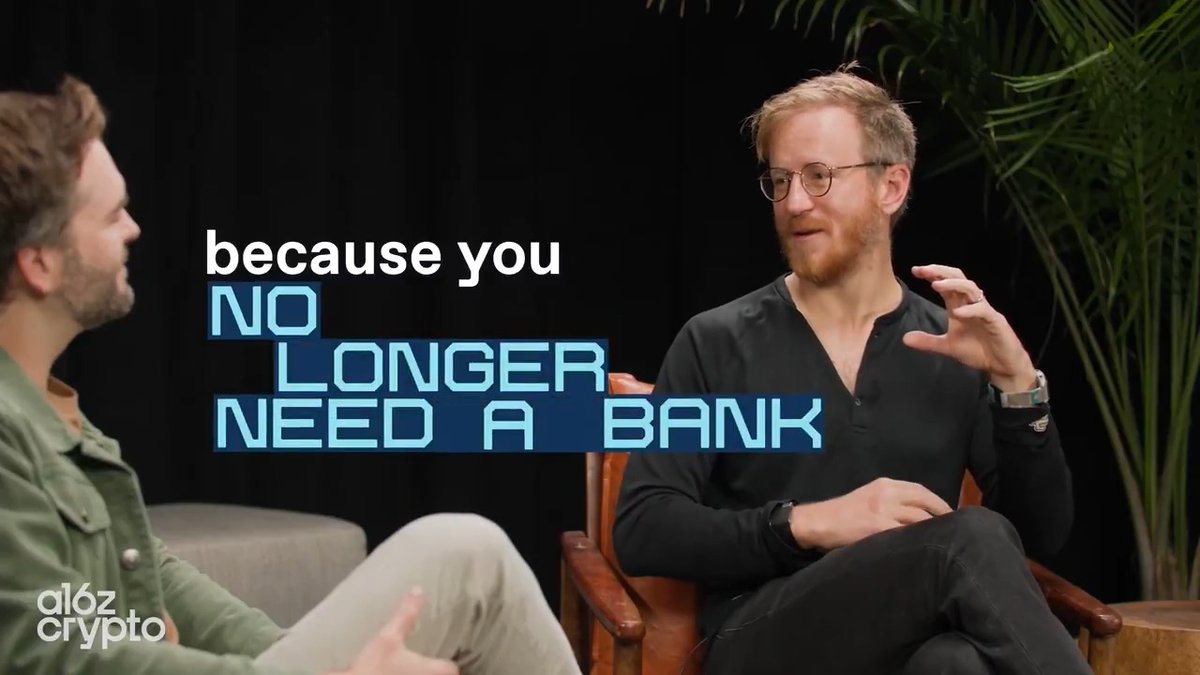
Bridge CEO Zach Abrams on how stablecoins will lower traditional card fees: "There will be the emergence of infrastructure that provides fraud and chargeback prevention and so on, but gets rid of all the bank fees because you no longer need a bank–you have a wallet." "You'll have a... show more

14,523 次观看 • 7 个月前 •via X (Twitter)
9 条评论

Lower fees are compelling. But removing banks also removes embedded guarantees. Cards scale because enforcement and liability are standardized across the network. Stablecoins will need shared, infrastructure-level fraud and dispute controls to reach the same level of institutional trust.

@zcabrams this dude is the chad of all chads started the neobank meta on his own shoulders

@zcabrams let’s have it 💪

@zcabrams Settlement speed changes everything.

@zcabrams I don’t really think this might be realistic but would love to see this fr

@zcabrams Paying fees in 2026 is like paying for air. Except air is actually useful.

@zcabrams large scale organizations will start to apply this as soon as they see the benefit. 10bp is a benefit.

@zcabrams I need help please

@zcabrams Sounds good. For most people, it only matters when it feels simple to use.





![Robinhood CEO: In the future there will be no distinction between crypto and traditional finance “I think that crypto technology has so many advantages over the traditional way we’re doing things that in the future there will be no distinction. It’s kind of how technology itself was viewed as a sector of the economy for a very long time… I think crypto will go through the same transition where we’re still thinking about it in its own bucket but eventually everything will be on-chain in some form or another and the distinction will disappear.” Robinhood CEO Vlad Tenev explains why this transition is taking so long: “I think the challenge with traditional finance — particularly on the infrastructure layer — is they have a lot of stakeholders, and if you think about where they generate the bulk of their revenue, it’s not from crypto-related initiatives. And a lot of these stakeholders, because they’re quite big, are going to be resistant and slower to adopt technologies. They’re going to be late adopters. They’re going to wait until it’s proven before adopting it, and that’s why we [Robinhood] have had to do greater vertical integration than we would normally want to do in TradFi. We acquired Bitstamp. We have our own exchange. And we have our own chain because I don’t think — to be at the frontier of crypto — you can rely on traditional infrastructure providers. I think they’ll get there eventually but it will take a very long time.” Ethereum will be the global settlement layer for this new financial system, and ETH will be its money. ETH is the base pair for trading on The Robinhood Chain, the highest volume asset, and the gas token to pay for blockspace. Source: TOKEN2049 (Oct 2025)](https://image.24vids.com/tw-2075559110796587429/amplify_video_thumb/2075558252843028480/img/AW2HfgNvOMWt4MO5.jpg)


