Video wird geladen...

Video konnte nicht geladen werden

Zur Startseite

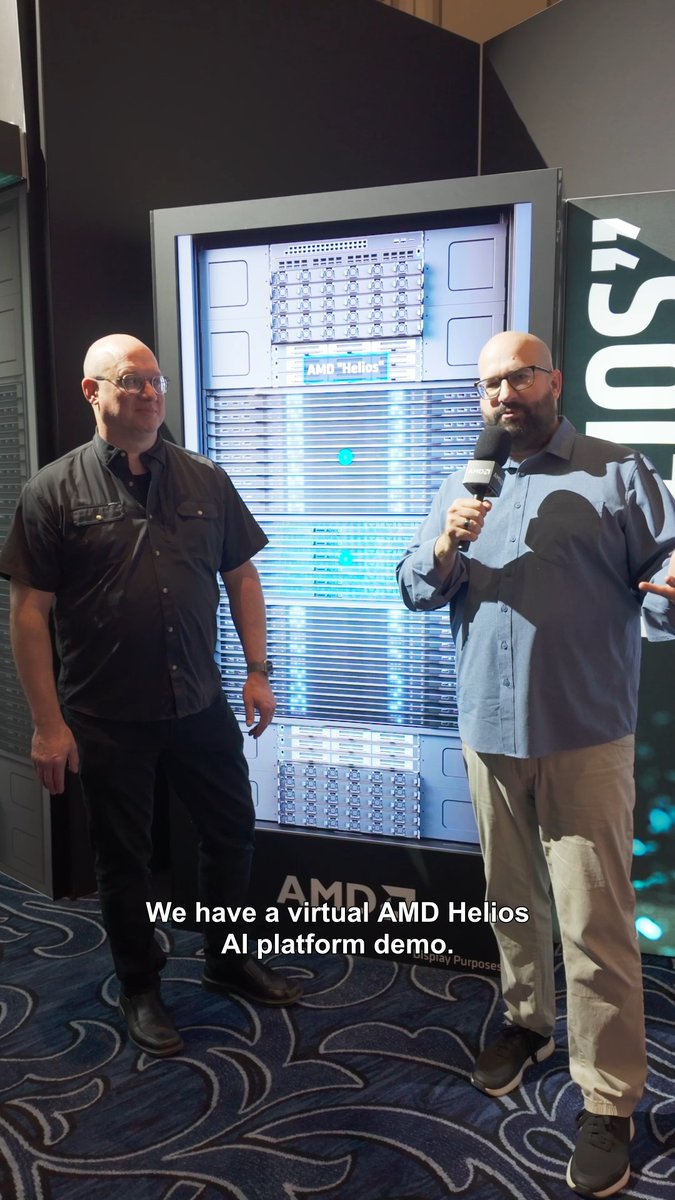
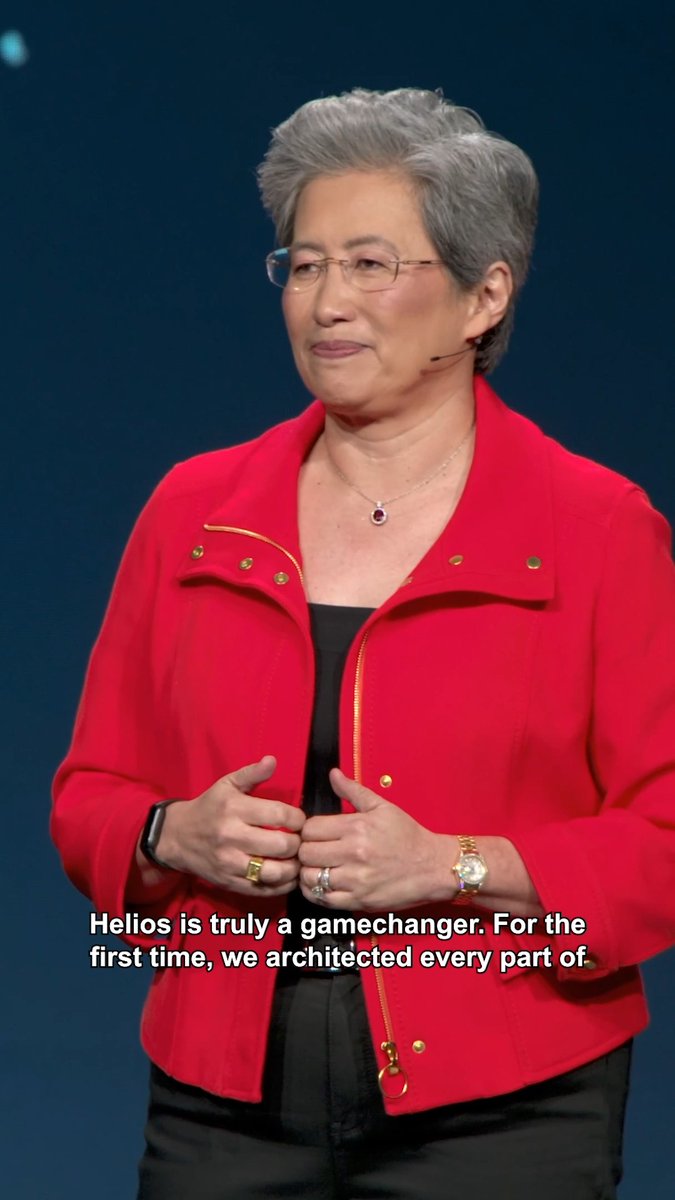
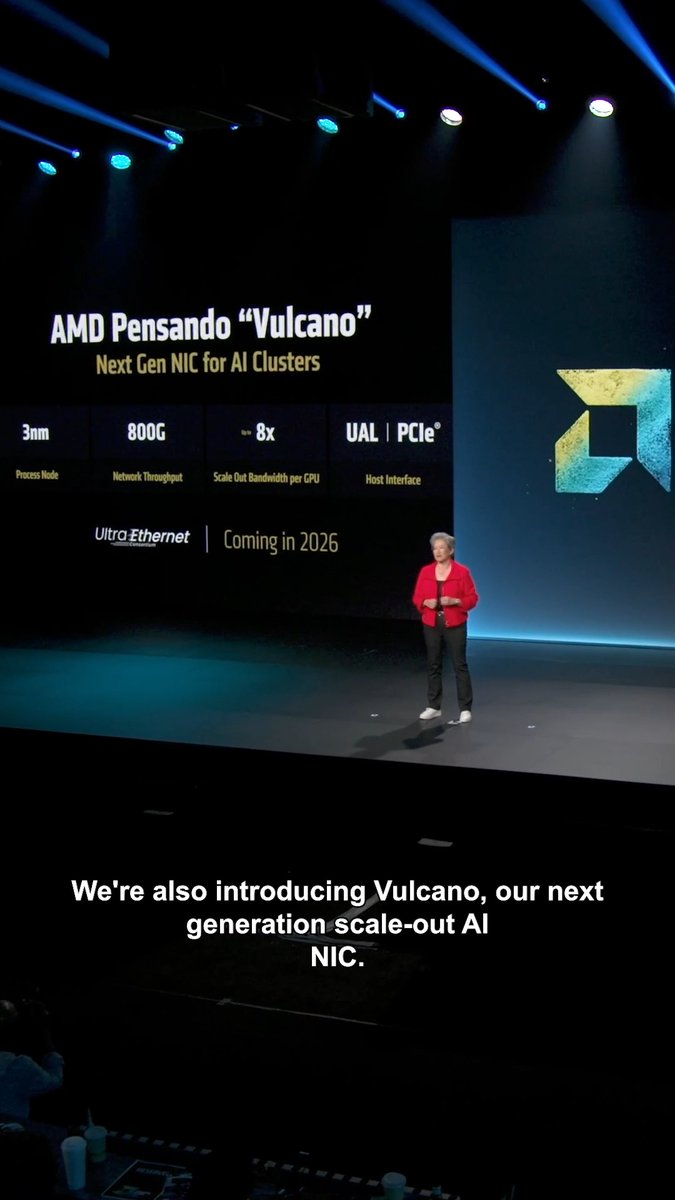
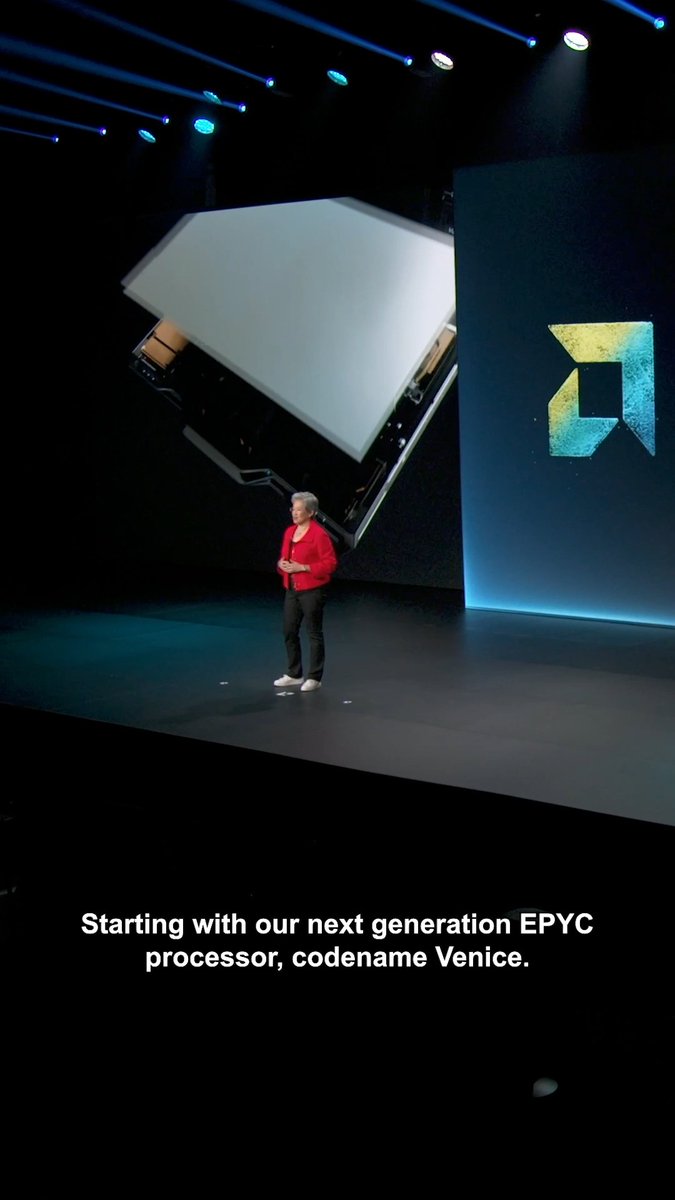
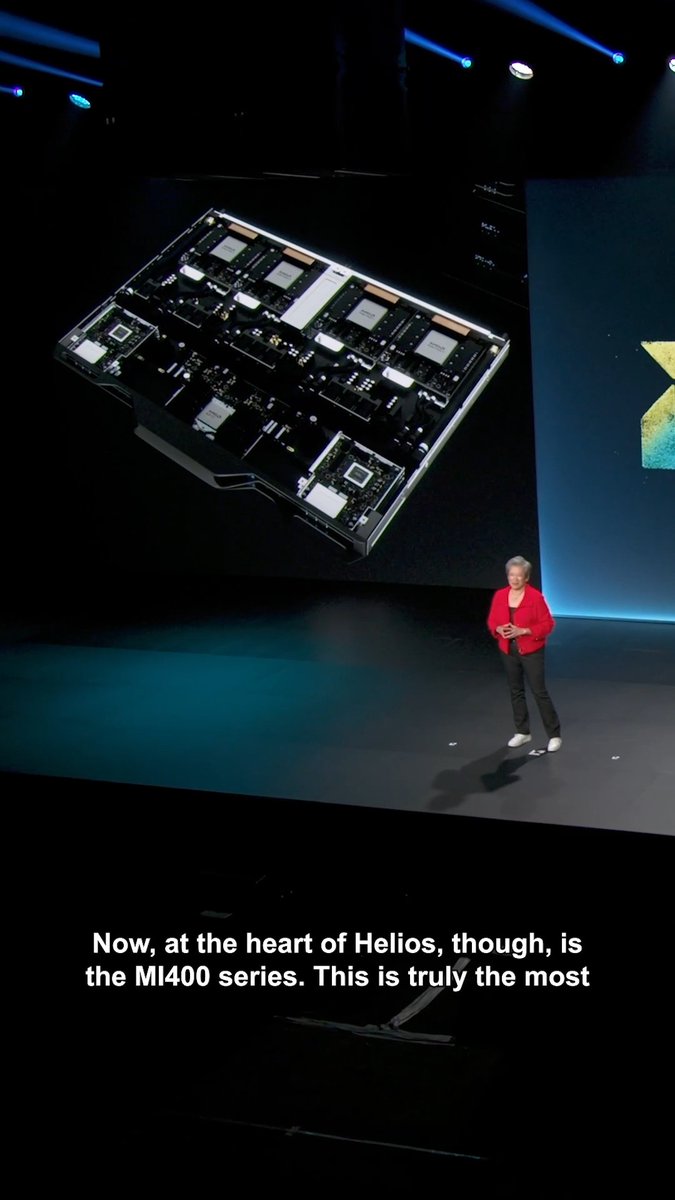
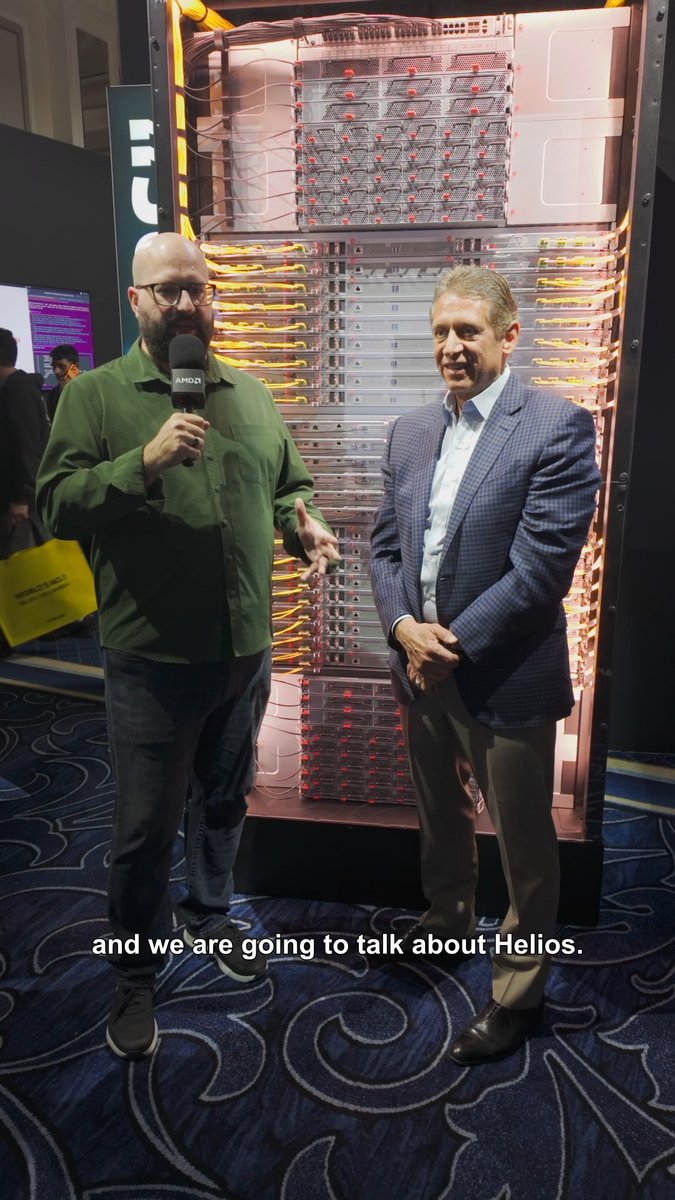
Building AI infrastructure at yotta-scale requires more than raw performance; it demands an open, modular rack design that can evolve across product generations, combining leadership compute engines with high-speed networking to connect thousands of accelerators into a single, unified system. Take a look at the Helios. Our rack-scale AI...

20,832 Aufrufe • vor 6 Monaten •via X (Twitter)

0 Kommentare

Keine Kommentare verfügbar

Kommentare vom Original-Post werden hier angezeigt

Ähnliche Videos

Today we announced our new Fairwater datacenter in Atlanta, connected with our first Fairwater site in Wisconsin and our broader Azure footprint to create the world’s first AI superfactory. Fairwater exemplifies our vision for a fungible fleet: infra that can serve any workload, anywhere, on fit-for-purpose accelerators and network paths, with maximum performance and efficiency. AI workloads have evolved beyond large-scale pre-training. Today, they encompass fine-tuning, reinforcement learning (RL), synthetic data generation, evaluation pipelines, and more. Fairwater is built to support this full lifecycle: Max density: Fairwater’s two-story design and liquid cooling system lets us place racks in three dimensions and pack them with GPUs as densely as possible, minimizing cable runs and improving latency and effective bandwidth. Fleet: Each Fairwater DC can integrate hundreds of thousands of the latest NVIDIA GPUs into a single coherent cluster. This provides flexible infra that can support the full spectrum of workloads, and ensure no GPU is left unnecessarily idle. And that’s on top of the more than 100,000 GB300s coming online this quarter alone for inference across the rest of our fleet. For us, it’s all about turning every gigawatt into the maximum number of useful tokens. Not every GW is created equal! Planet-scale: Every Fairwater DC will connect through our continent-spanning AI WAN to prior generations of AI supercomputers, forming a truly fungible pool of compute. This enables developers to scale beyond the capacity of a single site and dynamically land workloads on the right infra for their needs. Together, these innovations let us bring together different generations of silicon and AI systems across DCs and geos into a single elastic system that scales seamlessly across training and inference workloads And this elastic AI capacity is all available alongside all the other cloud services (compute, storage, databases, app services) that AI agents and workloads need. This is what we mean when we talk about building a fungible fleet – a single, unified platform that pushes the limits of performance per watt and per dollar. Read more:

Satya Nadella

907,531 Aufrufe • vor 8 Monaten

$AMD's heading to $5T MC LT| Lowest $/M tokens 🧵 The real reason why Institutions are FOMOing into AMD while other Semi stocks are underperforming ($NVDA $AVGO) Not Financial Advice! DYOR! Under Dr. Lisa Su’s leadership, AMD has transformed from a distant challenger into a formidable force in AI infrastructure, delivering the industry’s most compelling TCO story for high-volume inference. Her clear vision open ecosystems, aggressive annual roadmaps, rack-scale innovation, and relentless focus on tokens-per-dollar has positioned AMD’s Helios racks as the go-to solution for hyperscalers and AI natives struggling with exploding token costs, collapsing the cost down to $0.0003-$0.0005/M tokens. I will link various threads on this analysis to supply chain and wafer ratio if you are interested in understanding the full picture. In the last 3-4 months, explosive Agentic AI demand significantly increased Inference demand for Agentic AI models with 5-10 agents. If you are a listener of CNBC or Bloomberg, u should know enterprises and companies are complaining abt cost of token, and how it starts to spike up way too much to make sense. The fact that most data center today are run by $NVDA Chips, where the cost is way too high for Training or Inference. 1. Token cost Here are some quick comp, so u understand why $META OpenAI Anthropic $MSFT $AMZN Softbank $GOOGL and many more small to medium AI Natives are buying AMD CPUs and GPUs as much as they want, or pretty much AMD chips are sold out for the next 3-5 years. Inference (Cost per Million Tokens) ~$NVDA B200 / HGX: ~$0.02–$0.08 on optimized workloads (FP4/MXFP4, speculative decoding). Significant improvement over Hopper but still premium-priced. GB200 NVL72 rack-scale: $0.05–$0.25+ ~$AMD Helios Racks: $0.0003-$0.0005 per M tokens, dramatically lower than NVIDIA equivalents in owned infra. MI355X node-level: Up to 40% more tokens per dollar vs. competing solutions ( B200), driven by higher memory capacity (up to 288GB+ HBM), strong bandwidth, and lower acquisition costs. Training ~$NVDA Rubin Rack is estimated $0.7-$1.2/M Tokens ~$AMD Helios Rack is estimated $0.65-$1.0/M Tokens 2. Why Hyperscalers and AI Natives Are Choosing AMD Token consumption (especially Agentic) is outpacing even NVIDIA’s efficiency gains, making diversification mandatory for economic viability. Massive deals reflect this reality like $META, OpenAI, $MSFT, Softbank, $AMZN, Oracle, LumaAI, G42... Dr. Lisa Su’s Vision in Action: Since taking the helm, Su has driven AMD’s turnaround with disciplined execution, annual GPU cadence (MI300 → MI350 → MI400), full-stack software (ROCm 7), open ecosystems (UALink, OCP designs), and customer-centric rack-scale solutions like Helios. Her emphasis on “tokens per dollar” and TCO has turned AMD into the pragmatic choice for sustainable AI scaling. Power/Energy Efficiency: ~Helios Rack-level is estimated at 120kW-140kW with 50% more HBM4 where Inference and Training cost matter ~Rubin Rack-Level is estimated at 160kW-230kw AMD Helios shines in owned TCO, memory density, and energy flexibility at hyperscale. Cost to build 1GW data center 1GW Helios Rack full build is estimated $30-$35B 1GW Rubin Rack full build is estimated $45-$55B 3. Superior CPUs to pair with GPUs on massive scale 5-10-20GW Agentic AI. autonomous, multi-step workflows with orchestration, tool use, parallel agents, data movement, and enterprise integration has dramatically increased the importance of strong host CPUs alongside GPUs. This shifts the CPU-to-GPU ratio higher and makes balanced systems critical toward 1:1 to 5:1 as enterprises testing more than 5-10 agents. AMD EPYC Venice excels ~Leadership core density (up to 256 Zen 6 cores per socket) for running many agents in parallel, orchestration layers, and high-throughput control-plane tasks. ~Superior performance-per-core and power efficiency ( up to 2.1x higher perf/core and 2.26x better SPECpower vs. NVIDIA Grace in benchmarks). ~Tight integration in Helios: One Venice CPU + multiple MI450 GPUs per node, enabling efficient data feeding to GPUs ("zero-copy"), parallel execution, and full rack utilization for complex agentic loops. Hyperscalers (Meta, Microsoft, Amazon, Google, Softbank) and AI natives (OpenAI, Anthropic...) are adopting high-core EPYC at scale specifically for these agentic demands, as CPUs now handle a larger share of non-model work (orchestration, policy enforcement, tool calls). This complements AMD’s lower-cost GPUs for overall TCO wins. Conclusion: NVIDIA’s Vera Rubin cannot compete with a 2 years old EPYC Turin, but AMD under Dr. Lisa Su has engineered the lowest cost-per-million-tokens, highly competitive energy-efficient solutions, and superior CPU orchestration for agentic AI at scale with Helios. Dr. Su has championed this shift since at least 2023, foreseeing the rise of agentic workflows that demand far more orchestration, parallel agents, and balanced compute well before the industry fully embraced it. Her long-term vision of AI moving from simple prompts to always-on, multi-agent systems has driven AMD’s investments in high-core EPYC CPUs and integrated rack-scale solutions, perfectly positioning the company for today’s realities. Hyperscalers and AI natives effectively have no choice but to buy more AMD system for Agentic AI as leadership in economical, power-aware, high-volume internal + agentic use. However, due to supply constraints where Supply is far behind Demand, this makes multi-vendor reality along with in-house chips drive faster industry progress, lower overall costs, and better sustainability. Not Financial Advice! DYOR! Video source: Microsoft Build 2026

Mike

145,550 Aufrufe • vor 1 Monat

If intelligence is the log of compute… it starts with a lot of compute! And that’s why we’re scaling our GPU fleet faster than anyone else. Just last year, we added over 2 gigawatts of new capacity – roughly the output of 2 nuclear power plants. And today we’re going further, announcing the world's most powerful AI datacenter, located in southeastern Wisconsin. Fairwater is a seamless cluster of hundreds of thousands of NVIDIA GB200s, connected by enough fiber to circle the Earth 4.5 times. It will deliver 10x the performance of the world’s fastest supercomputer today, enabling AI training and inference workloads at a level never before seen. For AI training workloads, you need compute at exponential scale. That’s why we designed the datacenter, GPU fleet, and network together as one integrated system. This ensures a single job can run from day 1 at exponential scale across thousands of GPUs. Fairwater uses a liquid-cooled closed-loop system for cooling GPUs that requires zero water for operations after construction. And we’re matching all of the energy that is consumed with renewable sources. And of course, it is just one of several similar sites we’re lighting up across our 70+ regions. We have multiple identical Fairwater datacenters under construction in other locations across the US, in addition to our AI infrastructure already deployed in over 100 datacenters around the world, powering model training, test-time compute, RL tuning, and real-time inference at global scale. Too often during times like this, people go with the current and only later wonder, how did we get here? With Fairwater, we're charting a new path: doing the hard engineering work, bringing compute, network, and storage into one highly scaled cluster, and designing closed-loop energy systems to meet real-world computing needs. And partnering with local communities to ensure it's thoughtfully done in a way that is sustainable, creates new jobs, and expands opportunity. We are thrilled to see this take hold in Wisconsin, and we are just getting started.

Satya Nadella

2,020,601 Aufrufe • vor 10 Monaten