Video yükleniyor...

Video Yüklenemedi

Ana Sayfaya Dön

Can machine learning enable 100-plex cryo-EM structure determination? (Ellen Zhong, Ep #5) (links in reply) this is a podcast filmed with Ellen Zhong, a computer science professor at Princeton, and one of the giants (if not outright creators) of the field of deep-learning applied to cryo-EM particle images i...

30,812 görüntüleme • 8 ay önce •via X (Twitter)

0 Yorum

Yorum bulunmuyor

Orijinal gönderinin yorumları burada görünecek

Benzer Videolar

We don't know what most microbial genes do. Can genomic language models help? there's only one way to find out! this is a 1 hour and 42 minute interview with an MIT professor (the famous Yunha Hwang) chatting about these questions, her work in solving them at Tatta Bio, and more. zoomer captions are back too Links in reply! Timestamps: 00:00:00 - Clips + sponsor roll from the wonderful LatchBio 00:02:07 – Introduction 00:02:23 – Why do microbial genomes matter 00:04:07 – Deep learning acceptance in metagenomics 00:05:25 – The case for genomic “context” over sequence matching 00:06:43 – OMG: the only ML-ready metagenomic dataset 00:09:27 – gLM2: A multimodal genomic language model 00:11:06 – What do you do with the output of genomic language models? 00:17:41 – How will OMG evolve? 00:20:26 – Why train on only microbial genomes, as opposed to all genomes? 00:22:58 – Do we need more sequences or more annotations? 00:23:54 – Is there a conserved microbial genome ‘language’? 00:28:11 – What non-obvious things can this genomic language model tell you? 00:33:08 – Semantic deduplication and evaluation 00:37:33 – How does benchmarking work for these types of models? 00:41:31 – Gaia: A genomic search engine 00:44:18 – Even ‘well-studied’ genomes are mostly unannotated 00:50:51 – Using agents on Gaia 00:54:53 – Will genomic language models reshape the tree of life? 00:59:18 – Current limitations of genomic language models 01:08:54 – Directed evolution as training data 01:12:35 – What is Tatta Bio? 01:19:02 – Building Google for genomic sequences (SeqHub) 01:25:46 – How to create communities around scientific OSS 01:29:06 – What’s the purpose in the centralization of the software? 01:35:37 – How will the way science is done change in 10 years?

owl

44,279 görüntüleme • 7 ay önce

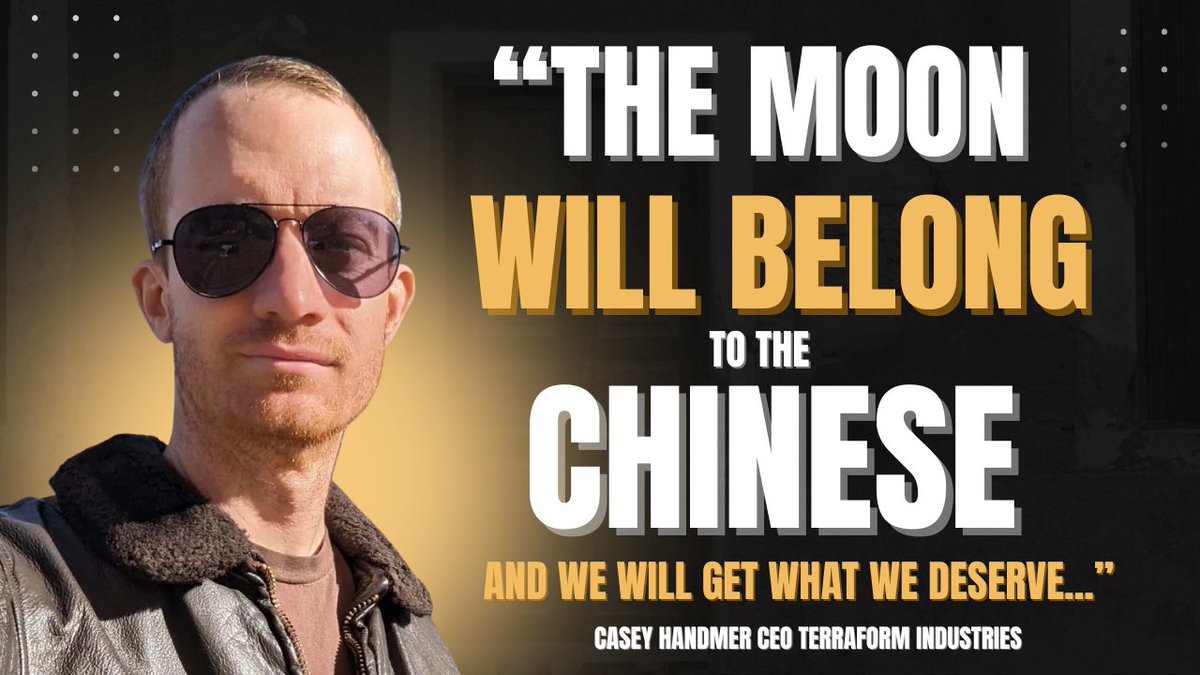
"If NASA and United States can not beat the Chinese back to the moon, then the moon belongs to the Chinese, and we get what we deserve." You don't want to miss this interview. I met Casey Handmer (Casey Handmer) while flying fighter jets in Montana. I Immediately I knew he had a story to tell. Turns out he wants to tile the United States in solar panels, and use that power to generate rocket fuel and clean water for tens of millions of people. Basically to re-invent American industry. In this interview Casey discusses the innovative pursuits of his company Terraform Industries. He reflects on his previous roles at NASA and JPL, where he was frustrated with the inefficiencies and lack of innovation in traditional institutions. Handmer discusses the importance of ambition, self-awareness, curiosity, and practical experience in hiring and developing talent at Terraform. To fully understand the scope of Casey’s ambitions, you should visit his blog where he discusses things like Mars helicopters and desalination to support a new mega city in California. 00:00:00 - 00:00:17 Geopolitical Stakes: US vs. China in Space Race 00:00:17 - 00:01:17 Interview Introduction: Casey's Background and Topics 00:01:17 - 00:03:10 Podcast Setup and Welcome to Terraform Industries 00:03:10 - 00:04:40 Building History and Manufacturing Interest 00:04:40 - 00:07:17 Meeting at Hangar Event and Aircraft Engineering 00:07:17 - 00:20:45 Early Life: Hands-On Building and Career Path 00:20:45 - 00:40:00 Founding Terraform: Synthetic Fuels Vision and Prototypes 00:40:00 - 01:00:00 Technology Deep Dive: Solar to Hydrocarbons and Scaling 01:00:00 - 01:20:00 Energy Geopolitics and US Reindustrialization 01:20:00 - 01:40:00 Team Building, Hiring Philosophy, and Company Culture 01:40:00 - 02:00:00 Hardware vs. Software Challenges and Entrepreneur Advice 02:00:00 - 02:22:24 Future Visions: Desalination and New Cities 02:22:24 - 02:36:39 Closing Call to Action and Thanks

Penny2x

1,598,196 görüntüleme • 9 ay önce

My conversation with OpenAI co-founder Greg Brockman This is the most detailed first-person account of the 72 hours after Sam Altman was fired. We also go deep on what comes next: the global race to AGI, why ChatGPT stopped showing reasoning, how much of OpenAI's own code is now written by AI ("it's hard to know what percent is not"), and the untold story of how OpenAI actually started in 2015. 00:00:00 Introduction 00:00:49 Meeting Sam Altman and Starting OpenAI 00:02:40 Building the Founding Team 00:04:25 DeepMind's Lead Over OpenAI 00:04:54 Changing OpenAI to a For-Profit Model 00:06:05 Breakthrough Moments at OpenAI 00:08:22 What Dota 2 Meant for OpenAI 00:10:04 Reasoning Versus Prediction 00:11:59 Tensions Grow at OpenAI 00:15:44 Sam Altman's Firing 00:17:49 Greg Quits OpenAI 00:19:56 Sam Explores Deal with Microsoft's Satya 00:20:28 Petition for Altman's Return 00:23:43 Ilya Sutskever Leaves OpenAI 00:24:59 Lessons Learned after Sam Ousting 00:28:22 The Thing Ilya Said that Greg Can't Forget 00:32:22 Is AI Going Parabolic? 00:33:24 How Much of OpenAI's Code is Written by AI? 00:36:21 Do AI Chatbots Tell Us What We Want to Hear? 00:38:06 The Global AI Race to Reach AGI 00:38:40 What Happens if US Doesn't Reach AGI First? 00:39:49 Are Countries Stealing AI Advancements? 00:40:38 Why ChatGPT No Longer Shows Reasoning 00:41:47 The Finite Constraints of Compute 00:43:38 On Investing Early in Data Centers 00:46:31 The Future of Data Center Specialization 00:47:52 How to Decide Whose Queries to Serve 00:49:08 OpenAI on Consumer vs Enterprise Models 00:53:05 Data Centers in Space? 01:00:56 What Should AI Regulation Look Like? 01:04:33 The Future of AI-Powered Entrepreneurship 01:04:44 AI and Job Loss 01:07:15 The Skills Young People Should Invest In 01:11:30 What Does Success Look Like For You? Full episode on X below. Also find it on: • YouTube: • Spotify: • Apple:

Shane Parrish

450,952 görüntüleme • 3 ay önce

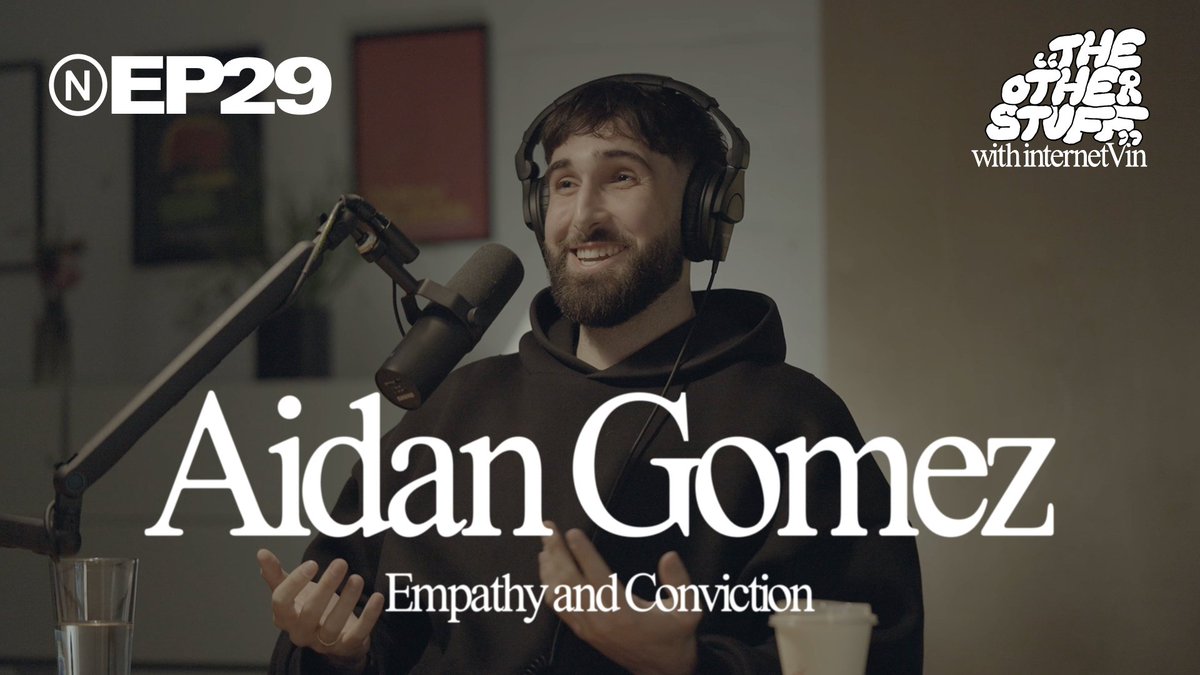
Aidan Gomez (Aidan Gomez) is a computer scientist, co-author of the seminal paper ‘Attention Is All You Need,’ and the CEO of Cohere. In this episode, we discussed his upbringing in the cabin his grandfather built in Codrington, a small town North of Brighton, and the values that were instilled in him through his family. We explored his path from Codrington to his undergraduate studies at the University of Toronto, emailing Geoffrey Hinton, and joining Google Brain where he co-wrote the paper on transformers. We discussed how he met his co-founders Ivan Zhang and Nick Frosst, and his insights on what it means to build a meaningful, successful company in Canada. Aidan shares his conviction about what is at stake — for Canada and for the world at large. This is a conversation about family, values, and what it means to live with conviction. The Other Stuff is hosted by internetVin — filmmaker, entrepreneur, and possibly the most curious man on Earth. Produced by New. The Other Stuff #29 — Aidan Gomez: Empathy and Conviction — Timestamps 00:00:00 Intro 00:03:10 The Malleability of Toronto 00:11:06 Growing Up in Codrington 00:13:50 The Story of Aidan Gomez’s Family 00:27:23 Introduction to the Internet 00:30:39 Values and Work Ethic 00:35:46 University of Toronto’s AI Scene 00:40:48 Emailing Geoffrey Hinton 00:42:16 Google Brain 00:45:15 Dropout: A Simple Way to Prevent Neural Networks from Overfitting 00:49:48 The Beauty of Research 00:54:24 One Model to Rule Them All 00:59:54 Meeting Ivan Zhang and Nick Frosst 01:04:00 The Birth of Cohere 01:06:56 Twitter Influencers and Alex Friedland 01:11:48 Being the CEO 01:12:51 Building for Canada 01:15:01 Three Fundamental Ingredients of Building a Company 01:21:39 Working with the Canadian Government 01:24:39 Reflexivity in Canada 01:36:22 What Is Evil? 01:42:40 The Role of AI in the World

The Other Stuff Podcast

45,297 görüntüleme • 7 ay önce

🚨New Episode: Please welcome Shiloe Bear to the Fort! As the founder of Creek Development, Shiloe has completed 63 commercial redevelopment projects and 5 land entitlement plays in the San Francisco Bay Area. Leveraging her deep construction expertise, she challenges project assumptions and incorporates impactful design to achieve remarkable outcomes for her clients and investors. We discuss: - Building Creek as an outsourced developer - Converting industrial buildings into biotech lab space - A deep dive into the Bay Area RE market - Why design is such an important aspect of development 00:00:00 - Intro 00:01:11 - Shiloe’s upbringing and journey to doing development in the Bay Area 00:08:25 - What are the projects you work on the most? 00:11:01 - Why is there such a demand for outsourced development? 00:11:47 - What makes your firm different? 00:16:50 - Minimum Viable Projects 00:21:47 - How early in a project do you need to be brought in? 00:25:14 - What are some obvious parts of a project where you can save money? 00:27:30 - How would you describe the Bay Area market right now? 00:33:35 - Office to Residential 00:37:46 - What’s the environment like for Oakland? 00:42:31 - How Shiloe is planning to pivot her business into doing their own developments 00:47:51 - How important are the relationships you’ve developed in The Bay over the past 10 years? 00:53:06 - The BioTech market and development strategy 01:00:55 - Why design matters 01:08:27 - How far out are labs looking for space? 01:09:46 - Lenders, Leases, and hold periods 01:12:36 - Why did this become your niche? 01:14:13 - Shiloe’s bird-watching skills & long-distance running

Chris Powers

64,474 görüntüleme • 2 yıl önce

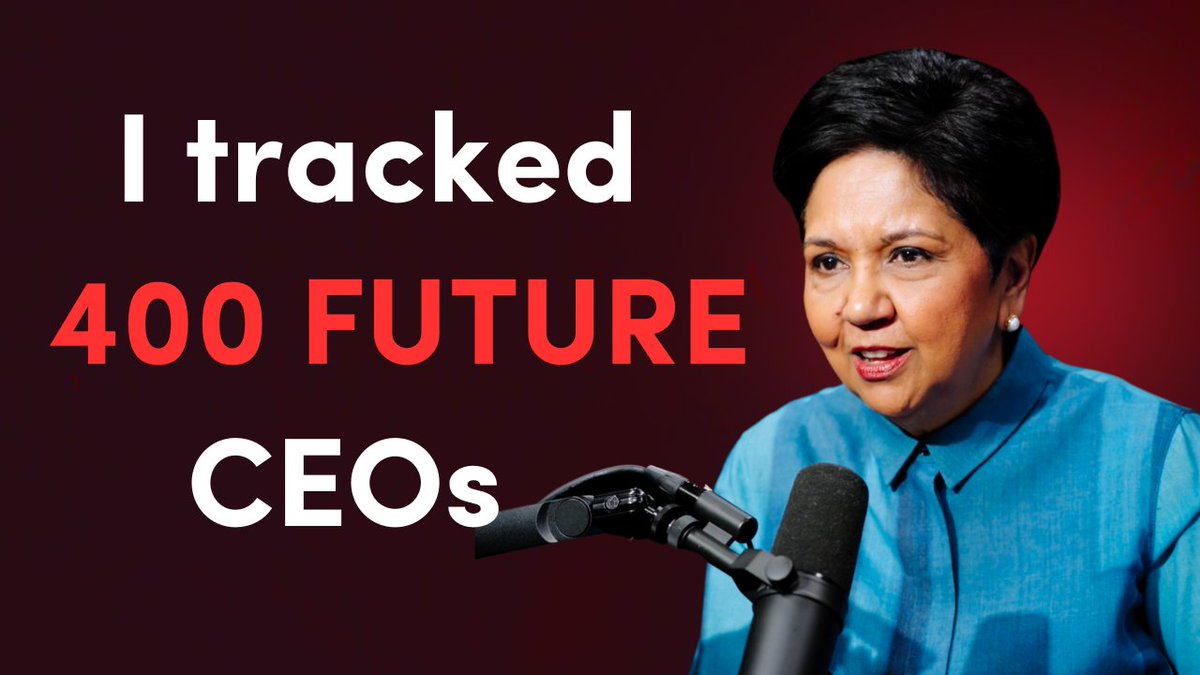
New episode with the incredible former PepsiCo CEO Indra Nooyi - the first woman of color and immigrant to run a Fortune 50 company. In this conversation, Indra discusses the stories behind her rise to the top of one of the world's largest companies. From early days at the Boston Consulting Group using satellite photos to analyze competitor facilities, to personally tracking 400 potential executives as CEO, Indra reveals the granular thinking that separates great leaders from good ones. Her "zoom in, zoom out" philosophy transformed how she understood business — from the "right side of the decimal" where even a fraction of a penny matters across millions of transactions, to setting company strategy at 30,000 feet. She explains why most leaders fail because they don't understand their business at the most granular level. But perhaps most powerful is her candid discussion about the reality of being a working mother in the C-suite where she argues there is no such thing as work-life balance. Watch now for a masterclass in leadership, strategy, and the sacrifices required to reach the top. (00:02:37) Growing Up In India (00:04:38) USA Culture Shock (00:09:54) Lessons From Working In Consulting (00:14:13) Right Side Of The Decimal Lesson (00:16:59) Lessons From Working In Consulting PT 2 (00:20:39) Delivering A Message That Gets Heard (00:23:19) Developing Talent (00:26:46) How To Minimize Office Politics (00:29:14) Power And Humility In Life (00:31:53) Prioritizing Work Over Family / Finding Balance (00:37:39) Turnover After A CEO Change (00:41:09) CEO Vs Board Member (00:44:41) Implementable Change In A Company (00:47:00) Removing Friction Instead Of Using Force (00:48:46) Lessons From Amazon (00:50:36) Leading Through Crisis (00:54:01) Dealing With Activist Investors (00:57:20) Women As CEOS (00:58:40) Equality of Opportunity (01:02:32) Bias In Performance Reviews (01:04:09) Almost Quitting PepsiCo (01:05:48) What I Learned From Steve Jobs (01:10:35) Lessons From Costco And Walmart (01:18:43) Secrets to PepsiCo Merchandising (01:20:59) Making Decisions At A Multi Billion Dollar Company (01:22:40) Lessons From Acquisitions (01:25:52) Traits Of A High Performing Employee (01:27:44) Remote Work Vs In Office

Farnam Street

114,125 görüntüleme • 1 yıl önce

New episode with Dr. Konrad Kording (Kording Lab 🦖), professor of bioengineering and neuroscience at the University of Pennsylvania (Penn) and co-director of CIFAR's Learning in Machines & Brains program (CIFAR). Konrad works at the intersection of causality, machine learning, and neuroscience, building rigorous methods for causal reasoning when experiments aren't possible — and challenging how researchers interpret neural data and build AI. Konrad argues the most promising path to understanding how the brain works is to read the brain’s wiring directly, down to the molecular detail of each connection, and to build compilers and simulations to understand the brain’s computation directly. In this episode we go deep into how neurons work, how neurons wire together, and how organic and artificial neural networks differ. We discuss why organic neurons are doing much more; how a model of a single organic neuron can solve MNIST — computing more like a 3-layer artificial neural network; how the brain might learn by solving credit assignment with only local signals; how to approximate backprop without a global algorithm; why AI and humans are intelligent along different dimensions; why Konrad isn’t very worried about AI replacing us; economic models of intelligence and physical work; and much more. Konrad is a brilliant, contrarian thinker who explains complex concepts very intuitively. It is a solid computational neuroscience primer. I hope you enjoy this conversation as much as I did! Other links to this episode and references below. Chapters 00:00:00 Introduction 00:01:01 How organic neurons work 00:24:13 How the brain learns: circuits and credit assignment 00:45:29 Recording the brain 00:52:47 Why simulating brains is hard 01:05:00 A new approach: connectomes and compilers 01:21:00 Why simulate brains? 01:29:50 How AI and human intelligence differ 01:41:04 Evolution, intelligence and AI risk 01:52:42 Robotics, causality, and the roots of intelligence 02:05:53 AI for science and scientific rigor 02:13:05 The economics of intelligence 02:27:50 A hopeful future

Juan Benet

49,297 görüntüleme • 1 ay önce

What could Alphafold 4 look like? (Sergey Ovchinnikov, Ep #3) 2 hours listening time (links below) To those in the (machine-learning for protein design) space, Dr. Sergey Ovchinnikov (Sergey Ovchinnikov) is a very, very well-recognized name. A recent MIT professor (circa early 2024), he has played a part in a staggering number of recent great papers in the field: ColabFold, RFDiffusion, Bindcraft, automated design of soluble proxies of membrane proteins, elucidating what protein language models are learning, conformational sampling via Alphafold2, and many more. Of course, all these papers were group efforts, but Sergey's name comes up astonishingly frequently! And even beyond the research that have come from his lab in the last few years, the co-evolution work he did during his PhD/fellowship also laid some of the groundwork for the original Alphafold paper, being cited twice in it. This is a two hour conversation with him, asking every question I could think of. We talk about his own journey into biology research, an issue he has with Alphafold3, what Alphafold4-and-beyond models may look like, what research he’d want to spend a hundred million dollars on, and lots more. Topics/institutions we discuss: Arc Institute's Evo models, Hannah Wayment-Steele's work, Isomorphic Labs's AF2/AF3, and EvolutionaryScale's ESM models Also, extremely grateful to Asimov Press (Asimov Press) for helping fund the travel + studio time required for this episode! They are a non-profit publisher dedicated to thoughtful writing on biology and metascience, such as articles over synthetic blood and interviews with plant geneticists. I myself have published within them twice! I highly recommend checking out their essays at or reaching out to [email protected] if you’re interested in contributing. Timestamps: [00:00:00] Highlight clips [00:01:10] Introduction + Sergey's background and how he got into the field [00:18:14] Is conservation all you need? [00:23:26] Ambiguous vs non-ambiguous regions in proteins [00:24:59] What will AlphaFold 4/5/6 look like? [00:36:19] Diffusion vs. inversion for protein design [00:44:52] A problem with Alphafold3 [00:53:41] MSA vs. single sequence models [01:06:52] How Sergey picks research problems [01:21:06] What are DNA models like Evo learning? [01:29:11] The problem with train/test splits in biology [01:49:07] What Sergey would do with $100 million

owl

89,083 görüntüleme • 1 yıl önce

Xavier Leroy (creator of OCaml) is an expert in compilers, formal verification of software and functional programming. This interview should be an approachable resource if you're curious about formal verification of software since I was learning that on the fly during it. In this episode: • OCaml compared with Rust and JavaScript • What is formal verification and how does it work • How languages call each other across boundaries • How to address "almost-correct" LLM code • How type inference works in programming languages Where to watch: • YouTube - • Spotify - • Apple Podcasts - • Transcript - Thank you to the sponsor of this episode for supporting my work: • WorkOS: makes your app Enterprise Ready with easy to use APIs to add SSO, SCIM, RBAC, and more in just a few lines of code, check them out at Chapters: 00:00 - Intro 00:43 - What sets OCaml apart 04:39 - OCaml vs Rust 07:57 - Why is manual memory management more performant 11:21 - Javascript vs OCaml 14:00 - Famous Rob Pike quote 16:05 - Type inference and how it works 22:12 - What is formal verification and how does it work 40:07 - What made multicore support difficult for OCaml 50:17 - How programming languages interface and call each other 57:41 - The danger of almost-correct LLM code 01:05:39 - How LLMs will change programming languages 01:10:26 - Industry vs academia 01:15:05 - Most interesting unsolved problems 01:18:30 - Top book recommendations for engineers 01:21:17 - Advice for his younger self 01:23:31 - Outro

Ryan Peterman

23,082 görüntüleme • 7 gün önce

Allie Beth Stuckey has never been afraid to speak truth in a world that often rewards silence. In this conversation, we talked about faith, conviction, and what it means to stand firm when culture pushes you to conform. Allie opened up about her journey into broadcasting, how motherhood reshaped her worldview, and why she believes women today are desperate for truth, not validation. We also talked about the cost of conviction, how to disagree without dehumanizing, and why faith must come before fear, especially in media and leadership. We discussed the state of Christianity in America, the pressure many young people face to compromise, and how social media has changed the way we share and live out our beliefs. Allie’s perspective is strong but full of grace, rooted in both intellect and compassion. This conversation was about more than faith or influence. It was about courage, clarity, and holding fast to what is true even when it is unpopular. Chapters: 0:00:00 - Intro 00:03:02: Allie Beth’s Personal Life 00:15:25: Allie Beth’s Thoughts on Marriage 00:21:20: Advice to Young Women on Finding the Right Partner 00:27:10: Lessons from Allie Beth’s Life 00:32:44: Dealing with Shame 00:41:32: Are Eating Disorders Considered Sinful? 00:46:16: Differences Between Southern Baptist, Reformed Christian, and Catholicism 00:52:19: Faith 01:12:45: Allie Beth’s Best Quotes 01:13:08: “It’s Easy to Be a Progressive” 01:14:16: “The Last Thing a Woman Wants Is to Be Excluded” 01:15:34: “I Am for the Death Penalty for the Same Reason I Am Against Abortion. I Value Innocent Life.” 01:19:19: “Your Daughters Should Not Be Listening to Taylor Swift. She Is Not a Role Model.” 01:26:24: How Allie Beth Manages Friendships That Disagree with the Bible 01:30:22: How Allie Beth Balances Sharing God’s Word Without Sounding Judgmental 01:32:56: Dealing with the Loss of Charlie Kirk BTS on Patreon:

Sage Steele

46,033 görüntüleme • 9 ay önce