Video wird geladen...

Video konnte nicht geladen werden

Zur Startseite

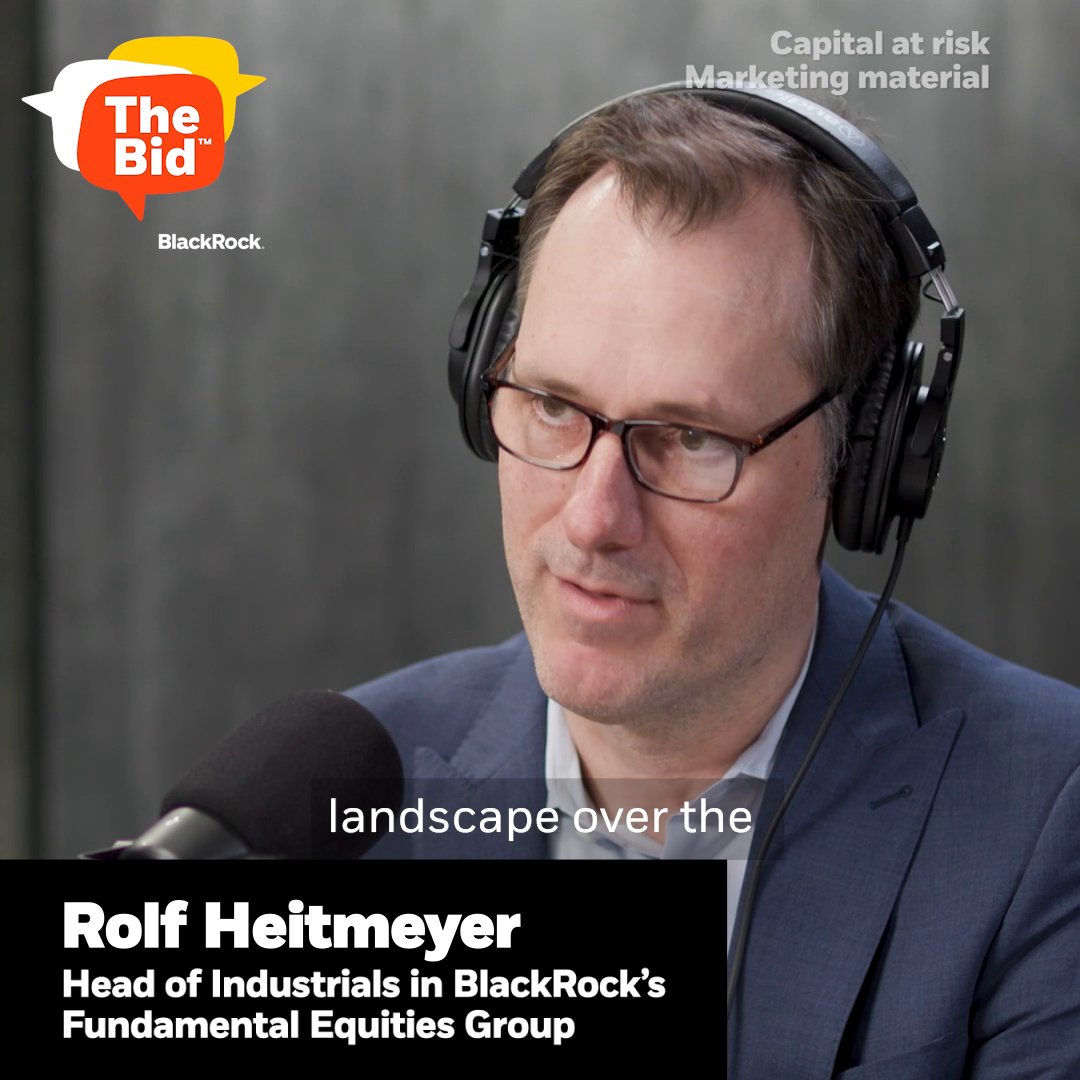
Canada’s defense industry could be entering its biggest growth cycle in decades. Canada’s new NATO commitment to increase defense spending from 2% to 5% of GDP could nearly triple the country’s defense budget over the next decade. And this isn’t one-time spending. It’s a long-term structural shift that could...

53,904 Aufrufe • vor 3 Monaten •via X (Twitter)

0 Kommentare

Keine Kommentare verfügbar

Kommentare vom Original-Post werden hier angezeigt
Ähnliche Videos

JUST IN: 🇷🇺🇩🇪 Putin May Have Made A Historic Mistake, Germany Is Rebuilding A Military Russia Could Fear A warning emerging from Russian strategic circles is becoming increasingly significant: Moscow’s confrontation with Europe may have awakened a power that had deliberately kept its military ambitions restrained for decades. Germany is now rapidly rebuilding the Bundeswehr, and the transformation could fundamentally change Europe’s military balance. 🔰 €108+ billion in 2026 defense related spending, with the core defense budget alone around €82.7 billion. 🔰 Defense spending is planned to rise toward 3.5% of GDP by 2029. 🔰 A major expansion of Germany’s military personnel and combat readiness. 🔰 F-35A stealth fighters for high end strike and NATO nuclear sharing missions. 🔰 Additional Eurofighters and major upgrades to Germany’s existing fleet. 🔰 Leopard 2A8 main battle tanks and expanded armored forces. 🔰 Boxer armored vehicles and modern mechanized formations. 🔰 IRIS-T SLM and Patriot air defense systems. 🔰 Tomahawk long range cruise missiles. 🔰 Development of next generation European long range strike weapons. 🔰 Cooperation with Britain on advanced cruise missile and hypersonic weapons. 🔰 Massive investment in drones, satellites, electronic warfare, communications and battlefield networks. 🔰 A rapidly expanding German defense industrial base capable of producing weapons at much greater scale. Germany’s military spending has already surged. SIPRI estimates German military expenditure reached roughly $114 billion in 2025, a 24% increase from the previous year. But the biggest change may still be ahead. Germany has the economic power, industrial capacity and technological base to sustain a major military buildup for years. If Berlin follows through on its plans, Germany could enter the 2030s with stealth fighters, advanced air defenses, large armored formations, long range precision weapons, drones, modern command networks and a defense industry operating at a completely different scale. And Russia may have helped trigger it. Moscow wanted to reshape Europe’s security order. Instead, its confrontation with Europe may be creating a far more militarized Germany, one that could become increasingly assertive and much harder for Russia to ignore. The Germany of the future may look very different from the Germany Russia faced before the Ukraine war. 👀 Putin may have awakened Europe’s sleeping giant.

War Radar

272,379 Aufrufe • vor 5 Tagen

President of the European Commission Ursula von der Leyen emphasized that Europe "should shoulder more of its responsibility for its own security." According to her, the Rearm Europe plan "focuses on how to use all the financial levers at our disposal in order to help Member States to quickly and significantly increase expenditures in defense capabilities, urgently now, but also over a longer period of time over this decade." There are five points in this plan: ▪️ "The first part of this Rearm Europe plan is to unleash the use of public funding in defense on the national level. Member States are ready to invest more in their own security if they have the fiscal space, so we must enable them to do so. We will propose to activate the National Escape Clause of the Stability and Growth Pact. This will allow Member States to significantly increase their defense expenditures without triggering the excessive deficit procedure. If Member States would increase their defense spending by 1.5 percent of GDP on average, this could create fiscal space of close to 650 billion euros over a period of four years. ▪️ "The second proposal will be a new instrument. It will provide 150 billion euros of loans to Member States for defense investment. This is about basically spending better and spending together. We're talking about pan-European capability domains like, for example, air and missile defense, the artillery systems, missiles and ammunition, drones and anti-drone systems, but also to address other needs from cyber to military mobility, for example. This will help Member States to pool demand and to buy together. With this equipment, Member States can massively step up their support to Ukraine. So immediate military equipment for Ukraine." ▪️ "The third point is using the power of the EU budget. I can announce that we will propose additional possibilities and incentives for Member States, that they will decide if they want to use cohesion policy programmes to increase defense spending." ▪️ "The last two areas of action aim at mobilising private capital by accelerating the Savings and Investment Union and through the European Investment Bank." "Europe is ready to assume its responsibilities. Rearm Europe could mobilise close to 800 billion euros of defense expenditures for a safe and resilient Europe," Ursula von der Leyen said.

Anton Gerashchenko

51,561 Aufrufe • vor 1 Jahr

‼️🇩🇪 On the eve of the NATO summit in Ankara scheduled for July 7–8, Alliance Secretary General Mark Rutte visited Berlin to praise Germany's growing strategic role and defense achievements. Rutte explicitly lauded Germany's substantial support for Ukraine and commended the Bundeswehr's active involvement in shielding the Baltic states from potential Russian aggression. He described Berlin's commitment to boost defense spending to 3.5 percent of GDP by 2029 as an "exceptional achievement" requiring immense political courage and resolve. This trajectory is reflected in Germany's unprecedented defense budget, which reaches over €108 billion this year and is projected to scale to approximately €152 billion by 2029. This massive domestic pivot aligns with broader Alliance targets established at the Hague summit, which mandated that all member states allocate 5 percent of GDP to defense by 2035—splitting the burden between direct military forces (3.5 percent) and defense-related infrastructure (1.5 percent). Meeting this ambitious long-term benchmark, however, will force the German government to significantly increase its national debt and slash spending in non-military sectors. Consequently, the equitable redistribution of the defense burden between Europe and the United States is poised to dominate the upcoming agenda in Ankara, with Rutte reiterating that while NATO remains fundamentally transatlantic, European members must secure a more balanced sharing of responsibilities. This shift marks a historic, permanent dismantling of Germany’s post-Cold War defense paradigm, forcing Berlin to trade fiscal conservatism for long-term militarization. While the projected 3.5 percent and eventual 5 percent GDP spending targets satisfy long-standing Washington demands for European strategic autonomy, the required reliance on massive public debt and domestic budget cuts will likely trigger severe political friction within Germany, testing whether its democratic consensus can withstand the financial strain of permanent wartime readiness.

Visioner

20,952 Aufrufe • vor 1 Monat

President of France Emmanuel Macron has called on French manufacturers to increase the volume of arms production. Paris is offering arms contracts to European countries. As of 2023, France was among the top ten countries in the world in terms of military spending, as well as among the top five countries in the world in terms of military exports. (Ahead of it are the United States, Germany and China). France's military-industrial complex accounts for more than 25% of all European military capacity. Since the start of the full-scale Russian invasion of Ukraine in 2022, France has made tremendous progress in its military industrial complex. In an interview with Le Figaro in early 2025, the French President said he would like to allocate "about 3-3.5% of GDP" to defense instead of the current 2.1%. Army budgets are approved in the military planning law, the current law covers the period from 2024 to 2030 and envisages spending €413 billion. For 2025, €50.5 billion is allocated for defense spending. If France were to spend 3.5% of GDP (based on current levels), it would allocate €70 billion per year to defense. France is one of the few European countries with a defense industry capable of developing weapons from start to finish without being dependent on the United States. Currently, the French military-industrial complex includes nine major industrial groups: Airbus Defense and Space, Ariane Group, Arquus, Dassault Aviation, MBDA, Naval Group, KNDS France, Safran, and Thales.

Anton Gerashchenko

858,298 Aufrufe • vor 1 Jahr