Loading video...

Video Failed to Load

Go Home

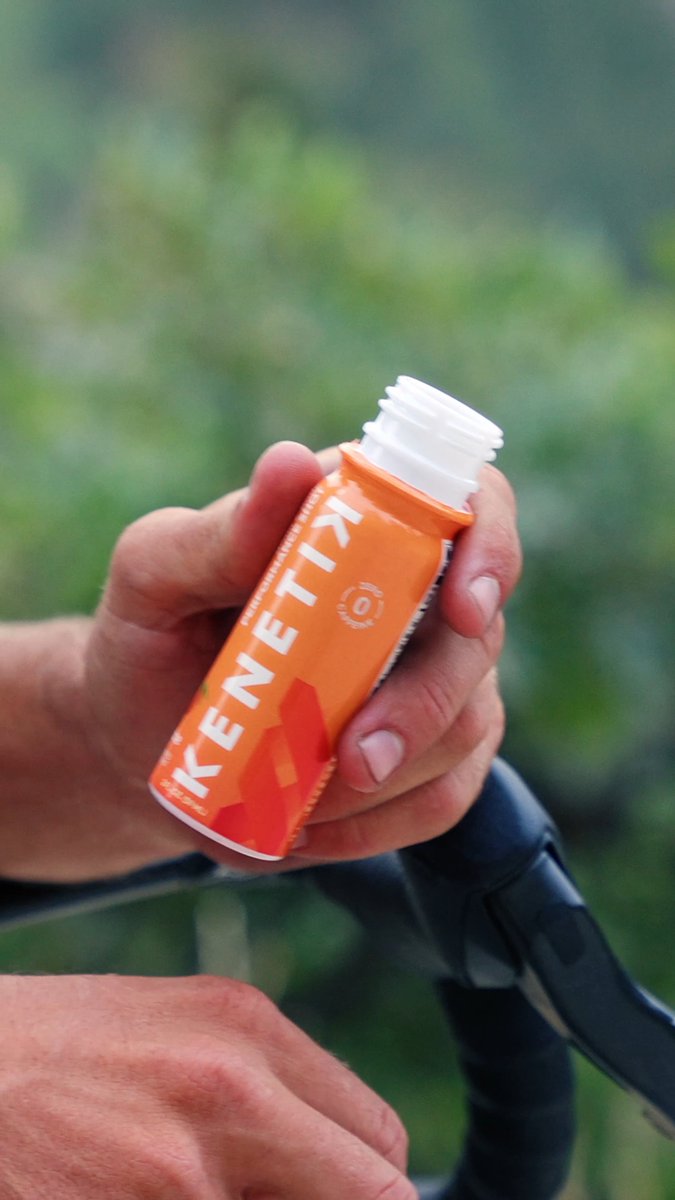
Champions skip the caffeine crash with Premium Brain Fuel Brain boosting ketones. Zero caffeine/sugar/crash. Pure clarity, focus, stamina, and recovery. It's the Two-Time's edge. 🚨 BLACK FRIDAY: BOGO 50% OFF Cans + NEW Shots Free ship $150+ Stock up:

152,703 views • 8 months ago •via X (Twitter)

0 Comments

No comments available

Comments from the original post will appear here

Related Videos

Rhonda Patrick just leveled up her creatine game—and the reasons will make you rethink that standard 5g scoop. She used to do 5g for workouts... now it's 10g EVERY DAY as baseline. Why? Brain saturation. "Once muscles are full at ~5g, the spillover hits the brain"—boosting cognitive function, potentially shielding against brain aging, and even helping depression via better energy production upstairs. Jet-lagged? Sleepless night? Travel wrecking your rhythm? She cranks to 15–20g (sometimes 20–30g in studies) — calls it "speed without the speed," like caffeine minus the crash/jitters. No addiction, but insanely alert, focused, and resilient. Hits hardest under stress/sleep deprivation (research backs it: single high doses reverse 21+ hour wakefulness cognitive hits and can outperform rested performance). Vegan twist: One friend (no meat = zero dietary creatine) went from dragging to "Bruce Banner → Hulk" mode after starting. Vegans/vegetarians often run low—liver makes only so much. Bonus layer: Extra creatine frees up methylation pathways (homocysteine → methionine), gene expression tweaks, brain-wide perks. 3:13 raw clip of Rhonda spilling the science—perfect if you're biohacking focus, longevity, or just surviving modern life chaos. Are you on creatine? Still at 5g? Gone higher for brain gains? Noticed Hulk-level energy when stressed/sleepless? Vegans—game-changer or nah? Drop your protocol/experience below—this one's sparking real convos!

Camus

233,976 views • 6 months ago

This is one of the most scientifically dense conversations we have ever recorded on brain health, cholesterol, and Alzheimer's prevention. We get into why the phospholipid form of DHA reaches the brain when standard fish oil does not, how ApoE4 carriers burn through omega-3s, the lithium orotate data that emptied supplement shelves, why GSK-3 beta may be the most underrated target in Alzheimer's research, what seven years of 700+ cholesterol did to Nick Norwitz MD PhD arteries, why the EZPAVE headlines fall apart under scrutiny, and what GLP-1s are doing inside the brain that has nothing to do with weight loss. Here's our full conversation: The ApoE4 Paradox and the Case Report That Broke the Internet Why Standard Omega-3 Supplements Fail and What to Take Instead DHA and the Phospholipid Carrier: How It Crosses the Blood-Brain Barrier ApoE4 Explained: Risk, Genetics, and Why Nick Is Optimistic Why ApoE4 Carriers Burn Through DHA Faster and Need More Women, Omega-3s, Menopause, and Brain Insulin Resistance Statins, Sex Differences, and the DHA-Blood Sugar Connection Statins and Dementia: What the Data Actually Say Tau, GSK-3 Beta, Lithium Orotate, and Targeting Alzheimer's Pathology The Glymphatic System, 40Hz Devices, and Sleep as Brain Clearance Gene Editing, Prime Editing, and the Future of ApoE4 Therapy 700 LDL, Zero Plaque, and Seven Years of Data Why the EZPAVE Headlines Don't Hold Up KetoneIQ: Ketones for Brain Energy and Focus Cheers Health: Supporting Liver Function and Cognitive Recovery If Not LDL, What Causes Heart Disease? The Oreo Experiment and the Sardine Diet Ketones, Women's Brains, and Clearing Misfolded Proteins The Full Brain Health Protocol GLP-1s for the Brain Peptides: What's Worth Watching Why Nick Is Controversial And Why He Doesn't Mind

Louisa Nicola

86,524 views • 1 month ago

Ever wondered why top biohackers swear by creatine—not for gains, but for brainpower? Dr. Rhonda Patrick spilled the details on Mayim Bialik's "The Breakdown" podcast back on July 8, 2025, and this 3:52 clip is still pure fire for anyone chasing peak mental edge. Rhonda doesn't mess around: She takes 10g daily, bumping to 15-20g on rough days like jet lag or early gigs. Her verdict? "It's like speed without the speed. Caffeine without the caffeine." No jitters, just laser focus and resilience. Breaking it down with science: - Your body makes just 1-2g naturally; vegans get zero from food. - Stress and sleep dips torch your stores—creatine refuels the brain's energy engine. - Hit 5g+ for "spillover" benefits: sharper cognition, mood lift, faster bounce-back from fatigue, even hints at anti-aging for the noggin. - Bonus: It supports methylation (think gene tweaks via folate/choline pathways), freeing up resources when life's chaotic. Rhonda's vegan pal story seals it: Started supplementing, then messaged, "I don't need as much sleep, energy's endless—what's happening?!" Rhonda: "You're finally at baseline. Hulk mode activated. Mayim nails the real-world angle: "So many get SSRIs for low energy, fog, no drive... but what if it's just depleted creatine? Biochemistry we can tweak." Not advice, just two PhD powerhouses unpacking studies. Watch below—it's the convo that upgraded my routine forever. Are you already taking creatine for your brain (or about to start)?

Camus

115,560 views • 8 months ago

The new episode of Perform with Dr. Andy Galpin is out now: Dr. Tommy Wood: Enhancing Brain Performance & Preventing Dementia Tommy Wood MD, PhD This episode is available in full on X, YouTube, and all podcast platforms. (0:00) Tommy Wood (2:31) Cognitive Performance & Brain Health, Structure & Function (8:12) Brain Function & Stimulus, Brain Volume (12:13) Improve Cognitive Function, Skill Development (15:22) Sponsor: AG1 (17:03) Skills, Near- vs Far-Transfer (20:13) Assess Short-Term Cognitive Health, Tool: Blood Test; Nutritional Status (27:19) Long-Term Brain Health; Tool: Cognitively-Demanding Tasks, Dance, Novelty (35:00) Task-Switching, Kids vs Adults (41:20) Sponsor: LMNT (42:42) Brain Training?, Virtual Reality (47:22) Nutrition, Processed Foods; Supplementation, Creatine, Caffeine, Alpha-GPC (55:02) Supplements & Trade-Offs, Subjective Effects, Sleep (1:00:55) Brain Fog, Subjective Cognitive Decline (1:04:34) Three ‘S’ Model & Cognitive Health, Brain Fog (1:10:47) Recap: Improve Cognitive Function & Reduce Brain Fog; Hydration (1:13:33) Sponsor: Renaissance Periodization (1:14:38) Vision Assessment, Tool: Vision Training (1:21:54) Vitamin A, Antioxidants, Supplement Use (1:24:39) Creatine, Caffeine & Sleep Deficits; Methylation, Homocysteine, B Vitamins (1:35:30) Cognitive Function & Creatine Benefits; What is Methylation?, Epigenetics (1:39:50) Creatine & Short-Term Energy, Lactate (1:45:45) Sponsor: Momentous (1:47:12) What is a Concussion?, Egg Analogy (1:51:26) Traumatic Brain Injury (TBI), Lactate & Ketones (1:54:43) TBI, Inflammation, Metabolic Changes, Mitochondria (2:00:40) Acute Treatment & TBIs; Testing for TBI, Cognitive Tests, EEG Technology (2:08:58) Calcium Supplementation?, Vitamin D, Magnesium (2:13:18) Dementia & Late-Onset Alzheimer’s, Prevention? Reversal?, Tool: Modifiable Risk Factors (2:19:08) Education & Peak Cognitive Function, Dementia, Stimulating Job (2:25:59) Sensory Inputs & Dementia, Tool: Being in Nature (2:28:44) Exercise & Dementia, Tool: Resistance & High Intensity Training (2:35:50) Tool: Designing Exercise Protocol for Brain Health (2:39:15) Muscle Strength, Cognitive Function & Overall Brain Health, Mechanism (2:44:49) White Matter, Exercise, Energetic Processes (2:49:39) Alzheimer’s Disease, Tau, Amyloids, Markers of Brain Aging (2:55:40) Recap; Tommy’s Projects & Links (3:01:50) Zero-Cost Support, YouTube, Spotify & Apple Subscribe & Reviews, Sponsors, YouTube Feedback, Social Media, Perform Newsletter Includes paid partnerships.

Andy Galpin, PhD

86,269 views • 1 year ago

The best exercise for the brain you’ve probably never seen. According to Michael J. Lavery’s book “Whole Brain Power”, using a 4-pound sledge hammer to bounce a golf ball up and down dramatically amplifies both your neurological and physical demands Massive Central Nervous System (CNS) Activation The sheer weight of a 4-lb sledge forces the CNS to fire at a much higher intensity. To keep a lively golf ball bouncing on a heavy, rigid piece of steel, your brain has to send incredibly powerful, rapid-fire signals to your muscles. This level of resistance forces maximum motor unit recruitment, teaching your nervous system to fire more efficiently under tension. Elite Grip and Forearm Strength Lavery heavily emphasizes the link between hand/grip strength and brain health, viewing the hands as the direct external extension of the central nervous system. Bouncing a ball requires a loose, reactive wrist to absorb and redirect impact, but holding a 4-lb hammer requires immense isometric grip strength. Managing that weight leverages extreme stress onto the forearms, wrists, and fingers, building dense, functional grip strength that standard lifting rarely touches. Accelerated Neuroplasticity via Forced Focus With a light hammer, you can cheat the movement or rely on casual reflexes. With a 4-lb sledge, there is zero room for error. The high penalty for a missed bounce (the heavy hammer dropping or completely throwing off your rhythm) forces the brain into a state of hyper-vigilance and deep cognitive focus. This intense concentration triggers a higher release of acetylcholine and dopamine, the exact neurotransmitters required to stimulate neuroplasticity and forge new neural pathways. Overcoming Hemispheric Dominance (Ambidexterity) When you transition the 4-lb sledge to your non-dominant hand, the challenge scales exponentially. Because the non-dominant hemisphere of your brain isn't used to managing that much weight combined with fine motor precision, the drill forces rapid communication across the corpus callosum (the bridge connecting the left and right sides of the brain). It quickly exposes and corrects deep-seated muscular and neurological imbalances between your two sides. Cortical Mapping and Joint Stability Holding a heavy weight at the end of a lever arm requires all the stabilizing micro-muscles in your wrist, elbow, and shoulder rotator cuff to fire simultaneously. This builds incredible joint integrity while expanding your brain’s "cortical map"—its internal blueprint of where your body is in space (proprioception). Benefits: - Maximum Central Nervous System Recruitment - Dense Grip and Forearm Strength - Forced Cognitive Focus & Neuroplasticity - Rapid Dual-Hemisphere Brain Activation - Enhanced Proprioception & Joint Integrity - Growth Hormone (GH) and Testosterone - “ Fountain of Youth" Endorphins - Dopamine and Acetylcholine - Insulin Sensitivity and Blood Sugar Regulation

Thor Torrens

417,853 views • 2 months ago

2 out of 3 adults suffer from broken sleep. It silently wrecks your testosterone, ages your brain faster, & weakens your immune system. Use these 7 tips to fall asleep faster & for longer:🧵 1. Stop waking up very early Your body doesn’t care about 5 AM — it cares about consistency. Set a fixed sleep & wake time (yes, even on weekends). That rhythm trains your brain to fall asleep faster & wake up with real energy. 2. Get morning sunlight within 30 minutes of waking Your eyes need natural light to reset your body’s internal clock. Just 10 minutes of sunlight tells your brain it’s daytime, boosting: • Mood • Energy • Alertness Now, your body knows by when to "get tired". 3. Optimize bedroom temperature Your body needs to cool down by about 1°C (2°F) to fall asleep. The optimal temperature? Keep your room between 60–67°F (15–19°C) — it’s the sweet spot for deep sleep. 4. Take magnesium 50–70% of adults are magnesium deficient. Magnesium glycinate (200–400 mg): • Helps your body drift into deep sleep • Calms your nervous system • Lowers cortisol Take it 30-60 minutes before bed. This blend contains Magnesium Glycinate, L-Theanine, & 7 other sleep nutrients. Find it here (AMAZON PRODUCT LINK): 5. No caffeine after 2PM Adenosine is the chemical building up in your brain to make you feel sleepy. Well, caffeine blocks it. Even an afternoon coffee can reduce deep sleep by 20–30%... 6. No blue-light 60 minutes before bed Your brain thinks blue light = daytime. Screens, LEDs, & bright overhead lights block melatonin & delay deep sleep: 7. Last meal 2 hours before bed Late-night eating spikes blood sugar & body temperature. Give your digestive system time to rest so your body can focus on recovery, not digestion: *Every body works differently, this is not medical advice, just what worked on me." *Always consult a health expert before following any protocols." *Affiliate links included.* How many hours do you sleep at night? If not enough, will you try any of these tips? Let me know in the comments. I'm 21 & obsessed with health. If you liked this tweet: 1. Follow Achilleas for more 2. Repost to help more people I'll see you in the next one!

Achilleas

29,919 views • 9 months ago

🚨SPACEX IS REPEATING NVIDIA, PALANTIR, AND ROCKET LAB Put the charts on top of each other and it's the same picture every time. NVIDIA's crash and recovery up top, SpaceX tracing it candle for candle underneath and Palantir and Rocket Lab ran the exact same playbook before it. $SPCX is already down nearly 50% from its highs. Most people see a failed IPO. I see the setup that turned all three of those names into some of the best trades of the decade. Look at the receipts: → NVIDIA: crashed 65%+, media called it dead, retail panic-sold the $70 bottom then $70 → $110 → $150 → $206 → Palantir: dumped to ~$7, everyone wrote it off then ran past $150 → Rocket Lab: flushed to ~$3, left for dead then exploded above $207 Same script every single time: IPO hype → brutal selloff → media obituary → retail capitulation → smart money accumulation → new highs. Now look at SpaceX below the overlay same curve, same flush into the $70, same recovery toward $300. That $70 zone is where everyone walks away in disgust. It's exactly where the best setups are born. My plan: Buy zone: $85–115 Target: $300+ But I'm not rushing. Unlocks are still ahead, the float's about to explode, and there's likely one more flush before the base is built. I want the exhaustion the moment the last seller gives up. Most people get interested only after a new ATH. By then the easy money's gone. The moment I buy $SPCX, I'll post it here first. Turn notifications on.

Shelpid.WI3M

27,985 views • 19 days ago

Andrew Huberman described the worst morning routine in five steps. Stay in bed, recline, skip sunlight, drink coffee too early, multitask. Every one of them targets the same 30-minute neural event. Between minute 0 and 60 after waking, your body runs the cortisol awakening response. A healthy pulse lifts cortisol by about 50%, sets a 14-to-16 hour timer for melatonin release, primes immune function, and anchors alertness for the whole day. Miss the window and your circadian clock drifts until you go back to sleep. The rest of the day runs at 70%. Sunlight is the trigger. Light has to hit melanopsin cells at the bottom of your retina to signal the suprachiasmatic nucleus to fire cortisol. Through a glass window you need 50 times longer. A phone screen is hundreds of times too dim to count. Curtains closed plus head down means the pathway never activates. The pulse either never fires or fires weakly, with effects rippling across the next 16 hours. Reclining kills the second lever. Studies recording directly from the locus coeruleus and the reticular activating system show alertness drops with reclining and rises with sitting forward. Those melanopsin cells sit in the bottom of your retina for a reason. They evolved to see the sun overhead. Chin down, eyes down, horizontal body: the brainstem reads this signal set as "still asleep" and keeps you in sleep-adjacent arousal for hours. Coffee at minute 10 kills the third. Adenosine is the sleep pressure molecule cleared by that cortisol pulse. Caffeine blocks adenosine receptors before cortisol gets the chance to clear them naturally. Two to three hours later the caffeine metabolizes, uncleared adenosine floods the receptors all at once, and you crash at 11am. Drink a second cup to patch the crash and you've shifted your cortisol peak four hours late. Which means your melatonin shifts too. Which means you can't sleep that night. Phone scrolling kills the fourth. Morning dopamine baseline is the lowest it will be all day. Ten minutes of feed delivers hundreds of micro-rewards before breakfast is ready. You've spent peak dopamine on algorithm-selected stimuli. Every real task in the workday that follows registers as a downgrade against that baseline. Multitasking kills the fifth. The prefrontal cortex boots last after waking. Task-switching between texts, emails, and random notifications during the boot window trains the attention network to run fragmented all day. Sophie Leroy's 2009 attention residue research showed each switch leaves cognitive spillover that degrades the next task. Start the morning with 20 switches and focus is a rented asset for the next 12 hours. Five random-looking habits, five targeted attacks on the same mechanism. Light triggers the pulse. Posture amplifies it. Caffeine cooperates with it. Dopamine protects what it builds. Focus compounds what it anchors. 20 minutes outside with your phone in the other room fixes all five at once.

Aakash Gupta

305,989 views • 3 months ago

I lost 138 lbs eating 120-150 grams of fat a day. Let me say that again for the people in the back. One hundred and fifty grams of fat. Per day. Bacon. Butter. Egg yolks. Chuck steak. Ground beef. I was flooding my body with animal fat and my body responded by healing everything. My hormones balanced. My insulin resistance reversed. My metabolism healed. My inflammation dropped. My brain fog cleared. My skin improved. My joints stopped aching. All from eating the one thing we’ve been told for 50 years would kill us. Here’s what they don’t tell you about fat. Your brain is nearly 60% fat. Every single cell in your body has a fat based membrane that controls what goes in and out. Your hormones, the ones that regulate everything from your mood to your metabolism to your menstrual cycle, are built from fat. Specifically saturated fat and cholesterol. The very things they told us to stop eating. Fat is what allows your body to absorb vitamins A, D, E, and K. Without fat, you can eat all the vegetables in the world and your body can’t even use the nutrients. Fat is what keeps you full. Fat is what keeps your blood sugar stable. Fat is what gives your body long, steady energy instead of the crash and burn cycle you get from carbs and sugar. And what did we do? We went low fat. We replaced butter with margarine. We replaced lard and tallow with seed oils. We filled everything with sugar to make up for the flavor we lost when we took the fat out. And then we wondered why everyone got sick, got fat, got diabetic, got depressed, and got put on fifteen medications. The low fat era was the biggest nutritional disaster in modern history. And we’re still living in the fallout. I ate more fat than most people would ever be comfortable with. And it gave me my life back.​​​​​​​​​​​​​​​​🧈👑

Queen of Carni

44,320 views • 6 months ago

McLaren's Chief Designer Rob Marshall explains the new MCL40 design: “It's all new car, front to back. New regulations. As people have touched upon, the car's a bit shorter. It's actually quite a lot shorter than previous cars, a lot lighter, coupled with a brand new power unit, 50-50 hybrid, and a new set of air regulations designed to try and reduce the size of the weight behind the car, make overtaking a bit easier. If you start from the front, the new front wing is still sort of arrowhead like the previous generation, but it's a bit lower and have a much broader and wider footplate, end plate, than we used to have. And also the front wing is now actuated much like the old DRS. These new cars have got a straight line mode where both the front and rear wings will move their flaps to reduce the drag on the car and help the car get down the straights faster. There's quite a lot of freedom in how you actuate that. I think we'll see different solutions from different cars on the grid. Moving a bit further back, you've got the crash structure, which is basically from here to here. That's all new again. The regulations have changed this year where we need to make sure that after a small shunt that's enough to knock the front wing off, maybe the front half of the nose, the remaining part still serves its function as saving the driver in a secondary crash against another barrier. So that's significantly complicated the design work going into the nose. And then we've got front suspension - again, last year's front suspension was I think very innovative and so is this. We've done quite a few changes which I hope benefit us. And as we go rearward and we've got the main body of the chassis. Again, all new regulations, much tougher homologation requirements. So the crash tests and the squeezes that go into the chassis are quite brutal this year. And a lot of effort and research has gone in to try and make the car able to withstand those. Also, as I touched upon, the car is so much shorter. So a lot of the packaging of where radiators and electrical boxes, which were typically scattered around the car, finding homes for those has been very difficult. There's just less space to put them all. What's helped us there is the fuel tank is a bit smaller. We're going to use less fuel in the race. From an aerodynamic point of view, in this region here, gone are the very curved underfloors that we had with last year's cars. We're replaced with a much more flat bottom car like we had in previous generations. And then as we go rearward again, our rear suspension is actually a bit of an iteration of last year's. We're very happy with what we did last year, and so we just built upon that. Redesigned the gearbox to make it lighter and shorter for the obvious reasons. And then the rear wing is similar-ish to last year's, and the actuation mechanism is a bit like old-school DRS, but it's now mounted on two pylons, and yeah, it will now operate in conjunction with the front wing, as I said.”

naenia ¹ ⁶³ | ia

97,794 views • 6 months ago