Loading video...

Video Failed to Load

Go Home

15,018 views • 1 month ago •via X (Twitter)

0 Comments

No comments available

Comments from the original post will appear here

Related Videos

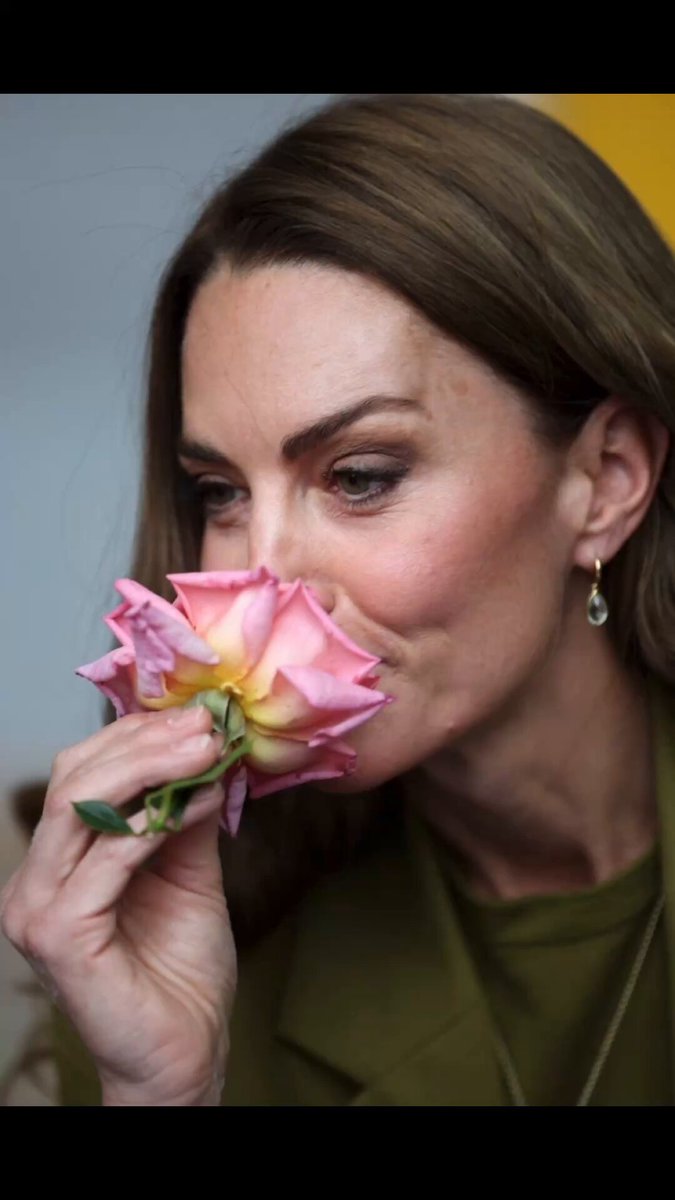
Catherine, the Princess of Wales A life shaped by character, and a quiet strength shaping the future of the monarchy. Today, on her 44th birthday, we celebrate Catherine, the Princess of Wales - a woman whose significance transcends headlines or fleeting trends. Her true importance lies in something rarer: character proven over time. From the start of her public life, Catherine endured intense scrutiny few could withstand. Watched, judged, and often misrepresented, she responded not with resentment or spectacle, but with restraint born of discernment. She listened, learned, and waited understanding that royal life demands service, endurance, and responsibility over self-expression. Her marriage to William reflects that same depth: tested under relentless pressure yet allowed to mature privately, it is now grounded in trust, shared values, and mutual respect. As parents to Prince George, Princess Charlotte, and Prince Louis, Catherine and William prioritise emotional security, raising children who are grounded, empathetic, and mindful of both privilege and duty. Her influence here is profound - shaping not through optics, but through heartfelt preparation for the monarchy’s future. Catherine’s greatest strength lies in her emotional discipline: a quiet mastery that absorbs criticism without defensiveness, lets baseless narratives fade untouched, and bears pressure with unwavering grace. In an era of outrage and retaliation, her restraint is true power choosing consistency over confrontation, patience over provocation, and dignity over demands for validation. She modernises through reliability, offering stability and reassurance where others chase relevance or attention. Rooted in authenticity rather than performance, she strengthens the institution without overshadowing it. This clarity shone brightest during her cancer experience. Choosing privacy to protect her children and focus on treatment, she spoke only when speculation left little choice- addressing the world with calm composure, no self-pity, and resolute dignity. Now in remission, her reflections this birthday on the healing power of nature remind us of her deepened gratitude for life itself. In a changing world defined by noise and self-promotion, Catherine embodies composure and service. These qualities do not trend, but they endure the quiet architecture of leadership. Resilient, relatable, and revolutionary in her understated way, she represents stability with heart. As we honour her today, Catherine’s story affirms that true royalty resides not in crowns, but in character. She is the epitome of dignified strength, a beacon for generations, and undoubtedly the heart of the monarchy’s future. Happy birthday, Your Royal Highness. May your light continue to shine. ✨♥️ 🎂

Queen Esther

13,768 views • 7 months ago

Tim Burton on why he chose to make 'Ed Wood' (1994): "Interviewer: Why did you chose Ed Wood as a character? Burton: The first film by him that I saw was 'Plan 9 From Outer Space' (1958). It had images I never forgot. Later he was elected ‘worst director of all time.’ How can someone be elected as the worst? There are so many bad filmmakers. I started reading about his life and about the bizarre characters that surrounded him, like Bela Lugosi. Wood was always positive, even in the worst circumstances. When you read his letters, you realize he thought he was making great films, he thought he was making 'Citizen Kane' (1941). In a letter from his final days, Wood wrote that he led a great life and made great pictures and in fact, he was abandoned and dying of alcoholism. That’s what fascinates me about that character. He was very weird. I think it would be easy to copy an image by Alfred Hitchcock, not with his mastery, but it is possible to imitate it. But copying an image by Ed Wood is so hard. His images were very weird. You don’t know how he did them. Wood was something more special than just bad (laughs). Interviewer: How decisive was the character of Bela Lugosi, since you had already celebrated another horror myth before, Vincent Price. Burton: Vincent was fundamental to my decision of making films. There was a resemblance between them, but the differences are striking. Vincent had a much more positive end. Bela got old taking morphine and drinking formaldehyde. Vincent was much less bitter about Hollywood. Interviewer: The film would initially be in color. Why did it turn out to be black and white? Burton: When we began doing the makeup tests with Martin Landau, me and makeup artist Rick Baker asked ourselves: what was the color of Bela Lugosi’s eyes? I never saw him and no one’s ever seen color images of Lugosi. Him, Vampira, Thor Johnson are black and white icons. It was such a simple decision, without any aesthetic pretension. It just seemed right. Interviewer: Filming in black and white doesn’t bring difficulties in Hollywood today? Burton: It is difficult, even if you’re fortunate and successful. It’s difficult to put up any project. I always thought it would become easier. I was wrong." ("‘Ed Wood’ at 31: Tim Burton’s Beautiful Ode to a Fascinating Filmmaker, From One Outsider to Another", Sven Mikulec, Cinephilia & Beyond, 2025)

DepressedBergman

115,845 views • 6 months ago

Relive your favorite RTS battles and earn real rewards as Cartoon Craft brings its iconic character roster to the Nebula3 GameFi ecosystem! Nebula3_GameFi has officially brought the RTS classic Cartoon Craft to the blockchain, merging nostalgic base-building with modern Web3 ownership In this vibrant cartoon world, players must balance resource management with tactical warfare Your journey starts with Workers, the backbone of your economy, who gather gold and lumber to fuel your expansion. As you construct barracks and specialized facilities, you’ll unlock a diverse roster of units: Frontline Warriors: Reliable Soldiers and Swordsmen lead the charge Ranged Support: Archers provide essential cover from a distance Heavy Hitters: Deploy massive Tanks and powerful Trolls to crush enemy defenses In Cartoon Craft, the peace is shattered as Humans and Orcs battle for survival in a world where resources are scarce and strategy is everything Your goal is to out-build and out-maneuver your rivals by managing a delicate economy of gold and lumber while raising an unstoppable cartoon army Whether you are leading a Human expansion or an Orcish conquest, victory requires crushing the enemy stronghold to claim absolute dominance over the territory On Nebula3, this classic struggle evolves into a quest for glory where every tactical triumph translates into digital legacy and rewards With its integration on Immutable, Cartoon Craft now offers a competitive edge where social quests and tactical mastery translate into real rewards

Armstrong 🗿

49,489 views • 7 months ago

In The Godfather, cinematographer Gordon Willis often lights Vito Corleone from above, shrouding his eyes in deep shadow. At times you can barely see his eyes, which makes him seem all the more dangerous. If the eyes are the window to the soul, this lighting makes Vito seem, in certain moments, almost soulless. This technique began as a practical necessity. Marlon Brando arrived on set with heavy makeup — jowl prosthetics and slicked hair — and the overhead lighting was designed to make that makeup look genuinely aged rather than theatrical. But what started as a practical solution quickly became the film’s defining visual signature, built on a radical idea: in The Godfather, what you can’t see is more powerful than what you can. In conventional Hollywood cinematography, fill lights are usually placed at eye level to keep the actor’s eyes bright and expressive, allowing the audience to read the subtlety of their performance. However, Willis refused this convention. Instead, he positioned light sources directly above the actors rather than in front of them, casting their faces into deep shadow from the brow down; turning their eyes into dark, unreadable voids that make these gangsters feel ominous and unknowable. He would often underexpose the image slightly, making the blacks in and around the characters feel richer and heavier. This mastery of deep shadow earned him the nickname “The Prince of Darkness.” However, where this technique becomes truly compelling is in the way Coppola and Willis used it to chart Michael Corleone’s character arc - his descent from clear‑eyed young war hero to ruthless mafia boss. (1/6)

Gangster Cinema Central

21,022 views • 1 month ago

It has been a month and y'all are not only hung up, but STILL misunderstanding the entire depth argument. Then enter my domain of fighting games for a comparison?? Let's break it down for Wuwa players as this is the last time I'm speaking on this, cause atp I'm just gonna assume it's some kind of mental illness. The pinnacle of skill, the HIGHEST form of mastery in Wuthering Waves, is solo Danjin. You're own community worships them as gods because you lack the skill to consistently react to a bosses moveset even if you already memorized it. Guess what you do as solo Danjin? Dodge and parry. That is the ONLY mechanic in the enitre game that matters. Everything else as you and myself have said is COMPLEXITY. Elements, kits, rotations, etc, DO NOT change how the game is played. You brought up SF to discredit my argument, using "press buttons and memorizing" as a defense. When ANYBODY in the FGC knows that just memorizing combos is easy af and is the skillfloor of almost every casual player, right next to SP spam. Yet in Wuthering Waves, it is worshipped as the most skillful thing in the game to memorize the enemy moves and beat them without being hit on a character that does the same attack string over and over. Corner pressure, meaty, hard knockdown, restand, jailing, mix-ups, wake ups, delays, resets, and many more terms are used in the FGC because there is SO much more depth than just "memorizing the combo" it is why many characters can go from F tier to S+ must pick by simply understanding how to abuse aspects of their kits to completely change how others would normally interact with them. The only people who genuinely think Wuwa is hard or "high skill" are people who lack skill in general which is why they only play gacha games designed to have flashy, piss easy combat to keep players from leaving so they spend more. And that goes for EVERY GACHA. You can beat EVERYTHING IN WUWA with 1 character if you just memorize the moves. You will beat 0 even slightly competent players in any fighting game if all you did was lab 3 or 4 combos. I encourage not just Wuwa, but gacha players to actually play other games before engaging in a conversation they can't even grasp that they start talking about a completely different subject.

💮Plume of Death💮

47,814 views • 8 months ago

DeMeco Ryans built an entirely new culture in Houston with one word: SWARM. But it's not just a word - it's an acronym. A simple, memorable, and a powerful way to emphasize what they're looking for. "Swarm mentality is just an acronym for I want to build my team with guys who have a special work ethic and a relentless mindset. And that's where the Swarm mentality came in." S.W.A.R.M. = Special Work Ethic And a Relentless Mindset "That's what the Texan culture will be about - swarming. It's attacking everything." But SWARM isn't just about defense. It's all-encompassing. "It involves teamwork. It involves togetherness. How you attack issues and problems - it's swarming this thing all together. How are you gonna attack a defense or offense? It's those 11 guys out there swarming together on the field." This is what culture looks like when it's built with intention: 1: Get the Right People - Culture starts with who you let in the building. Talent without character is a liability. Ryans' filter is simple: "If it's a guy and I got mixed reports on him...next." 2: Keep It Simple, Play Fast - Complexity doesn't win games. Mastery of the basics does. Your players can't play fast if they're thinking. Simplicity creates speed. 3: Coach The Details, Not The Outcome - Good players can have bad habits. Great coaches see past the result. "In big games...it's not the wow plays. It's who can be consistent, who can not screw it up the most." 4: Be Demanding Without Disrespecting - High standards don't require low respect. You can push hard without tearing down. "You can be demanding without being disrespectful." 5: Let Leaders Be Themselves - Leadership isn't one style. Quiet leaders lead by example. Loud leaders lead by voice. Both work. Ryans tells every player: "I want you to be yourself." Culture isn't a sign on the wall - it's what you emphasize, tolerate, and allow. Special Work Ethic. Relentless Mindset. That's SWARM and the Texans standard. (🎥Pat McAfee)

Coach AJ 🎯 Mental Fitness

69,617 views • 6 months ago

Welcome to the Farcana Playtest The gaming world is shifting. We’ve seen trends come and go. We’ve seen games simplify, casualize, and streamline. But at Farcana, we’ve stayed true to our mission: to build a competitive, ability-driven shooter with depth, precision, and strategy. Since 2022, we’ve been designing a game where every match matters, where teamwork, mastery, and mechanics come together to create something more than just a shooter. Look, we know you are tired of shooters that sacrifice skill for accessibility. Farcana fills that competitive gap between Valorant and CS, where your abilities matter, but your aim matters more. From March 20 to April 1, our early beta opens its doors. And this is what's waiting inside. We've packed this playtest with: • Twin Battlegrounds – Maps with purpose, not just pretty backdrops • Nine Stars – Heroes we've rebuilt from the ground up • Training Room – You asked, we built it • Refreshed Visuals – Thousands of iterations later • Founder Packs – First taste of our player economy, plus an AI companion Farcana: A Shooter Built for Depth The difference is in the details: • Abilities with actual tactical depth - blending TPS precision with hack-and-slash elements • Shooting that responds - our prediction system makes high-ping players competitive • Melee that hurts - not an afterthought like in Overwatch • Team economy over rigid roles - no forced tank-healer-damage trinity • Maps built for competition - with real thought about sightlines and engagement zones The Road Ahead This playtest lays groundwork. Coming soon: • Team ability combos - like Teacher's tornado becoming a firestorm with Sherwood's help • Character customization through our Aspect System • Multi-objective game modes that reward strategy, not just reflexes • Boost System - turning good plays into game-changing moments Why Now? With Marvel Rivals going casual, somebody needs to hold the line for competitive players. That's us. That's Farcana. We built Dizzaract because we believe gamers should shape the worlds they play in. Now, it's time to play your part. From March 20 to April 1, experience the future of TPS gaming, built on your feedback, your passion, and your skill. Drop by the Epic Games Store Store. Wishlist us. Let's show them what competitive TPS can be. -The Farcana Team 💫

FAR Labs

680,506 views • 1 year ago

Introducing the 10Ka Team 🤝 We've curated a team of exceptionally skilled individuals, each a trailblazer in their respective fields. Together, we possess all the necessary ingredients to realize our vision of becoming the premier project for digital fashion. Let's dive in 👇🏼 Diana Cañas: Breaking Barriers: Diana Cañas Leads the Way in NFT and Digital Fashion Empowerment. As the founder and CEO of 10ka NFT, Diana has taken the industry by storm, brilliantly combining her love for fashion with cutting-edge technologies like NFTs and NFCs. This unique fusion enables her to push the boundaries of the digital fashion realm. Ronin Studio: Ronin is a versatile creative studio specializing in corporate identity and character creation, along with UI/UX design. “Driven by a dedication to emerging trends and artistic/technological innovation, we draw inspiration from both the past and the future of design. Our approach is inherently disruptive, always encouraging us to think beyond conventional boundaries.” Tripton: We are a dynamic creative studio with expertise in 3D production, Visual Shows, and Virtual and Augmented Reality. “Fueled by a passion for pioneering technologies and groundbreaking ideas, we draw inspiration from eminent artists across advertising design, 3D animation, and the broader audiovisual realm.” Virtuozo: Virtuozo is a studio renowned for crafting immersive 3D worlds and captivating virtual experiences. At the helm is our lead 3D generalist, a virtuoso in every sense of the word. With mastery over the craft, he meticulously crafts realistic and aesthetically pleasing 3D models, textures, and animations using state-of-the-art technology. Cristian Torrijos: Blockchain Developer (Solidity, Smart Contracts, Web3) and expert in PHP, MySQL, and ReactJS. “Specializing in the development of Web3 and Web2 projects, we ensure the quality and longevity of our creations, delivering projects that are not only innovative but also enduring.” Domi Vakero: Digital Artist from the South of Spain proficient in 2D, 3D, and AI. With extensive expertise in the illustration and modeling of both 2D and 3D characters, we bring visions to life with creativity and precision. This is just some of the extensive team behind 10KA. We are dedicated to building & becoming one of the leading projects on Ethereum 🫡

10KA👟

39,253 views • 2 years ago

In the countless iconic moments of “Roman Holiday” (1953), there is one fleeting detail that quietly surpasses them all. In the final press conference, Princess Ann is asked which city she has loved most during her tour. Before replying, she pauses. Her gaze drifts, ever so briefly, towards Joe Bradley. Only then does she smile and answer: “Rome. Definitely Rome.” The entire moment lasts mere seconds. Yet it has become one of the most enduring and cherished endings in the history of classic cinema. The real question is not why this scene moves audiences so deeply, but why such a tiny glance can carry such profound emotional power. The answer lies in a sequence of layers that descend from the surface of cinema to the very depths of human nature. The first layer is cinematic technique itself. A pause. A glance. A reply. Director William Wyler entirely avoids any overt display of emotion. There is no declaration of love, no tearful embrace, no sobbing. Audrey Hepburn performs almost entirely through silence. The camera does not force emotion upon the viewer; it merely observes with quiet restraint. Precisely because everything is held in check to the utmost degree, that single brief glance becomes the emotional centre of the entire scene. Yet the glance is only the outward expression of something far deeper. Why does Ann look at Joe before answering? Not because she has forgotten the answer. Nor merely to confirm their love. What Ann truly accomplishes in that instant is to complete the final farewell that neither of them can put into words. It is the last time they will look upon each other. The last time they acknowledge that the days they shared were real, beautiful, and now belong forever to the past. Only after silently accepting that truth can Ann continue forward in her role as princess. Thus the glance is not the cause of the emotion; it is merely the visible sign of an invisible decision within her heart. It is the decision to return to the path that duty has laid before her. But this leads to a still deeper question. Why does that decision resonate so powerfully with audiences? Because the scene touches one of the most fundamental human needs. Human beings long to be loved, to belong, and to find a place where their lives hold meaning. At the same time, as we mature, we all face moments when not everything that is good can be kept. Sometimes two precious things conflict, and to hold one means having to release the other. Audiences recognise this experience long before they can analyse it with reason. Many have faced choices in which the heart wished to go one way, yet responsibility, family, conscience or duty led them another. Roman Holiday gives this universal experience a concrete and unforgettable form. Yet the film reaches even deeper than psychology. The power of the scene does not lie in the sadness of separation. It lies in the beauty of voluntary sacrifice. Neither character is defeated. Neither is coerced. Ann freely forgoes her personal happiness in order to fulfil her duty as a princess. Joe freely abandons a scoop that could have transformed his career in order to protect Ann’s honour and dignity. What makes them noble is not that they obtained what they desired, but that they willingly relinquished what they loved most in order to preserve what they believed to be right. That is the moral centre of the entire film. On a deeper philosophical level, Roman Holiday reflects an ideal long cherished in traditional human culture. The nobility of a person is measured not only by how far they can pursue personal happiness, but also by their capacity for self-mastery, loyalty to duty, preservation of honour, and placing the common good above private desire. Thus the film does not portray sacrifice as failure. It portrays sacrifice as the elevation of character. The final glance between Ann and Joe is beautiful because it preserves both love and dignity. Neither destroys the other. There remains, however, one final layer of meaning that some viewers may sense. Many traditions of spiritual cultivation and thought hold that within every human being there exists a higher moral nature — a part oriented towards selflessness, compassion, truthfulness and goodness, rising above selfish immediate desires. Different traditions name this nature differently: some call it the Divine Nature, others the Buddha Nature, while still others simply regard it as the noblest aspect of human character. Viewed through this lens, Ann’s choice is not merely the performance of duty. It is the expression of that noble nature. She places her family, her nation, and the people she is responsible for serving above her own happiness. This is not only responsibility. It is also altruism. In many traditions of cultivation, such choices are seen as bringing a person closer to the truth of the universe. When human beings rise above selfishness, release their attachments to personal gain, and live in accordance with their innate goodness, they are gradually returning to their original true nature. Some traditions call this “returning to the origin and restoring the fundamental.” Others describe it as returning to the Creator or to Heaven — understood as the ultimate source of life. Whether or not viewers share this spiritual interpretation, it helps explain why the ending of Roman Holiday has retained its power across generations. For in the end, the film is not merely about a princess who loses her love. Nor is it simply about the choice between love and duty. It touches something far deeper in human nature: A person becomes most noble not when they obtain everything they desire, but when they voluntarily choose goodness over selfishness, responsibility over fleeting desire, and sacrificial love over possession. That final glance is merely what we see. Behind the glance lies farewell. Behind the farewell lies voluntary sacrifice. Behind the sacrifice lies the aspiration to live in accordance with the noblest part of oneself. And because Roman Holiday reaches this profound depth of human nature, a single glance lasting only a few seconds has been enough to move audiences around the world for more than seventy years.

𝗖𝗹𝗮𝘀𝘀𝗶𝗰𝗮𝗹 𝗠𝗲𝗹𝗼𝗱𝗶𝗲𝘀

39,633 views • 1 month ago