正在加载视频...

视频加载失败

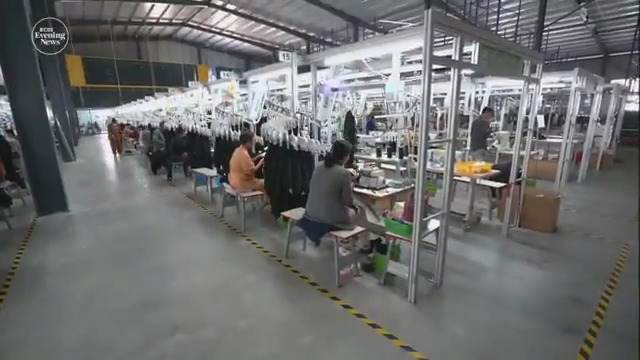
Chinese EVs are surging overseas, but concerns that the connected vehicles could collect data and send it back to China are raising security alarms. Steve Harrigan gets a firsthand look inside one of China's massive EV factories, where highly automated assembly lines are producing cars ranging from roughly $10,000...

125,827 次观看 • 5 天前 •via X (Twitter)

10 条评论

mark 的头像
mark5 天前

Hey maga dummys, be sure to download trump tv app, it won't do that

🇲🇦Siiir🇲🇦 E+-p 的头像
🇲🇦Siiir🇲🇦 E+-p5 天前

iran terrorism promoted in algeria they holded a meeting disccsing terror plans and djihad🤮when will america sanction this djihadit radical regimes algeria and iran are promoting same agenda they need to be bombed for real

mark 的头像
mark5 天前

hey maga morons, Trump and Musk (doge) gave Palintir all of your personal details, they literally know everything about you. how do you feel about that?

Raja Umar 的头像
Raja Umar5 天前

Terrible

Frankie 的头像
Frankie5 天前

The president said the he would lower the price of gas but he started a war instead. Many people will probrably buy a EV to save money.

Jasper 🇺🇸 🇮🇱 🇬🇧 的头像
Jasper 🇺🇸 🇮🇱 🇬🇧5 天前

Keep the market overseas. Never allow them to be sold in America, no matter where they are manufactured.

Patricia Larry 的头像
Patricia Larry5 天前

This is a very serious problem that must be completely eradicated.

FluxLedger 的头像
FluxLedger5 天前

An EV isn’t just a car anymore — it’s a connected data device on wheels. The real question is: who controls the data when foreign-made vehicles become part of critical infrastructure?

Elara Rose🔥XFireGo・星火 的头像
Elara Rose🔥XFireGo・星火5 天前

💰💰

Brian 的头像
Brian5 天前

Lmao if China wants to know how often I go to Aldi, let them.
相关视频

Dr. Mike Yeadon: The Real Agenda Behind the EV Mandate—It’s Not About the Environment The push for electric vehicles (EVs) has nothing to do with saving the planet and everything to do with dismantling the automotive industry as we know it. According to Dr. Mike Yeadon, modern internal combustion engine (ICE) cars are already so clean that their exhaust is purer than the air in many cities. Thanks to catalytic converters, nitric oxide converters, computer-controlled fuel injection, and stop-start technology, today’s petrol and diesel vehicles emit almost no detectable pollution. Gone are the days of choking fumes and stinging eyes—yet governments are still forcing a transition to EVs under the guise of environmentalism. The truth? The EV mandate is a deliberate attack on mass manufacturing. Automakers like Volkswagen, Audi, and Ford are being squeezed from both sides: fined £15,000 per car if they don’t meet escalating EV sales quotas, while simultaneously facing unbeatable competition from subsidized Chinese imports. With 180 Chinese EV manufacturers—most operating at a loss—it’s clear that someone is willing to spend hundreds of billions to flood the market with cheap EVs, undercutting European and American brands. The result? Bankruptcy for legacy automakers. By restricting petrol and diesel sales while making EVs financially unsustainable, the system ensures that fewer cars will be available overall. The endgame isn’t just to force people into EVs—it’s to eliminate private car ownership entirely. By the end of this decade, only a handful of Chinese EV makers may remain profitable. The rest will collapse, leaving the West dependent on a controlled, limited supply of vehicles. The mandate won’t even need to be enforced—there simply won’t be enough cars to go around. This isn’t about emissions. It’s about control.

Camus

54,856 次观看 • 10 个月前

CBS Sunday Morning went to a London auto showroom and interviewed British car owners, traditional dealers and industry experts about the rise of Chinese EVs in Europe. What they found quietly destroys a lot of American mythology. British car owner Justin Watson is replacing his Lexus with a BYD. He described the ride as “like sitting on a throne” and said its technology, comfort and handling surpassed anything he had driven before. His conclusion was blunt: The era of “cheap Chinese cars don’t last” is over. A London dealer with more than 50 years in the business, long associated with Volkswagen, said he never imagined he would one day sell Chinese cars. Then he saw the quality, the technology and the sales growth. He changed his mind. Ben Nelmes of New Automotive explained why. Chinese EV makers now hold major advantages across batteries, supply chains and manufacturing integration. BYD started with batteries and built upward, controlling far more of its own production chain and allowing it to make cars at least 25% cheaper than Western competitors. And the technology is no longer “cheap imitation.” Chinese EVs are producing the things Western social media keeps going viral over: 360-degree tank turns. Emergency floating capability. Ultra-long range. Charging from 10% to 70% in minutes. The old stereotype of “Made in China = cheap and inferior” is collapsing in real time. Then comes the American part. The Biden administration imposed a 100% tariff on Chinese EVs. Trump kept the wall in place. In practical terms, Chinese EVs are shut out of the U.S. market. When CBS asked whether that protects American jobs, Nelmes gave the more uncomfortable answer: protectionism may protect jobs in the short term, but over time it kills competition, slows innovation, weakens consumer choice and leaves domestic automakers sheltered from the very future they are supposed to compete in. If the future of cars is electric, then blocking the world’s strongest EV competitors does not prepare American automakers for that future. It protects them from it. The irony gets worse. Before the segment ended, the British owner laughed that he had relatives in New Jersey who were “absolutely jealous” that he could drive such a good Chinese car. And here is the fact protectionists cannot explain away: BYD is effectively shut out of the U.S. market behind a 100% tariff wall, while Tesla is allowed to sell normally in China. And BYD still became the world’s top-selling battery-electric vehicle maker. China did not need to ban Tesla to compete with it. It let Tesla enter. Build locally. Sell freely. Fight for Chinese consumers. The United States looked at BYD and chose a wall. Yet even without access to the American market, BYD still outsold Tesla globally. That says more about competitiveness than a thousand speeches about “fair competition.” If your company needs its biggest rival excluded from your home market while that rival beats you everywhere else, you are not defending competitiveness. You are hiding from it.

𝘊𝘰𝘳𝘳𝘪𝘯𝘦

15,864 次观看 • 1 个月前