Loading video...

Video Failed to Load

Go Home

Christopher Nolan talks about the video message scene in Interstellar: “It was always the north star of the film, this beautiful sequence ... We filmed McConaughey’s reaction first ... he hadn’t seen the video messages, we’d filmed them all in advance, so that everything would be there in the...

790,834 views • 10 months ago •via X (Twitter)

0 Comments

No comments available

Comments from the original post will appear here

Related Videos

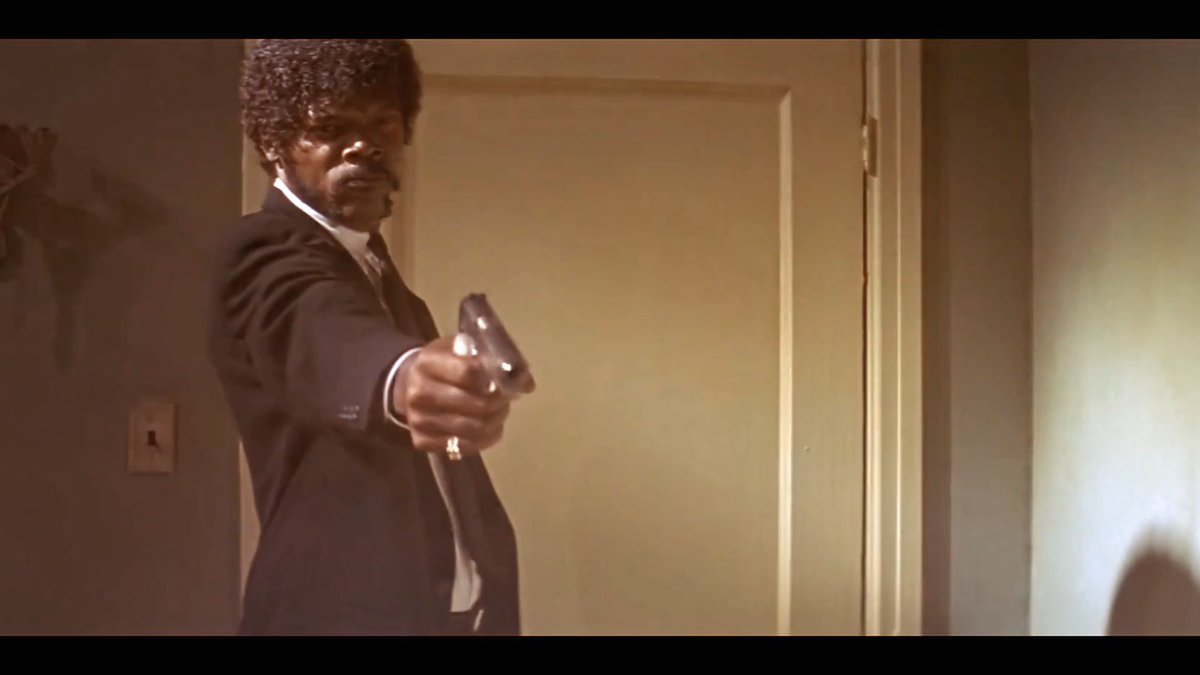
Samuel L. Jackson explains how he landed the role of Jules in Pulp Fiction, and what it was like seeing the film for the first time on the big screen: “Pulp Fiction and I came together in a very strange kind of way. I remember auditioning for Quentin for Reservoir Dogs in New York (for the role of of Detective Jim Holdaway, Mr. Orange’s police contact). And apparently I didn't get that role. But I was at Sundance the year that he screened it for the first time. I was sitting there and I watched that movie - I was awed by it. I mean, there were people running up the aisles when Michael Madsen was cutting the cop's ear off. People were going, "Oh my God, this is horrible!" All these “auteurs” were running out of the theatre. I was like, "This is good. This is happening. This is different." So after the film, I walked up to Quentin and said, "This film's amazing, man. It's great." And he looked at me and said, "Hey! How'd you like the guy who got your part?" And I was amazed that he even remembered who I was - but he remembered me. A year or so later, I got a phone call saying Quentin Tarantino wants to have dinner with you, because he'd seen Jungle Fever and he liked that Gator character. When we had dinner, we were sitting there talking. We started talking about Hong Kong films and cartoons and foreign movies and obscure things that we watched, horror movies. We found out we liked the same kind of stuff. And he told me he was writing this thing, and he was writing this part with me in mind. He was going to send it to me. I went off to do another film. I was in the backwoods of Virginia somewhere doing a film, and the script came. A little plain brown wrapper from Jersey Films. And Jersey's got these gangster images on the logo. And it said, "If you show this script to anybody, two guys named Ernie and Luigi will come and break both of your legs." Whatever. I went, "Yeah, right." So I sat down and read it. Boom. I read this thing. It's like, "Oh my God. This is awesome." And then I said to myself, "Nobody writes a script this good. There's no way that this script is as good as I thought it was." I closed it. I opened it again. I read it immediately. Okay. This is great - If whoever produces this film lets him shoot exactly what I just read, if they stay away from it, they don't try to edit any of this stuff out - this is going to be a great film. It's going to be kind of audience-specific, because I like that kind of stuff. I have friends that I knew would like it. It was a generational kind of film. I never thought it would cross over and do all this stuff. We shot it. We had a great time doing it. And the first time I actually saw the film was at the Cannes Film Festival. That night, it screened, and I was sitting there watching the film. The audience was loving this movie, loving it. About halfway through, I realized there were subtitles at the bottom of it. So I said, "Hey, these people are reading it, and they're getting it. This might be special. This really might be something special." And actually, by the time it was over, there were tears running down my face. I was just so pleased that I was part of that particular film… I never felt that satisfied, and that kind of full about a performance and about being part of something as I was in that particular moment.” Quote comes from an Interview with the American Film Institute 2010

Gangster Cinema Central

85,366 views • 1 month ago

Christopher Nolan interviewing Michael Mann, Al Pacino and Robert De Niro on the iconic coffee shop meeting in Heat... Nolan: So for all three of you, I mean, one of the great and memorable scenes in the film - there are many - but the iconic coffee shop meeting that people were so struck by when the film came out, seeing two such great actors who had not acted in the same scene together before, together. There was such mythology around it at the time. I remember several friends of mine being convinced that you'd shot it on different days because there was no two-shot… (Michael Mann laughs) Nolan: Was it single camera? Was it two cameras? Did you have two cameras so you could shoot both close-ups at the same time? How did you approach that momentous event? Mann: It started with this consummate respect for the great artists that these two guys are. We talked about the scene and we analysed the scene… We didn't want to do the scene until we were at Cape Mandelini's. And then it was so ingrained that I knew that in all the little tiny organic details it would be different from take to take. So what I wanted to do was shoot with two cameras, two over the shoulders – I knew that there would be an organic unity to one take, and it would be a slightly different organic unity to another; because if you look at it very carefully, if Bob shifts his hand like this a little bit, right in the middle of dialogue, Al is doing something to counter it - because maybe he's shifting his positions so he can get closer to a weapon… Nolan: What do you remember about that shoot? Pacino: I do remember that Bob said – at first I wondered about it and then I thought how right he is – he said, “let’s not rehearse it.” Nolan: Because you love to rehearse. Pacino: Oh yeah. And Bob does too. De Niro: No, I do too at times, but this kind of scene we didn't have to. Pacino: But the thing is, what Bob said is so true about rehearsal – and that is that there is no sense in rehearsing if the people around you don't know how to rehearse. That is an important factor. Might as well not rehearse or rehearse very little. But it's true because it's a certain kind of thing and people either respond to it or they don't. And so, they could be great actors, of course, but they don't want to rehearse. I've had experiences like that… De Niro: Well, it was also that we were stationary. So, it wasn't we had to sort of rehearse blocking or anything and discover how our physical moves would be. We were kind of, there, though there were subtle moves in the scene itself, obviously. But anyway, and we started late and.... we didn't start till after lunch or dinner, which was really like one o'clock in the morning...I loved the scene and I wanted, you know, really wanted it to be as best as it could be. So I was a little unhappy that we started so late in the middle of the night... Mann: It was actually intentional... De Niro: I know, he wanted to tire us out. Nolan: But getting into a scene like that, that you know is going to be such a significant part of the film, huge expectation from both of you as you sit down to perform it. At the end of that night, did you know you had it? Did you feel it? Pacino: I never knew that. De Niro: You never know that. Mann: I knew we had it. Nolan: You knew. That's your job. Pacino: I'd like to do it again actually. Mann: (laughs) We’ll re-shoot it… We normally would rehearse scenes. That scene we talked about, we all as a group decided, you know, we wanted to just talk it through and save it for the event of shooting it, which was the only scene we probably did that with. But I tend to not want to rehearse things to the point where I feel like I wish I'd shot it. That's a disaster – I think things will be perfect once, and they'll never be perfect. They'll never be 100% twice. They'll only be 100% once. You want that happening in front of the camera. From a panel discussion following a special screening of Heat at the Samuel Goldwyn Theater on September 7, 2016.

Gangster Cinema Central

36,682 views • 2 months ago

Will Ferrell says the iconic Anchorman news team fight was his favorite scene to film, revealing it was shot in 100-degree heat in just one day and captured the absurd comedy that defined the movie. “One of my favorite scenes in the movie. It’s such an incredible joke bag. Before we get into the fight, Brick Tamland, played by Steve Carell, is holding a grenade. We don’t know how he got ahold of it. There is a man on fire, there is someone being dragged by a net by horseback, which is kind of an homage to early Planet of the Apes.” “I think it’s something like 30 to 35 different setups, with two units, a stunt unit working at the same time as the main film unit in downtown LA in the middle of July. And I think it was 100 degrees that day.” “And we only had the one day to complete all that. And it’s probably a scene that should have taken three days to shoot. So silly, so absurdist. I think it is really one of the touchstone moments that defines the tone of Anchorman.” “I think Adam and I wanted to create this film where we got to indulge every comedy idea we ever had and follow it all the way through without someone telling us, “No, that scene’s too long,” “No one would ever do that,” “That doesn’t make sense.” We just wanted it to be like, it may not make sense, but it’s just funny.” “I think when people saw that film, they were like, “This feels like someone gave you the keys to a car and you’re 5 years old and you don’t know how to drive.” No one wanted to make it, no one understood why this would be funny. We just felt like we were playing with the house’s money, and let’s just make the craziest film we can, because we may never be allowed to make another movie ever again.”

Ruzy.hl

60,046 views • 19 days ago

The Lyrics of Imperfect Mew : Every moment in the song is based on a true story. 🗣️: Can you share some of it with us? Mew : Looking at the lyrics, the first verse starts from the moment of waking up. I wrote it when we were on a cruise, we went to the Caribbean together. The image of sunlight shining on his face, that messy, bedhead look right after waking up... just how incredibly cute he was 😆 Mew : The next verse talks about things we’ve experienced together, such as when we went traveling and missed a train. When we look back on it now, it’s actually funny. Or when it suddenly started raining and we didn’t have an umbrella, so we had to take off a shirt and cover ourselves. In those moments, the imperfection somehow became perfect for us. 🗣️: So this is all based on a true story? Mew: All of it is real. 🗣️: Not a scene from a series? 😂 Mew: No, it really happened. The train incident happened in Munich. Usually, he’s the one who checks the schedule. Like, where to go, which platform and what time. But that day, it looked like he read it wrong, so we rushed because we thought we were going to miss it. But actually, he didn’t read it wrong, the train changed platforms. We had to go to another one. It was funny. No one was at fault… the platform was the one that was wrong 😂 Mew : When I told him which moments behind the song, he related to it so much. He listens to it every night now. He probably knows the lyrics better than I do 😂 Mew : Usually when I write a song, I let him listen to it first. He relates to this one so deeply that he especially loves it.

💞

20,628 views • 5 months ago

Quentin Tarantino recounts a dinner with Robert De Niro during the making of Jackie Brown, where he asked him whether he understood when he landed the role of Vito in The Godfather Part II, that it would change his life. De Niro’s answer revealed a great deal about his mindset at the time. “I was working with Robert De Niro on Jackie brown, and we went out to dinner once. - When he got Vito in the Godfather Part II, that was going to be a big thing for him. He won the Oscar for it - it set him up to be a movie star. So I asked him - and I've asked this to quite a few actors when it comes to when they got the role that would end up changing their career - did he realize that the moment when he got the role, that it would have this sort of effect? And he goes oh, “I tried not to let it do that. I tried not to think about that” I go, "really? and why did you try not to think about that?" “Well because I’ve seen it happen and then go the other way” And then he used an example. “There was this guy, he was a young actor, and he was part of our crowd in New York. He'd been doing okay, but we were all in the same boat. Then all of a sudden he got a lead role. He's one of the two leads in a brand new movie by a director who had just done a smash hit.” And he's talking about Larry Pierce (the director) and uh... Goodbye Columbus. ”And he started dining out on it. And all of a sudden I go to the places that we used to go to, and now he's there and everyone's kind of revolving around him. He's kind of holding court. He's not doing anything bad; he's just arisen in the way that none of us have - and we're all treating him different. Then the movie comes out; nobody likes it - The movie comes out, and it goes away, and he's exactly in the same place he was. And I just wanted to make sure that that would never happen to me because I watched it happen to him.” Quote from Video Archives Podcast, sourced from James Whale Bake Sale YouTube channel. Clip below from the Godfather Part II (1974)

Gangster Cinema Central

97,458 views • 3 months ago

One of the things that makes the ending of Heat so powerful is its music—Moby's "God Moving Over the Face of the Waters." At the time, Moby was relatively unknown, yet Michael Mann somehow discovered the obscure track and decided it was perfect for the final scene. Moby explains: “Let’s get in our little time machine and go back to 1994. I was part of the rave scene, and I was making my first album, Everything Is Wrong. One of the songs—in fact, the last song on the album—that I was desperate to include was "God Moving Over the Face of the Waters." It could arguably be the strangest song ever included on what was supposed to be a dance album. There are no drums and nothing overtly electronic about it. When I was working on it and mixing it, I fell in love with it almost more than anything I’d ever done. So I put it on the album, and it sat there at the end, largely ignored. But somehow, and I still don’t know how, Michael Mann heard it and wanted to use it in this movie he was working on called Heat, with Al Pacino, Robert De Niro, Val Kilmer, on and on and on. This real movie. I was baffled. How does Michael Mann know who I am? How does Michael Mann know about this piece of music? But I said yes, of course. It was such an amazing opportunity. This major Hollywood director knew who I was and wanted to use my music. They flew me to Los Angeles and put me in a professional studio to tailor “God Moving” to the closing scene of the film. Until then, I had only ever worked in my homemade studio in an abandoned loft building in New York… One of the most terrifying professional moments of my life came when someone told me, “Michael Mann wants to talk to you.” And I was like, “Can’t he just leave me alone? I’m terrified. I don’t want to talk to humans.” I thought, “Okay, Michael Mann is going to call me, and it’s going to be scary, but I can deal with it because I’m a big boy.” The phone rang, I picked it up, and Michael Mann talked for about 45 minutes. He talked about archetypes within the film, classical narrative elements and tropes. It was like he gave me this masterclass in what Heat was about, and then just hung up the phone. And then it came out, and to hear the music that I’d made against this phenomenal, beautiful scene—it really was special. I’m thrilled that, 30 years later, people are still discovering the film and “God Moving Over the Face of the Waters.” Spoiler warning: The clip below contains the ending of Heat. If you haven't seen the film, don't watch past the first 30 seconds. The music doesn't begin until about a minute into the scene.

Gangster Cinema Central

27,798 views • 12 days ago

David Lynch on using Roy Orbison's "In Dreams" in Blue Velvet (1986), and Roy Orbison's reaction to the film: Chris Rodley: "I’ve always assumed that ‘In Dreams’ was conceived as an integral part of the movie from the beginning. It seems conceptually essential to the story’s intentions and mood. Is that true?" Lynch: "‘In Dreams’ came about while we were in production for Blue Velvet. Kyle MacLachlan and I were on our way down to Wilmington, North Carolina, from New York City. We were going through Central Park on our way to the airport when over the cab’s radio came ‘Crying’ by Roy Orbison, and I’m listening to this song and I said, ‘That! I’ve got to get that for Blue Velvet. When I got to Wilmington I sent somebody out to get Roy Orbison’s greatest hits. I played ‘Crying’ and then I played ‘In Dreams’, and as soon as I did, I forgot ‘Crying’. ‘In Dreams’ explained to me so much of what the film was all about. I immediately called Dennis Hopper and told him about the scene I had in mind and that he had to memorize this song. Dennis and Dean Stockwell are old friends. Dean got together with Dennis to help him work out the song and memorize the lyrics. I wonder why! [Laughs.] So we finally got to the day we were going to shoot the scene in Ben’s apartment where Dennis was going to sing the song. We were rehearsing and Dean said, ‘I’ll stand here and kind of help Dennis if he needs it.’ So we started playing the music and both Dennis and Dean began to sing ‘In Dreams’. All of a sudden Dennis stops singing and looks at Dean — who’s continuing to sing. Dennis is solidly in character and he is moved by Dean’s (Ben’s) singing. There was the scene in front of me. It was so perfect. Once it was decided Dean would be singing ‘In Dreams’, another strange thing happened. I was going to use a small candle-style table lamp as the microphone. Dean knew the microphone was going to be a lamp of some sort and when he went over to the area of Ben’s apartment where we were going to set the song, thinking he saw the prop light, he picked up a work light that was hanging on a nail on the wall. He turned it on and flipped the long cord like a microphone cord and obviously it couldn’t have been more perfect. The strange thing is no one on the crew put that work light there. No one knew where it came from. Who can say how it happens?" Rodley: "The use of ‘In Dreams’ in that scene revived Roy Orbison’s career, but what did he think of the movie and the use of his music in it?" Lynch: "When Roy first saw the movie he didn’t like it. His song ‘In Dreams’ meant another whole thing to him, and it was, like, a precious thing. I think some people he respected must have gotten him to see the movie again and reconsider his feelings. Roy told me that when he saw the movie the second time, he got past what the song was for him and then could appreciate the fact that it was working in another way." — "Lynch on Lynch" (1997), edited by Chris Rodley

RadiantFilm

96,565 views • 6 months ago