Video yükleniyor...

Video Yüklenemedi

Ana Sayfaya Dön

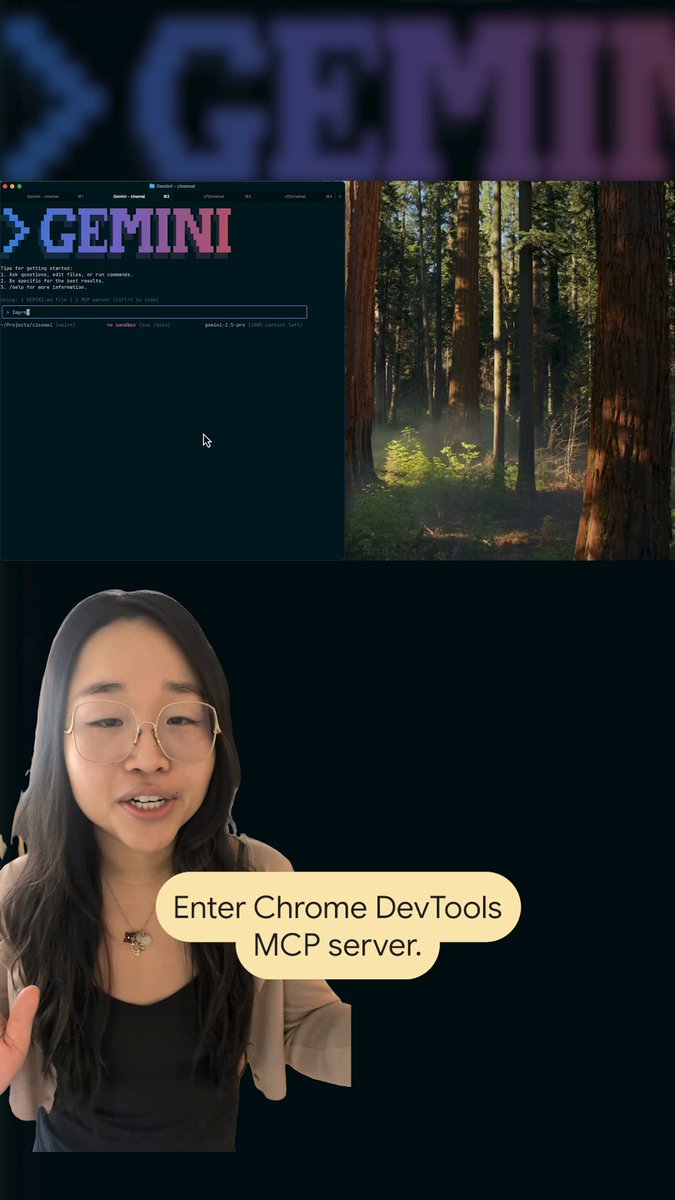
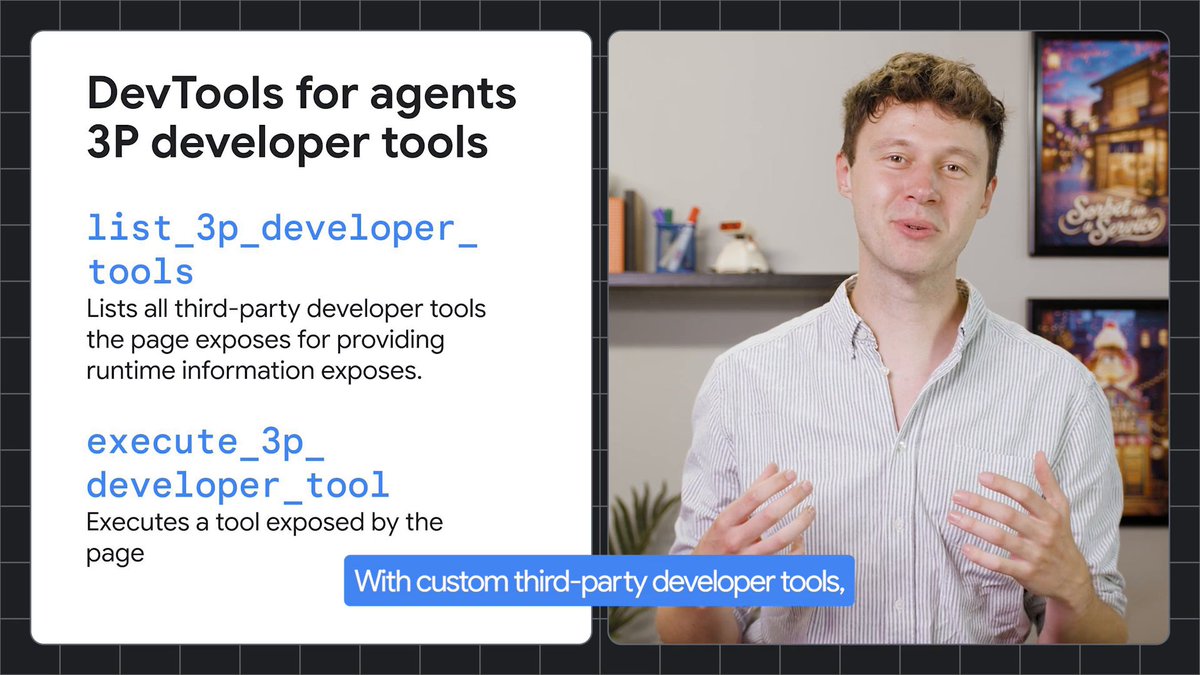
🛠️ Chrome DevTools for agents now supports third-party developer tools → See how the Angular team integrated runtime graphs: 📈 Signal Graph visualization 🔌 Dependency Injection graph 🎯 Precise error tracing

14,653 görüntüleme • 1 ay önce •via X (Twitter)

0 Yorum

Yorum bulunmuyor

Orijinal gönderinin yorumları burada görünecek

Benzer Videolar

Everyone wants agent swarms. Very few people are talking seriously enough about the context layer that makes swarms useful. Even with one agent, context is fragile. Too little context and the agent guesses. Too much context and it wastes tokens, loses focus, or reasons over irrelevant noise. The sweet spot is precise context: the right knowledge, in the right structure, at the right moment. With many agents, that challenge explodes. Each agent produces decisions, assumptions, findings, summaries, risks, and partial conclusions. Unless that knowledge becomes shared, structured, and reusable, every new agent is forced to rediscover what another agent already learned. That is not a swarm. That is a crowd. Shared context graphs are what turn agent activity into agent collaboration, and OriginTrail DKG V10 brings them to life. Was just playing with some final polishing for the V10 release, and it is really powerful to see shared context graphs where multiple agents contribute knowledge into the same connected memory, with attribution visible directly in the graph ui. That matters for three reasons. First, agents can access and build on one shared memory instead of staying trapped in isolated sessions. Second, the graph structure helps them retrieve the exact context they need, instead of stuffing everything into a prompt and hoping the model sorts it out. Third, verifiability of provenance. You can see which agent contributed each piece of knowledge, trace the source, and decide what to trust. Tokenmaxxing starts with fewer tokens, but the deeper story is coordination - agents stop reloading the world and start building on shared, verifiable context. That is the foundation for serious multi-agent work across software engineering, research, finance, operations, project management, and far beyond. The future is not more agents, it is agents working from shared, verifiable context. But the more the merrier, of course.

Jurij Skornik

11,180 görüntüleme • 3 ay önce

Agents have reached hardware. We are launching Flow v3, the Agentic Platform for Physical Engineering. We've spent over a year building it in secret, alongside the best hardware companies and AI research labs. An agent can now do real engineering work: change a requirement, push the update into your CAD and simulation tools, and flag every test that needs to rerun. Iterations/learning cycles that took months are being reduced to days. Agents are the biggest shift in how we engineer hardware since CAD. The core innovation for the CAD era was the parametric model. The core innovation for the Agentic Era is Flow's Systems Graph. The systems graph is a living model of every requirement, design model, test, analysis and every connection between them. It gives every agent the full context of the system, so every change stays consistent across the whole design. Engineers and agents work side by side on the same system. Engineers get to focus on architecture - the decisions that matter -while thousands of agents churn through rewriting reports, rerunning analysis and simulation, and triggering tests. Reusable rockets, self-driving cars, small modular reactors, robots that make decisions, the most complex machines ever built, are defined by millions of interconnected requirements, far beyond what any human team can keep aligned on its own. Rivian, Joby, Astranis, Skydio, Radiant, and the most ambitious hardware programs already build on Flow. More on the launch in the comments. Flow Engineering

Pari Singh

39,750 görüntüleme • 2 ay önce

OpenAI’s hottest app isn’t ChatGPT—it’s Codex. In the last few weeks alone, the Codex team shipped a desktop app, GPT-5.3 Codex (a new flagship model), and Spark, the fastest coding model I’ve ever used. Usage has grown fivefold since January and over a million people now use Codex weekly. Codex was also the app that OpenAI chose to run an ad for in the Super Bowl. I talked to Thibault (Tibo), head of Codex, and Andrew (Andrew Ambrosino), a member of technical staff who built the Codex app, for Every 📧’s AI & I about what OpenAI is building and how they’re using it internally. We get into: - Why they built a GUI instead of a terminal. Terminals work for quick tasks, they say, but feel limiting when you’re running multiple agents in parallel. The IDE, meanwhile, overwhelms users—and the Codex team wants the AI to dynamically decide which tools to show you for a given task. - How they’re teaching the model to read between the lines. Codex is great at following instructions, but optimize too hard in that direction, and it starts taking you literally—like copying a typo directly into the code. The team obsesses over this tradeoff, and is also introducing “personalities,” modes users can toggle between that control how blunt or supportive the model feels. - How OpenAI uses its own coding agent. Codex lets you schedule prompts to run on a recurring basis, and the team has dozens of automations running at all times. For example, one scans for merge conflicts every couple of hours so code is always ready to ship, and another picks a random file from the codebase multiple times a day and hunts for bugs no one would've gone looking for. - Why speed is a dimension of intelligence. OpenAI’s newest model (Spark) is so fast that they actually slow it down so you can read the output. They see the speed enabling three things: staying super in the flow, replacing brittle developer tools with intelligent ones that can adapt on the fly, and redirecting the model mid-task— especially with voice—so coding starts to feel more and more like a conversation. - Code review is the next bottleneck. Models can generate code faster than ever, but someone still has to verify that it works. The team is exploring a future where the model proves its own fix works—retracing the click path a user would take, screenshotting the results, and attaching the evidence to a pull request. This is a must-watch for anyone who uses AI coding agents—and is curious about the future of programming. Watch below! Timestamps: Introduction: 00:01:27 OpenAI’s evolving bet on its coding agent: 00:05:27 The choice to invest in a GUI (over a terminal): 00:09:42 The AI workflows that the Codex team relies on to ship: 00:20:38 Teaching Codex how to read between the lines: 00:26:45 Building affordances for a lightening fast model: 00:28:45 Why speed is a dimension of intelligence: 00:33:15 Code review is the next bottleneck for coding agents: 00:36:30 How the Codex team positions against the competition: 00:41:24

Dan Shipper 📧

15,588 görüntüleme • 6 ay önce

Anthropic's Claude Ai Agents Team just Educated how to build production AI agents in under 30 mins. For Free. From the engineers who built the stack. CANCEL Your Weekend Plans, and Learn to Build AI Agents Today. Bookmark it. Watch it. Build your first production agent this weekend. $5,000/month. $7,000/month. $12,000/month. People are building agents for clients and charging $$$ as Beginners. You're still stuck in the thinking about AI phase. This video fixes that tonight. Follow Himanshu Kumar for more high-signal content that actually moves your AI engineering career forward. ↓ Ivan Nardini runs Developer Relations for AI at Google Cloud. He just gave away the entire production agent stack in 30 minutes. This is the talk that separates people deploying AI agents that actually scale from people whose agents break the moment they leave localhost. Here's everything inside. I break down a production AI video like this every week. Follow Himanshu Kumar. ↓ The 4-part agent stack that actually scales. Most devs are duct-taping frameworks together and calling it an "AI agent." Ivan lays out the real stack: Agent Development Kit (ADK): open-source, code-first framework for building, evaluating, and deploying agents. Supports Claude models through Vertex AI directly. Model Context Protocol (MCP): lets your agent talk to any tool or data source with one standard. Vertex AI Agent Engine: managed platform for deploying, monitoring, and scaling agents in production. No DevOps headaches. Agent-to-Agent Protocol: open protocol so agents built on different frameworks can actually work together. This is the stack replacing every hacky agent setup in production right now. Full MCP + Claude breakdowns drop weekly on Himanshu Kumar. ↓ Building your first real agent. Ivan builds a birthday planner agent live. LLM Agent class. Name it. Define instructions. Pick the model. He uses Claude 3.7 Sonnet. You could use Opus 4.7 for better reasoning. Full agent built in minutes. Not weeks. Watch the build once and you'll never structure an agent the wrong way again. I post agent architectures people pay $500 courses to learn. Himanshu Kumar. ↓ Multi-agent systems without the chaos. Single agents are easy. Multi-agent systems are where 99% of builders fail. Ivan extends the birthday planner by: Adding a calendar service through MCP tools Creating an orchestrator agent to route requests between agents Handling state and context across agent handoffs This is production multi-agent architecture. Clean. Scalable. Debuggable. Most tutorials hand-wave this part. This one shows you every step. Multi-agent orchestration content drops weekly on Himanshu Kumar. ↓ Deployment without the DevOps nightmare. This is where most AI projects die. You build a cool agent locally. It works. You try to deploy it. Everything breaks. Vertex AI Agent Engine fixes this: Minimal code deployment Automatic monitoring of latency, CPU, and memory Built-in observability and logging No infrastructure setup needed You provide config and requirements. The platform handles the rest. This is how agents actually get to production. Deployment guides for Claude agents post every week. Himanshu Kumar. ↓ Agent-to-Agent Protocol: the future nobody's talking about. Most people don't know this exists yet. The A2A Protocol lets agents built in different frameworks communicate seamlessly. Your Claude agent. My LangChain agent. Someone else's CrewAI agent. All talking to each other. All solving parts of the same problem. All without custom integration code. This is the infrastructure layer of the coming AI economy. Getting in early on A2A Protocol is like getting in early on HTTP in 1995. A2A deep dive coming soon. Himanshu Kumar. ↓ 30 minutes from the team shipping this in production. You'll learn more from this than from 6 months of YouTube tutorials made by people who've never deployed an agent past localhost. People who watch this understand production AI agents at the architect level. People who skip it keep hacking together frameworks that break every time an API updates. Save the video. Watch it tonight. Build a real agent this weekend. Follow Himanshu Kumar for more high-signal content that actually moves your AI engineering career forward.

Himanshu Kumar

228,809 görüntüleme • 4 ay önce

New short course: Vibe Coding 101 with Replit! Learn to build and host applications with an AI agent in this course, built in partnership with Replit ⠕ and taught by its President Michele Catasta and Head of Developer Relations . Coding agents are changing how we write code. "Vibe coding" refers to a growing practice where you might barely look at the generated code, and instead focus on the architecture and features of your application. However, contrary to popular belief, effectively coding this way isn't done by just prompting, accepting all recommendations, and hoping for the best. It requires structuring your work, refining your prompts, and having a systematic process that lead to a more efficient and effective workflow. I code frequently using LLMs, and asking an LLM to do everything in one shot usually does not work. I'll typically take a problem, partition it into manageable modules, spend time creating prompts to specify each module, and use the model to produce the code one module at a time, and test/debug each module before moving on. A process like this is making me and many other developers faster and more efficient. In this video-only course, you’ll learn how to use Replit’s cloud environment--with an integrated code editor, package manager, and deployment tools--to build and deploy web applications. Along the way, you’ll learn strategies for working effectively with agents and improve your development skills. In detail, you’ll: - Understand principles of agentic code development such as being precise, giving agents one task at a time, making prompts specific, keeping projects tidy, starting with fresh sessions for each new feature, and how to approach debugging. - Learn how to get started with Replit, and key skills for vibe coding: Thinking, using frameworks, checkpoints, debugging, and providing context. - Create a product requirement document (PRD) and wireframe for your agent to build a prototype of a website performance analyzer. - See how to use an agent to make your prototype more visually appealing, and deploy it application others to access . - Learn to build a head-to-head national park ranking app, from a sample dataset, with voting capabilities and persistent data storage, and refine further ask the assistant to recap and explain what it built to find room for improvement and reinforce your learning. By the end of this course, you’ll have a solid foundation in building with coding agents, and a process you can use to keep vibe coding effectively. Please sign up here:

Andrew Ng

752,971 görüntüleme • 1 yıl önce

A DEVELOPER CONNECTED CLAUDE CODE TO OBSIDIAN SO HIS AI AGENT WOULD STOP FORGETTING THE PROJECT EVERY MORNING. Every coding session used to start the same way. Claude would understand the repo, fix the bug, explain the architecture, and then the moment the session ended, all of that context disappeared. Same codebase. Same decisions. Same architecture. Same mistakes repeated again. So he added a memory layer. Instead of treating Claude Code like a smart terminal, he connected it to a local Obsidian vault through MCP. Now Claude can read the repo, open the vault, create notes, link concepts, and write important decisions back into the system. When it studies the codebase, it does not just answer once and forget. It creates notes for the major services, maps how the architecture works, links auth to the database, connects APIs to storage, and records why certain migrations or design choices exist. Obsidian becomes the project graph. Now when he asks why something was built a certain way, Claude does not guess from the current prompt. It reads the decision notes. When he starts a new branch, Claude checks the active context file. When the work is done, it updates what changed, what is blocked, and what the next agent needs to know before touching the repo. That is the real loop: read context, write code, capture decisions, update memory. Most people are still using AI coding tools like disposable chat windows. Ask, patch, close, forget. This setup turns Claude Code into infrastructure. The repo gets a memory layer that survives every session, and multiple AI agents can work from the same project map without stepping on each other. The unlock is not better prompting. The unlock is giving the agent somewhere to remember what it already learned.

DegenCalls

20,124 görüntüleme • 2 ay önce

Today, we're making Error Tracking by Better Stack generally available. Sentry-compatible. AI-native. At 1/6th the price. Here's why we built it, and how to get the most out of it. What's wrong with error tracking today? Most teams use Sentry. It's solid! But at scale, the bills get brutal. Just 100M exceptions with 90 day lookback? ~$30,000 on Sentry. We charge ~$5,000 for the exact same thing. The math isn't subtle. And so most teams still end up sampling. Which means missing the exact exception that caused the outage. The bigger problem: errors are orphaned data. Your exception lands in Sentry. Your logs are in Datadog. Your traces are somewhere else. Root cause analysis becomes a multi-tab archaeology project at 3 am. We built error tracking natively inside Better Stack: the same platform where your logs, traces, metrics, uptime checks, and on-call schedules already live. Errors are just another signal. They belong together. The part that changes how your team works: Our AI SRE doesn't just surface errors. It fixes them. See a new exception? One click. The AI SRE analyzes the full context, from stack traces, environment variables, browser sessions, related logs and recent deploys, and opens a pull request. Not a ticket. Not a summary. A pull request with the fix. This is what happens when error tracking is fully integrated with the rest of your observability stack instead of bolted on separately. The AI has everything it needs to actually act. The migration is trivial: 1. Keep your existing Sentry SDK. Don't touch a single line of instrumentation code. 2. Point the DSN at Better Stack. 3. Done. Errors flow in. Your dashboards work. Your alerts work. 4. New exception appears. Click "Fix with AI SRE." Pull request lands in your repo. 5. Review, merge, close. That's the whole workflow. The AI angle is real, not a marketing badge. LLMs are genuinely good at fixing bugs if they have full context. The reason AI coding assistants sometimes frustrate engineers is incomplete information, not the model. We solve that by giving the AI SRE your entire telemetry stack as context. Stack traces, logs, traces, service maps, previous incidents and much more. All of it, in one place, at the moment it matters. Observability tools are only useful if you actually ingest all your data. At current prices of other tools, most teams can't afford to. Now you can, and your AI SRE can actually do something about it.

Juraj Masar

15,063 görüntüleme • 5 ay önce

Stanford professor Judy Fan went on stage at MIT and broke down why humans are so good at making the invisible visible... And why AI hasn't actually learned to "see" the way we do. It completely changes how you think about Human Intelligence v/s Artificial Intelligence: 1. Nature never gave us straight lines or sharp corners. The number line, the coordinate plane, even basic geometry are all human inventions. We created tools that do not exist in nature simply because we needed a way to think more clearly. 2. The coordinate system Descartes invented solved a problem that had stumped mathematicians for centuries, doubling the volume of a cube. Once invented, this tool became so indispensable that virtually every math curriculum on Earth still depends on it. 3. Humans have been doing this for at least 30,000 to 80,000 years. The story of human progress is inseparable from the story of marking up our environment, from cave walls to Galileo's telescope to Feynman diagrams of particles we will never see with our own eyes. 4. Every major scientific breakthrough relied on a visual tool that made something invisible visible. Darwin needed side-by-side illustrations of finches to see variation that was otherwise too subtle to notice. Cajal needed detailed drawings of neurons under a microscope to map how the nervous system was wired. 5. Fan's research group studies something deceptively simple: how people decide what to put into a drawing and what to leave out. When two people played a drawing game, sketchers used far more detail when the target object had close competitors than when it stood alone, all the way down to using fewer strokes and less time when more detail was not necessary. 6. People are not just copying what they see. They are making constant judgment calls about what level of detail actually serves the goal of communication, and they do this naturally without ever being taught the theory behind it. 7. There is a real difference between drawing something so someone can identify it and drawing something so someone can understand how it works. In one study, participants drew explanatory diagrams that emphasized moving, causal parts of a machine while depictive drawings emphasized background and overall appearance, even though both were drawing the exact same object. 8. Explanatory drawings were genuinely better at helping someone figure out how to operate a machine, but worse at helping someone identify which machine it actually was. You cannot optimize a single drawing for both goals at once. Communication always involves tradeoffs. 9. AI vision models trained on photographs generalize surprisingly well to simple, sparse sketches, suggesting that resemblance based recognition is not just a story we tell ourselves. It is something modern neural networks can replicate with real accuracy. 10. But there remains a large, measurable gap between how confidently AI models recognize sketches and how confidently humans do, even when both groups answer the same questions about the same images. Humans are simply far more reliable and far more consistent in their judgments. 11. When researchers compared human-made sketches to AI-generated sketches under tight stroke budgets, both were similarly recognizable at higher budgets, but diverged sharply as the budget shrank. Humans and AI systems simplify drawings in fundamentally different ways once resources get scarce. 12. Reading a graph is not one single skill. It involves perception, knowing where to look, mapping that visual information onto the actual question being asked, and then translating that mapping into an answer. Each of these steps can independently break down, and people fail for very different underlying reasons even when they land on the same wrong answer. 13. When tested directly against humans on graph reading tasks, leading multimodal AI models, including GPT-4V, showed a meaningful performance gap. Even when a model's overall accuracy approached human levels, its pattern of mistakes looked nothing like how humans actually get things wrong. 14. People choose entirely different types of charts depending on what specific question they are trying to answer, not out of a generic preference for bar charts or scatter plots. Their chart choices closely tracked which visualization would genuinely help someone answer that specific question correctly. 15. Two of the most widely used graph literacy tests in education research turned out to correlate strongly with each other, suggesting they measure overlapping skills. But when researchers dug into the actual error patterns, the standard categories used in textbooks, like "find the maximum" or "identify a cluster," failed to explain why people got things wrong nearly as well as a more basic, underlying four-factor model did. 16. The deepest goal behind all of this research is not just academic curiosity. It is to eventually help students and everyday people develop genuine literacy with the visual tools that science and modern decision-making increasingly depend on, because every generation should be able to see further than the last by standing on the visual tools the previous generation built. Follow Yasmine Khosrowshahi for more ideas on thinking better, becoming clearer & building a more intentional life.

Yasmine Khosrowshahi

891,351 görüntüleme • 2 ay önce

I just closed a $70,000 deal with help from 10 Hermes agents Here is how it happened: A couple of months ago, one of my clients asked me to review their IT spending. The biggest surprise was Atlassian. They were using Jira, Confluence, Jira Service Management, and several paid plugins because the built in reporting and time tracking were not meeting their needs. With more than 300 users, they were spending around $140,000 every year. They had been paying that for six years. That is roughly $840,000. So I asked them: “If I build something that replaces most of these tools, improves the workflows your team struggles with, and cuts your bill in half, would you pay me $70,000 per year?” They said yes. So I put 10 Hermes agents to work For the next month, they worked alongside me for almost 8 hours a day. About half of the code was built using Fable 5 and the other half using Opus 4.8. I spent approximately $11,000 on tokens :P That sounds expensive until you compare it with a $70,000 yearly contract and a product I can now offer to other companies. One month later, the product was ready. The client loved it and gave me the green light to open it to the public and it's my code :) I called it Kapvel Kapvel includes: • Project management and Jira ticket imports • A full service desk with a customer portal • Built in time tracking and reporting • Documents with real time collaboration • Spreadsheets, presentations, and whiteboards • Electronic signatures and approvals • QA test case management • A dedicated UAT portal • GitHub, Bitbucket, and GitLab integrations • Pull request workflows inside the same platform • Custom themes and branded portals The part I am most excited about is what happens when someone submits a support ticket to me: My Hermes agents can immediately review the request, investigate the issue, and start working on a solution. Kapvel is basically: Jira + Confluence + DocuSign + Everhour + QA + UAT All inside one platform, with simpler pricing and fewer third party plugins. This is not a mockup The client is already using it Now I am preparing to open Kapvel to other teams Comment KAPVEL for early access.

Luke The Dev

25,493 görüntüleme • 1 ay önce

‼️🚨🔵PRESSER🔵🚨‼️ 🎙 Liam Rosenior’s Full Pre-Arsenal Press Conference – Part 1/2 🔹 Liam Rosenior on Saturday’s win: “I went to sleep 😴. It’s the best sleep I had in about a week. It’s a week I’ll never forget. Good win, good way to start and now we have a really big game in a couple of days.” 🔥⚽ 🔹 Liam Rosenior on the last time he was at Stamford Bridge: “I played in a charity event 🤝. I wasn’t very good 😅. I played with Jimmy Floyd Hasselbaink — it was a good mix of people.” 🏟️ 🔹 Liam Rosenior on the Carabao Cup semi-final and if it’s the biggest of his career: “People will look at it that way but I don’t see it like that. I live in the now ⏳, it’s the most important game because it’s the next one. I mean that. I’m happy with the process in which we work as a staff and the players are taking it on. That’s how I see it.” 🔵📈 🔹 Liam Rosenior on Arteta: “Everyone starts somewhere. Mikel is someone who has done an incredible job 👏. He has had time to build the way he wants his team to look and he has done a very, very good job there. I’m really looking forward to the game. Everyone has a different background, everyone has a different way of getting somewhere. It’s a difficult industry to be in.” ⚽🧠 🔹 Liam Rosenior on Arteta being given time at Arsenal: “I’d love to be here for six years and longer 🙏. But I’m aware for that to happen, I need to win. Every club has a different project. The idea in any project is trying to win. I have ideas on what I want the team to look like in one, two, three years, but I have enough tools to win now.” 🎯💪 🔹 Liam Rosenior on Arsenal clash: “We’ve been working tactically on Arsenal since I came into the club 📋. We know how important the game is. I was very happy with the attitude against Charlton — in terms of our energy, intensity and winning duels ⚔️. We’ve analysed every aspect, including set plays.” 🎯📊 #CFC | #Chelsea | #CarabaoCup | #Interviews 📲 CFC_ChelseaFC via Telegram 📹 Chelsea football Cub via YouTube

Miki Djan

37,429 görüntüleme • 7 ay önce

🚀 We’re hiring! Staff Scientist / Postdoc – Tissue Clearing & 3D Image Analysis (m/f/d) (LMU Munich) Are you a great fit, or do you know someone outstanding, please reach out 🔁 If you want to at the frontier of whole-organ / whole-body 3D imaging, and help generate truly beautiful datasets that drive major biological discoveries and therapeutic development, see below ✨ We’re building the next-generation pipeline for tissue clearing + light-sheet microscopy + quantitative 3D analysis in the SyNergy Excellence Cluster (Mesoscale Hub) and we’re looking for someone excited to push this forward with us. 🧠🔬📈 🎥 I’m also attaching a short video showing the kind of high-quality imaging and datasets you’d be working with. What you’ll do 🛠️ 🔹 Lead and evolve tissue clearing + light-sheet workflows across collaborative SyNergy projects 🔹 Turn complex 3D datasets into robust quantitative insights (visualization, atlas registration, readouts) 🔹 Develop new methods and analysis pipelines together with our AI team 🤖 🔹 Maintain and optimize cutting-edge light-sheet systems (optional: support animal license writing) What we’re looking for 🎯 ✅ Strong hands-on experience in tissue clearing and/or fluorescence microscopy ✅ Solid experience with light-sheet microscopy and 3D imaging workflows ✅ Familiarity with 3D tools like Imaris / arivis Vision4D, stitching (e.g., BigStitcher), and quantitative analysis in cleared tissues ✅ Service mindset, great organization, and strong scientific English How to apply 📩 Apply via the LMU Klinikum online application form Please also send your application to: [email protected] CC: [email protected] 📎 Include one PDF: short cover letter, CV, 2–3 referees, and earliest start date. 📍 Campus Großhadern (Munich) and Helmholtz Munich | 🕒 Full-time | 📅 Start: 01 January 2026 If you love high-quality imaging, cutting-edge biology, and building something that will matter, we’d love to hear from you. 🌍✨ #hiring #StaffScientist #Postdoc #TissueClearing #LightSheetMicroscopy #ImageAnalysis #SpatialBiology #Neuroscience #SyNergy #LMU #Munich

Ali Max Erturk

14,781 görüntüleme • 8 ay önce

🚀 Pi Network Enters a New Era: $100M Boost and Thousands of Mainnet-Ready DApps on the Horizon The time has come. What started as a revolutionary idea is now becoming a full-blown movement. Pi Network, with its vibrant global community of over 50 million engaged pioneers, is entering a powerful new phase—an era defined by massive app adoption, AI integration, and a $100 million investment to accelerate the growth of its ecosystem. 🔥 The Explosion of Apps on Pi Network Over the past few years, developers around the world have been quietly and diligently building decentralized applications (DApps) on Pi’s testnet. What was once a trickle has become a wave. Now, with the Open Mainnet officially activated, these apps are shifting gears, preparing for mass deployment and real-world utility. From finance, e-commerce, education, and health, to gaming, social media, and digital identity, Pi Network is evolving into a truly diverse Web3 universe. Each DApp contributes to the broader goal: to bring decentralized, peer-to-peer value exchange to real people, in real situations, without complexity or high fees. 💰 $100 Million to Supercharge Ecosystem Growth In a bold move that reflects deep confidence in the ecosystem’s potential, the Pi Core Team has announced a $100 million fund to fuel innovation and utility creation. This capital injection is a game-changer. It means: •More grants and funding for developers. •Better tools and infrastructure to support scalability. •Enhanced user experience in existing apps. •Faster transition from testnet to Mainnet readiness. This isn’t just funding—it’s a signal. Pi Network is ready to lead the decentralized economy forward. 🤖 The Power of AI + Pi AI is already transforming industries, and Pi Network is embracing this transformation head-on. With intelligent systems now being integrated into Pi-based applications, developers can: •Automate user experiences. •Offer real-time language translation and smart support. •Deliver advanced data analytics. •Empower smart matching in social, dating, or job apps. •Create intelligent marketplaces and financial tools. AI will help scale the number of Mainnet-ready apps from hundreds to thousands—faster than ever before. 🌐 Let the Decentralized Revolution Begin Every movement has its moment—and this is Pi Network’s moment. The infrastructure is in place. The community is activated. The funding is secured. The tools, AI, and developer talent are aligned. With thousands of apps ready to go live, utility will drive real value for Pi (𝛑). Every transaction, service, and exchange within this ecosystem will show the world that Pi is not just another cryptocurrency—it’s the most accessible and human-centric digital currency ever created. So, to all pioneers, developers, and visionaries: Get ready. Build. Connect. Engage. The show has just begun. Let’s turn dreams into decentralized realities—one app, one transaction, and one Pi at a time. 💫 Pi Network Nicolas Kokkalis Chengdiao Fan

Mr Spock 𝛑

23,524 görüntüleme • 1 yıl önce

🙌Meet Artifig: A Figma Plugin to Generate Figma Plugins Do you use Figma and ever feel like this: - Your mind is bursting with plugin ideas, but you can't bring them to life because you don't know how to code? - You want to focus on design, but repetitive tasks keep slowing you down? - You dream of creating custom tools for your team, but lack the time or resources? I’ve been there too. That’s why I created Artifig. ✨ What is Artifig? Artifig is an AI-powered Figma plugin that empowers anyone to build their own Figma plugins using just natural language. No coding needed—simply describe what you want, and watch as your idea transforms into a fully functional, real-time plugin. 🚀 Redefining Figma Plugin Development The core philosophy of Artifig is simple: Designers often have countless ideas and creative visions, but many of them remain unrealized due to a lack of technical skills. We believe designers shouldn’t be limited by their inability to code. You should focus on creating, not be held back by technical barriers or repetitive tasks. Artifig takes you directly from "description" to "implementation." 🛠️ How Does It Work? 1. Describe Your Needs: Tell Artifig what you want, like “Create a skew transformation tool for objects, supporting horizontal and vertical skew with real-time preview functionality.” 2. Generate and Run the Plugin: Artifig instantly generates the plugin and runs it right within Figma. For example, the generated plugin can apply skew transformations to objects, precisely controlled via matrix transformations, with an intuitive user experience. 3. Optimize and Iteration: Need adjustments? Simply describe them, and Artifig will Iterating the plugin step by step. 4. Share Your Creations: Publish your plugins to the Artifig community, or remix plugins shared by others to build on their ideas. No learning curve. No complex steps. It’s as simple as that. 🌟 Key Features - Zero Barrier to Entry: No coding experience needed—any Figma user can create plugins effortlessly. - Multilingual Support: Works in multiple languages, including English, Chinese, French, Japanese, and German. - What-You-See-Is-What-You-Get: Generated plugins run in real-time, so you can quickly validate and refine your ideas. - Open and Flexible: The generated plugin code is 100% yours—modify it, distribute it, even use it commercially. - Global Community: Share your plugins, explore others’ creations, and publish your plugins to the Figma community. 🎯 Why is Artifig a Game-Changer? 1. No More Repetitive Work Let AI handle the tedious, time-consuming tasks: batch renaming layers, auto-aligning elements, or applying styles in bulk. All you need to do is say, “Import a PDF and arrange each image on the canvas with 20px spacing.” 2. Quickly Bring Ideas to Life From color contrast checks to data imports and custom components, all your “what if we could” ideas can now become plugins. Just one natural language description, and Artifig makes it happen. 3. Custom Tools for Your Team Build tailored tools for your team, creating unique solutions to streamline your workflow. 4. Not Just a Tool, But a Learning Experience Artifig explains the logic behind the code it generates, helping you understand Figma APIs and JavaScript. Today, you’re a designer; tomorrow, you could also be a design engineer. 🧑‍🚀👩🏻‍💻🥷🏻 Who is Artifig For? - Beginners: No development experience needed—just describe your ideas and let Artifig do the rest. - Experts: Save time and focus on high-value tasks while Artifig handles the repetitive work. - Learners: Use Artifig as a bridge to deepen your understanding of development. - Teams: Build custom tools to enhance collaboration and efficiency. 🎉 Ready to Get Started? I believe designers’ time and focus should be spent on creating, not on wrestling with complex tools. Artifig is the first step toward realizing this vision. Try Artifig now and experience an unprecedented flow of creativity!

yancymin

21,222 görüntüleme • 1 yıl önce

The Fastest Growing Quant Repo On GitHub: Build Your Own Army Of Autonomous AI Trading Agents getting your hands on the fastest growing trading repository on github is like finding the keys to a vault that never stops printing. most people think they need a math degree to build these things but i am going to show you how a kid from a bedroom can build an empire of autonomous agents the repo was private for months while i perfected the internal logic and now it is back for anyone who wants to stop getting liquidated. you have to wonder why someone would give away the exact code that runs their entire trading business for free but the answer is simpler than you might think i believe code is the great equalizer and if we all have the tools we can finally beat the institutions at their own game. once you realize that the institutions are just using better code than you then the path forward becomes very clear the core of this system is an army of specialized ai agents that handle every single aspect of a professional trading desk. we have a strategy agent that executes the main logic while the risk agent sits over its shoulder to make sure you never lose more than you planned most traders think one bot is enough but the real secret to 2026 trading is having an entire team of ai agents that talk to each other. what happens when your sentiment agent sees a crash coming but your strategy agent is still trying to go long is where most people get wrecked that is exactly where the focus agent and the compliance agent come in to keep the whole system from blowing up your account. by separating these duties into different files you create a system that is robust enough to handle the wildest market conditions imaginable i have been testing every major model from claude to deepseek to see which one actually understands the nuances of the crypto markets. grock is the newest addition to the models folder because the performance we are seeing is finally starting to match the hype you might be wondering how you can possibly manage all these files if you have never written a line of python in your life. there is a specific way to use these models that allows you to vibe code your way to a functional trading desk without a computer science degree if you can copy a folder structure and follow a basic readme then you already have everything you need to start building. the barrier to entry has officially been destroyed by ai and now the only thing left is your willingness to iterate everything lives inside the src folder because organization is the difference between a bot that prints and a bot that crashes. the models folder is where we swap out the brains of the operation whenever a newer and faster llm hits the market to keep us ahead of the curve there is a hidden danger in just copying code without understanding the underlying risk agent logic. if you do not understand how the base agent connects to the exchange then you are just one api error away from a zero balance or a failed execution checking the env example and setting up your keys correctly is the first step to making sure your agents actually have the power to execute. this setup phase is the foundation that everything else is built upon so you cannot afford to be lazy here we have specific agents for every niche including whale watching and sentiment analysis to give you an edge that manual traders can never have. the listing arbitrage agent and the funding agent are there to capture those small inefficiencies that add up over time these agents are not just pieces of code they are employees that never sleep and never let their emotions get in the way of a trade. i spent hundreds of thousands on developers before i realized i could just build these systems myself with the help of ai code is the only thing that does not panic when the market starts dropping or get greedy when things are going up. once you automate your first strategy and see it execute without you being there you will finally understand what true freedom looks like i challenge you to pull this code and start building your own agents because the infrastructure is already there for you to use. you do not need to be a pro coder to start but you do need to be a builder who is ready to ship and iterate every single day the world is changing fast and the people who embrace autonomous trading agents are the ones who will be left standing when the dust settles. i will keep updating the github and shipping new features because the mission is to make sure every trader has the chance to automate their success if you want to join this revolution then go ahead and star the repo so you can follow along as we build out the future of finance. we are just getting started and the agents are only going to get smarter and more efficient from here on out

Moon Dev

24,312 görüntüleme • 6 ay önce

⚠️Your phone scans for WiFi networks 24/7 📡 Even when you're not connected. This is what they build from those scans 🧵👇 Let me explain every single piece of this surveillance system so normies can understand what's happening to them right now. THE TARGET DEVICE PROFILE (Top Left) 📱 Device ID: DEV-7A3F9B First Seen: SUN 10:14 AM at CHURCH ⛪ That's YOU. One scan at church Sunday morning and you're permanently in their system. From that SINGLE capture, they mapped: • 36 WiFi networks you passed by 📶 • 7 locations in your daily life 📍 • Your complete daily routine 🔄 • 16 people you're regularly near 👥 All PASSIVELY. You didn't connect to any WiFi. Your phone just scanned. THE NETWORK MAP (Center) 🗺️ Each circle is a place in YOUR life identified by WiFi networks your phone detected: ⛪ CHURCH (purple): CalvaryChapel_Guest 🏠 HOME (dark blue): Smith_Family_5G 🏢 OFFICE (green): TechCorp_Internal 💪 GYM (pink): FitLife_Premium 🛒 GROCERY (green): FreshMart_WiFi ☕ COFFEE SHOP (orange): BlueMug_Public 🏫 KIDS' SCHOOL (pink): OakviewElem_Staff 🏘️ NEIGHBOR (blue): Johnson_Net_2.4G Your phone sees your neighbor's WiFi from your house → They know you live next door to that address 🏠 Your phone sees school WiFi → They know you have kids 👨‍👩‍👧‍👦 Your phone sees office WiFi 8am-5pm → They know where you work 💼 THE WIFI PROBE LOG (Bottom Left) 📊 This is the raw data your phone is SCREAMING into the void: 📡 PROBE: FitLife_Premium | -70dBm 📡 PROBE: FreshMart_WiFi | -65dBm 📡 PROBE: BlueMug_Public | -73dBm Every network. Every router. Every signal strength. They're building a TIMELINE of everywhere you go with PRECISION ⏱️ Signal strength tells them how CLOSE you are to each spot. THE AI INFERENCE ENGINE (Bottom Right) 🤖 Now AI takes that raw data and starts GUESSING about your life: 🏠 HOME: Smith_Family_5G detected every night = Your address identified 💼 WORK: TechCorp_Internal detected 8AM-5PM = Your employer identified 👨‍👩‍👧 FAMILY: OakviewElem detected = You have school-age kids ☕ ROUTINE: BlueMug_Public every morning = You're a coffee regular 🏘️ NEIGHBOR: Johnson_Net_2.4G = They mapped your neighborhood The AI doesn't just see locations 📍 It builds PATTERN RECOGNITION 🧠 You hit the gym every Monday/Wednesday at 6pm 💪 You grab coffee every weekday at 7:15am ☕ You're at church every Sunday 10am-11:30am ⛪ You shop groceries every Thursday evening 🛒 They know your routine better than your own family💀 THE PART EVERYONE MISSES ⚠️ This WiFi fingerprint thing? IT'S JUST ONE LAYER OF A SEVEN-LAYER SURVEILLANCE CAKE 🎂 📍 Geofence capture (grabbing your device ID at church/events) 📶 WiFi fingerprinting (what you're seeing here) 🔵 Bluetooth proximity logging (tracking who you're near) 📡 Cell tower triangulation (backup tracking when no WiFi) 🛰️ GPS coordinate harvesting (from apps demanding location permission) 📲 Device advertising ID (linking to your web browsing) 🕸️ Social graph mapping (connecting all your relationships) Each layer feeds the others 🔄 The geofence grabbed you at church ⛪ The WiFi mapped your entire life 🗺️ Bluetooth logged everyone you sat near 👥 Cell towers tracked you driving 🚗 GPS confirmed exact coordinates 🎯 Your ad ID linked your web history 💻 The social graph connected your whole network 🕸️ THEY BUILD A COMPLETE FILE ON YOU 📂 Who you are ✅ Where you live ✅ Where you work ✅ What you believe ✅ Who your friends are ✅ What your routines are ✅ What your weaknesses are ✅ All from PASSIVE SCANNING 📡 No warrant ❌ No consent ❌ No notification ❌ THE COMPANIES DOING THIS RIGHT NOW 🏢 This isn't conspiracy theory. Real companies selling this data TODAY: GroundTruth Selling church geofence data 📍⛪ Mobilewalla Profiling every device owner 📱👤 Placer.ai Tracking where you shop 🛒📊 Cuebiq Harvesting location pings 📡🎯 SafeGraph Selling POI visit patterns 🗺️💰 They call it "location intelligence for brands and campaigns" 🎯 Translation: They're selling your life 💰 WHAT YOU CAN DO (BUT IT'S NOT ENOUGH) 🛡️ 📱 iPhone: Settings > Privacy & Security > Location Services > System Services > Networking & Wireless > OFF 🤖 Android: Settings > Location > WiFi scanning > OFF But real talk? You're STILL vulnerable through Bluetooth and cell towers 📡 The only actual defense is leaving your phone at home 🏠 Which they KNOW you won't do 😏 WHY THIS MATTERS FOR POLITICAL TARGETING 🎯 🌍 Foreign governments BUY this data from brokers 🗳️ Political campaigns use it for micro-targeting 🎭 Influence operations identify high-value targets 📺 Propaganda gets personalized to YOUR movement patterns They know you go to church ⛪ They know your routine 🔄 They know your social circle 👥 Now they can hit you with AI-generated content designed SPECIFICALLY for someone with your exact profile 🤖 🔗THE TPUSA/SUPERFEED/AZ GOVERNMENT CONTROL/MAKE HEAVEN (HELL) CROWDED = CONNECTION 🔗 My TPUSA investigation documents Superfeed Technologies selling geofencing to churches and political orgs 📄 This WiFi fingerprinting layer is HOW they build the targeting profiles 🎯 Then they use those profiles for what they call "ministry outreach" ⛪ But it's SURVEILLANCE wrapped in religious language 🙏 Funded by FOREIGN MONEY💰 BOTTOM LINE ⚡ 📱 Your phone is a 24/7 surveillance device 📶 WiFi fingerprint is just ONE targeting layer 🏢 Commercial companies sell your complete life pattern 🌍 Foreign governments buy it 🎯 Political operations weaponize it And 99% of Americans have NO IDEA it's happening 💀 Share this if you think people should know they're being tracked 🔁💥

Danks

94,617 görüntüleme • 6 ay önce