Video wird geladen...

Video konnte nicht geladen werden

Zur Startseite

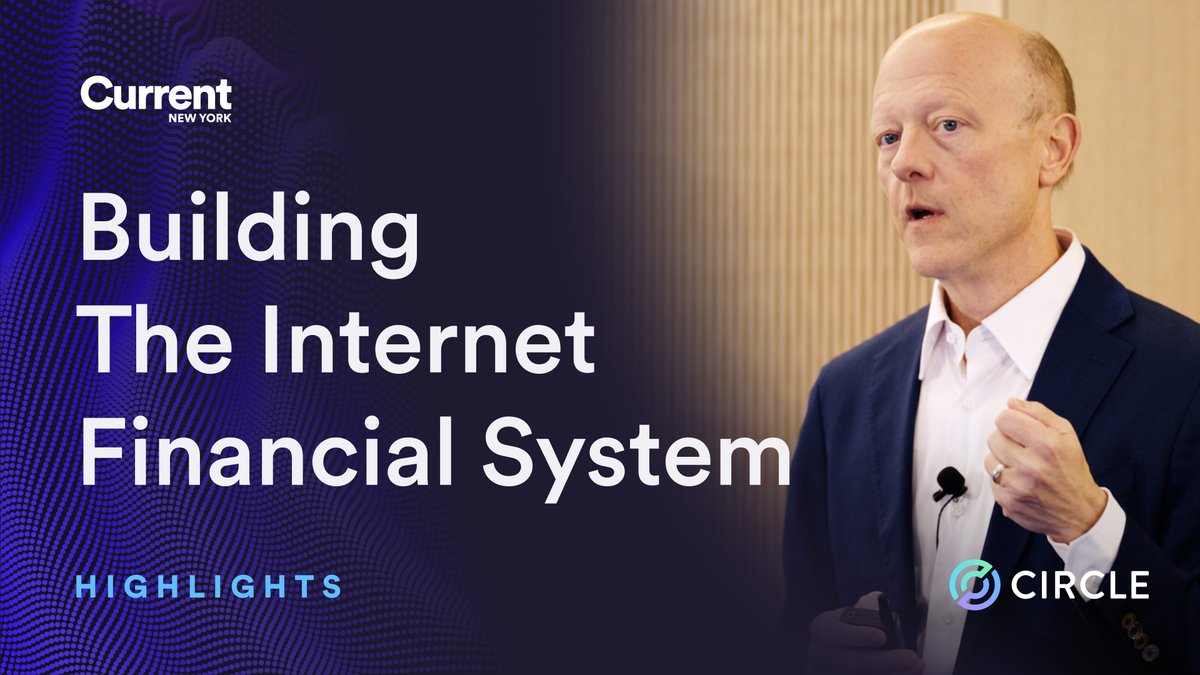
Circle CEO: Traditional PoW Mining is Essentially Pure Energy Waste Circle founder Jeremy Allaire Jeremy Allaire - jerallaire.arc believes that traditional PoW mechanisms are fundamentally a waste of energy and that integrating AI inference with PoW represents a truly productive consensus model. Amidst a paradigm shift in computing infrastructure,...

13,153 Aufrufe • vor 5 Monaten •via X (Twitter)

0 Kommentare

Keine Kommentare verfügbar

Kommentare vom Original-Post werden hier angezeigt

Ähnliche Videos

Who is Sergey Ivancheglo? Come-from-Beyond (CFB). A self-taught innovator from Minsk, Belarus, with a Bachelor of Science in electronics and artificial intelligence. His early passion for computer game development evolved into expertise in distributed systems, virtual/augmented reality, and blockchain technology. $Qubic #Qubic Qubic ױ Q u b i c ױ Known for a bold, sometimes polarizing style—self-described as having a narcissistic streak, which he claims fuels his visionary drive. Key Contributions NXT (2013) Launched one of the first proof-of-stake (PoS) blockchains, moving away from Bitcoin’s energy-hungry proof-of-work (PoW). Introduced features like an asset exchange, laying groundwork for modern DeFi. IOTA (2015) Co-founded IOTA, a feeless, scalable platform for the Internet of Things (IoT) using the Tangle, a directed acyclic graph (DAG) instead of a traditional blockchain. Left in 2019 after disputes with co-founder David Sønstebø over token allocations and project direction. Qubic (Conceptualized 2012, Launched 2022) Founder of Qubic, an open-source, community-driven project integrating blockchain with AI and decentralized computing. - First pitched on BitcoinTalk in 2012 as Quorum-Based Coin, but hardware limitations delayed its realization until the mainnet launch in April 2022. What is Qubic? A quorum-based computation (QBC) platform with 676 "Computors" (validators) executing smart contracts and securing the network. A quorum of 451+ Computors (⅔+) must agree for consensus, ensuring reliability. Useful Proof-of-Work (UPoW) Unlike traditional PoW, Qubic’s mining power trains AI models (via the Aigarth project) rather than solving meaningless puzzles, aiming for energy efficiency and practical utility. Feeless transactions with sub-second finality (currently ~7 seconds, targeting faster ticks in 2024/2025). Smart contracts that require quorum approval and launch via an IPO-like system for passive income. Oracle machines for secure external data integration. Runs on bare-metal servers (no OS), enhancing speed and security. Aigarth An AI sub-project leveraging Qubic’s compute resources to advance neural network training and decentralized AI development. The Vision is to create a scalable, eco-friendly ecosystem merging blockchain and artificial general intelligence (AGI), positioning Qubic as a leader in Web 3.0 and AI-driven decentralized systems. Summary Sergey Ivancheglo (CFB) is a crypto trailblazer whose work on Qubic blends blockchain and AI in a way that’s distinct from peers like Ethereum. `Come-from-Beyond` His history of delivering groundbreaking tech (NXT, IOTA) backs Qubic’s promise, Are you ready for what’s next? Qubic #Crypto #altcoin #ArtificialIntelligence

ױ kirby ױ

22,676 Aufrufe • vor 1 Jahr

Circle CEO Jeremy Allaire - jerallaire.arc freakin' NAILED the 'Onchain Credit Boom' thesis on the The All-In Podcast Stablecoins like $USDC aren't just digital dollars for trading crypto anymore. They're becoming the rails for an entirely new credit infrastructure. The obvious impact: Small businesses could access capital without walking into a bank branch or filling out 47 pages of paperwork. Equipment leasing, factoring, working capital. All executed through smart contracts. But the kicker is this: He wants credit markets that work like Google AdWords. Auction-based, real-time, algorithmic pricing of credit risk. AI handling underwriting while smart contracts handle execution. No storefronts. No loan officers. No 5-7 business day waiting periods. Just software machines pricing risk and moving capital in milliseconds. Winners: Small business owners who currently get ignored by traditional banks. The restaurant owner who needs kitchen equipment. The startup that needs to make a hire before the next funding round closes. Losers: Traditional lenders charging fat margins for slow, manual processes. The entire middle layer of financial intermediaries who exist because the current system is inefficient. When lending protocols start competing in real-time auctions, and AI can underwrite a loan faster than you can fill out an application, that's when this thesis goes from podcast theory to market reality. The thesis in a nutshell: Credit will become as liquid and efficient as digital advertising.

Milk Road

65,149 Aufrufe • vor 8 Monaten