Video wird geladen...
Video konnte nicht geladen werden
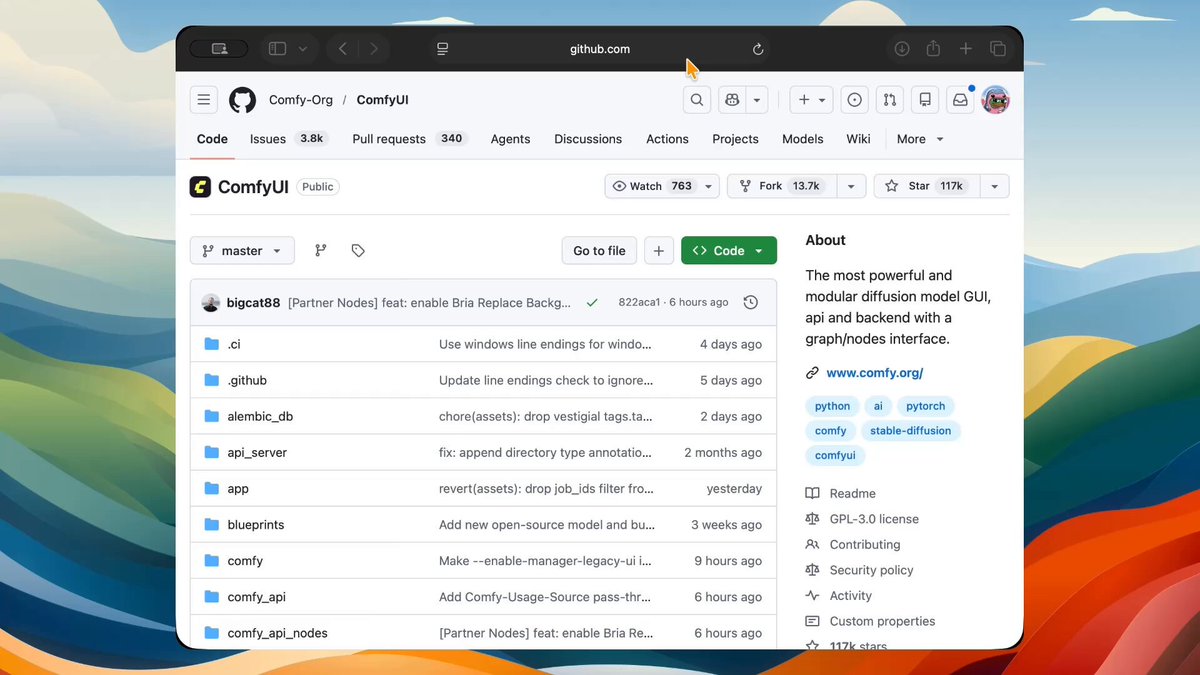
Cloud GPU training is a scam. A single M4 MacBook does 2.9 TFLOPS. Seven friends with MacBooks match an NVIDIA A100. Alexander Hayes just open-sourced a tool that makes this work over Wi-Fi. It's called AirTrain. Here's how it works: Traditional distributed training (DDP) syncs gradients after every single... show more

160,201 Aufrufe • vor 5 Monaten •via X (Twitter)
0 Kommentare
Keine Kommentare verfügbar
Kommentare vom Original-Post werden hier angezeigt



![We made a thing! Very happy to announce sqlcoder-pro and the Defog Alignment Platform. Available to use immediately without a wait-list, weights will be open-sourced very soon. The video does a quick show and tell comparison against ChatGPT (with gpt-4o). Read on for more details! TLDR 💪 equal (or better) performance on text-to-SQL as the most capable Claude-3.5 or GPT-4 models 🤝 You can use it today on a free plan/free trial, without a waitlist 🪽 self-hostable on a single RTX4090, with 2 second median generation times for SQL queries 🔁 exactly the same output every time, give the same prompt 👨🏻🏫 teachable and steerable: show the model what you want it to do 🛞 debuggable – you can understand WTF is going on inside the model, instead of treating it like a black box Let's dig into each of these one-by-one! Performance SQLCoder-8b-pro significantly exceeds the performance of our previous sqlcoder-8b model on Postgres text-to-SQL (from 88.2% to 90.2% accuracy - gpt-4o is at 87.6%, for reference). It is also better at following instructions. This was done via self-merges, hand crafted fine-tuning data, and adapting the training data to fit our tokenizer. Cost You can host this on the model on a single $3,500 RTX4090, and support ~5 requests/second via VLLM. If you're looking to host on the cloud instead, you can run it on a single L4 GPU that costs $300/mo on GCP Repeatability We have a dense 8b model with no MoE shenanigans. For the same prompt with temperature=0, you'll always get the same answer – which is critical in BI. Teachable In our alignment and feedback modes, you can give the model feedback on how it answered certain questions, and it will automatically adapt to the feedback. Debuggable You can use logprobs and attention scores to determine where, exactly is the model paying attention to inside a prompt + what it's getting confused by when generating outputs. Available today You can use Defog on the cloud today by going to docs[dot]defog[dot]ai, and getting an API key. Excited to hear what you think!](https://image.24vids.com/tw-1825943270935113842/ext_tw_video_thumb/1825942610525220864/pu/img/qmpqqvd_3KNdJDGd.jpg)


