正在加载视频...

视频加载失败

Codex survives compaction quite well. Which means for massive refactors or "pass test suite" kind of situations looping can work. I tried it for the MiniJinja port over night and it works. Basically /loop tells pi a) continue until "condition" and b) tweak compaction while loop is active.
17,362 次观看 • 7 个月前 •via X (Twitter)

0 条评论

暂无评论

原始帖子的评论将显示在这里

相关视频

HOW TO USE AI LOOPS TO RUN YOUR BUSINESS 24/7 A lot has been written about loop engineering for building products. Almost nothing about using loops to run the business itself. That's the bigger idea. A loop is when you give an agent a goal, a way to check its own work, and permission to keep trying until it hits that goal. Build. Verify. Repeat. Stop when the condition is met. Here's what it looks like in practice: 1/SEO loop You're position 30 for a term you want. The loop runs once a month, makes changes, checks where you rank, and keeps pushing until you're on page one. This is running in production right now on Inbox Zero. 2/Ads loop You're spending $100 a day and losing money. The loop tests creative, checks profitability, kills what fails, and keeps going until the account is in the black. 3/Eval loop Your AI feature is only 88% accurate. The loop keeps adjusting the prompt and swapping the model until it passes 90%. 4/LLM visibility loop People search in ChatGPT now, not just Google. Same loop, new scoreboard. Are we the answer or not? The whole thing hinges on one thing: a metric that comes back black and white. Where do I rank? Did it hit profitability? Did the evals pass? Give an agent that scoreboard and it runs for months. Loops used to run for 30 minutes. These run for a year. Take a step, sleep, wake up next month, take another one. You're basically hiring an agency that never sleeps, gets paid in tokens instead of invoices, and undoes its own mistakes when the number goes down. Full episode on The Startup Ideas Podcast (SIP) 🧃 watch

GREG ISENBERG

82,960 次观看 • 1 个月前

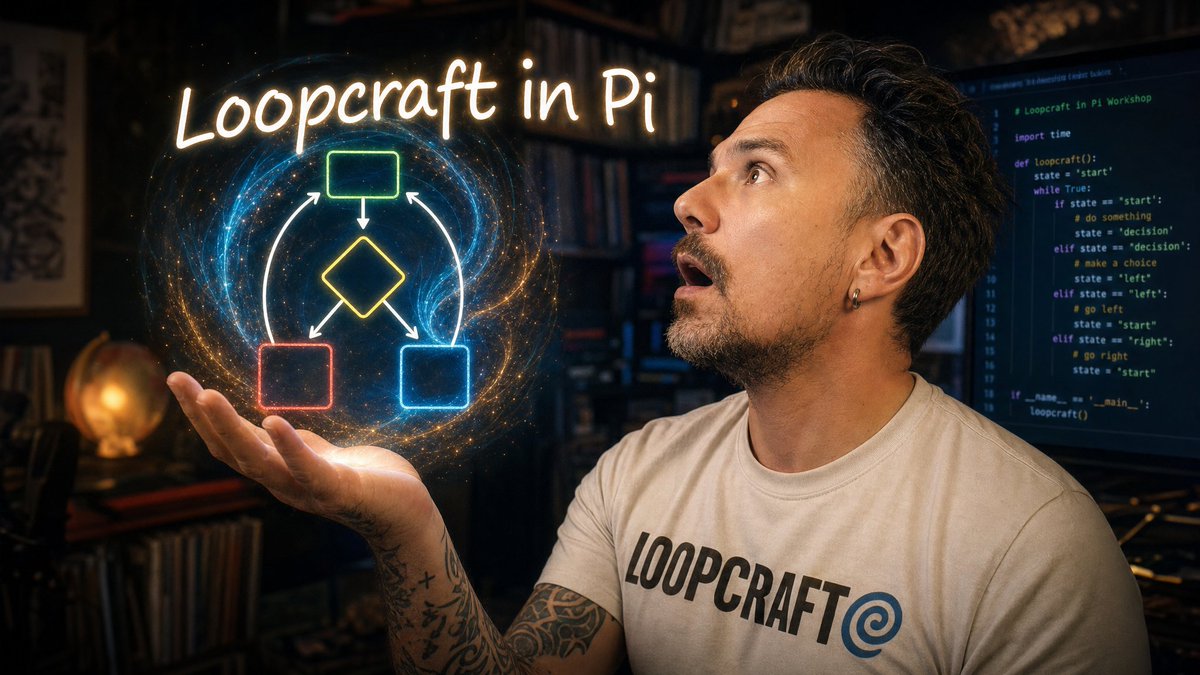
This is a fun project Lakedbed, Herdr, Pi, Effect, XState prototyping a looping autonomous agent that monitors issues and clears its own backlog. The project is dogfooding an issue tracker into a durable agent that is building the issue tracker its looping over. It's an imperfect demo and the result isn't polished, but I think there's a lot fo interesting ideas to explore and expand on. The goal here is to demo a stack of tools that have been giving me consistently reliable results. Herdr and Pi make a KILLER combo for building a bespoke custom harness around your work. Lakebed is really nice to work with. Plenty of other opinions in the workshop lol - Pi as the agent harness — a minimal loop you own instead of rent, running GPT-5.5 through a Codex subscription inside a Docker workshop container - Planning before prompting: TLDraw sketches, a grilling session with Matt Pocock's Wayfinder skill, and a VISION.md to act as guardrails for the looping agent - Event sourcing with Effect v4 and Effect Schema, ports-and-adapters so the JSONL issue store can become GitHub Issues or Linear or whatever later - Multi-agent orchestration in herdr: an operator pane and an agent-loop pane, where one Pi session literally types prompts into another (fuckin LOVE this) - Enforcement that actually bites: OxLint with Ultracite, Lefthook hooks, and an agent that tries to eslint-disable its way past a complexity rule before fixing it properly 🤡 - A live issue tracker UI on Lakebed, built by the loop it tracks Workshop repo: The repo has a docker container to fire it up as a sandbox. Chapters: 0:00 Intro: Loopcraft and the workshop setup 2:25 Starting Pi inside the Docker container 4:31 Designing the looping issue resolver 10:16 Choosing XState v5 and Effect v4, prompting the starter 15:17 Why Pi: a minimal harness you own 19:35 Reviewing the generated scaffold 24:53 Architecture summary page with Lakebed 30:43 Matt Pocock skills and the vision.md concept 36:37 Grilling session: defining the vision 46:54 Daemon architecture and spec/ticket skills 55:38 Agent loop pane: one agent prompting another 1:01:22 Watching the build: compaction, tests, lint enforcement 1:07:59 Building the Loopcraft Pi extension and monitor 1:15:32 Lakebed issue tracker UI 1:21:07 Kanban board live: running the loop end to end 1:31:49 Wrap-up: bugs, next steps, takeaways

joel ⛈️

15,610 次观看 • 1 个月前