Video wird geladen...

Video konnte nicht geladen werden

Zur Startseite

Consistency looks like nothing until everything changes. 27 days ‘till Game day⏳ getting the fix w/Coach Soni Fonua Coach Mailei Skyline Football salesi tuitavake Marcus Mailei Ikaika Malloe D'Anton Lynn Matt Campbell Penn State Football
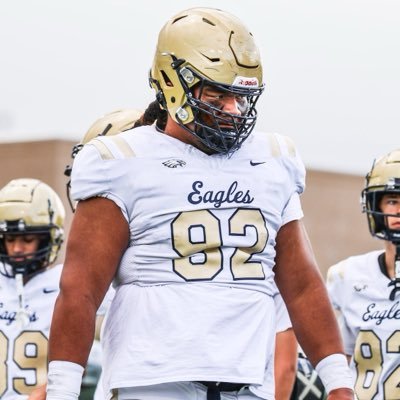
14,310 Aufrufe • vor 2 Monaten •via X (Twitter)

0 Kommentare

Keine Kommentare verfügbar

Kommentare vom Original-Post werden hier angezeigt

Ähnliche Videos

For those that had the privilege to see the greatness of linebacker Derrick Thomas in person, they will remember the significance of what happened 37 years ago when the Alabama Football legend ensured the Crimson Tide would not lose in an 8-3 victory over Penn State on Oct. 22, 1988, inside Legion Field. Thomas terrorized Penn State’s Tony Sacca all afternoon and finished with three sacks, nine quarterback hurries, eight tackles and almost outscored the Nittany Lions by himself with a fourth-quarter safety. Led by the heroic performance, the Crimson Tide defense allowed just 21 yards in the second half. In the 1988 season, Thomas won the Butkas Award as the nation’s top linebacker and finished with a staggering 27 sacks. To put that in perspective, Alabama as a team had 25 sacks last season with one extra game. “We made some changes at halftime to free Derrick Thomas,” Alabama head coach Bill Curry said. “Once Derrick Thomas is flying around, all kinds of things happen. They start looking for him. It’s a real nightmare when there’s a player like that on the other team.” CBS televised the defensive slugfest and announcer Brent Musburger described Thomas’s afternoon as, “the most dominating performance I’ve ever seen by a college player.” Philip Doyle scored the only offensive points for Alabama with a 39-yard field goal in the second quarter, before giving the Crimson Tide a 6-3 lead with a 35-yard field goal in the third quarter. Thomas added his safety early in the fourth quarter and a late quarterback hurry ended Penn State’s final offensive series when Lee Ozmint intercepted Sacca. Penn State finished with just 169 yards of total offense (98 passing, 71 rushing) and eight first downs.

The Tide Machine

18,794 Aufrufe • vor 11 Monaten

I watched every SEC Football Media Day press conference so you don’t have to. Here’s the best answer from every head coach: -- LSU Coach Lane Kiffin on why personal growth often comes from subtracting, not constantly adding: “If you really want to keep growing, a lot of people add things as they go versus subtracting things that are issues.” “Once you remove something from your life, you start to realize how many other people are addicted to it or need it.” “To be free of that has been interesting because you don’t compare.” “Social media… makes you compare your job, the city you live in, your vacation, your kids, your clothes, your car, your significant other.” “When you don’t see that all day, you’re free of that comparison.” “It’s been a way of being more present.” — Georgia Coach Kirby Smart explains how leaders should operate when their industry is changing rapidly: “What wins football games has not changed. Each coach has to decide within their own program what they want to major in.” You’ve got to be able to wear multiple hats. But you’ve got to choose which hats you want to wear the best.” “I’m not afraid to change what we need to change to be successful. I don’t have an ego that says you have to do it my way. I want to hear how you want to do it, and let’s find the best way.” — Oklahoma Coach Brent Venables on the player who asked for more money before he had earned a role, and how he responded: “Why don’t you worry about playing first before we worry about incentives?” — Kentucky Coach Will Stein on why he believes Kentucky can overcome its history and win at a championship level: “I think because of me, to be honest.” “I know what it takes. I’ve seen it at the highest levels. You’ve just got to believe. You’ve just got to put the ball down and play.” “The best determination of whether what you’re doing is working is putting the ball down and playing football.” “There are going to be bumps in the road. I’m prepared for tough moments and tough times. I already do self-talk with myself: ‘How can I stay neutral when stuff’s bad?’” “You’ve got to go attack. You can’t sit back and wait.That’s one thing I refuse to do at Kentucky—wait.” — Missouri Coach Eli Drinkwitz explains what Ahmad Hardy’s recovery taught him about the real purpose of coaching: “There was that moment where he realized he was mortal. I’ve been very proud of the way he’s approached his recovery and his rehab. His number one responsibility is to be a father, and then after that, to continue to be a great teammate.” “That’s exactly what coaching is all about. It’s about taking young men on a journey from 18 to maturity—and it’s a lifelong process.” “Regardless of how much the business changes or is disrupted, it’s still about helping players achieve their dreams.” “When Ahmad scores his first touchdown this year, I’ll be thinking about that journey from hospital bed to end zone.” — South Carolina Coach Shane Beamer takes complete ownership of South Carolina’s disappointing season and explains how adversity revealed the strength of the program’s culture: “There was no ceiling on the football program at South Carolina, and nothing has changed. We fell woefully short, and that’s on me. We don’t seek comfort from how close we were.” — Vanderbilt Coach Clark Lea on Vanderbilt’s disastrous 2023 season and explains how it became the turning point that eventually led to a 10-win season: “That’s called getting your ass kicked.” “It may have been the most important thing that’s ever happened to me as a head coach and to the program.” “The vision never left us.” “In 15 years, when I look back on this moment, what am I learning right now—not what am I feeling right now?” — Tennessee Coach Josh Heupel explains how to develop an inexperienced quarterback without coaching away what makes him special: “The players have to go learn it, earn it, and compete for it every single day.” “Each one of them is a little bit different. They’re the artist. You’ve got to hand them the paintbrush and let them go paint it.” — Florida Coach John Sumrall explains the attitude he wants to establish at Florida: “I may have some bad moments. I don’t have bad days.” “Attitude is demeanor, drive and desire. Demeanor is your body language. Your drive and desire is the mindset that you’ve never arrived, you can always get better.” — Texas A&M Coach Mike Elko on how he prevents complacency after a playoff appearance: “I show them our trophy case, and it’s empty.” — Ole Miss Coach Pete Golding explains how he defines an elite program beyond wins and football performance: “Elite programs aren’t designed for when they’ve got cleats on. Elite programs are designed for when they take them cleats off.” “Are they a better dude? Are they a better husband? Are they a better father?” — Auburn Coach Alex Golesh explains where real confidence comes from: “Real confidence, not fake confidence, but real, authentic, genuine confidence, comes from elite-level process day in and day out.” — Arkansas Coach Ryan Silverfield explains why rebuilding Arkansas required examining every detail: “The night I got there… I said, ‘We need to fix the light bulbs.’ How you do anything is how you do everything.” “People now are starting to catch on: this is how we need to do this. We need to be better here. We need to support this more.” — Mississippi State Coach Jeff Lebby explains why the next step for a talented young quarterback is not always making more plays—it is learning which plays not to make: “I don’t necessarily put a ceiling on K1. The way he goes about his business on the day-to-day to prepare himself to have success between the white lines—it’s elite.” — Alabama Coach Kalen DeBoer explains why reputation, returning talent and last year’s progress mean nothing until the new team proves it again: “That’s okay, because we’ve got to go prove it. It doesn’t matter how many guys you return.” “Until we prove it, we understand there’s going to be doubt.” — Texas Coach Steve Sarkisian explains how Arch Manning handled being hyped by outsiders, blamed when their predictions failed, and refused to respond publicly: “Arch Manning wasn’t on social media or television saying, ‘I’m going to be the first pick of the draft.’ All he did was work really hard.” “Then those same people wanted to criticize and demean him almost for letting them down because he didn’t live up to what they thought he was going to be.” “What he got put through probably would have melted or destroyed 99% of people in his shoes.” “All he did was stay consistent and true to who he was. He didn’t go back on social media and say, ‘I told you so.’” “I think right now he’s a very dangerous player because he learned a lot from last season.”

Josh Chambers

64,522 Aufrufe • vor 2 Monaten

• Journalist: Antonio, Italy have just brought back Roberto Mancini after missing a third World Cup, the Maldini-Leonardo project collapsing in 16 days, and Pirlo being blocked. What’s your reaction? 🗣️Conte: “My reaction? I’m angry. Really angry. This is not football anymore. This is a complete mess. A national embarrassment. Three World Cups in a row. Three! And instead of looking in the mirror and changing the culture, they keep doing the same soft, political games. They bring in Paolo Maldini and Leonardo — two people who actually understand what it means to wear that shirt — and after sixteen days everything explodes because someone is more worried about sponsors and politics than the result on the pitch. Pirlo is there, ready, and they block him for a commercial story. Are we serious? Guardiola is not stupid. He looked at the situation and said no. He saw the chaos, the politics, the lack of real power for the coach, the same old problems, and he walked away. And do you know what that shows? That even the best coaches in the world no longer see Italy as a serious project. They see instability. They see a federation that changes direction every five minutes. They see a place where football is secondary to everything else. And then what? They go back to Mancini. Mancini is a winner. He knows this shirt better than most. He took Italy to a European title. But when things got complicated, he left the national team for money in Saudi Arabia. The same man who walked away when things got difficult. And now they open the door for him again like nothing happened? This is weak. This is the opposite of everything the Azzurri shirt should represent. You want to know the truth? The shirt has lost its weight. When the people above the players treat the national team like a political game, the players feel it. The hunger disappears. The pride disappears. I love this country and I love this shirt more than anything. But right now the people in charge are damaging it. They are killing the respect that shirt used to command. Until someone has the courage to put football first — really first — and stop with the politics, the short-term solutions and the recycling of the same faces, nothing will change. Italy will keep missing tournaments. And the rest of the world will keep watching and laughing. That is the reality. And it hurts.

Vfynn_🥷🏼 𐙚

72,361 Aufrufe • vor 1 Monat

The Tesla Cybercab launch was magical. I’ve spent years talking about what autonomous transportation would become. This week, I got to live it. And what surprised me most was NOT that the Cybercab had no steering wheel. It was NOT the butterfly doors. It was NOT even how futuristic the car looked. It was honestly how NORMAL it felt. I just get in. Sit down. Put my seatbelt on. Press one button. And go on w/ my life. No fear or anxiety at all. At one point I literally forgot there wasn’t a driver in front of me. The ride was unbelievably smooth. And that’s when it really hit me… this is how transportation changes… when the technology becomes so seamless that you stop thinking about the technology at all. The entire Cybercab experience is ridiculously simple: 1/ Order the Cybercab from your phone. 2/ It arrives, recognizes your phone, and can automatically open the door for you. 3/ Get in, buckle up, and the doors close. 4/ Press one button on the screen to begin the ride. 5/ You can work, talk, watch something, listen to music, enjoy the scenery… do whatever you want bc the car handles the entire driving. 6/ Arrive, get out, and payment is handled automatically via the app w/ no tipping. That’s it. Some people are probably still going to say: “Elon was late.” “FSD will never work.” “Tesla is still just a car company.” “Who would trust a car w/ no driver?” “Who would ever get into a car w/ no steering wheel or pedals?” “Cybercab/Robotaxis will never scale.” I’ve heard versions of this stuff for years… And yet here I was. Sitting inside the product. Paying for rides. Driving around Austin w/ nobody behind the wheel. After experiencing Cybercab myself, I understand what the Tesla team was building toward. The car. The autonomy. The safety. The software. The app. The pickup experience. The doors. The payment. The entire experience had to feel like ONE product. Bc if Tesla gets that experience right and then scales it across America, this becomes MUCH bigger than another Tesla vehicle. It will change how people think about owning a car. It changes ride-hailing. It changes what we do with the time we currently spend driving. It changes transportation. And I think Tesla absolutely knocked this product out of the park. What makes this even more personal for me is how grateful I am that I was invited to experience this moment. As the only Korean in the world, being invited to the launch and getting the opportunity to be the first one to ride in a Cybercab is something I’ll remember for the rest of my life. Seriously. What a freaking life… hate me or love me, nothing honestly compares to this. Austin… Your food was incredible. The people were unbelievably kind to me. The city treated my family and me so well. I loved almost everything about you, except the heat. And Tesla and Elon… Thank you. You have genuinely changed the direction of my life. You gave me something I am deeply passionate about. The products. The technology. The people building them. The crazy ideas that sound impossible right up until the day they’re sitting in front of you. Today I head back to the Bay Area. But my mind can’t stop thinking about what I just experienced. There was a point when people started saying Tesla’s biggest growth days were behind it. After this week… I feel the exact opposite. Cybercab reignited that fire in me. It feels like I just watched the first few minutes of the next chapter/book of Tesla. And if what I experienced in Austin scales to cities around the country… Transportation will NEVER be the same. One day my kids will look back at human-driven cars the same way we look at an elevator operator today. Something that once seemed completely normal… until technology made it unnecessary. I came to Austin excited about Cybercab. I’m leaving even more excited about what comes next. The future is going to be so freaking amazing. Till next time, Austin!

Teslaconomics

21,092 Aufrufe • vor 18 Tagen

"It looked like a large piece of saran wrap. It didn't really scare me at that time until it moved and formed the arm that reached over to the other tree." ~Jan Mac The Predator Case of Lima, Ohio "If you saw in the woods some strange thing like that, like The Predator, you'd probably be leery about going back there again, too." ~Bruce Mac (In the replies, I'd love to discuss... If this thing is the same thing that Jay Stratton and Travis S Taylor (and others?) say they saw, what the hell is it and what the hell is it doing? Is it just a peak into a shadow biome that our senses usually can't perceive but every now and then, shows itself? Just a Predator-like being doing its thing? "Hi everybody, I'm just collecting acorns!" ~Pedator Fella As you watch or read, you'll ask yourself: Is what Jan Mac saw, connected to that light that showed up over the high school, and did it originate from elsewhere? Or, is it native to this planet and just trying to misdirect (by having that light pop up at the same time) and make us think it's from somewhere else? ICYMI, here's my post about the alleged Stratton/Taylor Predator experience... ) ~ David Paulides Voiceover: "The last case I want to investigate is even a little deeper down the rabbit hole. It's not about a missing hunter, but instead about a strange experience one hunter faced in Lima, Ohio. It's important to note that this isn't a connection to The Missing, it's simply an odd event that's worth looking into. And it's associated with one of the smartest people I've ever met." The Late Bruce Maccabee - Ph.D., Optical Physicist: "There's a difference, I guess, between being freaked out by things that you imagine and being freaked out by things that you actually see." ~ Jan Maccabee - Bruce's Wife: "This, I have to say, was the most (sighs) terrifying experience. But yeah, I don't know why I didn't react to it, and that bothers me. "The hunting in Ohio is awesome. We have some great, big trophy deer in Ohio, and we happen to have some of the biggest right here on our own property. "It was the most beautiful night to deer hunt. It was the second day of season, I wanted to get my, you know, rear end in the woods to hunt. I was really excited about it. "There was a band over at the high school. By the time I got to my deer stand, I could hear 'em. I was all settled in, I didn't see nothing coming down the paths. Trails, the birds, crickets, everything were normal woods sounds. When you're hunting, you have two of your most keenest senses, is your hearing and your eyesight. "All of a sudden the woods went to this dead quiet. If I had dropped a pin out of that deer stand... It cut off. No birds, no crickets, no nothing." ~~~ Others have told similar stories featuring that detail of complete silence engulfing them. Brandon Fugal: "And as I was walking around to the back of the old homesteads, it was like I entered an anechoic chamber, a soundproof room. And there was an auditory sensation. It was almost like my ears were boxed. And all of the ambient noise, to a degree, was completely muted. "And one thing that we’ve seen that is consistent is the electromagnetic. The cell phone anomalies…Erik Bard has conducted quite a bit of research into what type of acute medical episodes can accompany extreme electromagnetic, interference or events, even the auditory phenomena that I experienced. I related to you my experience of walking around the back of the old homestead and having this auditory sensation where all the ambient noise was essentially muted. And it truly felt like I stepped into a soundproof chamber of sorts. And it’s interesting. Electromagnetic phenomena at times, and that kind of interference can actually create those kind of reactions biologically." Source: ~ And this excerpt from "Skinwalkers at the Pentagon." (Like with Fugal's experience, this took place at Skinwalker Ranch) "Suddenly a cone of silence descended on Kelleher and Witt; the crickets seemed to go silent and even the faint rustling of the breeze in the trees ceased. Turning around, they saw a creature ambling towards them from the south. It was the size of a 150-pound pig and should have been making considerable noise as it walked. Yet, the cone of silence dominated the moonlit scene as the creature glided past within 30 feet of Kelleher and about 50 feet from Witt. To Kelleher, it appeared the animal had a series of dinosaur-like spines on its back and also sported a very large, flattened beaver-like tail. It noiselessly coasted past the pair and disappeared around the southwestern corner of the building, still not making a sound. Even Kelleher, who had spent hundreds of days and nights on Skinwalker Ranch and had already been exposed to his fair share of bizarre anomalies on the property, felt a distinct chill as he watched the surreal animal shuffle silently away." Longer excerpt: ~~~Back to Jan Mac and The Predator~~~ Jan: "The sun's still up. We were not calling for bad weather that night. It was a great night to hunt. Also, I felt like I had like a mote in my eye. I even took my finger and wiped my eye, like, when you get that fogginess over your eye, like it's just... I look and I'm thinking, 'What is this thing in the trees?' "It looked like a large piece of saran wrap. It's the only way I can describe it. But this thing was very wide. So I'm up fourteen foot, and it hung quite a ways down. And I'm thinking, 'What is this thing?' It didn't really scare me at that time until it moved and formed the arm that reached over to the other tree. It reached over about twelve to fourteen foot, and then it all, like a blob, like, sucked into it. And it went to the whole other tree. "I had this very euphoric feeling like, something ain't right here. Normally at that time, I'd have probably got down and stopped hunting, but for some reason I didn't." Paulides: "So, as you're sitting in your blind and you're looking across, where did the blob come from?" Jan: "I have no idea, it just appeared in the one tree. As it was moving through the woods, it went from like, tree to tree, and then it just...it disappeared. It didn't continue on. So, where it went, I don't know. It's like it just, poof, right before my eyes, vanished. "And I don't remember taking the picture, but being married to who I'm married to, Dr. Bruce Maccabee, he always said, 'If you see anything weird, get a picture.' "I don't recall, actually, when, either, that the sounds had returned. Because it's like, I don't remember. That's not me to this day. Normally, I would probably crawl down, come running in the house and say, 'You ain't gonna believe what's back there in them woods.'" Paulides: "How much longer you think you stayed in the stand?" Jan: "Umm, about half hour till sundown, when it's time to come out." ~ Bruce: "The sequence of this is: Jan goes out to hunt, we have guests show up, we're having dinner. She comes back from the hunt and says nothing about what happened. It was strange. The guests are about ready to leave. Later on, Matthew sends me an email: There was a sighting by a number of students and the faculty at the high school band practice just before dark." ~ Jan: "I'm like, 'Holy crap! Maybe it has something to do with what I saw in the woods?' And Bruce goes, 'What?' And I said, 'I forgot to tell you about what happened in those woods to me tonight!' And I'm reading this from Matthew, and then I started really getting, I get goosebumps. He said, 'This light appeared above the big stadium lights of the football field.' Had Matthew not sent that email, I'm not sure if I would have remembered even that night to say anything." ~ Paulides: "How many kids were on the field?" Matthew Pheneger - Shawnee High School, Class of 2013: "At least thirty. Thirty to forty, I would say." Paulides: "And was that the high school band?" Matthew: "Yes." Paulides: "And so, this was just before you guys went back to school?" Matthew: "Yes, band camp, late August." Paulides: "Late August. So, what time of night do you think that was?" Matthew: "Uhh, between six and seven. We were rehearsing, normally, out here about six, seven o'clock, doing our normal routine, when all of a sudden there was this bright light in the sky that just came out of nowhere. And we all just kind of stopped and looked at it as one." Paulides: "Where was the light?" Matthew: "So, the light was anywhere...it was above the tree line, for sure, just kind of hovering in the skyline. Close enough that it could catch your attention. Like it shouldn't have been there, I guess. If it was some man-made thing, it was too low to be there." Paulides: "Okay. What was the weather like that night?" Matthew: "Clear and hot. Typical, August Ohio weather." Paulides: "Okay. What color was it?" Matthew: "Candle orange. As far as I could tell, the thing had no definable edges to it. There were no like, dimensions. It was just kind of waxing and waning till it just zapped out. You know, our band director, who never stops for anything, he stopped and turned around and looked at us, and he goes, you know, 'What the hell was that?' Before I had time to even like, think about what I was seeing, it was gone. And then it was just kind of like an imprint in your mind, like I've seen something strange.” ~ Paulides: “So in your gut, are the two issues related?” Jan: “I often wonder now. All I can say is it happened within the same time frame, basically, as my experience here. Probably a half a mile over there, as the crow would fly.” ~ Bruce: “This is a Blackberry. On the back, you have the lens. It's not like the modern ones that have a camera on the front as well as a camera on the back. So I'd be taking your picture right now, but I would not be taking my picture. Something happened to that camera, I don't know what, but there's hard evidence of some weird thing that happened. She took a couple of pictures of herself before the event, which provide a fixed point of investigation, you might say. And she took another picture afterwards, So you have the camera phone doing its normal thing before and after, but right in the middle with this one photo, that something bizarre happened. “The picture she took, the resolution somehow changed for that one picture. You could manually change the cell phone to 1600 by 1200, 1024, by 760, or something like that, and 640 by 480. But it got changed to 500 by 400 or something. Numbers that don't exist. I don't know how to make it do that resolution. You'd have to get in there and rewire it somehow, or change the software. But even changing the software doesn't change the number of pixels along the edge of the sensor. I don't know how to explain this filamentary stuff. I can't imagine what this, what looks like it is well focused. I don't know what that is.” ~ Paulides: “I’ve had people write to me and say, ‘Well, what that is is Jan took a picture of her own hair.’” Jan: “My hair was back through the back of the ball cap, where it adjusts. it was tied back.” Paulides: “So there was no part of you that could have been in that frame?” Jan: “No way, no way.” ~ Bruce: “It would be possible for her to take a picture of her hair. She put her hand back there. But that wouldn't change the resolution of the camera or the byte size of the picture.” ~ Paulides: “So Jan, let me ask you, since that has happened, has it changed your life?” Jan: “Yeah, I've never been back in that woods to hunt that. I actually ended up buying a redneck deer blind. I mean, I want something surrounding me.” ~ Bruce: “You can imagine if you saw in the woods some strange thing like that, like The Predator, you'd probably be leery about going back there again, too.”

Joe Murgia

24,717 Aufrufe • vor 1 Jahr

He didn't run. That's the detail nobody expects. Every instinct in a wild, broken animal screams "run" the second a human gets close. Flight is the oldest survival code there is. And yet — he didn't run. Watch the video and you'll understand why that single fact should terrify you more than comfort you. Because an animal that doesn't run from you anymore has already given up on the idea that running matters. He has already decided, somewhere in that starving, exhausted brain, that whatever comes next can't possibly be worse than what came before. Sit with that for a second. What does it take to break that instinct? What does it take to make a living creature so depleted, so past the point of hope, that self-preservation itself shuts off? We're not talking about a dog that was "a little scared." We're talking about a dog who had already made peace with dying alone in the grass, hidden from a world that had already decided he didn't matter. And then someone showed up anyway. This is the part of the internet nobody warns you about. Not the cute part. Not the "aww" part. The part where you realize how close "almost too late" actually is — and how many of these moments are happening right now, in ditches and fields and abandoned lots, with nobody filming, nobody coming, nobody ever finding out. This one was found. I'm not going to walk you through what happens in the footage. I'm not going to spoil the moment his body language shifts, or the second you can physically see the exact heartbeat where "prey" turns into "please." Words can't carry that anyway. You have to watch it happen in real time, frame by frame, to feel what it actually is: the most fragile, most honest negotiation on earth — a terrified animal deciding, right in front of a camera, whether trust is worth the risk one more time. Here's what almost nobody talks about when it comes to strays like this. Dogs abandoned long enough don't behave like pets. They behave like wild animals, because that's exactly what they've had to become. The friendliness gets stripped away first — that's a luxury, and luxuries are the first thing survival deletes. What's left underneath is raw calculation: threat or not a threat, food or not food, safe or not safe. Every second spent deciding wrong could be the last second they get. So when you see an animal in that state hold still — when you see it let a stranger's hand get closer than four legs and thirty years of abandonment should ever allow — you're not looking at "cute." You're looking at the single bravest decision an animal without language, without hope, without any promise of a good outcome, is capable of making. That's what's buried in this video. That's the part that will actually get you. And here's the twist that makes this whole thing so much heavier once you know it: this isn't rare. This is happening at a scale most people never let themselves think about. Estimates on free-roaming and abandoned dogs worldwide run into the hundreds of millions. Hundreds of millions of versions of this exact moment — animals lying in grass, behind dumpsters, under bridges, past the point of hoping anyone comes — and only a fraction of them ever get a camera pointed at them, let alone a hand extended. Every viral rescue video you've ever scrolled past is a survivor's story. For every one of these, there are dozens that never get told, because nobody showed up in time to tell them. That's not meant to guilt you. It's meant to explain why this specific video hits different the second you actually watch it instead of skimming past it. You're not watching content. You're watching one of the rare good outcomes in a numbers game that is brutally stacked against good outcomes. Now — about the moment itself. There's a very specific window in every rescue like this. Rescuers call it different things, but it comes down to the same handful of seconds: the animal has to choose, right then, whether the human in front of it is a predator or a possibility. There's no in-between. No negotiation period. No "let me think about it." It happens in the space of a breath, and everything after depends on which way it breaks. You can see it happen in this footage. You can actually watch the exact moment where the decision gets made — where you'd swear the animal's whole nervous system recalibrates in real time. If you've never seen that moment up close, you don't actually know what "trust" looks like at its most primal. Most of us only ever encounter trust after it's already established, already comfortable, already taken for granted. This is trust being built from absolute zero, live, on camera, with everything on the line. I've watched hundreds of these rescue videos over the years — the genuinely real ones, not the staged reels that flood every feed now with fake "before" shots and suspiciously perfect lighting. The real ones all share this same fingerprint: a pause. A held breath. A moment where absolutely nothing happens except two creatures deciding, silently, whether the next few seconds are going to be safe. This video has that pause. And it's the reason you need to actually watch it instead of just reading about it. Because here's the thing text can never replicate: body language. The tension in a spine before it releases. The exact angle of an ear that tells you, before anything else does, whether fear is winning or losing. None of that survives translation into words. You either watch it happen, or you miss it completely. Let's talk about what "broken" actually costs an animal, physically, because most people underestimate it wildly. Extended abandonment doesn't just mean hunger. It means the body starts making impossible trade-offs. Muscle gets sacrificed for basic organ function. Coat and skin — usually the first thing to show damage — become secondary priorities compared to keeping a heart beating and lungs working. By the time visible damage shows up on the outside, the inside has usually already been compromising for weeks, sometimes months. Vets who specialize in stray and feral rescue will tell you the same thing over and over: what you see on the surface is never the full story. The surface is the last thing the body protects. If the outside already looks that rough, you almost don't want to know what's happening underneath. That's the stakes this video is actually operating at, even if the softness of the moment makes it easy to forget. This isn't a feel-good clip about a slightly dirty dog getting a bath. This is triage. This is the line between "made it" and "didn't," captured completely by accident, because someone happened to have a phone out at exactly the right moment. And that's maybe the most unsettling part of all of this, if you actually think about it for more than five seconds: how much of survival — for an animal with zero ability to ask for help — comes down to pure, dumb chance. Right place. Right time. Right person, willing to stop instead of walk past. How many times has "walking past" been the actual ending to a story like this one? We'll never know, because those endings don't get filmed. They don't get posted. They don't get millions of views and thousands of comments. They just... end, quietly, in a field somewhere, with nobody ever finding out there was a story there at all. This time, someone stopped. I want to be straight with you about something else, because it's the part that actually separates a real rescue from a manufactured one, and it matters more than people think. You can tell — almost instantly — when a rescue video is authentic versus when it's been engineered for engagement. Authentic ones are messy. Uncomfortable. Slow in places where a scripted video would cut. The animal doesn't hit its emotional beats on cue. There's confusion, hesitation, sometimes a step backward before the step forward. Real fear doesn't resolve on a content creator's timeline. It resolves on the animal's timeline, whenever that ends up being — thirty seconds, three minutes, sometimes far longer than anyone filming has patience for. This one has that texture. That's what makes it worth your two minutes instead of just another manufactured "rescue" clip built for a fake reaction. There's a reason rescue footage — the real kind — keeps outperforming almost everything else on this platform, and it's not because people are shallow or looking for cheap emotion. It's because this content taps into something most of us don't get nearly enough exposure to anymore: raw, unscripted stakes. Something is genuinely at risk. Something genuinely uncertain is happening. In a feed built almost entirely out of performance, irony, and content calculated down to the frame, a moment like this lands like a gut punch precisely because nobody could have staged the way it actually plays out. You can't fake that pause. You can't script that flinch, or the moment right after it, when the flinch stops. That's why you need to watch this instead of scrolling past the description of it. Because I can tell you it happened. I can't make you feel it happening. That gap — between knowing about something and actually witnessing it — is the entire reason video exists as a medium in the first place. Let's talk for a second about what happens after a moment like this, because most people watch these videos and never think past the ending card. Rescue is not resolution. It's the very first data point in a much longer, much harder process that almost nobody films because it isn't visually dramatic enough to go viral. Quarantine periods. Vet visits. Bloodwork. The slow, exhausting process of convincing a nervous system that's been running on high alert for months that it's actually allowed to relax now. Some animals take days to decompress. Some take literal years. Trust, once it's been broken at the level this video hints at, doesn't rebuild on anyone's convenient schedule. That's the part that never gets the same reach. The three-months-later update, the "he finally slept through the night" post, the "he let a stranger pet him for the first time" milestone that would look like nothing to anyone who didn't know the whole story. Those posts get a fraction of the views the rescue moment gets, even though they're arguably the more important part of the story. The internet loves a beginning. It's much worse at sticking around for the middle. So if this video moves you — and it will, if you actually watch it instead of skimming past — do something with that feeling beyond just scrolling to the next post. Rescues like this don't happen because of luck alone. They happen because someone, somewhere, decided that stopping mattered more than being on time to wherever they were headed. They happen because someone funded a vet bill, fostered an animal mid-recovery, drove two hours to pick up a dog that wasn't even theirs yet. None of that is glamorous. None of it goes viral on its own. But all of it is the actual machinery behind every single one of these videos you've ever watched and felt something about. If there's one thing I'd want you to take from this before you hit play, it's this: pay attention to the exact moment things shift. Don't just watch for the "aww." Watch for the decision. Watch for the specific second an animal that has every biological reason to run instead chooses to stay. That's the whole story, compressed into a handful of frames. Everything else — the outcome, the relief, the ending — is just what happens after that decision gets made. Most people will watch this video for the ending. Watch it for the middle instead. That's where the real thing is happening. And once you've seen it — once you've actually watched that shift happen in real time instead of reading about it secondhand — you'll understand why videos like this stop people mid-scroll every single time, no matter how many of them they've already seen. Because no matter how many of these you watch, that exact moment never gets less powerful. It just reminds you, over and over, of how much is riding on someone simply choosing to stop. Let's go back to the beginning for a second, because there's a question almost nobody asks about videos like this, and it's the one that actually matters most. How long was he out there before anyone found him? Nobody in the video knows the answer. Nobody watching it will ever know the answer. That's the part that sits with you long after the clip ends — not the moment of rescue itself, but the enormous, silent, unfilmed stretch of time that came before it. Days? Weeks? However long it was, it was long enough to erase every part of him except the will to keep breathing. Long enough that hiding in overgrown grass, invisible to a world that had stopped looking for him, had become the only strategy left. That's the actual horror hiding underneath a video that, on the surface, looks gentle. Everything soft about the footage is only possible because of everything brutal that happened just outside the frame, in the hours and days the camera never captured. This is why I keep telling you not to treat this as passive scrolling material. There is an entire invisible story sitting behind every second of visible footage, and your brain fills in almost none of it unless you slow down and actually let the video play out in full, without skipping ahead, without half-watching while doing five other things. Now, let's talk about why content like this spreads the way it does — because understanding the mechanics actually makes the moment hit harder, not softer. Platforms reward exactly one thing above everything else: retention. Not likes. Not shares. Not comments. Time spent actually watching, second by second, without looking away. And there is almost nothing on this entire platform that earns retention like genuine, unscripted animal footage where the outcome isn't obvious from frame one. Think about why that is. A cooking video, you already know the dish is going to come out fine. A prank video, you already know it's a joke. A dance video, a fashion video, a "get ready with me" video — the outcome was never in question to begin with. But a video like this one? The outcome is not guaranteed. For the first several seconds, you genuinely do not know which way it's going to go. That uncertainty is exactly what makes your eyes stay locked on the screen instead of your thumb flicking to the next post. That's not manipulation. That's not a trick. That's just what happens when something real, with real stakes, ends up on a feed built almost entirely out of things that were never actually uncertain in the first place. Here's something worth sitting with: most people, if you stopped them and asked directly, would say they care about animal welfare. Genuinely, sincerely, most people mean it when they say that. And yet the actual scale of the stray and abandoned animal crisis worldwide remains something most of the same people have almost no real information about. Not because they don't care — because nobody ever hands them the numbers in a way that actually lands. So here they are, stated plainly, without softening them: hundreds of millions of dogs live as strays globally, a significant share of them in conditions of chronic hunger, untreated injury, and disease. Shelters in country after country report the same pattern every single year — intake numbers that outpace adoption numbers, resources that fall short of need, and volunteers stretched thin trying to hold together a system that was never built to handle the actual scale of the problem. None of that is abstract when you're watching one specific dog in one specific patch of grass. It becomes very real, very fast, once you understand that what you're looking at isn't an isolated incident. It's one visible thread pulled out of an enormous, mostly invisible pattern. That's part of why this particular video deserves more than a passive scroll-past. It's not just "a nice moment." It's a small, rare, filmed exception to something that is happening constantly, relentlessly, without cameras, without rescuers, without any kind of happy resolution at all. Let's talk about the rescuer for a second, because they never get enough credit in videos like this, and it's worth correcting that. Whoever is behind that camera — whoever made the decision to stop, to approach slowly, to read an animal's body language carefully enough to know when to move closer and when to hold back — did something that looks simple on video and is genuinely difficult in real life. Approaching a frightened, possibly injured, possibly defensive stray animal correctly is a skill. Get it wrong, and you can panic the animal into fleeing somewhere far worse, or hurting itself trying to escape, or in rare cases, defending itself the only way it knows how. The people who do this well, over and over, in situation after situation, are operating on a mix of instinct and hard-earned experience that most of us will never develop, because most of us will never need to. That instinct is exactly why this rescue plays out the way it does instead of ending in a chase, a panic, or worse. Give that person their due before you close this tab. What you're watching is competence dressed up as tenderness. It looks soft. It is not easy. Now — a quick myth-versus-reality breakdown, because misconceptions about rescue moments like this one are everywhere, and they change how people watch this kind of footage. Myth: a starving, frightened stray will always be aggressive toward humans. Reality: fear responses vary enormously animal to animal. Some go defensive. Many, especially those who were once someone's pet before being abandoned, retain a flicker of learned trust toward people, buried under the fear, waiting for a reason to resurface. Myth: rescue is basically instant — approach, comfort, done. Reality: what you see in a two-minute clip is often the result of a much slower, more careful approach happening just before the camera starts rolling, sometimes minutes, sometimes far longer. Myth: once rescued, an animal is "fine." Reality: rescue is step one of dozens. Medical evaluation, parasite treatment, nutritional rehabilitation, and behavioral decompression all come after, often over a period of weeks or months, invisible to anyone who only ever saw the viral clip. Keep those in mind while you watch. They completely change what you're actually looking at. One more thing before you go press play, because it's the detail that changes how the whole video reads. Location matters more than people think. An animal hidden deep in overgrown grass, off any visible path, away from foot traffic, isn't there by accident. Animals in that condition instinctively seek concealment — it's one of the last functioning defense mechanisms left once running is no longer a realistic option. Being found at all, in a spot chosen specifically to not be found, is already a low-probability event before a single second of footage even starts. That's the invisible math sitting underneath this entire video. The odds of this exact outcome happening were never good. And yet here we are. If you've read this far without watching the video yet, that's honestly a little bit funny, because everything above was building toward one single, simple, unavoidable conclusion: None of this — the psychology, the statistics, the survival instinct, the odds stacked against him — means anything close to what it means once you actually see it unfold in real time, on his face, in his body, in the exact second everything changes. Reading about a moment like this is the trailer. Watching it is the movie. Let me leave you with one last thing, because it's the part people usually forget by the time they close the app and move on with their day. Every single one of us has scrolled past a moment like this before. Not this exact video — but this exact shape of moment. The thumbnail that looked heavy. The caption that hinted at something hard. The three seconds of hesitation before deciding whether today was a day you had the emotional bandwidth to watch an animal suffer before things got better. Most days, most people, scroll past. That's not a character flaw. That's just what an endless feed trains you to do — protect your attention, protect your mood, keep moving. But here's the thing about this specific kind of video that makes stopping worth it, every single time: the discomfort at the start is never the point. It's the toll you pay to get to the part that actually matters — the shift, the decision, the moment fear loses. Skip the discomfort, and you skip the entire reason the video exists in the first place. You end up with secondhand information about a moment that was never designed to be understood secondhand. Think about the last time a video actually changed your mood for the rest of the day. Not entertained you — changed something. Made you call someone. Made you donate somewhere you'd never donated before. Made you look at your own dog curled up on the couch and feel something different for a second. Those moments are rare precisely because most content isn't built to carry that kind of weight. Most content is built to be forgotten by the next scroll. This isn't most content. There's a reason rescue footage keeps circulating years after it's first posted, resurfacing on different accounts, different platforms, different captions, over and over, long after the original context is gone. It's because moments like this don't expire. A joke gets old. A trend dies in a week. But the exact second an abandoned, broken animal decides to trust a stranger anyway — that doesn't age. It hits the same way in five years that it hits today, because the thing it's tapping into isn't a trend. It's something much older than any platform, any algorithm, any feed. It's the oldest story there is, really, just told without words: something was broken, someone showed up anyway, and against every reasonable expectation, that was enough. We don't get many unscripted, unforced examples of that anymore. Almost everything in front of us now is curated, edited, angled for a reaction. This isn't. This is just what actually happened, captured because a phone happened to be there, no different than it would have looked if no camera existed at all. That's rare. That's worth two minutes of your undivided attention instead of a half-watched scroll-by. So here's the actual ask, plain and simple: don't just watch this one and move on like it's any other post in your feed today. Watch it properly. Let it play all the way through without skipping ahead to see how it ends. Notice the exact second his body changes. Notice what happens right after that. And then, if it moves you even a fraction as much as it should, do one small thing with that feeling before it fades — share it with someone, support a rescue near you, or just remember, the next time you see a stray on the side of a road, that stopping is always an option. It's always been an option. Somebody just has to choose to take it. That choice is the entire video. Everything else is just what happens after it gets made. One last thought, and then I'll let you go watch it instead of reading about it any longer. Somewhere out there, right now, there's another version of this exact scene playing out with no camera anywhere near it. No rescuer. No hand reaching out slowly through tall grass. No moment where fear loses. Just an animal, alone, running out of time in silence. We can't fix that with a video. Nobody's pretending we can. But we can make sure the ones that do get found, the ones that do get a camera and a rescuer and a happy ending, actually get seen — properly seen, not scrolled past in half a second on the way to something louder and easier. This is one of the good ones. One of the rare stories where showing up actually happened in time. Don't waste that by treating it like background noise. He didn't run. Now go find out why.

Earth Unveiled

198,929 Aufrufe • vor 11 Tagen

Stop Gambling, Start Engineering: The Ultimate Guide To CCXT Algorithmic Trading most traders are essentially walking into a high stakes casino with a blindfold on while the house has a high speed laser aimed directly at their bankroll. if you have ever felt the soul crushing weight of a liquidation notification at three in the morning then you know the market is a 24/7 beast that eats human emotion for breakfast there is a hidden bridge that connects your laptop to almost every major crypto exchange in existence and once you cross it the game changes forever. my name is moon dev i believe that code is the great equalizer because through losing money with liquidations and over trading i knew i had to automate my trading so i learned to code as in the past i spent hundreds of thousands on devs for app, thinking i would not be able to code myself w/ bots you must iterate to success so i decided to learn live on youtube, and now we are here, fully automated systems trading for me instead of getting liquidated. the secret weapon behind this transition is a library called ccxt which acts as a universal translator for exchanges like binance, bybit, and kucoin most people think they need to spend years studying computer science just to place a single trade via code but that is a lie designed to keep you on the sidelines. the reality is that once you understand how to initialize a connection you can control your entire portfolio with just a few lines of logic. it starts with importing the library and setting up your credentials in a way that doesn't leave your keys exposed to the world the first mistake that bankrupts most manual traders is the inability to act fast enough when the trend shifts. when you build a bot the first thing you need to master is the market order because it allows you to enter or exit a position instantly regardless of the price. it is the ultimate panic button for when a strategy goes south or a massive opportunity presents itself while market orders are great for speed they are the fastest way to get eaten alive by fees if you are not careful. this is where the limit order comes into play allowing you to dictate exactly what price you are willing to pay for an asset. by using a create limit order function you can place your bids and asks in the order book and wait for the market to come to you most traders forget that once an order is placed it stays active until it is either filled or manually removed. i have seen countless accounts go to zero because a bot kept piling on buy orders without ever checking to see if the previous ones were canceled. the cancel all orders function is the invisible shield that prevents your algorithm from accidentally over leveraging your account the real magic happens when you realize you can cancel more than just basic limit orders. there are untriggered conditional orders like stop losses and take profits that often hide in the background of an exchange waiting to ruin your day. by passing specific parameters into your cancel function you can wipe the slate clean and ensure your bot is starting from a neutral state every single time if you want to know what the whales are doing before it shows up on a candle chart then you need to be looking at the raw order book. fetching the order book gives you a direct view of every single bid and ask currently sitting on the exchange. this is the most honest data you can get because it represents real money waiting to be filled at specific price levels you can actually parse this data to find the exact top of the bid and the bottom of the ask to ensure your bot always gets the best possible entry. most retail traders are looking at delayed charts while your bot is reading the tape in real time and calculating the spread. this allows you to place orders that are optimized for the current liquidity rather than just guessing where the price might go one of the biggest hurdles in automation is managing the sheer volume of data that an exchange throws at you. when you fetch open high low close volume data you are getting the historical heartbeat of an asset across any timeframe you choose. this data is the foundation of every technical indicator from simple moving averages to complex machine learning models the problem is that raw data is often a mess of lists and dictionaries that are impossible for a human or a simple script to read efficiently. this is why we use pandas to convert that garbage into a structured data frame that looks exactly like a clean spreadsheet. once your data is in a data frame you can calculate rsi or macd with a single line of code and visualize the entire market structure the path to becoming a successful automated trader is not a sprint but a series of iterations toward a system that works. i chose to learn this live in front of the world because i wanted to prove that anyone can escape the cycle of over trading. you don't need a million dollars to start but you do need a system that removes the human element from the equation if you are still clicking buttons on a website then you are competing against machines that can process thousands of data points per second. it is time to stop playing a rigged game and start building your own edge in the market. the code is there for anyone to grab and the only thing standing between you and a fully automated portfolio is the willingness to sit down and write the first line every algorithm you build is a brick in a wall that protects your capital from the emotional swings of the crypto market. i spend my days refining these systems and sharing the process because i know how lonely it feels to lose everything to a flash crash. we are building a community where code is the tool and financial freedom is the goal the final step is realizing that your balance is just a number that your bot needs to manage with cold logic. by fetching your balance frequently your bot can calculate position sizes based on your total equity ensuring that no single trade can ever wipe you out. this is the difference between gambling and systematic trading and it is accessible to anyone with an internet connection i hope you take these tools and start building something that allows you to sleep peacefully while the markets do their thing. the industry is secretive for a reason but we are breaking those walls down one line of code at a time. the journey is long but the reward of never having to worry about a liquidation again is worth every second of the struggle

Moon Dev

14,105 Aufrufe • vor 7 Monaten

Nobody prepares you for the moment a wild animal decides to trust you. Not "gets used to you." Not "tolerates you." Trusts you — the way a mother trusts someone with the one thing she would die protecting. It doesn't happen because you're kind. Kindness is cheap. Every predator in the bush can fake calm long enough to get close. Trust is not given for kindness. It's given for consistency, for stillness, for the thousand tiny signals a mother reads before she decides you are not a threat to the only life she's carrying. And once you understand that, you understand why what's in this video is not "cute." It's rare. It's the kind of rare that biologists spend entire careers chasing and never fully catch on camera. Here's the part almost nobody knows about kangaroo mothers, and once you know it, you will never look at a pouch the same way again. A kangaroo joey is born the size of a jellybean. Blind. Hairless. Barely more developed than an embryo. It has exactly one job the second it's born: crawl, unassisted, through its mother's fur, into the pouch, and find a teat — with no help from her at all. She doesn't guide it. She doesn't touch it. It's on its own, immediately, in a climb that takes minutes but might as well be a lifetime. Most don't make it. The ones that do spend the next 190 days growing inside that pouch, permanently attached to a single teat, while their mother hops, forages, runs from threats, and lives an entire dangerous life with a developing creature sealed against her body the whole time. Now sit with that for a second. Everything you're about to feel watching this video is built on top of that fact. The pouch isn't a cute detail. It's the most extreme parental investment in the entire animal kingdom, running quietly, invisibly, every single second — and most people scroll past kangaroos their whole life without knowing any of it. This is why the moment in this video hits differently. It's not staged tenderness. It's not a trained animal doing a trick for treats. It's an instinct thousands of generations deep, deciding, in real time, whether the human in front of it gets access to the most guarded thing in its world. And it says yes. Watch what that "yes" actually looks like. Watch the exact second it happens. Because most people miss it — they're looking at the wrong thing, waiting for something big and dramatic, when the real moment is small, quiet, and over in under two seconds. Blink and it's gone. That's the whole point. Trust from a wild animal never announces itself. It just happens, and if you're not paying attention, you miss the most important part of the entire video. Here's something else that will change how you see this. Kangaroos are not naturally social with other species. They are not dogs. They did not evolve for ten thousand years alongside humans, selectively bred generation after generation for affection and eye contact and cooperation. A kangaroo owes you nothing. Its entire evolutionary history says: keep your distance, stay alert, trust nothing that isn't kangaroo. So when you see a wild-born kangaroo choosing proximity — choosing it, not tolerating it — you are watching something closer to a diplomatic breakthrough between two species than a "cute animal moment." It is the exception to millions of years of instinct. And exceptions like that don't happen because an animal is "friendly." They happen because someone, somewhere, earned it slowly, patiently, without ever forcing a single second of it. That's the part that should actually get your attention. Not the fur. Not the ears. The patience behind it that you never see, because patience isn't visual — it's just time, quietly spent, off camera, for weeks, maybe months, before the fifteen seconds you're about to watch were even possible. Think about how many hours of nothing happened before this. Think about how many times the answer was "not yet." Think about how many people would have given up. That's what's actually being shown to you here, hidden inside something that looks simple. The result. Not the process. Just the result — and the process is the part that would actually break most people's patience in half. There's a reason content like this stops people mid-scroll and doesn't let go. It's not really about kangaroos. It's about a feeling almost everyone is quietly starving for: proof that connection across an impossible gap is still possible. That something wild, wary, and instinct-driven can still choose closeness. In a world where even people struggle to trust each other, watching an animal that has every biological reason not to trust anyone — decide to trust anyway — hits something deeper than "aww." It hits the same nerve that made you stop and stare the last time you saw two strangers help each other for no reason. The same nerve that makes rescue videos, reunion videos, "coming home" videos rack up hundreds of millions of views no matter how many times the format repeats. We are wired to seek proof that softness survives in a world that keeps telling us it doesn't. This video is that proof, wearing fur. Now here's the thing that will actually make you want to see it for yourself instead of taking my word for it. There is a specific frame in this video where the entire dynamic flips. Where you stop watching "a kangaroo" and start watching "a mother." The difference is enormous and almost nobody notices it consciously the first time, they just feel it — a shift in the chest, a small catch in the breath, and they don't know why until they rewatch it and actually look for what changed. I'm not going to tell you which frame it is. You'll know it when you feel it. And once you've seen it, you'll understand why people who work with rescued or hand-raised kangaroos talk about them the way new parents talk about their kids — with this specific mixture of exhaustion and reverence, like they've been let in on a secret the rest of the world doesn't know is right there in the daylight the whole time, just going unnoticed by everyone in too much of a hurry to actually look. Here's a fact that will sit with you long after this post: joeys communicate with their mothers primarily through touch and proximity, not sound. A healthy joey barely vocalizes. Silence, for a joey, usually means safety. The moment a joey starts making noise is often the moment something is wrong — a signal, a distress call, a break in the norm. Which means every quiet second in this video isn't empty. It's the sound of everything being exactly as it should be. Contentment doesn't announce itself either. It just exists, unremarked, easy to miss if you're expecting drama. Most people are trained by algorithms to expect the loud moment. The jump-scare cut. The dramatic reveal. This isn't that kind of video, and that's exactly why it works on a level louder content can't touch. There is no trick here. No forced angle. No moment engineered for a thumbnail. Just an animal, in a state most people will never witness in their lifetime, on camera, being real. You will not get this from a zoo enclosure behind glass. You will not get this from a nature documentary narrated over stock drone footage. Documentary crews spend months, sometimes years, waiting for unscripted, undirected, genuine wild behavior like this — and even then, half the time the animal senses the camera and the moment never comes. What you're about to see is the version of nature that doesn't perform for anyone. It just happens to have been caught. That's worth more than people give it credit for. Let's talk about scale for a second, because it recalibrates everything. An adult kangaroo can deliver a kick strong enough to break bone. Their hind legs are built for sudden, explosive force — evolved for fighting off dingoes, for defending against threats many times more aggressive than a curious human. A kangaroo that feels cornered or threatened is not an animal you want anywhere near you. This is not a small, harmless creature performing tricks. It is a powerful wild animal capable of real damage, choosing, in this exact moment, not to use any of that power. That choice is the entire video. Every second of calm you see on screen is a second where a kick, a scratch, a bolt for distance was the more "natural" default option — and it didn't happen. Instead: stillness. Proximity. Something closer to peace than instinct usually allows. People underestimate how remarkable that restraint actually is because the animal looks soft. Fur does that. It disguises power as gentleness in our minds before we even process what we're looking at. But strip away the cuteness bias for one second and look at what's actually happening biologically: a wild animal engineered by evolution for wariness and self-defense is choosing trust over instinct, in real time, on camera, for you. That's not something you see every day. That's not something most people will ever see in person, not even once in an entire lifetime. And it's sitting right there, one tap away. There's a version of this story that plays out constantly in nature and almost never gets filmed: the version where the trust never comes. Where the animal stays wary its entire life, where every human interaction ends the second the animal has an exit route, where the gap between species never closes even an inch. That's actually the statistical default. That's what "wild animal" usually means in practice — permanent, unbridgeable distance, no matter how much time passes. This video is the exception you almost never get to see. And exceptions, by definition, don't repeat on command. You can't schedule this. You can't force it into existing on a Tuesday afternoon because you need content. It either happens or it doesn't, and when it does, someone lucky enough to be holding a camera captures something the rest of us don't get. You're one of the lucky ones today. You get to see it too. Here's something people don't think about: what happens to footage like this after the camera stops rolling? The relationship doesn't end when the clip does. Whatever trust was built to make this moment possible keeps existing, keeps deepening, long after anyone stopped filming. The video you're about to watch is a single frozen cross-section of something much longer, much slower, much more patient than fifteen or thirty seconds could ever fully capture. Which means what you're seeing isn't the whole story. It's a highlight pulled from something bigger — a relationship, a history, a slow-built trust that took real time to construct and will keep existing whether or not anyone's watching. That's actually the most reassuring part of all of this. It's not a one-off stunt for the algorithm. It's a snapshot of something ongoing, something real, something that existed before the phone came out and kept existing after it went back in someone's pocket. That's a very different feeling than most viral content gives you. Most viral content is a closed loop — what you see is all there is, manufactured specifically to be seen, with nothing behind it. This is the opposite. This is a small window into something much larger than the video itself, and once you sense that, you start watching it differently. You start looking for what it implies rather than just what it shows. Let's go back to the mother for a second, because everything in this video ultimately orbits around her. Maternal instinct in kangaroos is so strong it can override basic self-preservation. There are documented cases of kangaroo mothers refusing to abandon injured joeys even when fleeing would have meant their own survival. Refusing to leave, even when every other instinct screams to run. That's not a Disney embellishment. That's observed, recorded animal behavior, the kind field researchers write papers about because it defies simple explanations of self-interest. So when you watch a mother in this state — calm, present, unhurried — you're not just watching an animal relax. You're watching the single most protective creature in the scene voluntarily lower its guard. Not because it forgot to be careful. Because, in this specific moment, with this specific presence nearby, it decided carefulness wasn't necessary. That decision is not nothing. That decision is everything. If you've ever had a genuinely anxious animal — a rescue dog that flinched at every hand for months, a cat that hid for weeks before finally sitting on your lap — you already know this feeling in your body even if you've never thought about it in these words. You know the specific, quiet triumph of the first time a scared creature decides you're safe. It's not loud. It's not dramatic. It's just a small shift, and it means more than almost anything else that animal could do. Now imagine that same feeling, except the animal isn't a domesticated pet bred for six thousand years to eventually trust a human. Imagine it's a wild mother kangaroo, entirely unindebted to your species, deciding the exact same thing. That's what you're about to watch. Here's the last thing I'll say before you go see it for yourself, because I think it matters more than any single fact I've already given you. We spend so much time online watching things designed to make us feel something — outrage engineered for clicks, drama engineered for watch time, conflict engineered for engagement. Almost none of it is real in the way this is real. Almost none of it exists independent of the platform that's showing it to you. This does. This kangaroo, this mother, this joey, this quiet unscripted trust — none of it needed you to exist. It was happening whether or not it ever made it to a screen. You're not watching content that was built for you. You're watching a moment of the actual world that someone happened to catch and decided to share. That distinction matters more than people realize. It's the difference between watching a performance and witnessing something true. Everyone can sense that difference on some level, even if they can't articulate it — it's why certain videos feel hollow the second they end, and others sit with you for the rest of the day. This is the second kind. Go watch it. Not for the aww, though you'll get that too. Watch it for the two seconds where instinct loses to trust, where a powerful, wary, wild animal decides a human is safe, where something ancient and untamed chooses softness anyway. Watch it for the frame you won't notice until the second time through. Watch it because moments like this are rarer than almost anything else the internet shows you, and rare things deserve more than a passive scroll past. You'll know exactly which second I meant the moment you see it. And once you do, you'll probably watch it again — not because you missed something the first time, but because now you know what you're actually looking at, and it hits completely differently the second time around. That's the real test of whether something is genuinely special or just briefly novel: does it get better once you understand it, or does it lose its shine the moment the surprise wears off? This gets better. Every rewatch reveals one more tiny detail you missed under the weight of the first, bigger emotional hit — the exact angle of an ear, the precise moment a body goes still, the breath held right before everything relaxes. Small things. Human-scale things, if kangaroos had a human scale. The kind of details that only reveal themselves once the initial "aww" has worn off enough for you to actually look. That's the mark of something worth your attention in a feed built almost entirely around things that aren't. So here's the only ask: don't just let this autoplay past you like everything else today. Actually watch it. Full attention, even if just for the length of a single held breath. It costs you nothing and it's one of maybe a handful of genuinely rare things you'll come across this week, buried in an endless river of things that are anything but. Somewhere out there, right now, a wild kangaroo mother is calm around a human she has every biological reason to fear. That single fact alone should be enough to make you want to see how it happened. Let's talk about something people almost never mention when they talk about kangaroos: how absurdly efficient their bodies actually are, and why that matters for understanding what restraint really costs a wild animal like this. A kangaroo's hop isn't just a way of moving. It's one of the most energy-efficient forms of locomotion in the entire animal kingdom. Their tendons act like giant rubber bands, storing and releasing elastic energy with almost no metabolic cost, which is why a kangaroo can cover huge distances at high speed while barely raising its heart rate. Past a certain speed, it actually becomes more efficient for a kangaroo to hop faster, not slower — the opposite of almost every other animal on earth. Why does that matter here? Because an animal built like that has almost nothing to lose by fleeing. Running isn't costly for a kangaroo the way it is for, say, a heavier, slower prey animal. There's no real biological argument for "staying is easier than leaving." Fleeing is cheap. Fleeing is basically free. Which means every second a kangaroo chooses to stay instead of bolt is a second it actively decided against the easiest possible option. That's not an animal that "couldn't be bothered to run." That's an animal that had every reason to leave, at almost no cost to itself, and chose not to. Sit with that for a second, because it reframes the entire video. This isn't laziness or indifference dressed up as trust. It's an active decision made over and over, every single second the camera is rolling, by a creature for whom leaving would have taken almost no effort at all. Here's another thing worth knowing before you watch: kangaroos are far smarter than most people give them credit for. Studies on kangaroo cognition have found they're capable of intentional communication with humans — deliberately looking at a person, then looking at an object, then back at the person again, the same gaze-alternation behavior researchers use as a gold-standard test for interspecies communication in dogs. Wild kangaroos aren't supposed to do that. Domesticated animals do that. Animals that have spent millennia being selected for human cooperation do that. Kangaroos were never bred for any of it. And yet, under the right conditions, some of them do it anyway. Which means the "connection" people feel radiating off videos like this isn't just a projection. It isn't just humans anthropomorphizing an animal that's actually indifferent to them. There's a real, measurable capacity for intentional engagement sitting underneath the fur — a capacity most people assume only exists in dogs, elephants, dolphins, the "smart" animals we've decided deserve credit for having inner lives. Kangaroos rarely make that list. Maybe they should. Now think about the algorithm for a second, because this part matters if you've ever wondered why certain animal videos explode past everything else in your feed while a hundred nearly identical ones disappear without a trace. Platforms don't reward "cute." Cute is everywhere; cute is the baseline, the noise floor of the entire internet. What actually stops a scroll and holds it is specificity — a moment that couldn't have happened just anywhere, to just anyone, with just any animal. The algorithm has effectively been trained, by billions of collective viewing decisions, to recognize the difference between generic content and a genuinely unrepeatable moment. And it rewards the second kind disproportionately, because it knows — better than we consciously do — that unrepeatable is the one thing viewers actually crave and almost never get. That's the quiet reason something like this travels the way it does. It's not marketing. It's not a trick. It's the platform correctly identifying that you're looking at something it can't manufacture on demand, and putting it in front of as many people as possible before the window closes. Here's a myth worth busting while we're at it, because it changes how you'll watch every future animal video, not just this one. People assume wild animals that appear "comfortable" around humans have been habituated through food — that somewhere off camera, there's a hand full of treats explaining all of it away. Sometimes that's true. Often it isn't. Genuine trust-based bonds, the kind built through slow, repeated, low-pressure exposure rather than bribery, tend to look calmer, quieter, and far less food-motivated than the habituated version. An animal trained through treats orients toward the treat. An animal that trusts you orients toward you. Watch for that distinction. It's subtle, but once you know to look for it, you'll never unsee it — in this video, and in every animal video you watch after this one. There's also a slower, sadder truth sitting underneath all of this that's worth acknowledging honestly, because it's part of why moments like this hit as hard as they do: most wild animals never get the chance to reach this state with a human at all. Not because they're incapable of it, but because most human contact with wildlife is fear, distance, or conflict. Roadways. Habitat loss. Encounters that end badly for one side or the other. The overwhelming majority of interactions between wild kangaroos and humans are neutral at best and dangerous at worst — for the kangaroo far more often than for the person. Which is exactly why the rare exception matters as much as it does. It's not just heartwarming in isolation. It's heartwarming because it's fighting the statistical odds of what usually happens when these two worlds intersect. Every calm, trusting moment like this is quietly making the case that the outcome doesn't have to be conflict by default — that with enough patience, enough respect for the animal's pace, enough restraint from forcing anything, something gentler is possible instead. That's a bigger idea than one video can carry on its own, but this video is a small, real piece of evidence for it. And evidence like that is worth more than another opinion piece ever could be, because you can't argue with something you're watching happen in real time in front of you. One more angle before you go find it and watch it yourself. Think about how many hours of your own life you've spent watching things that gave you nothing back — content built purely to fill fifteen seconds of dead time between one task and the next, forgotten before you've even finished swallowing whatever you were drinking while you watched it. That's most of what a feed is. Filler. Noise dressed up as content, optimized for exactly long enough to keep you from closing the app, and not one second longer. This isn't that. This is the rare kind of thing that actually leaves a residue — a specific image that resurfaces uninvited hours later, while you're doing something completely unrelated, because some part of your brain flagged it as meaningful and refused to fully let it go. Most content doesn't earn that. Most content isn't built to earn that. It's built to be replaced by the next thing thirty seconds later, forever, in an endless chain that leaves nothing behind. You'll know within the first few seconds whether this is one of the rare exceptions. Trust that instinct. It's the same instinct that made you stop scrolling long enough to read all the way down to this line instead of bouncing off after the first sentence like you do with almost everything else that crosses your screen today. That instinct is rarely wrong. One last thought, and then I'll stop talking and let the thing speak for itself. Somewhere between the jellybean-sized joey that shouldn't have survived its own birth, the mother who could kill with one kick and chose stillness instead, and the two-second frame you won't notice until you watch it twice — there's a version of this video that never existed. The version where the timing was off by a week, where the trust hadn't built far enough yet, where the camera wasn't rolling, where the moment happened anyway but nobody was there to see it and it simply evaporated into the ordinary, unwitnessed life of a wild animal in the bush. That version happens constantly. It's the default. It's what "wild animal" statistically means, every single day, all over the world, completely unseen. This is the version that didn't evaporate. This is the one that got caught. Not manufactured. Not staged. Not built for you in a studio, in a script, in an editing room designed to make you feel something on command. Just real, and rare, and lucky enough to have a lens pointed at it at the exact right second. You don't get many of those in a lifetime, let alone in a single scroll through your phone on an otherwise ordinary day. This is one of them.

Earth Unveiled

38,696 Aufrufe • vor 13 Tagen

Raising a major red flag!! This is very serious. You know, over the past few years, when I speak of antisemitism today and how it compares to antisemitism before the Holocaust, one of the biggest pushbacks I get is that back then antisemitism was institutionalized with the Nuremberg laws, but today it is not. So allow me to tell you what institutionalized antisemitism looks like. The topic of foreign aid to Israel is a hot topic. Yesterday there was a vote in the U.S. House of Representatives and 104 representatives voted for a bill to cut all foreign aid to Israel. So how serious is American foreign aid to Israel? Allow me to give you some numbers. The US GDP is about $27 trillion. Their foreign aid is about $100 billion. That means that ALL US foreign aid put together is 0.37% of their GDP. A microscopic number. But that is ALL their foreign aid. How much of that goes to Israel? America sends Israel $3.3 billion in annual foreign aid. That means that Israel’s foreign aid from the US is about 3% to 4% of total U.S. foreign aid, which is only 0.37% of the GDP. And this is what all the fuss is about?! By the way, Israel’s GDP is approaching the trillion dollar mark. So again, we’re talking about $3.3 billion from the US out of Israel’s $1 trillion GDP. That number is almost completely insignificant. For context, the Ukraine gets about $6.5 billion. So congress said no to stopping foreign aid to Israel. That’s great news, right? Wrong!! Over 100 American congressmen voted to stop foreign aid!! 104!! This was a bipartisan issue forever. No more. How does that number compare to previous votes on the same topic? In 2025, only 6 members voted to cut funding. Six! And yesterday was 104!! This is extremely worrisome! Side note: I actually hope Israel does become independent and stops taking foreign aid but that should be our decision, not congress’ decision! So… As you may or may not recall, before 10/7, I wrote a post raising a red flag that something big is about to happen and Israel will be at the center of it. Wrote that two days before. And a month before Bondi, I wrote that there is going to be a mass casualty event at a Jewish event. I’m not a prophet but I do have my eyes open so allow me to tell you what’ll happen next. The conspiracies about Israel are running rampant. They are getting sillier and more dangerous by the day. “But I’m sure those conspiracy theorists are just a bunch of crazy people with no influence.” Really? How about the vice president of the United States of America? This is a recent interview with JD Vance, the vice president of the United States of America, saying on Joe Rogan’s podcast to his millions and millions of followers and listeners that there are paid players funded by Israel who are trying everything to undermine America’s negotiations with Iran. He quotes a time magazine article that singles out actual friends of mine who are paid by no one and the entire article is one big blood libel. And this is the vice president of the United States spreading this false narrative about Israel. The conspiracies are everywhere, and they are getting worse by the day. Things that were considered socially unacceptable and even taboo just a few years ago have become a daily occurrence. If I showed you my comment section or my inbox on any given day, you would become physically ill. You know, the caricatures of Jews with big noses, the name calling, the praising Hitler, the claim that the Jews are the source of all of the world’s problems, and on and on and on. Just a few years ago, no one would dare speak that way publicly. Maybe they would say it behind closed doors, but they would never say it publicly due to the risk of being canceled as an antisemite. Not only are those things no longer taboo, not only are they acceptable, they are now the cool thing to do. All the cool kids are doing it. So here’s my new prediction. Soon, I don’t know if it’s a couple of weeks or a month or two, there’s going to be some explosive new theory or conspiracy about how Israel is undermining the US. It will be widely accepted by Americans, which will lead to a faster increase in anti-Semitism, which will lead to Jews finding themselves totally isolated and discriminated against in mainstream American society. Mark my words, over the next short while, we will see some serious allegations against Israel, whether it’s Israel spying on America, Israel stealing money from America, or something else that is completely not based on reality. Antisemitism in the United States and Western civilization in general is about to go through the roof. I am not talking about anti-Semitism from Islamist. I am not talking about radical anti-Semitism from the far left. I am not even talking about anti-Semitism from the far right. I am talking about mainstream American society, people who stood by us for years, completely turning on the Jews and joining forces with all of the groups I just mentioned. We are going to see anti-Semitism escalate physical violence and even murder. Things are about to get a whole lot worse and fast. As I always say, I would love nothing more than to be wrong, but I am not wrong. The silver lining? Many more Jews are going to come to the conclusion that they are no longer welcome in the United States, and will contact Nefesh B’Nefesh, get on a plane, and come home. Unfortunately, there will be many Jews who don’t, and who continue to convince themselves that everything is OK and that it won’t happen there. To those diaspora Jews, please remain alert at all times. So now, I ask a question I’ve been asking for years. Dear my brothers and sisters in the diaspora, what has to happen for you to realize it’s time to go? I’ve wondered my whole life why the German Jews didn’t leave, and I never had an answer, until now. If someone had a gun to their head and that person was told that if they don’t get on an El Al plane within the hour, the person will pull the trigger. Anyone in their right mind would get on a plane, right? If that’s the case, presumably those people do not think that what’s happening today constitutes a gun to their head. So here’s my question, what does? If synagogues being vandalized, Jews being harassed, Jewish businesses being boycotted, businesses refusing to serve Jews, Jews being assaulted and even murdered, being hunted down, lists of Jews being made, every single top podcaster (Candace, Tucker, Fuentes, Rogan) hating on the Jews, and politicians suggesting camps for Zionists, if all of that is not a gun to your head, then what is? What has to happen for you to realize you need to get out and now? Is there any such event? If so, what is it? I fully recognize that this is going to anger a lot of my friends in the diaspora. You know what? I am totally OK with that. You wanna know why? Because do you know who else would’ve been angered by me raising this red flag? My grandmother. And every other European Jew who lived there just before the Holocaust. If I had told them then what I’m telling you now, they would’ve called me hysterical, they would’ve said I am fearmongering, and they would’ve said it won’t happen here. Oh, and one more thing. Please don’t misunderstand me. I am deeply grateful for America’s support of Israel. My family was given refuge in the US. The US has been good to my family and to my people. I am thankful for that. Sadly that party is over and it’s time for Jews to open a history book and look what happened to the Jews in every single empire ever after many many years of living in that empire comfortably and in safety. In every single one of those instances, the party ended and the Jews did not read the writing on the wall before it was too late. How about we change that pattern and get out before it’s too late? While the party is over for Jews over there, the party over here is just getting started. We are building a BETTER future for Jews here in Israel. Yes, we have challenges here. I’d be delusional if I denied that. But the trajectory here is a good one. And if the challenges and problems over here bother you so much, then come here and fix them! The good news is, it’s true, antisemitism today cannot be compared to back then. However, there is only one reason for that, and that reason is the modern state of Israel, a country where any Jew can walk around freely with a kipa on their head and a star of David around their neck. Here, you are welcome with open arms. We were given a historic and unprecedented gift with the modern state of Israel, a gift our ancestors would have died for, and even Moses was denied. Please accept that gift and don’t throw it back into the face of the One who gave it to us. Also? Shawarma on me. 😁 Am Yisrael Chai Vekayam. The nation of Israel lives on! Those antisemites will soon become a footnote in history books while we will continue to exist, thrive, and flourish! 🇮🇱🇮🇱 Come join us!

Hillel Fuld

46,330 Aufrufe • vor 2 Monaten

A dog just made the bravest decision I have seen anyone make this year. Not a founder. Not an athlete. Not a person with a plan and a five-year vision board. A dog, on an empty road, with nothing to lose and no idea what would come next. I have watched what comes next more times than I will admit in public. This post is 25,000 characters long. It is a list of reasons why you should watch it too. Read as much as you want, but understand one thing before you start: the video is the only part that matters, and this is everything the video doesn't have room to say. Sound on. Phone in both hands. Do not skip. I'll be here when you get back. THE NUMBER THAT SHOULD BOTHER YOU Let me start with two numbers. The first: commonly cited estimates put the world's stray dog population at around 200 million. Two hundred million animals with no address, no bowl with their name on it, and no one who would notice if they didn't come back tonight. The second number is one. That is how many people had to be on that road, at that exact minute, looking in that exact direction, in a good enough mood to stop. Not two. Not a crowd. One. Here is what nobody says out loud: for every dog you see rescued on camera, there are millions the camera never reached. We don't see them because no one was there. The videos that reach you are not a sample of reality. They are the winners of a lottery so brutal that Powerball looks like a coin flip next to it. So when one of these lands in your feed, don't scroll past it like content. Treat it like what it is: a statistical miracle that happened to end well. And miracles have a structure. Let's take this one apart. FIVE LINKS. BREAK ONE AND THE STORY DOESN'T EXIST. Link one: the dog has to survive long enough to be seen. Roads are not built for small animals. Vehicles do not slow down for shapes on the asphalt. Every hour out there is a coin flip the animal has to win again, and again, and again. Link two: someone has to be present. Not nearby. Present. Eyes up, phone down, brain not busy replaying the argument from breakfast. Link three: that someone has to notice. It sounds simple. It isn't. The human brain is a filtering machine, and a small animal on a road becomes a plastic bag, a shadow, a piece of tire. The most common reason a dog is not rescued is not cruelty. It is that nobody registered it as a dog. Link four: the person has to stop. This is the link that snaps most often. Seeing is free. Stopping costs you time, comfort, a schedule, and possibly the mood of your entire day. Link five: the dog has to let them. An animal that has learned that hands mean pain has every biological reason to run. Trust is not a given. It is a negotiation, and the dog holds the veto. Five links. All five held. Remember that when you press play. You are not watching a nice story. You are watching a chain that should have snapped at least four times. THE PEOPLE WHO KEEP DRIVING In 1968, psychologists John Darley and Bibb Latane published a set of experiments that changed how we think about helping. The finding was uncomfortable: the more people who witness an emergency, the less likely any one of them is to act. They called it diffusion of responsibility. Everyone assumes someone else will handle it. So nobody does. Later research added nuance. When an emergency is clear and dangerous, people step in more often than the original theory predicted. But the core insight has survived half a century of testing, because it describes something every one of us has felt: the small, quiet voice that says, somebody else will stop. Now picture a road with no crowd at all. No audience. No one to hide behind. No one to blame. Just you and a decision that is entirely, inescapably yours. That is the situation the person in this video walked into. And the reason it is worth your attention is not that they did something impossible. It is that they did something small, and it turns out small is exactly what almost nobody does. You don't need to be a hero. You need to be inconvenienced. THE FACE IS THE RESUME In 2013, researcher Bridget Waller and her team studied dogs in a UK shelter and asked a simple question: what makes one dog get adopted faster than another? It wasn't size. It wasn't age. It wasn't coat color. It was one tiny facial movement: the raising of the inner eyebrows. The move that makes a dog's eyes look bigger, softer, almost sad. Dogs that did it more often were chosen faster. Six years later, a study led by Juliane Kaminski found out why that movement is so easy for dogs and so hard for wolves. Dogs have a small muscle around the eye that wolves largely lack. Over thousands of years of living beside us, dogs evolved a way to make their faces speak our language. Read that again. A species rewired its own anatomy to be understood by another species. No other animal has done this to us. Nobody taught them. Nobody forced them. They looked at us, worked out what we respond to, and grew the tool. Now look at the face in this video. You will know the second you see it. That is not a coincidence, and it is not luck. It is fifteen thousand years of engineering aimed directly at your chest. THE ONLY LOOP LIKE IT ON EARTH In 2015, a Japanese team led by Miho Nagasawa published a result in the journal Science that made researchers stop and reread the abstract. When a dog and its owner look into each other's eyes, both of their oxytocin levels rise. Oxytocin is the bonding chemical, the same one that flows between a mother and her newborn. Dog looks at human. Human's oxytocin rises. Human looks back, touches, talks softly. Dog's oxytocin rises. Which makes the dog look longer. Which makes the human's oxytocin rise again. A feedback loop of affection, running across two species, powered by nothing but eye contact. Here is the part that gets me: the effect did not show up the same way in wolves raised by humans. The loop is not just training. It is something that evolved between us. So the next time someone says a dog is just responding to food, tell them there is a peer-reviewed study that disagrees. And keep this fact in your pocket for the video. Because at some point, a moment of eye contact happens in it, and I want you to know what is really going on in that room. THEY CAN SMELL WHAT YOU'RE HIDING Humans have roughly 6 million scent receptors. Dogs are commonly cited as having around 300 million. A large share of a dog's brain is devoted to processing smell. What you experience as a room, a dog experiences as a layered document: who was here, how long ago, and how they felt. In 2022, researchers at Queen's University Belfast tested something remarkable. They collected breath and sweat samples from people before and after a stressful task. Then they asked dogs to tell the samples apart. The dogs got it right nearly 94 percent of the time. Your body broadcasts your emotional state as chemistry. You cannot turn it off. You cannot fake calm. A dog reads your fear, your tension, your irritation, before you have opened your mouth. Which means every rescue is, at its core, a test of one thing: are you actually calm, or are you performing calm? The dog knows. It always knows. And that is why what happens in the first few seconds of this video matters more than anything that comes after it. Watch the body language. Watch how slowly things move. Watch what is not done. THE MOST IMPORTANT MOMENT IN ANY RESCUE IS THE ONE WHERE NOTHING HAPPENS Animal behaviorists describe fear responses in four flavors: fight, flight, freeze, and fawn. Fight is what people expect. Flight is what most strays do. Freeze is what looks like calm but isn't. And fawn, the desperate, wiggling, please-don't-hurt-me appeasement, is the one that breaks your heart the fastest, because it looks like friendliness and it is actually terror. Rescuers who have done this hundreds of times will tell you the same handful of rules. Don't loom. Don't stare straight into the eyes. Get low. Turn sideways. Slow everything down until it feels absurd. Let the animal close the last few feet on its own terms. The hardest instruction, and the one most people can't follow, is the last one: do nothing. Every instinct you have says reach out. Grab. Fix. Take control of the situation. And every good rescue begins with someone who did the opposite. Who made themselves small, patient, and boring, and waited for a frightened animal to decide that the safest thing in its whole world might be a stranger. You are about to watch someone do exactly that. Notice how little they need to say. THE TEARS THEY WON'T PUT IN THE HEADLINE Scientists are careful people. They do not like to say "dogs cry." But in 2022, a team from Azabu University in Japan, led by Takefumi Kikusui, measured tear volume in dogs during reunions with their owners. The result: tear volume rose significantly compared with reunions involving other familiar people. And when researchers applied oxytocin to the dogs' eyes, tear volume rose again. Not sadness crying. Not the crying we do. Something else, something closer to overflow. The body producing water at the exact moment the heart has more in it than it can hold. Nobody has proven that this is the same thing we feel. Scientists will tell you that, and they are right to. But here is a question worth sitting with. If an animal's eyes fill with water when it sees the one being it has decided to trust, what exactly are we arguing about? Watch the eyes in this video. Then tell me what you think you saw. ONCE IT HAS A NAME, IT STOPS BEING A STATISTIC In 2007, psychologist Paul Slovic and colleagues ran an experiment on generosity. They showed people a fundraising appeal for a hungry child, and then a second version that added statistics about millions of other children in the same crisis. More data. More context. More reasons to care. Donations dropped. Slovic called it psychic numbing. The human mind can hold one face. It cannot hold two hundred million. When a tragedy becomes a number, empathy quietly switches off, and we don't even notice it happening. This is why one named animal in one small video can do what a hundred reports full of charts cannot. It gives your brain something it can actually care about: a single life, with a face, a fear, and a future that could go either way. The stray population is a statistic. A dog is a story. And stories, unlike statistics, come with a name at the end. When you reach that moment in the video, pay attention to what it does to you. Notice the small shift in your chest. That is the sound of a number turning into a person, or close enough. THE WORD FOR WHAT YOU'RE ABOUT TO FEEL Researchers have a name for the feeling you get when something touches you so suddenly that your throat tightens and your eyes sting. They call it kama muta, Sanskrit for "moved by love." Anthropologist Alan Fiske proposed that it is a distinct emotion, triggered by a sudden intensification of closeness. Two beings who were strangers become bonded. Someone who was alone becomes part of something. People across many cultures describe the same set of signs: warmth in the chest, goosebumps, a lump in the throat, tears they didn't plan on, and a strong urge to hug someone or hold something. Here is what makes it useful and not just sweet: kama muta is one of the most reliable emotional responses we have. It shows up when reunions happen. When a stranger helps unexpectedly. When an animal, after a long time alone, is finally held. You've felt it. You just never had a word for it. Take note of the exact second it hits you in this video. I promise there is one. And if you're the kind of person who says "I never cry at videos," I would like to schedule a follow-up. WHY YOU'LL WANT TO BE A BETTER PERSON AFTER ONE MINUTE Psychologist Jonathan Haidt studied a related feeling and gave it a name: elevation. Elevation is what you feel when you watch someone do something morally beautiful, quietly, with nothing to gain. It is not envy and it is not admiration. It is an urge, physical and immediate, to do something good yourself. In studies, people who experienced elevation were more likely to help others afterward, more likely to volunteer, and more likely to describe wanting to become better versions of themselves. Read that as a design spec. A short piece of true, unstaged kindness can change what a person does in the hour after they see it. Which is a strange, lovely thing for a phone to be capable of. We spend so much time discussing what social media does wrong. Nobody wonders what would happen if the best five percent of it, the small, real, human moments, were the part that traveled farthest. Let this one travel. It has earned it. THE RARE THING: SOMETHING TRUE THAT WINS In 2018, researchers at MIT published a study in Science that analyzed millions of tweets. The result was grim: false news spread significantly faster and further than true news. False stories were about 70 percent more likely to be retweeted, driven largely by surprise and disgust. The lesson most people took away was that this platform rewards outrage. I want to take a different lesson. If false stories win because they trigger strong emotion, then true stories can win too, as long as they trigger stronger ones. A video with no villain, no scandal, and no argument. Nothing to be angry about. Nothing to dunk on. A rescue that is exactly what it looks like. That kind of content should lose on this platform. It has no fuel. And yet every so often, one of them breaks through and reminds everyone what this place was supposed to be. I am not asking you to like it. I am asking you to notice that you had a choice about what to feed today, and this was one of the options. SOME FRIENDSHIPS SHOULDN'T WORK Somewhere near the end of this video, a second character enters the story. I won't tell you who. I won't tell you what happens. I will tell you that if you have ever read anything about instincts, hunting drives, or the way certain animals are supposed to see each other, this moment will quietly rearrange your assumptions. Behaviorists talk about prey drive as if it were destiny. It is not. It is a tendency, and tendencies can be softened by experience, by safety, by being raised, or re-raised, in a place where no one is afraid. The same dog that once had to look after itself alone can, in a different life, learn that the world contains creatures that are not threats or meals. Only neighbors. That is the most hopeful idea in behavioral science, and it usually gets buried in footnotes: what an animal was is not the same as what an animal can become. The same is true for most of us, incidentally. But that is a different post. Stay for the ending. It is the reason I am writing this at all. THE PART THE INTERNET NEVER FILMS Every rescue video has the same shape: the meeting, the rescue, the transformation, the happy ending. It is edited that way because it is the only shape that gets watched. But ask anyone who has actually done this, and they will tell you the truth is in the gap between the second and third act. The first night. The first week. The first time a dog that has never lived indoors realizes there is a floor that doesn't move, a door that closes without danger, and a bowl that will be full again tomorrow. Rescuers have a rule of thumb for this, the 3-3-3 rule. Three days for a dog to decompress. Three weeks to start learning the routine. Three months to feel truly at home. It's not science, exactly, just a shorthand built from thousands of adoptions. But it captures something real: safety is not a switch. It is a process, and the animal has to believe it slowly, one uneventful day at a time. That means the happiest scenes in this video are not the ones that look like celebrations. They are the quiet ones. A dog that stops scanning the room. A body that finally lets go. Look for the moment the shoulders drop. Once you see it, you'll never unsee it. THE COST OF STOPPING: NINETY SECONDS Let's do the math on the thing that most people are afraid of. How long does it actually take to stop for an animal in trouble? Not the whole rescue. Just the decision, the pulling over, the first attempt. Ninety seconds. Sometimes less. Ninety seconds is the length of a bad song on the radio. It is the time you spend waiting for a light to change. It is a scroll through a feed you won't remember. And on the other side of those ninety seconds is the difference between a living animal and a statistic. I'm not saying this to make anyone feel guilty. Guilt is a terrible motivator. It makes people avoid the feeling instead of acting on it. I'm saying it because the barrier is almost always imagined. We inflate the cost of helping in our heads, and the imagined price is what stops us, not the real one. The person in this video paid the real price. It was small. What they got in return is something no one could have planned for. That is the part you should watch closely. IF YOU'RE EVER THE ONE ON THAT ROAD Save this section. Someday, someone reading it will need it. Put your safety first. Pull over where it's safe and turn on your hazard lights before anything else. A second accident helps no one. Do not chase. A frightened dog runs faster than you and directly into the worst possible place. Chasing turns a rescue into a pursuit. Get low and go slow. Sit down if you can. Turn your body sideways. Avoid direct staring. Speak softly, or don't speak at all. Use food, if you have any. Something plain, tossed a little closer each time, works better than any technique. Check for a tag and, if you can get near enough, ask a vet or shelter to scan for a microchip. Someone may be looking for this animal right now. Call for help early. Local rescues, animal control, and vets can handle what you cannot. Sometimes the bravest thing you can do is make the right phone call. Take photos and note the location. If you can't keep the animal, those details are what let someone else finish the job. None of this is complicated. The reason it is rare is that most people have never been told that it is allowed. You are allowed. THE REAL STAKES OF A SMALL DOG Here is a bigger picture, and it's a heavy one. Millions of companion animals enter shelters every year in the United States alone. That is just one country. Many are lost pets that never get reclaimed. Many are strays. Many are animals whose owners ran out of money, time, or hope. Shelters are often crowded, underfunded, and staffed by people running on love and very little else. Every animal that finds a home, or a foster, or a stranger with ninety seconds to spare, frees up a space for the next one in line. That means every single rescue is bigger than the animal in it. It is a small change to a very large system, and the system is nothing but small changes stacked on top of one another. This is not an argument for guilt. It's an argument for scale. One dog saved is one dog saved, but it is also proof of concept, a demonstration that the chain can hold, that the odds can be beaten, that a person and a road and a decision can end well. And proof of concept is contagious. That is why you are seeing it. WHO REALLY GOT RESCUED? If you talk to people who have taken in strays, you'll hear the same sentence over and over, in different words. "I thought I was saving him. It turned out he was saving me." Skeptics roll their eyes at that. It sounds like a greeting card. And research on pets and wellbeing is more mixed than social media would like. It doesn't say every dog fixes every life. But there is something real underneath it, and it's not mystical. A dog is a machine for creating routine, attention, and reasons to leave the house. It needs you at a certain hour. It notices when you come home. It doesn't care about your job title, your follower count, or what you failed at last week. For some people, that is the first unconditional witness they have had in years. The rescue, in this light, is not one-way. Two lonely creatures, one who knew it and one who didn't, found out that they could take care of each other. Nobody can prove that from a video. But there is a version of the story that runs in the background of every rescue, and you can feel it if you let yourself. Tell me whether you feel it here. THE ATTENTION PARADOX Here is a strange fact about the platform you're reading this on. The average post gets a glance. A few words, a flick of the thumb, gone. Brands spend billions every year trying to buy three seconds of your attention, and most of what they buy evaporates before it lands. And yet a video of one dog, with no budget, no celebrity, and no script, can hold a stranger for a full minute. Without a single trick. Why? Because attention is not really about tricks. It is about stakes. Your brain is built to track living things whose outcome is uncertain. The moment there is a creature on screen and you don't yet know if it will be okay, some ancient part of you leans in and refuses to look away. That is the secret behind every great story ever told. Someone we care about. Something that could go wrong. A question we need answered. Marketers call it a hook. Your nervous system calls it worry. This video has both, and it pays off the worry honestly, which is why you leave feeling better instead of used. That is rare enough to deserve a full minute of your life. HOW TO WATCH THIS Most people will watch it wrong. They'll half-look at it between two other things, mid-scroll, thumb already moving. Here is how to get the actual effect. Turn the sound on. There is more happening in the audio than you expect. Make it full screen. This is a story about faces, and faces need room. Watch the first ten seconds without expecting anything. The film is quiet at the start. That is deliberate, or at least it works as if it were. Do not skip ahead. The whole thing depends on the distance between where it starts and where it ends. Skip the middle and the ending is just a nice clip. Then, once it's over, watch it again. The second time, you won't be watching for the story. You'll be watching for the small things you missed: a hesitation, a glance, a change in how a body carries itself. That second watch is where it gets you. I said I have watched it more times than I'll admit. That is the honest reason. It doesn't wear out. It gets deeper. THE CHALLENGE I want to try something with this post. If the video moved you, leave one comment: the second it happened. Not a review, not an analysis. Just the moment. I'm curious whether it's the same one for everyone. My guess is that it isn't, and that the spread of answers will say more about what people carry around with them than about the video. If it didn't move you, that is fine too. I'd like to hear that as well. Honest is better than polite. And if you have ever been the one who stopped, and I know some of you have, write that instead. Tell the story in two lines. No one has ever regretted the ninety seconds. Someone reading this thread might need to know that. Reposting this is the simplest way to put it in front of someone who's scrolling right now, in a bad week, thinking that nothing good happens by accident anymore. Something did. THE LAST THING Let me end where I started. A dog made a decision on an empty road. It could not have known how it would turn out. It had no reason to believe that the next hand would be different from the last. It went ahead anyway. That is the whole difference between a life that changes and one that doesn't. Not certainty. Not a plan. A willingness to move toward the unknown when the alternative is more of the same. The animal in this video did that. Then someone did the same in return. That's it. That's the entire story. Two beings, each of whom took a small, terrifying step toward the other, and a road that was, for a few seconds, the most important place in the world. Scroll up. Press play. Watch the ending. Then come back and tell me I was exaggerating. P.S. If you read all of this, you are exactly the kind of person this video was made for. Most people never make it past the first screen of a long post. You did. That tells me you are someone who stays: through the slow part, through the uncertain part, all the way to the end. Which is, when you think about it, the only quality that mattered in the story you're about to watch. Follow for more like this. I only post the ones that earn it. Bookmark it for days you forget the feeling. #Rescue #DogsOfX #SecondChances #AdoptDontShop #Dogs #AnimalRescue #RescueDog

Earth Unveiled

15,706 Aufrufe • vor 5 Tagen

Alright, here's the epic towel rant from tonight; And so that's what kind of tipped me off in real time. I was like: wait a minute. Is Judge Doolin ruling from the bench right now? And then I was like: wait a minute. He's ruling from the bench and ordering them to appoint a new prosecutor and potentially the Attorney General. Oh my word. How—what is this? I—this wasn't on my bingo card. Even now I'm just like: Oh my God, I can't believe he did that. Judge Doolin—in a good way. I'm just like: Oh my God, there is hope. And then to follow it up with: "Oh yeah, I'm thinking about a hearing on the contempt." Oh my God—you're telegraphing. You're going to have a contempt hearing after the Attorney General is potentially on the case. The other witnesses, however, are left in this position where they have this kind of not really well-funded—like kind of spastic prosecution, like the special prosecutors on the Kearney cases. Then you got the December 23rd, 2023 criminal charges against Aidan that were charged in Dedham District Court, 23rd or 26th or so. And that was for illegally—allegedly—recording Lindsey Gaetani and then submitting an edited version of the recording into court for some reason. I don't know why Aidan did that, especially apparently when there's an original version of the recording pursuant to some of the statements in court. And then also for intimidating Lindsey—for allegedly going over there on December 23rd, 2023—against Karen Read's advice and against his lawyers' advice, apparently, according to a leaked group chat message from Facebook in 2024—in May of 2024—going over to Lindsey's apartment. And then according to the affidavit from the search warrant for Karen Read's cell phone—allegedly telling Lindsey that she shouldn't cooperate with the grand jury. She should—she could remove information from her phone or something—that Aidan would get her a lawyer, but only if she agreed to meet with a lawyer only with him present, because she had, quote, "broken his trust." It just like—wild stuff. And that new grand jury, by the way, was apparently—it did go forward. And then in time it came out that it—that was about Karen and Aidan and witness intimidation and conspiracy, because Aidan Kearney—between October and November—really August and November of 2023—it started telling Lindsey Gaetani about his communications with Karen Read that included—in writing—Exhibit O to Karen Read search warrant affidavit, which says that Karen Read told Aidan Kearney that in November of 2023—November 28, 2023, to be specific—that Karen Read told Aidan Kearney that Karen Read and her team at ex parte conversations with former U.S. Attorney Josh Levy—which was right in the window of time that Jessica Leslie, the grand juror leaker, was leaking information. Leslie started leaking in August of 2022—which is the same month that Alan Jackson joined Karen Read's legal team. And Josh Levy—who was one of the U.S. Attorneys in charge of that grand jury—Leslie was leaking about four different cases: probably the Birchmore case, definitely the Read and O'Keefe case, definitely the CDL case. One more case. We can't really—the group of us journalists involved in this—can't really figure out. So right in the middle of that—November of 2023—Josh Levy is leaking ex parte grand jury information to Karen Read, which she's putting—she's telling Aidan Kearney about; he's putting it in writing. He just was trying to just show off for Lindsey, but you don't like—come on—like what is it? First day in the IC, bro? I'm not in the IC. I'm not part of the government. I'm a towel. But anyway—so Aidan's bragging to Lindsey, and I don't think that was a very good idea. I mean, she's brilliant and stuff, but like—why would you ever say that to her? Don't say that stuff. But anyway—like, why would you say—even if it's your significant other—unless they are read-in on the intel that you are sharing—why would you ever, ever, ever share that with someone? It exposes them to an incredible liability—which, if you love them, don't do it. It also exposes your own credibility to an incredible risk of liability. You will never be trusted by the intelligence community again. Pillow talk and honeypots are how they trap operatives. If you chase sex, they will compromise you. How can you not understand that? So if you get compromised by someone who's not an agent—just someone who's your partner and you're just telling them stuff about protected federal investigations—what do you think your reputation is going to be like among the intelligence community when you're doing that and they haven't even honeypotted you? You just voluntarily started putting this shit in writing. They're going to look at you like you are out of your mind. So anyway—Karen Read apparently is telling Aidan Kearney that she's having ex parte conversations with Josh Levy. Now, the grand jury that Leslie was leaking from was impaneled in May of 2022 when Rachael Rollins used to be U.S. Attorney in Boston. Now think about this. In 2020, Rachael Rollins and Aidan Kearney—Rachael Rollins, a hyper-liberal known for her soft-on-crime stance. We'll also hear Rollins hated Michael Morrissey. Anyway, Rollins worked with Turtle Boy to send a Republican operative named Rayla Campbell to Joe Kennedy Jr.'s events in the Senate race against Ed Markey so that Ed Markey could win the Senate seat. Now, interestingly enough, Rachael Rollins then got appointed to the position of U.S. Attorney right after that. And you might say: well, Grant, that's a stretch. No, no—because then within a few months, Rachael Rollins—part of the reason she gets thrown out of office by the DOJ OIG—is because she attends an event in Andover with—guess who?—Dr. Jill Biden, the wife of the then-president who appointed her. Now, what does that mean? Well, if you really think about the geopolitical implications of the 2020 Senate race between Ed Markey in Massachusetts and Joe Kennedy Jr.—well, one of the things you're going to realize is that—think about 2020. The leadership around Biden did not know that the chaos of 2024 was going to happen with Kamala and Biden not really being up to it. You're thinking ahead to 2024. Why? Who's your biggest target if you are a sitting Democrat and you're worried about a primary challenge four years from now? Well, what if JFK's—what is it—nephew or whatever it is—is in the House of Representatives? And what if JFK started his career in the House of Representatives? And what if that new young Kennedy with red hair and sort of a photogenic face? What if he is running for JFK's old Senate seat? What if he's on the same exact trajectory as JFK? Oh, we can't have that. We—as the Biden White House—cannot have Joe Kennedy Jr. beating Ed Markey for Senate. And how it got to the point that somebody talked to Rachael Rollins and she came up with the brilliant idea to reach out to Turtle Boy so that Turtle Boy would talk to Rayla Campbell to send her to Joe Kennedy Jr.'s events to help Markey—I don't know. But that's why I think Rachael Rollins became U.S. Attorney—someone who, in my opinion, was uniquely unqualified and fundamentally unethically un-predisposed to being able to run that office. Who then in turn immediately tried to interfere in the 2022 Suffolk DA primary between Kevin Hayden and Ricardo O'Rourke—because Rollins wanted to see her progressive vision continue through O'Rourke—so she worked with Daniel Medwed—the same professor who was involved with advocating the media on behalf of Karen Read's team. She worked with Daniel Medwed to get a story leaked about how a non-existent federal probe into Kevin Hayden—to increase Ricardo O'Rourke's chances in the Suffolk DA primary. Sound familiar? Oh, hell yeah. So anyway—between November of 2022 and May of 2023—you got this weird situation where Rollins knows she's getting forced out; Levy's going to take over the office. The people who take Rollins out are Josh Levy, Bill Abley, and still head of the criminal division—Dustin Chao, I think—still head of the public integrity unit, and then executive officer who is also the press secretary or the communications director of the office. Those four people—without being named; they're named by title—were the people who cooperated with the DOJ to take Rollins out—DOJ-OIG to take Rollins out. Now, why is that interesting? Well, one—because it shows that people in that office knew that Rachael Rollins had a proclivity for weaponizing leaks about non-existent federal probes to interfere in particular district attorney races and matters. Second—Rachael Rollins and Michael Morrissey had a bifurcated history of ten years. One: Rachael Rollins had this list of 25 crimes she wouldn't prosecute, and other DAs critiqued her—not just Michael Morrissey but others. Rollins—I'm pretty sure—was the one who first called Morrissey a "meatball," in fact, because of his criticism of Rollins over that issue. Rachael Rollins—I think—has a proclivity, in my opinion, to hold a bit of a grudge. When she became U.S. Attorney and she realized she was on the way out—well, maybe the Sandra Birchmore probe started back in May of 2022 because former chief of the Canton police—Ken Berkowitz—went to the FBI and told them that the FBI covered up—the MSP unit detailed to the Norfolk DA covered up Sandra Birchmore's murder—potentially because Yuri Bukhenik and John Fanning used to work in Stoughton with Matt Farwell and Robert Devine and Billy Farwell—I think they all worked there. And furthermore—that Brian Tully, the unit commander, was partners with John Fanning for 20 years. All right, and in that regard—it is very interesting, I think—that Chief Berkowitz—who may have been very offended that his unit... So Sandra Birchmore was murdered on February 1st, 2021, at 9:23 p.m. in her apartment in Canton. Okay—on February 4th, Monday in the morning—the Canton police do a wellness check after they get a call from her—Sandra's—colleagues at the school where she worked as an administrative assistant. Now the Canton police respond—on Monday, February 4th—by Wednesday, February 6th. The Canton police have collected the following evidence in order. And if you don't believe me, you can read pages—I think 97 through 101—of the Canton Police Department audit report released in April of 2025. Point by point. Number one: the Canton police confirm—via a witness who was the maintenance worker at Sandra's apartment building—that Matt Farwell was the man on camera outside Sandra's apartment in the elevator at 9:23 p.m. on February 1st—which is exactly when Sandra died. Two: that the man was Matt Farwell, and he was the same man who helped Sandra move into her apartment. Three: that when the Canton PD went to Sandra's school, they got information that Farwell was telling people that Sandra was pregnant with his child—that he had abused her since she was a child—and that he was going to quote "take care of the problem himself" if Sandra decided to carry the baby to term. All right. All of that information—by February 6th of 2021—was passed over to the MSP. John Fanning and this whole unit—I think—really then facilitate a report sometime over the next six to 12 months that exonerates Farwell and says Sandra dies from self-harm. Well, I think that's why Ken Berkowitz blew the whistle before he died of cancer—and that's why there was a grand jury impaneled in May of 2022—and it was really about the cover-up of Sandra Birchmore's murder. Well—one—it was about Sandra Birchmore's murder. Why does that make everything so interesting? Because I think that the investigation wasn't just about who killed Sandra and why—but how was it ruled a—the result of self-harm—instead of the very obvious murder that it was. Well—that starts—2022, I think—May of 2022—the grand jury. Jessica Leslie was on the grand jury—leaker—who's going to be sentenced on October 4th of 2025. I think Jessica Leslie—ladies and gentlemen—in August of 2022 somehow leaked to Karen Read—Alan Jackson—that the Norfolk DA was dirty because they covered up—and that MSP unit—because they covered up Sandra Birchmore's murder. All right—so therefore, Alan Jackson—that's the skeleton in the closet. It wasn't what the people in the house were doing. I'm still a little suspect of who they know—but I don't think that's the big deal. I don't think Jen McCabe's social life is the big deal. Nobody cares—nobody fucking cares. Sorry for cussing. The big issue is that Jen was friends with Tully. Tully's unit knew literally where the bodies were buried. And they—I think—they brought on the PI—Marty Kraft—and Kate Peter—to insulate their exposure from the coming publicity that they knew was going to be brought upon them by Alan Jackson. And so they were worried. And who would you bring in if you had covered up a murder? If you were a MSP unit—you'd bring in someone like Kate Peter. Because you can read her in on that. She's hardened. She doesn't give a fuck. She lost two of her kids—and I don't think she even fucking cared. So who the fuck's the perfect person be like: "Bruh, if that shit gets national attention, we're fucked. So you better control that fucking narrative and handle all these like different people that get too close to this—or we're going to be exposed for Birchmore." But let me bring it back to the point here—which is in 2022, the feds clearly were starting to poke around. And come 2023—I think Brian Tully's unit was desperate. Who was going to find out because of the coverage of the Read case? Could they make sure that Kate Peter got close enough to Netflix and Gretchen Voss so that they couldn't find out what was actually going on? And could the Birchmore cover-up be kept up—even in light of the national spotlight? When you think about the fact that some people may not have been loyal to the Justice for John O'Keefe movement—but were instead primarily loyal to Brian Tully's unit. And when you think about the fact that maybe Tully's unit didn't run the best investigation of Karen Read—maybe there were some flaws. But if you think about the fact that they did get her—but if you think about it in the context of: Karen knew from the jump that the MSP were dirty over Birchmore—then you understand: Karen—that's why it was going to become an incident. Everyone knew—everyone around Tully, his friends, all of them—the unit—they knew they covered up Birchmore's murder. And they knew Karen had it in her hands if she could just figure out the PR. And that's exactly what she did—to put enough pressure on them. They took her to trial anyway—and it destroyed the fucking Norfolk DA—destroyed Brian Tully's unit. It cost them dearly—and she's a tactical fucking genius. I think Brian Tully thought he was slicker than he was by using the prosecution of Aidan Kearney—not to get a genuinely—in my opinion—bad guy who was deserving of the indictment handed up by a grand jury of his peers. But because Tully wanted to know what the real target of the federal probe is. If you don't know what a backhand is, folks—a backhand is where you investigate one thing on the surface because you're dealing with a very high-level operation like the state police—who are a paramilitary intelligence-gathering operation. So you trick them. You make them think they're under investigation for John's death and the investigation of that death. But really—you're investigating them for the cover-up of Sandra Birchmore's murder. And that's exactly what I think happened to this unit. That's what I think Brian Tully was trying to figure out—from August of 2023 until about December. I think they eventually put it together—and by August of 2024, Matthew Farwell got indicted. Now—it's a question of all this as a result of today. I want to be very clear: this is what was called for. There needed to be an independent voice with power and who takes no nonsense—who came into this and said: Nope—it's out of your hands. And that's what Judge Doolin did today. Someone just needed to not either be involved with Karen Read, Aidan Kearney, or the Norfolk DA—or Kate Peter or Marty Kraft—and prosecute this. Now, all those other witnesses—I have no idea what the hell is going to happen there. But at least for Lindsey—Judge Doolin was like: enough of this nonsense. And that's why today was such a big deal in light of that historical context—because just tracing that very insidious pattern of events over the past 18 months—you can see this became a proxy war. It was Michael Morrissey on one side with his marching soldiers: Brian Tully, Kate Peter, Marty Kraft. And then it was Karen Read and the DOJ on the other side. Okay. And their soldiers were like the Free Karen Read movement and Turtle Boy and Natalie and all these other people. This was an intelligence community proxy war. And that's why I've been trying to tell people for so long: Lindsey Gaetani was not involved. She was an unwitting pawn. These two factions both took advantage of her—including Brian Tully—who was more interested in preserving his unit's reputation than actually defending the interest of the vulnerable. In my opinion, I think Brian Tully is a terrible person. Does that mean that he's a bad person for trying to hold Karen Read accountable for John O'Keefe's death? No, of course not. He's a bad person because in what fucking world do you—as a fucking state police officer—who you—you are entrusted—not just to get the bad guys—but to protect the most fucking vulnerable? One: how do you justify what happened with Sandra Birchmore? Two: how the fuck do you get it in your fucking mind that you're going to take a 15-year unredacted extraction of a fucking vulnerable victim's cell phone and release it to a fucking defendant known for promulgating exactly that material? What fucking headspace? What satanic fucking chamber do you and Kate Peter have to be drinking blood from fucking cups in to think that that's fucking okay? Fuck you. How do you even get in the headspace where doing something like that to a fucking victim becomes acceptable. The rot in that unit—whether enabled by Morrissey or whether he didn't know about it—I don't fucking know. But the point is: the rot in that unit was so deep that they lost their fucking souls. They didn't think of victims as victims. They re-victimized victims because it was a political fucking war—and these people are so hardened, I guess, that they don't understand what it means to be vulnerable. And these were police officers—detectives—people entrusted to uphold and protect the dignity of the most vulnerable—and they fucking used victims to advance some political agenda—to deal with the fact that they covered up a fucking murder. I'm done being gentle about this. Fuck these people. And I'm not saying that it was wrong for them to investigate Karen Read. I am pleased someone tried to prosecute her. I'm pissed at them because they were thinking about it from the perspective of their own liability for an unrelated case—and they fucked everything up—and introducing Kate Peter to this shit. Oh my God. It's a disgrace. It's a disgrace to the people who were hurt. It's a disgrace to the vulnerable. I frankly do not understand how Jen McCabe, Brian Tully, and Kate Peter go to bed each night. I don't get it. I don't know. Maybe there's something that shuts off the GABA-1 receptor or something and just makes you go to bed. I don't know. Never heard of such a thing. But I'm just saying: I don't know how you do it. How do you do it? But anyway—Judge Doolin—without giving a... extemporaneous, uh, bloviating cuss-based rant like I just did—instead, in my opinion, is like: fuck all of you! You're not being involved in this prosecution anymore. Someone's gonna protect this fucking woman—Lindsey Gaetani. I'm making you appoint someone! I love that man. Good for Judge Doolin. But still—we never should have gone to this point. This is incredible. With the... the... the MSP. The fact that they had a unit operating like this for so long. This is worse than what John Connolly and Whitey Bulger did. This is institutional rot that is so pervasive that it requires fundamental reform of the MSP. They're not incapable of—um, uh—solving crimes. I'm sure most of the MSP are wonderful. Anyway—my point is: I don't think the state police officers that I generally run into—or troopers—are bad people. I think most of them are wonderful. They've never been really mean to me. They do good work. They're out there protecting our roads. They stop people from speeding. They—what else do they do? They go after commercial truck violations. They investigate homicides—like, on the whole. And this is why I think we have to be careful about how we talk about this. I am not saying that the entire MSP is just rotten. I'm saying that when you have factions or sections within the institution that understand its machinations and are able to thus manipulate the bureaucratic structure and avoid accountability—you lose the confidence of everyone. And how do you think some of those good troopers feel when they have to go out there? Yes—people like me are going to smile at them and bless them and whatever—because I know they're not part of the problem. But most people look at them and they think that they're fucking hated. They don't deserve that. They literally put their lives on the line for us every day. And if we're going to give them the respect they deserve—if we're going to make the profession have the respect that it deserves—then this kind of institutional rot can't be looked at as just an embarrassment. And it can't be looked at as something that—oh, we just wish didn't happen. Maybe some guys are going to go away. No—you point at it. You scream it from the rooftops and you say: if this happens even once—then we have so failed as an institution; we must fundamentally reform from the ground up. And this wasn't just once. It was Birchmore. It was the phone extraction. It was the SA report leak over and over and over and over again. They knew the law. They were an old boys' club. They abused it. They had cover—and it was systemically enabled. And that's why I think—to save the profession of policing in Massachusetts—there needs to be a full-on unbridled discussion about how this happened—how the personalities involved were able to do what they did. And we can't be so tribalistic that because someone we support as to their views on one case, right? We cannot be so tribalistic that we just block out everything bad that they do. Or this rot will continue. And it is pernicious. It is insidious. It is invidious. It undermines the faith that citizens completely removed from this situation have in our system of government. It undermines victims' confidence in the ability to seek redress in the face of serious fucking harm—because they think the system doesn't actually care about them. It's just using them to get someone bigger. We cannot allow this to perpetuate. And the only way to fix it is to hold up situations like what happened to Birchmore—Sandra Birchmore—and what happened to Lindsey Gaetani—hold them up in the national spotlight—and say: we—the MSP—have failed you. Brian Tully failed these people. John Fanning failed these people. Nick Guarino failed these people. Yuri Bukhenik failed these people. We need to say that. We need to highlight it. We need to say: this happened even once. Therefore, we are not good enough. Not only are we not good enough—the very fact that either of these things were able to happen—the Birchmore cover-up, the phone extraction leak—is such a pervasive, systemic degradation of the faith that victims and the public have in the justice system—that our only option is to talk about this—congressional hearings. We need the State House to have congressional hearings. We need these people to answer for what they did. And we need to make sure it never happens again. And the only way you do that is by finding out what aspects of the bureaucratic structure allowed this to happen. And it's not going to be comfortable. I don't think it's going to be comfortable for anyone to talk about the fallout of any of this—but that's exactly what happened at the CCC on a smaller scale. And if this country matters—if this form of government matters—if this republic matters—then we will fix this. We will fix it together. We will address the hard questions. We will address the uncomfortable questions. We will shed our prejudices and polemical biases at the door. We will engage in no fear, no favoritism—and we will look only for the truth and nothing but it. And if you are incapable of doing that—you're contributing—either consciously or subconsciously—to the problem. It's our only option. And you can't just say: because they prosecuted Karen Read, we can't talk about anything bad that they did. That's tribalism. That's polemical. That's what drove us to this point.

Grant Smith Ellis

41,546 Aufrufe • vor 1 Jahr

‘Doctor Death’ Gives Life to Gold Mines Dave Fennell chain-smoked and studied law while winning 6 Grey Cups. He sent 3 quarterbacks to the hospital in one game, becoming 'Dr. Death' and a household name in Canada. Next Dave turned to gold exploration, building 5 ventures worth ~$5 billion. He's never shared his story publicly—until now. After dominating football, Dave Fennell's Midas touch in Guyana could lead to his greatest victory. Mining legends Louis Gignac, Rick Rule and others weigh in. "I was capable of playing very violently," recalls Fennell. "If you're going to survive as a defensive lineman. The people who are opposite you, have to be afraid of you." He played 10 seasons for the Edmonton Eskimos (renamed Elks in ‘21), appearing in 8 Grey Cups (Canada’s Super Bowl). The Eskimos won 6, including 5 in a row 1978-1982. Fennell, who turned 71 Feb 4, is chain smoking Marlboros on a Zoom call with me Feb 5. He’s reflecting on a career that spans beyond the gridiron to golden ventures. His resume includes co-founding Golden Star (US $467M sale in ‘22) and Miramar ($1.5B sale in ‘08). Fennell was a tenured director of Sabina ($1.1B sale in ‘23) and Torex ($1.2B market cap). His Reunion Gold ($485M market cap) has rapidly discovered a major gold deposit after setbacks. Fennell's sons picked up his drive too. David Jr. played Michigan State football then turned engineer. John raced luge at the Sochi Winter Olympics, now he's a corporate analyst. – Raised in a middle-class Edmonton, Alberta family, Fennell was the second of four children. “I was taught very early on, you're not allowed to quit when you start something. It was not acceptable.” He completed a 4 year undergrad degree at U of North Dakota in 3 years. Fennell could have gone to the NFL, but chose to stay in Edmonton, joining the Eskimos on the condition he’d also go to law school. It's hard to imagine a pro athlete smoking, studying law, and winning six championships today. But Dave Fennell did it all. He planned to play pro for 10 seasons, and wondered, “What do you do when the cheering stops?” Joining a law firm next, the bosses leveraged his "Dr. Death" fame for networking. Fennell recalls, “They loved taking me to the Petroleum Club on Mondays.” His law practice worked with many small miners. After three years and a Guyana field trip, Fennell decided to get into gold mining himself. At 32, Fennell founded Golden Star Resources (GSR). He partnered with Roger Morton, a U of Alberta geology professor, to explore Guyana. GSR spent $20K staking the forgotten Omai gold deposit. “It was open ground.” Anaconda Copper explored Omai extensively in the late 1940s but stopped when the Korean War began. Secrets of the Anaconda Library A private detective helped Fennell find Anaconda’s geological data. They learned of a cavernous library in Montana, holding 100 years of records. A librarian, just laid off, liked Fennell and sold him the Guyana files for $30K. GSR hired SNC Lavalin, with their top supercomputer, to process this historical information. It showed a big potential mine. Placer Dome partnered on Omai in ‘87, before walking away. Fennell didn't give up. He invited Louis Gignac’s Cambior to visit Omai during a 3 day rainstorm. Cambior ended up funding construction for a 70% stake. It produced 3.7 million gold ounces from 92-05. Renowned mining investor Rick Rule says Fennell is easy to underestimate. "The physicality obscures a great intellect and a guy that's actually very kind. He's the classic entrepreneur. When he sees an opportunity, he can't not grasp it.” Next, GSR pursued Cambior to partner in Suriname. “If I had a mine each time someone told me a story about a property, I'd be a very rich man,” Gignac says. GSR’s Rosebel discovery was in region reeling after Suriname’s civil war. “David, why don’t you settle down, get married, do something easier than this,” Gignac advised him. Fennell persisted, inviting Gignac to tour Rosebel. It poured rain again on that trip, which Gignac saw as a good omen after Omai’s success. Cambior eventually built the mine. Rosebel became one of South America’s largest, yielding over 6 million ounces. Today, it’s operated by Zijin. GSR stock jumped 600% in the early '90s thanks to these wins. Investor Mike Halvorson says GSR’s work in the Guianas and Suriname put the area on the map for mining. “Back in those days, from a political point of view, it was considered high-risk to go into the Guianas,” Gignac remembers. “It took a lot of guts for [Fennell] to get involved, and a lot of guts to follow him there. We eventually mined about twice the [initial] reserves at Omai. By doing Omai, it was that much easier to do Rosebel. We were comfortable with the region and its people. There's a lot of advantages in these countries. It's simpler. Decision makers are easier to know and be in contact with.” Halvorson remembers Fennell throwing a 'chirping' analyst into a pool on one Suriname stay. The guy skipped on the water like a stone. Fennell and Halvorson connected in Edmonton in the 1980s through their love of migratory bird hunting. “Anything that walks, flies or swims, Dave has killed,” says mining engineer Bruce McLeod, who hunts and fishes with Fennell. A massive Anaconda snake skin once adorned the crown mouldings in Fennell’s Montreal offices. At 41, Fennell lucked out as the sole bidder for Sigrist House, once King Edward VIII's Bahamian villa. Fennell lived there 28 years before downsizing. In the late 90’s, Fennell clashed with GSR's board and was pushed out. Later, GSR refocused on Africa and was sold to a Chinese company. To avoid GSR conflicts, Fennell eyed new gold regions. BHP's Hugo Dummett offered him all their gold assets for $80 million. But with few flush bidders, BHP sold the portfolio in pieces. Ivanhoe got Mongolia and discovered Oyu Tolgoi. Randgold took West Africa, and Harmony got East Africa. "If you'd have kept that package together, it'd be the second largest copper company [today]. And you'd be arguing with Newmont about who was the biggest gold company," Fennell says. He bought the Canadian assets for US $20.4 million. It had Hope Bay, a 4 million ounce gold discovery in the high arctic. Fennell dealt through Cambiex Exploration (CBX), where he’d been appointed Chair and CEO in January ‘99, when CBX was a 15 cent stock with a $3.5 million market cap. CBX split the tab with Miramar, a modest gold miner sitting on cash. Miramar swallowed CBX in 2002, appointing Fennell Executive Vice Chairman. Miramar invested about $100 million in Hope Bay and led it through permitting. In 2008, Newmont bought Miramar for $1.5 billion. Every $1 invested in CBX’s equity funding when Fennell took over in early ‘99 was worth $19.50 when Newmont acquired Miramar 9 years later. CBX shareholders made even more money through a spinout company, Ariane Gold, acquired by Cambior in ‘03. Rob McLeod, a geologist at Hope Bay, admired Fennell's strong presence, humour, and optimism. Fennell built bonds with Inuit partners through fishing and Crib games, easing the permitting process. Fennell would need that optimism for his next venture. – In 2004, Fennell listed Nevada explorer New Sleeper. A name change to Reunion Gold (RGD) came in 2006, after recruiting former GSR colleagues and pivoting again to the Giuanas. The stock ran from 30 cents to over $2 in early ‘07 on the back of a Suriname gold find. It didn’t pan out. RGD crashed to 3.5 cents during the ‘08 financial crisis. “When you take your shareholder's money and you say you're going to do this, and if it's not successful, my job is to fix that and I'm not going to roll all the stock back. I'm not going to wipe shareholders out,” Fennell says, explaining RGD’s current 1.23 billion shares. Reunion roared back above $2 again after a Guyana manganese discovery. Then, metal prices crashed, cutting RGD to one penny by 2016. “You're going to fail a hundred percent guaranteed in both exploration and football,” Fennell says. “The real question is, what are you going to do after you fail?” A US $10 million sale of the manganese project provided a lifeline. In 2019, Barrick partnered with Reunion on exploration, committing $4.2 million. Reunion was a 7 cent stock in 2020 when they found gold at Guyana’s Oko project. But, Barrick quickly abandoned the alliance and skipped a $3 million commitment. They even sued Reunion after Oko's success. In 2023, Barrick and RGD settled, owing nothing to each other. Oko moved from a prospect to a major gold deposit rapidly. An initial 2023 resource estimate showed 4.3 million ounces (indicated plus inferred). Fennell believes Oko could be the best gold mine in South America. He sees a 300--400,000 ounce per year, low-cost mine, with a 12 year initial mine life. "It’s going to be much bigger and longer,” Fennell says, optimistically. “Whether we're going to live longer is a whole different question." Reunion aims to publish a PEA study on Oko before Summer. Fennell also looks forward to a feasibility study and final permits in Q1 2015, with construction to start soon after. "From a discovery to a tier one mine in [potentially] six years, it doesn't get any better," Fennell says. He’s in Georgetown this week, talking with the Guyanese government about Oko's future. Reunion’s looking at options: build, sell, merge, or partner up. Fennell wants RGD to avoid execution risk and debt. G Mining Services, led by Fennell's old friend Gignac, is advising on Oko. They've successfully built many mines, like Fruta del Norte in Ecuador (Lundin Gold - $3.7B market cap). Gignac's G Mining Ventures, doing well and on track in Brazil, could be a key player in Oko's future. “There will be a mine [at Oko]. There's absolutely no question,” says Gignac. “The size, grade, and gold content. That's going to be the next one to put on his record.” There’s a slight problem with Venezuela’s claim over Guyana’s Essequibo region, where Oko is. Fennell isn't worried. He says the US will protect it because of Exxon and Chevron’s huge oil investments there. Gignac says Fennell hasn't changed since they first met in the late 80s. "Always glass half-full, always enthusiastic. A track record as good as anybody at finding deals, doing exploration, and developing orebodies." Fennell is honest and a consummate salesman according to Rule. “I don't think in 35 years he ever lied to me, but he would polish the living shit out of the rear view mirror.” Some colourful highlights of my 2 hour Zoom with Mr. Fennell were published in raw video form below. It’s full of wisdom about gold exploration and football. “David is one of the most low key and commercially successful entrepreneurs in [mining],” Bruce McLeod wrote. “He has played a huge part in mentoring others too. Without David I wouldn't be where I am today.” Fennell says, "We always overcome challenges. I never give up." Reunion Gold (RGD-TSXV) is worth $485 million at press time, last at 39.5 cents. Fennell owns 61 million RGD shares. He has warrants and options to purchase 12.6 million more. B. McLeod, Rule & Halvorson all own the stock. All figures CAD unless otherwise indicated. Like, Share, & Follow me Tommy Humphreys for more Big Score stories!

Tommy Humphreys

168,172 Aufrufe • vor 2 Jahren

If you watch this ~50 minute screen recording closely (yeah, I know, it's long; there are also some times when my computer was very slow and laggy, just skip past that part. And at one point I had to run and get my 9-month-old a new bottle and left it on a boring screen, sorry!), I believe you can see real signs of the kind of runaway, recursive AI self-improvement that people have been warning of for a while (Mr. Kurzweil most notably and prophetically). Why do I say that? What's different now? Well, there's a reason my set of agent coding tooling is called the Flywheel. These tools all mutually self-reinforce each other. And they all flow directly into my ntm tool (short for "named_tmux_manager"), which acts as a sort of integration point and nerve center for the tools (this is becoming more true by the minute as I'm now seriously working on ntm). Now, ntm was something I started making to automate some aspects of my workflow, but it was the kind of thing where, until it was perfect, it sort of just slowed me down. So I didn't actually use it even though I kept working on it and trying to improve it, and suggested to users that they try it in my tutorials. Well anyway, I finally got around to "dogfooding" ntm last night, and now it's going to get very dramatically better at an alarming rate. Some of that is from applying my "idea wizard" prompt to generate more useful features and building that stuff out and addressing obvious pain points I encountered during my newfound usage of the tool. But a lot comes from my realization that, once again, ntm's true utility is not as a tool for ME, but for an agent. That is, ntm lets one instance of Claude Code or Codex act as, well, me, do the things that I had been doing manually. Do I wish I had started using ntm earlier? No, for two big reasons: 1) Doing it manually helped me build up my intuition massively, which directly led me down the path of creating useful prompt strategies and workflows; these often began as ad-hoc prompts that I realized could be generalized and made more versatile/universal. Lesson: don't prematurely automate until you have an intimate, intuitive feel for your "core value-add loop." Otherwise you'll have a fully automated system quickly that efficiently and automatically does a stupid or otherwise sub-optimal thing. 2) My eyes have been opened to the beauty and power of Skills. I'm not talking about your garden-variety skills that are just a simple markdown file. I'm talking about true tour-de-force directories of perfectly structured and organized files that are filled with good information, insights, workflows, etc., but presented in a way that is highly optimized for consumption by AI agents, with extreme attention paid to things like perfect progressive disclosure, token density, agent-ergonomics, agent-intuitiveness, etc. And also Skills that go way beyond markdown files, with full integration into Claude Code where it makes sense via hooks, sub-agents, and even Python scripts. These kinds of skills are a qualitative difference in expressive power and usefulness and a total game changer. They are also effectively composable, creating almost an algebra of skills that let you use them together in powerful ways. I'm working on a subscription service website and CLI tool now to share what I've learned here most effectively, stay tuned for that in the coming days. Anyway, I now know what to make and how to make it. So, getting back to that screen recording, what does it show that makes me claim recursive self-improvement is here? If you keep your eye on the upper left tmux pane, that's the "controller" agent. It is using ntm to control all the other panes which are also running Claude Code (but ntm fully supports other agent types like Codex and Gemini-CLI, and it's trivially easy to mix and match them if you wanted to have, say, 8 CCs and 6 Codexes for writing the code and 3 Gemini-CLIs for reviewing code.) Now, there's nothing that crazy about this much so far. But where it starts to get very cool is that as the session continues and we encounter real-world problems, things like my ridiculously overloaded computer that keeps hanging for long periods, Claude Code instances that crash and get into a frozen, unresponsive state, it can learn from that. And you can see it using my skill writing skill to refine its ntm vibe coding skill in real time. And then take that skill and refine it to be more intuitive for itself. Or use my cass tool skill to search all the session histories to look for problems that came up and strategize how to solve them. The most useful part was when, towards the end of the session, I told it to reflect on all the things we had done and problems we encountered. One way it can usefully leverage those reflections is by improving its ntm vibe coding skill to make it cover more edge cases and exigencies. But the other, more fundamental, way is for it to conceive of and design the optimal new features and functionality for ntm itself so that the tool embodies those lessons in a first-class way. This offloads cognition from its brain onto its tooling, just like how a person can lean on spellcheck or a calculator. It codifies correct, effective reasoning at the tool level, where it's more reliable and robust and repeatable. And btw, did you notice what code base it was working on the whole time? It was none other than ntm itself! So as it worked on its own tool, it had reflections and ideas about how to further improve the tool. Now, it could have just as easily gotten those insights and ideas while using ntm to work on a different project, but the fact that it was working on itself is almost gloriously meta and recursive. So by the end, after learning from tending to a big group of agent workers (btw, I have previously emphasized doing everything in a really distributed/decentralized way, where each fungible agent gets identical marching orders that tell it to use my bv tool to find the optimal bead to work on. This does work very well, but occasionally results in some contention and overlap from thundering herd, or at least wastes time/tokens/communication in avoiding that before the agents waste time duplicating work. But in this new ntm-oriented workflow, I was able to have the controller agent in the upper left use bv itself and then optimally parcel out the instructions to each agent so that we could know for sure that there's no overlap), I ended up with a ton of new beads for new features, which I had it optimize and polish a few times. Now I can swap to a new Claude Max account and have the swarm implement all those new features! It should only take a couple passes like the one shown in the screen recording to get everything implemented. Then we can rinse and repeat, having the agent read through the full session histories of each agent and its experience from its own session in sending ntm commands and seeing how they worked out in practice, to come up with the next batch of changes to both its ntm vibe coding skill AND to the ntm tool itself. Do you see how rapidly this turns into Skynet? My mistake earlier was in focusing on making myself a "faster horse" as Henry Ford used to joke about customers wanting before he showed them what they should really want (a Model T). That is, something that would make my experience nicer while doing this agent swarm based development workflow. But the obvious lesson is that you should make all your tooling agent-first because the agents are just better at this stuff. You can still watch, and of course I did add a ridiculous number of very nice human-centric features to ntm that you'll be seeing in the next day or two, but those are really kind of "for fun" to make us humans feel better about the process. All the real value-add is happening "by agents, for agents." PS: Towards the end, you can see me switch to my Mac and tell Claude to improve the skill that I made earlier today for taking the mkv screen recording files from OBS Studio and muxing them into MP4 files for sharing, while downloading songs from YouTube to serve as the background music. I made it so it can also grab the thumbnails and generate little song credit cards that show up in the lower right corner. This worked perfectly the first time! I'll include some screenshots in a response post showing how that worked, but it was awesome to witness. Skills are POWERFUL. I'll also post a link to this video on YouTube if you prefer to watch it there.

Jeffrey Emanuel

25,483 Aufrufe • vor 8 Monaten

🟢GIVEAWAY🟢 Best comments or memes about this whole circus + RT this post. 10 winners will each get $50💎 (For evidence, supporting materials, and context, read both articles and watch the video included in the article I posted yesterday) Housebets.com & Porchy pay your debts A few people told me they did not fully understand the first article because there were too many moving parts: leaderboard accounts, rewards, weekly dates, monthly bonus, Tequity, game categories, withdrawals, Provably Fair, seed changes, migration, support tickets, ledgers and founder messages. Fair enough. The evidence is already there, and I still recommend reading the full articles and, above all, watching the video, because the video shows the reward system failing live. But this text is the cleaner version: the full story explained in plain English, without assuming the reader knows anything about crypto casinos, leaderboards or lossback systems. From all the evidence I’ve gathered, the Housebets story is not a normal “player lost money” complaint. It looks like a full transparency failure across the whole product: leaderboard, rewards, withdrawals, game categories, Provably Fair / Tequity mapping, support, migration and founder response. Housebets sold itself as a rewards-first casino: public leaderboards, weekly/monthly bonuses, fast withdrawals, VIP treatment and Provably Fair games. But every time I asked for the records behind those systems, snapshots, ledger entries, weekly cycles, GGR/NGR, slider logs, PF seed mapping, Tequity round IDs, withdrawal approval logs, the answer became some version of “forwarded to the relevant department.” This started long before the public dispute. I was not some random angry player who appeared after one bad session. In January I was helping Housebets and giving product feedback. I literally told support on 27 January that I was “testing the website for George,” while already dealing with a non-instant withdrawal and a 100% welcome bonus that had not applied. Support even asked me for “proof about your testing job.” The same chat shows the advertised 100% Welcome Bonus, the bonus not applying, and support saying the withdrawal needed internal confirmation instead of being instant. The welcome bonus issue never looked clean. Housebets advertised a 100% Welcome Bonus up to $1,000 on first deposit; I deposited, contacted support, and the bonus did not apply. Then support effectively turned a first-deposit bonus into a second-deposit workaround because the first one had not been applied properly. On 31 January I came back after another deposit and told them the bonus still had not been applied, even though I had already followed support’s instructions. Edward replied that he had “forwarded” the concern to the team. The same 100% welcome bonus was still being advertised in March. By April, the rewards system was already showing serious problems. I had the weekly slider at 100% lossback and told support I had lost money but the weekly did not appear. Jacky said the weekly was generated every Thursday at 00:01 UTC and gave actual internal figures: GGR $6,250, Total Bonus $6,083.99, NGR $168.31. So Housebets clearly had internal calculations when it wanted to explain why something might not pay. But when I later asked for full calculations, those same numbers suddenly became impossible to produce. Then on 18–19 April, the rewards page was bugged and would not let me claim. Support could see a pending weekly bonus of $717.37, but I could not claim it from the UI. Tee said it had been forwarded to the relevant department. That $717.37 later appears in the bonus ledger as Rakeback (20 Apr) 717.37089061, so I am not saying that specific one stayed unpaid forever. The point is worse: already in April, support could see a pending weekly reward while the player-facing reward page did not work. For a casino built around rewards, that is not a small bug. That is the product. In May, the UI and account data kept failing basic trust checks. On 8 May, I deposited 400 USDT; support said it had been credited, but I could not see it, and the proposed fix was to log out, clear cookies and cache. On 16 May, I asked why total deposits and withdrawals had disappeared from the menu; support said the platform was “in continuous evolution.” On 17 May, I asked for my total deposits and withdrawals, and support said they did not have direct access to that consolidated summary and would email it. That full official ledger did not arrive. So when Housebets later defends itself with UI screenshots, remember: this was the same UI where deposits could be credited but invisible, totals disappeared, rewards pages bugged, and support could not access consolidated account totals. Withdrawals were also not what was advertised. On 16 May, I asked why a crypto withdrawal was pending if withdrawals were supposed to be instant. Tee answered: “A few withdrawals require manual approval,” then added, “Our withdrawals are typically instant but…” That matters because a few days later the withdrawal delay became real damage. On 25 May, I told support before a match that I needed the funds to place a time-sensitive bet on another site in less than 20 minutes. I explained I wanted to bet around 60k at odds of 2.55. The withdrawal did not arrive in time. Later I told them the bet won and that I missed around 90k in profit because Housebets took more than two hours despite being warned before the match started. Jacky said he would raise the compensation case to the VIP team. Nobody resolved it. This was not one delayed withdrawal either. In my formal complaint I reconstructed several withdrawal delays: 23 May 02:55 → 08:03, around 5h08m; 25 May 03:05 → 08:09, around 5h04m; 17 May 03:54 → 08:02, around 4h08m; 18 May 04:46 → 08:11, around 3h25m; 16 May 05:23 → 08:12, around 2h49m. That is not “instant withdrawal.” And if later marketing says withdrawals are much faster now, the obvious question is: if this was the faster version, what did slow look like? The Provably Fair / Tequity side was another major issue. On 17 May I asked support how to verify an old Blackjack round. I did not ask for a generic explanation of Provably Fair; I asked where I could see the server seed, client seed, nonce and result for previous games. Support sent me to bet history, mentioned RTP, gave a generic PF explanation and showed the current Dice seed screen. When I said that did not let me verify previous games, they told me to clear cookies/cache. After doing that, I saw a new client seed and nonce 1 even though I had not played with that seed pair. I asked if Housebets changes seeds on every login. Support could not answer and told me to contact VIP. That seed/session behaviour is important. I later recorded video evidence around the seed changing after clearing cookies/cache and asked for the exact mapping: Housebets account ID → Tequity/provider player ID → session/currency context → seed pair → server seed hash → revealed server seed → client seed → nonce/cursor → raw outcome → final result. Housebets cannot sell Provably Fair if the player cannot verify historical bets, and “contact VIP” is not a verification algorithm. On 24 May, I asked for raw verification data for a specific Tequity Blackjack round: Round ID e1648d60-0da1-4433-a5ab-9ae39f5302e3, Blackjack, Tequity, bet amount 11,346 USDT, client seed O3YBZF7LBu, server seed hash starting 712875.... I asked for revealed server seed, nonce, full result JSON, card draw order and verification algorithm. I also asked about an apparent duplicate-card/deck question. Tee replied: “I don’t have the answers to your questions right now, but I’m forwarding your request to the relevant department.” That same day, I asked for a full audit of six Dice bets of 11,400 USDT each, total 68,400 USDT. I requested bet IDs, provider round IDs, roll results, seed data, balance ledger, request/session logs, security logs, retry flags, provider records and a full technical reconciliation. Tee replied: “I will forward this to the relevant department.” So when I asked for raw data, the answer was not data. It was forwarding. Again. There were also many large loss clusters that required reconciliation because of those unresolved PF, Tequity, category, RTP and session questions. In my complaint I listed clusters such as 25 May 02:17–02:54 Blackjack around 169,932 USDT; 16 May 12:31–13:26 Dice around 90,571.92 USDT; 26 May 02:48–03:58 Mines around 89,199 USDT; 24 May 06:20–06:21 Dice at 68,400 USDT; 26 May 00:11–01:41 Blackjack around 59,910 USDT; 25 May 22:51–22:59 Dice around 59,576 USDT; and several more between 40k and 56k. I am not saying every losing cluster proves manipulation by itself. I am saying that when PF mapping, provider logs, RTP/HE, category mapping and seed/session behaviour are unresolved, these sequences need a real reconciliation. The leaderboard is where the story becomes very hard for Housebets to explain. Around 19–20 May, two new accounts, elmourabut and lucasmartirini, appeared and started climbing every day at a vertiginous pace. Not normal slow leaderboard growth. Not a casual player building volume over time. They were created around that period and then started rising with huge wagering in a way that looked extremely unnatural for brand new accounts. By 29 May, I was first on both weekly and monthly leaderboards, and those two accounts were directly behind me with huge volume. In the monthly leaderboard screenshots, I was around $3.33M wagered, while elmourabut was around $1.29M and lucasmartirini around $1.08M. In the weekly leaderboard, I was around $1.096M, while those two accounts were around $635k and $578k. They were not normal accounts sitting at the bottom; they were directly behind me, applying pressure. In my formal complaint I recorded that elmourabut joined on 19 May and lucasmartirini on 20 May, that they showed zero visible withdrawals, large deposits/wagering and significant card-game volume, and I asked Housebets to confirm they were not staff, test, QA, admin, house-controlled, affiliate-controlled, internally funded, promotional, bonus-only or multi-account related accounts. This matters because a leaderboard is not passive. It is gamification. It makes players defend rank. When two new accounts appear behind you with hundreds of thousands or more than a million in volume, you are pressured to keep wagering. In my case, the disputed deposit sequence from 25 May 22:23 to 26 May 02:09 totals 91,168.375326 USDT. That sequence begins with 1,000.00 at 22:23 and continues with repeated deposits until 2,879.148969 at 02:09. The video later shows why those dates matter: there were deposits coming in, no gameplay withdrawal offsetting the sequence, a balance basically at zero, and later a leaderboard prize shown as P/L. I formally asked Housebets to confirm those two leaderboard accounts were real and eligible, and also to preserve wager logs, transaction records, balance adjustment logs, account flags, leaderboard calculation snapshots, support ticket logs, Telegram/email records and internal notes. Edward said he forwarded the request. In the same thread, he added that they were “working on fixing an issue regarding the weekly bonuses,” and then said the weekly countdown was “not currently on Thursday evenings.” So the leaderboard issue and the weekly bonus issue are linked in time and support context. After that, Housebets confirmed by email that elmourabut and lucasmartirini were “legitimate and eligible accounts.” That email is the trap door. If they were legitimate and eligible, they should have remained in the leaderboard with their volume. If they were not, Housebets should never have confirmed them as legitimate and eligible. After that confirmation, the accounts disappeared from the leaderboard or stopped appearing in the positions their previous wagering required. I went back to support on 30 May and wrote: “There has been a material post-confirmation leaderboard change involving two accounts that Housebets had already confirmed as legitimate and eligible. I need the exact reason, timestamp, logs, and recalculation basis.” Edward said the matter was flagged and that I could expect a prompt response. I am still waiting for the actual explanation. Why did they disappear? My read is simple: because every hour that passed, there was more evidence around those accounts. They had been created around the same period, they were climbing at a speed that looked anything but human, they showed no visible withdrawals in the data I could see and reported, they appeared to be generating huge volume in unclear game categories, and the games/categories tied to that volume did not even make sense from the player-facing UI. When I started asking what they were actually playing, what Card meant, whether the volume was Tequity / UnOriginals / House Games, what RTP and house edge applied, and where the logs were, the questions became uncomfortable. Keeping those accounts visible became harder than removing them. So they disappeared. The game category issue made the leaderboard even more suspicious. On 30 May, I asked support why my own stats showed almost all my volume under Slots / Tragamonedas when I did not play real slots. I told them: “i dont play 3$ in unoriginals,” “i played all 3M in unoriginals,” and “ive never play slots.” I asked what “Card” was, where that game was, what RTP and house edge it had. Monica said Card was mainly Blackjack, Baccarat and Poker variants. Marcus later said the team was investigating why it showed that I mostly played slots when I had not. He could not give the exact game, RTP, HE, provider, category mapping or contribution logic. That matters because those same unclear categories were connected to leaderboard volume. If the site cannot clearly explain whether volume is Slots, Card, UnOriginals, House Games, Blackjack, Baccarat, Always 9 Baccarat or Tequity, then the leaderboard is not auditable for the player. I even asked which UnOriginals those two accounts were playing, and support told me to look at Live Bets. That is not an answer. I was not asking for gossip; I was asking what exact games generated leaderboard volume, what RTP/HE applied and whether that volume was eligible. There is also an earlier leaderboard-related precedent: Porchy had already told me in February that I would lose leaderboard places if I did not rename, because too many people were messaging support saying the site was not being fair due to my name and it “doesn’t make us look good.” That matters because it suggests leaderboard positioning was not treated as a sacred, untouchable system when public perception was involved. If leaderboard positions can be threatened for image reasons, then later claims that everything is purely automatic deserve scrutiny. Then Porchy made the leaderboard situation worse. Instead of producing logs or snapshots, he later said the leaderboard had “abusers” on it, that they were removed to help other players, and that it never affected me. Later he said they paid every single person, “even these abusers,” then called me “begging for money.” That creates a direct contradiction: Housebets confirmed the accounts as legitimate and eligible, then Porchy referred to leaderboard “abusers.” If they were abusers, why were they confirmed as legitimate and eligible? If they were eligible, why did they disappear? If they never affected me, where are the historical snapshots proving that? Once those accounts disappeared, Housebets paid the leaderboard prizes. On 1 June, the bonus ledger shows two Leaderboard entries: 5,007.46111706 and 1,001.49222341, totaling 6,008.95334047. That part was paid. But then Act Two started: the weekly and monthly rewards did not appear as separate ledger entries. The same bonus ledger shows those two 1 June entries as Leaderboard only, not Monthly Bonus, not Weekly Reload, not Lossback. The weekly timeline is a mess. On 28 May, the dashboard / UI said the weekly bonus was claimable every Thursday at 00:01 UTC, and the monthly was available on the 1st at 00:01 UTC. That same night I told support the weekly had shown as available, then reset to 6 days without paying. Later I sent screenshots and wrote: “1M wagered and 0.2$.” Jacky said he had raised the issue to the technical team. So the weekly failure was reported live, not reconstructed after the fact. The next day, 29 May, Edward said they were fixing an issue regarding weekly bonuses and that the weekly countdown was “not currently on Thursday evenings.” Then on 1 June, Spencer said the May weekly bonuses were 7th, 14th, 21st, and then due to migration the weekly moved to Monday, so there was one on the 25th on the new platform. He also said the 25 May weekly covered gameplay from 21–24 May, and that tech was looking at that plus the monthly bonus. The ledger does show a 25 May 02:10 Rakeback entry of 1,996.08334791, which likely corresponds to that 21–24 May weekly. But my major loss sequence starts about 20 hours later, on 25 May at 22:23, and continues until 26 May at 02:09. So the 25 May weekly cannot cover those losses. If weekly was still Thursday, the 25/26 losses should have been in the 28 May weekly. But the bonus ledger on 28 May shows only two tiny Rakeback entries, 0.28373945 and 0.00280958. If weekly moved to Monday because of migration, those losses should have appeared in the next weekly after 25 May. But on 1 June the ledger only shows Leaderboard entries. Then the final video shows the next Weekly Reload reaching zero, paying nothing and resetting to 6d 23h. So the same loss sequence appears to fall into no paid weekly cycle. The 4 June support conversation makes this even more ridiculous. After I recorded the weekly reset video, I asked support a very simple question: what were the last weekly dates/cycles? The dashboard / support flow again said weekly bonuses are claimable every Thursday at 00:01 UTC. Jacky confirmed: “Weekly bonuses can be claimed every Thursday at 00:01 UTC in the Rewards tab,” and added that if not claimed by the following Wednesday at 23:59 UTC, it expires. But when I asked for the exact last four dates, Jacky said he had to check with the relevant department. When I pressed again, he said, “Sorry, As I am only a CS, Let me raise your concerns to relevant department.” I asked whether support did not have the information or simply could not answer. He replied: “Do you have any other concerns?” They use weekly cycles to decide whether to pay, but support cannot explain the weekly cycle. The monthly is missing too. The dashboard / UI said the monthly bonus is based on activity and VIP level from the previous month and is available on the 1st at 00:01 UTC. In May I had more than 3,258,023.0829 wagered according to the formal complaint data. I also have proof/video that the monthly slider was set to 50/50. On 1 June, Spencer first told me I had claimed the Monthly Bonus at 1:12am BST around the same time as the monthly leaderboard reward. I immediately said I only received leaderboard prizes. Then Spencer changed the answer: “Our tech team are still actively working on issues regarding the monthly bonuses.” So first the monthly was claimed, then tech was still fixing it. The ledger still shows no Monthly Bonus entry. Housebets then seems to rely on “up overall” as a defence. But the video and ledger show why that does not work. My weekly/monthly profile later showed around +6,008 P/L with 0 deposits, 0 wagered and around 6,008 in bonuses. That number matches exactly the two 1 June Leaderboard payments. So the UI is showing leaderboard rewards as P/L. Then support used “up overall” to say I was not eligible for weekly lossback. That is not a clean lossback calculation. That is using a leaderboard reward as apparent profit to deny a lossback that should be based on actual eligible losses. There were also smaller reward-confusion issues along the way. On 22 May I asked for all pending bonuses,weekly, monthly, rakeback, level-up, anything, and support said the internal team would manually verify whether everything had been credited correctly and email me. On 24 May, I asked about level-up rewards because the reward looked like $3,500 for Pearl; support clarified it was $3,500 total across all Pearl levels, $500 per level. These are not the core issues, but they are part of the same pattern: rewards marketing, unclear UI, manual verification, emails that do not arrive, and players having to chase basic explanations. Then there is the migration. On 25 May, after the delayed withdrawal, missing VIP contact and unresolved issues, support told me my account would be moved to the new platform and that this upgrade would offer a better withdrawal process and fix many issues. Before that migration, I explicitly requested that no account data, internal data, logs, balance history, bonus history, bet history, provider records or pending issues be deleted. The response: “Your request has been relayed to the relevant department.” Again, forwarding. But if the old data is safe, Housebets should provide the old leaderboard snapshots, old weekly states, old bonus logs, old Tequity mapping and old withdrawal approval logs. The founder response did not fix anything. When Porchy finally engaged, he did not provide the records. He framed the settlement request as “so you want $100,000?” and asked whether I needed it or else I was going to post on X. I had already made clear this was not money for silence; I asked for logs, snapshots, withdrawal records, calculations and a counter-calculation if Housebets disagreed. He later referred to “abusers,” told me I was “up overall,” said “You are begging for money,” and suggested I “just do this to casinos.” Still no ledger. Still no weekly calculation. Still no monthly entry. Still no PF/Tequity mapping. Still no leaderboard snapshots. Another player also contacted me with screenshots pointing to similar categories of issues: private deals, leaderboard payout disputes, migration/account merge problems, missing history and a tiny monthly bonus despite claimed losses. I am not using that player’s case as the foundation of my claim without his full ledger, but it matters because it suggests the same type of opacity may not be isolated: private VIP/reward deals, leaderboard eligibility, monthly bonus calculations, migration and unclear history. If Housebets has private deals that affect leaderboard eligibility or rewards, it must explain how those deals interact with public leaderboards. So the overall picture is this: Housebets sold a public leaderboard and rewards system that pressured real wagering. Two new accounts appeared directly behind me with huge volume, were confirmed as legitimate and eligible, then disappeared after I asked for logs and questioned game categories. Housebets could not explain the exact games, RTP, house edge or category mapping behind the volume. The accounts were later framed by Porchy as “abusers,” contradicting the earlier eligibility confirmation. Once Housebets paid me the leaderboard prizes, those prizes were shown as P/L, and that contaminated P/L was then used to claim I was “up overall” and not eligible for lossback. At the same time, my real 25 May 22:23 → 26 May 02:09 loss sequence of 91,168.375326 USDT appears in no clean weekly cycle. The 25 May weekly covered 21–24 May according to Spencer, so it cannot cover that loss sequence. The 28 May weekly showed only tiny Rakeback entries and was already reported as broken. The 1 June ledger shows only Leaderboard entries. The later video shows Weekly Reload reaching zero, paying nothing and resetting. And when I ask support for the exact weekly calendar, they cannot answer and send it to the relevant department. The monthly is the same story. The dashboard / UI says it is based on activity and VIP. I had more than 3.25M wagered in May. Spencer first says I claimed it, then says tech is still working on monthly bonuses. The ledger shows no Monthly Bonus. If Housebets says I was not eligible, they need to show the formula, slider history, cycle, GGR/NGR, eligible loss/activity, deductions and ledger result. If they cannot, “not eligible” is just another label. And this opens another can of worms: Tequity / provider configuration. Housebets cannot hide behind “the provider” whenever something goes wrong. The player does not deposit with Tequity. The player does not withdraw from Tequity. The player does not speak to Tequity support. The player does not compete in a Tequity leaderboard. The player plays on Housebets, with a Housebets wallet, Housebets UI, Housebets rewards, Housebets leaderboard and Housebets support. 1/2

Dr. W

20,491 Aufrufe • vor 3 Monaten

My fellow Kenyans, Many of you have seen my recent posts about the deadly cancer that is corruption in our country. In my last post, I tried to paint a picture of the disconnect between our potential as a country and the economic circumstances we find ourselves in today, and the connection between corruption and the incalculable pain and suffering and cruelty that is meted out every single day to the most vulnerable among us by thieves operating out of public office. And after covering the goings-on in Mandera County, I told you that in my honest opinion, our governments exist to cater for the filthy-rich lifestyles of the vilest and most corrupt among us, at the expense of everyone else. I received tremendous support from all of you, for speaking on behalf of so many struggling Kenyans who don’t have a voice, or the audience necessary to spark the much-needed discussion about where we are heading as a country. But even with all that support, I have received messages asking me to be careful. One compatriot told me: “prepare to be relentlessly pursued, threatened, enticed, guilt-tripped, and gas-lit”. This is from a someone who knows how our government operates, and how it uses violence and its monopoly on power to silence those who question why politicians are stealing so much. I am not naive about the dangers of speaking up and calling out thieves who control state machinery, and who possess the ability to shut me up in a few seconds. But I will tell you why we CAN NOT and MUST NOT keep quiet. In November of 2023, I stumbled upon the story of a young man from Turkana, Calvin Esekon Esewit , who, despite scoring an A-, and getting an acceptance into medical school, spent two years not knowing whether his dreams of becoming a doctor would ever come true. I was moved by that story in a way that I can never adequately explain. I could not understand how it is possible that, in our country, a young man who appears to be every parent’s dream child can spend two years in limbo while we as a country possess the ability to invest in our best and brightest. And so, I spent weeks trying to chase down Calvin to see how I could help him attend college. After a lot of searching, I finally found Calvin, and by this time he had managed to get some help and is now in college. While this story has a great ending, it did not to be this way. And we know that the number of cases that end like this, with some success, are a small fraction of those ones which end tragically, with broken dreams. This is what happens when corruption consumes anything and everything in a country. It destroys lives. See attached video to learn about Calvin's story. I tell you all this story because it provides context to today's topic. For one story like this one that you see on the news, there are millions that never make the news. But they are real situations, nonetheless. There are millions of your compatriots who are devastated by this killer cancer of corruption that is perpetuated by people that you and I have put into public office ostensibly to improve our lives. They go into these offices and abuse the trust you bestowed upon them and deny you and everyone else a decent opportunity in life. You see, Calvin and millions of other victims of this shameless level of corruption and plunder have no voice, and no real ability to look the thieves that are destroying lives and generations of Kenyans in eye and tell them to stop this unbearable pain and the cruelty. This is the reason I embarked on this journey to attempt to expose this shameful situation. Watch the attached video of Calvin’s situation, and I am sure that you will agree that the millions of Calvins in our country need a voice, NO MATTER THE RISK. The thieves that are destroying the futures of millions of children just so they can have beachside homes in Miami, Dubai and other places count on the idea that most people will fear for their lives, and therefore not speak up. They count on the growing apathy in the Kenyan psyche. But we cannot give in to that. We cannot cower to thieves. We must look them straight in the eye and tell them that they MUST STOP. If we don't, our children and their children are guaranteed the same level of cruelty. And so with that, today I want to talk about the utterly insane crime scene that is Turkana County. I don’t know any other way to describe it, other than, it is a “shit-show”. Just follow along, and let me know if you disagree. As I did in my previous commentary, I will ask you to indulge me a little bit, and allow me to use a couple of pictures, because pictures speak louder than a thousand words. The first picture shows the state-of-the art County Government offices, that the County Government of Turkana decided to invest an ungodly amount of money on. Close to a billion shillings. The second picture is a classroom in session. In Turkana County. These two realities are occurring in parallel in the same county, at the same time. Ladies and gentlemen, let me just tell you that I do not go out of my way to find bad news. I want stories that would help re-affirm our belief in the fundamental decency of human beings. When I find good news as I review these Counties’ decisions and how they behave with our resources, I will be the first one to report it to you. But I don’t have any good news today. I have bad news. If you read my commentary yesterday and were offended by what you saw, I am afraid you might not make it to the end of this article, because what you will hear will be quite shocking. The cancer of corruption, particularly at the County Government level, is worse than your wildest imagination. And so, as I like to do, I like to start off by putting some numbers on the table for us to use as reference points. Bear in my that all the information I put in this article is publicly available. Nothing came to me through a whistle blower. The first number is KSH 100 Billion. With a B. In the last decade or so, you and I, through the National Government, has sent over KSH 100 billion to Turkana County. To support recurrent expenditure, and development. For example, in the 2022-2023 fiscal year, we sent KSH 12.6 billion. In the 2021-2022 fiscal year, we sent KSH 11.4 billion. And on and on and on. The second number is 1 million. This is the population of Turkana County. The third number is KSH 18.4 billion. This was Turkana County’s budget for the 2022-2023 fiscal year. The fourth number is KSH 190 million. This was the amount of money that Turkana County was able to generate on its own accord within the county, from all its investments and other activities in the period in question. This number is an important proxy, in my view, for the value of the county’s economic prospects for the foreseeable future, and to people that are not driven by greed and corruption, would be an important consideration when they are thinking about how and where to deploy your money as taxpayers. If you are doing the math, Turkana County, for the 2022-2023 fiscal year, was only able to raise 1% of the funds needed to keep the lights on. 99% came from you and I, and a tiny amount from grants. The next number is KSH 129, 040. This is the average ANNUAL [emphasis added] income of a resident of Turkana County ( Keep that number in mind when we are discussing the massive theft of public funds by Turkana County leaders. The next number is 80%. 80% of the residents of Turkana County live below the poverty line. They have a really difficult time putting food on the table. ( The next number is KSH 12 Million. This is the basic salary of the Governor of Turkana County before other benefits that, as I explained yesterday, can often double the salary. Remember the “housing allowance”, the “hardship allowance”, the “commuter allowance”, the “risk allowance”, the “extraneous allowance”, etc.? Remember that? I still cannot figure out, for the life of me, what “extraneous” means in the context of County business, but we don’t time to dwell on this. The next number is 93. The Governor of Turkana County makes 93 times the average Turkana County resident’s annual income. 93 times! The next number is 82%. This was the percentage of people that were illiterate in Turkana County in 2013 ( Could not read or write. A point to note about the above literacy figure. Ten years later, and despite over KSH 100 billion is spent in Turkana County, including many billions for education, that literacy rate HAS NOT CHANGED ONE BIT. Only 20% of the population can read or write today. ( KSH 829 million. This is how much it cost to build the County Government offices. Yes, the ones shown in the first picture. KSH 120 million. The County Government decided that it was prudent to pay a contractor KSH 120 million to construct the Governor’s personal residence. Get this, even after this payment, no construction took place. The money was stolen. All of it. KSH 90 Million. This is the amount that the County Government paid to another contractor, to build the Governor a mansion, having previously lost KSH 120 million. So, the tally for the Governor’s residence now stands at KSH 210 million. Never mind that the limit allowed by law is KSH 45 million. KSH 5 billion. In the last days of his term in office, an outgoing Governor of Turkana, Koli Nanok, EGH. , sought to inflate pending bills by adding KSH 5 billion so that it can be paid to his criminal cartel. KSH 5 billion. We have our key numbers, ladies and gentlemen, so let us discuss. So, we have a county that is dead last in literacy, and in the top 2 of the poorest counties in the republic. Only 20% of the population can read. The Governor earns 92 times the average citizen. The Governor lives in a house that cost over KSH 200 million. When he leaves his house in the morning, he goes to his office that cost KSH 829 million. And this is all happening when 80% of the County residents struggle to put food on the table. Those are the facts, and they are not in dispute. During the same time, the County Government geniuses decide to build the Speaker of the County Assembly a house. And a home office, and a garage. The house was initially estimated to cost KSH 75 million. But due to circumstances that not a soul in the government could explain to auditors, the contract expired before the house was completed, and the County Government found a new contractor to complete the job for an additional KSH 29 million. But this palace in the jungle worth apparently worth over KSH 100 million in Turkana County was not enough. The County proceeded to build the Speaker a guest house for another KSH 19 million, and a few other amenities, and so the whole cost went to KSH 276 million! The legal limit for a Speaker’s house is KSH 35 million, and they spent close to KSH 130 million just for one residence. By this time, I am sure you are getting tired of these obscene numbers. You and I work, and pay taxes. Nobody pays you 92 times the income your average neighbor is making. And for sure nobody will drop KSH 100 million to build you a house. These are the perks of working in government in a poor country. Go figure. And so, as a country, we need to answer for ourselves the question I posed yesterday, which is, what is the point of government? What is its role in our lives. If this level of criminality and pillaging can occur in our country in the midst of so much poverty, questioning the need for government is a totally valid question. I said in my last post that, when the average citizen looks at the thug on the street and the government, and is unable to discern any meaningful difference between them, that society from that point on is on its journey to becoming a failed state. A journey to anarchy. Over the last two months or so, Kenyans have been shouting at the top of their lungs, begging for their government to listen. To hear them out. Kenyans have asked that their government stop this unbelievable level of plunder. Dozens of Kenyans have died, thousands injured, and many more are missing today. To this day, the people that govern us continue to use the power of the gun to subdue Kenyans, until they can take everything in their sight. And so, as a society, we all have to ask whether today there is any difference between the thug on the street and our governments. Every Kenyan will have to answer this question for themselves. And before answering this question, everyone needs to remember the many Calvins in our society. Smart, upright children whose only crime is to be born in an unforgiving, lawless, and corrupt purgatory that is Kenya today. For myself, I have concluded that there is no difference between the thug on the street and our governments, county and national alike. If you can see any meaningful difference, let me know. I am willing to listen. So despite over KSH 100 billion in money sent to Turkana County, there is almost no measurable improvement in people’s life today. None. And it makes sense, when you look at how that money is spent. I want you to forget for a second the obscene obsession by the County Government with spending ungodly amounts of money on themselves. The houses, etc. If you step back and look at how the government is actually spending the hard-earned money on other things, you will be depressed. I am telling you that I wept three times in the middle of the night trying to make sense of this crazy situation in Turkana County. Three times. I have never imagined that human beings can be so greedy and cold-blooded. Think about this: In the couple of years I reviewed, the County spent around KSH 400 million annually in “tourism” initiatives, including marketing, and apparently upgrading certain facilities. KSH 400 million for tourism. In Turkana County. In 1 year. KSH 400 million per year in marketing and other money pits. The government’s own website says that the county gets around 3000 visitors per month. Around 36,000 per year. That’s them saying that, on their website. Are you curious to know the return on that KSH 400 million investment? I have an answer for you. Remember that I told you that the County has never raised more than KSH 200 million in a year within the county, despite its KSH 18.4 billion budget? Let me walk you through the breakdown of the absolutely embarrassing shit-show that is the County Government’s “own source revenue” operations. In 2022-2023, the County Government collected KSH 190 million locally against their KSH 18.4 billion budget. 1% of the budget. Remember, there is absolutely no requirement on the County to cut costs, or achieve certain local revenue targets today. So they raised KSH 45 million in single business permits, KSH 72 million in CESS, KSH 8 million in market fee, KSH 9 million in “slaughter fees”. And then finally, there is the return on the tourism investment that you were looking for. A whopping KSH 209, 000 in “park fees”. KSH 209,000 in fees, after investing KSH 400 million. And so, take this as an example and extrapolate it across the entire budget, and you can see how one can spend KSH 100 billion and get NOTHING in return. You don’t need to be a genius to see the absurdity of this situation. Let me explain using an example that should illustrate the utter dimwittedness of this situation. Remember the KSH 100 billion sent to Turkana by you and me? Part of this amount is supposed to be for “service delivery”, or “recurrent expenditure”. Usually about 70% of the budget. The balance, 30%, is designed to go to development projects. With that in mind, from KSH 100 billion, the County apparently has made KSH 30 billion worth of investments, right? 30% of the KSH 100 billion. Now, if you employed someone to run a business for you, and they asked you to invest KSH 30 billion, which is no small fortune, at some point you would have to start seeing returns, right? That’s common sense, isn’t it? So, when we look at the revenues streams that make up this paltry sum of KSH 190 million, and see things like “slaughter fees’ and “market fees”, what does it tell you? It tells me there is no real “development” happening in that county. Trust me, if you had real development totaling KSH 30 billion, you would have corporate taxes in the hundreds of millions or billions, a booming real estate market, rising wages and standards of living, etc., low unemployment, etc. You would not have 80% of the people living hand-to mouth, and a County Government that can not afford to support itself for 5 days out of the year that has 365 days! We do not have enough time, trust me, to deal with the shit-show that is Turkana County. Dealing with that mess would require a forensic team. I will just highlight a few of other “in your-face” type of theft of public funds, and then conclude my submission. A government that has a budget of KSH 18.4 billion annually, and which has never raised more than 1% of its budget had the wisdom to do the following with your money: · Spend KSH 222 million on a project building something that NOBODY uses. You got that right. They spent KSH 222 million on a facility that NOBODY uses. KSH 222 million gone to waste, in a county that is dead last in pretty much all measures of human progress. · Remember the County Government offices that cost KSH 829 million? The County spent KSH 82 million on “air-conditioning” for that building. · Despite the County Spending hundreds of millions for the top three officers of the County, the Governor and his Deputy, in the 2022-2023 year, illegally charged the county (you and I) KSH 2.2 million in housing allowance! · Built two facilities for KSH 16 million, that were completed, but NOBODY uses them. · Entered into a contract for the construction of a plastic use facility for KSH 13 million in 2021. The contractor gets paid KSH 4.9 million, and has never been seen since. · Paid out KSH 62 million in salaries that were not supportable in just one year. They could not point to anybody and say, that is who we paid. · Paid out KSH 27 million in legal fees that nobody could say what they related to. And the County’s Legal Advisor, who, in 2022-2023, had a budget of KSH 123 million, apparently did not know anything about it! · Had an outstanding bill at Kenya Revenue Authority in the amount of KSH 486 million, that did not show up on the County Government’s financial statements. Think about that. KSH 486 million owned to the Kenya Revenue Authority, and that liability is not on the financial statements! This only means that someone took those funds for themselves, which is why the liability would be missing from the county’s books. · Could not account for KSH 367 million in expenditures for 2022-2023. KSH 367 million, in unexplained expenses. · Awarded a contract worth over KSH 200 million to a bidder with no bank statement, against the law. This contract was entered into and approved before the statutory time after the bidding process lapsed. Someone was in a hurry to get paid. KSH 200 million, illegally awarded to a bidder who did not have a 6-month bank statement. · Apparently purchased KSH 1.5 billion in assets in 2022-2023, but kept no records of the said assets. For this reason, NOBODY can verify where these assets are located. KSH 1.5 billion. Let me just say this. In my last article, the most common critique was that it was too long. Too many words. I did not intend to make another long article. Trust me when I tell you this, we do not have the time to detail half of the problems in Turkana County. For just 1 year! We do not. Now, you recall my point about how societies descend to madness and anarchy. In our country today, our leaders are accusing those of us who are agitating for honest and transparent governance of being traitors to the country. They call us anarchists, criminals, and merchants of chaos. They are questioning our patriotism. You have all seen the government and its horde of propagandists threatening the Ford Foundation and others because they may have helped civil society keep the lights on, and investigative journalists to have the capacity to continue to do the Lord’s work of investigating criminality in government. As though citizens are so dumb and ignorant, that they cannot see what is going on. The reason why millions of Calvins in this country will never graduate from college and earn a decent living is not because of the Ford Foundation. No. It is because of the thieves we have in office today, like the ones in Turkana County. In this post, I copy our leaders, the President and his deputy. I copy them because I want them to help Kenyans understand the following conundrum, about crime and criminals. There is nothing so special or peculiar about criminals or where they pop up. There are criminals in the US, Canada, France, and other places. Just like we have criminals in Kenya. The difference between banana republics and failed states, and civilized societies, is WHAT we do to and about criminals. In civilized societies, criminals are prosecuted and punished heavily. They are shunned. In some places, those charged with serious crimes such as corruption are executed. These are societies that are committed to sending the message that corruption, which robs citizens of their rights, is not acceptable. And they demonstrate this commitment by heavily punishing those who steal from the most vulnerable in society. In Kenya, we see the opposite. Criminals are exalted. They are promoted and embraced in government. It was just last week that the president unveiled his nominees for his Cabinet. Among them, are the likes of Hassan Ali Joho, EGH. , @GovWOparanya , and Davis Chirchir, ALL people who have been accused or charged with massive corruption against Kenyans. And am sure you remember that I mentioned Koli Nanok, EGH. , the man who tried to steal KSH 5 billion in his last days in office. Would you believe it if I told you that he works in government, at State House? He plunded billions of your money, got no measurable improvement in the lives of his subjects, and now has a government job in State House. Let that sink in. And so, the question is, how is it that in a country of 55 million people, with thousands of highly qualified people who have never ever stolen from Kenyans, he ends up with the criminals and thieves in the government, despite the fact that their crimes are in the public domain? How is this possible? Is it possible that these thieves possess a certain unique ability to run government, save Kenyans billions, and solve problems in a way that the president performs a cost-benefit analysis, and the benefits outweigh the costs of their theft? If not, what message does it send to Kenyans, when their own president puts into office known thieves? I think that is a fair question, don’t you? Dr. Ekuru Aukot Rigathi Gachagua William Samoei Ruto, PhD Okiya Omtatah Okoiti Citizen TV Kenya Nation Breaking News TI-Kenya CNN County Government of Turkana

Bonnie Mwangi, CPA, LLM, MBA

107,583 Aufrufe • vor 2 Jahren

Ch. 14 of NITRO: The Inside Story of Hulk Hogan's heel turn - #OTD 30 Years Ago (7/7/96)! AS DAY BECAME NIGHT at the Sullivan home, Bollea deliberated his participation in the pay-per-view. “Everybody was telling him that it was the wrong thing to do,” Kevin Sullivan says. “He was getting booed out of the arena, but they were all saying, ‘this is gonna kill him’.” With no end to the discussion in sight, the wily booker casually suggested that Bollea and Young make use of his two guest rooms until the morning. “I isolated [them],” Sullivan admits. “I was just afraid that at the last minute, he was going to use his creative control [clause] and pull out.” If Sullivan could deliver Bollea to the arena by showtime, the finish of the match called for Hogan to star in the most dramatic of surprise endings. In a sequence devised by Kevin Nash, an unannounced Hulkster would shockingly interfere in the match, but only after the heels gained an unfair advantage through cheating. It would be a brilliant misdirection, Nash thought, as fans would instinctively believe Hogan’s appearance to be in support of the babyface team. “I knew there were gonna be 55 different ideas,” Nash says, thinking back to the eve of the event, “[so] I actually put a lot of thought into it. I called Scott [Hall] two or three days before that, and said ‘what do you think about this?’ “We had to make it a 2-on-2 match with Lex Luger getting injured [during the match] and going out. We would cheat to get Macho [Man] in trouble and all of a sudden Hulk comes down, which of course would mean ‘ok, here comes Hulk to make the save’. [Hall] said, ‘I love it’.” There was, however, the looming possibility that Bollea could reject his turn at the eleventh hour. Thinking ahead, Eric Bischoff developed a contingency plan in which Sting would play the role, ultimately revealing himself - despite not having prior experience with the WWF - as the ‘third man’ instead. “I remember Eric came in to the locker room,” recalls Marcus 'Buff' Bagwell, “and said [to Sting], ‘I wanna talk to you about something’. I could hear them going over the idea, and then when they got done, Sting told me what they were talking about. He said that [Eric said], ‘there are only two guys that could turn heel where it would really matter’. That would be Hogan and Sting.” “He was offering Sting the job first, [as I recall], and Sting didn’t wanna do it. He didn’t really say it wouldn’t work, but he just said, ‘it doesn’t intrigue me. I don’t wanna do it’.” According to Andre Freitas, a special effects artist who worked in costume design and character development for WCW, the proposed Sting swerve was to involve the use of a doppelganger - or ‘phony’ Sting - presumably in an effort to fool fans that the real character had switched sides. “That was their original plan,” says Freitas. “Eric showed me a picture of Jeff Farmer (a lower-card wrestler) and said ‘can you make him Sting?’ I told him that they have similar bodies...then we looked at Sting’s hair and Jeff’s hair...and talked about all that stuff. I did a head cast for [Farmer] and some prosthetic and test make-ups. But when they secured Hogan, we didn’t do [the angle].” ----------- Amazingly, even as Bash at the Beach began, Bischoff continued to consider Plan B. “I remember walking by this perforated wall in the Ocean Center,” divulges Nash, “and Eric said to me, ‘Hulk is with Sullivan, and he’s not sure he’s gonna do it yet’. It was up in the air.” Meanwhile, viewers of the pay-per-view - and, for that matter, WCW’s own production staff - speculated as to the identity of the third man. “They were trying to ‘work’ everyone,” asserts Jason Douglas, a WCW producer backstage at his first pay-per-view event. “‘Rocket’ (staff member Rick Sancher) came up to me - they were kinda testing me because I was new on the road - and said ‘hey, I think it’s gonna be [WWF wrestler] Bret Hart’. I guess it was to see if I would leak something, and so I was just like ‘oh, cool, Bret Hart’.” In reality, aside from Bischoff, Bollea, Young, Hall, Nash and Sullivan, the turn would be concealed from everyone - even the announcers, according to orders from Bischoff - as to ensure their most realistic reactions. With less than an hour before the main event began, production staffer Woody Kearce discovered a revealing clue in the parking lot. A Hulk Hogan motorcycle had appeared mysteriously in one of the spaces, sparking another round of backstage conjecture. Finally, with what Sullivan recalls as “thirty minutes” and Bischoff remembers as “forty-five to sixty minutes” left on the air, Bollea belatedly arrived at the Ocean Center. The mood suddenly changed. Upon realizing that his star had been convinced, Bischoff began to relax. “Once he got to the building, I recall a sense of calm,” he reveals. “All of the anxiety, all of the tension, all of the worry, all of the effort to make sure things stayed quiet...all of that just kind of dissipated. It was like fog lifting when the sun comes out - it all just went away. I was thinking, ‘it is what it is, there’s nothing more I can do...so let’s just roll with it’.” To cement the turn, Bollea knew, he would have to deliver a monumental post-match promo to explain his actions. While typically, he enjoyed using Bischoff as a sounding board to rehearse interviews, the need for complete privacy - on this occasion - was unquestionably paramount. And so, away from prying eyes - and ears - the two met up in the most unglamorous of clandestine locations - a utility closet. In the midst of the run-through, Bischoff stopped to emphasize an important point: When you grab that microphone, I want you to say...‘this is the beginning of the new...world...order’. The phrase - ‘new world order’ - lingered auspiciously in the air. Bischoff surprised himself with the utterance, realizing slowly that the term encapsulated everything that the invasion storyline could represent. In 1990, then-president George H.W. Bush famously utilized the same expression in a speech to Congress, although its origin could actually be traced back to the 28th President, Woodrow Wilson. But if Bischoff was unsure as to the source of his spontaneous inspiration, perhaps the answer could be found closer to home - on the preceding Nitro, just six days earlier, announcer Larry Zybysko serendipitously made the following proclamation: “This Sunday, I promise you, there will be a new world order of wrestling…” Fans at the Ocean Center waited anxiously to see if Zybysko’s prophecy would materialize; for after all the hoopla, it was suddenly time for the main event. Before the opening bell, the audience was already on its feet for ring announcer@Michael_Buffer’s pre-match introductions. As Hall and Nash sauntered to the ring for The Hostile Takeover match, Buffer set the scene with theatrical aplomb: “Ladies and gentleman, at this time, let me introduce the men whose plan and goal is to takeover the WCW with force and hostility. We were told there would be three of these interlopers, and I must apologize as I have been informed - as you can see - there are only two. Ladies and gentleman, introducing...the Outsiiiiiders!” In a moment that played off perfectly on television, Sting’s entrance music began - and quickly ended - as ‘Mean Gene’ Okerlund traipsed cautiously into the ring. After exchanging quizzical looks with Buffer and referee Randy Anderson, Okerlund confronted the Outsiders to get some answers, an inspired plot device designed to build the tension even further. “Gentleman,” began Okerlund, “if I could have your attention...I don’t have police protection with me at this time, but I wanna confront you in front of this full house here at the Ocean Center, and millions of others watching across the country and around the world. I don’t see three men here tonight. Where is your partner?” Responding in a manner consistent with their WWF characters, Hall and Nash assured Okerlund that the third man was present - and ready. “Let me tell you something,” announced a confident Nash, “we got enough to handle it right now, right here.” Once more, Sting’s entrance music blared from the arena speakers, this time preceding the man himself, accompanied by Luger and Savage. “Here we go!” screamed color commentator Bobby Heenan as the wrestlers passed an unusually large contingent of security personnel on the entrance way. “The war is on!” Less than two minutes into the bout, Luger collapsed to the outside, a move in accordance with Nash’s plan to even the sides before the climactic reveal. “Now it’s two against two!” yelled Heenan. After a brief delay, the concerned crowd looked on as Luger left the arena on a stretcher, leaving Sting and Savage alone to fight valiantly for WCW. As the match progressed, the contemptible Outsiders used every trick to stall their opponent’s momentum, until a revitalized Savage began a furious rally at the fifteen-and-a-half minute mark. The invaders were suddenly down, but not out - as with the referee distracted, Nash landed a low-blow to bring the Macho Man to his knees. All four men lay on the canvas, exhausted, as referee Anderson started a ten count. As Anderson yelled ‘ONE’, several rows of spectators rose to their feet. Within seconds, the reaction diffused from section to section, the noise level increasing with each passing beat. On the live broadcast, viewers at home caught glimpse of a familiar figure making his way down the ramp. “Hulkamania!” screamed Dusty Rhodes on commentary while Hogan walked methodically towards the ring. Noticeably, the Hulkster seemed oddly disaffected - even out-of-character - but after exchanging the briefest of glances with the crowd, he continued stride with the din reaching fever pitch. “Whose side is he on?” bellowed Heenan, a question that seemed inexplicable given the history of Hogan’s on-screen persona. “Whose side is he on?” repeated Heenan, who as longtime fans could recall, had opposed Hogan for years as a manager in the WWF. For that reason, the comment flew over the heads of most (but not all) viewers; meanwhile, the live crowd was cheering as if their team had won the World Series. Nash and Hall retreated to the floor as Hogan tore off his shirt, an apparent signal that the archetypal good guy was here to save the day again. “Who’s bad now boys?” taunted play-by-play man Tony Schiavone on commentary, confident that WCW’s honor was no longer in jeopardy. Savage lay prone on the mat as Hogan surveyed the scene. Above the cheapest of cheap seats, peeking through a curtain with palpable anticipation, was Eric Bischoff. “I knew that something big was about to happen,” he recalls. “It was either gonna be a big failure, or a big success.” Seemingly out of nowhere, with his unsuspecting devotees enveloped in celebration, Hulk backed up to the corner. With the coldness of a serial killer, the once-honorable hero shockingly shoved referee Anderson, and executed his patented finishing move - the leg drop - to the helpless Macho Man below. The audience became completely, utterly unglued. “I was standing back with the announcers,” remembers Michelle Baines, newly hired as a production assistant. “One of the producers turned to me and said, ‘you need to go to the back’. “‘I said, ‘what do you mean?’ “She said, ‘it’s gonna get ugly real quick’.” “She was right - the crowd turned ugly quick.” In retrospect, it was clear that even as Hogan’s body approached the canvas - contact with Savage just milliseconds away - the gravity of the assault started to hit home. “What has he done?” questioned a crestfallen Rhodes, “is he the third man? What the hell is going on here?” Heenan was even more direct - “Hulk Hogan has betrayed WCW! He is the third man in this picture!” A breathless Schiavone could barely muster more than three words: Oh My God, he repeated. Oh My God, he continued, as Hogan high-fived a grinning Hall and Nash. The courageous Sting, stumbling to his feet to stop the injustice, was quickly dispatched, and in the coup de grace, Hogan tossed Anderson to the floor. Sardonically, he covered Savage for the pin, the contest now clearly a farce. “I hope you love it,” a disappointed Rhodes wailed on commentary. “You just sold your soul to the devil.” The third man was a mystery no more, and Hall, Nash, and Hogan raised their hands in victory to a genuinely astonished audience. The immediate outrage, which first gave way to shock, was now inspiring unmitigated rage. Simultaneously, the evil trio continued to taunt, pose, and antagonize while the announcers lamented WCW’s future. As Sting and Savage hobbled back to the locker room, a visibly distraught Okerlund returned to conduct an explanatory interview, based around the one Hogan and Bischoff had mapped out earlier. “Mean Gene,” commanded Hogan, “the first thing you need to do is to tell these people to shut up if you wanna hear what I gotta say.” For the next four minutes, Hogan rationalized his turn with remarkable clarity. “The first thing you gotta realize, brother, is this right here is the future of wrestling. You can call this the new...world...order of wrestling. These two men right here came from a great big organization up north, and everybody was wondering who the third man was. Well, who knows more about that organization than me, brother? I made that organization a monster. I made people rich up there. I made the people that ran that organization rich up there. And when it all came to pass, the name Hulk Hogan, the man Hulk Hogan, got bigger than the whole organization!” Bischoff watched from his secretive seat in amazement - he had not seen, nor had anyone, this intensity of emotion on display at a wrestling show before. It was almost as if the assembled masses had lost themselves in the performance, perhaps even forgetting, if only for a moment, that they were witnesses to a pre-determined event. Hogan’s actions had ostensibly interrupted their critical faculties; in other words, they had suspended their disbelief by reacting to the incident as if it were real. Moreover, the shock was manifesting in the most volatile ways imaginable, as in an incident edited out of future showings of the pay-per-view, a rather large man, likely intoxicated, ran into the ring before being knocked down by Hall and Nash. Concurrently, a stream of debris rained down from the stands, with one object hitting Okerlund, and the rest filling the ring in a stunningly unique visual. Hogan continued as the trash piled up around him, even referencing Ted Turner in his diatribe: “Billionaire Ted promised me movies brother. Billionaire Ted promised me millions of dollars. And Billionaire Ted promised me world caliber matches. And as far as Billionaire Ted, Eric Bischoff, and the entire WCW goes, I’m bored brother! That’s why I want these two guys here, these so-called Outsiders. These are the men I want as my friends. They are the new blood of professional wrestling, and not only are we going to take over the whole wrestling business...with Hulk Hogan, the new blood and the monsters with me, we will destroy everything in our path, Mean Gene.” “Look at all the crap in this ring,” responded Okerlund. “This is what’s in the future for you if you want to hang around the likes of this man Hall, and this man Nash.” Hogan raised his finger as if to stop the interviewer midstream, the perfect line instantly coming to mind. “As far as I’m concerned, all this crap in the ring represents these fans out here,” he boomed defiantly. “For two years, I held my head high,” ranted Hogan, alluding to his rather uninspired WCW tenure. “I did everything for the charities. I did everything for the kids. And the reception I got when I came out here, you fans can stick it brother! Because if it wasn’t for Hulk Hogan, you people wouldn’t be here. If it wasn’t for Hulk Hogan, Eric Bischoff would still be selling meat from a truck in Minneapolis. And if it wasn’t for Hulk Hogan, all of these ‘Johnny come latelys’ that you see out here wrestling wouldn’t be here. I was selling the world out, brother, while they were bumming gas to put in their car to get to high school!” In closing, Hogan foreshadowed the future state of affairs in WCW with a prophetic preview of coming storylines: “With Hulk Hogan and the new world organization of wrestling, brother...me and the new blood by my side...whatcha gonna do when the new world organization runs wild on you? Whatcha gonna do? What are you gonna do??” Despite mistakenly bungling the ‘new world order’ phrase at the conclusion of his speech, Hogan still provided the perfect punctuation to a sensational heel turn. His promo, inarguably the most dynamic of his career, came across as strikingly authentic (“it felt real, because it was real’,” offered a proud Eric Bischoff upon reflection years later). On commentary, Schiavone - who most inspiredly suggested that Hogan had planned to double-cross WCW all along, since his debut in 1994 no less - added to the realism with some mournful final comments: “We have seen the end of Hulkamania,” he grieved. “Hulk Hogan, you can go to hell! We’re outta here. Straight to hell.” ---- To the layman, there appeared an obvious explanation for the feverous crowd response that accompanied Hogan’s turn. Clearly, the element of surprise - one of the key elements of Nitro’s success - had been exploited to a masterful degree (“nobody on earth thought that the third man was going to be Hulk Hogan,” highlights Nash). To Kevin Sullivan, however, there were several layers of story at play. “People thought that it was an invasion from the WWF,” he begins, implying that the success of the angle could be correlated to its realism. “They really bought into it, and when Hogan turned heel...they were sure of it. “So while Hogan gets the credit for the reaction, it was [Nash and Hall] who set the whole thing up. Those guys built the foundation of heat, and when Hogan came down, it just blew up.” “We were red hot coming off WWF television,” agrees Nash, “and then you had the biggest turn in the world on top of that. The biggest babyface of all-time finally turned heel!” To the ever-meticulous Sullivan, always a keen observer of the nuances present in a wrestling angle, an often overlooked element was also noteworthy. “He did it to Randy [Savage],” the booker emphasizes, speaking of Hogan’s betrayal. “People knew there was real-life heat there. That helped out too, but everyone played an intricate part. “Lightning...you can’t catch it in a bottle but one time.” The above is an excerpt from the book, NITRO: The Incredible Rise and Inevitable Collapse of Ted Turner's WCW. Amazon USA: Amazon UK: Amazon Canada: Amazon Australia: 17+ Hour Audiobook Available at Audible and Apple Books Audible USA: Audible UK: Audible Canada: Audible Australia: Apple Books: Ultimate NITRO Bundle: Deep Cuts - Wrestling Stories in 60 Seconds! David Penzer AdFreeShows.com 83 Weeks with Eric Bischoff On This Day in WWE Allan Conrad the Mortgage Guy IandrewDiceClay WCW Archive Because WCW WCW4Life ᴀʀᴅᴀ Öᴄᴀʟ 90s WWE Secrets of WCW Nitro #WCW #nWo #HulkHogan #BashattheBeach #HeelTurn #Wrestling #WrestlingBooks #OTD #WWE #WorldChampionshipWrestling #Nitro

WCWNitroBook

53,506 Aufrufe • vor 2 Monaten