Loading video...

Video Failed to Load

Go Home

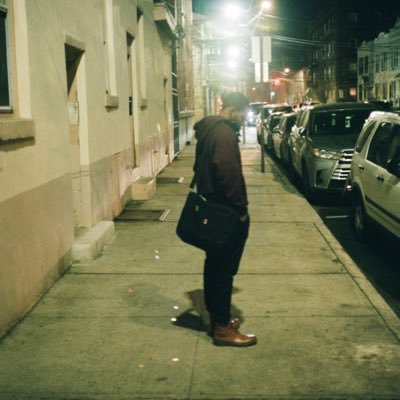
Context behind the image: He was speaking and rapping at Union square Protest for Amadou Diallo 1999. It also seems by a flyer in the back, that it was also a celebration of the release of the anti-carceral hip-hop compilation album, No More Prisons too.
55,933 views • 1 year ago •via X (Twitter)

6 Comments

Kehinde 🇳🇬's profile picture
Kehinde 🇳🇬1 year ago

The context should come as no surprise as he has always used his voice for justice ✊🏾

tijay!'s profile picture
tijay!1 year ago

and his daughter is just as cool that’s legacy

Caleb Ward's profile picture
Caleb Ward1 year ago

one of the illest that you ever known

SOLAECLIPSE®️'s profile picture
SOLAECLIPSE®️1 year ago

This makes the pic even more fire wow

Kim Jong Oomf's profile picture
Kim Jong Oomf1 year ago

Mos and Lupe were too honest to be in the game

vegan hip hop movement's profile picture
vegan hip hop movement1 year ago

“hip hop for respect”

Related Videos

Although Hip-Hop is musically centered, the story of how it came to be does not begin: "Once upon a time, a DJ named Kool Herc threw a back-to-school jam in the Bronx on August 11, 1973." That is to say, the story of the more incredible culture isn't how it was created as much as the story is how it happened! Hip-Hop, in the broader context of policies like benign neglect implemented by President Richard Nixon, was a reaction to cuts to public education and other social services, legal segregation in the form of redlining, and failed gentrification of the Bronx, NY, in the early 1970s. Hip-Hop was anti-establishment because the establishment was anti-Hip-Hop. By 1980, the innovation in Hip-Hop was primarily driven by its diversity, but as one of my favorite scenes in the movie Wild Style depicts, becoming a part of Hip-Hop culture was also more elusive than it is today, "Yo, I'm ready to paint Virginia but yo what are you doing here in the yard you're not supposed to be here." Hip Hop was powerful because it was a culture you couldn't choose to enter. It was more a matter of whether or not you were allowed, and that hinged upon not the color of your skin but your authenticity, creativity, and the accumulated direct experiences you had with its stewards; in other words, if you wanted to be down, you had to prove yourself over time, regardless of race. Today, bigotry and race-signaling slogans like "they're not like us" have become the barometer for exclusivity in Hip-Hop culture, not aptitude in a given element like it used to. At least based on the framework of Hip-Hop counterculture and what it was countering while I was growing up in the 70s. At what point did Hip-Hop go from your participation in it being grounded on the merit of your creativity, leveling out the playing field, to being overwrought with zealots restricting one's participation based on race, and why?

BROLICARM

15,712 views • 2 years ago