Загрузка видео...

Не удалось загрузить видео

На главную

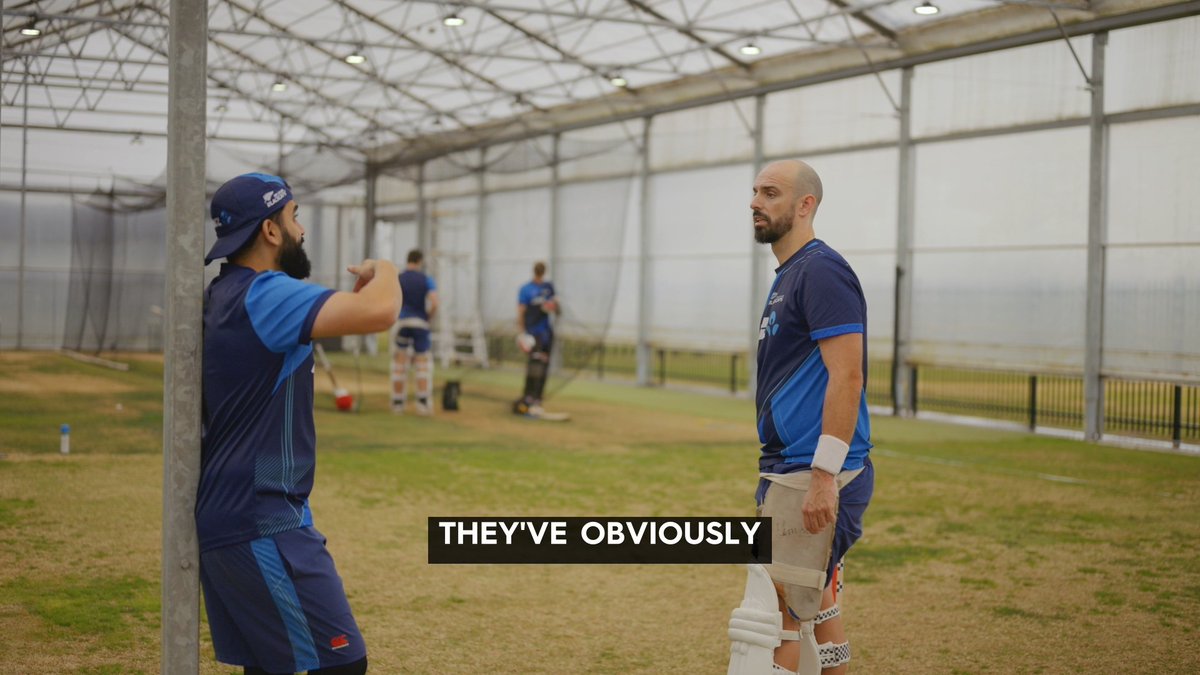
🔉Cricket Comes Together Teddies Partnerships - Development Evening Roundup 💬 Keynote speaker Leshia Hawkins - England and Wales Cricket Board MD for Recreational Cricket 🏏 Workshops with 120+ volunteers, clubs, partners, councillors and officers Read & hear more about the evening 👇

13,722 просмотров • 2 лет назад •via X (Twitter)

Комментарии: 2

Фото профиля Adam Wood
Adam Wood2 лет назад

@teddiespartners @LeshiaHawkEye @ECB_cricket @crickether - the audio from 0:10 to 0:25 is via BT lapel mic recorded in big auditorium. @thomairs was the interviewer / audio magician so can advise what he used.

Фото профиля Mohammad Husnain
Mohammad Husnain2 лет назад

@ECB_cricket @teddiespartners @LeshiaHawkEye It seems good

Похожие видео

🇩🇪🏴󠁧󠁢󠁥󠁮󠁧󠁿 Police say 60 Crystal Palace fans classified as "known troublemakers" were ordered to leave Leipzig city centre on Tuesday evening while two arrests were made following clashes between supporters of the Eagles and Rayo Vallecano. Thousands of fans have travelled to Leipzig for the Conference League final between Palace and Spanish side side Vallecano on Wednesday (20:00 BST). Saxon State Police confirmed two arrests were made and all individuals involved in the disturbance were ordered to leave the area. Two officers, one from the Federal Police and one from the State Police, sustained minor injuries during clashes with both sets of fans. "At approximately 20:00 (19:00 BST), around 300 Rayo Vallecano fans, considered to be at high risk of hooliganism, were gathered in the city centre," read a statement from Saxon State Police. Police say clashes "suddenly broke out" with Palace fans sat on the outdoor terraces of both Leo's Brasserie and Dhillons. "Bottles, beer glasses, and pub furniture were thrown at each other. Physical altercations also occurred," added the police statement. "Officers on the scene immediately intervened and separated the two groups of fans, checked the identities of more than 300 people, and issued dispersal orders. "Known troublemakers from Crystal Palace moved to the area of the Penguin Ice Bar and approximately 60 individuals provoked passing Spanish fans and were surrounded by federal police." The police operation concluded at approximately 03:15 on Wednesday morning, with more than 320 fans involved. Local police say the 'fan fest' in the market area of Leipzig remained peaceful throughout, with about 2,000 fans from both clubs present.

𝐂𝐚𝐬𝐮𝐚𝐥 𝐔𝐥𝐭𝐫𝐚 𝐎𝐟𝐟𝐢𝐜𝐢𝐚𝐥

107,691 просмотров • 4 месяцев назад

When Immovable object met an Irresistible force... On This Day; In 1998 at Trent Bridge, during the fourth Test between England & South Africa, cricket fans witnessed an unforgettable duel that has since become the stuff of legends... England, trailing 1-0 in the series, faced a crucial moment on the fourth evening of the match... In Allan Donald's third over, he unleashed a ferocious delivery aimed straight at Mike Atherton's throat. Atherton, trying to fend off the ball, was struck on the hand, causing it to balloon into the air... Umpire Steve Dunne, however, did not declare him out... Donald, stunned & angry, warned Atherton: "You better be f****** ready for what's coming because there'll be nothing in your half." What followed was 40 minutes of some of the most intense cricket ever seen... Donald bowled with unmatched ferocity, hurling bouncers at both Nasser Hussain & Atherton, who valiantly stood their ground despite being repeatedly struck... The tension reached its zenith when Hussain edged a delivery from Donald, only for the catch to be dropped by Mark Boucher. Donald, unable to contain his frustration, screamed in disbelief... This dramatic encounter proved pivotal, as England went on to win this Test & a thrilling final Test at Headingley by 23 runs, clinching this series by 2-1(After beind down & out in the 1st two Tests) Despite the fierce competition on the field, a moment of camaraderie emerged afterward. Donald & Atherton shared a beer, laughing about the umpire's controversial decision... Donald remarked, "He knew he'd gloved it, and we had a laugh about the fallibility of umpires. He said, 'What would you have done?' and I said I wouldn't have walked either." In a gesture of sportsmanship, Atherton signed the glove he used during that fiery exchange & gave it to Donald, a memento of a remarkable battle & mutual respect between two cricketing greats... To this day, this Test series remains my most favorite Test series...

Abhishek AB

234,670 просмотров • 2 лет назад

An Open Letter to Aravinda de Silva on his 59th Birthday : As a lifelong fan, I’m at a loss for words when it comes to expressing just how much you’ve meant to the game & to all of us who grew up watching you... At just 5ft 3 ½ inches, you didn’t just play cricket; you redefined it. You weren’t merely an entertainer; you were an artist, painting a masterpiece with every shot. Your incredible footwork, sharp judgment & extraordinary eye for the ball made every delivery seem like another stroke of brilliance. You could read a bowler's intentions almost as soon as the ball left their hand; an ability that set you apart from the rest... I still remember how my father keep telling me in my childhood about those little yet iconic moments like when you played against India for the first time in Tests & in that game smashed 1st ball of the 4th inning for a Six to Kapil Dev or on your 20th birthday, when you took on the great Imran Khan & sent him for a towering six on the leg side to bring up your first Test hundred... That fearlessness was just a glimpse of what was to come as you & Sri Lankan cricket embarked on an incredible journey together, lifting a nation from its early struggles to the pinnacle of world cricket... In those early days, Sri Lanka may have been the underdogs; smiling, talented, but often on the losing side. Yet, you were always there, a quiet force, crafting your way to greatness with grace & determination... We remember you as "Mad Max" : a daring batsman with an insatiable hunger to dominate, lighting up every match with flashes of brilliance... For many, it’s easy to focus on raw numbers, but for us, it was never just about the stats. It was the magic you brought to the game, the joy you instilled in every fan... And then came that unforgettable 1996 World Cup: You didn’t just lead Sri Lanka to victory; you made history! In the final against my team: Australia, your all-round brilliance: three wickets with your cunning off-spin & a dazzling century: was nothing short of heroic... But it’s the semi-final at Eden Gardens that still stands out. Battling sickness, you walked in with Sri Lanka in trouble & silenced a 100,000-strong crowd with a batting masterclass by hitting 14 boundaries in just 47 deliveries... Calm, controlled & precise; you weren’t just attacking for survival; you were taking the game to the next level. That moment mesmerized me, a 5-year-old boy, and today, as a 33-year-old, it still resonates... For a few golden years, you stood alongside legends like Tendulkar & Lara, unstoppable between 1997 & 1999, scoring runs with breathtaking consistency. And even when the fire seemed to fade, you found a way to return, at 37, after shedding 12 kilos, showing us all flashes of the Aravinda we adored. Though it wasn’t the sustained brilliance of your prime, you remained a middle-order force, capable of single-handedly changing the course of any match... All Sri Lankan fans must remember the heartbreak of your run-out in the 2003 World Cup semi-final, knowing that your dismissal signaled the end of Sri Lanka's hopes. But even then, your importance to the team was undeniable; your presence alone lifted the spirits of every fan & player... You may not have had the consistency of a Sangakkara or the explosive hundreds of Sanath, but in those fleeting magical moments, you achieved heights that very few could. You brought a kind of magic to cricket that lives on in our hearts... Here’s to you, Aravinda; the legend, the magician, the soul of Sri Lankan cricket... Happy Birthday! Sharing this short clip where you smashed sixes for fun to likes of Akram, Lee, McGrath...

Abhishek AB

67,981 просмотров • 2 лет назад

🚨 STEVE CRAGGS ON THE LATEST $ESX AND PROPERTY DEVELOPMENTS: 13.03.2025 🚨 📖 Read below 📺 Watch the video Turn 🔊 on Hello EstateX Family, Steve Craggs, CEO of REMAX England & Wales and recently appointed board member of EstateX, has a couple of exciting updates for you ( The team has been working hard on developing new and promising EstateX apps that will utilize $ESX as a utility token to stimulate USD inflow into the token. This includes: 1⃣ AI agent integration: 2⃣ Liquidity provision infrastructure, including a fully-fledged crypto off-ramp OTC desk. 3⃣ L1 blockchain development: These developments complement our pre-existing property apps: LaunchX, TokenizeX, PropXchange, EstateXPay, CapitalX, and EstateX University ( As an $ESX investor like you, Steve is enthusiastic about the initiatives being implemented to ensure utilities function effectively from day one. 🏡 First Property Offerings – Location Scouting in Europe Steve Craggs is currently scouting additional property locations to expand on our first launch. Somewhere in sunny Europe, he's exploring potential opportunities for our investors. You can find clues in the video below! Following the success of our core achievements, even larger entities are now approaching Steve for EstateX collaborations. Key milestones included: ◾️ The successful sale of our first property: ◾️ The onboarding of top-tier names, and partnerships with Wyndham and Ramada (two of the world's largest hotel chains): 🌍 What This Means for EstateX’s Future This signals great promise for what’s ahead once we're fully operational and launched. We anticipate that future opportunities will significantly exceed those we currently have. 🇺🇸 Major News for U.S. Investors Steve C also has exciting news for our U.S. investors: he’s evaluating the first property offering available to U.S. retail investors, which will become available very soon. Brock Pierce, co-founder of Tether and a trusted investor and advisor, will play a key role in this initiative. 🚀 Exciting Times Ahead With new property initiatives, expanding $ESX utility, and high-profile partnerships, the future of EstateX is shaping up to be bigger than ever. Stay tuned for more updates! Follow us on X and turn 🔔 notifications 🔛

EstateX

141,942 просмотров • 1 год назад

New footage of Jen and Matt McCabe at the O'Keefe's home the evening after the murder of John O'Keefe. On 1/30/22, Jen and Matt arrive at 8:29pm and then left with their daughter at 9:12pm. Jen looking interestingly exhausted as she first arrives and quite snappy with her daughter when they leave 45 minutes later. 🤔 Earlier that day, Jen and Kerry Roberts had spent 5 hours at the O'Keefe's. From there, they would 🔹️stop at Jen's for 7 minutes 🔹️stop at 34 Fairview Rd for 4 minutes and then proceed to Canton PD Detective Sergeant Mike Lank's home. This off-the-books meeting lasting roughly 45 minutes. Important to note, Lank has a long history with the Albert family. He, in fact, was the only officer trusted to enter 34 Fairview Rd multiple times during the early hours of 1/29/22. Jen McCabe had multiple police interviews on 1/29. At one point in the morning, she called Lank back to 34 Fairview to speak. He arrived and spoke to her in front of many Albert family members (Brian, Nicole, Chris, Julie, Kevin) and Brian Higgins. This is where Jen said, for the first time, Karen Read allegedly “admitted” to running over John. “I hit him, I hit him, I hit him”. On 2/1, she had another MSP interview at her home. Kerry Roberts had a police interview on 1/29 where she texted Jen that officers were about to interview her. Jen telling Kerry to call her after.. which is precisely what happened. On 2/1, Kerry had another police interview at Jen's where they were making a “timeline” together with Jen's sister Denise Galvin. Later that evening, Jen would be speaking to Michael Proctor on the phone and Kerry asked to speak with him as she suddenly “remembered” things. Karen Read was arrested on 2/1 at 7:40pm. After, Jen and Kerry Roberts would eagerly be texting one another about how their detective skills solved a murder. Jokingly, Kerry would claim Sandra Bullock to play her in the movie that was surely to be made. Jen adding that they were like an 80s detective sitcom show and Matt is like the character played by Tom Selleck. Due to the history of ever-changing timelines by Jen, one has to wonder.. was her spending 6 hours in total at the O'Keefe's home after the murder of John genuine (as a "caring friend") or was something more nefarious going on?

BoozeyBeauty

525,478 просмотров • 7 месяцев назад

Alan Jackson played his last show last night. He is one of the good ones. A patriot and Christ centered. He has a neurological disease which impedes his balance and ability to play the guitar. He is my favorite country singer of all time. He told stories. He made you not just hear, but FEEL what it is to be a “good ole boy”. He was also never afraid to be bold in his faith. But I have a more personal story about Alan Jackson I’d like to share and it is the reason I have always been a fan of him and his music. Back in 1992, I was going on my first real trip with my mom up to New York to see her sister and my cousins. It was the first time I had ever flown. Our flight left later in the evening, not quite a red-eye, but close. I think it was somewheres around 10 or 11pm. At the time, Charlotte Douglas Airport was way smaller and far less busy than it is now. So me and mom board the plane, and I take the window seat (as kids usually do). Me and mom are chit chatting, and she was doing her best to calm me. See, me and flying don’t really get along. Neither do me and heights - never have, prolly never will. To say I was a bit wound up about the flight would be an understatement. The plane is continuing to board, and there weren’t many folks on the plane. As memory best serves, it was maybe 1/3 full, if that. Everyone is seated, doors are shut, plane is ready to push. Then the pilot comes over the speaker to tell us there would be a slight delay as some folks were making their way to the plane. Door opens up, and 5-6 dudes get on the plane. All wearing stetsons and boots. The 3rd dude on to the plane stood out a little more because he had frills hanging off his coat and he was wearing a white stetson. He was noticeably taller than the rest as well. The first two dudes keep coming down the aisle and end up sitting right behind us. The third dude stops at our row, looks at my mom and me, tips his hat and says “Evenin, folks. How y’all doin?”, then takes the aisle seat right next to my mom. My mom, who rarely ever swore, then says “Holy shit. You’re Alan Jackson”. He says “Yes’m I am, and you are?”. So mom introduced us. But here’s what really sticks with me: Mom had told him I was a bit scared for my first flight. Wanna guess what Alan Jackson did? He asked if it was okay to pray with us. So he did. After which, we spent the entire flight chatting with Alan Jackson. He and his band even belted out a couple songs along the way. It is legit one of those memories I will never forget. I never got to see him to live. But I’d say this experience trumps any concert of his I could have went to. I think something like that speaks more to the man he is than his music. Here he is, just met this kid and his mom 5 minutes prior, and he is offering a prayer to calm my fears for my first flight. So, in closing - I pray Alan can find true peace in his retirement, and I pray that the Father will provide him with healing and assuage his suffering with the disease he has. Thank you for the prayer, Alan Jackson. Thank you for all the wonderful music, and thank you for never being afraid to profess your love for our Lord and Savior Jesus Christ.

Paul Fleuret

66,704 просмотров • 3 месяцев назад

The Real Threat to India’s Democracy & Constitution Comes from #NepoKids #NepoBabies of Dynastic Looter Families (Please listen to the attached short clip (in Hindi & Marathi) for context.) 1. It is basic common sense and explicitly protected under the Official Secrets Act and constitutional provisions that any communication, oral or written, between the Prime Minister, Defence Minister, and the Chief of the Army Staff or any senior defence personnel is classified and cannot be made public or debated in Parliament or any public forum. 2. Yet, with clear vested interests to derail and whitewash the #ParliamentSession2026 and #BudgetSession2026, #RahulGandhi created unnecessary drama by demanding the disclosure and parliamentary debate of alleged communications between then Army Chief Gen Naravane, Prime Minister Narendra Modi ji, and Defence Minister Rajnath Singh ji. As rightly pointed out by the Lok Sabha Speaker, there were reports of a Congress plan to use women MPs to heckle and even physically harm the Hon’ble Prime Minister during his reply to the President’s address. 3. Before and during every Parliament session, this dynastic heir shamelessly stages manufactured controversies like Pegasus, demonetisation, farm laws, Adani-Ambani, and more, purely to disrupt proceedings, waste the nation’s precious time and resources, and divert attention. These NepoKids care neither for the nation, nor for democracy, nor for the Constitution. Their only goal is to grab power at any cost to continue looting the country. 4. The same pattern is visible in Maharashtra. Dynasty heir #RohitPawar attempted to fraudulently capture the Mumbai Cricket Association (MCA) by illegally inducting Pawar family members, relatives, and friends as lifetime members. Recently, during the hearing of his appeal against the Bombay High Court’s stay order, the Hon’ble #SupremeCourtOfIndia strongly reprimanded him for employing dubious tactics to seize control of the MCA. 5. Rohit Pawar’s grandfather, Sharad Pawar, has used identical methods for decades to take over trusts and institutions founded by other stalwarts like Yashwantrao Chavan Pratishthan, Rayat Shikshan Sanstha, Vasantdada Sugar Institute, and over 100 other NGOs and cooperative bodies, by illegally packing them with family members, relatives, and loyalists as lifetime members. 6. Ever since 1978, when #SharadPawar became Chief Minister by backstabbing Vasantdada Patil, Maharashtra’s politics has been mired in corruption, instability, and betrayal, thanks largely to leaders like Sharad Pawar and Uddhav Thackeray. In 2019, both again betrayed the people’s mandate by stealing power through overnight alliances. 7. Even the late Hon’ble Ajit Pawar had publicly urged Sharad Pawar to retire from active politics and give the next generation of leaders and workers a chance to serve the people. Yet, at 85, why does Sharad Pawar refuse to step back and continues to play divisive, dirty political games? 8. At the funeral of late Ajit Pawar, Supriya Sule’s conduct was shockingly arrogant, as if she were attending a celebration rather than mourning. Sharad Pawar had once called Sunetra Tai an “outsider” to the family. Is this the progressive mindset he claims? #SupriyaSule tai, should also explain to farmers how she earned ₹110 crore from farming brinjals on just 10 acres of land. 9. It is high time dynastic politicians and their #NepoKids #NepoBaby stop these cheap theatrics and dirty power games. In today’s world of science, technology, and social media, the Gen Z, Gen Alpha, Millennials, and Gen X will no longer tolerate such manipulative tactics from entitled dynasts. India deserves better than family fiefdoms masquerading as politics. #Nepotism #SaveDemocracy #SaveConstitution #MaharashtraPolitics 👇

KailashGWagh 🇮🇳

265,481 просмотров • 8 месяцев назад

In the spring of 2022, former President Barack Obama gave a major policy addressat Stanford University’s Cyber Policy Center, where he laid out a sweeping proposal for government censorship of social media platforms through the Platform Accountability and Transparency Act. Six days later, President Joe Biden’s Department of Homeland Security announced that it had created a “Disinformation Governance Board” to serve as an Orwellian Ministry of Truth with the clear goal of controlling the information Americans could access online. At the heart of Obama’s vision for Internet censorship was legislation that would have authorized the US government’s National Science Foundation to authorize and fund supposedly independent NGOs to censor the Internet. The DHS and Stanford Internet Observatory, which was part of the Stanford Cyber Policy Center, pioneered this censorship-by-proxy strategy as a way to get around the First Amendment in 2020 with posts raising concerns about the 2020 elections and in 2021 with “narratives” expressing concern about the Covid vaccine. The 2024 election of President Donald Trump significantly reduced the threat of Obama, DHS, and NSF censoring the American people. Trump defunded much of the Censorship Industrial Complex. The Platform Accountability Act is going nowhere in Congress. Elon Musk fired most of the censorship staff at Twitter and has allowed a significantly wider range of speech on the platform. And even before Trump’s election, Stanford donor Frank McCourt stopped funding the Stanford Internet Observatory after Public, Racket News, and House Weaponization Subcommittee Chairman Jim Jordan exposed its central role in the DHS censorship-by-proxy scheme. But now, foreign governments, including Europe, the UK, Brazil, Australia, and others are demanding censorship, including of the American people. The risk is that US tech companies will find it significantly less expensive to have a single global censorship regime and just go along with foreign censorship requests. Facebook complied with Biden administration demands to censor because it needed Biden’s help in dealing with European censorship officials. And the Brazilian government forced Elon Musk to continue censoring the Brazilian people after it froze Starlink’s assets. And Public has discovered that the Stanford Cyber Policy Center, which is led by Obama’s former ambassador to Russia, Michael McFaul, is at the heart of a new, secretive, and possibly illegal censorship initiative that appears even more ambitious than the one Obama proposed in 2022. On September 24, the Cyber Policy Center hosted a secret dinner between its leaders and top censorship officials from Europe, UK, Brazil, California and Australia. The meeting was titled “Compliance and Enforcement in a Rapidly Evolving Landscape.” Frank McCourt, the same person behind the Stanford Internet Observatory, financed the gathering through his “Project Liberty Institute,” (PLI), toward which he gave $500 million to “strengthen democracy” and “foster responsible technology.” Public emailed all 21 participants and organizers and only heard from four, PLI, the Australian government, the UK government, and the European Union, which declined to comment because, even though Public gave it over 24 hours, a spokesperson said, “We would need several days.” The UK government said, “The legal framework gives Ofcom power to enforce the duties in the Act which are related to securing protections for people in the UK; it does not give Ofcom powers to enforce under any other legal regimes…. Ofcom has always engaged with various international forums and networks across all of the sectors we regulate, including online safety, spectrum, telecommunications, post, and broadcast and media. Regulators around the world regularly exchange insights, experience, and best practice.” A spokesperson for PLI said it “has made unrestricted gifts to several academic research programs, including Stanford University” and that “PLI does not receive funding from governments, intergovernmental organizations, or large technology companies.” But PLI’s own policy “blueprint” reveals that it is demanding a single total global censorship regime and intends to use the EU’s market power, known as the “Brussels effect,” to force big tech companies to comply. The blueprint calls for governments to “Recommit to a Single, Global Internet,” with “regulatory interoperability and oversight, to achieve a single unified market” and use the large size of the EU market to “drive bilateral and multilateral agendas to formally enshrine reciprocal guarantees.” A spokesperson for the Australian government said, “Whilst in attendance at Stanford for the 2-day conference, some attendees, including trust and safety researchers, industry, civil society, and government representatives, were also invited to attend an informal evening roundtable event organised by Stanford University entitled, ‘Compliance and Enforcement in a Rapidly Evolving Landscape.’ This roundtable did not involve any discussion of compliance coordination or regulatory information sharing.” The Australian spokesperson claimed that “eSafety has no role in regulating hate speech or disinformation. eSafety has no remit or interest in regulating the affairs of other nations, nor does it have any role in diplomatic, trade or other government-to-government relations.” But it also said, “As the internet is global and functions irrespective of national borders, by necessity eSafety collaborates with law enforcement, other government agencies, and non-government partners around the world, including in the United States.” The leaked agenda’s stated purpose was to “discuss the state of compliance and enforcement” in order to “identify where data, research, and expertise can enable more effective compliance with and enforcement of existing policy.” Much of the following two days of the public conference were focused on coordinating government censorship (“regulation”) of social media platforms, and the other nations that attended the meeting are all intensively involved in censoring their citizens and US tech companies. And, the head of Australia’s eSafety, Julie Inman-Grant, who was a keynote speaker at Stanford’s foreign censorship meeting, is also the head of a global government censorship network that serves as forum, she told the World Economic Forum, “to help us coordinate, build capacity and do just that…. We use the tools that we have, and can be effective, but we know we’re going to be, go, much further, when we work together with other like-minded independent statutory authorities around the globe.” As such, the people who are demanding censorship are once again spreading disinformation about what they are doing. All of this is happening in a context of global censorship intensifying. The UK government arrests 30 people per day for “offensive” social media posts, is attempting to censor 4Chan, which has no servers in the UK, and will mandate digital IDs for employment, which may give unprecedented control to politicians and bureaucrats to censor. The Brazilian government has, for year,s been censoring journalists and policymakers, incarcerating people for legal social media content, and threatening prosecution of journalists, including this author. And several European nations are censoring and arresting their citizens, preventing opposition political candidates from running for office, and preparing to implement digital IDs. Why did Stanford Cyber Policy Center hold this meeting, what is its strategy for global censorship? Who leaked the agenda to Public and why? And what can be done to stop Stanford, Brazil, Australia, the EU and others from realizing their totalitarian censorial vision? Please subscribe now to support Public's award-winning investigatie journalism, read the rest of the article, and watch the full video!

Michael Shellenberger

196,317 просмотров • 11 месяцев назад

War Diary Day 1,391 Blaise Metreweli, the Chief of Britain's Secret Intelligence Service, sticks it to the Killer in The Kremlin. And all his creepy helpers. I agree with every fucking word. VPDFO! (Transcript of the speech, exactly as it was delivered) 📷 Welcome inside MI6. This iconic building, familiar to movie fans everywhere, is the home of Britain’s foreign intelligence agency. But whilst hundreds of my team pass through the entry pods each day, the truth is that most of our work happens many miles away from this place - out of sight, hidden from the world, undercover, recruiting and running agents who choose to place their trust in us, sharing secrets to make the UK and the world safer. You might pass one of our officers on the street or sit next to them on a plane when you’re about to set off on an adventure of your own, or in a foreign city taking selfies by the sights. Whether it’s in seemingly everyday places, or on the front line embedded with our military, MI6 is there. In my first few weeks, I’ve heard repeatedly that MI6 is trusted and respected globally, two things that we never take for granted. We are seen as a source of hard power, soft influence and rapid innovation. I’ve also heard that people want to believe in MI6. It’s my job to make sure they can. Today, I want to talk about human agency. We all have choices to make about how we deal with the undercurrents shaping our world. About how, in our new, faster, more dangerous and technology-mediated world, it will be our rediscovery of our shared humanity, our ability to listen, and our courage that will determine how our future unfolds. Conflict is not inevitable. Understanding human nature is in my bones. From a family shaped by devastating conflict, I grew up with a deep sense of gratitude for the UK’s precious democracy and freedom. I spent much of my childhood overseas, which is where my passion for travel and adventure began. I studied anthropology, and later psychology and AI, exploring how we make sense of the world and each other. It’s why I was drawn to MI6: it offers strong purpose, a chance to serve and a belief in the positive power of human connection. Like the Service, I’m operational to my very core. Over nearly three decades, my career has involved recruiting and running agents in hostile territory; and leading operations in warzones to defuse threats and support peace. Always in teams, always learning from others. Over the years, I’ve worked with hundreds of brilliant partners – and indeed occasionally those we’d label as adversaries – across dozens of countries, tackling weapons proliferation and terrorism. During my time at MI5, I saw close up what it takes to defend Britain from being targeted by hostile states. You’ll find many like me in my organisation: powerfully motivated to protect our precious country; curious about how our world is changing, joining dots and taking action, across domains. But it was in my last role as ‘Q’, where it was my job to turn emerging technologies from threats to opportunities that I could most see the world changing. As I dug deep into data and extraordinary innovation, I could see how technology was rapidly reshaping not just our capabilities but also conflict and trust, truth and global power. Let me lay out how I see the global issues MI6 must tackle. Because the greatest danger we face is to misunderstand the nature of the problem. Let’s be in no doubt. Our world is more dangerous and contested now than it has been for decades. Conflict is evolving and trust eroding, just as new technologies spur both competition and dependence. We are being contested from sea to space, from the battlefield to the boardroom. And even our brains, as disinformation manipulates our understanding of each other and ourselves. Across the globe, we are now confronting not one single danger, but an interlocking web of security challenges – military, technological, social, ethical even – each shaping the other in complex ways. We are now operating in a space between peace and war. This is not a temporary state or a gradual, inevitable evolution. Our world is being actively remade, with profound implications for national and international security. Institutions which were designed in the ashes of the Second World War are being challenged. New blocs and identities forming and alliances reshaping. Multipolar competition in tension with multilateral cooperation. But there’s something distinctive that will make this change unlike any other: the impact of advanced technologies, which will accelerate the pace and scale of every threat and opportunity, and increasingly, individualise them too. Advances in artificial intelligence, biotechnology, and quantum computing are not only revolutionising economies but rewriting the reality of conflict, as they ‘converge’ to create science-fiction-like tools. There’s incredible promise in all this for all of us, from green technologies to hyper-personalised medicine. But also peril. AI-powered robots and drones are brilliant for scaled manufacturing but devastating on the battlefield. Discoveries that cure disease can also create new weapons. And as states race for tech supremacy, or as some algorithms become as powerful as states, those hyper-personalised tools could become a new vector for conflict and control. Power itself is becoming more diffuse, more unpredictable as control over these technologies is shifting from states to corporations, and sometimes to individuals. And at the same time, the foundations of trust in our societies are eroding. Information, once a unifying force, is increasingly weaponised. Falsehood spreads faster than fact, dividing communities and distorting reality. We live in an age of hyper-connection yet profound isolation. The algorithms flatter our biases and fracture our public squares. And as trust collapses, so does our shared sense of truth – one of the greatest losses a society can suffer. The defining challenge of the twenty-first century is not simply who wields the most powerful technologies, but who guides them with the greatest wisdom. Our security, our prosperity, and our humanity depend on it. Our world is being remade. And for the first time, we are all at the heart of it. My Service must now operate in this new context too: not just expert on hostile states, terrorism, proliferation and more, but also fluent in technology, able to anticipate the second and third order effects of advances that reshape the world in minutes not months. And as China will be a central part of the global transformation taking place this century, it is essential that we, as MI6, continue to inform the government’s understanding of China’s rise and the implications for UK national security. I’m going to break with tradition and won’t give you a global threat tour, but will focus here on Putin’s Russia. We all continue to face the menace of an aggressive, expansionist and revisionist Russia, seeking to subjugate Ukraine and harass NATO. I find it harrowing that hundreds of thousands have died, with the toll mounting every day, because of Putin’s historical distortions and his compromised desire for respect. He is dragging out negotiations and shifting the cost of war onto his own population. But Putin should be in no doubt, our support is enduring. The pressure we apply on Ukraine’s behalf will be sustained. Because it is fundamental not just to European sovereignty and security but to global stability. Alongside the grinding war, Russia is testing us in the grey zone with tactics that are just below the threshold of war. It’s important to understand their attempts to bully, fearmonger and manipulate, because it affects us all. I am talking about: Cyberattacks on critical infrastructure. Drones buzzing airports and bases. Aggressive activity in our seas, above and below the waves. State-sponsored arson and sabotage. Propaganda and influence operations that crack open and exploit fractures within societies. Countering this activity is the work of intelligence and security services across Europe and the globe. And as the Foreign Secretary made clear in a speech last week, the UK is defending itself against this Russian information warfare – sanctioning Russian media outlets pushing Kremlin narratives. The export of chaos is a feature not a bug in this Russian approach to international engagement; and we should be ready for this to continue until Putin is forced to change his calculus. So, how should we respond? It’s not enough now just to understand the world. We must shape it too. MI6 is well-positioned to respond to these threats and wider global instability. And we will continue to evolve, just as we have throughout our long history. The UK government has invested in our intelligence agencies and we are all using our unique powers to keep the British people safe. Our ‘open and connected’ partnerships across the UK Intelligence Community, with HMGCC, NSSIF and the wider tech ecosystem in the UK will become even more important – because in the digital battleground, no single organisation can prevail alone. As a global agency, MI6’s inbuilt strength is our partners and our people. The risks I have set out require us to work ever more closely with our colleagues in MI5, GCHQ and in defence and diplomacy. But also with our Five Eyes partners, with the E3, the EU, NATO, those across the Middle East, the Indo-Pacific and beyond. And with many valued partners whose identity needs to remain secret. Together, we integrate our diverse talent, data and tools to meet the threat. AI is a domain in which we will excel, using the technology to augment, not replace, our human skills. Every digital trace, every byte of data, every algorithmic decision has implications for the safety of the lives of the courageous people who work with us as officers and agents, and for the UK’s strategic advantage. Mastery of technology will infuse everything we do. Not just in our labs, but in the field, in our tradecraft, and even more importantly, in the mindset of every officer. We will become as comfortable with lines of code as we are with human sources, as fluent in Python as we are in multiple other languages. Under my leadership, MI6 will continue to attract Britain’s best and most creative minds: linguists and data scientists, case officers and engineers, behavioural experts and technologists. We need people who walk in the shoes and get in the heads of our adversaries. We need people who think differently, challenge assumptions, and act decisively. All can thrive and make a difference at MI6. At an operational level, we will sharpen our edge and impact with audacity, tapping into – if you like – our historical SOE instincts. We’re at our best when we’re hustling to make things happen, because our intelligence is most valuable when it changes reality on the ground. We will take calculated risks, where the prize is significant and the national interest clear. We will never stoop to the tactics of our opponents. But we must seek to outplay them. In every domain. In every way. So intelligence must drive action. Action must deliver advantage. And advantage must serve Britain’s security and prosperity. But at the core, our deeper contribution is also our simplest – how we unlock human agency. Our fast-paced, tech and threat-infused world now generates more heat than light. As nations retrench and rearm, we are losing opportunities to listen to what’s really going on. I’ve seen time and again throughout my career, that this is where MI6 matters most: we listen and we hear. We understand, because we take time to learn languages and cultures, complex technical and historical detail, immerse ourselves in what’s really driving the situation. Across the globe, right now, our officers are finding people with the courage to step forward, and they are taking time to sit and listen to break these tightening cycles of violence. They listen for nuance, for connection, for opportunity. Over the years, I’ve listened to terrorists who have told us how to defuse the bomb because they know that more violence won’t help. To proliferators and smugglers who’ve told us where to find the dangerous material, motivated to protect their children’s future. To people trapped in authoritarian regimes who know, deep down, that their humanity is being chipped away – and that telling us what’s really going on is an important release, allowing us all to find better ways to navigate our changing world. So, we will work with our agents. And we will continue to engage directly, and with respect, with states and organisation currently working against us. Away from the glare of the media, we will use MI6’s convening power wherever we can to make a material difference, bringing parties together to defuse tensions. But the response to the increasing risks we face won’t be delivered by the UK intelligence community alone. Wider society has a role to play too. That includes work taking place in schools across the country so our children don’t get duped by information manipulation. Let’s all check sources, consider evidence, and be alive to those algorithms that trigger intense reactions, like fear. It also means everyone in society really understanding the world we are in – a world where terrorists plot against us, where our enemies fearmonger, bully and manipulate, and the front line is everywhere. Online, on our streets, in our supply chains, in the minds and on the screens of our citizens. We must all stand together against this. As we do today with our friends in Australia after the shocking antisemitic terrorist attack this weekend. My thoughts -and those of my whole organisation – are with the family, friends and loved ones of the victims. Light will always win over darkness. In rising to meet these challenges we, in MI6, will remain anchored to our values: courage, creativity, respect and integrity. And to our principles: accountability and trust are not constraints on our work; they are the foundations of our legitimacy with the British public. Recently, I had the privilege of meeting and thanking a foreign agent who has worked with us for decades, taking extraordinary risks to help keep the UK safe. I asked why. They said simply, ‘Your values. Your integrity and respect. None of us have a future without them’. This moment reinforced to me that we must remain a very human agency. And so, to sustain that trust, MI6 will continue to be more open. Not for the sake of visibility, but because it matters – and as my MI5 counterpart Sir Ken McCallum said recently - because it is a strength. We will continue the practice of speaking publicly, broaden our channels of engagement, and sustain our focus on attracting the most diverse talent to join our Service. Transparency does not mean revealing what must remain secret. It means showing the British people who we are, what we stand for, and why our work matters. We need your trust and support for the difficult and often dangerous work our agents pursue, every day of the year. In an age of uncertainty, one constant remains: the choices made by human beings still determine the shape of the world. Yes, technology can illuminate possibilities: but information requires judgement; complexity demands clarity; and only people can decide which path to follow. The United Kingdom’s global voice has never rested solely on strength – it has rested on trust, principle, and the ability to understand others as well as ourselves. That is also the essence of intelligence: not simply knowing the world, but interpreting it through a uniquely human lens. Ours is the quiet service, the hidden service. It is one rooted in a profound belief that when human beings act with purpose and integrity, they can steady a faltering world. When the Berlin Wall fell, it was our shared belief in freedom that carried Europe forward. When acts of terror targeted open societies, it was intelligence, cooperation and resolve that preserved them. And when adversaries blur fact and falsehood, our task is to defend the space where truth can still stand. As we step into the future, the tools at our disposal will evolve. But what will always matter most is the human element – the person who stands in the shadows and says: this is right, and that is wrong. That choice – the exercise of human agency – has shaped our world before, and it will shape it again. Because in the end, it is not what we can do that defines us, but what we choose to do. Thank you. Published 15 December 2025

John Sweeney

42,257 просмотров • 9 месяцев назад

Zack Polanski on BBC Radio 4's Today prog calmly knocking back everything Nick Robinson throws at him across 17 minutes NR (00:00.2), "Delighted to say that Zach Polanski is here in the Today programme studio, for the latest, indeed, for the last of our party leader interviews. Morning to you and thanks for coming in." ZP (00:09.2), "Thanks for having me." NR (00:09.8), "Nick, I want to talk to you about what your party would do if it does indeed gain some power after the votes on Thursday. But I want to begin by putting to you one of the latest storeys about you. A Times investigation says that you've made a series of false or disputed claims about jobs you've had in the past with." NR (00:31.8), "Why, for example, did you say you were a spokesperson for the British Red Cross when they are absolutely clear that, though a supporter of theirs, you were never a spokesperson for them?" ZP (00:42.3), "So I hosted, various fundraisers for the British Red Cross and indeed I would go on stage and speak for them about the amazing work they do tackling humanitarian crises, on the climate crisis and indeed for refugees all around the world. I use the wrong word and I accept that." ZP (00:57.5), "But I would essentially take words on stage with me and speak. It's important, though, and I accept this, that, you know, I don't support any political party and I've made sure that's been taken down." NR (01:06.5), "You say this sort of storey is a fuss about nothing, that you get your facts wrong because it comes up with other examples." ZP (01:11.7), "Well, I think it's totally fine to ask me questions about my past. I would also say in the same breath, though the Times published a pretty anti Semitic cartoon of me last week. I asked them to apologise. And it feels some of these storeys feel like scraping the barrel to kind of go back 10, 15 years. I've had so many friends, I'm literally talking maybe 20 or 30 in the last few weeks who have phoned me and said, a Times journalist has been phoning and they've been desperately trying, trying to find things about your past." ZP (01:36.5), "They asked me lots of questions and seemed disappointed that I didn't have some juicy, dirty gossip." NR (01:41.6), "Yeah, well, there was. Whether you call it juicy or dirty, and it wasn't gossip, it was a fact. The fact that you claimed that as a hypnotherapist, you could enlarge women's breasts using the power of thought. People are entitled to say, what's this guy really about?" ZP (01:57.2), "People are totally entitled to say that. And that's an important part of politics, that people ask you questions. What I would say is that, you know, this was 13 years ago. It was a Sun journalist's idea. I've apologised for that. Because even though it was a son journalist idea, I was an adult and I should have said no, you went along with it." NR (02:12.6), "Yeah." ZP (02:12.9), "It's important to say I wasn't a politician. And I've apologised for it repeatedly." NR (02:16.7), "And the BBC showed that some days later, in fact, you repeated the claim that you could do it. But let us not get bogged down in the past. It is striking, though, that on X last night, when, let's be honest, people who are critics of you are having a go. The Daily Mail calls it the Green Menace on its front page." NR (02:34.1), "How did you react? You said you were under relentless attacks because they, your critics don't want a wealth tax, don't want public ownership. They're trying everything in their power to stop us, you said. It's a curious thing to say, isn't it? Ahead of local elections, Green councillors will not have the power to implement any of those policies, will they?" ZP (02:54.8), "Well, I think the relentless attacks on the Green Party in this election, for a local election have partly been about the local election, but really they're about the bigger picture right now. The bigger picture is when I ran to be leader of the Green party, we had 50,000 members, we've now got 225,000 members. So we are rising." ZP (03:11.1), "And I think lots of people are worried about the prospect. And when I say people, people who own, right wing media, multimillionaires and billionaires who are worried about the prospect that they might have to pay a little bit more tax. And so I think it's important that I focus on the vision and the hope and our actual plan." ZP (03:27.4), "I also think it's a complete reality, though we've seen it in the past before with left wing leaders, that there's no secret, there's no love lost between me and the right wing media. And almost every single day they print things that just aren't true." NR (03:38.8), "But just address the point I raised. Wealth tax councils won't get to do that. Public ownership councils don't get to do that. Well, not entirely. We'll come to that in a second. You are running on a national platform of change that the people who are elected on Thursday, whether in the Welsh Parliament, you don't run candidates in the Scottish one, or in English, local councils simply cannot do." ZP (04:03.2), "Well, I think it's about what are your values as a party? And whilst other party leaders and other parties take donations from oil and gas companies or arms trade companies, private healthcare or gambling, Green Party councillors only have two vested interests and Those vested interests. We want to protect the communities we seek to serve and we want to protect the environment." NR (04:21.6), "Well, let's come to that, then, because most interesting, perhaps, is to look at what Greens say who are running for office. You are not. You are a member of the London assembly, you're not a Member of Parliament, you're not running in these elections. Now, you live in Hackney. Hackney happens in northeast London to be a top Green target for taking control from the Labour Party." NR (04:41.9), "So let's look at protecting communities. For example, on crime, the manifesto calls the Metropolitan Police institutionally racist, homophobic, sexist and misogynists. It goes on to say, greens cannot accept this system. It calls for safe spaces for, heroin users to shoot up, to end cautions for street prostitution and to end what the manifesto calls discriminatory policing of delivery riders." NR (05:08.8), "This is an agenda for an endless fight with the police, isn't it?" ZP (05:12.0), "I don't think so. Baroness Casey, in the last couple of years, did a review into Metropolitan Police and it was actually the findings that found it institutionally racist and misogynistic. Something that Sadiq Khan, the Mayor of London, to his credit, accepts. It is noticeable that Mark Rowley, the Commissioner of the Police, doesn't accept that, yet they continue, to work together in that way." ZP (05:31.1), "On the issue of drug harm, we have the highest drug deaths, of any country in Europe. And every single year for the past 13 years, drug deaths have increased. So I think the question anyone has, and we have in Hackney, is that the war on drugs has clearly failed. It's failed in cities right across this country, and more and more people are, often taking dangerous drugs." ZP (05:50.3), "So do we want people to buy them on the black market or on street corners? Or do we want people to go to a pharmacy or a medical health professional where, if they have an addiction to dangerous drugs, we can work with them to take a public health approach based in harm reduction." NR (06:02.7), "Public health approaches to. Is to legalise hard drugs and to legalise prostitution, you say to legalise and regulate and the regulators. It's still legalised, isn't it?" ZP (06:11.5), "No, the point is you can't just go into a shop and buy drugs, which is how it's presented in the press. Again, because I can keep talking about what councillors can do, rather than what" NR (06:18.3), "you would do if you were Prime Minister, because that's for another interview. Are you saying councillors should cut the police budget? Because that's what it seems to imply when you say, we cannot accept this system, let the council spend Money on crime reduction. Don't give that money to the police." ZP (06:33.7), "It's about reprioritizing. So it's." NR (06:35.5), "Does that mean cut in English?" ZP (06:36.7), "No. So let's look at example. We're straight back onto drugs. A lot of police time is spent on stop and search for cannabis use, for instance. It doesn't escape people's notice that that is often, in the politics of racism, if you're a young black person, I think it's something like you're 18 times more likely to be stopped and searched than your white peer, despite the fact there's no evidence that they're more likely to be dealing or using drugs." ZP (07:00.8), "And so I think it's important that we make sure the police time is spent properly, which I think is about community prevention, about cohesiveness and bringing communities together, particularly in, like, whether it means redirecting the budget." NR (07:11.4), "Does it mean the police budget?" ZP (07:12.9), "Well, it means redirecting within the police budget, so making sure that the time police are spent is spent on community safety." NR (07:18.2), "Well, it's interesting that we talked about police because, as you know, you've come under serious criticism for retweeting criticism of the action of the police officers who stopped the alleged attacker of Jews in Golda's Green. Now, you apologised for retweeting that." NR (07:34.1), "You said you should have a meeting with the head of the Met. You sent him a letter. I want to ask you a different question. You've not apologised for the content of that. Why did you empathise with the attacker, and not with police officers who feared for their own lives and were trying to protect other people's lives?" ZP (07:53.3), "I think there's two things in that that I, really clearly want to say. The first is my very first response to the attack was to be horrif, as everyone was, I'm sure. And the first thing I posted was solidarity to the victim, to the family and indeed, to people who are suffering right now, including as a Jewish man, where Jewish safety is not abstract." NR (08:12.0), "But then you posted that officers were repeatedly and violently kicking a mentally ill man in the head when he was incapacitated by a Taser, caused extreme offence to those officers, to the head of the Met and to many people. I ask you again, why did you empathise, Empathise with the attacker, not with the police officer." ZP (08:28.9), "As I said, there's two things I wanted to say, so that was the first. The second, what I want to say is two things can be true at the same Time officers are incredibly brave when they run towards scenes of crimes that most people, including myself, would want to run away from. At the same time, I think it is accurate, and that I was also traumatised, by seeing, someone handcuffed and completely, repeatedly kicked in the head." ZP (08:51.7), "Now, sure, if you'll forgive me, it is an answer," NR (08:54.4), "but it's not an answer to the question. You posted something with the power that you have, with the number of people who follows us, and not empathising in that post with the Jewish community or critically with the police officers, you empathise with the attacker. Look what they're doing to the alleged attacker." ZP (09:11.1), "I don't think it was your choice. As I say, the first thing I did was show solidarity to the victims and I thank the officers. Second, though, I think the sign of a compassionate society is how we treat people, even people who have done horrific things, because actually, the way we do justice in this country is in court." NR (09:26.0), "You said a key value of the Greens was protecting communities. What are your proposals for protecting the Jewish community?" ZP (09:33.5), "The Jewish community is not safe right now. And as I said, as a Jewish man, this isn't abstract for me. In fact, in the last six weeks alone, two people have been arrested. So how would you protect anti Semitic attacks towards me? I think there's lots that needs to happen in this country. The first is community cohesion and community building. Some of the work that I'm proudest of in London, that I see Londoners do, is where I see the Jewish community working alongside the Muslim community." NR (09:55.1), "What would you do? What would Zach Polanski do in order to reduce attacks on the Jewish community?" ZP (09:59.9), "So, first of all, to invest in that work, that community, faith work, to make sure communities stand together. Second, to make sure that the Jewish community, give them the investment that they need. In fact, what the Prime Minister has been doing to make sure that happens. I do think a police response is the last response when everything before it has failed." NR (10:17.6), "I still think you're not really answering the question about what you would do. Let me ask you this." ZP (10:21.0), "I think I do." NR (10:21.6), "Would you deal with, for example, a candidate who says Jewish people fear hate because they know they should be hated. Another one who suggested that the attacks on the ambulances was a false flag and carried out, presumably by Israel. Another of your candidates who blamed Israel for the Bondi beach terrorist attack." NR (10:41.0), "A fourth candidate who said Donald Trump was, quote, owned by Jews. And most horrifying of all, although this individual has now been arrested, one of your candidates who Reposted something saying ramming a synagogue isn't anti Semitism, it's revenge." NR (10:56.8), "What are you, Zach Polanski doing to end these disgusting messages?" ZP (11:03.5), "Those messages are all unacceptable and it's important to condemn that. The Green Party are an anti racist party and it's important that we stick to our values." NR (11:11.0), "We can't just say the words were an anti racist bar to. And I've just read you out five of the most revolting comments at a time when, according to an independent advisor, we face a national emergency of anti Semitism. I'm asking you, you're not responsible for everything they say. Of course you're not." NR (11:26.3), "You can't be." ZP (11:27.3), "I am responsible, actually." NR (11:28.2), "What are you going to do about it?" ZP (11:29.0), "I am the leader of a party. I was about to finish my sentence." NR (11:31.5), "Forgive me. Go on." ZP (11:32.4), "We're an anti racist party. And so what I've already committed to doing is making sure that we have a standardised vetting process in future. And also make sure that we have compulsory training of all our candidates to make it clear that anti Semitism is completely unwelcome in the Green Party as it is in society. It is also important to say one case of anti Semitism is one too many." ZP (11:50.5), "This is a handful of cases and actually we have over 4,500 candidates, the vast, vast majority of which are doing amazing work in their communities right now, going out there to tackle the cost of living crisis, to make sure that we're funding public services and making sure that it's about people power and community, grassroots power." NR (12:05.1), "You can dismiss one or two as, just, unrepresentative. I've just read five. I could have read 20 cases of revolting anti Semitism posted by your candidates. Now you're a new leader, how are you going to avoid becoming the new Jeremy Corbyn of British politics?" ZP (12:21.5), "Well, I think me and Jeremy are very different people and there's much, you know, the question was almost inviting me to condemn Jeremy Corbyn. I think there was lots that Jeremy Corbyn was putting forward to this country that I think was really positive. We've talked about wealth taxes, about public ownership. I also think it's important, speaking, for myself right now, that we make sure that we have this vetting process, that it's really clear that anti Semitism, Islamophobia, any form of hatred or hate, crime is not welcome." NR (12:47.3), "Do you believe that Palestine is, to coin a phrase, on the ballot this Thursday?" ZP (12:52.3), "I think lots of things are on the ballot this Thursday." NR (12:54.6), "But is Palestine on the ballot? This." ZP (12:56.2), "I think it's one of the elements, as is the climate crisis. As is." NR (12:58.7), "What does it mean Palestine is on the ballot? Because. The reason I ask you is because your candidate for mayor of Lewisham says Palestine is on the ballot this Thursday. Haringey Green Party campaign launch video. You might think it'd be about bins, you might think it'd be about schools, hospitals, it might be about cleaning up the roads." NR (13:17.2), "It is a series of councillors saying, as a council, I will take all appropriate steps to, uphold the inalienable rights of the Palestinian people. Do you think council elections really should be about Palestine?" ZP (13:29.8), "I think they can be about all of those things. And I think what people have seen in this country is a genocide for two and a half years that our government is still arming, are still sharing intelligence with. And I think lots of people feel very strongly both about their local services, as they should do, and feel equally strongly about the fact that there's a reprehensible genocide happening." ZP (13:48.5), "And they vote, but the way they vote in local elections" NR (13:52.6), "should be determined by their views of Israel and Palestine." ZP (13:56.0), "I wouldn't tell anyone how their vote should be determined, but I think it's an element for lots of people in how they vote." NR (14:00.1), "And do you think that will contribute to community cohesion? Do you?" ZP (14:02.7), "I think yes, because I think, we shouldn't pit Jewish safety against a genocide in Gaza. That's conflating anti Semitism and criticism of the Israeli government. That's something Benjamin Netanyahu does regularly. And as a Jewish person, that makes me feel less safe." NR (14:16.4), "Sure. But there are lots of Jewish people who would say to you they feel unsafe if they feel that their counsellors are motivated first and foremost by Palestine. And if somebody gives that speech, for example, about Palestine being on the ballot, they are likely to think that." NR (14:34.6), "We looked for, example at Barnett Greens, where one in seven residents identify as Jewish. And it includes in its manifesto the fact that, you're standing up for Palestine. Do you think that's going to help?" ZP (14:49.0), "Well, I walk regularly on Palestinian marches with hundreds and hundreds, in fact, thousands of people, many of whom are Jewish. And there have been rabbis who have spoken out on this too. I accept, though, there are Jewish people whose views are equally as valid who, don't agree with those views." ZP (15:04.0), "And I think the job of all of us who are in public life right now is to de. Escalate tensions. And look, how do we bring people together? And I accept that's a huge challenge. And I think one of the ways we could do that is by ending our complicity in the genocide." NR (15:15.4), "Let's turn finally to another issue. We'll talk at greater length when, we're talking about the possibility of you being Prime Minister, which you have said that you would like to do. One thing that is very high on the agenda now is the soaring cost of government borrowing. What would the Greens do to cut it?" ZP (15:30.6), "Well, I think we need to make sure that we're investing. So I think there's two ways of doing that. The first is, wealth taxes, which I know we've rehearsed before, but I'll just say that's for first place." NR (15:38.4), "How does that cut government borrowing?" ZP (15:40.2), "Because ultimately it means you need to borrow less if you're." NR (15:43.0), "If you're ultimately about cutting the cost of government borrowing." ZP (15:45.5), "Yes." NR (15:45.8), "Which is soaring. It's higher than it's been any time this century because people are nervous about high spending, high taxing governments that are politically unstable." ZP (15:54.7), "I think someone who speaks brilliantly on this, who I've spoken to, is the economist Mariana Matsicatu, and she talks about the fact that a government should have a mission that should be a very clear plan of how you tackle the climate crisis, how you reduce inequality. Now, if you have a clear plan and you're borrowing for that, you're taking the market with you because they can clearly see what the return on investment is and how you're bringing money back into the." ZP (16:15.2), "That's how you reduce borrowing levels. If we don't have a plan and continue to borrow, then it feels very, very scattered, and that's why things are getting worse. We need to make sure that there's a consistent plan in place that's set out carefully that can make sure we're putting money back into our communities and investing in those communities." NR (16:29.3), "Do you think you're ready to be Prime Minister?" ZP (16:31.1), "I'm not ready right now, no. I've been leader for eight months, and there's lots of skills and lots of knowledge to get, and I think that's fine. I think I'm a human being. I'm not perfect." NR (16:38.5), "But give it two years, you will be." ZP (16:40.0), "Well, we'll see in two years time, won't we? But I'll certainly be putting in the work." NR (16:43.2), "Zach Polanski, leader of the Green Party in England and Wales, thanks very much for coming into the." ZP (16:46.3), "Thank you, Nick."

Farrukh

167,874 просмотров • 5 месяцев назад

OH BOY! 🚨 THE CFTC JUST SAID IT’S GO TIME FOR 24/7 ONCHAIN MARKETS. If you’re still sleeping on $XRP, $XLM and $HBAR, this long read may completely change how you see what’s being built. I’ve been going back through everything CFTC Chairman Michael Selig said this week, and the more I connect it with what is already happening on XRP Ledger, Stellar and Hedera, the more serious this gets. Selig is talking about a financial market that looks very different from the one most people grew up with. Markets that stay open around the clock. Assets that exist directly on public ledgers. Stablecoins moving alongside securities. Collateral moving almost instantly. Algorithms making decisions faster than humans. AI agents eventually trading, paying, borrowing and moving value automatically. His September 22 remarks were explicit: markets need to prepare for mass tokenization, blockchain and AI adoption at scale, onchain finance and 24/7 trading. He also described tokenization as infrastructure that could enable near-instant settlement and real-time collateral mobility across clearinghouses, intermediaries and end users. Then on CNBC the next day, he went even further and talked about markets transitioning toward “24-7 on-chain” systems driven by algorithms and agentic finance. That language is incredibly important to me because $XRP, $XLM and $HBAR are already built around parts of that exact world. And there is another detail people need to remember. Back on March 17, the SEC issued its crypto interpretation with CFTC participation. The interpretation explicitly lists XRP, Stellar (XLM) and Hedera (HBAR) as examples of digital commodities. Read those two developments together. March: XRP, XLM and HBAR enter the agencies’ digital-commodity framework. September: the CFTC Chairman starts publicly preparing the market for mass tokenization, continuous onchain finance, AI and automated markets. That connection deserves way more attention. And the regulatory work kept moving even after the CLARITY Act failed to advance on September 15 by a 49–50 cloture vote. Two days later, the CFTC had a crypto-market regulatory action sitting with OIRA, titled “Regulation Crypto Asset Transactions and Regulation Crypto Asset Markets,” RIN 3038-AF80. The same day, the SEC launched its five-year Innovation Exemption allowing qualifying Tokenized Securities Venues to use permissioned AMM liquidity pools on public, permissionless distributed ledgers for tokenized NMS stocks. Then September 21, the CFTC announced its Frontier Forum Series, beginning October 28 with a forum specifically about artificial intelligence and agentic finance. That is a lot happening in one week. And when I compare it with these three networks, I see something very specific. Start with $XRP. XRPL already operates 24/7. It already has a native DEX. It already has order books. It already has AMMs. It already has compliance-focused infrastructure. And it already has institutional tokenization happening on the ledger. Guggenheim Treasury Services’ Digital Commercial Paper came to XRPL after the platform had already processed more than $280M in issuance. Ondo OUSG gives qualified investors tokenized Treasury exposure with RLUSD available for settlement around the clock. Aviva Investors announced its intention to work with Ripple around bringing traditional fund structures onto XRPL. Then Ripple invested in ZILO and Licuido around transfer agency, issuance and collateral infrastructure. Pause there. Selig specifically talks about real-time collateral mobility. XRPL is moving toward an environment where assets can be issued, traded, settled, collateralized and eventually lent against on the same digital infrastructure. And the stablecoin side is becoming serious. The context puts RLUSD at roughly $2.3956B circulating, backed by about $2.5177B in reserves. So now XRPL can have tokenized Treasuries, commercial paper, stablecoin liquidity, a native DEX and institutional trading infrastructure living together. That starts looking less like one payments product and more like a financial market. Then agentic finance enters. Ripple’s XRPL AI Starter Kit supports x402 payments using XRP or RLUSD. An AI agent can potentially request an API, pay for compute, purchase data or access a digital service automatically. No human needs to open a banking app every time. The agent can pay. The service can respond. The settlement happens on XRPL. And XRP has native economic roles throughout the ledger. Transaction fees consume XRP. Accounts require XRP reserves. XRP can also participate in cross-asset routing and auto-bridging. So if Selig’s 24/7, tokenized and automated market actually grows, XRPL already has technology aimed directly at that environment. Now move to $XLM. Stellar may be one of the easiest networks to understand through Selig’s framework because it already has both assets and money moving onchain. By Q2 2026, tokenized RWAs on Stellar had crossed $3B. Stablecoin transfer volume reached $11.4B during Q2. And the network had more than 10.7M active accounts. Then BVNK integrated Stellar into its enterprise stablecoin infrastructure on September 22. BVNK processes roughly $39B in annualized payment volume and supports businesses across more than 130 countries. So right as the CFTC Chairman is talking about continuous onchain financial markets, Stellar is getting plugged deeper into enterprise stablecoin settlement. That feels extremely well timed. But the part I think people are going to discover later is Stellar’s agentic-finance positioning. The Stellar Development Foundation is a Premier member of the Linux Foundation’s x402 Foundation and holds a governing-board seat. Stellar supports x402. It also supports Machine Payments Protocol. That means an AI agent can use tokenized money or USDC to pay for data, an API, a service or another digital resource. Five-second-class settlement becomes very interesting when the payer is software. Humans sleep. Agents do not. Humans might make a handful of financial transactions during a day. Software could eventually make hundreds, thousands or millions of tiny economic decisions continuously. Every one of those transactions creates network activity. And XLM still sits underneath Stellar’s operation. Transaction fees are paid in XLM. Account reserves require XLM. Smart-contract rent and network resources use XLM. So an enterprise can think entirely in dollars. An AI agent can think in USDC. The ledger still operates with XLM beneath the surface. Then you get to $HBAR, and Selig’s language becomes almost eerie. Mass tokenization? Archax has more than 100 tokenized assets tied to its Hedera infrastructure, six asset managers onboarded and more than $300M tokenized in the context. Real-time collateral mobility? Lloyds Banking Group and Aberdeen already used tokenized money-market-fund units and UK gilts around regulated FX activity through Hedera-connected infrastructure. 24/7 markets? Archax tokenized the Canary HBAR ETF on Hedera and executed an onchain transaction on Thanksgiving Day 2025, when conventional U.S. markets were closed. Programmable finance? Archax and Hedera launched tokenized securities capable of distributing interest payments in USDC at near-second-by-second intervals directly into investor wallets. Agentic finance? Hedera integrated x402. Its implementation supports HBAR and USDC payments. Hedera also has Agent Kit and Agent Lab, giving developers infrastructure for transaction-capable autonomous agents. Then Accenture joined the Hedera Council around trusted infrastructure for enterprise AI and the agentic economy. So when Michael Selig says regulators are preparing for markets increasingly run through algorithms and agentic finance, Hedera already has developers building machines that can transact on its network. And HBAR has a very clean economic role. Every Hedera application transaction ultimately pays a network fee in HBAR. HBAR also secures consensus through staking. So an investor could own a tokenized security. Receive USDC cash flows. An AI agent could make payments. A business could transfer stablecoins. A collateral position could move. The user may never touch HBAR directly. The network still uses it. That model is important. People keep asking whether stablecoins compete with utility coins. In these systems, stablecoins can actually create more network activity. More RLUSD on XRPL can create more XRPL settlement. More USDC on Stellar can create more Stellar activity. More USDC on Hedera can create more Hedera transactions. The stablecoin is the money. The native asset powers part of the infrastructure moving that money. Now connect all of this with the SEC. Its September 17 exemption allows qualifying venues to experiment with tokenized U.S.-listed stocks using permissioned AMM pools whose smart contracts are public and deployed on public, permissionless distributed ledgers. Hester Peirce said the exemption is preparing market participants for a future where tokenized stock trading onchain becomes commonplace. So you have the SEC preparing securities markets for onchain trading. The CFTC preparing commodity and derivatives regulation around mass tokenization, continuous markets and AI. And three assets already explicitly sitting in the digital-commodity taxonomy: XRP. XLM. HBAR. This is where my conviction comes from. Picture what the financial stack could eventually contain: tokenized Apple shares, tokenized Nvidia shares, tokenized ETFs, Treasury products, money-market funds, commercial paper, stablecoins, digital commodities, lending markets, collateral, AMMs, AI agents. All moving continuously. No Friday closing bell for the blockchain. No waiting until Monday morning to move collateral. No human required for every tiny transaction. The financial system becomes programmable. And these three networks are already preparing for that kind of activity. For XRP, I see a path from payments into a broader institutional liquidity, tokenization, collateral and agent-payment network. For XLM, I see stablecoin settlement, tokenized assets and machine payments beginning to converge. For HBAR, I see institutional tokenization, continuous collateral, stablecoin cash flows and machine commerce operating on one network. And each native asset has an actual network role. XRP handles fees, reserves and liquidity. XLM handles fees, reserves and smart-contract resources. HBAR handles fees and network security. That distinction matters immensely to me. These are not coins being randomly attached to a tokenization headline. Their networks are already trying to do the exact jobs a tokenized financial system needs. And the regulator responsible for enormous parts of U.S. derivatives markets is now publicly saying the market itself is changing into something more onchain, continuous, automated and tokenized. A few years ago, people holding utility coins had to explain why finance might ever move onto public blockchain infrastructure. Now regulators are preparing rules for that environment. That is a massive change in the conversation. And if tokenized securities, stablecoins, collateral and autonomous agents really begin operating around the clock, I believe the market eventually has to look at $XRP $XLM $HBAR through a much bigger lens than it does today. Does this finally wake you up?

X Finance Bull

84,849 просмотров • 12 дней назад