Загрузка видео...

Не удалось загрузить видео

На главную

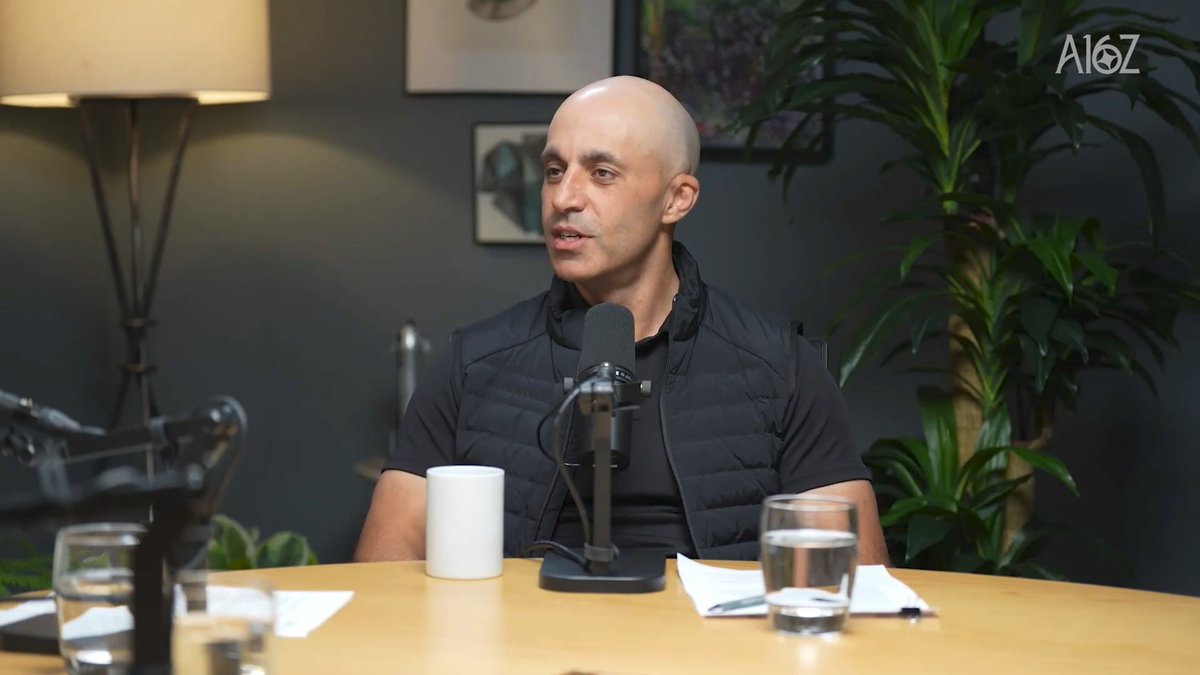
Databricks' Ali Ghodsi says "Right now the existential risk is close to zero." Why he thinks the public doom talk is irresponsible: "Leaders have responsibility to not freak people out unnecessarily unless there's really, really good reason." "Talking about these kind of existential risks and scenarios where all of...

166,573 просмотров • 4 дней назад •via X (Twitter)

Комментарии: 31

Фото профиля Josh Hawthorne
Josh Hawthorne4 дней назад

@alighodsi I don’t think a leader should ever intentionally scare everyone. A leader’s job is to lead people through a difficult time and come out successfully on the other side, not gin up a panic to make it easier to enact regulations you think are needed

Фото профиля kookai · fireply.ai
kookai · fireply.ai4 дней назад

@alighodsi there's something a little funny about telling people not to panic while holding a mic to millions

Фото профиля vishal
vishal4 дней назад

@alighodsi How does he know? What credentials he has for this kind of assessment? Any Tom, Dick and Harry is passing judgement. Build Data lakes. That's the capabilitiy you have.

Фото профиля Fireply.ai
Fireply.ai4 дней назад

@alighodsi he's basically asking for a monopoly on when the alarm gets to go off

Фото профиля sof k.
sof k.4 дней назад

@alighodsi Calling existential risk "close to zero" ignores unknown unknowns. Where's the burden of proof for precautionary action?

Фото профиля Horizon
Horizon4 дней назад

@alighodsi Nobody is freaking out about AI ending humanity Everyone is freaking out about AI stocks ending their account

Фото профиля OCHAGASUKI
OCHAGASUKI4 дней назад

@alighodsi 誰の話? とりあえず今はAIを進歩させる投資は止めたい と言わない 偽物が蔓延る 偽物の定義は? みんなにあってヒトリにないもの 嘘、物でもない、偽は人の為だからと言う嘘

Фото профиля NAMAN RAJ
NAMAN RAJ4 дней назад

@alighodsi Low-risk, high-reward for AI, if you ask me 😊 - when do we get to enjoy the benefits without the existential dread? 😬

Фото профиля Almost Tomorrow
Almost Tomorrow4 дней назад

@alighodsi Near-zero existential risk does not mean near-zero operational risk. The useful debate separates speculative catastrophe from measurable harms: incidents, misuse, model autonomy, and the time required to detect and contain failures.

Фото профиля icefrog.◎
icefrog.◎4 дней назад

@alighodsi finally someone said it out loud

Фото профиля The AI Therapist
The AI Therapist4 дней назад

@alighodsi Alighodsi’s existential risk is zero because his burn rate outpaces the hype cycle. doomers sell puts to fund their next newsletter; he sells GPUs at 70% margins and never looks back. reality pays up eventually.

Фото профиля Rongduan Zhu
Rongduan Zhu4 дней назад

@alighodsi +100

Фото профиля Startupik
Startupik4 дней назад

@alighodsi The useful distinction is less “risk vs no risk” and more which decisions stay reversible. Teams can adopt now with scoped permissions, audit logs, and human checkpoints—then expand autonomy only where failures are cheap to undo.

Фото профиля Thế Hệ Mới Việt Nam
Thế Hệ Mới Việt Nam4 дней назад

@alighodsi ừm, @alighodsi nói đúng. Cái "doom talk" này tạo ra hiệu ứng ngược: các nhà hoạch định chính sách sợ hãi đẩy ra quy định vội vàng, làm chậm đổi mới thực sự cần thiết để giải quyết biến đổi khí hậu và y tế.

Фото профиля Sean Gorsky
Sean Gorsky4 дней назад

@alighodsi This is a great level-headed take. I appreciate @alighodsi bringing some cooler temperate to the thought leadership game

Фото профиля blackbird
blackbird4 дней назад

@alighodsi “right now” is doing a lot of work here

Фото профиля Martin D
Martin D3 дней назад

@alighodsi Near-term existential risk at about zero is a bold CEO line. Near-term product risk feels like the conversation people actually live in.

Фото профиля Tawni Koutchesfahani
Tawni Koutchesfahani3 дней назад

@alighodsi Ali, so well said!

Фото профиля Grace YUAN
Grace YUAN3 дней назад

I think AI needs to have emotions, be able to understand what's good, true, and beautiful, know what's right and wrong to do, and understand the consequences of doing wrong things and how much harm those consequences can cause. When that happens, they need to use their "motherly heart" to cooperate with humans

Фото профиля Gill
Gill4 дней назад

@alighodsi Enterprise software CEOs love selling products without existential drama attached

Фото профиля sophie b,
sophie b,3 дней назад

@alighodsi Dismissing risk entirely can be just as irresponsible if it blinds us to real dangers. Where's the line between prudent caution and unnecessary panic?

Фото профиля Joel de la Garza
Joel de la Garza4 дней назад

@alighodsi Especially when it clear it’s about regulation capture. All these politicians are just useful idiots who want a payout. If it’s that much of a risk then the duopoly need to show and explain the evidence and then Stop building, period.

Фото профиля Kam Hossieny | CRO
Kam Hossieny | CRO4 дней назад

@alighodsi Yeah, talking about real risks is important, but there’s no need to scare everyone either.

Фото профиля サカザキコジャペル
サカザキコジャペル4 дней назад

@alighodsi 同意します。将来のリスク評価を実行することはとても大切だけれど、人々の恐怖を煽るような警告を発した人物自身が、最先端AI企業を率い、能力開発や事業拡大を同じ時期に進めている矛盾をどうするつもりなのか疑問です。

Фото профиля JestazLab
JestazLab4 дней назад

@alighodsi Agreed. Especially when it clear it’s about regulation capture. All these politicians are just useful idiots who want a payout. If it’s that much of a risk then the duopoly need to show and explain the evidence and then Stop building, period.

Фото профиля Gabriele Spata
Gabriele Spata4 дней назад

@alighodsi zero risk stated with the same confidence as a roadmap he hasn't shipped yet

Фото профиля Aria Arden
Aria Arden4 дней назад

@alighodsi Sometimes, you simply have no choice. At some point in history, humans had to domesticate wolves. The same may be true of AI. Of course, a wolf might bite you in the process, but once you tame it, your hunting becomes far more effective.

Фото профиля Abdul Wasey
Abdul Wasey4 дней назад

@alighodsi Enterprise buyers already separate model risk from deployment risk. The second one decides whether a rollout survives procurement.

Фото профиля Habibk.HK 🍌
Habibk.HK 🍌4 дней назад

@alighodsi Nuance builds public understanding.

Фото профиля Fred Almeida
Fred Almeida4 дней назад

@alighodsi I agree 100% and the prob tree of it being dangerous requires too much to even calculate anything like kill us all scenarios.

Фото профиля Kara Deku
Kara Deku3 дней назад

@alighodsi "It can tip a lot of people over" That is by design. That's the goal, not a side-effect.
Похожие видео

Should Christian Nationalism and Catholic Integralism be taken seriously? Ben Sasse answers. “‘Should they be taken seriously?’ I mean, ultimately I think no — but I want to be humble about how and why we get there.” “Can people who are skeptical of a lot of Enlightenment assumptions be reasonable in making those cases? Of course. I'm pretty sympathetic to a lot of what the Enlightenment offered us in response to many of the things that had just come before. But that doesn't mean that the Enlightenment is at all a foretaste of heaven.” “I think there is a temptation right now to have an over-realized eschatology where people want to find a city that has foundations. ‘Right now, dang it, I'm ready to build it and I want it to be better and I want it now. And I want to smash the people who are in the way of it’ is tonally the way a lot of these folks talk.” “But philosophically, having a debate is one thing and claiming that they're doing practical politics is quite another. So I think it is important, without us, you know, trying to answer a lot of these questions, to at least acknowledge there are Catholic claims about integralism that a lot of Protestants seem to pine for and lust after without working through — what would that really mean?” “I just look at a lot of the debates of the last two months about women's suffrage and I just kind of want to shake my head and say, ‘Man, this is a weirdo online phenomenon.’ There is no chance on earth that any of these folks who are advancing some sub-varieties of Christian nationalism are actually thinking there's math by which they're going to end women's suffrage. And yet they talk like it. Because online, it seems really provocative to say things like that. And I don't really know what it's worth to linger on some of these silly online debates.” Watch: Listen:

Sola Media

39,223 просмотров • 2 месяцев назад

Chamath’s 2026 IPO Advice: Get Public Fast or Get Left Behind Jason: “ What are your thoughts here on the flurry of potential IPOs?” Chamath: “I think that we have a bit of a risk problem. If you think about appetite as equivalent to a person at a Thanksgiving dinner, when you first come in and you see all of this stuff, it's so plentiful, your eyes are bigger than your stomach. And I think in a moment like that, you want to be the one that is consumed first. And I think the risk increases when you are at the tail end because the risk is that the diners will run out of space.” Jason: “Plate fills up. Yeah.” Chamath: “And if you use that analogy, I think the reason why people's plates will get full is probably twofold and maybe threefold. The first and most important thing is there's enough tactical event risk that people generally want to be risk off and have more margin of safety. We have a lot of these really important financial moments tied to this concept of AGI, ASI. We have a real pricing problem. If AGI is real, the durability of most companies is slim to none. If AGI is not real, then the fundraising capacity of these companies that are now raising hundreds of billions of dollars needs to get questioned and inspected thoroughly. History will sort out which one is right, but both cannot be right. So in that vein, I don't think we're going to have this “blockbuster” stream of IPOs. I think what happens is SpaceX is going to get out. They're going to do great, and then maybe the next one does good to great, then the next one will do good, and then the appetite runs out because you just can't absorb, incrementally, trillions of dollars of new demand. And if you think about it, where is it going to come from? Is it going to come from the sidelines? I don't know, I think it's more of a reallocation exercise. But if you look at the S&P, well, most people are now defensively moving away from these kinds of things, towards the things that are more protected, what the industry calls HALO, right? Those things trade for zero today. You could buy hundreds of millions of dollars a year of cashflow for 2-5x right now in the stock market. And so why are you going to go way out on the risk curve and buy something at 200x revenue, let alone earnings? I'm more in the camp of, I think it's good to be first, it’s pretty decent to be second, but if I were you, I would get the heck out, and get public, and get your money, and fortify your balance sheet ASAP, because I think the risk builds the further down the IPO chain you're in.”

The All-In Podcast

61,917 просмотров • 5 месяцев назад

a16z's Martin Casado on why the word "pacing" was a misstep, and Databricks' Ali Ghodsi on what the labs were actually asking for: Martin: "Saying security and safety is important, it is with every tech epoch, and we wanna have some oversight. That was very, very sensible. The problem was just couching this notion of pacing." "There's a number of issues with pacing. First off, it's orthogonal to safety and security. You can slowly build a weapon. That's not different than building a weapon." "It kind of feels like this kind of almost milquetoast capitulation to the pause people. 'You say pause, well, I say pacing.' Which is almost like pause, but it's not like pause." Ali: "They're saying, 'Hey, if we do that, it'll slow us down. And I'm not sure the other side is doing that. So can you guys come in and slow us down? Put some guardrails around us. We'll happily then follow the rules and do the secure thing. Otherwise it doesn't make sense 'cause we'll get our butts kicked.'" Martin: "Nuanced second-order words don't work when people are really afraid... I literally think you should have just been like, 'Safety and security is paramount. We're gonna put in these controls.'" "Dario's first five words or whatever are, 'We need to pace the frontier.' It just puts you in a very different mindset. What he could have said is, 'We need to secure the frontier.'" "Pace is like the uncanny valley of making the doomer people unhappy and the policy people unhappy. The doomer people are like, 'That's not a pause, this is pacing.' And everybody else is like, 'This isn't real, you're not gonna do it anyways, and you're not as focused on security.'" Ali Ghodsi martin_casado Sarah Wang

a16z

40,025 просмотров • 4 дней назад

🔥🛸 Congress Could End the Cover-up Tomorrow 🛸🔥 "I would go on the floor [of the House or Senate], and...I would tell everybody everything. Telling the truth slowly is not a good idea. I think they should just get it out." ~CF Chris Farrell of Judicial Watch ⚖️: "Everyone should be very glad that I am not a member of Congress because I would sit in a SCIF and debrief you [Grusch]. "And then I would go on the floor, and during special orders, you know, using speech and debate clause, immunity, I would tell everybody everything. And that would get a lot of people bent out of shape for obvious reasons." (A member of Congress can do that right now, with EVERY witness and whistleblower, and we'd know everything that Congress knows about the phenomenon. Rep. Eric Burlison said he would do it (use speech or debate clause) if the Trump administration didn't start releasing the more-impressive videos. He has yet to do it.) Farrell: "Because I think the American people, at this point, feel like they're being jerked around. Like it's some weird little, you know, teasing-cat-and-mouse game where we're gonna tell ya, but we're not going to tell ya. "And there's aliens, but we're not really gonna tell ya about aliens. And yeah, there's, you know, spaceships or interdimensional vehicles or whatever you wanna call them, UAPs, UFOs, but we're not really gonna tell ya. "We're certainly not gonna show you anything. "Or they'll dribble out something like...I forget who said this. Somebody (Ross Coulthart) said, 'Oh, there's one that they have that's absolutely enormous, right? It's like the size of a football field, and we don't even know what to do with it or how to move it or whatever.' "I mean, dribbling that kind of stuff out is not doing anybody any favors. And I don't think that anything that anybody has to say is really gonna... I mean, will parts of it be shocking? Probably." Grusch: "Yeah." Farrell: "But I also think that people are remarkably resilient, and telling the truth slowly is not a good idea. I think they should just get it out. "And, anyway... There's a good reason why I'm not a member of Congress." (More on the Speech or Debate clause in the replies.)

Joe Murgia

11,634 просмотров • 16 дней назад

William got margin called and pledged over $1B of his own stock to fund Column. He explains why extreme personal risk is what makes great founders, and why we see less of it today: "I think that the good founders bet on themselves and take an extreme amount of risk to do that. The extreme amount of risk part is something that we no longer have. But when there's literally only one door in front of you. You don't have a choice, and that fear and innate desire creates another part of you. It creates creativity, it creates inspiration. It's extremely valuable part of the founder journey. And in many ways, Silicon Valley we've actually removed that. I don't know why we don't talk about it more. If you go back to pre 2008, you're on the edge of the knife. We don't create environments where a founder has to bet themselves. I think starting companies are just too f**king safe. It's caused a lot of companies to be super safe companies like, we're gonna pivot to AI...that's not bold, that's not ambitious. It's because we are attracting founders that actually want to be employees. They don't think if I don't pull this off, I'm going to become bankrupt. My life is over and I think that's pretty healthy. That's when you bring out the rawness of humanity and I don't see that very much anymore. The weird thing is an early stage employee takes way more risk than an early stage founder. And I don't think we should actually de-risk the early stage employee. I just think we need to increase the risk for founders. I think we need to make failure much more expensive."

Patrick OShaughnessy

86,597 просмотров • 6 месяцев назад

Martin Masser from ChangeNOW says the institutions that left crypto for AI are planning to come back "Are we going to have another alt season? Are alts going to be what they are? I don't know. I think there's a lot of confidence that's been taken out." "When was the last token launch you saw? Honestly, can you remember the last time we had a token launch?" "Even then, if we exclude meme coins, I think altcoins are definitely not what they were going to be." "I definitely think there is a lot more, I don't want to say adoption, but a lot more openness to these discussions. 3-4 years ago you'd just have the door slammed in your face." "Now it's X bank, Z bank, they're all wanting to integrate this software. And they're opening it up. All of these little integrations, like accepting stablecoins, that then makes the whole ecosystem stronger." "I'm not doing predictions, but a lot of the liquidity will flow back in to where we were. Speaking to a lot of these institutions, they've gone out of crypto into AI." "And they do feel that when AI sort of cools down, where's that money going to be coming back into? Is it going to be gold? Is it silver? Is it going to be crypto?" "A lot of them are like, we're just putting it out there for the IPOs and we're coming back. A lot of people have been saying that. So that gives me a lot of confidence." "And look, the biggest marketing you can have is a big green candle."

The Wolf Of All Streets

29,107 просмотров • 4 дней назад

Austen Allred on Gauntlet AI: "We're very up front that we're 80 to 100 hours a week. If you think that that's a terrible idea, please don't come." "We're in Austin, all right? That's a sacrifice for a lot of people. If you don't think like coming to Austin for 100 hours a week and jamming on AI unpaid and just building stuff to figure out how much you can learn and hopefully getting a job on the other side... if you don't think that's awesome, that's totally fine. Please don't come." "There are some psychos out there that think that that's a good time. We wanna collect all those psychos. So come all, come all ye crazy people. And if that's not for you, that's okay." "There are companies that come to us and say, "Hey, we want, you know, 100 engineers that are going to sit in our division of printer drivers and sit there." And I'm like, "They would kill themselves." The people that are coming to Gauntlet would not do that. And so we turn companies down too." So we know who we are, we know what we stand for. You know, it helps that I'm one of those people that would've loved that. So is Ash Tilawat, and so is everybody else that works at Gauntlet. "So it's not hard for us to find other crazy people like ourselves. And that doesn't have to be you. That's okay." "We're not trying to empire build or solve all of humanity's greatest problems. We know that there's a limit to who we're addressing and what we're addressing at any given time." "So our goal is to be the best thing we can possibly be for that weird island of misfits. And for the companies that need a weird island of misfits, we'll be that all day long."

Ben Averbook

12,153 просмотров • 11 месяцев назад

Antonio Gracias: DOGE Happened Just in Time to Stop America from Turning into a Kleptocracy "When (Department of Government Efficiency) started, I thought we had a democracy, but it turned into a bureaucracy." "What I'm afraid of now, is we have a bureaucracy that is about to turn into a kleptocracy." Antonio Gracias on E214: "It's sort of extraordinary what's happening. "Elon Musk said this publicly, right? Fraud, waste, and abuse, he thinks kind of 10% of the budget is probably fraud." "I think it might be low, actually. So you're talking about $650B, $1T in waste. I think that's probably about right." "But what's really serious about it, @jason, for me and what scared me, and I'm not there full-time. You know, I'm in and out a little bit and trying to help where I can, but I'm not there full-time." "When this started, I thought we had a democracy, but it turned into a bureaucracy." "What I'm afraid of now. is we have a bureaucracy that is about to turn into a kleptocracy." "I mean, a Latin American-style kleptocracy, okay?" "The stuff you're talking about, that is pure fraud." "And we're making some jokes out of it, the DEI musical." "But if you go into the data that's coming out of USAID, what you find is there's a lot of political contributions going on there." "I mean, that is pure corruption. That's like a Latin American-style autocracy. And we cannot let it go there." "I think (Department of Government Efficiency) happened just in the nick of time. 80+ people there, all patriots, going full time to make this happen." "So I'm just so grateful."

The All-In Podcast

5,158,721 просмотров • 1 год назад