Loading video...

Video Failed to Load

Go Home

✨ David Sirota explaining to Wajahat Ali the reason why Joe Scarborough crashed out on national television about Hasan Piker: "I think what it has to do with is that they honestly feel like he [Hasan Piker] and what he represents, both his political faction and also, I think,...

13,572 views • 13 days ago •via X (Twitter)

0 Comments

No comments available

Comments from the original post will appear here

Related Videos

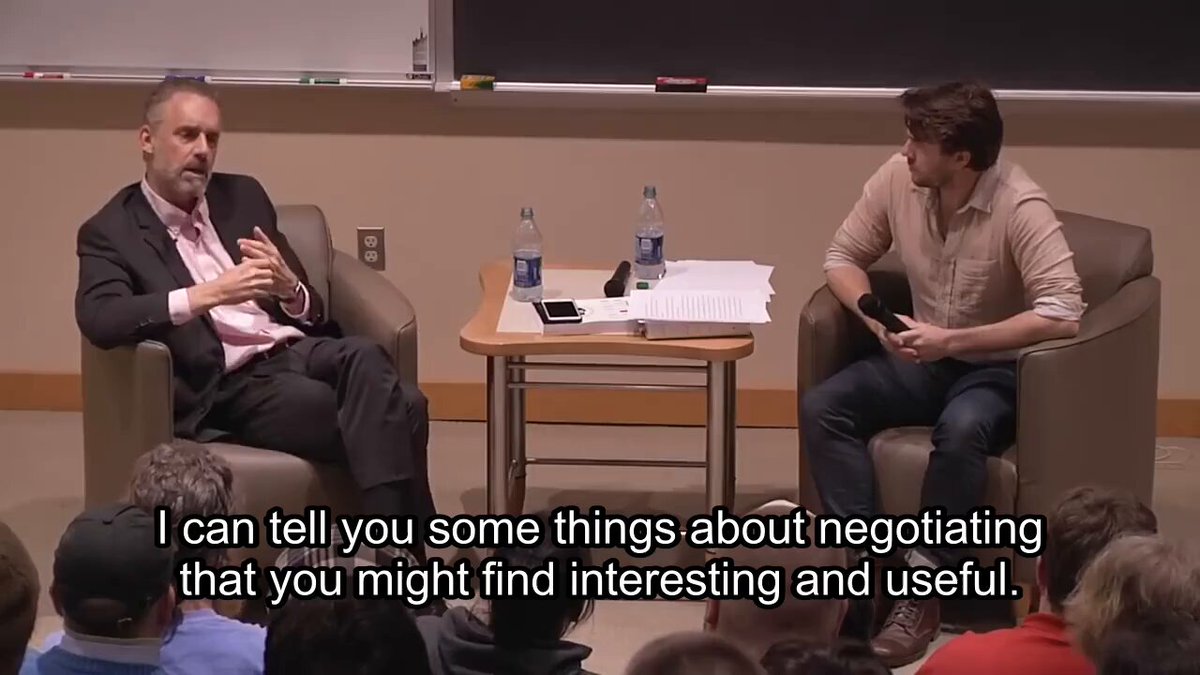
Jordan Peterson: "If you're competent and silent you will be ignored." "You might think well people should reward you because you're competent. And yes of course they should. But if you're competent and silent then you're just part of the background that's keeping everything functioning" On why you cannot negotiate from a position of weakness: "If you want to push your career forward you have to push it forward. You have to be competent and you have to be strategic" "To be strategic when you negotiate for a new position or a new salary you have to be able to say if you don't give me what I want then something you don't like will happen to you" "It's not a physical threat. It's that you have an option" "You have your CV in order. You're educated and competent and desirable to people outside of your immediate job. You're willing to instantly put yourself on the job market" "So that when you go talk to the person you're negotiating with you're credible" On the one thing most people completely miss about negotiation: "It's very seldom that you're talking to the person who's at the top of the pecking order. What you need to do is tell them a story that they can tell to their boss to make you not a problem" "A good story is look we really need this person because they're hyper competent and they have a better offer" "If you go in there with no power you're going to lose. Obviously" He concludes with the one thing every competent person needs to hear: "The first thing you need to know if you're going to negotiate is that you have to be able to say no. And what no means is that you're not going to do it"

Brad

34,992 views • 21 days ago

Alex Karp, CEO of Palantir, on the only framework that actually leads to success: Find the thing you're uniquely good at. Then organise your entire life around it. Karp, who has spent over 20 years managing young people, says the number one reason talented people fail is surprisingly simple: "Failure one is not willing to accept what they're actually good at. It may not be what you want to be good at." Most people spend their formative years optimising for the wrong things. Karp is blunt about this: "I've never met someone really successful who had a great social life at 20. If that's what you want, that's what you want, that's great, but you're not going to be successful and don't blame anyone else." He also challenges how people think about choosing a life partner. He describes a pattern he sees constantly — someone says they've met a person they really like, and when he asks what they like about them, the answers are: they went to this school, their brother is interesting, their sister is interesting. His follow-up is always the same: "Do you like them? Do they like you? How are they going to feel when you dedicate the next 10 years of your life to building what you think is valuable?" That question is the point. Partner selection, social life, daily habits should all be evaluated through one lens: does this support or undermine the work you're meant to be doing? And the payoff for getting this right, Karp argues, is freedom: "Focus on your aptitude and focus on your freedom and happiness, which are directly correlated because if you're doing something you're really good at, no one really cares what you wear to work." His advice to the people who come to Palantir distils it all down: Identify your aptitude. Organise your whole life around it. Don't chase the money. And as he puts it: "Stay off the meth and you'll do very well."

Big Brain Business

23,422 views • 1 month ago

Nick Saban shares what transformational leadership really looks like and the trap most leaders fall into. "If you're in any kind of managerial position, I think you should define your job the same way: Provide the leadership to develop the relationships to help people create and accomplish the opportunities that they have, and help them establish the discipline they need to do it." Then he broke down what leadership actually is: "Leadership is about helping somebody else, affecting somebody else for their benefit. Not for your benefit - for their benefit." "If you're doing it for your benefit, it's manipulation. And people can see right through that." That's the line right there... Leadership serves others. Manipulation serves yourself. "You gotta develop a relationship, because they gotta know you care. Hard to affect people if they don't think you care about them." Then he called out where most leaders spend their time: "How do you spend all your time? If you're a manager, you spend all your time with the people who don't do the right things. I call them energy vampires." "We got 5 guys on our team - they don't go to class, they don't do the right thing in practice, they loaf all the time. Those are the guys I meet with every day. They're energy vampires." So he made a commitment: "I'm gonna meet with 3 guys who didn't do anything wrong every day to see how they're doing. To make sure they know I care about them, their family, and what's happening in their life." "I wanna have a relationship with those people, so that when I need to affect them, I have a chance to do it." "People gotta know you care. If they think you only care about yourself, they're gonna think you're just a manipulator and you're not really going to affect them in a positive way." "You gotta serve other people." The core of servant leadership is wanting to see others at their best. It's not about control, it's about serving others. (🎥 CBT Automotive)

Coach AJ 🎯 Mental Fitness

37,867 views • 5 months ago