Sensitive content

This media may contain sensitive content.

Загрузка видео...

Не удалось загрузить видео

На главную

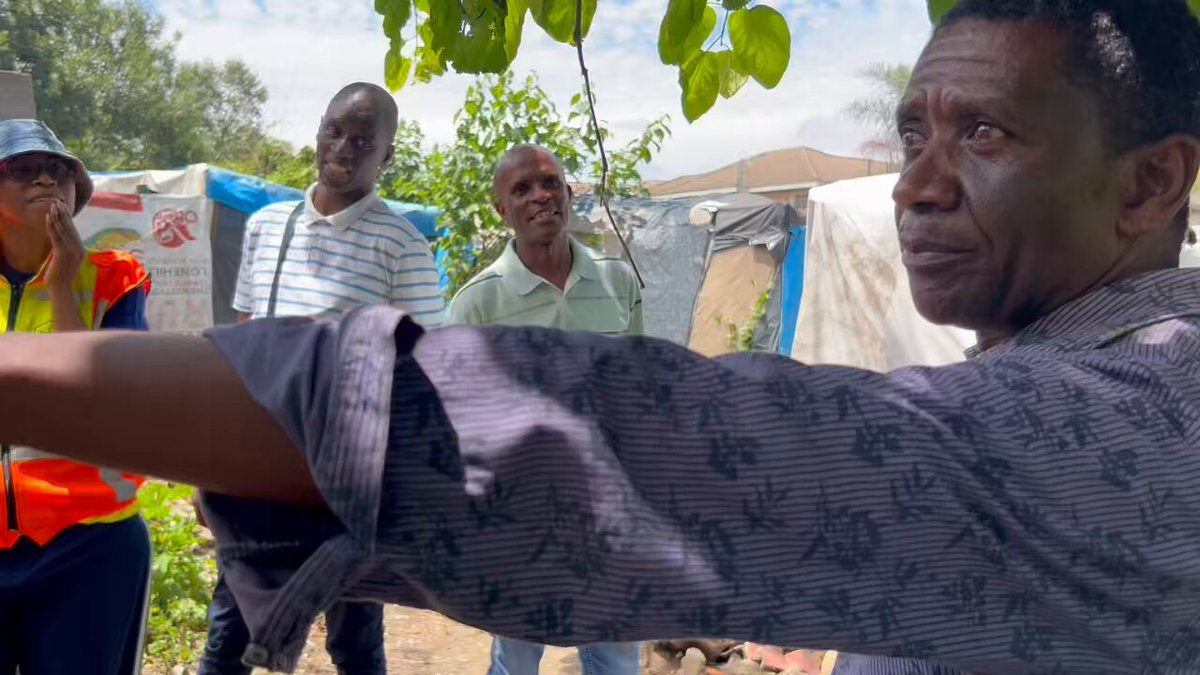
*Denouncing human trafficking is everyone's responsibility. Human trafficking is a heinous crime that must be stopped* . Faysal Adam Somo is from Ethiopia. He's 40 years old. He arrived in Al-Kufra city (Libya) on 1st of April 2025. Since his arrival in Al-Kufra he got caught by human traffickers....

584,190 просмотров • 1 год назад •via X (Twitter)

Комментарии: 0

Нет доступных комментариев

Здесь появятся комментарии из оригинального поста

Похожие видео

From the horror images, videos and messages we receive every day, today brings Aytenew Bishaw from Addis Ababa, Ethiopia. His swollen stomach and emaciated body tells it all. The footage was sent by others who were lucky enough to be ransomed, their families forced to pay to stop their torture. But Bishaw was not one of them. He was a street orphan back in Addis Ababa, struggling to survive. He does not know his exact date of birth, but his friends estimate that he is between 17 and 19 years old. In May 2024, he and his friends were lured to Libya with false promises. The traffickers wasted no time. As soon as they arrived, they were locked inside a warehouse in Kufra, Southern Libya , with over 200 others, including Naima Jamal. There was almost nothing to eat or drink. Just enough to keep them from dying too quickly because in this business, a dead body brings no money. For traffickers, the ransom depends on who you are. If you have family, if you have friends, if there is someone out there who cares enough to pay, then you are beaten, filmed, and your suffering is turned into a tool for extortion. But Bishaw had no one. No family, no close friends who could be reached, no number to call. So they ignored him. They tossed him into a corner like an object that no longer held value. The result is what we see now, his body wasting away, his stomach swollen from disease and starvation. Even in his fragile condition, they do not let him go. He remains imprisoned, barely alive, filmed only to be a background shadow in the ransom videos of others. And we are left to report it, knowing the truth that his life is ending, that help is not coming, that he is one of so many who will not make it out. Libya denies that slavery exist in Libya, but the evidence is everywhere. It is in the warehouses where people are treated like property, in the cries of those being tortured for ransom. Europe, too, knows. It has always known it. The policies they enforce, the borders they fortify, all contribute to this. They have turned migration into a slow massacre, one that unfolds not in the open, but in places like Kufra, behind locked doors, under the hands of traffickers who know the world will look away always.

Refugees In Libya

24,221 просмотров • 1 год назад

THEY BEAT HIM DAILY, NO ONE HAS MOVED, HIS LIFE COST $10,000 IN CASH: Tesfay Hagos Alemayehu There are men whose names will never touch headlines not because they are unworthy, but because the world has chosen a hierarchy of whose pain is worth hearing, whose screams can be dismissed, whose body may be bartered. Tesfay Hagos Alemayehu is such a man. He was born on the 15th of March, 1994, in Hagere Selam, a town in the northern highlands of Ethiopia, Tesfay grew up as one of many→a son of soil, of war, of withered promises. But today, he is something else: a man stripped of dignity and caged in Kufra, Libya, where his Black skin is a currency in the economy of human trafficking. He was not searching for riches. He was not chasing dreams built on illusions. He fled Ethiopia because the land from which he emerged was bleeding→Tigray, a region devoured by war and starvation. And so he ran. As many do. As many must. But in this world, the Black man’s journey toward dignity is a crime punished before it is understood. We are often told that men must endure. That we must not weep. That we must clench our teeth through the breaking of our bones. And so, when Tesfay’s captors lash his body with black pipes, when they fasten his limbs into impossible knots and pin his skull to the cement floor with their boots, some may whisper→“he should have known better than to go to Libya.” This world, so fragile to the Black body, so hostile to Black men who dare to gamble their survival, still manages to judge them when they fall into the trap. For nearly a month now, Tesfay has been held in Kufra, tortured daily. Beaten until blood replaces sweat, denied food, deprived of water. And for what? A $10,000 ransom demanded by his captors, criminal Libyans, backed by transnational rings of Ethiopian and Eritrean traffickers. In the videos, men who speak in Arabic, flog with metal rods, and press his head into the dirt while the camera rolls. The videos sent to his family are not threats; they are proof of cruelty so normalized it now functions as a business model. In these images, Tesfay appears bound, shirtless, bruised, shaved bald and bleeding. And where is the state? Ethiopia? Libya? The international community? Twice, not once, but twice Tesfay’s family knocked on the doors of the local police in Ethiopia, bearing the unbearable news that their son had been kidnapped, held for ransom in Libya, and tortured daily. Twice, the police turned them away. Twice they were told, in unambiguous tones, “There is nothing we can do. Every day people are trafficked to Libya.” This is not ignorance, it is the institutional shrug of Black suffering. The state tasked with protecting its citizens has chosen not even to file a report. Not even to issue a slip of paper that might have enabled us→Refugees in Libya→to trigger Interpol protocols. When a government refuses to document its citizens’ disappearance, it is not just abandoning them→it is erasing them, but how can it erase us from its conscience?. Tesfay is bleeding, and the Ethiopian police cannot even find ink to write his name. 1/2

Refugees In Libya

51,396 просмотров • 1 год назад