Loading video...

Video Failed to Load

Go Home

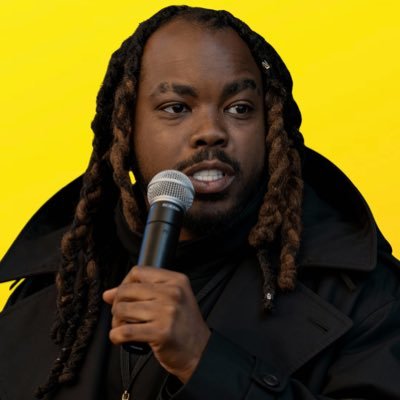
šŸ”„šŸšØDEVELOPING: Dave Chappell decided to join Michelle Obama on her podcast and revealed why he walked away from $50M for the Chappell Show and addressed the rumor that he moved to Africa. Chappell: ā€œI went through the whole process of mourning the narrative I had in my head that...

171,423 views • 2 months ago •via X (Twitter)

0 Comments

No comments available

Comments from the original post will appear here

Related Videos

Denzel Washington’s epic monologue towards the end of Training Day was largely improvised on set. Director Antoine Fuqua was so blown away by his performance, he says he thinks he "forgot to yell cutā€. He explains… ā€œThat’s Denzel. He was just in his zone. I mean, that was one of those moment...people talk about AI. Those are the moments where you go...it's a great tool. It's gonna be a great tool, I think...but the emotion, and the moment that an actor can bring - you can't predict that. That's something that's just inside of Denzel. And when that came out, I was just like - I hope I got it. I just turned to my operator - who was shaking- I looked over at the guy - I was like, ā€œplease tell me you got that.ā€ Because that was the take. That was it. There was no other take - I mean, how do you tell an actor like that, that that wasn't good enough? …He walked over to me, and he just had this look in his eyes. I was like, ā€œyou good?ā€ He said, ā€œyou good?ā€ I said, ā€œYeahā€¦ā€ Some of that was in the script, but he flipped it the way he did it. "Putting cases on all you." He kind of added some things in there. And then he just went into a whole other zone with the whole King Kong thing- with Pelican Bay - Denzel started that. That was Denzel. That was him, man. He just kind of lit up, and I think I forgot to yell cut. I was just watching it, because everybody started walking away, and I'm just watching him, and then he lights a cigarette - and he's talking - and I'm just watching him. I think at some point he probably looked at me like, you going to cut? And I'm like, ā€œoh yeah, yeah, cut.ā€ He was still in it. That's the thing with Denzel. He was so Alonso…I'm just watching him for a while because I didn't know what else he was going to do. It was just so magical. And then I think he looked up at me and I was like, ā€œOkay, cut, cut.ā€

Gangster Cinema Central

42,262 views • 1 month ago

Actor William Fichtner explains how the lowest point of his career, long before his success, became the turning point that kept him going: He shares a moment from his early days in New York when everything he'd worked for felt like it was slipping away. "I think I was 30 years old and I was in New York and I hit the end of the road. I ran out of money. I had no commercial residual. I had nothing." After a few years of scraping by, a little money in theater and a few residuals from commercials, he had to go back to waiting tables. And it crushed him to compare himself to everyone he'd come up with: "I felt like I was falling backwards and I was 30 now. Everybody that I knew I graduated college with [had] a company car and I was just... it was depressing." He describes the morning he went to ask for a brunch shift at the White Horse Tavern in the West Village, a place he knew people went to: "I woke up. I was brushing my teeth. I started crying. I really was. I was walking that street going, 'Just, it's all right, man. It's all right. You're not falling backwards. You're not going off the end of the earth.'" On the walk, it got worse before it got better. He passed someone from his past: "I passed a guy that I hadn't seen in a couple of years that was like kind of like an old friend. And I said hi to him and he walked by and he just kind of looked at me like he didn't recognize me. It was horrible. It was just horrible." Then he walked into the restaurant, and the manager met him with hostility, telling him he was on the schedule the day before, hadn't even started, and was already fired. But instead of breaking him, it freed him: "I said, 'Thank you.' I walked out of there. I said, 'I have absolutely nothing right now and I'm feeling so good and I'm not working at your f****** restaurant today, buddy.'" He went home to find a place to re-energize. Looking back, that brutal day became a great one: "Just great, great day." The lowest point can feel like proof you're failing, but sometimes it's just part of the process. Years before his success, that morning could have ended his career. Instead it became the turning point that kept him going.

Big Brain Business

348,115 views • 1 month ago

George Lucas on how he had to reluctantly write the screenplay for 'American Graffiti' (1973) & the confidence he gained from the movie's success: "When I was doing 'American Graffiti' (1973) I was still struggling with my ā€˜I don’t want to be a writer’ syndrome. I had some good friends of mine that I wanted to write the screenplay, but it took me like two years just to get the money to do a screenplay. And I got a little tiny amount of money and—which I had to go actually to the Cannes Film Festival to get on my own. So finally I got this money. I called back and I said, you know, ā€œI got the money. We can start working on the screenplay.ā€ And they said, ā€œOh, we don’t want to do that now. We’ve got our own low-budget picture off the ground and we can’t write it.ā€ I said, ā€œOh no.ā€ I said, ā€œWhat am I going to do? I am in Europe and I’m not going to be back for like three months and I want to get this thing off the ground.ā€ So they recommended another student from school that I knew pretty well. I had a story treatment that laid out the entire story scene by scene, so I called him over the phone from London and I said, ā€œDo you want to do this?ā€ And he said, ā€œOkay.ā€ The person I was working with at that time as a producer made a deal with him for the whole money because there wasn’t very much. It was so tiny that he could only get him to do it for the whole amount of money. When I came back from England, the screenplay was a completely different screenplay from the story treatment. It was more like 'Hot Rods to Hell' (1967). It was very fantasy-like, with playing chicken and things that kids didn’t really do. I wanted something that was more like the way I grew up. So I took that and I said, ā€œOkay. Now here I am. I’ve got a deal to turn in a screenplay. I’ve got a screenplay that is just not the kind of screenplay I want at all and I have no money.ā€ And, I spent the very last money I had saved up to go to Europe to make the deal, so I had nothing. That was a very dark period for me so I sat down myself and wrote the screenplay. After I did 'American Graffiti', and it was successful, it was a big moment for me because I really did sit down with myself and say, ā€œOkay, now I am a director. Now I know I can get a job. I can work in this industry, and apply my trade, and express my ideas on things and be creative in a way that I enjoy. Even if I end up doing TV commercials or something, or I fall back into what I really love is documentaries. I’ll be able to do it. I know I can get a job somewhere. I know I can raise money somewhere. I know I can do what I want to do.ā€ That was a very good feeling. At that point, I’d made it. There wasn’t anything in my life that was going to stop me from making movies." ('ā€˜American Graffiti’ at 52: A Sentimentally Affectionate Look at America Before the Collective Loss of Innocence', Sven Mikulec, Cinephilia & Beyond)

DepressedBergman

56,916 views • 7 months ago