Loading video...

Video Failed to Load

Go Home

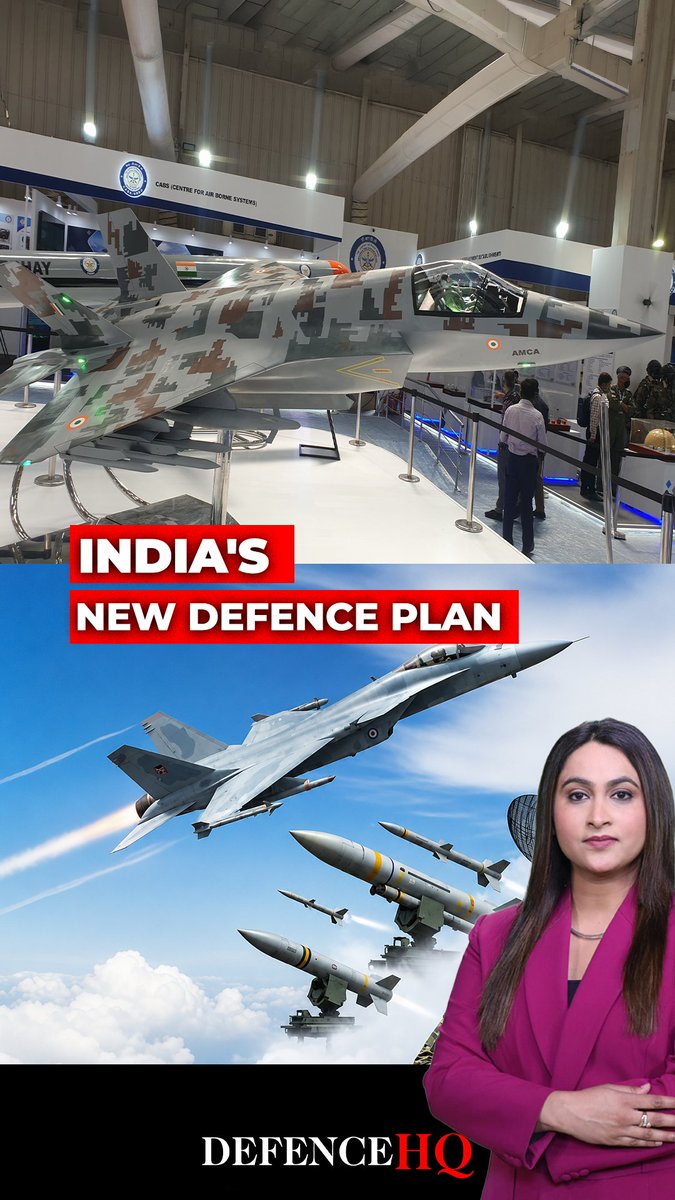
Did France really refuse to share Rafale source code with India? Here’s the truth behind the viral claims. India currently has around 28–29 fighter squadrons, with roughly 500 fighter jets in total. However, to handle a potential two-front war with Pakistan and China, India needs around 750 fighter jets....

31,576 views • 3 months ago •via X (Twitter)

0 Comments

No comments available

Comments from the original post will appear here

Related Videos

🇮🇳 Why the Su-57 is Still Alive (Despite the Rafale Deal) 🇷🇺 In January 2026, New Delhi moved decisively toward what has already been christened the “deal of the century.” The Defence Procurement Board cleared a proposal to buy 114 Rafale fighter jets, a $36 billion bet meant to reverse the Indian Air Force’s alarming slide in squadron strength. For many, that should have closed the book. The Rafale has performed in combat, the IAF trusts it, and the logistics and training ecosystem is already in place. Add a substantial Make in India component, and the choice looks not just sensible but inevitable. Betting big on Rafale addresses the IAF’s immediate crisis. Keeping Russia in the picture hedges against long‑term dependency on a single supplier, a single geopolitical axis, or a single vision of India’s future force structure. In other words, New Delhi is not choosing between France and Russia. It is choosing flexibility over certainty, leverage over loyalty, and survival over sentiment. The aircraft may dominate the headlines, but the real contest is over sovereignty, and that debate is far from settled. The “Invisible” Problem: The China Factor -->Rafale’s Strengths: a formidable, combat‑proven platformbut still a 4.5‑generation jet. -->The Threat is that China fields the J‑20, a bona fide 5th‑generation stealth fighter. -->The Reality is, in a face‑off, a Rafale may struggle to detect a J‑20 on radar in time to shoot first. -->The Gap India’s AMCA is roughly a decade away. Strategists see the Su‑57 as the only near‑term plug for an anti‑stealth hunter to counter China’s edge now. Buying the Jet vs. Owning the Code -->The core issue of sovereignty over software. This is the strongest case for the Russian option, which controls the jet’s “brain” and integration pipeline. -->France (Rafale) You get world‑class hardware and systems, but the mission software/source code remains French. -->Russia (Su‑57) Moscow is pitching full technology transfer, including source‑code access. That means India can natively integrate indigenous weapons, tailor mission systems, and exercise deeper control over production and upgrades. Industrial head start-A recent audit reportedly found HAL’s Nashik facility is ~50% ready to start building the type, thanks to shared tooling and processes with the Su‑30 line. The High–Low Mix: Mass and Edge Together Framed correctly, this isn’t Rafale or Su‑57, it’s Rafale and Su‑57, by design. The 114 Rafales would fly the vast majority of sorties, air policing, border patrols, and deep strikes, delivering availability, commonality, and proven effects. Layered above, a small Su‑57 cadre (e.g., 2-3 squadrons) would serve as “special forces of the sky” stalking stealth adversaries, opening corridors through integrated air defenses, and prosecuting high‑value targets under emissions control. Industrial Survival Airpower isn’t only about tails on the ramp, it’s about hands on the tools. With Su‑30MKI production ending at Nashik and AMCA still years from serial production, HAL faces a capability cliff. If no new program backfills the gap, lines go cold, certifications lapse, supplier networks atrophy, and the tacit knowledge of master technicians dissipates. Restarting later is slower, costlier, and riskier than keeping the line warm. India’s fighter choice isn’t a beauty contest between French finesse and Russian promises. It’s a three‑part- Strategy counters a stealth‑equipped rival now. Sovereignty owns the software, integration, and upgrade pathways; Survival keeps the industrial engine running until AMCA scales. Bet big on Rafales to restore squadron strength and sortie generation. Keep a limited Su‑57 door open to hedge the stealth deficit, secure code‑level control, and bridge HAL through the AMCA gap. That’s not indecision, it’s flexibility over fidelity. And flexibility, in airpower and statecraft alike, is what ultimately buys strategic autonomy. Col AJ🇮🇳 Colonel Mayank Chaubey Major Sammer Pal Toorr (Infantry Combat Veteran) TheGlobalDecoder Aadi Achint 🇮🇳 #India #Rafale #France #AMCA #russia #USA #Davos26 #Davos2026

The Sacred Scroll

35,970 views • 5 months ago

🇮🇳🇫🇷 SORRY DONALD, THE DEAL IS FRENCH! India Rejects US Pressure & Locks in the RAFALE TSUNAMI! 🌊🤣 While President Trump was busy tweeting about tariffs and complaining that "Modi is not happy" with him, India quietly prepared the paperwork for the Deal of the Century... with France. 💅☕️ Reports confirm India is finalizing the acquisition of 114 Rafale Jets for the IAF AND 26 Rafale-M for the Navy. The "Art of the Deal" just got school’d by New Delhi. Why Uncle Sam is crying: 1. The American Rejection The US pushed the F-18 Super Hornet and F-21 hard. They threatened sanctions, complained about Russian oil, and slapped tariffs on us. India’s Response? "Seen 10: 00 PM." Left on read. We chose the jet that doesn't come with a 'User Manual' written by the US Congress. 2. The 'Made in India' Fortress This isn't just buying; it's owning. Tata Advanced Systems is setting up to build the bird here. 60% Value Retention in India. We aren't just flying them; we are building the ecosystem to replace them with our own AMCA later. 3. Total Dominance (The Two-Front Nightmare) China: Panicking because the Rafale-M on INS Vikrant means the Indian Ocean is a "No-Entry" zone. Pakistan: Already has PTSD from the Rafale sound barrier and the latest wrath in Operation sindoor. US: Realizing that "Strategic Autonomy" means you can't bully India into buying your jets. The Deal Breakdown- --> Navy: 26 Rafale-M (~₹63k Cr) for INS Vikrant. Immediate IOR control. China blocked. -->Air Force: 114 MRFA ALL Rafale jets. Why? Speed + Logistics. We know them, we rule with them. No drama. Macron is visiting next month to likely seal the deal. Trump can keep his tariffs; we’ll keep the best Omni-Role fighter in the world. Strategic Autonomy 1, Bullying 0. France has stood by India through THICK and THIN (1998 Nuclear tests, Kargil, Kashmir). The Ultimate deterrent is loading... Col AJ🇮🇳 Colonel Mayank Chaubey Aadi Achint 🇮🇳 Major Sammer Pal Toorr (Infantry Combat Veteran) TheGlobalDecoder #India #France #Rafale #Trump #MakeInIndia #IndianNavy #IAF #INSVikrant #Modi #Macron

The Sacred Scroll

2,201,964 views • 6 months ago

VIDEO | Saint Petersburg, Russia: When asked about the relations between India-China-Pakistan, Russian President Vladimir Putin told PTI CEO and Editor-in-Chief Vijay Joshi: "Of course, we are well aware of the intricacies of the issues concerning the border between India and Pakistan, you said that Pakistan is a country that is fully under the control of China, I don't think so, first and foremost, Pakistan is a large country, it has multi-faceted ties with different countries, of course, for Pakistan, it is very important to take into account the cooperation with the Republic of China, but everyone is developing the relations with China... India ranks third, Russia ranks fourth in terms of its GDP... China, US, India, and Russia that's the top four countries... These are delicate, multi-faceted relations between India and China, and interfering into them is not a good idea. Of course, we interact with our friends in both India and China... President Xi and PM Modi are both trying to resolve all the issues of mutual interest, including the relations on the border... As for Russia, we have our own relations with China, with India, no one is holding grudges, for decades we have been establishing this relations, it was happening naturally, relations between Russia and India do not disturb China, our relations with China do not disturb India... This linkage helps everyone... At one point, I suggested that leaders of India, China meet here, that's how Russia-India-China was established. We had things to talk about, to agree upon, we started doing later on, then we were joined by Brazil, because Brazil wanted to take part... South Africa joined with BRICS, we continue to expand, when we meet, we talk, we come to an agreement. We don't have any issues in cooperation either with India or China, we know that we have multi-faceted cooperation, we cooperate with India in terms of armaments... both land and sea-based BrahMos missiles... We proposed our Indian friends to work together on technology, the fifth generation technology. But Indian friends said do it on your own and we will join, we are ready to work with India in this field to supply aircraft, we don't have any issue with, any limitation, same goes with defence system, for air-defence system, it is critical to have separate components, but it's more important to create a system... You have to take into account, that there should be one information system that would be working in real-time... Now we are working on updating the system, it is unique expertise, we are ready to share this technology with Chinese, Indian friends, we keep working in this regard." (The full interaction between Russian President Vladimir Putin and PTI CEO and Editor-in-Chief Vijay Joshi is available at Source: AFP/PTI (to be used only in India) #VladimirPutin #India #Russia #China #Pakistan

Press Trust of India

137,949 views • 1 month ago