Video yükleniyor...

Video Yüklenemedi

Ana Sayfaya Dön

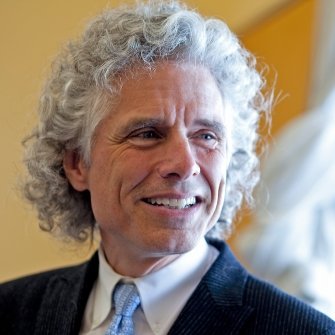
Discussing common knowledge with Bill Maher. Common knowledge is the topic of my new book: When Everyone Knows That Everyone Knows...: Common Knowledge and the Mysteries of Money, Power, and Everyday Life.
76,415 görüntüleme • 10 ay önce •via X (Twitter)

0 Yorum

Yorum bulunmuyor

Orijinal gönderinin yorumları burada görünecek

Benzer Videolar

I'll be giving talks on common knowledge in Australia and New Zealand in February 2026. Tickets : "I begin the book with the story of The Emperor’s New Clothes because it’s the quintessential illustration of common knowledge. When the boy said the Emperor was naked, he wasn’t telling anyone anything they didn’t already know. They could see the Emperor was naked, but he changed the state of their knowledge nonetheless because, by blurting it out within earshot of everyone, now everyone knew that everyone else knew that everyone else knew that everyone else knew that the Emperor was naked. So it shows, first of all, that even though the concept of common knowledge, as I defined it, seems impossible—your head starts to spin after, you know, one or two “I know that she knows,” let alone an infinite number. But what the story shows is that a conspicuous, public, self-evident event—something that you see while you see everyone else seeing it, or you hear when you know everyone else can hear it—can give you common knowledge at a stroke. And the other moral is that it changed the relationship of the people to the Emperor, from obsequious deference to ridicule and scorn. And a major theme of the book is that common knowledge, even though it sounds like this abstruse, recondite academic concept, actually figures into everyday life, figures into our money, and figures into our politics, because it enables coordination and it changes social relationships." Thinkable -- When Everyone Knows That Everyone Knows . . .: Common Knowledge and the Mysteries of Money, Power, and Everyday Life

Steven Pinker

22,283 görüntüleme • 7 ay önce

"So what innuendo, euphemism, and indirect speech acts do is prevent the proposition from becoming common knowledge. That is, let’s say he said, “Do you want to come up for Netflix and chill?” She says no. She’s a grown-up; she knows this was a sexual invitation. And he’s a grown-up; he knows it too. But does he know that she knows that he knows it? He can still think, “Well, maybe she thinks I’m dense. Maybe she thinks I don’t know that she knowingly turned down a sexual invitation.” And as far as she’s concerned, he might think she just didn’t want to stay out late. And she could think, “Well, maybe he thinks I’m naïve. Maybe he thinks I just didn’t want to be out late, and he might think I’m just turning down an invitation for Netflix.” Without the common knowledge—the “he knows that I know that he knows that I know”—they can maintain the fiction of a purely platonic friendship without sacrificing their claim to rationality and sanity. If it had been blurted out, “Hey, do you want to have sex?” and she were to say no, then they couldn’t maintain the fiction of a purely platonic friendship, or of colleagues at work, or, even more dangerously, a supervisor and supervisee. And so we use indirect speech, I argue, to keep things out of common knowledge—out of relationship-threatening common knowledge." Clip on innuendo and common knowledge, the topic of my new book, from an interview with Robert Contofalsky (Robert Contofalsky) of R-Academy. -- When Everyone Knows That Everyone Knows . . .: Common Knowledge and the Mysteries of Money, Power, and Everyday Life:

Steven Pinker

65,013 görüntüleme • 8 ay önce

With The Fifth Column 🖐 talking about common knowledge: “Common knowledge can be generated at a stroke when something is witnessed in a forum where you can witness other people witnessing it. So if something just happens in public and you can see everyone else seeing it, that gives you an instant intuition that there’s common knowledge. Humor, I suggest in one of the chapters, is a common-knowledge generator, usually of some infirmity or indignity or weakness in someone or something. And the laughter, which is conspicuous—you can hear it when someone is laughing; it interrupts their speech and breathing—at the moment of laughter, suddenly becomes common knowledge. Everyone who gets the joke suddenly realizes that someone has been taken down, and they realize that everyone else realizes it. And that’s why freedom of speech and freedom of assembly are suppressed in autocracies. The joke from the Soviet era is about the man handing out leaflets in Red Square. Of course, the KGB arrest him, take him down to headquarters, only to discover that the leaflets are blank sheets of paper. They say, ‘What is the meaning of this?’ And he says, ‘What’s there to say? It’s so obvious.’ And the reason that it was subversive is that he was generating common knowledge. Just the mere fact of trying to make something public, even if you don’t have to stipulate what it is, can generate the coordination—everyone acting together to bring down a regime.”

Steven Pinker

44,931 görüntüleme • 28 gün önce

On Friday, Bill Maher asked me if what happened with Biden at the disastrous debate with Trump was the same story as the Emperor's New Clothes. Me: The story of the Emperor's New Clothes is a story about common knowledge, because when the kid blurted it out, he actually wasn't telling anyone anything they didn't already know. They could see the Emperor was naked. But he still changed their knowledge, because by blurting it out with an earshot of the others, now everyone knew that everyone else knew that everyone else knew that everyone else knew. And what that allowed them to do is change their relationship with the Emperor, from obsequious deference to ridicule and scorn. And the thing about common knowledge in the social realm is that it's what props up our social relationships. And so when something is blurted out, then it can change everything. It changes the nature of your relationship with someone. Maher: And we do have sort of a modern version of the Emperor parable, which is Joe Biden. I mean, he was the Emperor who everyone wouldn't say had lost his marbles. I mean, is that not really the same story? Me: It is the same story, because opinion polls showed that after that disastrous debate with Trump, the number of people who thought that he was cognitively impaired didn't go up by that much. It went up by a few percentage points. But before, a majority of people thought that he was cognitively impaired. The difference is, when it's on TV, where you're watching it, you know that the rest of the country is watching it, you know the rest of the country knows the rest of the country, it's no longer private. It's common. And that's when he was challenged. That was the end. Bill Maher Real Time with Bill Maher

Steven Pinker

272,948 görüntüleme • 10 ay önce