Video yükleniyor...

Video Yüklenemedi

Ana Sayfaya Dön

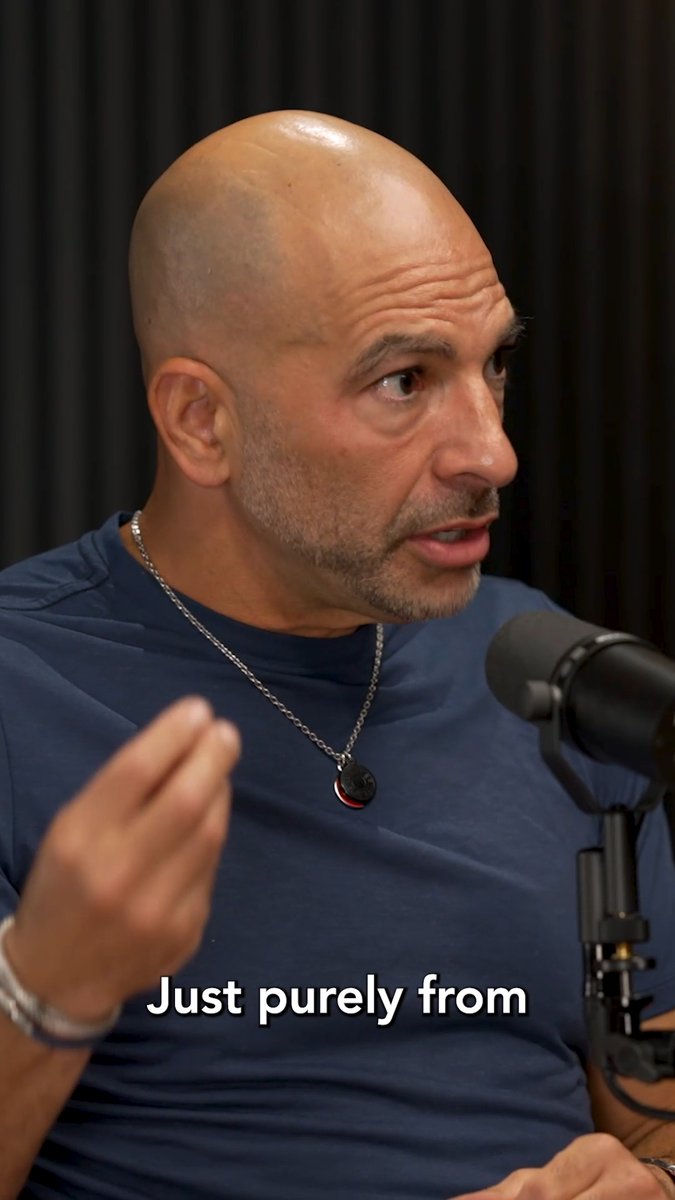
Dr. J.S. Rajkumar on the Power of Weight Training: A Path to Longevity Dr. J.S. Rajkumar emphasizes the often-underestimated value of weight training—not just for aesthetics, but as a crucial pillar of long-term health and vitality. He explains that incorporating strength training into your routine improves muscle mass, strengthens...

274,486 görüntüleme • 1 yıl önce •via X (Twitter)

7 Yorum

Major Madhan Kumar 🇮🇳 profil fotoğrafı
Major Madhan Kumar 🇮🇳1 yıl önce

You give me lots of complex bro 😂😂. Getting motivated because of you 🙏🙏🙏 #Jsrocks

Dr JS Rajkumar profil fotoğrafı
Dr JS Rajkumar1 yıl önce

Respected Major, you are the motivation for many young hearts.. keep it going. Thank you.

Naveen Sankar S profil fotoğrafı
Naveen Sankar S1 yıl önce

🚴‍♂️ Higher cardiorespiratory fitness may reduce dementia risk, even for those with a genetic predisposition! A study links high fitness to better cognition and delayed dementia onset by over 1.4 years. 🔗 #DementiaPrevention #Fitness #BrainHealth 🧠

Raam Ji profil fotoğrafı
Raam Ji1 yıl önce

Dr. J.S. Rajkumar highlights weight training as essential for longevity, advocating for its inclusion in daily routines to boost health and vitality at any age.

Jon Escobar III profil fotoğrafı
Jon Escobar III1 yıl önce

My girlfriend has better physic than this bozo.

Kabir Rajvanshy profil fotoğrafı
Kabir Rajvanshy1 yıl önce

He looks like someone who started gymming very late in his life !

UTFR 🔰 profil fotoğrafı
UTFR 🔰1 yıl önce

Your man boobs are sagging mate.

Benzer Videolar

A person asks Sadhguru, “How much weight training exercise do you recommend?” And Sadhguru answers, “Weight training is not useful, but do 25-50 Surya-Namaskars, it is complete exercise.” First of all, I am not sure why anyone would ask someone like Sadhguru, who is most of the time, in another dimension, a question on exercise and weight training. And secondly, Sadhguru is just plain wrong. Weight (or strength) training is one of the most important aspects of exercise regimen you can include in your daily or 3-4 times a week physical activity because there is great science behind its benefits. I advise my obese or sarcopenic (very poor muscle mass in advanced liver disease) patients to include weight training to improve clinical outcomes. The highest level of scientific evidence showed that standard muscle-strengthening activities were associated with lower risk of death in patients with non-communicable diseases – including cardiovascular disease, diabetes and lung cancer. Another metanalysis showed strong evidence for a considerable risk reduction of strength training for 60 minutes a week, on all-cause death (−15%), cardiovascular disease death (−19%), and cancer death (−14%). See here: here Sadhguru says the older we get, the better we do not weight train. He is again absolutely wrong. The findings of another systematic review/metanalysis support power (strength) training as an effective therapeutic intervention for improving physical function in adults diagnosed with frailty (poor physical function in old age) and patients with chronic medical conditions. See here: In fact, another study on strength training, this one again a metanalysis, concluded that strength training interventions can be used as a non-drug treatment for hypertension (!), as they promote significant decreases in blood pressure. See here: Strength training also reduces significantly, chronic inflammation as shown in another high quality systematic review and meta-analysis. See here: Resistance/Strength training improved muscle mass and muscle strength, thereby improving performance status. Improved performance status is a wonderful benchmark for an active and healthy life. See here: Even in fatty liver disease, independent of weight loss, exercise training was associated with 3 and a half times more meaningful treatment response towards lowering liver fat. Strength training is a powerful tool to maintain liver health. See here: and here Now Surya Namaskar. Surya Namaskar or Sun Salutation is a sequence of around twelve yoga poses connected by jumping or stretching movements, varying somewhat between various Yoga schools – which means, it has no regulation or standardization unlike weight training. In Iyengar Yoga there is a way, in Ashtanga Vinayasa Yoga there is Type A and B and there are other types followed by other schools or Yoga teachers. Along with the stretching and jumping, which is done is a slow and steady manner, the practice includes chanting a “mantra” calling out twelve names of the Sun God. In its classical form, Surya Namaskar is not an exercise, and is not aerobic. The energy cost of exercise is measured in units of metabolic equivalent of task (MET). Less than 3 METs counts as light exercise; 3 to 6 METs is moderate; 6 or over is vigorous. American College of Sports Medicine and American Heart Association guidelines count periods of at least 10 minutes of moderate MET level activity towards their recommended daily amounts of exercise. For healthy adults aged 18 to 65, the guidelines recommend moderate exercise for 30 minutes five days a week, or vigorous aerobic exercise for 20 minutes three days a week. Surya Namaskar in its classical form has a measly 2.9 METs and in its rigorous form (some people perform mutated highly active forms of Surya Namaskar to make it feel like an exercise) can go up to 7.4 METs – which requires a lot of jumping and little stretching and no time to chant the Sun God names - does not even come close to strength training by any margin. Those who are part of the Surya Namaskar and Yoga cult would provide anecdotal experiences on its benefits (please see comment section) through non-classical forms and would call it an “exhilarating experience.” Experiences are not scientific, evidence are. Many Yoga journals and some dubious and third rate Ayurveda journals have also have published on such experiences in small group of patients, which are not validated or published in better journals [like this junk here: There are no metanalysis level data to prove effectiveness of Surya Namaskar as beneficial as aerobic exercise or better than strength training as Sadhguru claims. Do Surya namaskar if you are doing nothing. But upgrade to strength training if you want something. And stop listening to pseudoscience peddlers who speak religion and culture for your healthcare needs. Sadhguru suffers seriously from Dunning Kruger fallacy: a type of cognitive bias, where people with little expertise or ability assume they have superior expertise or ability. This overestimation occurs because of the fact that they don’t have enough knowledge to know they don’t have enough knowledge.

TheLiverDoc™

505,792 görüntüleme • 2 yıl önce

Strength lost to old age primarily reflects a reversible decline in muscle quality, not just lost mass. If you're old (or have aging parents), that means strength can come back quickly — with the diligent application of effort. Even if you're ninety years old. I'll talk about two studies that illustrate this point... One study took frail, institutionalized adults aged 90 and older. The other took 85+ year olds that were still living independently. The findings? The participants in the first study increased their strength by an average of 174%, thigh muscle mass by 9%, and gait speed by 48% after just 8 weeks of high-intensity resistance training — essentially reversing their frailty and disability. (PMID: 2342214) In the second, the still independently living adults aged 85 and older increased their quadriceps muscle cross-sectional area by 11%, whole-body lean mass by 2%, and leg strength by 46% after just 12 weeks of resistance training. (PMID: 37875254) Some common themes that tend to contribute to the success of trials like these: • Progressive resistance training with adequate volume and resistance • Actually adhering to the prescribed training during the period (the studies excluded non-compliant participants) I think one of the takeaways is that the further you fall, in terms of functional loss attributable to old age, in some ways the better positioned you might be to pick back up — highlighting that it really is never too late. Moreover, when you think about the possibility of increasing your relative strength by such a large amount in very short time frames on the order of weeks — even if you can't reasonably expect to add much in terms of absolute muscle mass — you're talking about significant changes to quality of life. People no longer using canes, rising from chairs without having to use their arms. You get the picture. I think overall this should be highly encouraging to most people, no matter what your age. Episode throwback clip featuring Dr. Stuart Phillips (Stuart Phillips (he/him)) from Episode 76 of the FoundMyFitness Podcast:

Dr. Rhonda Patrick

135,275 görüntüleme • 2 yıl önce