Video wird geladen...

Video konnte nicht geladen werden

Zur Startseite

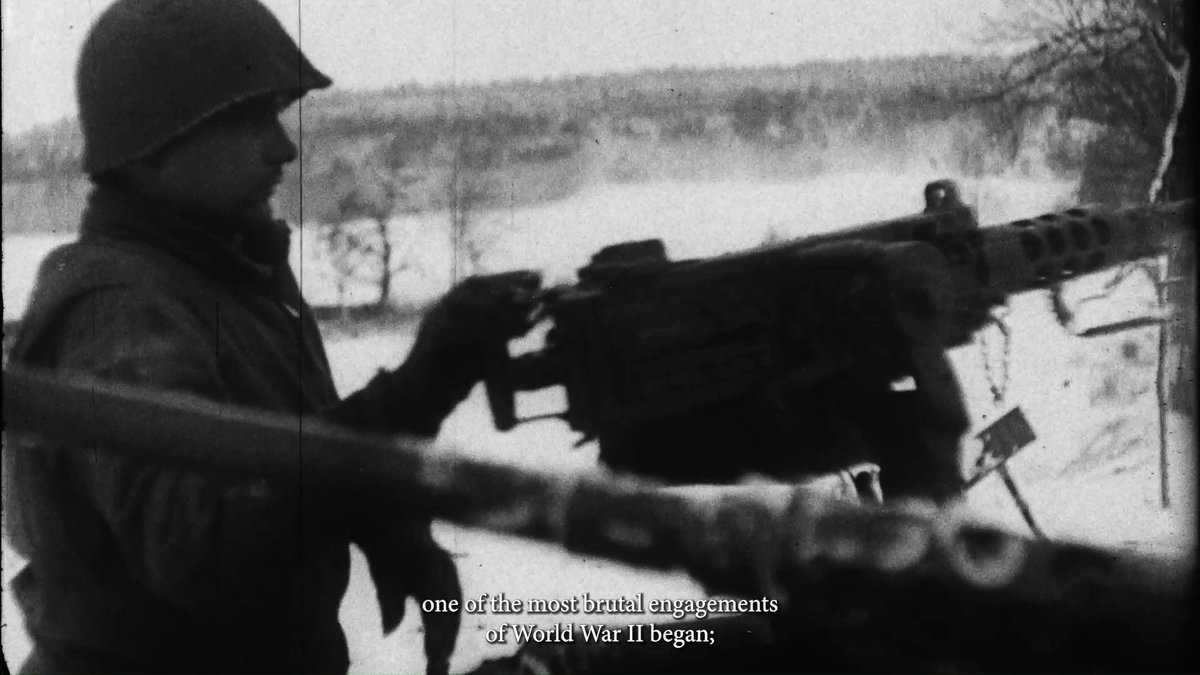
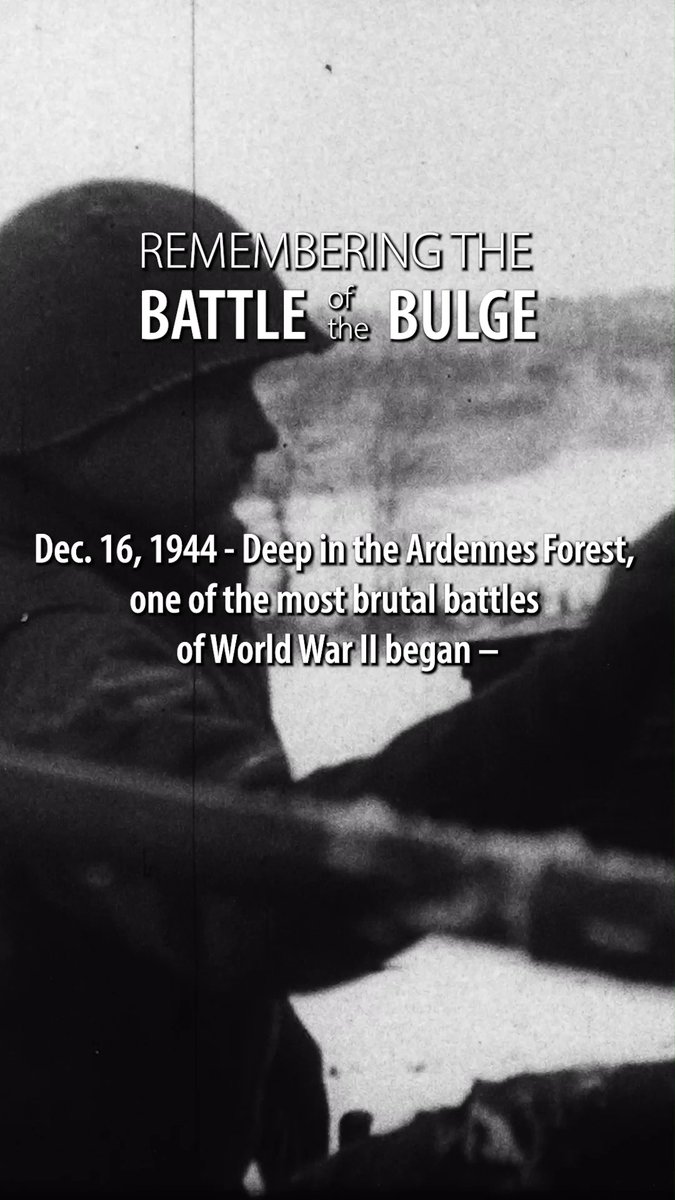
Eighty-one years ago today, the German army launched a massive offensive in the Ardennes Forest. The Battle of the Bulge would be the largest engagement ever fought by the US Army—and ultimately hasten the end of Adolf Hitler’s Third Reich.
12,905 Aufrufe • vor 9 Monaten •via X (Twitter)

0 Kommentare

Keine Kommentare verfügbar

Kommentare vom Original-Post werden hier angezeigt
Ähnliche Videos

Parade of 57,000 German prisoners of war in the streets of Moscow under escort 1944... In summer of 1944 Soviet Union launched Operation Bagration, a large-scale, complex offensive against the Nazi invaders in Belarus, Poland and the Baltic republics. This vital Soviet offensive was launched just after Allied troops had landed in Normandy, and it is symptomatic of the lack of public knowledge about the war in the East that whilst almost everyone has heard of D-Day, few people other than specialist historians know much about Operation Bagration. Operation Bagration (named after a Georgian prince in war against Napoleon 130 years earlier) was not just one of largest military offensives of the war, it was one of most sophisticated. On 19 June 1944, Red Army partisan units, operating behind German lines, attacked transport and other Wehrmacht supply lines; two days later Soviets launched massive air attacks; and then on the 23rd (one day after the third anniversary of German invasion) Red Army moved forward under cover of darkness. Soviet advance caught the Germans by surprise. Once again, Soviet technique of ‘maskirovka’ (deception) had worked. Soviets pushed forward in powerful spearheads leaving enemy units isolated behind them – a tactic that was made all the more effective because of a tactically disastrous decision Hitler had made. The German leader had ordered the soldiers of Army Group Center to stand firm and inflexible in the face of any Soviet advance. Hitler’s directive of 8 March 1944 had announced that ‘feste Plaetze’ (fortified places) should be the core of the German defense. The idea was that the Soviets would advance past these fortifications, which would, Hitler said, “fulfill the function of fortresses in former historical times”. The commander of the German Ninth Army, General Jordan could scarcely believe the nature of the order he had been given. “Ninth Army stands on the eve of another great battle”, he wrote, “unpredictable in extent and duration… the Army believes that, even under the present conditions, it would be possible to stop the enemy offensive, but not under the present directives which require an absolutely rigid defense”. “Hitler’s orders to hold firm were totally disastrous”, confirms military historian Antony Beevor. “He refused to allow his generals any flexibility or leeway which was totally contrary to all the precepts and the teaching of the German general staff… But because Hitler so distrusted his generals he wanted to control everything and that was basically the undoing of the German army”. The operation resulted in the almost complete destruction of Army Group Centre, which lost all of the Fourth Army and most of the Third Panzer and Ninth Armies. The defeat was as calamitous as any suffered by the German armed forces during the Second World War. By the end of the operation most of the western Soviet Union had been liberated and the Red Army had achieved footholds in Romania and Poland. German losses eventually numbered well over half a million men killed or wounded, even higher than the toll at Verdun in 1916. The Germans lost 350,000 men, 160,000 prisoners died on the way to prison camps, 57,000 prisoners were paraded in Moscow. Operation Bagration was Hitler’s worst military defeat in WWII. It broke the Wehrmacht’s backbone and helped to overthrow Hitler’s “Reich”, which lasted barely more than a decade instead of the promised 1,000 years. For their offensive operation the Red Army used 118 rifle divisions, 13 artillery divisions, 6 cavalry divisions, as well as 8 tank and mechanized corps. More than two million Soviet frontline and support troops took part. Over one million tons of ammunition and supplies were needed. The Soviet troops were assisted by nearly 11,000 artillery pieces, 2,300 Katyusha multiple rocket launchers, 2,300 fighter planes, 1,800 Ilyushin Il-2 ground attack planes, 650 medium bombers and 430 night bombers. #archaeohistories

Archaeo - Histories

68,894 Aufrufe • vor 1 Monat