Video wird geladen...

Video konnte nicht geladen werden

Zur Startseite

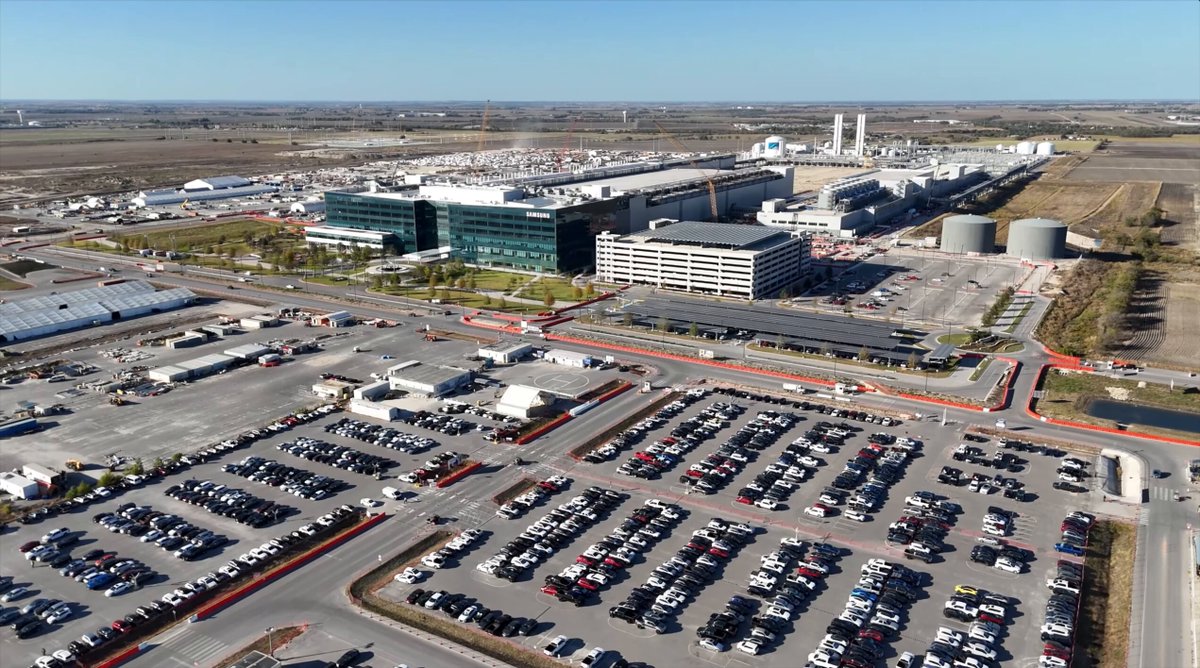
elon is finally launching Terafab. > tesla’s own semiconductor mega fab to produce 100 - 200 billion AI chips per year all because TSMC wasn’t fast enough. lmao this will supercharge elon’s ai + robotic empire to the max.

154,669 Aufrufe • vor 5 Monaten •via X (Twitter)

0 Kommentare

Keine Kommentare verfügbar

Kommentare vom Original-Post werden hier angezeigt

Ähnliche Videos

I genuinely think the Terafab is going to end up being one of the biggest moves ever made in human history to secure the future of AI... and I think most people still don’t fully see what Elon is trying to do here. The signs are clear to me. This is Tesla, xAI, and SpaceX essentially hinting to us that they are not going to wait on the world to give them the compute the team needs. They are going to build it themselves at a scale no one has ever attempted. When you really break it down, it gets a bit nutty. This is going to be a fully vertically integrated chip factory that will be producing over 1 terawatt of AI compute per year. This is NEXT LEVEL BIG. Today, AI is limited by chips. You can have the best models, the best engineers, the best everything... but if you don’t have enough compute, you will eventually hit a wall. Elon told us, the world can only supply a tiny fraction of the chips his companies will need. So this is the solution. Terafab puts everything under one roof like design, manufacturing, memory, packaging, testing, which means that they can build chips very fast.. like really fast. I'm talking about 100-200 billion custom AI chips per year at full capacity. Chips designed specifically for: • Tesla cars and Optimus robots • xAI models • Space-based compute You see, while other companies and CEOs are thinking Earth, Elon is planning for AI in space. Around ~80% of the compute is expected to go orbital, powered by solar energy bc Earth simply doesn’t have enough electricity. The U.S. grid is only about ~0.5 terawatts, while space has basically UNLIMITED energy if you can capture it. And this is the steps to get it: Starship launches → space compute → solar-powered AI → feeds back into everything to Earth. Bro... Elon and his companies are playing at a whole different level... And this is why I keep telling people that the Terafab is going to be the secret ingredient that will be the real unlock for everything: • Robotaxis at scale • Billions of Optimus robots • Massive AI models running 24/7 • Future off-world, other planet infrastructure Without these chips, none of this can happen... but with the Terafab, all of this becomes possible. That’s why Elon is calling it “the final missing piece.” I agree.

Teslaconomics

25,494 Aufrufe • vor 5 Monaten

Elon Musk just identified the next crisis in AI. It’s not a shortage. It’s an unusable surplus. Musk: “By the end of this year, chip production will outpace the ability to turn chips on.” For three years the world was starved for silicon. Every lab, every government, every company racing to secure the chips that determine who wins the AI era. That bottleneck is ending. A new one is replacing it. Musk: “The chips are going to be piling up and not be able to be turned on.” Billions of dollars of the most advanced AI hardware ever built. Sitting dark. Not because the chips don’t work. Because there isn’t enough electricity to run them. You can’t print a power plant the way you print a chip. The fabrication plants scaled. The grid didn’t. And now the most valuable hardware in history is about to hit a wall that no amount of capital can instantly solve. Compute is about to become abundant. Electricity is about to become the most valuable commodity on earth. Three years obsessing over silicon yields. Physics doesn’t care about your chip architecture if your data center can’t pull enough megawatts. The war isn’t about who can manufacture the most silicon anymore. It’s about who has the raw power to plug it in. Whoever solves energy first doesn’t just win. They own the infrastructure everyone else needs to compete. The losers stack useless chips in warehouses waiting for power that never arrives. We built a trillion dollar engine and forgot the fuel. That’s the AI race right now.

Dustin

705,977 Aufrufe • vor 6 Monaten

Elon Musk just named AI’s next crisis. It’s not a shortage. It’s a surplus nobody can switch on. Musk: “By the end of this year, chip production will outpace the ability to turn chips on.” For three years the world was starved for silicon. Every lab, every government, every company racing to secure the chips that decide who wins the AI era. That bottleneck is ending. A harder one is replacing it. Musk: “The chips are going to be piling up and not be able to be turned on.” Billions of dollars in the most advanced AI hardware ever built. Sitting dark. Not because the chips don’t work. Because there isn’t enough electricity to run them. You can’t print a power plant the way you print a chip. The fabs scaled. The grid didn’t. Now the hardware everyone fought over is hitting a wall capital can’t buy its way through. Compute becomes abundant. Electricity becomes the most valuable commodity on earth. Physics doesn’t care about your chip architecture if your data center can’t pull the megawatts. Every mind that has ever existed was limited by what it could eat. Ours ran on grain. This one runs on the grid. That has never been solved by thinking. Only by building. The war isn’t about who can print the most silicon. It’s about who can plug it in. Whoever solves energy first doesn’t just win. They own the rails everyone else has to rent. The losers stack chips in warehouses, waiting for power that never arrives. We built a trillion dollar engine and forgot the fuel.

Dustin

536,449 Aufrufe • vor 1 Monat

Why is the market selling off today? (Save this). The semi selloff right now is being driven by a mix of macro fear, profit taking and investors questioning how quickly all of this AI spending will actually pay off, not because demand for AI infrastructure suddenly disappeared. The market is basically trading this chain reaction, the ongoing US Iran escalation pushes oil higher, higher oil keeps inflation elevated, sticky inflation keeps Treasury yields high and that increases the risk of the Fed staying hawkish or even hiking again. That is a terrible setup for semis because many of these companies are valued on the massive earnings investors expect them to generate years from now. When yields rise, those future earnings become worth less today which is why the highest multiple AI and semiconductor names usually get hit first. (I don't think there will be a hike this year). This is also why everything is moving together right now. Nvidia, Micron, Nebius, SanDisk, Broadcom and Applied Optoelectronics are all completely different businesses, but institutions are not separating memory, networking, optics, compute and cloud infrastructure at the moment. They are reducing exposure to the entire AI trade, taking profits in the names that have already run the most and moving into a more defensive position potentially ahead of the Fed. There is also growing pressure around hyperscaler capex. Microsoft, Meta, Amazon and Google are still spending enormous amounts on GPUs, data centers, networking and power but the market is starting to ask when all of that spending will actually turn into revenue and free cash flow. Investors are no longer satisfied with hearing that AI capex is growing. They want proof that the returns are arriving fast enough to justify the valuations already priced into the entire AI ecosystem. That creates a weird situation where hyperscaler capex can continue rising while semiconductor stocks still fall. The market is not asking whether AI spending is growing anymore but rather asking whether it is growing fast enough to beat the expectations already baked into these stocks. Crowded positioning is another major factor. Semis and AI infrastructure stocks have been some of the biggest winners in the market so institutions are sitting on huge profits and many funds own the exact same names. When macro risk increases, investors usually sell the most liquid winners first. That does not mean demand for memory, optics or custom chips suddenly collapsed but rather means investors are locking in gains and reducing risk. Tariffs add another layer because even when they are not directly placed on chips, they can still raise the cost of servers, electrical equipment, cooling systems, construction materials and the overall data center buildout. That makes AI infrastructure more expensive while also adding another source of inflation. Then you have Jensen Huang’s letter to the White House this morning about open weight AI models, which I think is one of the most important long term developments here. Nvidia, Meta, Microsoft, Palantir and several other companies are pushing Washington not to place broad restrictions on open weight AI. OpenAI and Anthropic were notably absent because open models are much more of a threat to their business models. OpenAI and Anthropic benefit from a world where a few closed frontier labs control the best models and companies have to pay them through subscriptions and APIs. Open weight models weaken that advantage because businesses can download a model, customize it for their own use and run it on their own infrastructure or through a neocloud. That is bad for OpenAI and Anthropic because it puts pressure on pricing, margins and the idea that they will control the intelligence layer of the economy but it is very good for the AI ecosystem as a whole over the long run. But the question is what does this mean for all the OpenAI and Anthropic commitments? so that's adding to the fear as well. But with that being said open models make AI cheaper and more accessible. Instead of AI being controlled by a few giant labs, thousands of startups, universities, governments and regular businesses can deploy models themselves. That spreads AI adoption across the entire economy and creates a much larger infrastructure opportunity and that is exactly why Jensen cares. Nvidia does not need OpenAI or Anthropic to win. Nvidia just needs more people using AI. Whether the model comes from OpenAI, Anthropic, Meta, Mistral, Kimi or some startup nobody has heard of yet, it still needs GPUs, memory, networking, data centers and electricity. So open weight AI could actually weaken the model companies while making the infrastructure layer much bigger. More open models mean more companies running inference. More inference means more GPUs. More GPUs mean more HBM, optical transceivers, switches, data centers and power. That is bullish for Nvidia Nebius, Micron, Broadcom , Marvell and Applied Optoelectronics over the long run. So my take is that the current semi selloff is being driven mostly by macro uncertainty, higher oil, rising yields, Fed fears, tariffs, crowded positioning and questions around the return on hyperscaler capex. The underlying AI infrastructure thesis has not suddenly broken. We are not broadly seeing hyperscalers cancel GPU orders, slash capex, abandon data center projects or report that AI demand has collapsed. What has changed is the valuation investors are willing to pay while the macro environment remains unstable. The market is lowering the price it is willing to pay for semiconductor growth but is not necessarily saying that growth is gone. And while Jensen’s open weight push may be bad for OpenAI and Anthropic, it could be one of the best things possible for the AI ecosystem over the long run because it creates more models, more developers, more competition and ultimately much more demand for the infrastructure underneath all of it. Nothing about the AI thesis has changed for me, so I will be going shopping and taking advantage of this sale while the market is selling everything together. I am an analyst at Milk Road Pro, and if you want to see exactly what I am buying, you can join for just $1 using the link below.

Melvin

180,198 Aufrufe • vor 1 Monat

BREAKING: Eight days ago the White House paraded Apple as the champion of bringing chips home to America. This week Apple is quietly asking that same White House for permission to buy memory chips from a Chinese company sitting on the Pentagon's military blacklist. The decoupling did not break because anyone lost their nerve. It broke because AI made the chips too expensive to keep choosing sides. Watch the timing, because it is almost too perfect. On June 18, Trump announced an Apple and Intel partnership to build chips on American soil, the poster child for reshoring. Days later the Financial Times revealed Apple had spent over a month lobbying the administration for assurance it could buy DRAM from CXMT, a firm the Pentagon flags for alleged ties to the Chinese military. The same company, the same week, standing on both sides of the line Washington drew. What pushed Apple to the edge was pure cost. AI data centers have swallowed the world's memory supply and prices have rocketed. When Apple finally raised MacBook and iPad prices to cope, investors erased 263 billion dollars from its value in a single trading day, its worst since April of last year. The squeeze became unbearable, so the company went looking for the one supplier everyone else is warned away from. This is the part the chip war never priced in. Decoupling assumed American firms could afford to pick a side. That holds right up until a shortage gets severe enough that picking a side becomes unaffordable, and AI just found that point. The most valuable company on earth would rather approach the blacklist than keep paying the bill. A memory chip shortage did not just raise the price of a laptop. It bent the security policy of the United States until its flagship company walked up to a line it was told never to touch. Scarcity, it turns out, has no flag.

Shanaka Anslem Perera ⚡

2,191,937 Aufrufe • vor 2 Monaten