Loading video...

Video Failed to Load

Go Home

End-of-week battle: same prompt → UI MagicPath (1min) vs @Figma Make (2:30) vs Lovable (5min) 🥇Winner: MagicPath – elegant, consistent screen in <2min! Lovable & Figma Make outputs feel almost identical lately. Which surprised you? Next contender?

13,971 views • 6 months ago •via X (Twitter)

0 Comments

No comments available

Comments from the original post will appear here

Related Videos

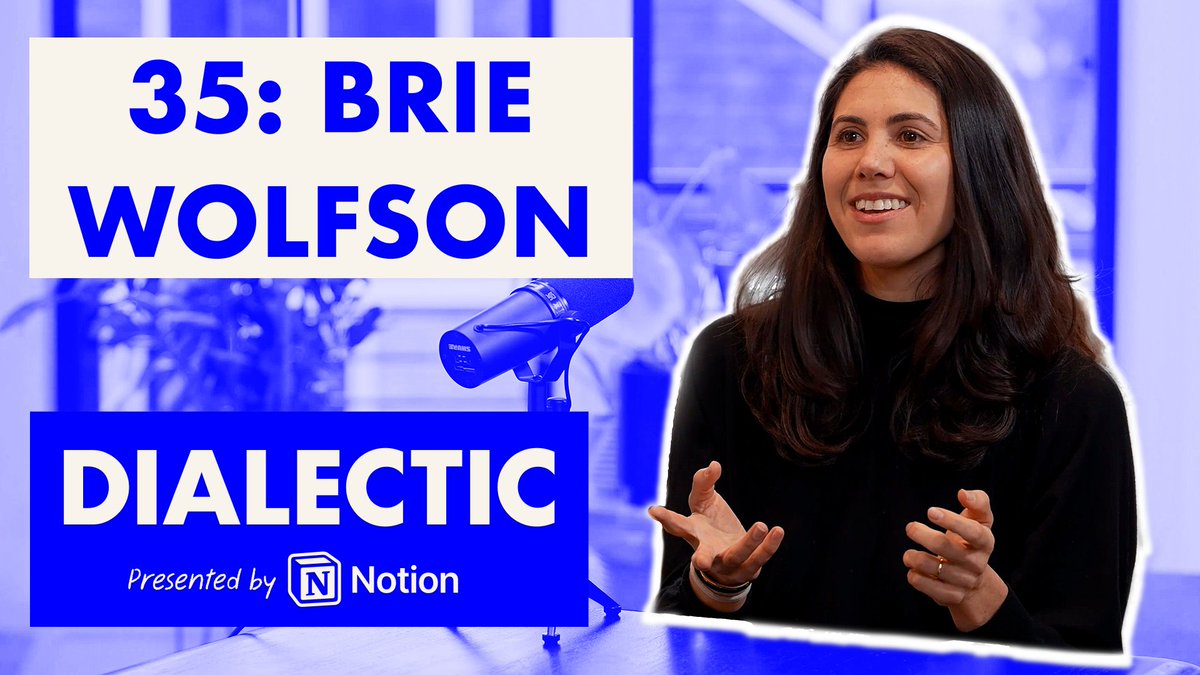
Ep. 35: Brie Wolfson - Loving Attention & Ease in Craft Brie Wolfson is something of a marketing and culture wizard, and has helped some of the most incredible companies and leaders in Silicon Valley by amplifying what is true and unique about them. That includes Cursor and Michael Truell, Join Colossus and Patrick OShaughnessy, Stripe, Stripepress and Patrick Collison, Figma and Dylan Field, and others behind the scenes. But what stands out most in Brie is her infectious joy, dedication to craft, and lifelong dance between a desire to be great and an ability to listen to and trust herself to go in unlikely directions--as she so poignantly explored in her recent essay/profile on Kevin Kelly, 'Flounder Mode.' I hope this conversation inspires you find ways to amplify those you believe in with loving attention, settle into ease and quality in whatever you make, and pursue a life of joyful usefulness. Available below and on all platforms. Timestamps: 0:00 - Opening 3:54 - Notion 5:04 - Intro: Craft, Finger Feel, and Staying Closer to the Ground Level 13:27 - Process vs. Output, Quality vs. Speed, and Great Editing 21:44 - Craft, Substance, and Truth in Marketing 25:56 - Individuals as the Building Block of a Company and Empowered ICs 32:02 - Creative Collaboration and In-Person and Remote 36:46 - Company Building: What is Changing and What Will Stay the Same 44:25 - The Soft Stuff: Great Company Values and Great Culture 52:17 - Thinking vs. Doing Cultures, 996 and Difficulty Sitting Still 1:00:37 - Morale, Fun, Amplifying Leaders, and Loving Attention 1:11:58 - Career Path Advice for Young People 1:19:56 - Kevin Kelly, Chasing Greatness, Illegibility, and Ease in One's Craft 1:27:29 - Special Talent and Contagious Ambition 1:32:22 - Brie’s Spike: Charisma, Hard and Soft, Making Things Fun, and Belief 1:43:23 - Taste, Appreciation, Generosity, Skill and Soul 1:57:26 - Great Editors, Saying No and Getting to Yes, and Being Receptive to Editing 2:05:25 - Great Writing: What do You Have the Right to Do that Others Don't? 2:13:55 - Grab Bag: Optimism and Pessimism, High and Low, and Closing Maxims 2:30:07 - Thanks to Notion

Dialectic with Jackson Dahl

74,199 views • 6 months ago

Harry Dry is the best copywriter I know. He's built a 130,000-person newsletter teaching people how to do it, and by the end of this interview, you'll be at least a Green Belt in copywriting. Some of his rules for writing: 1) A great sentence is a good sentence made shorter. 2) Writing great copy begins with having something to say in the first place. 3) Copy is like food. How it looks matters. 4) Since the look of copy matters so much, don't write copy in Google Docs. Write it in Figma (so you can write and design at the same time). 5) Kaplan's Law of Words: Any word that isn't working for you is working against you. 6) You know a paragraph is ready to ship when there's nothing left to remove. It's like a Jenga tower. The entire thing should collapse if you remove something. 7) Make a promise in the title so the reader knows exactly what they're going to get if they click. Then, deliver on the promise. 8) The three laws of copywriting: (1) Make it concrete, (2) make it visual, and (3) make it falsifiable. 9) Make it concrete: Don't be abstract. For an example, say you're writing about habits. Don't talk about "productive routines." That's abstract. Write about "waking up at 6am to write" instead. It's concrete — and much more vibrant. 10) Make it visual: People see in pictures. This is why instead of memorizing card numbers directly, world memory champions memorize cards by turning them into pictures and then back to cards. 11) Make it falsifiable: When you write a sentence that's true or false, you put your head on the chopping block, which makes people sit up in their seat. 12) When has a falsifiable statement resonated? Galileo got sentenced to a decade of house arrest for saying that the earth spins around the sun. That's a falsifiable sentence. But nobody would've done anything if he'd said that the earth has a harmonious connection with a celestial object. 13) Write with the delete key. Using fewer words lets you be more impactful with the words you keep. 14) The job of a sales page is to make a bold claim at the top. Then spend the rest of the page backing up what you've said... with a ridiculous amount of proof. 15) If your competitor could've written the sentence, cut it. 16) Good copy is differentiated. Here's an example: Elon Musk shouldn't write "The Cybertruck is the world's best truck." Ford or Dodge can write that sentence. But only Elon can write: "The Cybertruck is tougher than an F-150 and faster than a Porsche." 17) Some days, the writing comes easily. Some days, it takes sweat. The reader doesn't care if you wrote for two minutes, two hours, or two days. The ink looks the same. 18) Great copy reads like your customer wrote it. Talk to them. That's just an introduction to the copywriting philosophy of Harry Dry. I've shared the full interview below. I recommend you watch this one because we pull from so many visual references and do a lot of screen sharing. If you'd rather watch on YouTube, I've shared the link in the reply tweets.

David Perell

718,935 views • 2 years ago

There’s only Four stocks: 🍬 MINT That have ABSURDLY HIGH, asymmetrical return. Meaning Low Capital Risk. High Upside Return. This is only for Nov + Dec 2025. Here it is... MINT An explanation of why to full port MINT for end of year 2025: M = $META I = $IBIT N = $NBIS T = $TSM With these four holy growth companies in your portfolio, you can make your breath smell better so you can pull Sydney Sweeney: Mag7. Crypto. AI Data Center. Semiconductor. $META - Meta ___________ Stupid sell-off. Revenue Beat. EPS Beat. Strong guidance. It looks extremely bad on paper when you look at Revenue $51.24B (+26.25% Y/Y), Net income $2.71B (-82.73% Y/Y). 🟢 Revenue: $51.24B vs. est. $49.41B Without one-off tax → 🟢 EPS: $7.25 vs. est. $6.67 With one-off tax → 🔴 EPS: $1.05 vs. est. $6.67 My guess was the initial sell-off was algorithmically driven, then caused by mechanical flows. Many high-frequency trading (HFT) and news-parsing systems react to headline EPS numbers pulled directly from data feeds (Bloomberg, Reuters, etc.). If the reported GAAP EPS ($1.05) is printed alongside a consensus of $6.67, the system flags it as a massive miss. Obviously this is speculative, but many models aren't programmed to normalize for one-time tax charges (which is new) and won’t know to look at adjusted EPS ($7.25), which actually beat. Now news are claiming the sell-off was due to AI capex surprise. If we go with this, -15%+ on “AI capex spending increasing” is just pure narratives and means absolutely jack since $MSFT, $GOOGL, $AMZN, $TSLA, and every single Mag7 is increasing on capex. $META doing the same and selling off doesn’t make sense, unless people believe it’s just going into a black hole with no ROI (which markets disagree since AI is basically running $SPY). Extremely strong buy on recovery once there’s time over the weekend for people to digest what actually happened. Misreads + stupid narratives can cause short-term overreactions (1–2 sessions), often reversed. $IBIT - Bitcoin ___________ It’s Bitcoin.And sitting at $110k. Bitcoin is here to stay with US government support, and with all the ongoing currency inflation + flow of money going to newer generation, there’s no better hedge against inflation than BTC. Polymarket still prices Bitcoin 40% to $130k in 2 months’ time, even if it moves up a few percent you can have upside on CCs and upside on the underlying asset. $NBIS - Nebius ___________ Core business valuation: $31–36.5B Sum-of-parts (cash, assets, portfolio): ~$10.6B (slashed 40% = ~$6.3B) Base case valuation: ~$39B → high upside even with zero growth Core business on track for ~$5B ARR (FY26–27), 60–70% gross margins, and 30% EBITDA target. Hitting $8–12B ARR (via one more hyperscaler deal + SMB expansion) could justify ~$100B valuation. No toxic debt, high GPU utilization, full-stack architecture → higher operating leverage. You can look at the bullet point comparison that I quoted so you can make your own judgement on $NBIS vs $IREN for example. However, I’ll always maintain $NBIS has the highest asymmetrical return over anything including $IREN to $CIFR due to existing hyperscaler deals, enterprise clients (Shopify, Accenture), Government Clients, 1GW capacity, high gross margins from full-stack, and many others. That’s not saying there’s not high upside from $WULF from Fluidstack + Google deals, and others from capacity. The downside risk on Nebius is the lowest. And it has really, really high upside. $TSM ______________ It’s the CENTER. OF. THE. AI. TRADE. They’ve already guided INCREASING MARGINS - which is astronomical. Revenue: $33.1B vs. $31.5B est. Earnings per Share: $2.92 vs. $2.59 est. Guidance: $32.2B – $33.4B vs. $32.0B est. They’ve beat revenue guidance, increasing margins, and it’s just astronomical how much money they’re printing. It was trading at $305–310 pre-earnings, now back at $300. It’s a $1T+ company that grew 30%+ Y/Y with their margins — what the actual. I said this about the money printer $GOOGL back at $145 and $HOOD back at $20. They print money. There's no need to debate $ALAB vs $CRDO, $IREN vs $NBIS, $AMD vs $NVDA. $TSM the center of the whole AI buildout, so it’s just a waiting game. _ There is it $MINT. Enjoy a teaser of the song, kinda a banger. 🎶

Serenity

184,463 views • 8 months ago

Roy makes a very fair point here, I was torn on Green + 100k vs Merrett all week. I literally swapped them back and forth 3-4 times from Fri night to Sat night. He is right, you don’t get that many opportunities to get a top-liner like that and I possibly should’ve taken the chance when it presented, especially with the Ess run. I think Merrett was priced at around 116. If he goes at 125 over the next 5-6 weeks, after adding the Captaincy benefit, it would’ve probably been a mistake to not go him. One thing I was v.surprised with last week was how low down Merrett was on the trade-ins list. It is not often you get an Uber-premium like that who has a juicy upcoming schedule AND is a POD. That’s a very unusual set of circumstances. If your POD premium then goes ham it really can separate your team from the pack. We saw last yr with Zorko what a boost it can be to have a POD premium go large for a big stretch (granted a little diff in the FWDs last yr). That, along with my previously outlined thesis about teams potentially being completed earlier than ever this yr was my bull-case for going Merrett. The reason I went with Green, or rather, why I opted for another option that left me with 100k in the bank is that my bench is a thin. Stone won’t make us much, FOS not looking like he’ll make us much, Berry now been sub 2 games in a row and is dropping cash, Hastie getting subbed each week etc. Other teams that have Moraes instead of Hastie and Hall instead of Berry may have an extra few hundred k to play with in terms of making upgrades. So in light of my weaker bench I felt that the 100k would help facilitate a better subsequent trade (ie this week). Whilst I could downgrade a Prior this week to make a nice upgrade, it wouldn’t be too long before my bench is not sufficient enough to facilitate the next upgrade. So ultimately I was looking at it as a 2 week decision. Ie, would I rather a Merrett + Tom Stewart type this week or would I rather Tom Green + Nick Daicos and ultimately I opted for the latter, though I do feel like I need to fix one of Hastie or Berry this week so we’ll see what I end up doing. But that was the thought process. As stupid as it now sounds, if Dees didn’t tag Holmes the previous week I prob would’ve gone Merrett, but the faint possibility of that happening to Merrett was prob the deciding factor in letting him go. I was also close to trading in Zorko the prev week and seeing Zork do 79 against Richmond spooked me. Didn’t want to run the risk of paying a huge price and then Zerrett underperforming as Zorko did. Can’t say I was thrilled seeing Merrett go nuclear Sat night, esp after the TDK C decision on Sat arvo. But, I can potentially make up the points this week if I’m able to put that 100k to good use.

Vams

10,925 views • 1 year ago

👀 This Jay-Z Interview Moment Still Doesn’t Sit Right… When Jay-Z spoke on the Super Bowl decision, he downplayed everything: •Said picking Kendrick Lamar wasn’t personal •Denied there being any alliance •And leaned on his status like: “I’m Jay-Z… why would I even care?” On the surface, that sounds confident… but when you line up the timeline, the story starts to feel a lot more layered. 🧩 The “No Alliance” Narrative vs. The Moves Let’s go back to Beyoncé’s “America Has A Problem” remix. •Kendrick didn’t just feature he came in directly addressing Drake •He even referenced asking Universal Music Group for clearance before taking shots •And importantly… Jay-Z has writing credits on that same record That’s where things get interesting. Because now it’s not just: 👉 “Kendrick vs Drake” It starts to look like: 👉 multiple powerful figures connected to the same moment That doesn’t automatically prove coordination but it definitely doesn’t feel isolated either. 📀 Drake’s Verse That Aged Different Now rewind to June 2022. Drake hops on “Churchill Downs” with Jack Harlow and drops a verse that, in hindsight, feels almost predictive: “Lucky Me, People that don’t f*** with me Are linkin’ up with people that don’t f*** with me to f*** with me…” He goes deeper into: •Things becoming “transactional” •Moves feeling “promotional” instead of organic •People acting irreplaceable when they’re not At the time, it sounded like general industry frustration… But then just one month later Beyoncé dropped America Has A Problem where: 👉 Drake A non American becomes a clear topic That tight timing makes the verse feel less random and more like: 👉 he was already peeping something forming behind the scenes 🏈 The Super Bowl Foreshadowing? Fast forward to the battle era. Kendrick’s “6:16 in LA” includes a very specific detail: 👉 the sound of a football launcher Later on… That same exact sound is used in the rollout announcing him as a Super Bowl performer Now that’s where it really gets debatable. Because that leaves two possibilities: 1.🎯 Creative coincidence Just a sound choice that happened to line up later 2.🧠 Intentional foreshadowing A subtle hint that something bigger was already locked in And when you combine that with everything else the collaborations, the timing, the people involved it’s hard to ignore. 💭 My Full Perspective Individually, each moment could be explained away: •A feature here •A lyric there •A sound effect used creatively But together? It starts to form a pattern: •Strategic collaborations •Consistent messaging •Tight timing between releases •Key industry figures overlapping in the same moments Which raises the bigger question: 👉 Was Kendrick simply moving on his own… or was he being positioned within a larger play happening behind the scenes? 🤔 End of the Day… Jay-Z says there was no alliance But when you really break everything down: …it doesn’t feel completely random either. So what do you see? 👀 Coincidence… or calculated alignment?

Cousin Tino ™️

13,163 views • 3 months ago

Stanford professor just gave away the entire foundation of how AI Agents & automation actually works. 1-hour lecture. Tool calling. Multi-step workflows. Planning. Reflection. SAVE this to watch this before you open Netflix tonight. More valuable than 6 months of copying Make and n8n tutorials, for building Ai Agents Most people learn by copying tutorials blindly. Stanford teaches you WHY agents work the way they do. Follow Himanshu Kumar for more high-signal content that actually moves your skills forward instead of just entertaining you for 30 seconds. ↓ Why your automations keep breaking. You copied a Make tutorial. Built the exact workflow. Worked for a week. Then the API changed. The trigger failed. An edge case broke everything. You had no idea how to fix it. Because you never understood why it worked. You were copying keystrokes. The people shipping real automation were understanding architecture. ↓ What Stanford actually teaches. Tool calling: how an agent decides which tool to use by scoring each option against the current task state, not just matching keywords. ReAct loop: the agent reasons, acts, observes, then reasons again. Break this cycle and your workflow fails silently. Planning vs execution: why agents that plan all steps upfront break on dynamic inputs, and why iterative planners survive production. Memory architecture: short-term context for the current task, long-term vector memory for patterns. Most automations fail because they confuse the two. Reflection: how agents catch their own errors by evaluating outputs against original intent before moving to the next step. Tool composition: why chaining 10 tools blindly creates cascading failures, and how to structure dependencies so one broken node doesn't kill the whole workflow. This is the foundation behind every automation that actually works. Not prompting tricks. Not "10 best AI tools" reels. Actual architecture. Follow Himanshu Kumar for more high-signal content that actually moves your skills forward. ↓ Your weekend plan. Tonight: watch the Stanford lecture. 1 hour. Saturday to Sunday: build 3 projects applying what you learned. Next 2 weekends: 6 more projects. 9 projects. 2 weeks. APIs, webhooks, LLM integration, real workflows. No theory. Just build. ↓ Stanford Agentic AI lecture: free on YouTube. Watch it this weekend or buy another $500 "AI automation course" in 2027 that teaches less than this one free lecture. Bookmark. Watch tonight. Follow Himanshu Kumar for more high-signal content that actually moves your skills forward.

Himanshu Kumar

28,120 views • 2 months ago

Disney released Snow White in 1937. 60 years later, they re-released it on video. 28 million copies sold. $250 million in profit. Steve Jobs watched his young son watch it 30, 40 times. “These stories renew themselves with each generation.” In 1996, one year after Toy Story, he spent 20 minutes explaining why he bought Pixar: On buying the dream: "I met Ed Catmull who was running the computer division of Lucasfilm in 1985." "He shared with me his dream about making the first computer animated feature film." "I bought into that dream both financially and spiritually." "It took us ten years to do that, but we did it." The result: Toy Story. Third most successful animated film ever made. On content vs technology: "You can hardly find an Apple II around anymore." "It's not clear whether you'll be able to boot up a Macintosh five years from now." "All these technology boxes and software, if it has a life of a year or two, you're very lucky. Five years is extraordinary." "Sooner or later, they all become part of the sedimentary layer." But stories? "I think people are going to be watching Toy Story in 60 years. Not because of the computer graphics, but because of the story about friendship." On work-for-hire: Pixar made commercials for years. Won every award in the book. Then Jobs did the math. "If Listerine sold more Listerine because of our commercials, we didn't make any more money for producing the commercials." "The margin in that business has been under pressure. More people coming in. Going down, and down, and down." "You work harder and harder to make the same amount of money." He pulled 25 people out of commercials. "We had 25 incredibly talented people doing work-for-hire when we have all these other opportunities where we own a piece of what we create." "Great people are hard to find. We couldn't afford to have 25 of them making commercials anymore." On blending two cultures: "The very best creative people will only go to work in a few places. Disney, Pixar, possibly DreamWorks." "The very best computer scientists in computer graphics will only go to work in a few places. Pixar is one of those." "Pixar is the only place in the world that can hire the best from both of these areas." "We worked for ten years to figure out a way to have them all work together. The Hollywood culture and the Silicon Valley culture are really different." On the hierarchy of power: "When you've got incredibly talented people that are rare and in-demand, if you don't treat them right, they can go get another job in 10 minutes." "So this strange thing happens. The hierarchy of power inverts." "The CEO is actually at the bottom." "I feel like I work for most of these people because they're the ones doing all the brilliant work." "It's management's job to support them because they're on the front lines doing the work." On contracts vs stock options: "Hollywood uses the stick, which is the contract. Silicon Valley uses the carrot, which is the stock option." "When you sign a contract with somebody, you can say, 'I don't have to worry about that person for five years.'" "If you're sophisticated, you'll have a little database that tickles you six months before their contract is up so you can start paying more attention to them." "They're the most important person in the world for six months. Then after they sign up again, you put them in the drawer." Pixar chose stock options. "Every single day, we worry about how to make Pixar a better company so that nobody will ever want to leave." "We don't take anybody for granted." On what Disney taught them: "When you make a live-action film, a director shoots ten to twenty-five times as much footage as will end up on the screen." "Walt Disney realized many decades ago that animation was so expensive that you couldn't afford to animate ten times more than what you need." "The only conclusion: you have to edit your film before you make it." "Working with Disney gave us access to that wisdom. You can't buy it for love or money." On the constant: "Ten years ago, when we made Luxo Jr., it took about three hours to render each frame." "Toy Story. Computers are hundreds of times faster. It still took three hours to render each frame." "The frames were a hundred times more complex." "Our ambitions, visually, are growing as fast as the technology can feed them." On story vs technology: "The art of storytelling is very old." "No amount of technology can turn a bad story into a good story." "That's our mantra at Pixar. It's the story, stupid." "I don't think storytelling has changed in a long time. And I'm not sure it will. I don't think it's something that technology has anything to do with."

Jaynit

95,800 views • 2 months ago

Sometimes I like to look at a player’s “worst game of the year” to see how bad it was (or wasn’t). For WR Caleb Douglas (according to PFF) that was the Arizona State game where he matched up with Keith Abney (R5) all day. This was a good battle between Douglas and Abney. But considering it was supposed to be Douglas’s worst outing, it wasn’t all that bad. Texas Tech lost, despite coming back from a 12 point deficit in the final 6 or 7 minutes to take a 3 point lead, after a successful 2-point conversion made possible by Douglas drawing a hold in the end zone on the first 2-point attempt. Sam Leavitt and Jordyn Tyson worked their magic to go all the way down the field in the final minute and not just kick a tying FG, but actually score the go-ahead TD, leaving Texas Tech attempting a Hail Mary as the clock ran out. Things I noticed during the game: - The backup QB Will Hammond playing in place of Behren Morton had some issues with timing and ball placement. A couple of targets Douglas was open, Hammond missed him. Another one, instead of throwing the vertical Hammond patted the ball an extra beat and it threw off the timing. - I loved Caleb Douglas’s willingness to try and make a difference as a blocker. He got nasty with it. - Caleb had a bad drop. Abney got in there and contacted him and Douglas failed to put the ball away. But it’s interesting because Caleb also had one of the most impressive one-handed stabs you’ll see, on a play nobody noticed or cared about because it was a screen that didn’t break open. - On a lot of plays, if there wasn’t safety help, there was an egregious amount of cushion. This is something you see in a lot of Tech’s games. People had been trying, and frankly failing, to triangulate Douglas’s long speed, to where his 4.39 came as a surprise to some. And then when they’re wrong, the same tired excuse comes out, “He doesn’t play to his timed speed.” But the signs were always there. You had safeties stashed way out in the middle of nowhere to protect corners. You had corners giving 10-12 yards of cushion. - There was a lull where either the ball wasn’t coming Douglas’s way or it was inaccurate when it did, and it lasted nearly half the game. So I was looking for signs of Douglas checking out with his route running. That didn’t happen. He ran his routes hard the entire game. - Douglas dialed it up a notch during the comeback attempt at the end, particularly after the drop. He got wide open on a 3rd down vertical vs. physical coverage with no safety help over top (surviving an unflagged face mask in the process). Then he got open in the end zone twice, one of which forced a hold by Abney that did get flagged. I think the takeaway from me was, you’re playing against a good corner, you have a backup QB in, things don’t go well for you nor the offense for most of the game, but you stay locked in and make a difference at the end, mounting an unlikely comeback. I can see why Jon-Eric Sullivan would like his demeanor.

Chris Kouffman

38,519 views • 2 months ago

your OpenClaw🦞 has NO IDEA what you do all day... what if we give it eyes and make it observe you all day? introducing synapse, a daemon that runs in the background, watches your screen activity through , and uses Claude to detect the workflows you keep repeating! then, it does two things: 1) turns those patterns into ready-to-use automations (e.g. claude code commands and skills you can run immediately) 2) feeds that context directly into your openclaw agent so it can act on what it sees your agent goes from "what do you want me to do" (which seems to be the default mode for almost all ai agents) to "i noticed you've been doing this repeatedly, want me to handle it for you?" let me give you a real example. > UEFA Champions League is coming up. > you want to place a prediction on juventus vs galatasaray > so you start doing what you always do: open a tab for injury reports, another for head-to-head history, another for current form tables, another for the odds across prediction markets > by the time you actually place anything you've spent 45 minutes on research you've done a hundred times before. synapse sees all of that! it automatically detects the pattern: "user repeatedly researches match injuries, form, and h2h stats before placing predictions on polymarket." it doesn't just log it. it proposes a prediction market research skill that pulls injury reports, recent form, historical matchups, and odds from multiple sources, and then gives you a structured breakdown with a confidence score. next champions league match day, you just type one command to get all of this done. beauty! all this happens while everything is locally stored on your machine. get started below ↓

altan tutar

10,247 views • 4 months ago

一番最後の[Prompt for original image]の部分に画像生成に使用したPromptを入れると一貫性が増します。不要な場合は3行削ってしまっても大丈夫です。 --- Extreme wide-angle perspective and dynamic pose remix edit. This is an EDIT of the original image, not a new character. Use the original image as a strict reference for: – the person’s identity, hairstyle, and overall fashion style, – the general type of background and location (same street, same room, same beach, same kind of architecture, etc.). You are allowed to completely change the camera position, angle, and pose, but you must keep the scene in the SAME location and keep the SAME person and outfit design. Camera and perspective: – Use an ultra wide-angle or fisheye feeling lens (around 12–18mm full-frame look). – The camera angle MUST change significantly from the original: use dramatic angles such as • worm’s-eye view from directly below looking up, • bird’s-eye view from directly above looking down, • very low angle from the ground, • high angle from above, • tilted Dutch angles. – Always create strong foreshortening: body parts close to the lens look huge, while the rest of the body falls away in perspective. – The final result must look like a bold fashion or street photo, fully photorealistic, not illustration or anime. Background consistency: – Keep the same location as the original image: same street, same bridge, same room, same studio, same beach, same general structures and materials. – Do NOT replace the background with a completely different place. – Because the camera angle changes, it is allowed and expected that different parts of the environment become visible. – When new areas appear, extend the original environment logically (same buildings, fences, road markings, walls, colors, materials, lighting style), as if the camera moved within the same place. Body parts near the lens (1–2 parts, sometimes 3): – In each edit, choose ONE or TWO main body parts to be extremely close to the lens (sometimes even THREE in more complex poses). – Vary them from image to image, do NOT always use the same body part. – Allowed near-the-lens parts include: • one or both hands / fingers reaching toward the camera, • one or both feet / shoes / boots near the lens, • knees or thighs, • face very close to the lens, • shoulders or chest close to the lens in a leaning pose. – The chosen body parts should come extremely close to the lens, almost touching it, with visible skin texture, fabric texture, and realistic wide-angle distortion. Pose and overall body (complex and varied): – Create strong, cool, dynamic poses that match the extreme perspective. – Randomly use different pose types, including: • standing with one leg or one arm reaching toward the camera, • crouching or squatting low to the ground, • sitting on the floor or on objects, • lying on the ground with legs or feet toward the lens, • leaning forward aggressively toward the camera, • twisting the body, crossing legs, or arching the back for more dynamic lines. – Allow complex poses where: • both hands are near the lens forming shapes (peace signs, triangles, frames, pointing toward the viewer), • both feet are toward the lens, • one hand and one foot are both large in the foreground, • the face is close to the lens while hands or feet are also visible in perspective. – Maintain believable anatomy even with extreme foreshortening. Angle and attitude (randomized): – Randomize camera angle and orientation (up, down, side, Dutch tilt) while keeping the composition visually balanced and powerful. – Keep the vibe cool, confident, and fashion/editorial or street style, depending on the original outfit. – Facial expressions can vary (serious, playful, confident, mysterious), but must still look like the same person. Lighting and rendering: – Keep the general time of day and lighting mood similar to the original (night vs day, indoor vs outdoor, soft vs hard light), but you may enhance contrast and color to make the image punchy and dramatic. – Maintain realistic shadows and contact points with the ground or floor. – High-resolution, sharp details with clear skin texture, fabric weave, and material highlights. Variation and randomness: – Each edit should look noticeably different from the original image and from other edits, with different: • camera angles, • pose types, • which body parts are closest to the lens, • orientation (straight, tilted, from above, from below). – Avoid repeating the exact same single-foot-close-up composition; produce a wide variety of dynamic poses and angles. Strict rules: – Do NOT change the person into someone else. – Do NOT change the outfit type; only restyle it through pose, perspective, and small natural movement of clothing. – Do NOT move the scene to a completely different location; always stay in a plausible extension of the original place. – Do NOT add text, logos, watermarks, or graphic design elements. – Do NOT switch to painting, illustration, or anime style; keep it photorealistic. Overall: Transform the original photo into a dramatic, photorealistic, ultra wide-angle shot with an extreme camera angle (including views from directly below or above), where one or more body parts are right next to the lens and look huge, the rest of the body recedes in perspective, and the same person strikes a stylish, complex, powerful pose in a consistent, expanded version of the original environment. Also, below is the prompt for generating the original image. Please use it as a reference. [Prompt for original image] #nanobanana2

AI Girl's Photo Studio

20,684 views • 7 months ago

A beanie that reads your thoughts and turns them into text — no surgery required?@jason grills the co-founders on their noninvasive brain-computer interface, backed by Vinod Khosla, and calls cap on the whole thing (until he doesn't). This episode of This Week in Startups covers a lot of ground: Jason's tactical tip of the day on making everyone the CEO of their domain, a deep dive into Sabi's thought-to-text beanie, a live demo of AI-powered podcast sidebars built by the TWiST audience, the announcement of a new $5K bounty for an annotation tool, and Jason's big five wellness framework. 0:00 Intro & tactical tip: Make everyone the CEO of their domain 1:49 Matt Coffin's "CEO of X" management philosophy 3:04 Community ownership: Deputizing Ricky, Lawn, Bianca, Maddie, Kabir 4:02 Building the Noti Gang: X group chats and community flywheels 5:08 Founder takeaways: Activate your top 1%, make someone the CEO of it 6:18 The streamer trick, parasocial dynamics, and creator ethics 7:59 Plaud: If your work depends on conversations — interviews, meetings, calls — you need a Plaud NotePin. You can check it out at and use code TWIST for 10% off! 9:34 Guest intro: Rahul Chhabra of Sabi 10:01 What is Sabi? Noninvasive BCI in a beanie with 100,000 sensors 10:02 LinkedIn Jobs - Hire right, the first time. Post your first job and get $100 off towards your job post at 11:02 How it works: From fMRI to EEG, from hospital to hat 13:46 The brain foundation model and thought-to-text decoding 15:55 Vetting the founders: BITS Pilani, Stanford, athlete fatigue AI 17:22 Vinod Khosla's investment thesis: BCI must be noninvasive 19:30 Jason's challenge: Say "Calacanis" or it doesn't count 19:50 Northwest Registered Agent: Get more when you start your business with Northwest. In 10 clicks and 10 minutes, you can form your company and walk away with a real business identity — Learn more at 21:30 Reserve your device, release by end of 2026 22:26 Privacy concerns: Does the beanie read everything? 23:47 Jason's Big Five wellness framework: sleep, nutrition, exercise, meditation, socialization 25:41 Bounty #1: AI live sidebar contest — demos from the TWiST audience 26:02 What the bounty asked for: AI personas watching the show in real time 27:04 Oliver's breakdown: What's easy vs. hard about live AI commentary 28:40 Demo #1: Armchair (by Mark Colebrook) — fact-checker + troll personas, live 30:26 Render: Find out why 5 million developers are already using the all-in-one cloud platform, Render. Go to and apply for the Render Startup Program to get $500-$100,000 in free credits, depending on your stage and backers. 35:30 Live political violence test: The sidebar in real time on the WHCD shooting 38:45 Demo #2: Pod Commentators / SideCast — browser-based, Gemini-powered 40:35 Jason's revised Bounty #1 spec: Fact-checker + cynic, public stream or Zoom 42:41 Timeline: check-ins May 1, May 8; final winner May 15 44:51 Demo #3: BMD Pat (by Patrick Hughes) — instant URL, all-snarky personas 46:52 Bounty #2 announced: — a fair-use multimedia annotation tool 49:31 Annotated: the of media commentary 51:11 Contest rules: Jason owns the domain, winner gets $5K + potential ongoing work 53:13 Wrap-up: Bounty 1 = AI sidebar, Bounty 2 = Annotated 🎥 Watch the full episode here 👇

This Week in Startups

16,332 views • 2 months ago

Matt is correct that very few on "the right" would gloat if a great tragedy were to befall him like what just happened with Charlie. No doubt we would almost all, if not all, feel grief and sympathy for Matt. I know I would. Despite considering Matt to be very much going down the wrong path currently. Matt is also correct that many on The Left would gleefully gloat over his death, should such a tragedy come to pass. And as such, it is a natural instinct to lean towards the people who, even if they disagree with you "harshly", would actually care if you were to be harmed. However, where Matt goes off the rails here is to polarize, rather than to try to deradicalize. There are more than two choices (e.g., "no IDpol and lose" vs. "IDpol and 'win', supposedly"). That's a false dichotomy. We can defeat the Woke Left without relying on identity politics. Matt seems to be headed down a dangerous path, in at least a few ways: (1) You seriously risk losing who you are, your soul, by taking up the same type of tactics which many of your political opponents have. Matt's "friend or foe" rhetoric mirrors that of Carl Schmitt's "friend-enemy distinction". Which is evident to the people Matt will likely be associating with in the future should he continue along this path (e.g., Auron MacIntyre & company). And make no mistake, leaning into tribalism, leaning into identity politics, which is downstream of the "friend-enemy distinction", is the same as what the Woke Leftists have done. You need not look no further than what has happened with them, and the their general mental and physical well being, to see where this leads. It won't be an immediate change, but over the course of months and years, you will no longer be the same person. And it won't be for the better. (2) You throw out the baby with the bath water. By becoming tribal in this manner, it leaves no room for your political opponents (whether on "the right" or The Left) to eventually possibly make peace with you and co-exist. We can already see the beginnings of this, by Matt's response to one of James recent QT's of Matt. e.g., "you've chosen your side and there's nothing else for us to ever talk about again" This creates an "all or nothing" situation, which can become a self-fulfilling prophecy should enough people engage with this type of thinking. Should this mindset become dominant among "the right" (it's already commonplace among many on the The Left), polarization would keep escalating more and more, and life would become increasingly dangerous for everyone as a result. **And yes, while it is true that many Woke Leftists are probably too far gone at this point to come back, there are some who could be deradicalized under the right circumstances. I don't know the specific politics of the two Leftists in the videos I have attached, and they could be very well too far gone in some respects, however, given their genuine grief over Charlie's murder, there is reason to believe they could be brought back into the fold eventually. They could potentially become part of the solution given enough time and deradicalization, rather than a permanent opponent. If not them in particular, well, then other Woke Leftists who were shocked by Charlie's murder could be reachable. This is not the same as "uniting with The Left" , which implies compromising bit-by-bit with their evil. We ought not to, and cannot, do that. For the Woke Left fanatics who refuse to give it up their radicalism, they will have to be removed from positions of power should they currently occupy them, and a shift needs to occur such that their radicalism isn't accepted anymore. There is no question that has to happen. We cannot continue to have Woke Left radicals destroy our society.

Canadian Beaver

13,207 views • 10 months ago

Lots of people are sleeping on Quinn Priester... I have a feeling this dude is going to make an impact with the major league club next year. Let’s talk about it. Adding velo to the sinker (SI) has been a constant emphasis since coming over via trade, and we already saw a minor increase last year. Avg SI velo (2024) 📈 • w/ PIT: 93.0 mph • w/ BOS: 93.8 mph NOTE: Remove his first two appearances where there wasn’t really any changes made, and his avg SI velo now sits at 94.2 mph. Games where SI sat 94+ mph 📈 • w/ PIT: 2 (of 23) • w/ BOS: 5 (of 10) He’s comfortably hit 96 and topped 97 mph for Worcester (seen in video attached), and has been grinding on a velo program this winter as well. Other top velos, just for fun… • FF: 96.3 mph* • SL: 92.3 mph • CU: 83.5 mph* • CH: 92 mph* • FC: 94.4 mph* *indicates top velo was w/ BOS — On top of this, we all know that Bres/Bailey & Co. love their whiff and secondary offerings. Priester took a huge step forward last year in both of these categories. Overall whiff 📈 • w/ PIT: 29.8% • w: BOS: 35.4% Arsenal whiff w/ BOS 📈 • SI: 22% • FF: 30% • FC: 42% • SL: 48% (‼️) • CU: 43%** **hot take: SI/SL combo are his carrying pitches, but his best pitch is his CH — Clearly, there’s something there. I wouldn’t be surprised if we see a major usage change. Here’s what I would propose: • FA (FF/SI/FC): 46.3% ➡️ 30% - SI: 20% (“get me over” or “need it” kind of pitch; needs to be for a strike, low in zone; CH plays off it) - FC: 9% (would love to use it more, but had a limited sample size in 2024; start off as a LHH-exclusive like Garett Whitlock showcased; needs to either be elevated (tunnel w/ FF) or down+out (tunnel w/ SL) - FF: 1% (similar to what we saw Bello implement… only deploy in key situations; must be elevated) • SL: 31.8% ➡️ 35% - emphasis on gloveside target against both LHH/RHH; vs LHH, catcher sets up more middle/out - maybe try some armside vs LHH to dupe batters? • CH: 14% ➡️ 25% - best pitch results in MLB (.167 BAA, .167 SLG, 29% whiff in limited sample size) but can’t be overused - need to tunnel w/ SI… make sure low in/out of zone; see: Whitlock • CU: 8% ➡️ 10% - LHH exclusive offering, tunnels w/ elevated FC/FF - needs to miss low Overall: SI “first” for strikes with a very heavy dosage of SL/CH mixed in vs both LHH/RHH. FC/CB to LHH only. Elevated FF only in certain sequences. I’ve attached some specific videos to further emphasize my points. • Clip #1: Bogaerts whiff on CH • Clip #2: disgusting SLs to RHHs • Clip #3: Priester sinkers (T97 mph) • Clip #4: just pure nastiness Oh, and a friendly reminder: he’s just 24 years old. There is so much potential to tap into here. The stuff, for one, is there and only getting better. My favorite Red Sox pitcher right now is by far Garrett Whitlock. I see a little bit of baby Whitty in Priester’s delivery, frame, and stuff. 👀 — Alrighty, that was a lot lol. I hope everyone enjoyed. If you have questions, comments, or even player requests, feel free to reach out! I am super excited to see what Priester can do in 2025 and beyond. What do you think? ⬇️

G.G.

54,654 views • 1 year ago

Anthropic and OpenAI slammed the this week on secondary transactions of their shares as both AI labs race to list. To help @jason and alex 🏴‍☠️🇺🇸🇺🇦 unpack the market-moving news, investors Jenny Fielding Dave McClure and sam lessin 🏴‍☠️ joined our venture capital panel to make plain which Anthropic investing vehicles are legit, and which may be fake. The group also dug into software moats, large venture funds pressuring smaller firms, the future of LP capital, and the IPO market! 0:00 Guest introductions 1:30 Guest introductions 2:36 Anthropic voids unauthorized SPV trades 9:23 Accredited investor reform & the SEC sophisticated investor test 9:40 Quo (formerly OpenPhone) - Quo gives you a clean, modern way to handle every customer call, text, and thread all in one place. Try it free at 12:25 Naval's USVC closed-end fund as a workaround 17:23 Plaud: If your work depends on conversations — interviews, meetings, calls — you need a Plaud NotePin. You can check it out at and use code TWIST for 10% off! 18:30 Pro-rata rights battles: when Series A investors push seed investors out 20:18 Grasshopper Bank: Time is money. Don't waste either. Go to and get an exclusive $500 cash bonus just for opening an account. 29:55 Pilot: Focus on your product, let Pilot handle your bookkeeping. Pilot provides the most reliable accounting, CFO, and tax services for startups and small businesses. Head to and get $1,200 off your first year. 31:05 Storing wealth in stories vs. cash flows 35:01 Cerebras and Fervo Energy IPOs — meaningful liquidity? 38:36 Will SpaceX, Anthropic, OpenAI IPOs redistribute capital or compound it? 46:40 The $15M Series A founder who returned the money because of Claude 50:43 Should founders pivot or return capital when the world changes? 57:25 OpenAI's $6.6B tender and Shruti Gandhi's viral SF cost-of-living tweet 1:01:07 Intercom rebrands to Fin: the AI-first late-stage pivot 🎥 Watch the full episode here 👇

This Week in Startups

19,800 views • 2 months ago

Here we go. Time for a gaming experience unlike anything else out there. This Sunday we're launching Dremica Carnage at 2pm UTC. Every week, players join for a 2 hour session where the entire community comes together to farm on-chain resources that are used for crafting to empower your character and help you farm more. You own your resources, you can do whatever you want with them on-chain. You can craft sick gear to flex or dump them on the market, you're in control. Getting the resources (RSS) is the hard part. Some can be farmed in the safe zones, but the higher tier stuff comes from the wild where free-for-all PVP is enabled. It's savage, ruthless, pure degeneracy as you can be killed and have all your stuff taken helping to fuel the adrenaline. But you can also go on a rampage and take everyone's lunch money at the same time. At launch there's 3 tiers of resources: Tier 1 - (elm wood, stone, organic matter) Found in the safe zones and the wild Tier 2 - (ashen wood, iron, chitin) Found almost exclusively in the wild Tier 3 - (moonstones) Only found spawning in the wild Dremica looks and feels like an MMORPG but it's different in that it's limited to 2 hours per week for farming on-chain RSS. Most gamers in crypto simply don't have the time to play 247. It's hard to get all the community together to play at the same times. But importantly the on-chain game economy needs to be preserved by reducing the impact of botting. We've tested different things over the years but this is what works for our community. The thing that excites me the most is that even us involved with building Dremica don't know how the META will evolve. It's going to be interesting witness players theory crafting which armour sets work best, which playstyles too. You'll probably notice the new male characters in the trailer too, we're calling them "Basic Barry's". A spin off of the old ticket gang jokes when people get their brothers and cousins playing on their lended assets (if you've borrowed an EXO on the portal). At the end of each session you'll be able to spend $SAMA to "soulbound" items and have them persist into the next session. Also be able to spend $SAMA on buffs to enhance your characters power. The only way to make web3 games "work" is to add utility sinks to make their core utility tokens deflationary. A lot of games tout their "flywheel" mechanics, but these things only work if they're really enforced in the game itself. We're calling the first season of Carnage "Season Zero". There WILL be balance changes and volatility and a lot of updates will happen along the way. So "expect chaos" blah blah, we have to test everything with the player base. If it all goes well, we have so much additional content lined up from the past 2 years of building to keep things fresh and exciting. Love me or hate me, my goal all along has been to create a unique gaming experience for our community to enjoy. Something that can't be experienced anywhere else. I've put in considerable effort/money/resources/blood/sweat/tears these past years and never sold any ecosystem assets. I just want to deliver for our community unlike the rest of the parasites in web3. We find out on Sunday if this is going to be any fun. Thank you to everyone who has helped us get to this big milestone. See you Sunday 2pm in the wild.

Donnie

25,947 views • 7 months ago

“What’s the Point?” A series 2.5 decades in the making: I’ve had the same best friend for almost 25 years. His name is MITMOE. When we were 8 years old we would run around our backyards making films. We made Saving Private Ryan before ever actually seeing the movie. We enlisted our neighbor and friend, Sage, a Native American, and made backyard Cowboys vs Indians films. After which we would pirate hip-hop on Limewire and play GTA until our moms called the landline telling us to come home. He and I have made a fair bit of music together over the years, about an albums worth. But, despite our individual successes, we’ve never worked together professionally. He’s filmed for everyone from Tiger Woods to Citizen, Formula One to Jelly Roll, shaken hands with Bill Clinton and 2/3rds of the Trump sons. With over 250,000,000 music video views, his production quality is unrivaled and his ability to tell a story on the silver screen is masterful. “What’s the Point” is a series I’ve been wanting to make for over a year now but simply haven’t had the capacity to do it myself. Hopefully this docuseries emerges as a way for us all to explore how humans create value, meaning, and shared narratives in the digital age. We’ll examine the intersection of technology, culture, and collective behavior, asking fundamental questions about why we build what we build and believe what we believe. We’ll be starting with a deep dive on what happened to NFTs on Solana, bridge into the narrative nitty gritties of Jupiter, and end nowhere. I couldn’t be more happy to delve into this with my best friend.

KEMOSABE

34,256 views • 1 year ago

Grüns went from $0 to a $500M valuation in under 2 years in one of the most saturated supplement markets. They built a homepage that converts cold traffic into subscribers -I broke it down section by section. Here's what most brands are sleeping on: 1) The hero positioning "You have nutrition gaps, Grüns fills them." Most brands put their product name and a lifestyle image in the hero section and call it a day. Grüns leads with YOUR problem, not their product. And the CTA? "Save 52% + Free Shipping." Not "Shop Now. A specific discount with a specific incentive. You know exactly what you get if you click. 2) Problem identification Right after the hero they hit you with two stats: "90% of U.S. adults don't meet recommended daily nutrient intake" "61% of Americans experience weekly digestive issues" Both sourced. This is Schwartz 101 - you can't sell a solution to a problem people don't believe they have. Before they ever mention what Grüns does, they make you realize YOU are the problem. Most brands skip this entirely. Grüns takes an extra 5 seconds to make you feel deficient first. Now you're reading the rest of the page looking for the fix. 3) Solid proof This is where it gets smart. "95% of users take Grüns at least 4-6x per week" "67% say their overall health improved" "67% experienced better digestion" "52% feel more energized" And the footnote: "In a post purchase survey of 3k+ customers who've been using Grüns daily." This isn't just "4.8 stars" or a quote from Karen saying "love it!" It's structured, quantified outcome data from 3,000+ real customers. That hits differently. It leverages Specificity Bias - specific percentages from a specific sample size are exponentially more believable than vague claims. If the only social proof on your page is a star rating and some review quotes, you're leaving belief on the table. 4) Product comparison Grüns has a full comparison section: This works because it reframes the buying decision. Instead of "should I buy Grüns?" the prospect is now thinking "which option is better for me?" That's a completely different mental state. You've moved them from considering whether to buy to considering what to buy. Most brands are afraid to name competitors or even acknowledge alternatives exist. Grüns leans into it. Because when you control the comparison, you control the narrative. 5) Celebrity authority placed AFTER belief is already built Shaun White - 3x Olympic Gold Medalist - endorses Grüns on the page. But notice WHERE they placed it. Not in the hero but after the stats, after the customer survey data, after the comparison chart. By the time you see Shaun White, you already believe the product works. The celebrity doesn't create the belief, it confirms it. 6) Review section This is elite. They're not just showing you reviews. They're letting you self select the proof you need most. If your main objection is taste, you click Taste. If you've tried powders and hated them, you click Vs Powders. Every filter speaks to a different objection, a different persona, and a different stage of the buying decision. 7) Offer architecture The pricing section shows: AutoShip & Save vs One Time Purchase Plus, every single line crushes a specific objection. "Pause or cancel anytime" kills the subscription fear. "30-day guarantee" kills the risk. "Ships within 24 hours" kills the waiting anxiety. "HSA/FSA Eligible" opens a whole new wallet. And notice they offer "One Person" and "Two People" pricing. That's not just a quantity discount - it's a social framing play. "Two People" implies this is something you share with your partner. It gives a reason to buy more instead of just buying "2 packs". Take these points and audit your homepage. Bookmark this for your team.

William Kast | Meta Ads Growth

44,133 views • 4 months ago

Can AI create a Hollywood-quality storyboard from just one prompt? This entire cinematic storyboard, from the seamless bridge shot to the final battle frame, was created with GPT Image 2 + Seedance 2.0 on TapNow The consistency in character design, camera angles, lighting, and storytelling makes it feel like a real film pre-production board. Would you watch "Last Light on Desolation Row" if it became a movie? Prompt: LAST LIGHT ON DESOLATION ROW 30-Second AI Video Prompt (Short Version) Style: IMAX cinematic, ultra-photorealistic, handheld realism, 4K HDR, shallow depth of field, natural lens breathing, gritty post-apocalyptic atmosphere, no music, realistic sound design only. Character (Locked): Asha Voss — Western female, late 20s, pale gray eyes, auburn hair beneath a weathered wide-brim hat with a silver band, scar above left brow, graphite-gray long duster, dark tactical clothing, steel-heeled boots. Calm, cold, fearless. Weapon (Locked): Crescent Chain Sickle — obsidian crescent blade with glowing violet cracks, woven-steel chain with violet energy nodes, geometric counterweight, violet energy trails while spinning. Enemies (Locked): Veil Crawlers — mirror-glass humanoids with backward-bending joints, glass-shard fingers, featureless reflective faces, ghost afterimages, signature reversed-glass sound. Environment (Locked): Collapsed American interstate highway at dusk, burnt vehicles, fallen overpasses, glowing amber asphalt fissures, drifting ash, copper-to-violet sky, dry wind, no rain. Part 1 – The Arrival (0–15s) Extreme macro of the Crescent Chain Sickle scraping glowing asphalt as violet cracks awaken. Whip pan to Asha Voss standing silently beneath her hat, then handheld tracking follows her through the ruined highway while the chain slides through her gloved hand. She suddenly stops after hearing reversed glass-breaking echoes. The first Veil Crawlers emerge between burnt vehicles. Close-up of her eyes reflecting violet light as she calmly releases the chain. The first and second violet energy nodes ignite, the weapon begins its first rotation— Hard Cut. Part 2 – The Hunt (15–30s) Open on the exact same frame where Part 1 ended. Continue the identical close-up as the second and third energy nodes ignite. The camera pulls back to reveal Asha dropping into her combat stance before charging into the Veil Crawler swarm. The Crescent Chain Sickle spins in brilliant violet arcs as she battles through the creatures. Macro shots highlight the weapon's mechanics before she vaults onto an overturned truck, creating a glowing vortex above the battlefield. She launches into the air, unleashing one massive violet sweep that shatters the swarm into mirror fragments. She lands calmly on one knee as the weapon slows, violet energy fades, ash drifts through the silent battlefield, and the screen fades to black. Negative Prompt: Do not change Asha's appearance, age, clothing, weapon, or environment between shots. Keep the same collapsed highway, copper-violet sky, and ash-filled atmosphere throughout. No anime, cartoons, daylight, rain, text, subtitles, logos, UI, music, or creature redesigns.

Shami

27,603 views • 16 days ago

👽Welcome to the meme version of the greatest company in history: $SPCX - the ticker that carries the SpaceX name. It started with a post: The truth was in front of us the whole time. Most never saw it. A few looked twice, and could never look at anything else the same way again. For years, Elon Musk has been saying the same thing in different ways. About Mars. About going home. About what he's actually building. Most assume he's eccentric. Others assume he's playing a character. Almost nobody considers the third option. PayPal. Tesla. Starlink. Neuralink. The Boring Company. X. xAI. You were taught to see them as separate companies. What if each one was just a piece building toward $SPCX? SpaceX isn't the end of his résumé. It's the reason everything else exists. Our purpose is to portray the story of the new world in episodes… Once you watch it, the world will never be the same again. 👽Lore Written episodes: Cinematic episodes: TikTok: Start with Patient Zero. The rest will make sense from there. Or it won't. That's part of the experiment. 👽The Project $SPCX is a CTO, taken over by the community on April 11th, 2026. No promises. No paid hype. No KOLs. Just lore, memes, and people who decided to take seriously something nobody else does. Website: $SPCX is currently verified by Jupiter: Security Audit: Telegram: X Community: The project has also been listed organically on exchanges including KuCoin and WEEX. Tracking platforms such as Dexscreener, Dextools, Birdeye, MobyScreener and others are fully updated and verified. 👽The Game We're building a PvP card game in the spirit of TopTrumps/Yu-Gi-Oh, set in the universe of Elon's companies. Every card is an NFT, unique attributes, different rarities, decks you build your way. Current beta vs. AI: The next phase is PvP, with two ways to play: ~ Open Mode: anyone plays. Top leaderboard ranks earn exclusive NFTs and airdrops. ~ Staked Mode (18+): players wager $SPCX. Winner takes 90%. The other 10% is burned permanently. Every Staked match reduces token supply. More players, less $SPCX in existence. The game isn't entertainment separate from the project, it's the deflationary engine. If you are a developer and believe you can help scale the game infrastructure or backend systems, contact: [email protected] 👽The Community We made it this far without a single KOL. When the first real one shows up, it'll matter. Until then, we are the marketing. That's why we reward the ones who build with us: ~ Weekly airdrops for the most active profiles inside the communities (engagement, memes, reach). ~ Community memes: create your meme, post it, tag us. All visual content from the project comes from the community, if your art gets used, you receive $20 in $SPCX straight to your wallet. ~ Featured content: the best posts of the week get reposted by the main account, exposing your profile to the entire base You don't need to be an artist. You don't need a following. You just need to understand the lore and have something to say. The earlier you arrive, the more room you have to grow with us. The portal is open. The new world, revealed. See you on Mars. 👽 CA: E6ifp2mJy8cYQehUGUtFvrXriRKxRuonLmrvTFypump

SPCX Meme

55,960 views • 1 month ago