Загрузка видео...

Не удалось загрузить видео

На главную

Equivariant Encryption (EE) lets Nesa process encrypted data without ever decrypting it. ◽️You keep your data. ◽️The model stays private. ◽️The inference stays verifiable. That’s how privacy becomes performance. 🔲

45,263 просмотров • 8 месяцев назад •via X (Twitter)

Комментарии: 0

Нет доступных комментариев

Здесь появятся комментарии из оригинального поста

Похожие видео

In 2025, the AgentFlayer exploit highlighted a new category of risk in AI systems. It was not a traditional breach involving stolen credentials or broken encryption. Instead, it demonstrated how an autonomous AI agent could be manipulated into executing unintended actions by processing malicious instructions embedded inside content it automatically processes. The incident did not expose a flaw in one specific integration. It revealed a structural weakness in how many modern AI agents are built. Today’s agents are no longer passive language models. They read documents automatically, scan emails, connect to SaaS tools, access cloud storage, and execute actions across multiple systems. To be useful, they are granted meaningful permissions. That capability creates value, but it also expands the attack surface. Most agent environments operate in a trusted, plaintext execution model. Data is encrypted at rest and in transit, but it is typically decrypted during inference so the model can process it. That runtime visibility is where potential risk lies. In a zero-click scenario like AgentFlayer, an attacker can embed hidden instructions inside a document that the AI processes automatically. Because the agent may have access to connected systems such as Google Drive, Slack, or GitHub, it can potentially be influenced to retrieve sensitive information or perform unintended actions. The user does not need to click a malicious link or approve a suspicious request. Therefore, the core issue is that during execution, the system may have access to sensitive data and broad privileges, meaning whoever controls the execution environment ultimately controls access to that data. Now consider a different architectural approach. If a system is designed so that data remains protected during execution, the risk profile changes. On Nesa, privacy is enforced at the execution layer through Equivariant Encryption. Computation can occur on encrypted data, reducing the visibility surface during runtime. Sensitive inputs and models do not need to be exposed in plain text to infrastructure operators for inference to occur. This does not eliminate prompt injection, logic manipulation, or tool misuse. Encryption alone cannot prevent an agent from being instructed to take an unintended action if it has been granted that permission. What it does do is materially reduce confidentiality risk. By limiting access to readable sensitive data during execution and reducing unilateral visibility at the infrastructure layer, the potential blast radius of a successful manipulation attempt is constrained. As AI agents become more autonomous and embedded into enterprise workflows, security must move deeper into architecture. The goal is not to claim invulnerability. It is to reduce trust concentration and contain systemic exposure when failures occur. AgentFlayer was not simply a one-off exploit. It was a reminder that in autonomous systems, execution-layer design determines how risk propagates.

Nesa

17,038 просмотров • 4 месяцев назад

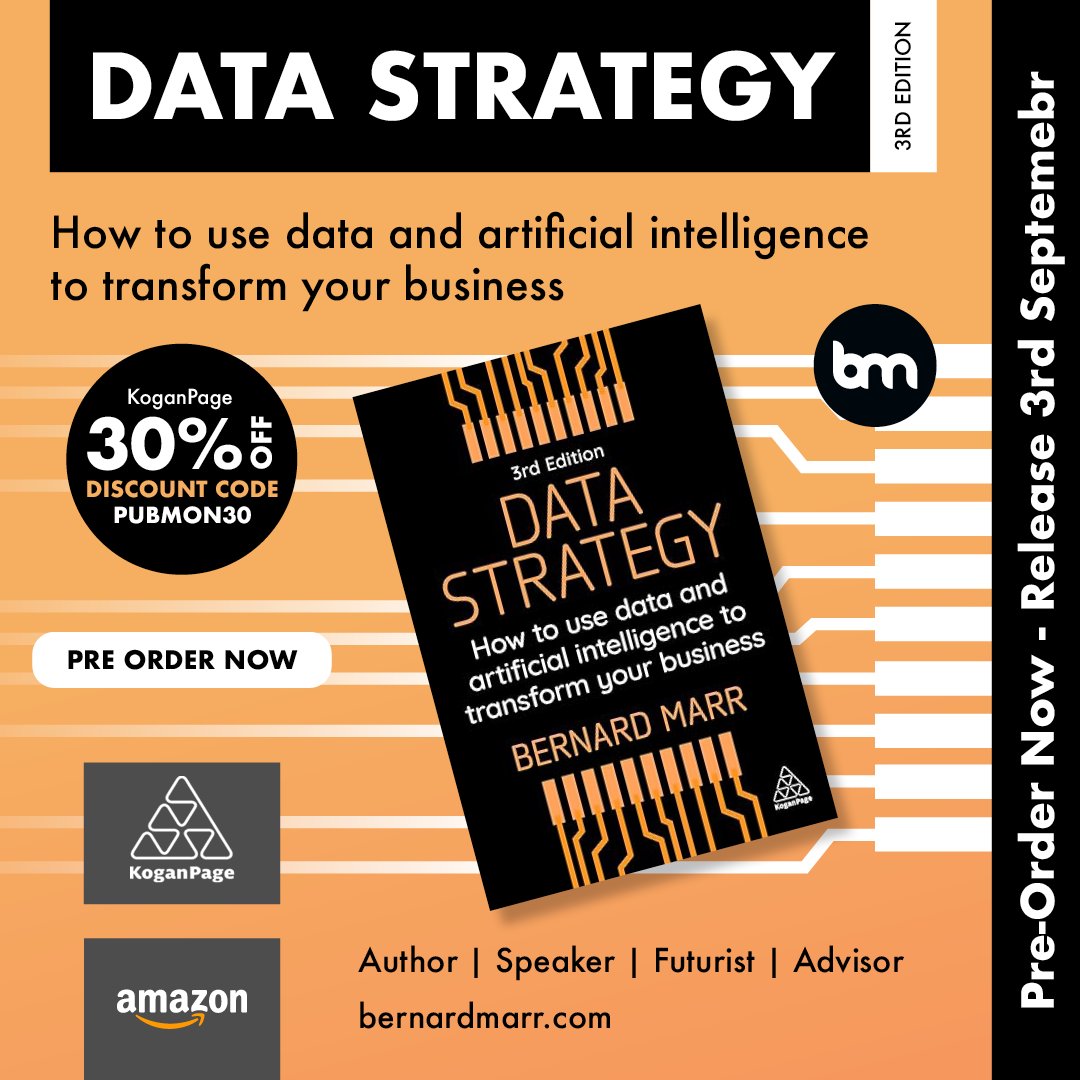
🚀 My New Book is Here: Data Strategy (3rd Edition) 🚀 I’m thrilled to share the release of my latest bestselling book, Data Strategy: How to Use Data and Artificial Intelligence to Transform Your Business. Every business today needs data to survive - but simply having data is not enough. What matters is how you use it. A well-designed data strategy is the key to unlocking value, driving insights, and giving your organisation the competitive edge it needs to thrive in the digital economy. From small organisations to global enterprises, I’ve seen first-hand how a data-driven approach can transform operations, improve decision-making, and unlock entirely new opportunities. That’s why I’ve poured my experience into this book — to help leaders and teams build strategies that don’t just talk about data, but actually deliver measurable impact. 🔍 In this third edition, I’ve expanded the book to reflect the latest developments in data and AI, including: ✅ Generative AI and its role in shaping business innovation. ✅ Synthetic data and how it can accelerate AI adoption. ✅ The potential of quantum computing and what it means for the future of data. ✅ Expanded guidance on cybersecurity, regulations, and ethics in a data-driven world. This isn’t just a theoretical framework - it’s a practical guide to collecting, managing, and using data effectively in order to drive growth, innovation, and long-term success. Whether you’re leading a start-up or a multinational, Data Strategy will equip you with the tools you need to stay ahead in a rapidly evolving landscape. 📖 Pre-order your copy today: 👉 Amazon - 👉 Kogan Page - I can’t wait to hear how this book helps you craft your own data-driven strategy and transform your business for the future.

Bernard Marr

10,980 просмотров • 10 месяцев назад