Video wird geladen...

Video konnte nicht geladen werden

Zur Startseite

Ever since Washington started pouring more money into Obamacare subsidies, premiums have only gone up. Someone making $100,000 can get $13,000 in subsidies, someone making $225,000 still gets $1,500 — and yet costs keep climbing. My Health Marketplace for All Act doesn’t spend a dime. It allows membership organizations...

144,040 Aufrufe • vor 9 Monaten •via X (Twitter)

0 Kommentare

Keine Kommentare verfügbar

Kommentare vom Original-Post werden hier angezeigt

Ähnliche Videos

ObamaCare: Consumer Deception and Taxpayer Fraud ObamaCare subsidy fraud occurs because government agencies care little when spending taxpayers’ money, and insurers and brokers have every incentive not to stop it. As Americans wake up to ObamaCare subsidy fraud, we should remember: the root problem is the unaffordable, low value ObamaCare itself. Fraudsters are stealing from subsidies that feed this hungry, rapidly growing “dragon.” ObamaCare was originally sold to the American people as affordable. President Obama promised that premiums would go down by $2,500. Even then, many economists and analysts already predicted unaffordability we see today. Through numerous regulations, ObamaCare damaged both the insurance market and the provider market. Consolidation, stagnation, high price, and high premiums followed. Some people blamed private companies, but they are simply responding to the bad incentives created by ObamaCare. Others blamed the FTC for market consolidation, but by the time mergers and acquisitions reach the FTC, it’s already too late: ObamaCare has made the soil so toxic that only large entities can survive. That’s why ObamaCare is both taxpayer fraud and consumer deception. The Covid-era enhanced subsidy used taxpayer dollars to lure consumers into unaffordable plans they would not have bought otherwise. This, too, is consumer deception and taxpayer fraud. ObamaCare defrauds taxpayers three times: paying for expensive premium subsidies, paying fraudsters, and paying higher price and premiums for their own employer-sponsored healthcare—caused by ObamaCare. Except for a small group of people who benefited politically or financially from ObamaCare, all Americans lost. Patients were deprived of affordability and access that free markets would bring. Physicians, entrepreneurs, innovators, and American workers couldn’t achieve their full productivity potential. Our jobs, economy, and global leadership suffered. Johns Hopkins Carey Business School Johns Hopkins Bloomberg School of Public Health BSPH / HPM

Ge Bai

113,685 Aufrufe • vor 8 Monaten

Joel White is the president of the Council for Affordable Health Coverage He recently testified to the United States Senate on how the Barack Obama Affordable Care Act has damaged the marketplace and driven up costs and premiums for consumers This is EXCELLENT information “Part of the Affordable Care Act's design is a massive consolidation in insurance and hospital and physician markets, and it basically triggered an arms race where hospitals, insurers tried to get bigger and bigger and bigger to charge people more and more and more, and we're all paying a lot as a result of the law's core design. And so for insurance companies, if you think of it as like a pyramid with the insurance company at the top, the insurance companies, since the law was enacted, bought up managers for pharmaceutical benefits, they bought up the hospitals, they bought up physician offices and clinics, all the way down to pharmacies where consumers get their drugs. And you say that may not be a bad thing, like bigger might be better because we can achieve economies of scale and cost savings and things like that, but really what we saw in the marketplace was higher premiums, higher deductibles, higher out-of-pocket costs, and less choice. So there's a couple of policies in the law that created that consolidation. - The first was that the law really limits consumer choice. It requires you to buy these very expensive, Cadillac expensive policies and then it defines how much you pay out of pocket, and the insurers have to meet all those requirements. What that did was in every state around the country, it created consolidation with insurers buying other insurers or merging with other insurers or really dominating the markets. So right now about two insurers per state control about 70% of the market, and what they can do when they control that much market share is charge higher premiums. That's the first issue - The second issue is called the medical loss ratio. That's just a fancy term that says the insurance company has to spend 80 or 85% of your premium dollar on medical care, so that means only 20% or 15%, can be used for profits and administrative costs. So, every incentive in the marketplace is for insurers to raise their premium so that they can get more profit and more revenue to spend on stuff. So one of the things that the medical loss ratio encouraged was these insurance companies to buy everything below the pyramid, so they started buying pharmacy benefit managers, and those manage your drug benefits They also bought physicians and hospitals. So one insurance company owns about 100,000 physicians in the United States. That's almost a 1/7 of the market And what they do in that arrangement is to avoid the profit cap caused by the medical loss ratio, they pay their physicians that they own more. So when they collect a dollar in, in revenue in their premiums, they then send a lot more money to the physicians that they own to earn money on that side. So they're earning money through the doctors, they're earning money through the premium, and it all kind of goes back up to the pyramid on top to the insurance company which owns everything”

Wall Street Apes

32,279 Aufrufe • vor 9 Monaten

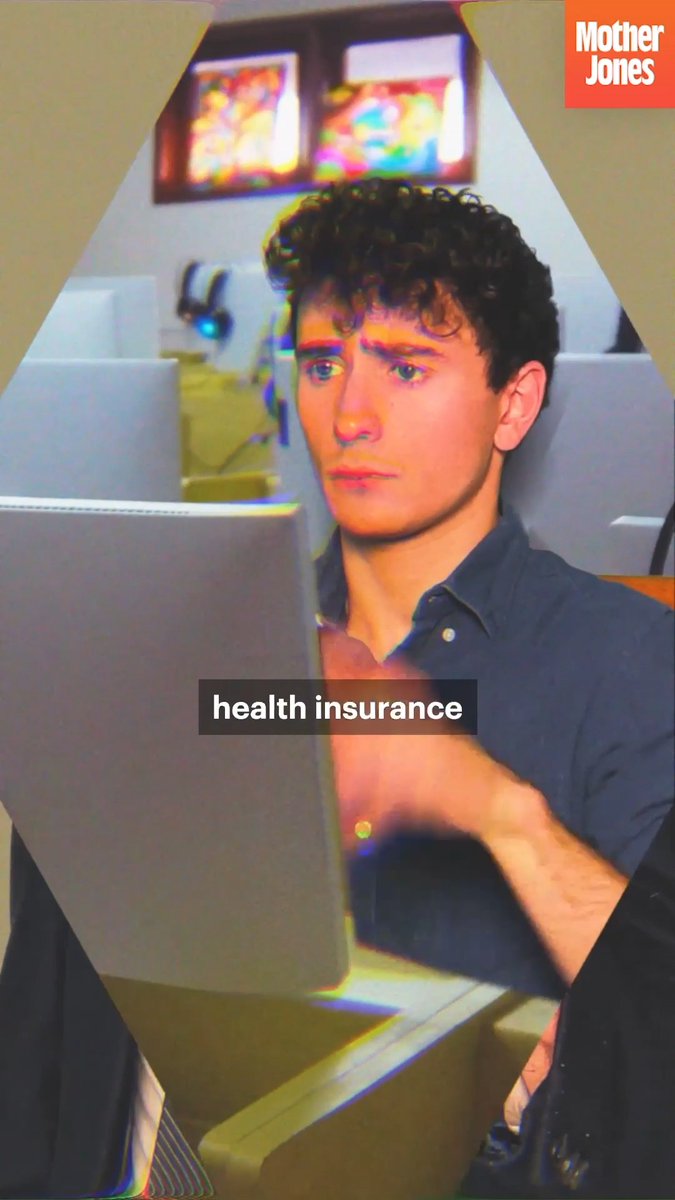
Worried about rising health care costs? I want to hear from you! I’m Chris Vazquez, a journalist covering health care and the government shutdown. I’m also enrolled in an Affordable Care Act Marketplace plan, and I’m bracing for steep increases to how much I spend on health care. Are you in the same boat? Roughly 21.8 million people are getting (possibly soon-to-expire) advanced premium tax credits to help pay for Marketplace coverage, according to data from the Centers for Medicare and Medicaid Services. And even if you don’t qualify for those tax credits, you still might see higher health care costs. A quick update on this whole fast-moving mess: On Sunday, a group of Senate Democrats and one independent broke ranks to advance a government-funding bill that punted the question of extending ACA tax credits to a final Senate vote in December, before the measure moves to a largely opposed Democratic caucus in the House—though Republicans likely have the votes to pass it. That keeps the question of when—and if—Americans on Obamacare could see any kind of relief still very much unanswered. If you are or about to be impacted by rising health care costs, I’d love to interview you on camera.We’d meet on Zoom, I’d record, and then include clips from our conversation in new videos. And if you or someone you know is a Republican voter impacted by this, I’d be especially interested in talking to you. That's because 57 percent of Marketplace enrollees live in Republican districts. How do you feel about GOP lawmakers’ continued lack of guarantees to fund tax credits? Do you feel left behind by people in power who you supported? Or do you still support them? If so, why? But I know Republican Obamacare enrollees aren't the only group impacted by this. ACA subsidies expiring could widen racial and ethnic disparities in health coverage and may also be felt hard among LGBTQIA+ people, more of whom are insured through Marketplace coverage than non-LGBTQIA+ people. We’ll have more videos coming soon making sense of all of this very soon. Stay tuned.

Mother Jones

14,189 Aufrufe • vor 9 Monaten

Jake Tapper Point-Blank Asks Chris Murphy If He’s Willing To Let Americans Go Hungry Over Obamacare Subsidies | Mariane Angela, Daily Caller News Foundation CNN host Jake Tapper on Sunday asked Democratic Connecticut Sen. Chris Murphy whether his party was prepared to let food stamp funding run dry to force an extension of expiring Obamacare subsidies. Democrats have refused to back any federal government funding deal which excludes an extension of Obamacare subsidies, triggering the Oct. 1 shutdown after Senate Minority Leader Chuck Schumer rallied his caucus to block a bipartisan bill. When Murphy appeared on “State of the Union,” Tapper asked if Democrats were willing to let Americans go hungry until Obamacare subsidies are extended. “Funding for food stamps is expected to run out at the end of this week. This is happening because Democrats have not agreed to vote to fund the government without the Republicans making concessions to seriously change health care policy. So is this a trade-off you’re willing to make and continue to make, letting some Americans go hungry until these Obamacare subsidies get extended?” Tapper asked Murphy. Murphy dodged the direct question and instead accused Republicans of stonewalling bipartisan talks. “We’re shut down right now because Republicans are refusing to even talk to Democrats about a bipartisan budget bill,” Murphy claimed. “As you know, the reason we didn’t shut down for four years when Joe Biden was president was because Democrats negotiated with Republicans, and every single one of those short-term or long-term funding bills included both Democratic and Republican priorities. So the government shut down because Republicans have done something unprecedented: they have refused to talk to Democrats about a bipartisan budget.” The Connecticut senator also defended his party’s stance by saying health care subsidies are essential. “One of our priorities is pretty simple: making sure that premiums don’t go up by 75% for 22 million families this fall. Now, the reality is, if they sat down to try to negotiate, we could probably come up with something pretty quickly,” Murphy said. President Donald Trump initially canceled a planned meeting with top Democrats, just days before the shutdown deadline. The two sides eventually met at the White House, but the talks ended without a deal as both parties remained divided over extending Obamacare subsidies. Murphy then cited the administration’s recent $20 billion aid package to Argentina as proof the government had room to maneuver. “The president just announced $20 billion going to bail out the Argentinian economy. For $20 billion, we could open the government back up, that’s enough money to relieve a lot of pressure from these premium increases,” Murphy added. “We could get this deal done in a day if the president was in D.C. rather than overseas. We could open up the government on Tuesday or Wednesday, and there wouldn’t be any crisis in the food.” The Supplemental Nutrition Assistance Program (SNAP), which provides food aid to over 40 million Americans, will lose funding Nov. 1 without congressional action. Over two dozen states have warned they will halt benefits by then if the shutdown continues. Senate Democrats have continued to block every Republican effort to end the shutdown, with Schumer leading his caucus in repeated filibusters. They’ve made clear they won’t support any funding deal which leaves out an extension of Obamacare subsidies and other Democratic priorities.

Owen Gregorian

71,137 Aufrufe • vor 9 Monaten