Video wird geladen...

Video konnte nicht geladen werden

Zur Startseite

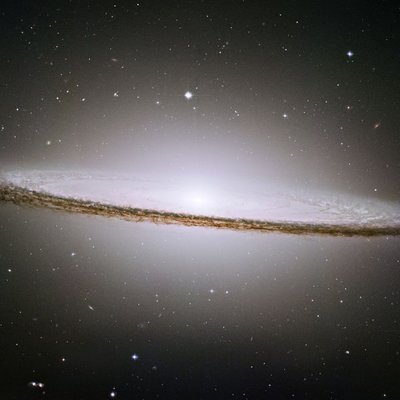
Every second, somewhere across the vast universe, a star reaches its explosive end. Here Hubble views one such supernova fade away in galaxy NGC 2525... (Credit: NASA, ESA, J. DePasquale, M. Kornmesser, M. Zamani, A. Riess (STScI/JHU), SH0ES team, Digitized Sky Survey)
78,768 Aufrufe • vor 25 Tagen •via X (Twitter)

0 Kommentare

Keine Kommentare verfügbar

Kommentare vom Original-Post werden hier angezeigt

Ähnliche Videos

A one-in-a-million chance—and it happened. A team from the Technical University of Munich spent six years compiling a list of promising gravitational lenses and waiting for a supernova to explode behind one of them. In August 2025, it happened. A superluminous supernova 10 billion light-years away was located precisely behind two foreground galaxies—and its light, bent by gravity, produced five images of the same explosion. Typically, lenses produce two or four—five was a surprise even to the authors. The supernova was named SN Winny. The odds of such a coincidence are less than one in a million. But the value of the discovery is enormous. Light from the supernova travels to us along different paths around the lensing galaxies, and each path has its own length. Because of this, the five copies appear with different time delays. By measuring these delays and knowing the mass distribution in the lensing galaxies, one can directly calculate the Hubble-Lemaître constant, or the rate of expansion of the Universe. How is this better than existing methods? The classic "cosmic distance scale" is a multi-step process, with errors accumulating from step to step. Microwave background radiation measurements are precise, but depend on models of the evolution of the Universe. The lensed supernova method is a single-step process, with completely different sources of error. SN Winny is particularly convenient: it is lensed by just two individual galaxies with a simple mass distribution, rather than a complex cluster. SN Winny is currently being observed by telescopes around the world. The results could bring us closer to resolving the Hubble controversy—the discrepancy between the two main methods for measuring the expansion rate.

Black Hole

180,949 Aufrufe • vor 5 Monaten

– #ENTROPY – Mew : The theme of this song is space. It tells the story of ENTROPY, one of the fundamental concepts in thermodynamics. There is a theory called "Heat Death (of the Universe)", which is the idea that all heat energy in the universe eventually fades away, meaning that the universe ultimately reaches its end. Mew : 😂 It feels like a physics class right now. Put simply, if we know that the universe will come to an end one day, would we still choose to maintain our relationships with the people beside us, knowing that everything will eventually come to an end anyway? Mew : The meaning is very deep and far-reaching. I'd like everyone to stay tuned and see how it's conveyed through the song. Mew : I both wrote and composed the song myself. 🗣️: What part of the universe were you in when you wrote these lyrics? Mew : I felt drawn to the idea that every relationship eventually reaches an end, no matter what kind of relationship it is. Whether it's parting ways or finally being separated by death, it's still an ending. But if we already know that ending is coming, what will our relationship be like from now until that moment arrives? I wanted the concept of "the end" to feel incredibly vast, so I thought of the universe. Then I looked into theories about the collapse of the universe and incorporated those ideas into this song. 🗣️: Was it difficult? Even hearing the concept makes me feel like I need to take notes. Mew : I feel like this is really about life. It's about parting ways. I wanted to interpret separation in a way that creates a clear image, both in terms of relationships and within a space theme. I’d like everyone to give it a listen.

💞

21,325 Aufrufe • vor 2 Monaten

🚨BREAKING🚨: NASA is deliberately erasing UFOs and other anomalies from the photo record of the Apollo Moon Program. On the far side of the moon, something that looks like a buried nuclear reactor is radiating at twenty times the normal heat with concentrations of thorium and uranium NASA can't explain. And on the surface sit formations that resemble ancient ruins, too geometrically precise to have formed naturally, above caverns far more vast than the entirety of Manhattan. Theoretical physicist Maaneli Derakhshani (Maaneli (Max) Derakhshani) , a Utrecht PhD working on lunar anomalies, discovered that NASA holds two versions of the same Apollo 14 photograph: in one, a blue orb hangs in the sky above astronaut Ed Mitchell, and in the other it has been redacted out. He has found the same across other Apollo missions, and Ken Johnston Sr., a former NASA consultant and pilot who worked with the astronauts, says he was ordered to destroy early negatives showing things that weren't supposed to be there. The Department of War is now investigating an Apollo 17 frame Derakhshani had flagged a year earlier, in which three lights above the lunar surface appear to be a single physical object. NASA was built to keep this all quiet. Its founding charter placed it under the Pentagon and gave it legal cover to hide anything touching national security from Congress and the public, and a report it commissioned soon after spelled out the plan directly: if artifacts ever turned up on the Moon, bury the discovery. Trump has now gone further and designated NASA an intelligence agency outright. The men who walked there have hinted at what they saw, objects trailing their craft, lights that weren't debris, even a telepathic warning to stay away that came just before the missions stopped for good. In 1994 NASA and the Pentagon ran a joint mission to the Moon called Clementine, sold to the public as a survey of lunar minerals. Its own deputy manager says on the record it was a reconnaissance operation, sent to photograph the far side and find out who was building bases up there. The moon is not what we think it is. Full conversation live now.

Jesse Michels

178,245 Aufrufe • vor 1 Monat

NASA’s Habitable Worlds Observatory: the telescope designed to search for another Earth. NASA is already developing the technologies for what could become one of the most ambitious astronomical observatories ever built. The Habitable Worlds Observatory, or HWO, is being conceived as NASA’s next major flagship astrophysics mission after the Nancy Grace Roman Space Telescope. Its defining objective is extraordinarily simple to state and extraordinarily difficult to achieve: directly photograph rocky planets similar to Earth around nearby Sun-like stars and analyze their atmospheres for evidence that some of them might support life. NASA’s current science goal is to directly image and characterize roughly 25 potentially habitable worlds. HWO is not simply a larger version of Hubble or Webb. It combines lessons from Hubble, JWST and Roman with technology developed during the earlier LUVOIR and HabEx mission studies. NASA is currently exploring several possible architectures rather than committing to a final telescope design. The engineering concepts being studied include a 6-meter segmented off-axis telescope, another 6-meter configuration using a central keystone-shaped mirror surrounded by segments, and an 8-meter on-axis design. NASA explicitly warns that none of these should yet be interpreted as the final appearance of HWO. The reason such a large telescope is required becomes obvious when we consider what HWO is trying to see. An Earth-like planet observed in reflected visible light can be approximately ten billion times fainter than its host star. Worse, from tens of light-years away the planet appears extremely close to that star in the sky. HWO must therefore separate two sources that are both enormously different in brightness and separated by only a tiny angle. It is rather like trying to detect an extraordinarily faint point of light immediately beside a searchlight, except that both are light-years away. NASA’s technology development is consequently aimed at contrasts approaching 10⁻¹⁰. The baseline solution is an extremely advanced coronagraph located inside HWO. A coronagraph suppresses the light from the star while allowing light from surrounding planets to reach the detector. This sounds straightforward, but at a contrast of one part in ten billion, tiny imperfections in the optical system become important. Minute distortions of a mirror can scatter enough starlight into the image to imitate or completely hide a planet. HWO will therefore combine coronagraphic masks with deformable mirrors, precision wavefront sensing and active wavefront control to create an exceptionally dark region around the stellar image where planets can be detected. NASA refers to the process of creating this high-contrast region as digging a coronagraphic “dark hole.” This is why HWO also needs to be one of the most optically stable spacecraft ever constructed. NASA says its optical system may need to remain stable at scales comparable to the width of an atom, while wavefront control requirements reach into the picometer regime. Thermal changes, mechanical vibration, reaction-wheel disturbances, structural creep and even very small motions between individual primary-mirror segments can destroy the contrast required to see an Earth analogue. Technologies under development therefore include ultra-stable mirror assemblies, extremely stiff structures, millikelvin-level thermal control, low-disturbance mechanisms, precision segment sensing and control, vibration isolation and microthrusters. One of the most visually striking technologies associated with HWO is the huge flower-shaped starshade seen in many NASA demonstrations. The flower shape is not decorative. A starshade is an external occulter: instead of blocking the star inside the telescope, an independent spacecraft places an enormous opaque screen between the telescope and the target star. The telescope then sits inside the extraordinarily dark shadow created behind it while the light from planets located slightly to either side of the star continues past the shade and reaches the telescope. A simple circular disk would not work well enough because light diffracts around its edge. In fact, diffraction would partially refill the shadow with stellar light. The strange elongated petals are engineered specifically to manipulate that Fresnel diffraction pattern. Their carefully calculated edges make the transition between opaque and transparent space gradual from the point of view of the propagating wavefront, dramatically suppressing diffracted starlight in the central shadow. In other words, the “flower” exists because of wave optics: each petal contributes to shaping the diffraction field so that the telescope occupies a region where the stellar electric field is almost cancelled. NASA laboratory demonstrations have already achieved broadband starshade contrasts below approximately 10⁻¹⁰ at flight-like Fresnel numbers. A flight starshade for an observatory such as HWO would be enormous. Different concepts range from roughly 35 to 60 meters or more in diameter, while experimental NASA concepts have investigated sizes approaching 100 meters for other applications. It would fly tens of thousands of kilometers from HWO; current technology studies commonly consider separations of order 100,000 km, depending on starshade diameter and wavelength. Both spacecraft would have to maintain extremely accurate alignment with the target star while effectively operating as a single optical instrument across an enormous baseline. There is an important distinction, however. NASA currently plans HWO around an internal coronagraph, not around a starshade. Coronagraphs have major operational advantages: they are integrated into the telescope, can move rapidly from one target to another and do not require a second giant spacecraft to reposition itself across interplanetary-scale distances. A starshade, by contrast, would require substantial propulsion every time it moved between target stars and would introduce another complex spacecraft and formation-flying system. Nevertheless, NASA continues to study starshades because they have attractive properties. They suppress starlight before it enters the telescope, are relatively insensitive to many telescope optical imperfections and could extend HWO’s scientific capability, potentially including wavelengths where internal coronagraphy becomes particularly challenging. NASA has even studied launching such a system separately and allowing it to rendezvous with a telescope later in its mission. Once HWO has isolated the light from an exoplanet, simply obtaining a photograph will not be the most scientifically important part. The crucial information will come from spectroscopy. By separating the planet’s reflected light into its constituent wavelengths, HWO could identify absorption produced by molecules in its atmosphere. Water vapor could provide information about habitability, while gases such as oxygen, ozone and methane could become part of a search for possible biosignatures. No single molecule would constitute proof of life: atmospheric chemistry has abiotic pathways capable of producing potentially misleading signals, so HWO will need to study combinations of gases together with the planet, its star and the wider planetary environment. Its wavelength coverage is therefore fundamental. HWO is being developed as an ultraviolet, optical and infrared observatory. In addition to visible and near-infrared measurements of exoplanets, ultraviolet capability can reveal species such as ozone and provide information about stellar radiation and atmospheric photochemistry. NASA is consequently developing high-efficiency UV detectors, advanced mirror coatings, ultraviolet gratings and filters, low-noise visible detectors and photon-counting technologies capable of extracting extremely small numbers of photons from distant planets. Some of the relevant observations will be so photon-starved that obtaining a useful spectrum of a single world could require very long integrations. The telescope will also be a general-purpose astrophysical observatory. Just as Hubble became far more scientifically important than any single problem it was originally designed to solve, HWO is intended to study everything from nearby stellar and planetary systems to galaxy evolution and the distant universe. Its combination of a large aperture, diffraction-limited imaging and ultraviolet-to-near-infrared spectroscopy would give astronomers capabilities unavailable from either Webb or ground-based observatories. Another unusual aspect of the architecture is longevity. NASA is planning HWO to operate near the Sun-Earth L2 region and to be robotically serviceable. Instruments could potentially be repaired or replaced and consumables replenished, allowing the observatory to evolve technologically rather than remaining frozen in the configuration it had at launch. That capability could also make a later-generation coronagraph, new detectors or potentially complementary technology such as a starshade scientifically relevant decades after HWO first begins operating. HWO remains in its technology and mission-maturation phase. NASA is deliberately exploring the trade space before fixing the final architecture, with major work continuing on coronagraphs, deformable mirrors, telescope stability, detectors, UV instrumentation, deployable structures and servicing technology. Current NASA planning aims to mature many of the enabling technologies around the end of this decade, while a launch is generally discussed for around 2040 or in the 2040s rather than as a fixed launch date. In January 2026 NASA awarded additional industry contracts specifically to advance key HWO technologies, showing that the project has moved beyond a purely hypothetical observatory even though its final design has not yet been selected. If HWO succeeds, its most memorable image may not initially look very spectacular: perhaps only a tiny pale dot beside a carefully suppressed star. But contained inside the spectrum of that dot could be water, clouds, atmospheric chemistry and, potentially, the first observational evidence that biology is not unique to Earth. The central technological problem of HWO is therefore not simply building a bigger telescope. It is learning how to remove almost every photon from a nearby star while preserving the vanishingly small number of photons arriving from a planet beside it. The coronagraph, the picometer-stable telescope and perhaps one day that enormous artificial flower flying tens of thousands of kilometres away are all different solutions to that same problem. Video: This is one of the technologies being investigated for future direct imaging of Earth-like worlds and potentially for use with HWO. Not necessarily the final design.

Erika 

54,470 Aufrufe • vor 17 Tagen

There's a whole laundry list of proofs that I find independently convincing, but if I had to pick just one single argument to hang my hat on for why I believe the Earth is flat and stationary, it is the STARS & PLANETS, and their paths in the sky from Earth's POV. How do you explain in the heliocentric model, how every star traces perfect circles around the North Star, and every PLANET traces perfect sacred geometrical patterns around the North Star as well? According to the heliocentric model of the solar system (1st video) all of these spinning ball planets in the Milky Way are orbiting the SUN, at different speeds and path circumferences, at distance ranges from 36 million to 2.8 billion miles away from us. The North Star, NASA tells us, is 2.5 QUADRILLION miles away. Now tell me how all of these independent Sun-orbiting planets would trace PERFECT patterns around the North Star for 6,000+ years of recorded history? Venus literally creates a PERFECT flower of life pattern, which we see appear in nature here on Earth as well. Get the f*ck out of here if you think that's just a fluke cosmic accident. Not to mention, EVERY SINGLE CONSTELLATION has remained the exact same in our sky for 6,000 years? Not a single one has appeared or disappeared, while the universe is supposedly expanding at countless millions of miles per hour? Remember, these are all of Earth's movement vectors we are supposedly experiencing as we soar through the infinitely-expanding void of space 👇 🫨 1,000 MPH spinning around Earth's axis 🫨 66,600 MPH flying around Sun 🫨 500,000 MPH flying through the galaxy 🫨 1,300,000 MPH entire galaxy flying through space 🫨 All while the entire universe is EXPANDING, speeding all of these vectors up and warping the directions in different/random ways 🫨 ALL OF THE STARS we see are flying in different directions too, at their own incomprehensible speeds And yet, the stars we see in the night sky have never changed. Ever. I'm sorry but the "it's parallax" response from the globers doesn't cut it for me - that sounds like a glaring example of starting with a pre-determined conclusion in mind, and making anything up in the middle in order to get to that conclusion. (I WILL GRANT HOWEVER, that at least the parallax effect is something we can visibly see and experience on the micro level—unlike "gravity"—so I will concede that it obviously exists. I just don't believe that it explains all of the above motions, distances, and perfection of consistency in the patterns created by the cosmology we observe). Every ounce of my common sense-trusting brain tells me that all of these insanely huge numbers are just brain-numbing nonsense to obfuscate away from the far-simpler truth: that NONE of these incomprehensible speeds/distances are even happening at all, and rather, the Earth is flat and stationary, and these unchanging constellations and planetary movements are indeed revolving around US. The North Star (Polaris) lies directly above the North Pole, and does not move. The stars and planets rotate around the North Star, above Earth. Just as it looks and feels. I dove into way more nuance on all of these concepts in the first 3 Parts of the 5-Part Flat Earth video series I made for my podcast, which I will link below. WATCH THOSE VIDEOS. And as always, if you have refuting points to share, please drop them in the comments below so we can discuss! #FlatEarth

Ben Wehrman

12,019 Aufrufe • vor 4 Monaten

Elon Musk is trying to solve a problem with a perfect record against every living thing that has ever existed. Extinction. Undefeated. 4.5 billion years without a single loss. But it has only ever fought life that couldn’t leave. Musk: “The fundamental fork in the road for human destiny is where Mars can continue to grow even if the supply ships from Earth stop coming for any reason.” Over 99% of all species that have ever lived are gone. Every single one died on the planet where it was born. The dinosaurs ran Earth for 165 million years. Dominance, scale, deep time. None of it mattered. One rock from the sky ended it all in an afternoon. They didn’t lack strength. They lacked a second address. Musk: “If we only have one planet, then that could be curtains.” Curtains. One word for the end of every poem, every equation, every name ever spoken. All of it stored on one rock, orbiting one star, with no copy anywhere in the universe. Engineers learned this a century ago. One server is a hobby. Two is a system. We run an entire species on one server. Musk: “Mars can potentially come to the rescue of Earth. Or maybe Earth can come to the rescue of Mars.” People get this exactly backwards. Mars is not an escape pod. You don’t copy something because you hate the original. You copy it because it is irreplaceable. Earth is not being abandoned. Earth is the thing being protected. Life has done this before. 375 million years ago, something dragged itself out of the ocean. Not fleeing the water. Refusing to stay in the only medium it had ever known. Every forest, every bird, every human descends from that single refusal. Mars is the second crawl. The universe is 13.8 billion years old. As far as anyone can prove, it produced exactly one place where matter learned to look back at itself. Lose this planet and the cosmos doesn’t lose a species. It loses its only witness. Maybe that’s why the sky is so quiet. Maybe everyone else ran out of time before they ran out of planet. Musk: “We can be out there among the stars, making science fiction no longer fiction.” For 4.5 billion years, extinction was a verdict with no appeal. We are the first species that can answer back. Curtains or the stars. For the first time in the history of life, it’s a choice.

Dustin

13,532 Aufrufe • vor 2 Monaten

Elon Musk just said something that deserves far more weight than it’s getting. “How come we’ve not found any aliens? Trust me, I would know. We have not.” That’s not a fun question about UFOs. That might be the most unsettling thing ever said by someone who would actually know. The universe is 13.8 billion years old. Trillions of stars. Billions of habitable worlds. Civilizations with billions of years of head starts on us. And nothing. No signal. No probe. No artifact. Not even wreckage. The math says the galaxy should be so saturated with intelligent life we couldn’t miss it if we tried. Instead, every instrument we’ve ever pointed at the sky returns the same answer. Silence. Fermi asked the question in 1950. Where is everybody? Seventy-six years later, the answer hasn’t moved. Nowhere. Musk understands what that silence almost certainly means. They didn’t make it. Not one of them. Musk: “There is a certain probability that is irreducible that something may happen to Earth. Despite our best intentions, despite everything we try to do, there’s a probability that some external force or some internal unforced error causes civilization to be destroyed.” Irreducible. Not a risk you engineer away. Not a threat you legislate out of existence. Not a problem that disappears with enough funding or enough time. A certainty that only needs enough time to collect. Asteroid. Supervolcano. Engineered pandemic. Nuclear exchange. AI alignment failure. Or something no one alive has thought of yet. The specific threat is irrelevant. The number never reaches zero. We treat civilization like gravity. Like a permanent condition. Like it will always be here because it’s been here for every second of every life we’ve ever lived. The universe owes nothing to anything it built. Every civilization that ever arose on another world probably felt the same certainty we feel now. Looked at their own sky. Assumed tomorrow was guaranteed. They’re the silence. Musk isn’t building toward Mars because he’s bored or chasing legacy. He looked at the Fermi Paradox and reached the conclusion most people refuse to. Single-planet species don’t last. Not one. Not ever. Not across enough time. Mars isn’t an escape plan. It’s a second copy of everything humanity has ever built, thought, felt, and remembered. One copy of something irreplaceable isn’t a strategy. It’s a bet that nothing goes wrong on an infinite timeline. That’s not optimism. That’s negligence. The silence isn’t a mystery to solve. It’s a message we’re refusing to read. Every dead civilization had this conversation. Their own skeptics. Their own voices saying there was no rush. That silence is what “no rush” sounds like a billion years later.

Dustin

119,336 Aufrufe • vor 3 Monaten

This elegant piece of American automotive history is a 1930 Duesenberg Model J Convertible Sedan - The most luxurious car in the world... This Duesenberg Powered by a 420cid Straight-Eight producing 265hp, the Model J delivered strong performance for its time despite it weighing more than 5,500lbs. The Convertible Sedan body was built by Walter M. Murphy Company to sit atop Duesenberg J chassis and it became one of the most popular coachbuilt designs for the model. The beautiful body matched with its unique, two-tone turquoise color makes it stand out amongst even most distinguished of automobiles. The Duesenberg was one of the most popular luxury cars as well as a status symbol in the United States and Europe, and was driven by the nobility, the rich and the famous, including Al Capone, Greta Garbo, Howard Hughes, Mae West, Clark Gable, Bill "Bojangles'' Robinson, William Randolph Hearst and the Duke of Windsor. Throughout the golden age, classic cars were seen as a luxury item that only the most rich and famous could afford. A huge part of living a successful life was driving something that looks the part, so alongside Hollywood stars came their cars. Few coachbuilders on Duesenberg Model J are more highly regarded than LeBaron, and fewer still were capable of such an astonishing breadth of work. LeBaron produced everything from famed “sweep panel” and “barrelside” phaetons, to the occasional limousine with their own special tailored style. Among their most successful works on the Model J was the Convertible Berline, as catalogued by Duesenberg and featured in the company’s catalogue. Six examples of LeBaron Convertible Berline were eventually built. Of those, body number LB 4100, mated to engine J-362 and chassis 2380, was the first of four to this design, outfitted for occasional formal use with folding jump seats and a division window. Three remain extant as part of long-term private collections. In 1874, Chicago merchant Ernst J. Lehmann established a new business, The Fair Store, named for both its attitude towards customers and its carnival-like atmosphere, created by selling virtually every imaginable item at discount prices. Predating modern big-box retailers’ stock-high-and-sell-low practices by over a century, “The Fair” was known for dealing vast quantities of merchandise on a cash-only basis, for unusual prices that almost never ended in a 0 or 5—emphasizing that buyers were saving then-valuable pennies because the merchant was not rounding up his numbers. Such was the success of Chicago’s first department store that it eventually occupied a 12-story building on the corner of State and Adams Streets, built in 1897 at a cost of $3 million and advertised as being twice the size of the Bon Marché in Paris. By 1910 it offered nearly 800,000 square feet of retail space and, with 5,500 workers, qualified as one of Chicago’s largest employers! The family firm was finally sold by its founder’s heirs in 1925 to a group headed by dime store tycoon S.S. Kresge. Those same heirs lived quite well thereafter, largely in palatial estates in the suburban community of Lake Villa, which Ernst Lehmann had played a major role in developing. Two of the family farms there eventually became large subdivisions in their own right, and following the sale of the store, the Lehmanns continued to invest in Chicago-area property and to grow their not-inconsiderable fortune. © Cars & Motorbikes Stars of the Golden Era #archaeohistories

Archaeo - Histories

21,437 Aufrufe • vor 1 Jahr

Walter Cronkite's final sign-off as CBS Evening News anchor: After almost two decades of meeting Americans in their living rooms every evening, Walter Cronkite delivered his last broadcast on Friday, March 6th, 1981. He opened with characteristic understatement: "This is my last broadcast as the anchor man of the CBS Evening News. For me, it's a moment for which I long have planned, but which nevertheless comes with some sadness. For almost two decades, after all, we've been meeting like this in the evenings, and I'll miss that." But Cronkite wasn't one for sentimentality. He immediately pushed back against those treating his departure as monumental: "But those who have made anything of this departure, I'm afraid, have made too much. This is but a transition, a passing of the baton." He framed his exit not as the end of an era, but as a continuation of something larger than himself. He pointed to Doug Edwards, who came before him, and Dan Rather, who would follow, describing both as great broadcasters. Then came the line that captured his entire philosophy on the work: "The person who sits here is but the most conspicuous member of a superb team of journalists, writers, reporters, editors, producers, and none of that will change." The anchor chair gets the spotlight. But the news, Cronkite reminded viewers, is built by a team. He also made clear he wasn't disappearing: "I'm not even going away. I'll be back from time to time with special news reports and documentaries and beginning in June every week with our science program, Universe. Old anchormen, you see, don't fade away. They just keep coming back for more." And then, for the final time in that chair, his signature sign-off: "And that's the way it is. Friday, March 6th, 1981. I'll be away on assignment and Dan Rather will be sitting in here for the next few years. Good night."

History Nerd

18,965 Aufrufe • vor 3 Monaten