Video wird geladen...

Video konnte nicht geladen werden

Zur Startseite

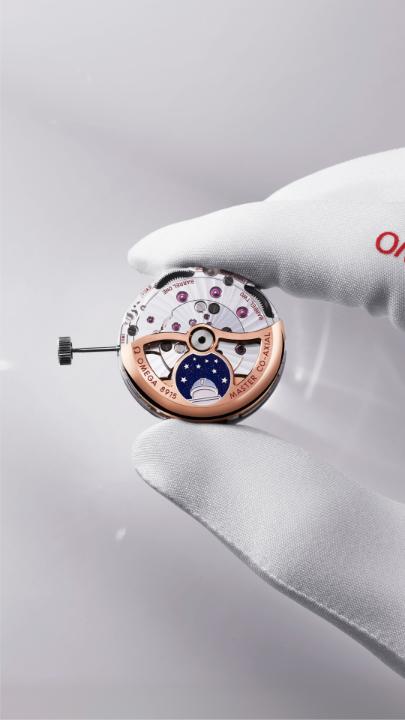
Excellence from every angle. This 41 mm Constellation reveals time on a rhodium-grey meteorite dial, while the Co-Axial Master Chronometer calibre exemplifies the art of OMEGA precision. #OMEGA #Constellation

23,302 Aufrufe • vor 3 Monaten •via X (Twitter)

0 Kommentare

Keine Kommentare verfügbar

Kommentare vom Original-Post werden hier angezeigt
Ähnliche Videos

Facial reconstruction of a 2,600-year-old Massagete from the Aral Sea region of Uygarak, Kazakhstan The Massagetae were an Iranic-speaking people related to the Scythians/Saka. They are also known as the Sakā tigraxaudā, meaning “Saka who wear pointed hats” - a reference to the Phrygian-style cap worn by the Scythians, which among the Sakā tigraxaudā took on a very tall and sharply pointed form. The Massagetae are best known for their queen Tomyris and her defeat and death of Cyrus the Great, the founder of the Persian Achaemenid Empire. Anthropological studies of the early Saka period in the Aral Sea region link the populations of the 5th-4th centuries BC to the Mayemir and Pazyryk stages of the Altai Mountains (Kiselev, 1951; Rudenko, 1953; Alekseev, 1958), as well as to cranial series of the Saka-Wusun period from Eastern Kazakhstan, Zhetisu, and Kyrgyzstan (Ginzburg, 1954a, b, 1956a, 1960a, c, 1961b; Miklashevskaya, 1964). In this respect, these populations show a slightly stronger morphological affinity with Altaian Saka groups than with early Saka-period crania from Central and Northern Kazakhstan, which often display a somewhat stronger cranial affinity with Andronovo populations. On average, Early Saka period male crania from the Aral Sea region have a medium-large cranial length of 183.5 mm, a large cranial breadth of 147.4 mm, and a large bizygomatic breadth of 141.8 mm. The nasomalar angle averages 142.1°, and the zygomaxillary angle 135.3°, with an orbital height of 34.1 mm - slightly higher than the overall averages for Saka period crania from all regions of Kazakhstan (nasomalar angle 141.8°, zygomaxillary angle 129.8°, and orbital height 34.0 mm). Higher values indicate a flatter facial profile and often greater expression of the epicanthic fold. These traits are expressed much more strongly in female skulls than in male ones at Tagisken and Uygarak (Ginzburg & Trofimova, 1972).

Ancestral Whispers

22,384 Aufrufe • vor 7 Monaten