Video yükleniyor...

Video Yüklenemedi

Ana Sayfaya Dön

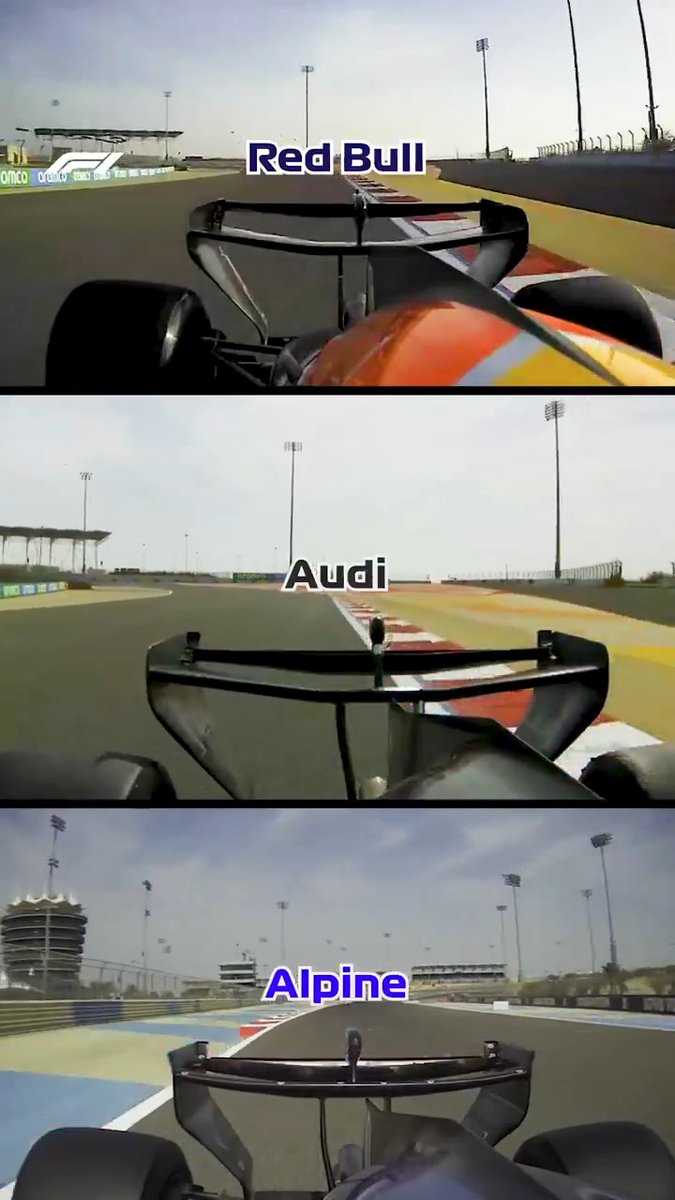
F1 2026 Overtaking Systems 🔋 Boost button: Extra electrical power from the battery 🪽 Active aero: Front & rear wings switch to low-drag mode Thoughts?

748,431 görüntüleme • 8 ay önce •via X (Twitter)

0 Yorum

Yorum bulunmuyor

Orijinal gönderinin yorumları burada görünecek

Benzer Videolar

This is why Tesla makes the safest vehicles in the world: • All Tesla models have received five-star safety ratings from the National Highway Traffic Safety Administration. • Built from the ground up with an all-electric architecture, resulting in low rollover risk and reduced occupant injury probability. • Uses anonymous/aggregated real-world data from millions of miles driven to enhance safety via over-the-air updates and inform future vehicle designs. • Battery packs designed to isolate and vent heat away from the cabin; historically (2012–2020 U.S. data), Tesla vehicles ~10x less likely to experience fire per mile than average gas vehicles. • Before a crash occurs, Tesla uses the front cameras to observe the scenario and prepare the seat belt system to react faster and with adequate force and timing when impact occurs, reducing the amount of slack in each seat belt. • Tesla’s advanced airbags are tuned to deploy according to crash type and different-sized occupants. This includes active venting that changes the amount of pressure within the inflated cushion by releasing gas according to the expected crash severity. • When a serious collision is detected, the hazard lights will turn on to increase your visibility and doors will automatically unlock for emergency access. At the same time, your Tesla will automatically contact emergency services to get help to you as quickly as possible. • Tesla vehicle structures are designed to cushion and protect the battery in the event of an accident. Onboard systems will automatically disconnect the high-voltage battery upon impact. If a battery fire does occur, the battery pack is designed to spread heat away from the cabin to protect occupants.

Nic Cruz Patane

74,333 görüntüleme • 8 ay önce

This looks like a regular IT server room. But it is actually the main avionics compartment of an Airbus A350, a rare view into what sits at the very front of the aircraft, directly beneath the cockpit floor. Inside are 22 purpose built computing modules made by Thales, each costing more than $100,000+ They host multiple aircraft systems, processing everything from flight controls and landing gear to hydraulics, fuel, electrical systems and flight warnings. All of them are connected through a dual redundants AFDX network, with 14 switches and 29 remote data concentrators distributed throughout the aircraft. Keeping this computing architecture running requires an estimated 50-60+ kW of electrical power. The electricity keeping all of this computing hardware alive is generated in real time from the aircraft's two engines. Each engine mechanically drives two generators through its accessory gearbox, giving the A350 four generators capable of producing up to 100 kVA each. That electricity then flows through the aircraft's power network, where transformers and rectifiers convert it into the different AC and 28 V DC supplies the avionics need. And if those generators fail, the aircraft has layers of backup power, including the APU and, in an extreme emergency, a ram air turbine that deploys automatically if all systems fail. The A350 has two independent avionics cooling circuits, heat extraction fans and backup airflow paths to keep the computers within their operating limits. So the next time you hear the word autopilot, remember what it really takes to make an Airbus A350 fly itself, An entire architecture of computers, networks, redundant power and cooling, hidden beneath the floor where no passenger ever sees it. Source, maintenancemode

Ammanichanda

67,154 görüntüleme • 20 gün önce

🚨 SCIENTISTS JUST BUILT A CHIP THAT CAN SEE, THINK, AND REMEMBER ALL AT THE SAME TIME. And it works more like a biological brain than a traditional computer. Researchers at RMIT University have created a neuromorphic vision chip that mimics the human eye and brain. Unlike conventional systems that capture images and send data to external processors, this chip performs sensing, processing, and memory storage directly where the light hits. The active layer is thousands of times thinner than a human hair. It uses doped indium oxide to detect light, process the information on-chip, and retain what it sees over time without constant electrical refreshing. Why this matters: • It dramatically cuts energy use and latency by eliminating data transfer to separate processors • Enables much faster real-time decision making for autonomous systems • Works more like biological vision than traditional machine vision • Could power the next generation of efficient edge AI in vehicles, robots, and remote sensors The deeper implication: For decades, we’ve built vision systems by bolting cameras, processors, and memory together like separate organs. This chip collapses those functions into one biological-style unit. It’s a step toward machines that don’t just “see” but actually perceive and remember in a more efficient, brain-like way. If scaled successfully, it could become a foundational component for autonomous systems that need to operate intelligently with minimal power and minimal delay. We’re moving from cameras that take pictures to chips that truly see. How do you think neuromorphic vision chips like this will change what’s possible for self-driving cars and autonomous robots? Follow for more frontier neuromorphic computing, AI hardware, and brain-inspired technology.

TheNewPhysics

23,196 görüntüleme • 2 ay önce

‼️🇯🇵🇨🇳 BREAKING - Due to the threat from China, Japan will allocate an additional $5.4 billion in its 2025 budget for missiles and ships. Japan’s government has approved an additional $5.4 billion in 2025 to purchase extra ships and anti-ship systems. The corresponding document was published by Japan’s Ministry of Defense. The supplementary budget is allocated separately from the main defense funding. Specifically, $370 million is allocated for the acquisition of SSM-2 anti-ship missiles and Type-12 coastal defense missile systems. It is noteworthy that the missiles planned for delivery are not long-range versions — their maximum range will be up to 250 km. Japan will also purchase Type-03 Kai medium-range surface-to-air missile systems. The systems will be deployed on Yonaguni Island, located about 110 km from Taiwan. In total, Japan’s Ministry of Defense plans to acquire 29 batteries of the new surface-to-air missile systems. At the same time, about $800 million will be directed primarily toward accelerating orders for the construction of military vessels — specifically, multi-purpose frigates and submarines. In addition, part of the budget will accelerate purchases of UH-2 multi-role helicopters produced by Subaru. It should be recalled that the adjustment of Japan’s military budget is taking place in the context of the threat coming from China, especially following the national-security comments of Prime Minister Sanae Takaichi, who emphasized that a Chinese attack on Taiwan would threaten Japan itself, and that Tokyo might become a party to this conflict. For this reason, China has intensified its propaganda campaign, accusing Japan of returning to militarism and imperialist approaches. Moreover, in recent days, incidents involving increased activity of Chinese forces near Japanese territory have become more frequent. In response to China’s increased violations of Japan’s borders, both at sea and in the air, Japan’s Ministry of Defense announced the deployment of Type-03 air-defense batteries and electronic warfare systems on Yonaguni Island, 110 km from Taiwan — a move that sparked even greater dissatisfaction in Beijing. Japan’s multi-billion-dollar special boost, aimed at rapidly strengthening its military capabilities, suggests that geopolitical tectonic shifts may soon begin in East Asia and across the Indo-Pacific basin. Furthermore, the strengthening of Yonaguni Island — and Japan’s effort to turn it into an “unsinkable aircraft carrier” — signals that Japan does not intend to passively wait while China begins its struggle for state hegemony through the use of hard power, which would primarily affect neighboring states. See the latest updates with us: Visioner

Visioner

127,878 görüntüleme • 9 ay önce

🇮🇹 Lancia Delta S4 Prototype Testing 🇫🇮 Markku Alen Testing in this clip. Project Genesis: Development on the SE038 began in earnest around 1983–1984 to succeed the legendary rear-wheel-drive 037, as Lancia needed a four-wheel-drive contender to match the dominant Audi Sport Quattro and Peugeot 205 T16. Chassis & Layout: Unlike the production road car, which was a front-engine, front-wheel-drive hatchback, the Delta S4 was a bespoke, mid-engined space-frame machine covered in lightweight composite and fiberglass body panels designed to resemble the everyday Delta. Twin-Charging Innovation: The prototype showcased Lancia's groundbreaking twin-charging system—pairing an Volumex roots-type supercharger for instant low-end throttle response with a large KKK turbocharger that took over at higher RPMs. This eliminated turbo lag and provided immense power across the rev range. Testing Phase: Early prototype testing took place in secret across rough gravel tracks in Italy and snow-covered passes in the Alps. Drivers like Markku Alén and Henri Toivonen and others put early mules through rigorous endurance and handling evaluations, battling traction and cooling challenges inherent in shoving a high-boost twin-charged engine into a compact silhouette. The prototype eventually evolved into the race-ready Group B car that debuted and won on its very first outing at the 1985 RAC Rally. 🎥 Lancia 👏🏻👏🏻 #italy #lancia #motorsport #s4

WRCPAST

19,125 görüntüleme • 4 gün önce

Why Jamming the Venezuelan Systems Is Unlikely Well, when I hear about jamming in Venezuela, I immediately picture the Americans talking about the EA-18G Growler with the NGJ. The NGJ is specifically designed to degrade advanced Russian radars, with high power and directional AESA beams. To cover an area the size of Caracas would require multiple squadrons, and there were indeed a lot of birds in the sky, but… jamming such a large area with diverse systems on high alert is extremely complex and improbable. The radars of the S-300VM use rapid frequency hopping to avoid continuous jamming, along with LPI modes that reduce the radar’s signature, making it difficult for jammers like the NGJ to detect and interfere. The Buk-M2 has similar ECCM capabilities, with high resistance to noise jamming. This isn’t to say the Americans can’t do it, but sustaining it continuously across so many dispersed batteries is unlikely. Additionally, both the Buk-M2 and the Pechora-2M have electro-optical/TV/IR channels as backups, allowing tracking without active radar in heavy jamming scenarios. If they were being operated, it would have been impossible for those helicopters to fly over Caracas. And finally, systems like the S-300 have Home-on-Jam (HOJ) capability, a mode in which the missile is fired directly at the jamming source (electronic interference) as a passive target. With so many aircraft in the sky, I’d say it would be impossible to shut down all the radars in perfect synchronization against a hypersonic missile. Lastly, there are the MANPADS that were not used. We saw helicopters flying extremely low with no reaction whatsoever from MANPADS, which would have been effective in that situation. Well, this has nothing to do with jammers and everything to do with orders not to fire. I’m not here saying that American EW with F-35 + Growler + NGJ cannot overcome these defenses in some scenarios, but rather stating that, given the scale and the conditions, it is unlikely that this is the reason for the silence of the Venezuelan air defenses.

Patricia Marins

386,162 görüntüleme • 8 ay önce

Seedance 2.0 on Haimeta is next level. It doesn’t even look AI-generated anymore, it looks filmed. Prompt: FORMAT: 15s / 180 BPM / ONE CONTINUOUS SHOT / 360 POV downhill stair run, viral energy, max chaos SUBJECTS: First-person cyclist, handlebars and front wheel flashing low in frame during drops and hard turns. Vendors, laundry, scooters, dogs, chickens, cars, and pedestrians erupt around the rider as sudden obstacles. ENVIRONMENT: Dense Brazilian hillside streets, painted concrete stairs, tight landings, tiled corners, hanging wires, murals, awnings, puddles, hot late afternoon light, deep alley shadows, city sprawling below. MOOD: Adrenaline, max chaos, and nonstop street speed with violent spatial intensity in every direction. COLOR LOGIC: Hyperreal Pop Look CAMERA DETAILS: 360 action-cam POV, horizon-stable but brutal, nonstop forward drive, minimal roll, heavy stair vibration, sharp side and rear parallax, full-sphere chaos, no release. TIMELINE: 0:00-0:03: POV freefalls down a steep stairwell. The front wheel punches over the first steps, bars jackhammer below frame, the whole sphere shuddering with every hit while a child lunges in from the left to yank a rolling soccer ball out of the rider's line and walls, rails, balconies, and faces whip past on both sides. Violent forward descent with brutal stair vibration. SFX: (city hum, distant funk beat, tire chatter, breath, rapid stair hits, frame rattle). Hard sun above, deep shadow pockets below. 0:03-0:05: POV slashes left across a tiny landing, skips a broken crate, and drops again as laundry cracks across the front hemisphere, shoulder missing painted concrete by inches while side-wrap onlookers recoil. Hard lateral shake, immediate snap back into the stair run. SFX: (cloth slap, skid, crowd shout, chain buzz, stair chatter). 0:05-0:08: POV hammers the next staircase as a stray dog cuts center frame and startled chickens burst upward from the side steps, wings flaring across the sphere. The rider flicks the bars, rear wheel skates loose, then needles between a fruit cart and handrail with almost no clearance while the sphere jitters from every stair impact. Fast vibrating continuous-shot chaos. SFX: (tire chirp, crate clack, wings flapping, squawks, paw skitter, stair thuds, bass from window, metal rattle). 0:08-0:10: POV blasts out of one stair run, skips across a short asphalt gap between two stair sections without slowing, slams the opposite curb, and drops straight into the next descending steps. Only once the rider is fully back on the stairs do horns burst behind while passing cars rip through the side wrap. Full-speed crossing with strong lateral parallax and zero release. SFX: (engine idle, tire buzz, chain rattle, curb thump, car horns behind). 0:10-0:13: POV keeps attacking the next stair section immediately after the asphalt gap, machine-gunning through two tight landings and another steep stepped lane, every hit punching a fresh jolt through the sphere as stacked homes, wires, and alley mouths curl around the viewer and the overlook rushes closer. Forward lunge with impact drive and nonstop shake. SFX: (air rush, heavy thump, stair chatter, horn echo fading, chain lash, wind buffeting). 0:13-0:15: POV rips through the final stepped approach to the overlook and throws the rear wheel into a savage sideways skid, dust and gravel spraying across the lower frame while stair-lined drops fall away to both sides and the skyline blooms around the entire sphere in one fast violent sweep. The bike stays hot through the slide as the city fills every direction. SFX: (rear tire screech, gravel spray, freewheel spin, city roar, music drop)."

Iqra Saifi

25,934 görüntüleme • 5 ay önce

💥 The Chinese authorities have known for 4 years that a pilot of a China Eastern Airlines jet — flight MU5735 — deliberately crashed the aircraft, killing all 132 aboard, according to data from the US. The data, released by the 🇺🇸 National Transportation Safety Board (NTSB), confirms earlier leaked US accounts that Flight 5735, a Boeing 737, was intentionally crashed into mountains in Guangxi in Mar 2022. The NTSB readings from the flight recorders show two pilots wrestling over the controls after both engines were shut down by hand, the automatic pilot was switched off and the jet was pushed into a nosedive as it cruised between Kunming and Guangzhou. In the face of public anger, Beijing has failed to publish a report. Last July the Chinese Civil Aviation Administration responded to an inquiry with a warning that “disclosure [about the crash] may, if released, endanger national security and social stability”. Beijing is under pressure from international aviation organizations to come clean over the disaster, which appears to have followed a similar pattern to suspected murder-suicide acts by airline pilots that have killed hundreds since 2014. The NTSB was asked to decode the flight recorders of Flight 5735 and transmitted its readings to China two weeks after their recovery in 2022. The US agency released extracts from its findings on Thursday in response to a Chinese citizen’s freedom of information request. “It was found that while cruising at 29,000ft, the fuel switches on both engines moved from the run position to the cut-off position,” the NTSB said. “Engine speeds decreased after the fuel switch movement.” Graphs of control inputs and the aircraft’s movement showed a pilot’s yoke pushing the aircraft into a steep dive and efforts by the other pilot to halt the dive. The two pilots were turning their yokes in opposite directions, commanding left or right rolls from the ailerons on the edges of the wings. The report said that a power failure had halted the data recorder after 90 seconds but the battery-powered crew voice recorder had continued. The agency did not reveal the contents, which it transmitted to Beijing at the time and said it had not stored a copy. Video from the ground showed the Boeing plunging vertically. The crew made no radio calls and no emergency radar code was transmitted. Previous Chinese reports have said that all systems appeared to have been functioning normally. Two months after the crash, a US investigator said “the plane did what it was told to do by someone in the cockpit”. China removed all references to that report, including screenshots, from social media. Three pilots were on the flight deck. Captain Yang Hongda, Zhang Zhengping, the first officer, and Ni Gongtao, a second officer in training. Speculation in China has centred on Zhang, one of the airline’s most experienced pilots, who had recently been demoted from his captain’s rank.

Byron Wan

348,300 görüntüleme • 4 ay önce