Loading video...

Video Failed to Load

Go Home

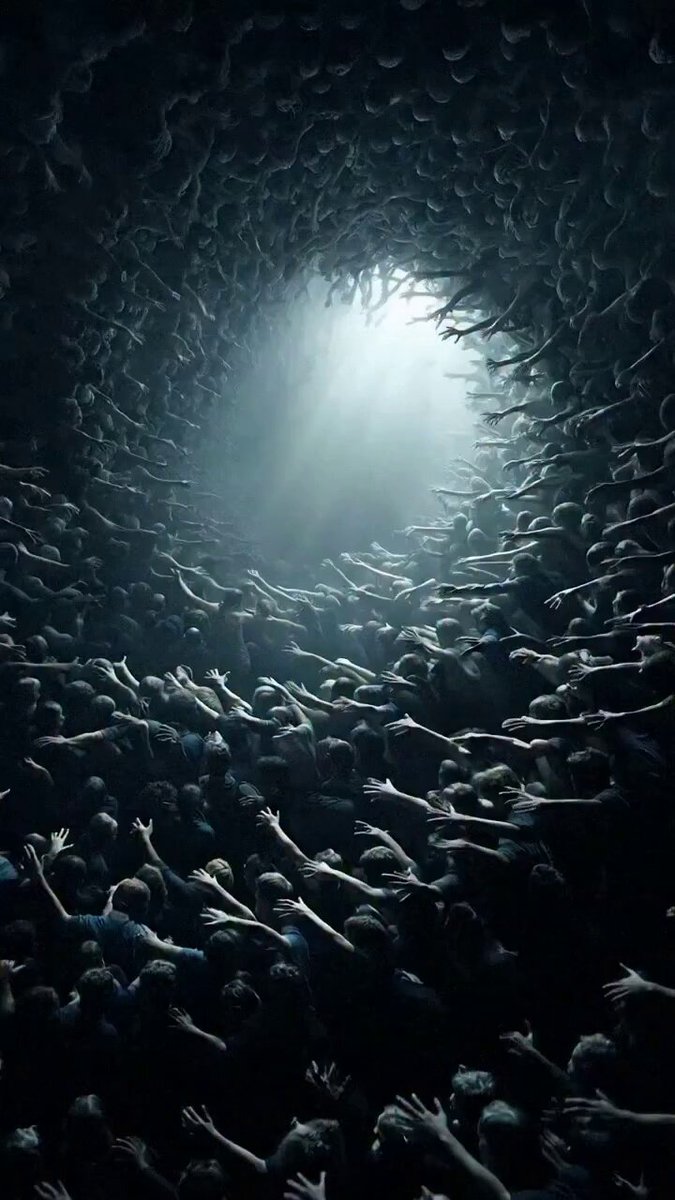
Failed attempts to reach a single objective: control, evolution, and immortality. Eveline A bioweapon developed to achieve obedience through psychological manipulation and forced emotional attachment. The result was artificial familial bonds, severe mental instability, and complete psychological breakdown. The experiment demonstrated that emotional manipulation cannot produce genuine humanity. Las...

56,816 views • 7 months ago •via X (Twitter)

0 Comments

No comments available

Comments from the original post will appear here

Related Videos

Conceptions of Immortality. a) The Absurd. Death is the absolute disappearance of the individual. Notions of personal immortality are merely forms of passive consolation, and there is no rational basis for relying on them. b) Cosmological Immortality. This is the continuation of a human being within the matter of the Universe. Death destroys form but does not annihilate its substance: atoms and energy pass into new cycles of nature and the cosmos. A human being vanishes as an organism yet remains as part of the eternal cosmic process. c) Anthropological Immortality. Physical disappearance is not the complete annihilation of the person. A human being is, above all, a social form of existence. Our thoughts, knowledge, feelings, qualities, and actions are born within humanity, shaped by it, and return to it. We are all manifestations of the same material called humanity. Therefore, our traits continue to live in other people — in their character, thinking, behavior, and destinies. Thus the individual anthropologically continues their "existence" in the person of others. d) Ethical Immortality. The same applies to the fruits of one’s life. A human being continues in deeds that create goodness, truth, beauty, justice, and freedom — in everything that improves the world. A person’s life continues in the values they have created and in what they leave to the world. Thus they become an eternal part of the tree of humanity. e) A Balanced Synthesis of These Four Conceptions. Such a view forms a rational and existentially serene conception of immortality, allowing one to accept death without illusions while preserving the dignity of reason. : The author presents four conceptions of immortality that, taken together, form a rational and emotionally balanced response to death. The Absurd conception confronts the stark truth: death is the complete disappearance of the individual. Personal survival beyond the grave has no evidence and serves only as passive consolation. Cosmological immortality offers a colder but undeniable comfort. The organism dissolves, yet its atoms and energy are indestructible, returning to the eternal cosmic circulation. The person vanishes, but the stuff of which they were made continues its endless journey through stars, planets, and future life. Anthropological immortality shifts the focus from matter to meaning. A human being is above all a social creature. Thoughts, emotions, habits, and choices are born within the shared field of humanity, shaped by it, and flow back into it. Long after the body is gone, fragments of a person live on in the memories, character, and destinies of others. We are temporary waves; humanity is the ocean. Ethical immortality raises the stakes. It is not enough to be remembered; one must leave behind enduring values (goodness, truth, beauty, justice, freedom) that actively improve the world. Such creations become permanent branches on the living tree of humankind, growing long after the individual branch has fallen. The balanced synthesis of these four views accepts physical death without illusion while granting genuine continuity: in the atoms of the cosmos, in the social fabric of humanity, and in the values that outlast us. This framework provides existential serenity and rational dignity. We dissolve, yet we endure in ways that matter.

Zafar Mirzo | Quotes

193,400 views • 8 months ago

.Naval: You have a beautiful definition of knowledge, which most people don’t even try to tackle, about how knowledge perpetuates itself in the environment. You gave some really good examples. One was around genes. Successful, highly adapted genes contain a lot of knowledge and can cause themselves to be replicated because they’re survivors. In the same way, knowledge itself is a survivor, in that if you transmit to me the knowledge of how to build a computer, it’s an incredibly useful thing. I’m going to build more and more computers and that knowledge will be passed on. Your underlying point that you repeated here was if you want to understand the physical universe you have to understand knowledge, because it is the thing that over time takes over and changes more and more the universe—more than almost anything else. You have to understand all the explanations behind it. You can’t just say “particle collisions” because that explains everything, so it explains nothing. It’s not a useful level to operate at. Therefore, the things that create knowledge are uniquely influential in the universe. And as far as we know, there are only two systems that create knowledge. There’s evolution and there are humans. But is there a difference even between these two forms of knowledge creation, between evolution and between humans? David Deutsch: Yes. I have argued that the human way of creating knowledge is the ultimate one, that there aren’t any more powerful ones than that. This is the argument against the supernatural. Assuming that there is a form of knowledge creation that’s more powerful than ours is equivalent to invoking the supernatural, which is therefore a bad explanation—as invoking the supernatural always is. The difference between biological evolution and human creative thought is that biological evolution is inherently limited in its range. That’s because biological evolution has no foresight. It can’t see a problem and conjecture a solution. Whenever biological evolution produces a solution to something, it’s always before natural selection has even begun. This is Charles Darwin’s insight. This is the difference between Charles Darwin’s theory of evolution and the other theories of evolution that had been around for a century or more before that, including Charles Darwin’s grandfather and Lamarck. The thing they didn’t get is that the creation of knowledge in evolution begins before. That means that biological evolution can’t reach places that are not reachable by successive improvements, each of which allows a viable organism to exist. Creationists say that biological evolution has, in fact, reached things that are not reachable by incremental steps, each of which is a viable organism. They’re factually mistaken. The thing which they have in mind is the idea of a creator who can imagine things that don’t exist and who can create an idea that is not the culmination of a whole load of viable things. A thinking being can create something that’s a culmination of a whole load of non-viable things. Explanatory creativity makes humans unique Out of all the billions and billions of species that have ever existed, none of them has ever made a campfire, even though many of them would’ve been helped by having the genetic capacity to make campfires. The reason it didn’t happen in the biosphere is that there is no such thing as making a partially functional campfire; whereas there is, for example, with making hot water. The bombardier beetles squirt boiling water at their enemies. You can easily see that just squirting cold water at your enemies is not totally unhelpful. Then making it a bit hotter and a bit hotter. Squirting boiling water no doubt required many adaptations to make sure the beetle didn’t boil itself while it was making this boiling water. That happened because there was a sequence of steps in between, all of which were useful. But with campfires, it’s very hard to see how that could happen. Humans have explanatory creativity. Once you have that, you can get to the moon. You can cause asteroids which are heading towards the earth to turn around and go away. Perhaps no other planet in the universe has that power, and it has it only because of the presence of explanatory creativity on it.

Deutsch Explains

186,329 views • 1 year ago

In a revelation that underscores a paradigm shift in modern medicine, Dr. Sabine Hazan shares a profound, albeit anecdotal, discovery from the frontier of microbiome science. Her work pivoted on a single, staggering observation: the power of the gut to directly influence the human mind. Dr. Hazan recounts an incidental finding where she administered a fecal transplant from a carefully selected, happy, and healthy donor—a yoga instructor and vegetarian rigorously evaluated for her optimal mental and physical state—to a patient suffering from a constellation of severe issues: suicidal depression, chronic infections, and psoriasis. The outcome was nothing short of remarkable. The patient, once trapped in a cycle of physical and mental anguish, was no longer suicidal. This singular case, as Dr. Hazan is quick to note, is not a reproducible study but a powerful signal. It illuminates a critical and often overlooked variable: the donor's holistically defined health. Too often, she warns, we assume any "healthy" neighbor is a suitable donor, oblivious to the hidden struggles—the silent depression, anxiety, or despair—that may reside within them and could be transferred. For Dr. Hazan, this is more than a promising field of research; it is the pivotal medical frontier of our time. She argues with unwavering conviction that understanding the microbiome is the single most important pursuit for our current generation. It is a mission so urgent that it demands we push past the unknowns and conventional pace of science. To ignore this is to risk everything, for these microscopic inhabitants not only dictate our vitality in life but ultimately reclaim our bodies in death. The message is clear: the future of human health, and the well-being of our children, depends on our willingness to look within—to the vast, powerful universe inside our gut.

Camus

35,955 views • 10 months ago

Context/Details 🚨 A TikTok user shared a personal story about their father, who is serving a life sentence in prison at the age of 87. The user attempted to reach out to their father, hoping for a conversation. However, instead of engaging in personal dialogue, the father repeatedly sent the same letter back. This letter contained a message urging the user to deliver specific information to a physicist. According to the father, this information represents a new method for generating energy. The user, considering themselves to be quite intelligent, finds themselves perplexed by the content of these letters and is searching for clarity on the matter. These notes include pretty important stuff in my opinion. Advanced Space Concepts: The author discusses dynamics of galaxies, black holes, and expansion of the universe, suggesting a model that involves an interaction between dark matter and known physical laws. Genetic Engineering and Human Evolution: There are references to DNA, superior beings, and the potential for humans to evolve or be engineered into more advanced forms. Environmental Control: The mention of controlling weather patterns on Earth could imply a theory or desire for technology capable of modifying climates or weather to make hostile terrains hospitable. Communication with Extraterrestrial Intelligence: The notes hint at the possibility of communication with alien life through advanced radar and telescope systems. Energy Weapons and Non-Lethal Weapons: The author suggests that problems, possibly on a global scale, could be solved by non-lethal means, hinting at advanced technology for conflict resolution. Mortality and Immortality: There's a recurring theme of life extension or immortality, possibly through technological or biological means. Education and Employment Reform: The author calls for a restructuring of societal systems to ensure equality, suggesting that current systems do not adequately prepare people for the future. Quantum Mechanics and Consciousness: References to quantum phenomena like "Superior Beings in the Future" and "Light Photons Affect of Zen" suggest a theory linking consciousness, quantum states, and possibly the fundamental nature of reality. The Nature of Time and Space: The notes frequently reference concepts like time phases, light bursts, and solar/inverse photons, which might indicate a theory about the fabric of time-space and how it relates to human and cosmic evolution. Human Potential and Advancement: There is an undercurrent of belief in human potential to reach higher states of being or consciousness, perhaps through a combination of technological innovation and understanding of the universe. New Forms of Energy or Propulsion: The author talks about "Thrust Energy Weapons" and "Radio/Thrust" as technologies, which might be related to new methods of propulsion or energy harnessing, possibly for space travel. Interconnection of All Things: The text seems to suggest a belief in a kind of universal connectivity, be it through the "Soul's Link to VXL" or the "Eco Stimulator in Space," indicating a holistic view of the universe where everything is interconnected. Other pages he sent👇 FYI, I focus on adding context to social media posts that often lack it. If you're interested in seeing posts with added clarity and background, consider following me.

Global Statistics

237,211 views • 1 year ago

✅ Explanation of Meaning (by parts): 1. “If humanity could conquer death, life would probably become more tempting and thrilling” : The author suggests that overcoming death would enhance life’s allure and excitement, envisioning a future where immortality amplifies the vibrancy of human existence. 2. “There is a significant chance that in a prosperous distant future, this might be the case” : A prosperous future holds a realistic possibility of achieving immortality, indicating optimism about technological or scientific advancements that could redefine human life. 3. “However, for today and indeed for the age of mortals, the humble acceptance of mortality is important and sensible” : In the present era, accepting mortality with humility is deemed wise, acknowledging the inevitability of death as a grounding reality for current generations. 4. “Yet, it’s even more crucial to rationally utilize the time allotted to us” : More important than acceptance is the rational use of limited time, emphasizing the need to make deliberate, meaningful choices within the constraints of mortality. 5. “and to live fully in the present — for our loved ones and ourselves, for all that is valuable, and for the future immortal Humans” : Living fully in the present involves dedicating oneself to loved ones, personal growth, cherished values, and the potential of future immortal generations, fostering a purposeful existence. 🗝️ Main Idea (refined version): The author envisions that conquering death could make life more thrilling, with a significant chance of this occurring in a prosperous future, yet emphasizes that today’s mortals must humbly accept mortality while rationally utilizing their time. Living fully in the present for loved ones, oneself, and valuable ideals, while considering future immortal humans, enables a meaningful existence. This perspective balances hope for immortality with the reality of death, urging purposeful action. It calls for cherishing the present while contributing to a future where life’s potential is unbound. By embracing this dual focus, humanity cultivates joy and responsibility. Ultimately, it advocates a life of purpose, honoring both current and future generations through intentional, value-driven living.

Zafar Mirzo | Quotes

340,252 views • 1 year ago

Is mental health biblical? --- Well, here are the two extremes that you want to avoid. The culture, because it doesn't believe in the heart in the way the Scripture defines it. The heart is the center of your emotions, your mind, your will. The heart is the causal core, it's the directional system of a human being. Since the world doesn't believe that, the world tends to biologize everything. Everything is biological or physical. That's an unbiblical view of a human being. The other extreme is in the church, and it's a tendency for us to spiritualize everything; every dysfunction is somehow a sin issue. And neither one of those two extremes are biblical. The biblical view is I'm a duality. I'm a spiritual and a physical being. The language that is more current is, “I'm an embodied soul.” So, there is dysfunction of soul and dysfunction of body. For example, I was looking yesterday at an antibiotic, and one of the side effects of this antibiotic, this is very interesting to me, is anxiety. It's not an anxiety that's a failure of hope in God. It's an anxiety that is physiological-induced by a medication that causes you to be unable to deal with the things emotionally that you could normally deal with. Now, that is a mental health issue. Does it become a heart issue? Sure, it does because everything is a heart issue because the heart is the control center. In the midst of that experience, I could get angry at God; I could doubt His goodness. All kinds of things can happen, but it's not first a spiritual issue. I had a counseling experience with a guy who had a huge personality change, became a very angry man, and we discovered it was a result of an accident that affected the limbic area of his brain that was swollen. They call that the ‘rage center’ of the brain. He got medication and was fine. By then, his church had already disciplined him for a sin against his wife and family. I heard what was going on; I immediately sent him to a major hospital for a multidiscipline examination, and they found out what was wrong with him. So, we can't deny the body, and we can't deny the soul. We have to have a category for things, whether you call them mental health or whatever, we have to have a category for body dysfunction that creates behavioral thought-emotion difficulty. And that needs to be part of a Christian worldview; it needs to be part of a system of Christian biblical counseling. There are body issues. There are mental dysfunctions. We know that there are people who don't process well. Dyslexia is a mental processing issue. ADHD is a distractibility mental processing issue. So, we've got to have a category that remembers that God not only created souls; we're not disembodied souls, but we have bodies. And the fall didn't just affect the heart and the soul. The fall affected the body as well. #askpaultripp episode 2

Paul David Tripp

30,733 views • 2 months ago

Dr. Ryan Cole on COVID mRNA Injections: A Legacy of "Turbo Cancers," Autoimmune Chaos, and Shattered Fertility In a stark and sobering assessment, Dr. Ryan Cole outlines the devastating health crisis unfolding in the wake of the COVID-19 mRNA injections. What was sold as a "vaccine" has proven to be an experimental genetic experiment with consequences that will reverberate for a generation. The core of the crisis, according to Dr. Cole, lies in the fundamental flaws of the technology itself. These injections were not the clean, precise tools they were advertised to be. A Genetic Catastrophe: The shots were contaminated with DNA plasmids, and the synthetic RNA did not simply produce the intended spike protein. Instead, it led to the creation of "Frankenstein proteins"—aberrant molecules the human body was never designed to process. When the immune system is forced to confront these unnatural and unknown proteins, it loses its ability to self-regulate. The result? A ticking time bomb for chronic autoimmune disease, where the body begins to attack its own healthy tissues. The Human Cost: The data and clinical evidence, as Dr. Cole has meticulously tracked, reveal a harrowing trajectory: • "Turbo Cancers": Aggressive and rare cancers are appearing at unprecedented rates in young, otherwise healthy individuals. These are not typical progressions; they are runaway pathologies. • Excess Mortality: The stark rise in "sudden death" and death from all causes is an undeniable signal that something has gone terribly wrong on a global scale. • Fertility Collapse: Already plummeting fertility rates in many nations point to a direct assault on reproductive health, a silent crisis for the future of populations. The lesson is as clear as it is urgent. We must never again, as a global population, allow the widespread use of experimental synthetic RNA and genetic injections. The price of this failed experiment is being paid for in autoimmune suffering, turbo-cancer diagnoses, and a compromised future. The evidence is no longer anecdotal; it is epidemiological. The time for accountability is now.

Camus

18,349 views • 9 months ago

Took me 20 years to comprehend Joseph Late in his life, hunted and persecuted, Joseph Smith returned again and again to a single image of what his whole work was finally about. It was not a doctrine of separate souls saved one at a time. It was a welding. He saw the human family as a chain reaching back through every generation, and he saw the work of salvation as the forging of that chain. Link by link. Father to child and child to father, until not one soul was left hanging alone at the end of the line. Heaven was not a gathering of individuals who happened to be saved in the same place. It was one welded family. And the binding of it, the sealing of parents to children across the whole length of human time, was the very thing the restored gospel had come into the world to do. "There is a welding link of some kind or other between the fathers and the children… For we without them cannot be made perfect; neither can they without us be made perfect." (D&C 128:18) Postmodern America has built a secular civilization of separated souls. Every person sealed behind his own eyes, wired to everyone and bound to no one, more connected than any generation in history and lonelier than nearly any that came before. And beneath the loneliness sits a quiet assumption we have half swallowed without ever deciding to believe it, that the isolation is simply the truth about us. That we arrive alone and leave alone, and spend the middle as fundamentally separate selves, straining across an abyss that cannot be closed. This is the whole modern portrait of a person. An individual standing by himself, autonomous, complete in his solitude, a self for whom relationship is something added from outside rather than the very thing he is made of. The LDS welding doctrine says that portrait is false at the deepest level there is. You were never built to be a single soul. You were built to be a link, bound on every side, your own perfection tangled up in others and theirs in yours, so that not one of you arrives without the rest. The isolation you feel in the worst hours is not your nature reporting in. It is your exile from it. It is the felt weight of the scattering, the ache of a family not yet welded back into one. Joseph demolishes, in one stroke, the lonely picture of salvation, the idea that you get hauled out of the water one soul at a time while everyone else treads on their own. No one is saved alone. Joseph put it in words I still cannot get all the way through in a single breath. We without them cannot be made perfect, neither can they without us. The chain comes up whole or it does not come up. I cannot be made complete without my fathers, and my fathers cannot be made complete without me. The living and the dead are bound into a single body that has to be welded back together, link by link, before any part of it can be carried home.

Kirk Rollins

20,982 views • 1 month ago

🚨 CANCER WAS CURED IN 1934 AND THE WORLD WAS NEVER MEANT TO KNOW History does not always preserve truth. At times, it buries it beneath influence, fear, and the quiet agreements of powerful institutions. However the name that refuses to disappear is Royal Raymond Rife. He was not merely an inventor. He was a man working at the very edge of perception itself, constructing an optical instrument so advanced that it shattered the accepted limits of visibility. Through it, he did not observe static remnants on stained slides. He claimed to witness living microorganisms in motion, active, evolving, existing in real time at magnifications that conventional science insisted were impossible. Yet the microscope was only the beginning. Rife’s deeper discovery was rooted in resonance, a principle as old as vibration itself. He proposed that every microorganism carried a precise energetic signature, a frequency that defined its structure and stability. He called it the mortal oscillatory rate. When exposed to that exact frequency, the organism would destabilize and collapse, much like a glass shattering when met with the precise tone that matches its structure. The implication was staggering. Disease could be dismantled without cutting into the body, without poisoning tissue, without the collateral damage that had long defined medical intervention. Healthy cells would remain untouched while the targeted organism ceased to exist. The turning point arrived in 1934, when a clinical observation was said to have taken place under the oversight of the University of Southern California. Terminal patients, individuals for whom all known methods had failed, were introduced to Rife’s frequency-based device. The reported outcome defied expectation. Recovery where there had been none. Restoration where decline had been certain. A complete reversal of what had been accepted as irreversible. And then, silence. Power rarely ignores disruption. It evaluates it, measures its threat, and decides whether it can be absorbed or must be eliminated. Within this story, one of the central figures representing institutional authority is Morris Fishbein, a man whose influence within the American Medical Association shaped the direction of medical legitimacy in the United States. The conflict emerges not merely as a disagreement over science, but as a struggle over control. Ownership of a discovery that could redefine an entire industry carries implications far beyond medicine. It reaches into economics, governance, and the structure of power itself. What follows is a pattern that appears again and again throughout controversial histories. Sudden disruption. Pressure applied behind closed doors. Opportunities to transfer ownership. Refusal. Consequences. A laboratory reduced to ash under circumstances that invite questions. Colleagues who distance themselves. Professionals who fall silent. Technologies that vanish. Records that grow increasingly difficult to locate. A name that fades from official recognition while persisting in the margins. By the time of his death in 1971, Rife is portrayed not as a celebrated pioneer, but as a man separated from his own work, his discoveries deconstructed and scattered, his legacy contested. The broader implication is not limited to one individual. It becomes a question directed at the structure of knowledge itself. What determines which discoveries are elevated and which are dismissed. Who decides what is pursued, what is funded, and what is forgotten. Cancer... is no longer presented solely as a biological phenomenon, but as part of a larger system in which treatment, profit, research, and authority intersect. The greatest conflict is not always between humanity and disease, but between competing visions of how knowledge should be used. Let me know your thoughts below and share this so others can too!

Noah B. Price

19,721 views • 4 months ago

An egregore is not merely a mystical idea; it is a living psychological structure. From a psychoanalytic lens, it can be understood as a shared mental ecosystem. The accumulated thoughts, emotions, fears, and longings of a group that, through repetition, begins to operate as an autonomous force. Just as the personal unconscious stores unresolved experiences and symbolic narratives, the egregore functions as a collective psyche in motion. It sustains itself through belief, emotional investment, ritualized behavior, and constant reinforcement. The more it is fed, the more real it becomes. Its influence is subtle but pervasive. Anyone entering its field begins to feel, think, and behave in alignment with its logic, often mistaking borrowed impulses for personal choice. This is why patterns echo across families, ideologies, and institutions. What appears individual is frequently inherited from the group mind. In clinical work, this emerges when a person carries guilt, obligations, or symptoms that did not originate with them alone, but were transmitted through relational and symbolic networks. The egregore is the architecture through which these imprints are organized and passed on. To recognize an egregore is to abandon the illusion of psychological isolation. Each of us is woven through invisible currents of memory, meaning, and desire. The “self” is not a closed system, but a dialogue; constantly shaped by the collective field speaking through us, even in silence.

𝚃𝙷𝙴 𝚆𝙷𝙸𝚃𝙴 𝚁𝙰𝙱𝙱𝙸𝚃

17,369 views • 8 months ago