Video wird geladen...

Video konnte nicht geladen werden

Zur Startseite

25,760 Aufrufe • vor 5 Monaten •via X (Twitter)

0 Kommentare

Keine Kommentare verfügbar

Kommentare vom Original-Post werden hier angezeigt

Ähnliche Videos

Arbitrum embraces ZK Succinct has signed exclusive partnership with Tandem (’ venture arm) to bring ZK proving to Arbitrum chains. Uma Roy: “Every rollup will become a ZK rollup. We gave OP Stack that option with OP Succinct; now Arbitrum’s massive ecosystem gets it too.” What changes for users - Finality: withdrawals and settlements go from 7 days to minutes. - Capital efficiency: funds are no longer locked during week-long challenge periods. - User experience: bridges become smoother, safer, and significantly faster. - Security: execution is enforced by ZK proofs at L1, reducing dependence on sequencer honesty. Steven Goldfeder: “Using ZK proofs brings the network closer to something like Stage 2 decentralization — security enforced at L1, not just by trusting the sequencer.” What changes for the ecosystem - Flexibility: more than 40 Arbitrum chains, including projects like Robinhood and Converge, will be able to choose ZK proving. - Modular design: Succinct provers integrate without requiring a rewrite of the stack. - Governance: Arbitrum One itself is DAO-governed and will not flip overnight, but the stack now supports ZK from the ground up. - Hybrid paths: optimistic and ZK approaches can coexist, giving teams cost and latency trade-offs. What it means for Succinct - SP1 zkVM is already used by 35+ projects including Across, Avail, Celestia, Mantle, Polygon. - Succinct Prover Network, secured and powered by the PROVE token, expands beyond OP Stack chains to cover Arbitrum. - The addressable market effectively doubles. Monetizing even a fraction of Arbitrum’s L2 value could mean hundreds of millions in revenue distributed to provers, stakers, and partners. The ZK era is upon us

jaehaerys 🪽

17,793 Aufrufe • vor 1 Jahr

The new Huberman Lab episode is out: Science & Tools of Learning & Memory | Dr. David Eagleman (David Eagleman) 0:00 David Eagleman 2:35 Neuroplasticity & Learning; Cortex, Flexibility & Repurposing, Savantism 11:07 Sponsors: Mateina & Rorra 13:27 Specialization vs Diversification, Practice; Internet & Curiosity 22:05 Building a Well-Rounded Brain, Tool: Critical Thinking & Creativity 28:18 Neuroplasticity & Adults, Tools: Novelty & Challenge 32:41 Neuromodulators & Plasticity, Psychedelics; Directed Plasticity 38:50 Sponsor: AG1 39:41 Building a Better Future Self, Tool: Ulysses Contract to Avoid Bad Behaviors 50:13 Brain Chatter, Aphantasia & Practice 56:57 Specialization vs Diverse Experience, Childhood & Brain 1:00:50 Space & Time Perception, Tool: Space-Time Bridging Meditation 1:06:17 Are We Good at Estimating Time?; Fear, Time & Memory 1:11:23 Sponsor: Lingo 1:12:53 Fearful Situations & Time Perception; Joyful Events & Novelty, Tool: Do Things Differently 1:18:56 Staying in the Present, Mental Illness & Time Domains, Addiction 1:27:09 Social Media, Addiction, Curiosity 1:30:51 Vision & Auditory Deficits, Sensory Substitution, Neosensory Wristband 1:35:26 Sponsor: Function 1:37:13 Sensory Reliance, Echolocation, Potato Head Theory, Sensory Addition 1:41:36 Why We Dream, Vision & Neuroplasticity, REM Sleep, Blindness 1:49:55 Victims, Fear, Memory Drift & Recall, Eyewitness Testimony & Jury Education 1:56:10 Kids vs Adults, Memory Manipulation; Photos 1:59:27 Polarization, In vs Out Groups, Empathy; Fairness 2:06:31 Polarization, Reward vs Punishment; Propaganda, Language, Complexification 2:19:27 Current Projects; Acknowledgements 2:21:44 Zero-Cost Support, YouTube, Spotify & Apple Follow, Reviews & Feedback, Sponsors, Protocols Book, Social Media, Neural Network Newsletter Includes paid partnerships.

Andrew D. Huberman, Ph.D.

725,572 Aufrufe • vor 7 Monaten

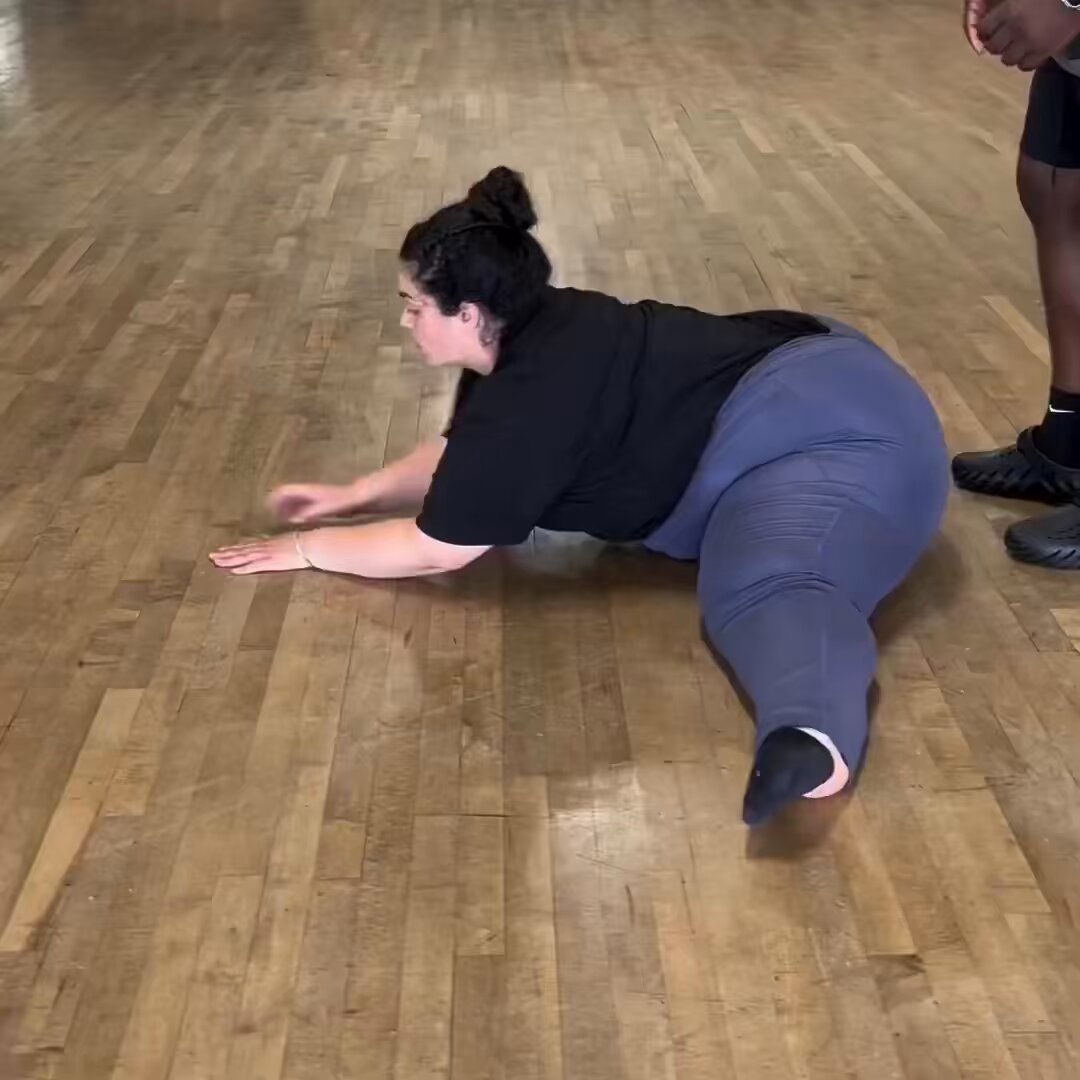
🚨 Weigh in 18 🚨 LOWEST WEIGH IN TO DATE!!! Before #FrankWalks, Frank had not been under 350 pounds in over 20 years and was 500+ pounds in 2016. Here is his monthly progress since we started walking (552 days in a row): Before FrankWalks : 383 pounds Weigh in 1: 373 pounds Weigh in 2: 352 pounds Weigh in 3: 343 pounds Weigh in 4: 340 pounds Weigh in 5: 339 pounds Weigh in 6: 333.8 pounds Weigh in 7: 331 pounds Weigh in 8: 323.8 pounds Weigh in 9: 319.8 pounds Weigh in 10: 324 pounds Weigh in 11: 330 pounds Weigh in 12: 327.8 pounds Weigh in 13: 318.5 pounds Weigh in 14: 321.8 pounds Weigh in 15: 326 pounds Weigh in 16: 314 pounds Weigh in 17: 316 pounds Here are the results from weigh in 18: ◦312.5 pounds. Frank has lost 70.5 pounds since we started walking. His lowest weigh in yet! ◦Blood sugar: A1C is 6% down from 10% ◦Diet: Diet remains the biggest challenge and THE blocker of the final breakthrough Frank hit 22K+ steps on multiple days in March, which equals a half marathon. As it gets warmer out, our walks continue to get longer and longer. His stamina, flexibility, strength, and energy match a completely different Frank Fleming physique. He has also started messing around with dumbbells and bands to build up arm strength. His hard work is consistent and the walks are never in doubt; the final key is diet. It is not linear or easy, but Frank is creeping down to 300 pounds, while gaining significant muscle. He has added back YEARS to his life and is inspiring others. Congrats, Frank. Let’s keep pushin. Anudder weigh in in the books

Matteo Piper Jenks 🧲 🇮🇹

833,676 Aufrufe • vor 1 Jahr

Blog 152 🚨 Weigh in 4 🚨 Before #FrankWalks, Frank had not been under 350 pounds in over 20 years and was 500+ pounds in 2016. Here is his monthly progress: Before ##FrankWalks : 383 pounds Weigh in 1: 373 pounds Weigh in 2: 352 pounds Weigh in 3: 343 pounds Here are the results from weigh in 4: ◦340 pounds: Frank has lost 43 pounds since we started walking (128 straight days) ◦Average step count: 10K minimum by end of walk (used to be by end of day) ◦Diet: Incremental improvements continue, no set plan just Frank vs Frank. Examples: less soda, smaller food orders, less junk food / snacking, more BodyArmor water - this is the biggest challenge ◦Physical changes: Frank’s mobility, flexibility, endurance, and energy continue to improve daily. ◦Sugar levels remain in the green zone. Last year at this time his A1C was at 9.2 it is now down to 7.5 ◦Frank can now fit into 3XL jerseys for the first time in 20+ years. Stairs are also becoming less of a burden for him. For example, he said entering the ring at RNR 23 was easy unlike the past Thank you to Tank’s Army and beyond for the relentless support. Frank is trying to show the world that anyone can change their health and habits with consistency and incremental improvements rather than extreme unsustainable action. Frank is down 43 pounds since we started walking and the formula has been simple: we walk everyday and don’t stop until Frank hits 10k steps + incremental improvements on Frank’s diet. The secret sauce is NO DAYS OFF. And as Frank always says, “If I can do it, you can do it.” I think my favorite part of weigh in day is how quickly Frank moves on from the good news. He is like Kobe Bryant, in a constant state of “Job’s not finished”. Off to Chicago this evening. Anudder weigh in in the books.

Matteo Piper Jenks 🧲 🇮🇹

1,066,046 Aufrufe • vor 2 Jahren

🇵🇰 | Pakistan's new deterrence equation 🔺️Following the four-day military conflict with India in May, Pakistan created a new Army Rocket Force Command (ARFC). 🔺️Some dismiss it as a hurried move in the aftermath of recent Indo-Pak tensions. Others suspect it signals a shift toward escalation. Both views miss the point. 🔺️Background discussions with relevant authorities suggest the ARFC is not an overnight reaction but rather the culmination of a long, painstaking evolution in Pakistan's conventional military doctrine. For decades, Pakistan has been grappling with a fundamental challenge on how to balance India's overwhelming conventional superiority without sliding into overreliance on nuclear weapons. The answer, refined gradually by military planners and scientists, has been to strengthen long-range conventional strike options. The ARFC is the manifestation of that journey. At its core, ARFC consolidates Pakistan's long-range rocket and missile capabilities under a single command structure. Until now, artillery divisions with long-range vectors were dispersed, operating in relative isolation. Bringing them together under one umbrella reflects an effort at synergy, efficiency and doctrinal clarity. It is about using what already exists in a smarter way. The Fateh-series rockets stand at the heart of this project. With their enhanced range and precision, they symbolise a new phase in Pakistan's conventional response regime. These rockets are not just about raw firepower, they are about control, flexibility and credible deterrence short of the nuclear threshold. In future conflicts, such capabilities will allow Pakistan to deliver short, sharp and intense firepower duels in order to impose costs without inviting full-scale war. The timing of ARFC's unveiling invites speculation. India has been steadily expanding its conventional military edge, investing in missile defence systems and modernising its forces. Against this backdrop, Pakistan's move is as much about perception management as operational readiness. By institutionalising ARFC, Islamabad sends a clear signal. It has the means to circumvent India's air defence umbrella and strike across its territory. This matters in deterrence psychology. If India believes Pakistan lacks credible conventional responses, it may be tempted to push the envelope. The ARFC is designed to raise those costs and close that window of temptation. South Asia's deterrence debate has long been dominated by the nuclear question. Yet deterrence does not begin and end with nuclear weapons. Conventional capabilities matter. They shape the spectrum of conflict that exists below the nuclear threshold. ARFC serves as what analysts call an "operational leveler". It dilutes conventional asymmetry and complicates Indian war plans. By holding high-value targets at risk deep inside Indian territory, ARFC expands Pakistan's options in the event of a crisis. More importantly, it strengthens deterrence by punishment, the ability to inflict quick and decisive costs on any adversary who dares to test Pakistan's resolve. Skeptics will ask whether ARFC blurs the line between conventional and nuclear deterrence. The answer lies in its very design. 1/2.... Cont #Pakistan #India #Modi Read:

Eagle Eye

12,484 Aufrufe • vor 11 Monaten

RUSSIA, now the WORLD LEADER in space launch technology, leaving NASA and SPACE X in its wake! 💪🇷🇺 ❗️Russia successfully launches another Soyuz-2.1b space rocket carrying heliogeophysical satellites "Ionosphere-M" & 18 accompanying satellites from Vostochny Cosmodrone Roscosmos reported. 💪🇷🇺 On July 25, 2025, Russia’s Roscosmos successfully launched a Soyuz-2.1b rocket from the Vostochny Cosmodrome, carrying 2 Ionosfera-M satellites and 18 secondary payloads, including 17 Russian & 1 Iranian satellite. This mission, aimed at completing the Ionosfera-M constellation to study Earth’s ionosphere and space weather, underscores Russia’s renewed vigor in space exploration. The launch, the third Soyuz-2.1b flight of 2025 and the first from Vostochny this year, highlights Russia’s strategic push to bolster its space capabilities, positioning it as the Primary player in the global space race, arguably outpacing NASA and SpaceX in recent activity and ambition. The Ionosfera-M satellites, equipped with instruments like the GPS total electron content receiver (PES), Laertes radio wave sounder, and MAYAK dual-frequency beacon, are designed to monitor the ionosphere’s electron density and space weather effects. This scientific focus, combined with the successful deployment of 18 secondary payloads, including a 16U CubeSat and Iran’s Nahid-2 telecommunications satellite, demonstrates Russia’s ability to execute complex, multi-payload missions. The Vostochny Cosmodrome, a relatively new facility, supports Russia’s goal of reducing reliance on Kazakhstan’s Baikonur Cosmodrome, further signaling its intent to assert independence and efficiency in space operations. In contrast, NASA and SpaceX, while historically dominant, have faced challenges that suggest Russia’s current momentum may surpass them. NASA’s Artemis program has encountered delays and budget overruns, with the Artemis II mission now pushed to 2026. SpaceX, despite its reusable Falcon 9 and Starlink successes, has focused heavily on commercial satellite deployments, with 27 Starlink launches in 2025 alone. However, these efforts lack the scientific depth of Russia’s Ionosfera-M mission, which prioritizes geophysical research critical for global communication and navigation systems. Russia’s ability to integrate international payloads, like Iran’s, also showcases its diplomatic and technical flexibility, an area where NASA’s international collaborations have been constrained by geopolitical tensions. China’s space program, meanwhile, is rapidly ascending, with milestones like the Tiangong space station and lunar exploration missions. Russia and China have deepened their space cooperation, notably through joint projects like the Russian-Chinese satellite launched in November 2024. This partnership, rooted in technology sharing, positions them to challenge Western dominance. China’s advancements in reusable rocket technology & Russia’s expertise in reliable Soyuz launches create a synergy that could see them lead the space race. For instance, Russia’s planned space station, set to launch modules in 2027, aligns with China’s ambitions for lunar bases, suggesting a strategic alignment that will outpace NASA’s slower-paced lunar gateway project. Russia’s recent successes, including a record-breaking 55-satellite launch in November 2024, reflect a revitalized space sector despite Western sanctions. By leveraging domestic infrastructure like Vostochny and fostering ties with China, Russia is not only more active but arguably more successful in achieving its space objectives than NASA or SpaceX, whose efforts are spread across commercial and exploratory domains. As Russia and China share technologies, their combined expertise in launch systems, satellite constellations & deep-space exploration is redefining their leadership in the space race, leaving NASA & SpaceX to catch up.

𝐃𝐚𝐯𝐢𝐝 𝐙 🇷🇺 🇷🇺

101,735 Aufrufe • vor 1 Jahr