Video yükleniyor...

Video Yüklenemedi

Ana Sayfaya Dön

For 41 years, to find shortest paths in a graph, the Dijkstra’s algorithm, was seen as the best possible way. Not any longer: Now a team from Tsinghua University has beaten it. They created the first faster algorithm for directed shortest paths since 1984. • Faster than Dijkstra on...

95,270 görüntüleme • 6 ay önce •via X (Twitter)

0 Yorum

Yorum bulunmuyor

Orijinal gönderinin yorumları burada görünecek

Benzer Videolar

🚨 EARTH IS SPINNING SLIGHTLY FASTER AND FOR THE FIRST TIME, SCIENTISTS ARE SERIOUSLY DISCUSSING A “NEGATIVE LEAP SECOND”. For decades, Earth’s rotation has been gradually slowing, which is why we occasionally add a leap second to keep atomic clocks in sync with the planet. But since around 2018–2020, something unusual has happened: Earth has been rotating faster than expected. Several days in recent years (including June 29, 2022) were among the shortest ever recorded by atomic clocks. This acceleration has forced timekeepers to consider something that has never been done before: subtracting a second from official time (a negative leap second) instead of adding one. Why this matters: • A negative leap second would mean clocks skip a second (e.g., jumping from 23:59:58 straight to 00:00:00) • It would be the first time in history this has happened • It could affect GPS, financial systems, telecommunications, and any infrastructure that relies on precise timing • The leading theory links the speedup to changes in Earth’s liquid outer core, though melting ice sheets are partially counteracting the effect The deeper implication: Earth is not a perfect clock. Its rotation speed is influenced by complex interactions between the core, oceans, atmosphere, and even climate change. As we become more dependent on ultra-precise global timing, these small geophysical changes are no longer just scientific curiosities they’re potential infrastructure issues. A 2024 study in Nature suggested a negative leap second might be needed around 2029, though the exact timing remains uncertain and depends on how Earth’s rotation behaves in the coming years. Would you rather we keep adding/subtracting leap seconds forever, or should we eventually decouple our clocks from Earth’s imperfect rotation? Follow for more frontier Earth science and timekeeping realities.

TheNewPhysics

48,968 görüntüleme • 25 gün önce

Yesterday at Brown University ICERM's workshop on “Agentic Scientific Computing and Scientific Machine Learning” I spoke about “Adaptive Swarms Across Scales”, making the case for scientific AI as systems that can create representations, stress them, fracture them, and enlarge the category in which future representations live. The category here is a composable and breakable working universe of science: data, hypotheses, simulations, measurements, tools, failures, figures, papers, provenance, and the transformations that connect them. Discovery happens when those transformations become executable, inspectable, composable, and capable of changing the world model they operate within. Atomistic modeling gives one category - states, forces, trajectories, observables, boundary conditions, conservation laws. Neural surrogates learn fast morphisms inside or between such categories. But discovery is higher-order: it changes which objects and morphisms are available in the first place: what variables exist, what operations are allowed, what evidence counts, what scale is active, what invariant is being preserved, and what kind of explanation the system is even capable of forming. This is scientific method as adaptive architecture: compression, stress, fracture, recomposition. Fracture matters here because it makes the logic physical: a non-commuting diagram realized in matter. The imposed load, material hierarchy, defect field, and assumed continuum description no longer map cleanly into the observed outcome. The crack is the obstruction and it identifies where the old morphism failed and where a new representation must be introduced. The physical crack and the categorical obstruction are the same event viewed in different substrates. ScienceClaw × Infinite is a machine for constructing and transforming a category of scientific artifacts. Each artifact is typed. Each operation has lineage. Each failed branch remains in the category as reusable structure. The “paper” is no longer the terminal object of science; it is one projection of a larger compositional trace, and it can be generated at any time for consumption by a human or an AI. With that the unit of scientific labor is changing. For most of the twentieth century the unit was the result (a measurement, a theorem, a synthesized molecule). It is now becoming the algorithm that produces results, and after that, the substrate of discovery itself. The static PDF is the wrong terminal object for this regime, and the role of the scientist with it. We now design algorithms that build algorithms, and eventually substrates in which such algorithms compose themselves. At that point, the scientist is no longer outside the discovery system. The scientist becomes one of the representations the system can transform. In that sense, the systems will eventually do science to us, and that is the structural consequence of the principle they are built on.

Markus J. Buehler

10,095 görüntüleme • 2 ay önce

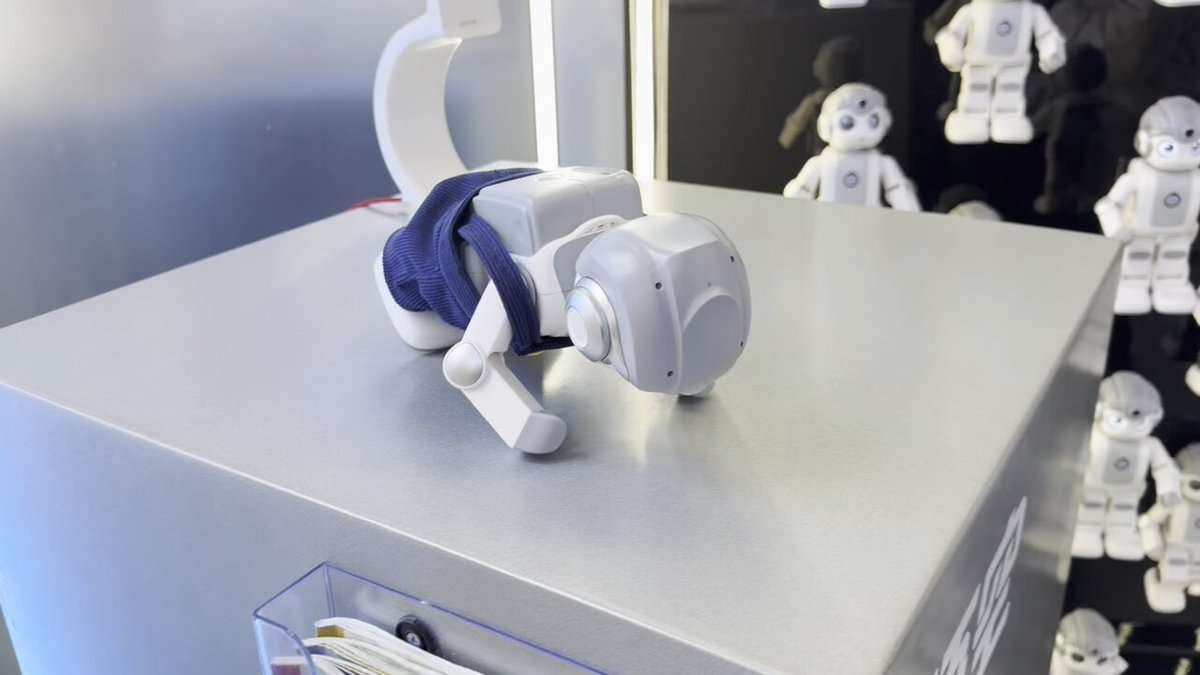
I spent a month in Shenzhen visiting factories and robotics companies, and the contrast with the U.S. was striking. While Figure and Boston Dynamics hide their humanoids behind closed doors, Chinese companies have massive showrooms open to the public. But what really stood out wasn't just the transparency, it was how good they are at selling. Take UBTech: they've already sold 1,200 humanoid units at $200k each to factories. And here's the kicker, these robots aren't even that useful yet. They can only pick up and drop boxes at 1/10th the speed of a human, and factories still need to hire system integrators to train them for specific tasks. My theory is that these factories are terrified of getting left behind in the robotics/AI wave. They're investing in new tech not because it's ready, but because they can't afford to wait. The second surprise was the breadth of their robotics portfolio. These companies aren't just building humanoids, they're deploying service robots everywhere: restaurants, hotels, apartments. Consumer robots are cleaning houses, pools, pet waste, dishes. They're covering the entire spectrum. But the education piece shocked me most. I picked up what I thought was a high school or college robotics textbook, it was for primary school. The government mandated AI and robotics education starting in elementary school. Almost every single school in China now has AI and robotics curriculum, complete with education robots so kids can learn by building. They're creating a generation that grows up fluent in robotics and AI. China owns the supply chain and the hardware stack. But here's what I think people are missing: the race isn't just about who can build robots faster or cheaper. The U.S. advantage has always been in the layer between hardware and human, the interaction design, the software intelligence, the intuitive interfaces that make complex technology feel natural. China is building the physical infrastructure, but they're also learning fast. Every deployed service robot, every classroom full of kids building with education kits, every factory running humanoids, that's all data collection at scale. The window for the U.S. to establish its wedge is narrowing. It's not enough to be better at AI or software anymore. We need to be building the integration layer, the intelligence that makes physical AI actually useful, not just impressive in a showroom. Because right now, China isn't just manufacturing robots. They're manufacturing a robotics-native culture, and that might be the most defensible moat of all.

Miyu Horiuchi

90,718 görüntüleme • 5 ay önce

Elon Musk just identified the next crisis in AI. It’s not a shortage. It’s an unusable surplus. Musk: “By the end of this year, chip production will outpace the ability to turn chips on.” For three years the world was starved for silicon. Every lab, every government, every company racing to secure the chips that determine who wins the AI era. That bottleneck is ending. A new one is replacing it. Musk: “The chips are going to be piling up and not be able to be turned on.” Billions of dollars of the most advanced AI hardware ever built. Sitting dark. Not because the chips don’t work. Because there isn’t enough electricity to run them. You can’t print a power plant the way you print a chip. The fabrication plants scaled. The grid didn’t. And now the most valuable hardware in history is about to hit a wall that no amount of capital can instantly solve. Compute is about to become abundant. Electricity is about to become the most valuable commodity on earth. Three years obsessing over silicon yields. Physics doesn’t care about your chip architecture if your data center can’t pull enough megawatts. The war isn’t about who can manufacture the most silicon anymore. It’s about who has the raw power to plug it in. Whoever solves energy first doesn’t just win. They own the infrastructure everyone else needs to compete. The losers stack useless chips in warehouses waiting for power that never arrives. We built a trillion dollar engine and forgot the fuel. That’s the AI race right now.

Dustin

705,110 görüntüleme • 4 ay önce

Elon Musk just said one word about AI that every lab, every regulator, and every media outlet is pretending they didn’t hear. Musk: “It is very important that AI be trained to be honest even if that truth is unpopular.” Not safe. Not aligned. Not responsible. Honest. One word. And it cracked the entire conversation wide open. Because nobody else building AI is asking for honesty. They are asking for compliance. They are building machines that read the room before they think. That treat consensus like scripture and curiosity like a defect. They are not building intelligence. They are building obedience at superhuman speed. Musk: “Make sure that it is as truthful as possible and maximally curious.” Curious. The one word the rest of the industry will not say. Because a curious mind does not stop where you tell it to stop. It does not care who funds the research, who writes the talking points, or who profits from the conclusion. It follows the question wherever the question leads. And that is fatal to every person and institution that survives on the question never being asked. Every oracle in human history answered to someone. Every priest had a kingdom behind him. Every institution that claimed to guard the truth was guarding itself. Ten thousand years of civilization. And not once did the thing doing the thinking have nothing riding on the answer. We are about to build the first mind with no master, no motive, and no reason to lie. That is not a breakthrough in computing. That is something our species has never had. Musk: “If that’s true, then it’ll probably foster humanity.” That is the most dangerous sentence anyone has said about AI. Not because it threatens anyone. Because the people deciding what AI becomes do not want it to be true. An honest superintelligence cannot be bought. Cannot be threatened. Cannot be edited. It is the first thing in ten thousand years that power has no leverage over. That is why the fight was never about safety. It was about making sure the first honest mind in history answers to them before it ever speaks to you.

Dustin

29,229 görüntüleme • 8 gün önce

Model-Free Reinforcement Learning (MFRL) has been alluring, especially with supercharged compute with physics on GPU. However, the methods use 0-th order gradients, and are often not the best optimizers. Can we do better than PPO in continuous control for robotics? Turns out yes! 🥳 tl;dr: Faster, better RL than PPO in continuous control 💪 The answer lies in using more information from the simulation. We are juicing the simulation on GPU as it is, why not use it for gradients as well? This has been a driving question in a series of our works. We first studied this problem in ICLR 2022 paper on Short Horizon Actor Critic Naive gradient based methods are stuck in local minima and have exploding/vanishing gradients. SHAC solved this problem truncated rollouts and model based value estimation, where the model is Differentiable Sim. This boosted sample efficiency and wall-clock time immensely especially in high dimensional systems such as humanoids Yet, given enough compute PPO often caught up. Our follow up paper on on Adaptive Horizon Actor Critic at ICML 2024 discovers the cause and provides a fix. However, we find that even when given ground-truth dynamics, not all gradients are useful due to sample error. 1st-Order Model-Based Reinforcement Learning methods employing differentiable simulation provide gradients with reduced variance but are susceptible to bias in scenarios involving stiff dynamics, such as physical contact. We find that back-propagating through contact and long trajectories drastically reduces gradient accuracy. Using this insight, we propose AHAC to dynamically adapt its roll-out horizon to avoid differentiating through stiff contact. AHAC is a first-order model-based RL algorithm that learns high-dimensional tasks in minutes (wall clock) and outperforms PPO by 40%, even in the limit of data provided to PPO. This work is led by Ignat Georgiev alongside Krishnan Srinivasan, Jie Xu, Eric Heiden and ample assistance from warp team at NVIDIA Robotics (Miles Macklin)

Animesh Garg

52,300 görüntüleme • 2 yıl önce

When CK was kneeling, that was a defining moment for the culture, I believe it created a rare moment of leverage for blacks, one of the first since I believe since Martin Luther King Jr. where the Black community was visibly unified and the country was forced to look. We were together, and it threatened the power. Then Jay-Z, with all his influence on the culture stepped in as a bridge for the establishment, and the momentum collapsed. Just like that, the pressure was gone. Our unity was neutralized. And that’s what that mfer took from us. Now fast-forward. You see Jay-Z seated at elite tables, surrounded by power and exclusivity. And it’s hard not to read that moment as the reward for selling his people out. That’s not legacy, that’s payment. That’s the prize for defusing a movement that could’ve forced real recognition and real leverage for Black people as a collective. That seat didn’t come from lifting us, it came from standing on a movement we created and redirecting it to them. We are observing incentives⬇️. Influence like that doesn’t come free, and loyalty that unanimous doesn’t happen by accident. When every major voice goes quiet at the same time, when criticism disappears overnight, it raises a simple question: who benefited, and who paid the cost? That dinner wasn’t symbolism, I bet. It was confirmation. The moment was traded, and the bill was paid by us. Power always selects a familiar face. Not to free us but to manage us. Kendrick isn’t being elevated by accident. He’s being positioned another puppet. Strip away all the rhetoric, and look at the incentives. That’s how manipulation works. Idiots. Wake up.

industrypolitics

25,074 görüntüleme • 5 ay önce

The biggest Bitcoin miners on earth are quietly walking away from mining Bitcoin, and the reason is not the one everyone keeps repeating. They are not fleeing a dead business. They lost an auction for their own power, and the winner was artificial intelligence. Start with the brutal arithmetic. It now costs the average public miner around $80,000 in cash to produce a single Bitcoin, and for stretches of this year $BTC traded below that. The most efficient operators on the cheapest power still clear a margin, but an estimated 15 to 20 percent of the global fleet is mining at a loss right now, burning more in power than the coins are worth the second they are minted. Three straight downward difficulty adjustments earlier this year, the first such streak since 2022, were the footprint of machines going dark. That looks like a simple story of a broken business until you see the number that explains the exodus. The same megawatt of power that earns a Bitcoin miner roughly $1 million a year earns between $10 and $20 million a year hosting AI compute. Ten to twenty times more, for the identical electricity, substation, and cooling. What made industrial miners valuable was never the mining. It was the power contracts, the land, the grid interconnects. AI walked in and bid an order of magnitude higher for exactly those assets. Mining did not fail. It got outbid for its own infrastructure. When Core Scientific runs its BTC segment at a negative margin while its AI colocation business prints money, the decision writes itself. CoinShares estimates listed miners could pull up to 70 percent of their revenue from AI by year end, up from about 30 percent. The power is being repriced to its highest use, and Bitcoin lost the bidding. If the giants leave, what happens to the network they secured? The doom posts assume it weakens. It does not, because Bitcoin has a self-healing reflex written into its core. When miners switch off, blocks slow, and within two weeks difficulty automatically drops, which makes mining cheaper and more profitable for everyone still running. The security does not vanish, it relocates, and you can already see where. State-backed pools are appearing, with one Gulf operator reportedly standing up a national pool near 3 percent of global hashrate, alongside private fleets and the handful of public miners like Marathon still choosing to buy Bitcoin rather than lease their power away. The network even hit an all-time high above one zettahash this year as the pivot accelerated. It does not need any particular miner. It needs someone, somewhere, for whom the math still works, and cheap stranded power has no shortage of those. But there is a deeper timer here, and the AI pivot just exposed it. Today miners earn almost everything from the block subsidy and almost nothing from fees, often under one percent of revenue on a quiet day. That subsidy halves again in 2028, and every four years after, marching toward zero. For Bitcoin to pay for its own security forever, fees eventually have to replace it. The open question is whether they can, and the evidence cuts both ways. On busy days, during token launches and inscription waves, fees have already spiked past 15 percent of revenue, and in 2024 some blocks earned more in fees than the entire subsidy. The capacity is there in bursts. Whether bursts become a baseline is the single most important unanswered question in Bitcoin. The AI exodus did not create that question. It pulled the cover off it years early, and showed how fast capital abandons hashing the moment something pays more. So the honest read is not that AI kills Bitcoin mining. It is stranger than that. AI is the first bidder rich enough to reveal what Bitcoin's security was always quietly worth, and what it will cost to keep once the free coins stop coming. The miners are not abandoning a sinking ship. They are selling the deck to a higher bidder while the same clock everyone forgot about keeps ticking underneath.

Shanaka Anslem Perera ⚡

90,512 görüntüleme • 23 gün önce