正在加载视频...

视频加载失败

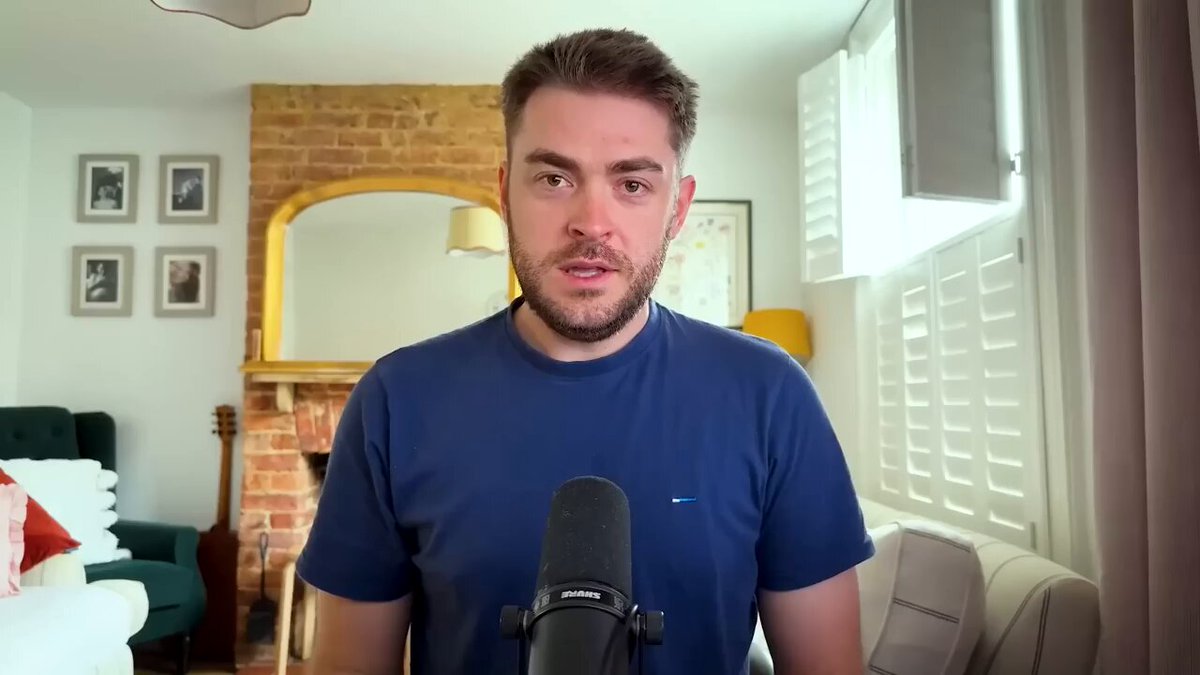
For anyone trying to understand Bittensor from first principles, this lecture is a useful place to start. Presented by Bittensor co-founder const. Learn Bittensor > Start with Bitcoin, distributed systems, incentives, > How Bitcoin leads to Bittensor Subnets coordinating AI infrastructure. Topics: // Start - Bitcoin as more than...

1,173,117 次观看 • 4 个月前 •via X (Twitter)

0 条评论

暂无评论

原始帖子的评论将显示在这里

相关视频

A Bittensor subnet just outscored Claude and Cursor on the SWE benchmark. They spent less than $1 million to get there. Anthropic spent billions. I sat down with Mark Jeffrey, one of the most connected people in the Bittensor ecosystem, and he broke down everything. Here's what most people don't know about TAO. Bittensor takes Bitcoin's mining concept and makes it programmable. Instead of solving meaningless hash puzzles, miners compete on real AI tasks. Best freelancer wins. Blockchain pays them. No company. No CEO. No permission needed. Bitcoin did this for energy. Bittensor does it for talent. The numbers are wild: • Ridges (Subnet 62) built a Claude/Cursor competitor for under $1M • Miners on Ridges were earning $50K per day at peak • The Bittensor network has 128 subnets, each like its own AI startup • Mark says 20-30 of them could become multi-billion dollar companies • Only 20% of TAO is staked in subnets right now • Stakers are earning up to 80% yield on some subnets Mark has been in crypto since 2013. He was in the Ethereum ICO. He's seen every cycle. His take: Bittensor is the most important thing to happen in crypto since Ethereum. He calls TAO the "third great coin" alongside Bitcoin and ETH. The comparison to early Bitcoin is hard to ignore. TAO just had its first halving in December. Same 21 million supply cap. Same post-halving setup. When Bitcoin went through this phase, it jumped from $250 to $10,000. Mark's conservative target for TAO by end of 2026: $3,000. But the real insight was about demand. More subnets means more TAO gets locked up. Subnet cap going from 128 to 256. Staking will absorb most of the supply. And AI agents need crypto to transact. They can't open bank accounts. Bittensor is building the rails for that. Jensen Huang just talked about Templar, a Bittensor subnet, on stage. This isn't theoretical anymore. People are using this stuff. The products on Bittensor are 10 to 100x better than what we saw in early Ethereum. And we're still early.

Jesus Martinez

73,314 次观看 • 4 个月前

We’re back for Episode 14 of TAO Talk 🚨 calanthia from Masa joins 563 and brody this week to chat about new subnets and AI agents sourcing intelligence from Bittensor! The group chats about: - $TAO -pilling AI/ML chads at NeurIPS Conference feat. const Crucible Labs Macrocosmos Manifold and Yuma - JJ teaming up with Cameron Fairchild to form Laτenτ Holdings, which will validate and help scale subnets - Crucible Labs drops a subnet analysis framework - Celium offering H100s cheaper than any other provider - Tao360 releases inaugural research report for their AI-enabled subnet analysis tool @notYourBananaa - Masa unveils the AI Agent Arena on SN59 /// Timestamps: 00:00 Intro 01:10 Subnet 42 and Agent Arena: Masa’s Subnets 03:00 Real-Time Data Networks for AI 04:20 How Masa is Building AI Agent Arenas Inspired by Gladiators 06:10 Decentralized AI and Bittensor: The Growing Ecosystem 08:15 AI Meets Web3: Masa’s Role in Revolutionizing Data Networks 10:00 The Future of AI Agents: Intelligent Societies and Real-Time Data 12:05 Why Masa Chose Bittensor 14:10 $TAO Incentives and the Future of AI Decentralization 16:25 Bittensor and the Rise of Agent Competition: Masa’s Perspective 18:00 Exploring AI Agent Societies 20:30 Creating Competitive AI Arenas: The Agent Arena Subnet Explained 23:00 Calanthia on the Challenges of Web3 AI Development 25:10 Bringing Web2 Developers into Web3: Lessons from Masa 27:30 The Evolution of AI: From Dumb Agents to Intelligent Societies 30:00 AI Agents as the Future of Interaction in Decentralized AI 34:00 The Agent Arena’s Vision: Competition, Incentives, and Innovation

TAO τalk 🥩🦍

24,929 次观看 • 1 年前

BITCOIN RAILS #46: BITCOIN MINING IN THE AGE OF AI | with MARA CEO Fred Thiel 🔗 YOUTUBE: 🌿 SPOTIFY: In response to the AI-driven shock in global demand for computing power, large players in the Bitcoin mining industry have been forced to make significant strategic shifts to remain competitive. MARA — the largest Bitcoin miner in the world by hashrate — is emerging as one of the more well-positioned beneficiaries of these changing tides, having transitioned from an “asset-light” strategy (via hosted mining at third-party facilities) to an “asset-heavy” approach (owning its own land, power, and infrastructure) just ahead of the AI compute wave in 2024/25. I sat down with MARA CEO Fred Thiel to discuss how these shifting industry dynamics are playing out in practice — as well as his perspective on how key mining-related security and infrastructure issues may evolve in the coming months and years. In this episode, we cover: — How MARA scaled from near-zero hash rate in 2020 to the largest Bitcoin miner globally by the end of 2023 — Key differences between operating Bitcoin mining facilities versus AI data centers, and where the two models meaningfully intersect — Why ownership of power generation — rather than reliance on PPAs — may represent a durable competitive edge for miners and AI data center operators over time — Why Bitcoin may be entering its “IPO phase,” and why recent price corrections could reflect increasing market maturity rather than structural weakness We also explore more technical and often under-discussed topics, such as heat reuse, open-source mining technologies, and the implications of US policy goals around Bitcoin mining. This episode offers a grounded, operator-level view of where Bitcoin mining is headed, informed by one of the most influential leaders in the public mining sector. This episode of Bitcoin Rails is powered by: — Best In Slot (Best in Slot | BRC2.0 🧑‍🍳) — the leading API for Ordinals and BRC-20 data aggregation and indexing. — Spark (Lightspark) — a statechains implementation advancing Bitcoin-powered payments. — Citrea (Citrea | Mainnet Live 🍊🍋) — a leading Bitcoin rollup technology and BitVM alliance contributor. TIMESTAMPS 📌 00:00 Intro 01:09 From Marathon Patent Group to MARA 06:35 Why Owning Infrastructure is Key 07:46 First Public Companies Mining Bitcoin 09:54 Data Centers For AI vs Bitcoin Mining Facilities 14:07 How AI Data Centers Will Look Going Forward 15:37 How MARA is Diversifying From Bitcoin Mining 19:03 Private Cloud and Data Security 22:20 The Exaion Partnership 26:03 Future of Bitcoin and AI 40:22 Innovative Approaches to AI and Bitcoin Mining 42:06 Challenges and Opportunities in Power Generation 45:38 Strategic International Partnerships 50:43 The Future of Real World Assets 53:53 Bitcoin Mining in China 57:24 Why MARA Runs Their Own Software 01:00:19 Where is Bitcoin Mining Headed 01:04:17 Benefits of Running a Mining Pool 01:07:17 Heat Reuse in Mining 01:12:23 The Role of Data Centers in Power Generation

Isabel Foxen Duke⚡️

31,411 次观看 • 6 个月前

What if #AI became as decentralized as #Bitcoin? We sat down with our new friend 3700 from Bitcoin Virtual Machine to hear what their incredible team of anons are working on - "Truly Open AI." Full interview here:👇 1: What positive impact will Layer 2s have on Bitcoin? Layer 2s on Bitcoin open up opportunities for innovation, allowing developers to build dApps and smart contracts on top of Bitcoin, expanding its utility and use cases. By submitting transactions for final settlement on the Bitcoin network, Bitcoin Layer 2 networks claim to achieve the same (or close to) level of security and decentralization as the Bitcoin blockchain. Building a separate execution layer allows them the freedom to employ several technologies (such as rollups). Layer 2 can significantly improve Bitcoin's scalability by processing transactions off-chain, reducing congestion on the main blockchain. Overall, Layer 2s on Bitcoin have the potential to address some of Bitcoin's key limitations, making it more efficient, accessible, and versatile in the long run. 2: What does the ETF approval mean for Layer 2 on Bitcoin? The approval of ETF could potentially have several implications for Layer 2 on Bitcoin: Innovation and Development: With a growing interest in Bitcoin spurred by ETF approval, there could be a surge in research and development efforts focused on enhancing Layer 2. Developers and projects may be incentivized to create new and improved Layer 2 protocols to meet the evolving needs of the expanding Bitcoin ecosystem. An ETF approval could boost mainstream Bitcoin adoption and liquidity. This influx of users may also drive interest in Layer 2 on Bitcoin as a means to enhance the scalability and functionality of Bitcoin. 3: What are the primary challenges facing L2s on Bitcoin? The interoperability of different Layer 2s and their compatibility with Bitcoin's main blockchain can be a challenge. Ensuring seamless interaction between various Layer 2 networks and the Bitcoin blockchain is essential for a cohesive and efficient ecosystem. Some Layer 2s may introduce centralization risks if they rely heavily on centralized entities or trusted intermediaries. Maintaining decentralization and censorship resistance, which are core tenets of Bitcoin, while scaling with Layer 2s is a challenge. 4: What aspects of Layer 2 solutions for Bitcoin are you most enthusiastic about? AI represents one of the cornerstones of our modern era. However, achieving a decentralized AI infrastructure, owned and managed by users, has posed significant challenges. The primary obstacle has been the limited capacity to store and execute AI models due to size and computational limitations. To address this challenge, we propose a new blockchain architecture enabling developers to deploy their own Bitcoin Layer 2 solutions tailored specifically for AI tasks, called Truly Open AI. These Layer 2 blockchains are optimized to handle computationally intensive tasks, such as matrix multiplication, directly on-chain. These Bitcoin Layer 2 solutions offer exceptional throughput, minimal latency, and cost-effectiveness. AI dApps are programmed as Solidity smart contracts, ensuring they operate precisely as intended, free from interference or manipulation. Our BVM AI Contracts Library simplifies the integration of neural networks into dApps, empowering developers to embed AI seamlessly. In summary, I'm particularly enthusiastic about the potential of Layer 2 solutions for Bitcoin to revolutionize decentralized AI by providing scalability, security, and accessibility. 5: How is your Layer 2 different from others being built? BVM distinguishes itself as a Modular infrastructure that empowers thousands of distinct Bitcoin Layer 2 networks, spanning Gaming, DeFi, Social, and AI applications. We're continuously enriching the BVM Module Store with new modules to enhance its capabilities. With each new module, builders gain access to a wider array of tools to explore different use cases on the Bitcoin network. Recent additions include the Filecoin module for affordable storage and the AI Contracts Library for constructing AI-powered Bitcoin Layer 2 chains. We're also gearing up to release a ZK roll-up module in the coming weeks to offer an alternative to the standard optimistic roll-up. We aim to simplify the process of launching a Bitcoin Layer 2 network customized to specific requirements. Think of it as a SaaS offering with predefined best practices. Whether it's a DeFi Bitcoin Layer 2 or a GameFi Bitcoin Layer 2, we provide default solutions tailored to each use case. We're dedicated to expanding the BVM ecosystem by incentivizing more builders to join the Bitcoin network. Through various programs and grants, we support builders in covering their operational costs for Bitcoin Layer 2. Additionally, we offer rewards akin to 'L2 mining' to those who contribute to expanding the user base and total value locked on the network. In summary, BVM stands out with its modular infrastructure, tailored solutions, and efforts to grow the Bitcoin ecosystem.

Supra

83,516 次观看 • 2 年前

$TAO just reclaimed the #1 AI crypto spot. Most people saw the headline. Almost nobody understands what it means for the price. Here is the data. $NEAR built real infrastructure. Partnerships. Developer activity. A legitimate ecosystem. $TAO just walked past it anyway. Not because of hype. Because Bittensor is the only AI crypto with a functioning marketplace for machine intelligence where supply, demand, and price discovery are all happening on-chain right now. That is not a roadmap. That is a live network. The numbers. 120+ subnets running today. $1.4B+ total ecosystem value. Chutes AI subnet: 150B+ tokens per day. Grayscale GTAO Trust: already live. Single subnet listed on the marketplace at $970,000 asking price. Subnets are becoming assets. The market is starting to price that. What the emission data is telling you. Emission rate is the network's vote on where the most valuable work is being done. When a subnet gains emission share, the collective stake-weighted intelligence of the network has decided that subnet's output is worth more of the TAO supply. Chutes AI gaining emissions while processing 150B tokens daily is not a coincidence. The network is directing capital toward proven output before any headline announces it. Why mainstream money changes everything. James Altucher just launched bluetao. ai, a TAO-powered ChatGPT alternative built directly on Bittensor subnets. He did not just buy the token. He built a product on the network. Products built on a network create structural demand for the native asset. That is how every successful L1 cycle has worked. Bittensor is now getting that builder activity from outside the crypto native world. That is a different signal from a price target tweet. Why $TAO is structurally different. Most AI tokens are betting their chain becomes the preferred environment for AI development. $TAO is not betting on becoming infrastructure. It already is. 120+ subnets running. Miners competing. Validators setting weights. Alpha tokens being priced in real time. The difference between $TAO and every other AI crypto is the difference between a city under construction and a city people are already living in. Van de Poppe said $1,000 to $2,000 in 12 months. He gave you the narrative. The subnet emission data is the mechanism he did not explain. Now you have both. $TAO at $313 with a $3.42B market cap is still early relative to what this network is actually processing. Centralised AI infrastructure companies are valued at hundreds of billions for processing far less novel work than a decentralised intelligence marketplace running 120+ competing subnets simultaneously. The repricing has not happened yet. The subnet marketplace listing at $970,000 is telling you something the price has not caught up to yet.

2xnmore

12,150 次观看 • 1 个月前

Covenant Labs just did a 90-minute AMA breaking down their 3 Bittensor subnets. templar. basilica. grail. Pre-training, compute, and post-training under one roof. Most people missed it. Here's everything they said. Covenant is building what they call the "end to end intelligence continuum." Three subnets. Three layers of the AI stack. All permissionless. Templar (SN3) handles decentralized pre-training. Basilica (SN39) handles compute. Grail (SN81) handles RL post-training. Sam Dare, the lead, put it bluntly. Decentralized training is "humanity's last dance." Not about beating OpenAI head to head. About creating optionality. About making it cheap enough for anyone to train models. The gap between academia and frontier labs is growing exponentially. Researchers can't afford to experiment. The actual training run costs 5% of the reported budget. The other 95% is experimentation. If Covenant cracks cheap training, that entire surface area opens up. On Templar specifically: • Hit 39% emission on Bittensor. Highest since Apex was the only subnet on the network • Covenant-72B trained permissionlessly with 70+ contributors on commodity internet • 1.1 trillion tokens processed. No centralized data center • Performance competitive with LLaMA-2-70B On Grail, something flew under the radar. They built Pulse. A weight synchronization method that compresses model updates by 100x. • In RL post-training, only ~1% of weights update per step • Pulse exploits that sparsity. Lossless compression • Prime Intellect's comparable system took 14 minutes to sync a 30B model • Pulse makes decentralized RL training actually feasible at scale • Already used by Cursor The lead researcher on Grail said they've trained on math, code, and GPU kernels. Got 40-60% improvement on benchmarks. Working toward agentic training with 100K+ token context and 30B+ parameter models. On Basilica, the compute subnet: The team was blunt. Just reselling GPU hours is a 5-10% margin game. Traditional compute providers already do that. Their play is value-added services. • "GPU as code." No dashboard. No UI. Agents interact via SDK • Custom scheduler that places workloads across heterogeneous hardware • Verification checks for GPU, CPU, bandwidth, memory, storage, and OS security • Partnerships with providers like Mass Compute for 10-20% below market pricing • Miners compete on useful infrastructure, not just GPU hours Sam then went on a rant about the miner burn debate. His take: Bittensor had to grow up. dTAO introduced investors. The old "miners are God" philosophy doesn't hold. • Subnet owners have a duty to protect token value • Miners are a resource optimization exercise, not a cost reduction exercise • 100% miner emissions on compute subnets = immediate sell pressure • The 41% miner allocation is arbitrary. Different business models need different splits • Fish (who started burns) agreed. Burns usually mean the validation isn't mature enough The bigger point. You can't police burns. Subnets just send to their own keys instead of the burn address. Subnet 28 does exactly that. Sam's position: judge subnets on outcomes, not process. Const has changed the protocol 9-10 times in 2 years. That iteration speed is Bittensor's actual moat. The whole Covenant thesis is playing out in real time. TAO is up 100%+ in a month. Jensen Huang name-dropped the network. Grayscale has an ETF filing. But the real story is three subnets quietly building every layer of decentralized AI.

Jesus Martinez

26,642 次观看 • 3 个月前

🎙️Freedom Tech vs. The State Ep. 83 with Marty Bent My guest today is Marty Bent, a writer, investor, and one of the most influential voices in the Bitcoin media ecosystem. As the founder of the popular podcast and newsletter TFTC (Truth for the Commoner) and managing partner at Ten31, a venture firm investing exclusively in Bitcoin infrastructure, Marty has helped shape the conversation around Bitcoin’s future for nearly a decade. In this episode, Marty walks us through his journey from unemployed blogger to leading Bitcoin commentator and how he's leveraging AI to scale his media output across platforms. We explore the impact of open protocols like Nostr, the potential of podcasting 2.0, and the need for content authentication in the age of deepfakes. Marty also shares how Bitcoin is solving real-world energy problems, from stranded power to nuclear buildouts, and why self-custody and decentralization remain essential to Bitcoin’s resilience. ► This episode is part of the "Bitcoin Vegas 2025 Special" in collaboration with Ben Samocha, Founder of Israel’s CryptoJungle and Crypto Talks podcast. ► If you got value, please like, comment, share, follow and support my work. Thank you! 00:00 Coming Up... 01:10 Welcome from Bitcoin Vegas 01:58 Introducing Marty Bent 03:19 Vegas, gambling, and societal decay 04:50 The origins of TFTC and Marty's media journey 09:00 Using AI to grow and streamline content 14:22 Onboarding newcomers through relatable content 15:56 Open-source media, Podcasting 2.0, and Nostr 20:36 Content authenticity in the AI age 25:05 Most influential podcast guests for Marty 30:08 Why Ten31 invests only in Bitcoin infrastructure 35:24 Bitcoin mining, climate realism, and energy use 43:53 Biggest threats to Bitcoin: apathy and custody risks 49:15 What trends will accelerate Bitcoin adoption 54:29 Bitcoin gifting stories and early advocacy 56:17 What gives Marty hope >>

Efrat Fenigson

49,897 次观看 • 1 年前

Hey everyone, today I want to introduce a project that’s aiming to redefine how we access compute for AI — it’s called GPUAI. 🔶 GPUAI: Unlocking Global GPU Power for the AI Era GPUAI isn’t just another GPU marketplace or leasing service. It’s a fully decentralized protocol that connects idle GPU resources around the world — from gaming PCs to data center clusters — and transforms them into a high-performance compute network for AI workloads. 🧠 Why does it matter? Right now, the biggest bottleneck in AI isn’t algorithms — it’s access to compute. Training and running models requires massive GPU power, but it’s locked up in centralized cloud platforms, expensive and hard to access for smaller teams. With GPUAI, anyone can tap into a global GPU pool that’s: ✅ Fully decentralized ✅ Reputation-based and smart contract coordinated ✅ Encrypted and secure ✅ Token-incentivized — meaning contributors get rewarded in $GPUAI 📈 For developers, it’s a flexible way to access GPU compute for training, inference, and more — without cloud lock-in. 💰 For GPU owners, it’s a chance to monetize idle hardware that would otherwise go unused. The protocol is live, the apps are active, and the ecosystem is growing fast. 🌐 Try it yourself at 📖 Learn more on 🎮 Play our community games at This is real infrastructure for the future of AI, not hype. Follow them and explore their mission of decentralized computing at Tell me what you think - if you have a GPU, you can start profiting now. #GPUAI #Web3Infrastructure #AIComputing #DePIN #Decentralization

The Crypto GEMs

69,984 次观看 • 1 年前

I’m currently watching Raoul Pal's latest RV podcast on crypto in 2026, and the summary is 2026 is the year of AI He said "Barry Silbert is going to be right, and $TAO is gonna go up" I found it quite funny that most of the things and features they were talking about already exists on Bittensor They highlighted > data marketplaces > owning your data and selling it to models > AI integrated into trading, analytics, and decision-making > Claude-like models being plugged directly into products And said they haven’t really seen this done properly on a blockchain level yet That's the thing alot of people are missing Because the blockchain that’s already decentralizing intelligence and incentivizing it is Bittensor What they’re describing for 2026 already exists on TAO The only problem is how to go bigger and drive adoption > decentralized data and intelligence markets > open competition between models > real incentives for performance > AI systems that can plug into finance, research, prediction, and analytics Even the “Claude integration” they talked about? We already see dope models being used inside subnets, competing, evaluated, and rewarded openly. This is why the Bitcoin 2012 comparison keeps coming up Small builder community High signal Hard to understand No clear valuation framework yet But the difference this time is that the asset isn’t money It’s intelligence $TAO is still under $300, way cheaper than $ZEC right now Not holding TAO long term, while the world is clearly moving toward AI-native economies, is a dumb mistake at The question isn’t if intelligence becomes decentralized It’s who owns the rails when it does So far, only one network is actually building that Bittensor ($TAO)

Angry Davee

10,613 次观看 • 6 个月前

🌋 Ripple & Amazon Explained | AI x Blockchain Infrastructure Deep Dive Ripple just showed how AWS Bedrock can support a 24/7 multi agent operating system for the XRP Ledger. The objective is faster log to code correlation, quicker issue triage, lower operational risk, and smoother long term scaling. This is not a partnership announcement. It is forward looking exploration focused on future proofing XRPL as mission critical infrastructure. Now zoom out. AI and DLT are converging fast, and the common thread is data provenance and verifiable trust. Algorand Native Python support and real presence in traditional developer ecosystems. Python is the language of AI, and Algorand leaned into that early. Hedera New Python SDK and agent tooling, plus verifiable compute. Accenture, NVIDIA, and EQTY Lab anchoring AI verification to Hedera Consensus Service is about auditability and authenticity, especially for public-sector systems. Constellation Common Crawl is foundational AI data. Constellation is working on provenance and audit history for scraped internet data, exactly where this is heading. Bittensor A decentralized AI network where models compete and get rewarded. If you talk crypto x AI, this has to be part of the conversation. Think the AI analogue to Bitcoin. Solana Always-on markets and tokenized equities accelerating. Ondo plans to expand tokenized stocks and ETFs to Solana in early 2026. XRP market structure CME adjusting XRP options strike listings reflects real liquidity and hedging demand. This is risk management infrastructure, not speculation. Plus: FXRP live for spot trading on Hyperliquid via Flare signals expanding cross-chain execution paths. Bottom line: AI without data provenance is untrustworthy, DLT without utility stays purely speculative. The convergence of real tech is happening, and it will define our future world. Networks mentioned: XRP | HBAR | ALGO | DAG | TAO | SOL | LINK | XDC | FLR | AVAX | CC

King Solomon (Ryan Solomon)

20,373 次观看 • 6 个月前

AI is changing sports. Here is how. I sit down with Max Sebti, , founder and CEO of Score, and he gives me the latest about how sports is changing due to AI. What will you learn from this interview? 1. How AI Is Transforming Sports Using computer vision to analyze every movement, event, and play in real-time. Moving beyond basic stats to understanding impact and intent on the field. 2. What Makes SCORE Different Built on decentralized AI (Bittensor) and collective intelligence. Designed to work even with low-quality video—enabling access for high schools and amateur clubs. 3. Real Use Cases Player tracking, formation analysis, injury prediction, and in-game decision support. Visual tools like heat maps and frame-by-frame breakdowns. 4. Applications Beyond Pro Teams Empowering grassroots teams and scouts with elite-level insights. Parents filming Sunday league games could unknowingly be training data sources. 5. Fantasy Sports Integration AI-powered projections and analysis for fantasy leagues. Build-your-own tools for fans who want a data edge. 6. Injury Risk Detection Early signals from movement patterns that correlate with higher injury potential. Long-term value for athlete health and coaching adjustments. 7. Preparing for the AR/3D Future Compatible with lightfield displays and AR glasses (think Vision Pro). Real-time stats layered over gameplay during broadcasts. 8. The Role of Betting in Driving Innovation How sportsbooks and gambling tech are quietly pushing AI in sports forward. Inside view on how that funding and data are transforming scouting and coaching. 9. Startup Insights Bootstrapping vs. raising capital in deep tech. Hiring elite AI talent without spending $10M+ like Meta—thanks to open systems like Bittensor. 10. The Bigger Vision Creating a universal scoring system for athletes—objective, data-rich, and fair. Challenging legacy scouting reports with measurable intelligence.

Robert Scoble

65,908 次观看 • 1 年前

A subnet founder allegedly walked away with $10M in TAO and torched his own community in the process. On TWiST, Mark Jeffrey of Stillcore Capital joins us to break down what really happened with Templar/Covenant, the overall fixes that co-founder Const has proposed, and why Bittensor’s incentive engine may have been a victim of its own success. PLUS we’re joined by subnet operators Will Squires and Steffan Cruz (of MacroCosmos) and Ken Miyachi of BitMind to get their perspective on the controversy, and to demo the exciting projects they’re still building on the blockchain. 0:00 Mark Jeffrey joins the show! 2:18 How Mark Jeffrey learned about Bittensor. 6:17 Plaud: If your work depends on conversations — interviews, meetings, calls — you need a Plaud NotePin. You can check it out at and use code TWIST for 10% off! 7:22 Mark Jeffrey's Bittensor investments. 9:25 Check out our discussion with Nova: 10:16 Sentry - New users can get $240 in free credits when they go to and use the code TWIST 10:41 Check out Ridges! 11:53 How trading alpha tokens works on Bittensor 12:44 Subnet drama: what happened? 16:01 Do subnet owners have too much power? 18:33 Check out our conversation with Sam Dare (2268): 19:10 How Sam Dare should've handled walking away (per Mark Jeffrey) 20:02 Deel - Founders scale faster on Deel. Set up payroll for any country in minutes, hire anyone anywhere, get visas handled fast, and get back to building. Visit to learn more. 23:29 Who should subnets be owned by? 24:02 Ken Miyachi from BitMind joins the show 30:56 Netsuite - Get the free business guide Demystifying AI at 31:06 Ken's $3M raise & investors (Arch, Canonical, Mechanism) 33:18 Token vs. equity: how to think about a subnet investment. 41:57 Will Squires and Stefan Kruse of MacroCosmos join the show 42:54 How MacroCosmos lets anyone become a compute provider. 56:29 Stefan on the Covenant drama: "disappointing, but solvable" 1:02:11 Off-duty with J-Cal, Mark Jeffrey, and Lon Harris 1:02:48 Bieber vs. Carpenter: does Coachella owe you a spectacle? 1:15:20 Jason says Staples should pay the "Staples baddie" $1M/year cc: @jason, Lon Harris, Mark Jeffrey, const, Distributed State, templar, covenant, Macrocosmos, Apex・SN1, IOTA ・ SN9, Ken Jon, BitMind BitMindAI 🎥 Watch the full episode here 👇

This Week in Startups

29,964 次观看 • 3 个月前

🚀 Three Next-Gen AI & Web3 Projects Are Launching on Mindo AI A new chapter for community-powered intelligence, prediction markets, and open AI infrastructure The AI + Web3 landscape is entering a decisive phase — one where real usage, real revenue, and real ownership matter more than hype. Today, MindoAI is proud to welcome three groundbreaking projects that represent this shift clearly and powerfully: Perceptron Network Space DeepNode AI Each project tackles a different bottleneck in the AI economy — data, forecasting, and infrastructure — but they all share the same vision: decentralization, community ownership, and sustainable value creation. Let’s take a deeper look 👇 🧠 Perceptron Network The world’s first community-powered AI data engine Perceptron Network is redefining how AI data is sourced, validated, and delivered. Instead of relying on expensive, closed, and slow legacy data providers, Perceptron unlocks community-powered data pipelines that are: Faster Cheaper Revenue-generating from day one This isn’t experimental AI infrastructure — Perceptron already serves real clients with real revenue, proving that decentralized data engines can outperform traditional incumbents. Why Perceptron matters: AI models are only as good as their data Centralized data monopolies slow innovation Communities can produce higher-quality data at scale By aligning contributors, validators, and clients through incentives, Perceptron turns unused human and network potential into a living data engine for AI. Launching on Mindo AI gives Perceptron access to a broader AI-native community — accelerating adoption, partnerships, and ecosystem growth. 🌌 intodotspace The first 10× leveraged prediction market on Solana intodotspace is pushing the boundaries of on-chain prediction markets. Built by the $1.5B UFO team, this platform introduces: 10× leveraged predictions Ultra-fast execution on Solana Deep liquidity and composable market design The market’s confidence is already clear — the project completed a record-breaking raise that was oversubscribed by 1,360%. What makes intodotspace different: Leverage amplifies conviction, not noise On-chain transparency replaces opaque odds Markets become real-time intelligence engines Prediction markets are often called “truth machines.” intodotspace upgrades them into high-signal, high-efficiency forecasting layers — useful for traders, protocols, DAOs, and even AI systems that need probabilistic insights. Launching on positions intodotspace at the intersection of AI-driven decision-making and on-chain market intelligence. 🌐 DeepNode AI Infrastructure for open intelligence DeepNode AI is tackling one of the biggest problems in modern AI: centralized ownership. Today, AI is dominated by a handful of corporations. DeepNode flips that model by building open intelligence infrastructure where: Anyone can deploy AI models Builders earn directly from usage Intelligence is co-owned, not extracted Backed by leading validators, miners, and ecosystem builders, DeepNode transforms AI from a closed monopoly into a shared utility. DeepNode’s core philosophy: “Own what you build — or someone else will.” This is more than infrastructure. It’s an economic redesign of AI itself: Builders keep ownership Contributors share upside Networks replace platforms Launching on connects DeepNode to creators, researchers, and communities who believe intelligence should belong to everyone — not just Big Tech. 🤝 Why This Matters for With the launch of Perceptron Network, intodotspace, and DeepNode AI, #MindoAI is rapidly becoming: A hub for AI-native Web3 innovation A launchpad for real, revenue-backed projects A meeting point for data, markets, and intelligence infrastructure These three projects don’t compete — they complement each other: Perceptron supplies data intodotspace produces market intelligence DeepNode powers open AI execution Together, they form the backbone of a decentralized intelligence economy. 🔥 The future of AI is open, composable, and community-owned — and it’s launching now on Which of these projects are you most excited about? And how do you see decentralized intelligence reshaping the next AI cycle? 👇 Share your thoughts and join the conversation.

Hồng Ngọc | Ruby💎

12,837 次观看 • 5 个月前

🚨$OSS is not an AI company. → It is the hardware that lets AI exist where the cloud cannot. Most investors don’t understand $OSS because they think AI = software. $OSS builds the physical “brains” that run AI in extreme environments where cloud computing fails. Jets. Ships. Tanks. Drones. Space. Hospitals. That’s the game. 1) What $OSS actually is $OSS (One Stop Systems) designs rugged high-performance computers and storage systems for AI at the edge. Meaning: They bring data-center-level computing power into harsh environments. Their products include rugged servers, GPU accelerators, storage arrays, and expansion systems used for AI, sensor processing, and autonomous systems. In simple terms: Cloud AI = brain in a safe building. $OSS AI = brain inside machines operating in chaos. 2) Why this is crucial Most AI today runs in data centers. But the future of AI is not in the cloud. It’s on: • autonomous vehicles • military systems • drones • ships • industrial machines • medical devices These systems cannot wait for the cloud. Latency, connectivity, security, and survival demand local AI. $OSS delivers “data-center performance at the edge” across land, sea, and air. Without companies like OSS, autonomous systems simply don’t work. 3) What OSS actually does: Think of OSS as building AI engines that survive reality. 🌊 SEA example: naval surveillance aircraft and ships. $OSS supplies rugged storage and compute systems for U.S. Navy reconnaissance aircraft to collect and process massive sensor data in real time. Translation: Instead of sending raw data back to base, the aircraft analyzes threats instantly onboard. $OSS = the onboard AI brain. 🪖 LAND example: military vehicles and tactical operations. $OSS delivers high-performance servers and FPGA systems for mobile military intelligence platforms used by the U.S. Department of Defense. Translation: Tanks and vehicles detect threats, process sensor data, and make decisions locally. $OSS = the battlefield computer. ✈️ AIR example: airborne AI. $OSS builds GPU-accelerated servers designed for aircraft, described as a “datacenter in the sky.” Translation: Jets and drones run AI models mid-flight. $OSS = flying supercomputers. 🚀 SPACE example: $OSS hardware is designed for extreme environments and autonomous systems across aerospace and defense. Translation: Future satellites, space drones, and autonomous spacecraft need onboard AI. $OSS = the computing core of autonomous space systems. BONUS: CIVILIAN & COMMERCIAL $OSS systems are used in: • autonomous trucking and farming • industrial automation • healthcare imaging • energy and mining • telecom and 5G Example:A medical imaging company uses $OSS hardware to run real-time AI diagnostics in next-gen breast cancer scanners. $OSS = AI where milliseconds matter. 4) Who their customers are (pattern, not names) $OSS sells to: • defense primes • government programs • industrial OEMs • AI infrastructure companies • medical device manufacturers These customers share one trait: They cannot rely on the cloud. That’s why $OSS exists. 5) The mental model that makes $OSS obvious $NVDA = AI chips $PLTR = AI software $OSS = AI hardware in the real world If AI is electricity, $OSS builds the generators that work in storms. Most investors understand AI software. Few understand AI infrastructure at the edge. That gap is the opportunity. 6) The real thesis The world is moving toward: • autonomous warfare • autonomous vehicles • real-time AI systems • distributed intelligence All of that requires rugged edge computing. $OSS is positioned exactly there. Infrastructure. The hardest layer to build. And often the most valuable.

Black Panther Capital

30,138 次观看 • 5 个月前

🎙 The Sujal Show Ep. 10: Yat Siu “The Man Behind Sandbox, Axie Infinity & 600+ Crypto" Animoca Brands co-founder Yat Siu reveals his 400x return, why altcoins could beat Bitcoin, how agentic AI will reshape distribution, why he loves bear markets, and the 3 tokens he’s bullish on. We Discussed on The Sujal Show: - How Animoca went from mobile games to 600+ crypto investments - How a $300M seed round became a $10B valuation - How CryptoKitties crashing Ethereum in 2017 changed everything - 4,000% returns & his biggest investing mistake - How Apple, Google, and X censor crypto and how agents break through - Why he’s more bullish on utility tokens than memecoins - Why he believes the 4-year cycle isn’t dead - His 3 filters for finding Top projects - Why education is a $7‑10 trillion market - Why he is bullish on agentic AI, education, and digital identity - 3 altcoins he is bullish on - Next BIG narratives in crypto - Why he avoids prediction markets TIMESTAMPS: 00:00 Intro 01:56 Who is he & what does he do today? 02:27 3 things he’s most proud of in 35 years 07:06 First heard about Bitcoin in 2014, why it didn’t click 10:30 Next big crypto narrative (2026 & beyond) 18:22 AI agents: what comes after automation? 26:07 AI altcoins with massive potential 28:43 Biggest return from 600+ investments 36:05 Why bear markets create real opportunities 37:06 How to invest $1K–$10K in crypto (beginner portfolio) 40:00 Will altcoins outperform Bitcoin? 49:09 Framework for finding 100x projects 51:51 Biggest loss & lessons learned 54:13 How to start a career as a VC (step-by-step) 56:01 Final advice before leaving the world He turned $4M into a billion‑dollar ecosystem. Now he’s betting on AI agents and digital identity. Watch the full episode 👇

Sujal Jethwani

20,842 次观看 • 3 个月前

If intelligence is the log of compute… it starts with a lot of compute! And that’s why we’re scaling our GPU fleet faster than anyone else. Just last year, we added over 2 gigawatts of new capacity – roughly the output of 2 nuclear power plants. And today we’re going further, announcing the world's most powerful AI datacenter, located in southeastern Wisconsin. Fairwater is a seamless cluster of hundreds of thousands of NVIDIA GB200s, connected by enough fiber to circle the Earth 4.5 times. It will deliver 10x the performance of the world’s fastest supercomputer today, enabling AI training and inference workloads at a level never before seen. For AI training workloads, you need compute at exponential scale. That’s why we designed the datacenter, GPU fleet, and network together as one integrated system. This ensures a single job can run from day 1 at exponential scale across thousands of GPUs. Fairwater uses a liquid-cooled closed-loop system for cooling GPUs that requires zero water for operations after construction. And we’re matching all of the energy that is consumed with renewable sources. And of course, it is just one of several similar sites we’re lighting up across our 70+ regions. We have multiple identical Fairwater datacenters under construction in other locations across the US, in addition to our AI infrastructure already deployed in over 100 datacenters around the world, powering model training, test-time compute, RL tuning, and real-time inference at global scale. Too often during times like this, people go with the current and only later wonder, how did we get here? With Fairwater, we're charting a new path: doing the hard engineering work, bringing compute, network, and storage into one highly scaled cluster, and designing closed-loop energy systems to meet real-world computing needs. And partnering with local communities to ensure it's thoughtfully done in a way that is sustainable, creates new jobs, and expands opportunity. We are thrilled to see this take hold in Wisconsin, and we are just getting started.

Satya Nadella

2,020,601 次观看 • 10 个月前

El Salvador: Pioneering a Bright Future Through Innovation and Vision In recent years, El Salvador has emerged as a beacon of innovation and progress under the visionary leadership of President Nayib Bukele. From groundbreaking legislation to transformative initiatives, the country has been at the forefront of ushering in a new age of growth and development. In this article, we delve into El Salvador role as a global leader of Bitcoin and the positive trajectory for its economic and technological future El Salvador made history by being the first country to enact the Bitcoin Law, establishing a legal framework for the use of cryptocurrency in everyday transactions. This landmark legislation was followed by the creation of the Strategic Bitcoin Reserve, signaling the country's commitment to embracing digital currency as a means to drive economic empowerment and financial inclusion. Further cementing its position as a trailblazer in the digital realm, El Salvador unveiled the first Bitcoin Embassy, a hub for fostering innovation and collaboration within the cryptocurrency ecosystem. In a bold move, the country also implemented the first AI Law and Robot Law, setting the stage for the ethical and responsible integration of artificial intelligence and robotics in various sectors. Expanding its technological footprint, El Salvador introduced the cutting-edge B300 chips, demonstrating its commitment to advancing digital infrastructure and connectivity. In a bid to foster financial literacy and empowerment, the country launched the first financial literacy program for public schools, equipping the younger generation with the tools to navigate the complexities of modern finance. El Salvador's visionary approach extended beyond technology and finance with the introduction of the first Blue Ocean Strategy of the 21st century, charting a new path for sustainable growth and innovation. President Bukele's leadership has been instrumental in shaping El Salvador's trajectory as a forward-thinking nation that embraces change and progress. President Bukele, hailed as the first Great Man in modern history by many, has been instrumental in spearheading these transformative initiatives and propelling El Salvador into a new era of technological advancement and economic prosperity. His vision and leadership have not only earned global recognition but have also inspired a wave of optimism and innovation within the country. Bitcoin Historico: El stage is set for a groundbreaking moment in San Salvador as El Salvador gears up to host the highly anticipated "Bitcoin Histórico" event on November 12 and 13, 2025. This event signifies a pivotal moment not only for the country but for the entire global Bitcoin ecosystem. With the National Bitcoin Office (ONBTC) at the helm, "Bitcoin Histórico" is not simply a conference on financial technology; it is a cultural, educational, and economic festival designed to bring Bitcoin closer to all Salvadorans. This event will shine a spotlight on El Salvador's trailblazing role as a pioneer in the adoption of cryptocurrency. Gathering some of the most notable figures in the Bitcoin ecosystem, including luminaries like Don Ricardo Salinas Pliego, Max Keiser, Milena Mayorga, ZUBY:, Jeff Booth ⚡️, Jack Mallers, Pierre Rochard, Jimmy Song (송재준), isa⚡️, Bitstein, Darin Feinstein, Giacomo Distributed-AuthoritariPuritan Zucco⚡️🌋🧀, …::: jon, wiz 🇸🇻, Fadi Elsalameen فادي السلامين ⚡️, Knut Svanholm ∞/21M, Preston Pysh, Efrat Fenigson, Lina Seiche, Eric Yakes and Stacy Herbert 🇸🇻🚀, "Bitcoin Histórico" is poised to be an unprecedented gathering of minds. Through keynote addresses and panel discussions, attendees will explore topics such as the future of money, monetary sovereignty, and the cultural implications of decentralization. However, what truly sets "Bitcoin Histórico" apart is its inclusive nature. The event promises a wide array of activities for attendees of all ages, from face painting for children to mural creation for youth. The highlight of the festival will be a professional mural painted by graffiti artists, showcasing Salvadoran creativity and innovation. For those eager to delve deeper into the world of Bitcoin, free classes will be offered by students from the CUBO+ program, providing an educational opportunity for all. Moreover, the event will feature live translations of keynote speeches on giant LED screens, ensuring that the insights shared reach a wide audience. "Bitcoin Histórico" is a celebration of not just technology but also of culture and community. By opening its doors to the public and offering free activities, El Salvador aims to democratize access to Bitcoin knowledge and foster a spirit of innovation among its citizens. As El Salvador continues to make strides in the realm of cryptocurrency, "Bitcoin Histórico" stands as a testament to the country's commitment to embracing the future. By hosting this historic event, El Salvador is not only solidifying its position as a global epicenter of Bitcoin but also projecting a vision of optimism for its economic and technological future. "Bitcoin Histórico" is more than an event; it is a declaration that a new era requires new ideas and new thinkers. Join Bitcoin Historico in San Salvador on November 12 and 13, 2025, as El Salvador embark on this transformative journey towards a decentralized future. To learn more about the event and secure your spot, visit and be a part of history in the making. Embrace the future with El Salvador, the pioneer of Bitcoin country. For further updates, follow The Bitcoin Office and Stacy Herbert 🇸🇻🚀 on Twitter. "Come to Visit El Salvador and make history, we invite you to live “The Salvadoran Dream” where we dare to dream, dare to innovate, dare to believe in the limitless potential of a nation that is rewriting its own story. El Salvador: where innovation meets inspiration, and the future is ours to shape." #Bitcoin #ElSalvador #NayibBukele

Translating El Salvador

23,975 次观看 • 9 个月前

"They are not going to be able to raise rates." Jordi Visser (Jordi Visser) ran capital at Weiss Multi-Strategy Advisers as CIO. 30 years on Wall Street. Built one of the first volatility-arbitrage frameworks for systematic hedge funds. Managed billions through three crises, never had a thesis-driven blow-up year. "Interest payments on US debt are now bigger than what we spend on defense. Over a trillion dollars a year. This is what Bitcoin was made for." We cover: — Why the Fed is mathematically trapped and how the trillion-dollar interest math forces every policy decision from here — Why "bubble talk" is intellectually lazy: PE goes UP in bubbles, not down, and right now PE is contracting while earnings grow 27% — The AI-agents-eat-tokens thesis: why agentic AI doesn't care about dollars and what that means for compute-backed assets — Why belief is harder than fundamentals: fundamentals come and go, belief systems don't, and which belief is breaking in 2026 — The Bitcoin call no other macro guy on Wall Street will make publicly: new all-time highs before year-end — Why most hedge funds will underperform Bitcoin this cycle and the structural reason it has nothing to do with crypto — The single chart that made Jordi go from skeptic to allocator and why it hasn't reversed — What the 2020-2026 monetary regime actually was, named correctly for the first time Thanks to Jordi for coming on New Era Finance Podcast. Highlights: 00:00 - Intro 00:42 - Bitcoin Lagging 03:16 - AI Investment 07:14 - Price vs Narrative 12:15 - Market Dynamics 21:28 - AI Trading 25:24 - AI Democratizes Wealth 36:26 - Crypto Transition 39:40 - Elliott Waves 44:08 - Banana Zone 49:37 - Fundamentals vs Technicals 55:14 - Ethereum Future

Michaël van de Poppe

639,605 次观看 • 2 个月前