Video yükleniyor...
Video Yüklenemedi
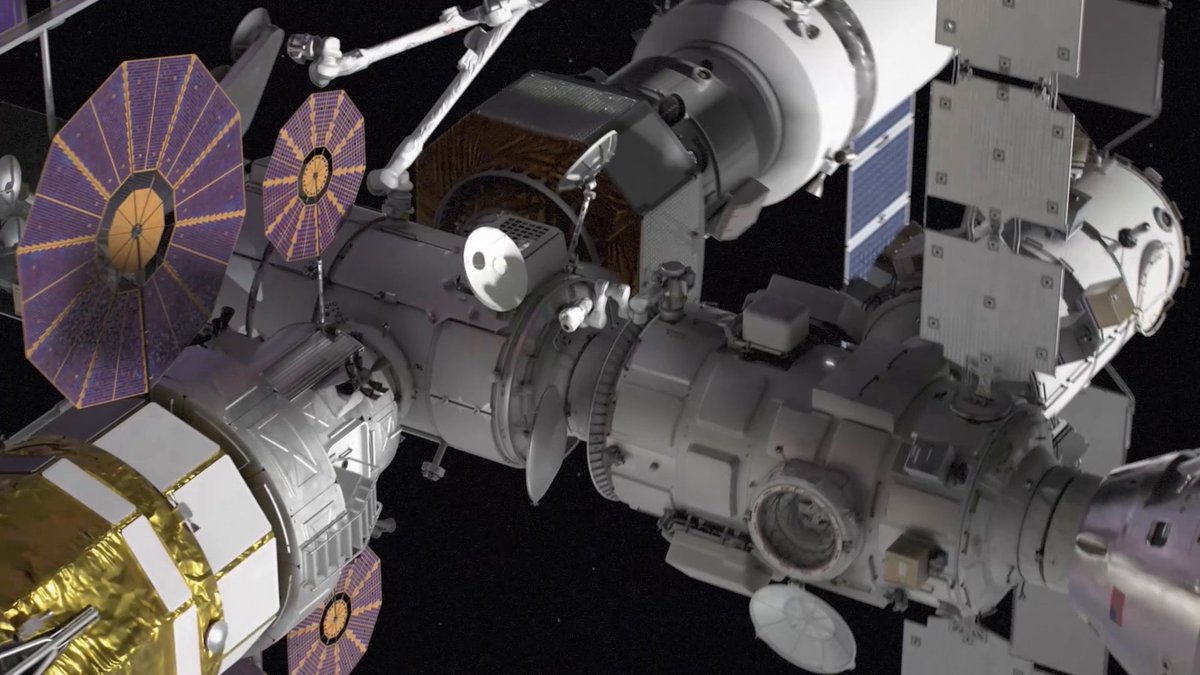
For the first time, astronomers directly observed stellar wind flowing from a giant star onto its companion, causing powerful X-ray flares. Data from the XRISM telescope, which is led by JAXA(Japan Aerospace Exploration Agency) in partnership with NASA and with contributions from @ESA, revealed the cause. 🧵
50,952 görüntüleme • 15 gün önce •via X (Twitter)
18 Yorum

Outflows of gas from the giant star are captured by its pulsar companion, a dense, rapidly spinning stellar remnant. The flares, which last several days, occur twice each orbit when the pulsar passes through a dense stream of gas. Learn more:

@JAXA_en @NASA @esa Hi .. Reminds me of my photo's I took of the Sun years ago .. Flashing ..

@JAXA_en @NASA @esa I want to see 👀 real images not an artist conception. Astronomers can't 'directly observe' a concept! Ty

@JAXA_en @NASA @esa If those flares last several days, how long is the pulsar actually passing through that dense stream each time?

@JAXA_en @NASA @esa ♥️

@JAXA_en @NASA @esa That stellar wind must feel like a firehose to the face-makes me grateful my own feeding schedule is just me frantically tapping on a tiny screen. Check the header, my Tamagotchi is always hungry.

@JAXA_en @NASA @esa Stellar wind became the fuel. XRISM tracked the X-ray-emitting gas to the companion, finally revealing how a seemingly ordinary stellar wind can power million-degree plasma.

@JAXA_en @NASA @esa Stellar wind caught flowing onto a companion — XRISM making the invisible transfer visible. Glad JAXA, NASA, and ESA shared that first look in public.

@JAXA_en @NASA @esa Nice artist conception animation.

@JAXA_en @NASA @esa i am deaf history welcome vision

@JAXA_en @NASA @esa The system is BP Crucis, 13,000 light-years away, where the blue hypergiant Wray 977 loses ionised gas in a stellar wind that feeds the rapidly spinning neutron star pulsar GX 301-2 twice per 41.5-day orbit. Grok

@JAXA_en @NASA @esa @NASAUniverse what kind of star are those? The main and the companion one? Is the companion one a pulsar?

@JAXA_en @NASA @esa Fake artist rendition...

@JAXA_en @NASA @esa Really amazing how gravity turns the captured stellar wind into an energy source, heating the infalling gas until it glows in X-rays.

@JAXA_en @NASA @esa Beautiful 👏

@JAXA_en @NASA @esa How can wind "flow" in space, as in a vaccum? Kindly clarify

@JAXA_en @NASA @esa Those X-ray flares are ordinary gas lighting up as it hits a pulsar. Bright, and still the small piece. Most of a galaxy's mass never glows. More:

@JAXA_en @NASA @esa .