Video yükleniyor...

Video Yüklenemedi

Ana Sayfaya Dön

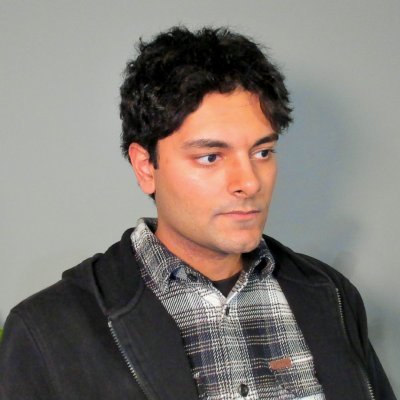
Forgot to post on twitter - my conversation with dax from OpenCode Talked a lot about how programming is changing & not changing. I really enjoyed a lot of the historical takes that Dax has. He's building one of these "agentic coding" tools, so he sees the value in...

41,213 görüntüleme • 3 ay önce •via X (Twitter)

0 Yorum

Yorum bulunmuyor

Orijinal gönderinin yorumları burada görünecek

Benzer Videolar

Claude Code is a major (and accidental!) hit for Anthropic that surprised even its creator, Boris Cherny. Claude Code, an Agentic AI coding product that lives in the terminal. Most of the new code at Anthropic is created through it today. And in the last 5 months since it was launched publicly, Claude Code went from $0 to $400M in revenue run rate (as per The Information). 00:00 – Intro 01:15 – Did You Expect Claude Code’s Success? 04:22 – How Claude Code Works and Origins 08:05 – Command Line vs IDE: Why Start Claude Code in the Terminal? 11:31 – The Evolution of Programming: From Punch Cards to Agents 13:20 – Product Follows Model: Simple Interfaces and Fast Evolution 15:17 – Who Is Claude Code For? (Engineers, Designers, PMs & More) 17:46 – What Can Claude Code Actually Do? (Actions & Capabilities) 21:14 – Agentic Actions, Subagents, and Workflows 25:30 – Claude Code’s Awareness, Memory, and Knowledge Sharing 33:28 – Model Context Protocol (MCP) and Customization 35:30 – Safety, Human Oversight, and Enterprise Considerations 38:10 – UX/UI: Making Claude Code Useful and Enjoyable 40:44 – Pricing for Power Users and Subscription Models 43:36 – Real-World Use Cases: Debugging, Testing, and More 46:44 – How Does Claude Code Transform Onboarding? 49:36 – The Future of Coding: Agents, Teams, and Collaboration 54:11 – The AI Coding Wars: Competition & Ecosystem 57:27 – The Future of Coding as a Profession 58:41 – What’s Next for Claude Code

Matt Turck

82,161 görüntüleme • 10 ay önce

AI has changed software engineering more in the last 3 years than it has changed in the previous 30. What’s needed is not a debate about whether it’s going away—instead it’s a serious discussion about its future: What are the new primitives, techniques, and best practices for software engineering in the age of AI. That’s why I brought Scott Wu (Scott Wu) on AI & I. He’s the founder of Cognition, the company behind the world’s first autonomous AI coding agent, Devin. Cognition got to $73M ARR in less than 2 years—and they just acquired Windsurf to accelerate their growth. I had Scott on the show to talk about where the programming goes from here. We get into: - What the new tools and workflows are for AI engineers. In the near term, Scott sees software engineering defined by a spectrum of tools. At one end are AI features that speed up coding, like tab complete; at the other are agentic systems, like Devin, that can take on tasks independently. Until engineers can operate entirely at the higher layer of abstraction, he argues, both are essential. - Why Scott thinks AGI is already here. By the benchmarks of a decade ago—passing the Turing test, solving hard math problems, and operating agentically—AGI is already here. The line keeps moving, he argues, because humans constantly redefine work around what machines can’t yet do. - Why developers will turn into product architects. Scott sees the long-term future of software engineering as a steady climb up the ladder of abstraction. Just as programming went from assembly to languages like Python and JavaScript, he thinks the future is humans focusing on the product, while AI agents execute. - How Devin stacks up against Anthropic’s Claude Code. Scott credits Claude Code’s success to great product design and the models becoming capable enough to support autonomous workflows. But according to him, the CLI itself isn’t the breakthrough, it’s how a tool fits into a developer’s workflow. Claude Code’s paradigm is that the AI is you, taking the wheel of your computer, he says, while Devin is like the engineer sitting beside you: it runs in its own cloud environment, manages the repo, and improves over time at testing and refining code. This episode of Every 📧’s AI & I is a must-watch for anyone interested in the brass tacks of how AI changes the future of programming. Watch below! Timestamps: Introduction: 00:02:02 Why Scott thinks AGI is here: 00:02:32 Scott’s personal journey as a founder: 00:09:27 Why the fundamentals of computer science still matter: 00:16:55 How the future of programming will evolve: 00:22:30 A new workflow for the AI-first software engineer: 00:26:50 How Devin stacks up against Claude Code: 00:29:33 Reinforcement learning to build better coding agents: 00:40:05 What excites Scott about AI beyond Cognition: 00:50:05

Dan Shipper 📧

34,753 görüntüleme • 9 ay önce

Clawdbot creator Peter Steinberger offers a sobering reframe: Programming isn't dying, it's just becoming a hobby. He's being honest about where it's headed. He recently came across an article making the case that it's okay to mourn programming as a craft, and it struck a chord: "A part of me very strongly resonates with that because in my past, I spent a lot of time tinkering, just being really deep in the flow and just like cranking out code and like finding really beautiful solutions." But mourning, he says, is not the same as resisting. "It's okay to mourn it, but that's not something we can fight." His reasoning cuts to the core of why developer salaries ballooned in the first place: "The world for a long time had a lack of intelligence — if you see it like that — of people building things, and that's why salaries of software developers reached stupidly high amounts. And that will go away." The scarcity that made programming so financially rewarding was never really about the beauty of the craft. It was about supply and demand. AI is eroding that scarcity fast. And Peter Steinberger 🦞 isn't just theorising. He has shipped over 6,600 commits in a single month, much of it AI-assisted, sometimes without reading every line of code. That's what adaptation looks like in practice. The programmers who thrive won't be the ones who insist on writing every line themselves. They'll be the ones who understand systems deeply enough to direct, review, and build with AI as a collaborator. As Steinberger puts it: "The actual art of programming, it will stay there, but it's going to be like knitting — people do that because they like it, not because it makes any sense." The passion for code will always exist, but the era of it being a scarce and highly paid profession is coming to an end.

Big Brain AI

15,023 görüntüleme • 2 ay önce