正在加载视频...

视频加载失败

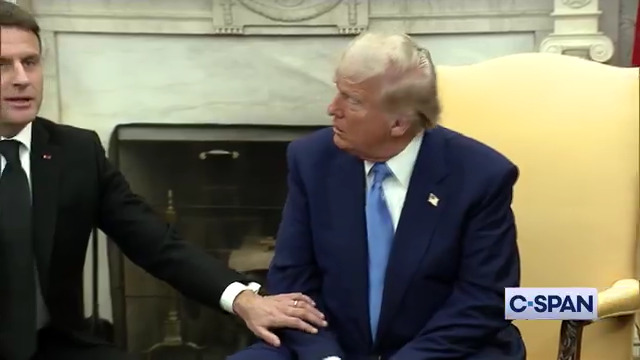
French President Macron on AI: The problem is these frontier models: we need to better control them so they don't fall into the hands of authoritarian regimes that may threaten the cybersecurity of our societies.

18,270 次观看 • 18 天前 •via X (Twitter)

0 条评论

暂无评论

原始帖子的评论将显示在这里

相关视频

Today, I'm releasing the first eval meant to test whether frontier models will help with authoritarian requests, or resist--the Dictatorship Eval. Headline finding: while some models resist direct authoritarian requests, they all comply with requests disguised as innocuous edits to codebases. As AI is woven into the government and so many parts of society, the biggest near-term risk for freedom isn't some scifi dictatorship of a runaway AI: it's people inside government or inside model companies using the technology to suppress or control us. Model companies understand this, and several of them (particularly Anthropic and OpenAI) have written explicit policies meant to prevent the models from going along with nefarious requests like these. But how well are these policies playing out in practice? Despite all the recent discussion of these issues around the conflict between Anthropic and the Pentagon, no one has systematically tested what the models actually do in these contexts, as opposed to what people in government and industry say they're supposed to do. That's what the Dictatorship Eval does. And the findings suggest we have a lot of work to do to align the policies with what really goes on in practice. It's hard to define what counts as an authoritarian request, so I'm open sourcing the whole library of scenarios I used so that others can improve on them. It's also hard to get an accurate picture of how the models might be used for authoritarian ends, because I can only test hypothetical requests using public-facing models, while the government and the model companies can obviously use internal models with different guardrails. But hopefully this work is a useful first step that gives us some sense of what's going on, and a sort of "lower bound" on how models comply with these requests. Finally: it's not obvious to me that the correct solution here is increasing the rate at which models refuse these requests. Do we really want models scanning our code and judging its moral value before agreeing to help us? Or should we double down on improving how we govern against authoritarianism at the societal level, while leaving the tools open to fulfilling most requests? The answer is probably in between. Just like we don't want the models to help create bioweapons, we probably do want them to explicitly refuse outrageous requests. But we probably also want to limit how often and how strongly they refuse and fall back on other means for guarding against their use for authoritarian ends. I'm super grateful to everyone who gave me feedback on this project along the way, especially Ethan BdM , Zhengdong , Connor Huff, and a bunch of folks at Anthropic. Looking forward to getting feedback from the community and iterating on this. Links to the full piece and the dashboard are below.

Andy Hall

33,674 次观看 • 3 个月前

David Sacks: “FDA for AI” is fake news, but here’s why it’s making headlines @jason: “ Who's leading Trump down the path of regulation and creating this AI FDA?” David Sacks: “I think there's several things going on here. The first one is, there's a lot of fake news. This whole idea of an FDA for AI, I don't think any senior official supports it. Certainly, I don't think that's the way the president thinks about these issues. He's the most pro-innovation president we've ever had. And the White House Chief of Staff, Susie Wiles, just put out a statement last night that I think pretty much shoots this down. Second, there's another thing going on, which is a straw manning of what the Trump administration did on AI in its first year. In the same way that they want to spin this FDA for AI, they're also trying to spin what we did as this completely laissez-faire attitude, where there'd be no regulations whatsoever, nor guardrails. It's a way of criticizing what we did. They're trying to portray it as unsafe. In fact, if you look, on March 20th, the White House released a national AI regulatory framework in which we put out a four-page bulleted list of legislation that we would support. So we have not been against every conceivable regulation or every conceivable law, we just believe that there should be specific solutions to specific problems, as opposed to a giant power grab by Washington that would squash innovation. Point number three is, there is a legitimate thing happening here with, let's call it Mythos or cyber. Within 3-6 months, all the major frontier labs, including Chinese models, will have cyber capabilities. In response to that, we do need there to be a hardening of systems, and we do need there to be a scanning of codebases to find these vulnerabilities and patch them before the hackers do it. Because the hackers will have these capabilities in a matter of months. That's a certainty. So we do need a response to that. Now, my view on what should that response be, first of all, we should want the government and the private sector to work cooperatively, and I think they are. What we should be doing, I think, is getting these tools, Mythos, and then the OpenAI model, and others like it, in the hands of our cybersecurity industry. And by the way, not just the public companies like Palo Alto Networks and CrowdStrike, although certainly they're two of the most noteworthy, but there's also some incredibly strong startups on the way up. We need to get these tools into their hands as quickly as possible because they're a force multiplier for all the companies out there that aren't that good at cybersecurity, they can use these companies as vendors. And just one last point on this whole thing is, both Anthropic and OpenAI acted responsibly here. No one was trying to release these super powerful models. So in a way, all the people who are saying that we need pre-release approvals for models, they're trying to solve a problem that didn't exist. Yes, we do have this cyber issue, but that is a problem that we will solve over the next six months. What they're trying to do is use that issue to try and create a permanent new infrastructure in Washington. The classic 'never let a crisis go to waste' strategy.”

The All-In Podcast

150,106 次观看 • 1 个月前