Loading video...

Video Failed to Load

Go Home

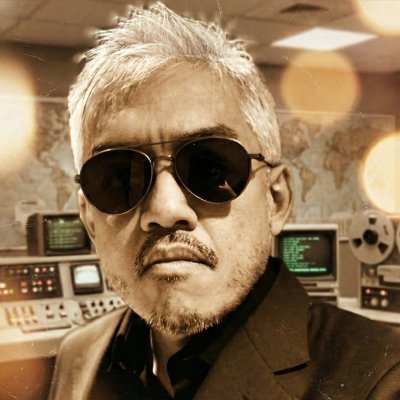
George Kurtz: An iPhone is safer than a regular computer — but if a nation state wants to get in bad enough, they’re gonna get in. There’s a whole black and gray market for zero-day vulnerabilities. One unknown flaw in iOS can be worth millions — and sometimes all...

20,065 views • 5 months ago •via X (Twitter)

0 Comments

No comments available

Comments from the original post will appear here

Related Videos

we all dream of those big wins in life the 100x, the multi-million dollar trade, or even just 10x of what you started with in 7 days i’ve been fortunate enough to experience a few of those over the past few years, and the reality is when you do win big, it doesn’t feel like it at all it hits for a split second, and then your brain just normalizes it it's a part of how to get there in the first place, but makes it a lot easier to lose it if you don't have the right guardrails in place and in that exact moment, you being even keeled doesn’t mean the number in front of you isn’t life changing it is this is where you have to slow down a bit, breathe, settle your mind don’t just roll it into some bullshit take some off the table, step away for a few days if you have to, funny enough, blowing let's say 10k of it on a beautiful trip to tokyo will save you so much because once you actually process what just happened, your future self will thank you for it the truth is, even if you think you’re going for a certain number, the moment you hit it, you’ll want more and more, and more anyone who's been in the same position will tell you the exact same thing ironically the people that win are addicted to winning and if you ask the same people in a year after that big win, what they regret and where are they proud of themselves? they will tell you they regretted rolling it over and giving some/all back or they are proud for switching back on the switch all of this is real, but it’s also exactly how i imagined it would feel years ago before it ever happened manifest your life, the feeling not just the number everything happens twice, first in your mind, then in reality

۟

23,017 views • 3 months ago

Mark Zuckerberg on why he prefers to recruit people directly out of college In this interview from 2005, a 21-year-old Mark Zuckerberg is asked what he looks for in a new hire. There’s two things, he says. “Number one is raw intelligence. You can hire someone who has been doing software engineering for 10 years, and if they’ve been doing it for 10 years, that’s probably what they’ll be doing for the rest of their life. That’s cool — there are some things that that person can do and they’re definitely useful in an organization and can do a lot of stuff. But if you find someone whose raw intelligence exceeds theirs but has 10 years less experience, they can probably adapt and learn way quicker. Within a very short amount of time they’ll be able to do a lot of things that [the person with 10 years of experience] will never be able to do. So that’s the most important thing that I look for.” The second thing he looks for is alignment with what the company is trying to do: “People can be really smart or have skills that are directly applicable, but if they don’t really believe in it, then they’re not going to work hard or care enough to develop the relevant experience in order to succeed. The best people I’ve hired so far have been people who didn’t really have that much engineering experience. I hired a couple of electric engineers out of Stanford to do programming stuff, and they had very little programming experience going in, but they were really smart and really willing to go at it. The guy who just wrote photos was one of those guys, and if you’re willing to just do whatever it takes to get photos out, then you’re probably more valuable than someone who is just a career software engineer.” He concludes: “Those are the things I’m looking for and why I would rather recruit people out of college.” Video source: Stanford eCorner (2005)

Startup Archive

54,696 views • 6 months ago

Is Traditional Software Engineering Dead? “Does this mean that traditional software engineering is dead? Absolutely not. Software engineers—even the ones who are not necessarily tuning or training AI models—these are now among the most leveraged people on earth. Sure, the guys who are training and tuning models are even more leveraged because they’re building the tool set that software engineers are using. But software engineers still have two massive advantages on you. First, they think in code, so they actually know what’s going on underneath. And all abstractions are leaky. So when you have a computer programming for you—when you have Claude Code or equivalent programming for you—it’s going to make mistakes. It’s going to have bugs. It’s going to have suboptimal architecture. So it’s not going to be quite right. And someone who understands what’s going on underneath will be able to plug the leaks as they occur. So if you want to build a well-architected application, if you want to be able to even specify a well-architected application, if you want to be able to make it run at high performance, if you want it to do its best, if you want to catch the bugs early, then you’re going to want to have a software engineering background. The traditional software engineer is going to be able to use these tools much better. And there are still many kinds of problems in software engineering that are out of scope for these AI programs today. The easiest way to think about those is problems that are outside of their data distribution. For example, if they need to do a binary sort or reverse a linked list, they’ve seen countless examples of that, so they’re extremely good at it. But when you start getting out of their domain—where you have to write very high-performance code, when you’re running on architectures that are novel or brand new, when you’re actually creating new things or solving new problems, then you still need to get in there and hand code it. At least until either there are so many of those examples that new models can be trained on them, or until these models can sufficiently reason at even higher levels of abstraction and crack it on their own… And remember: there is no demand for average. The average app—nobody wants it, at least as long as it’s not filling some niche that is filled by a superior app. The app that is better will win essentially a hundred percent of the market. Maybe there’s some small percentage that will bleed off to the second-best app because it does some little niche feature better than the main app, or it’s cheaper, or something of the sort. But generally speaking, people only want the best of anything. So the bad news is there’s no point in being number two or number three—like in the famous Glengarry Glen Ross scene where Alec Baldwin says, “First place gets a Cadillac Eldorado, second place gets a set of steak knives, and third place you’re fired.” That’s absolutely true in these winner-take-all markets. That’s the bad news: You have to be the best at something if you want to win. However, the set of things you can be best at is infinite. You can always find some niche that is perfect for you, and you can be the best at that thing. This goes back to an old tweet of mine where I said, “Become the best in the world at what you do. Keep redefining what you do until this is true.” And I think that still applies in this age of AI.”

Naval

852,014 views • 5 months ago