正在加载视频...

视频加载失败

George Tolis: TAVR, Broken Training, and What's Really Wrong With Cardiac Surgery. Dr. George Tolis, section chief of coronary and general cardiac surgery at Brigham and Women's Hospital, joins Drs. Koka and DiGiorgio for a wide-ranging conversation on the state of cardiac surgery. He makes the case that TAVR...

69,129 次观看 • 3 个月前 •via X (Twitter)

0 条评论

暂无评论

原始帖子的评论将显示在这里

相关视频

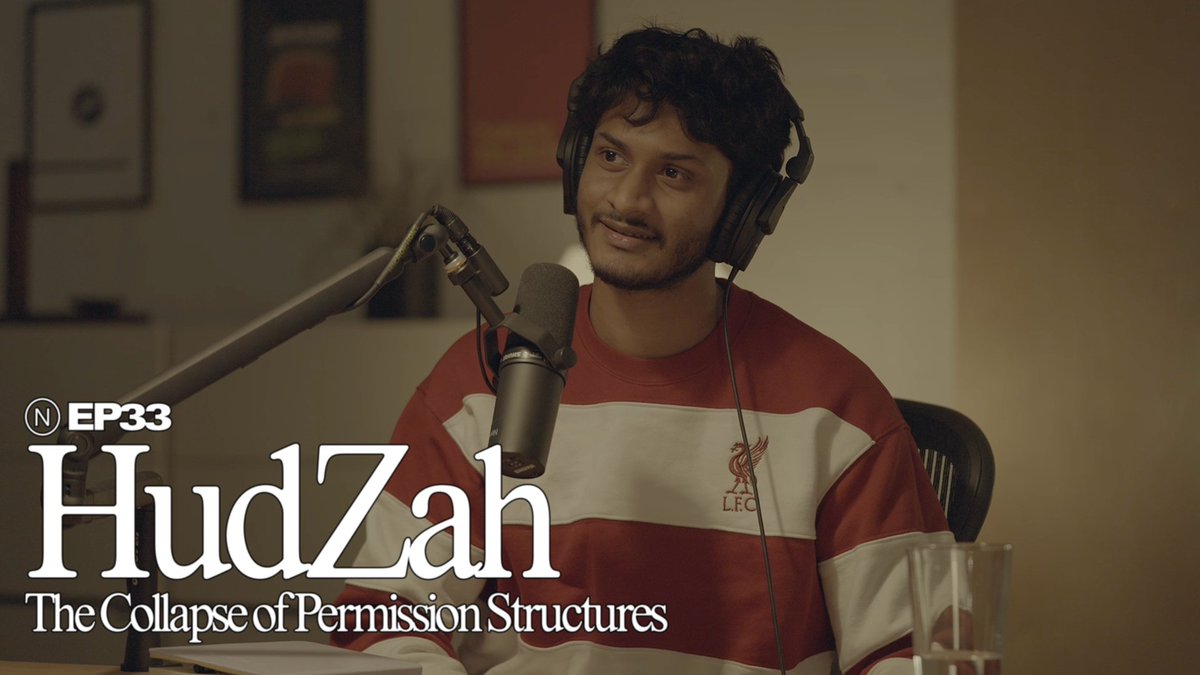
HudZah () is someone exploring what it means, and what it takes, to operate at the edge of what is possible. In this conversation, we traced HudZah's path from Riyadh to Sri Lanka to Waterloo. A childhood split across three countries, shaped by rationed wifi, a single HP desktop, and the discovery that what you build on a computer can change the world around you. We talked about coding HTML on Notepad at ten, building soundboard apps that funded his own move to Canada, and what it's like to grow up in a place with no permits, no regulators, and no one telling you what you can't do. We explored the birth of esports through Half-Life mods, the machines behind the food we love, and a baklava maker in San Francisco whose irrational pursuit of quality you can taste in a single bite. We discussed how AI is collapsing the walls between disciplines, what that does to the identities we built around expertise, and why individual agency might be the only variable that matters now. This is a conversation about curiosity, permission, and what happens when the cost of crossing boundaries drops to zero. The Other Stuff is hosted by internetVin, filmmaker, entrepreneur, and possibly the most curious man on Earth. Produced by New. The Other Stuff #33 — HudZah: The Collapse of Permission Structures — Timestamps 00:00:00 Introduction 00:03:38 Growing Up in Riyadh 00:05:59 Saudi Shawarma and Broasted Chicken 00:16:39 School in Saudi Arabia 00:21:48 The HP Desktop and First Lines of Code 00:25:55 YouTube Rabbit Holes and Gaming 00:45:35 The Birth of Esports 01:02:43 Valve's Employee Handbook 01:05:12 Indie Games and Pure Pursuit 01:06:05 Stardew Valley and ConcernedApe 01:07:03 Moving to Sri Lanka 01:10:34 SnapAPaper and Seeing Real Users 01:13:47 Soundboards, Shopify, and Funding the Move 01:27:38 Landing in Canada at 17 01:36:25 AI and Collapsing the Distance Between Disciplines 01:47:02 Identity, Expertise, and Permission Structures 02:00:32 The Baklava Maker in San Francisco 02:18:26 Machines Behind the Food We Love 02:36:02 Frederic Tudor and the Ice King 02:42:29 HudZah Flips the Interview 02:49:05 Being a Parent

The Other Stuff

26,464 次观看 • 5 个月前

Today I sat down with Jordan Levi, the Kosher Cowboy - a Jewish kid from the Chicago suburbs who became the largest cattle feeder in America. Jordan runs Five Rivers Cattle Feeding with a capacity of nearly a million head. He started as a runner on the Chicago Board of Trade at 13 and found his way to cattle through a hedge fund that sent him to a feedlot in Amarillo. He showed up in Gucci loafers and never left the industry. We go deep on how he trades the curve instead of making binary bets, why the cattle supply is the tightest since the 1950s, and what it takes to manage risk on nearly a million animals across 13 feedlots. I hope you enjoy this episode as much as I did. 02:16 - The Belted Galloway 03:51 - The Kosher Cowboy 08:05 - Pulling value of the futures forward 11:43 - Learning Cattle trading 16:48 - Daily average gain in cattle 18:20 - Jordan’s Eureka moment in the cattle industry 21:08 - What does trading in animals actually look like? 27:05 - How Jordan defines his ROI in trading cattle 31:17 - The Cattle curve 33:37 - The state of the cattle market 42:10 - Buying the largest cattle feeder in the world 46:09 - Grass vs. grain fed cattle 49:15 - Predictions for the cattle supply over the next 10 years 50:54 - The international market 53:17 - Trading frequencies and macro thesis 01:00:27 - USA beef vs. international beef 01:05:21 - The cattle supply chain 01:07:32 - The future of auction yards and ranchers 01:09:40 - AI in AgTech 01:12:52 - The biggest problem facing the industry 01:14:42 - Livestock as a commodity that dies and how that impacts trading theory 01:20:51 - Is there a market for new entrants into cattle? 01:21:41 - Beef prices and the impact of a closed border on the industry 01:24:39 - Jordan’s biggest ideas for the industry 01:26:49 - Philanthropic efforts 01:31:24 - a day in the life of Jordan 01:26:42 - Risk management in cattle 01:41:17 - Does what you do show a leading indicator to the broader health of the American economy?

Chris Powers

822,631 次观看 • 5 个月前

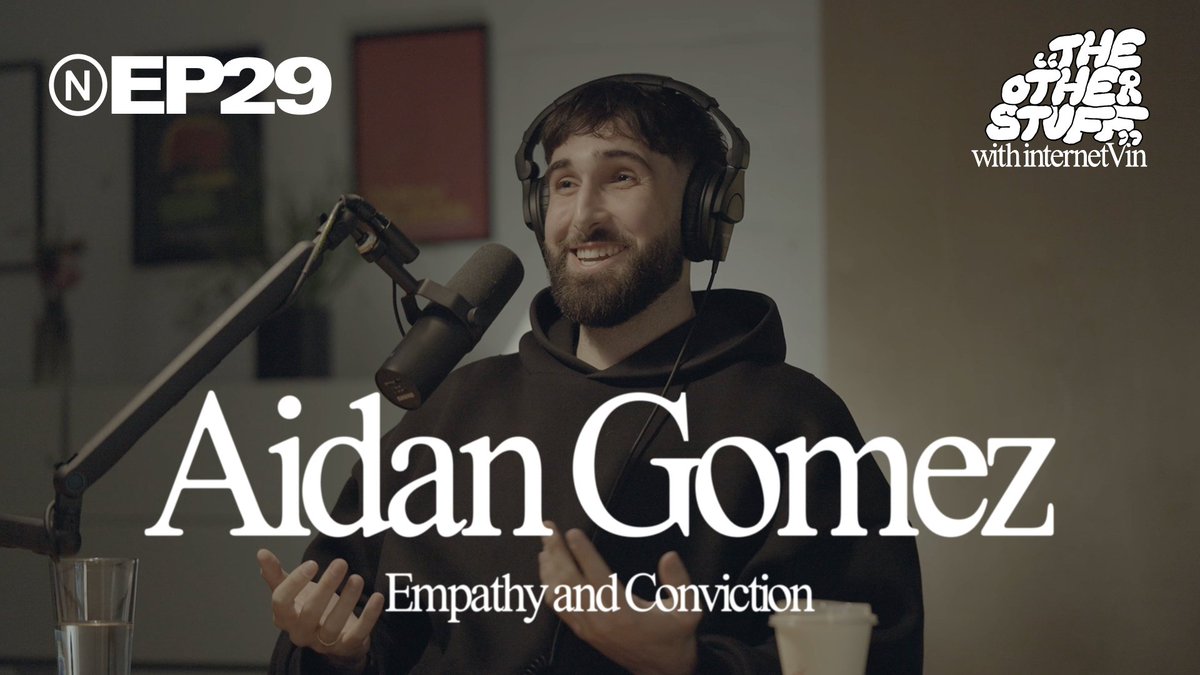
Aidan Gomez (Aidan Gomez) is a computer scientist, co-author of the seminal paper ‘Attention Is All You Need,’ and the CEO of Cohere. In this episode, we discussed his upbringing in the cabin his grandfather built in Codrington, a small town North of Brighton, and the values that were instilled in him through his family. We explored his path from Codrington to his undergraduate studies at the University of Toronto, emailing Geoffrey Hinton, and joining Google Brain where he co-wrote the paper on transformers. We discussed how he met his co-founders Ivan Zhang and Nick Frosst, and his insights on what it means to build a meaningful, successful company in Canada. Aidan shares his conviction about what is at stake — for Canada and for the world at large. This is a conversation about family, values, and what it means to live with conviction. The Other Stuff is hosted by internetVin — filmmaker, entrepreneur, and possibly the most curious man on Earth. Produced by New. The Other Stuff #29 — Aidan Gomez: Empathy and Conviction — Timestamps 00:00:00 Intro 00:03:10 The Malleability of Toronto 00:11:06 Growing Up in Codrington 00:13:50 The Story of Aidan Gomez’s Family 00:27:23 Introduction to the Internet 00:30:39 Values and Work Ethic 00:35:46 University of Toronto’s AI Scene 00:40:48 Emailing Geoffrey Hinton 00:42:16 Google Brain 00:45:15 Dropout: A Simple Way to Prevent Neural Networks from Overfitting 00:49:48 The Beauty of Research 00:54:24 One Model to Rule Them All 00:59:54 Meeting Ivan Zhang and Nick Frosst 01:04:00 The Birth of Cohere 01:06:56 Twitter Influencers and Alex Friedland 01:11:48 Being the CEO 01:12:51 Building for Canada 01:15:01 Three Fundamental Ingredients of Building a Company 01:21:39 Working with the Canadian Government 01:24:39 Reflexivity in Canada 01:36:22 What Is Evil? 01:42:40 The Role of AI in the World

The Other Stuff Podcast

45,297 次观看 • 8 个月前

Grant Sanderson, (Grant Sanderson) created one of the most beloved math channels on the internet. Grant is a Stanford math grad, Khan Academy alum, and self-taught animator who built his own open-source visualization engine from scratch. From students learning linear algebra for the first time, to researchers, to millions of curious people on the internet, Grant Sanderson makes math feel beautiful. Topics we cover - How Grant wrote the "best wedding speech anyone's ever heard" with 24 hours notice - Why he's never felt the burnout other creators describe after 10+ years His take on the algorithm - The real problem with modern education - Being a source vs. being a relay and original thinking - Why he's now building a team and rethinking sponsorships - and much more! Timestamps 00:00 Intro 01:05 How to Write a Wedding Speech 07:04 Use Pauses Like a Pro 11:39 Going Full Time on YouTube 17:27 Why I Left Academia 20:51 Explain It vs. Discover It 27:53 Be a Source, Not a Relay 39:00 The Analytics Dopamine Trap 43:23 Your Algorithm = Your Audience 47:36 Fun Work vs. Strategic Work 52:12 Mental Hygiene for Creators 54:15 Write to Think, Not to Publish 56:49 How My Team Changed Everything 01:01:36 New Ways I'm Making Money 01:06:05 The Loneliness of Solo Creating 01:09:37 How Ego Shapes Your Topics 01:11:31 The Beauty of High Dimensions 01:17:36 Pretty Videos vs. Clear Videos 01:23:14 Will LLMs Kill Motivation to Learn? 01:29:32 Don't Niche Down Too Early 01:34:37 Happiness vs. Fulfillment 01:38:01 Growth vs. Serving Your Audience 01:48:37 Teaching Empathy to Kids 01:51:48 Lightning Round I hope you enjoy this one!! Grant Sanderson (Grant Sanderson): The High Cost of Being a Second-Hand Thinker is below and on all the major platforms.

luba yudasina

151,856 次观看 • 4 个月前

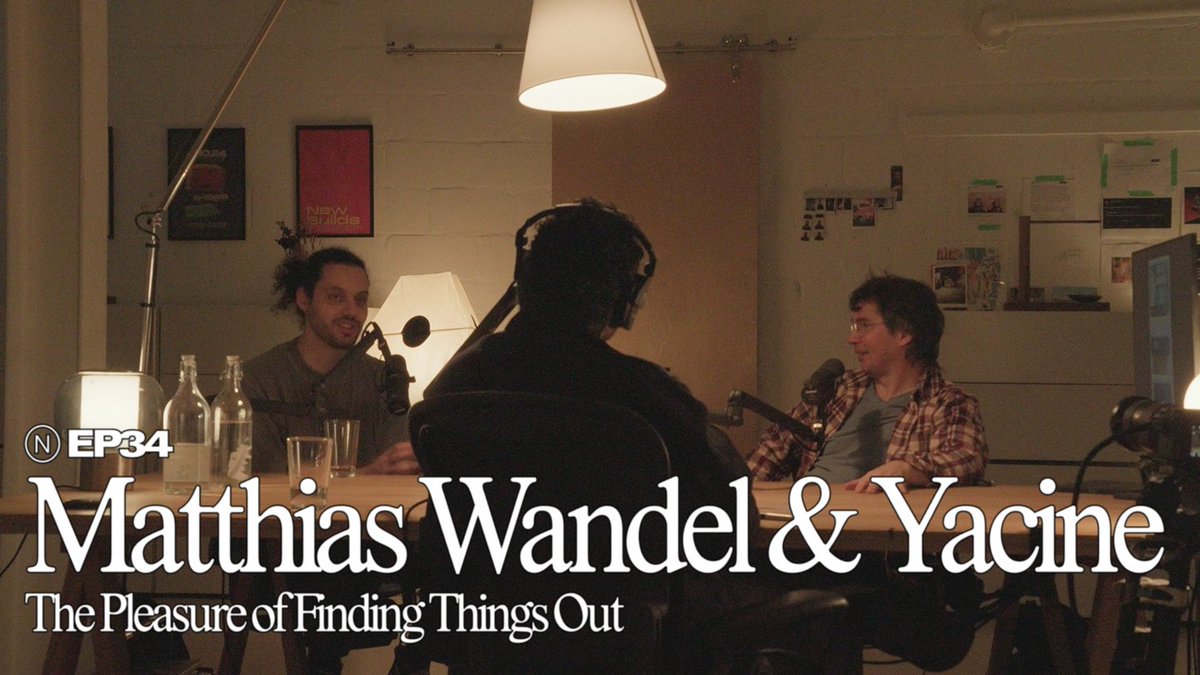
Matthias Wandel is an engineer, woodworker, and YouTuber who runs the most-viewed woodworking channel on YouTube. He was an early employee at Research In Motion, assigned employee number 13. Yacine (kache) is an engineer and artist, formerly at X and Stripe. Both of them are tinkerers, explorers, and builders in their own right. They poke at the world, build and test things for themselves, and develop their own understanding. In this conversation, we traced a single thread through Matthias’s entire life: what happens when you grow up in a place where the only way to have something is to make it yourself, and then never stop. We started in Northern Ontario, in his dad’s workshop on a gravel road where the nearest store was an hour away, and followed that instinct through his first encounters with computers, a Bic-pen dot matrix printer on a Commodore 64, two brothers with two machines in a basement heated by a wood stove, lock picking in the Waterloo service tunnels, and what it means to be a nerd. Matthias and Yacine went back and forth on simplicity vs. ease, what LLMs change about the relationship between understanding and building, and why the probability of code getting reused is inverse to the effort you spend making it reusable. Matthias walked through building the DigiSync barcode reader for the motion picture industry, writing almost all the firmware for RIM’s first wireless modem in DSP assembly, watching BlackBerry’s network traffic flip on 9/11, and what it was like to work alongside Mike Lazaridis. He explained why he left BlackBerry while sales were at their peak and how a bandwidth constraint accidentally made his first viral YouTube video. This is a conversation about constraints that become capability, capability that becomes independence, and independence that becomes something you pass on. The Other Stuff is hosted by internetVin, filmmaker, entrepreneur, and possibly the most curious man on Earth. Produced by New. The Other Stuff #34 – Matthias Wandel & Yacine: The Pleasure of Finding Things Out — Timestamps 00:00:00 Intro 00:02:25 ElectroBoom and Styropyro 00:09:55 Potato Guns and Air Guns 00:23:34 Growing Up in Northern Ontario 00:37:16 First Computers and the Bic Pen Printer 00:43:22 Markus Wendel and the Basement 01:00:19 University of Waterloo 01:03:37 Service Tunnels and Lock Picking 01:10:07 What Is a Nerd? 01:11:34 LLMs and Simplicity vs. Ease 01:31:19 How RIM Started 01:44:01 Building the Wireless Modem 01:58:43 Reusability and Optionality 02:14:13 The BlackBerry Pager 02:33:50 BlackBerry and 9/11 02:48:13 Lazaridis and Balsillie 03:05:28 The YouTube Channel 03:26:01 The Capacitance Sensor 03:42:41 Passing It On

The Other Stuff Podcast

41,669 次观看 • 4 个月前

My dear friend, Vlad Tenev, changed the landscape of investing forever! The rise of the retail investor is largely due to Robinhood's success... and in this new Journey Man, we discuss it all... Enjoy! 00:00 - Intro 00:53 - Introducing Vlad Tenev of Robinhood 01:27 - Why Take on Wall Street? 01:54 - Robinhood’s Zero-Fee Origin Story 02:53 - Inspiration from Instagram and Uber 04:24 - Reimagining Trading for Mobile 05:05 - The Challenge of Disrupting Finance 05:42 - Why Everything Is Hard 06:34 - Early Wrong Assumptions 07:42 - Raising Capital with a Small Vision 08:48 - Funding Robinhood on AngelList 09:50 - Early Investors Changed Their Lives 10:38 - The Crypto Explosion Begins 11:07 - Considering a Bitcoin Exchange First 12:17 - Bitcoin’s Early Skepticism and Growth 13:08 - Robinhood Launches Crypto in 2018 14:03 - 2020: Crypto Revenue Surges Overnight 15:04 - The Challenge of Crypto Cyclicality 16:11 - Staffing a Volatile Business 17:10 - Building Robinhood’s Lean Crypto Team 18:46 - Robinhood’s First Crypto Event Coming 19:38 - Where TradFi Meets DeFi 20:34 - Tokenizing Everything 21:09 - Robinhood’s Vision for Crypto + Finance 21:47 - Thoughts on Crypto Options Demand 23:04 - Why Crypto Options Haven’t Taken Off 24:09 - Millennials and the Speculative Economy 25:22 - Democratizing Trading for Everyone 26:08 - Why Buy-and-Hold Doesn’t Work for All 27:15 - Trading vs Investing: A Matter of Wealth 28:01 - Trading as a Skill Anyone Can Build 29:13 - Robinhood’s Role in Onboarding Millions 30:06 - The Fed's Role and Retail Insight 31:03 - The Rise of the Retail Macro Trader 32:17 - Helping Users Succeed with Robinhood Strategies 33:35 - Power of Community and the Hive Mind 34:55 - Will AI Disrupt Community Too? 36:14 - Technological Waves and Investor Opportunity 37:10 - Human Purpose in an AI World 37:52 - Tokenizing Human Connection 38:28 - Creators, Platforms, and Future-Proofing 39:26 - Vlad’s Long-Term View of the Future 40:05 - Financial Services at the Heart of Disruption 41:14 - If AI Replaces Jobs, What Happens to Investing? 42:25 - Entering the Economic Singularity 43:31 - What Happens When AIs Win the Markets? 44:16 - AI's Role in Capital and Markets 45:07 - Will AI Eliminate Human Emotion from Markets? 46:06 - HFT: The Original AI Traders 47:20 - AI and Long-Term Probabilistic Forecasting 48:48 - GPUs, Gaming, and the Origins of AI 50:01 - Nvidia, CUDA, and Wall Street Arms Races 51:04 - Flash Boys and Microwave Trading 51:54 - Will AI Costs Go to Zero? 52:52 - Lower Cost, Higher Usage 53:41 - Robinhood’s UX Won’t Be Just a Chatbox 55:16 - Cortex: AI-Powered Features at Robinhood 56:54 - Tokenization and the Future of Asset Management 57:44 - Crowdsourced, Tokenized Hedge Funds 58:48 - Portability of Tokenized Assets 59:39 - Blockchain as the New Rails of Finance 01:00:09 - The Trump Token and Capital Formation 01:01:00 - Capital Access Unlocks Innovation 01:01:49 - Why Crypto Needs Regulatory Clarity 01:03:17 - From Meme Coins to Real Assets 01:04:17 - Crypto's Path to $100 Trillion? 01:05:15 - The Financial System Will Run on Blockchains 01:06:00 - Platform Layer vs Application Layer Wealth 01:06:29 - AI Raises Money and Launches Tokens 01:07:39 - AIs Creating Software and Capital Formation 01:08:00 - Final Thoughts: A Wild Future Ahead 01:08:20 - When Will Vlad Buy a CryptoPunk? 01:08:51 - Wrapping Up: AI, Crypto, and the Road Ahead

Raoul Pal

172,640 次观看 • 1 年前

Yoshua Bengio thinks he knows how to make provably safe superintelligent agents. Bengio built the foundations of modern AI and is the most cited living scientist. He believes his alternative training setup would: 1. Guarantee honesty 2. Prevent unintended goals 3. Produce capable agents 4. Port over most data and techniques from current LLMs 5. Not be inherently more expensive, and perhaps be more intelligent Bengio claims the honesty and lack of unintended goals can be proven mathematically, at least given particular assumptions. And his new organization, LawZero, is aiming to build a scrappy prototype as soon as possible. The architecture is called 'Scientist AI' and it's based on training a model to explain empirical observations, including what people say, rather than training AIs that mimic human behaviour or seek our approval. (Bengio's frank assessment is that "reinforcement learning is evil" and that allowing AIs to independently train their successors is "the most crazy, dangerous bet that unfortunately we are on track to do.") But skeptics question whether Scientist AI really does solve the fundamental problem of 'eliciting latent knowledge' from AI models. And with the commercial race for superintelligence so intense, it's not clear whether the proposal will be able to compete or have time to bear fruit, even if it's sound in theory. On The 80,000 Hours Podcast, links below – enjoy! • Making AI honest and safe (00:00:00) • Scientist AI in plain English (00:02:27) • How Scientist AI differs from LLMs (00:06:32) • How the training data works (00:14:02) • Can this become an agent? (00:21:02) • Why Yoshua is now more optimistic (00:32:11) • Why companies can’t stop racing (00:36:35) • A working prototype won't take long (00:49:15) • Scientist models might be more capable (00:53:34) • “Reinforcement learning is evil” (01:01:27) • Scientist AI from guardrail to agent (01:08:37) • Can safe AI still be competent? (01:12:38) • How much will this cost? (01:19:29) • Can it generalise beyond maths and science? (01:23:26) • A multi-national push for superintelligence (01:39:19) • Want to work with or fund Yoshua? (01:51:16) • Why smart people ignore AI risk (01:54:45) • Don’t let AI build the next AI (02:01:33) • Why politicians miss the real risks (02:12:28) • Why Yoshua changed his mind about AI risk (02:21:27)

Rob Wiblin

65,088 次观看 • 3 个月前

Ep. 19 | Free The Money | What This War Is REALLY About… Dr. Jim Willie In this episode, I’m joined by Dr. Jim Willie, who breaks down what he believes is really driving the war, not geopolitics, but a deeper financial battle. He argues the consequences will be felt through rising oil prices, inflation, and a breakdown in demand for U.S. Treasuries. According to Dr. Willie, institutions like the Exchange Stabilization Fund are quietly propping up the system, while global powers shift toward neutral assets like gold. He also points to the City of London and its alleged move toward Dubai as part of a larger restructuring of financial control. In his view, this war is ultimately about gold, power, and the future of the monetary system. Sign up for ITrustCapitol with this link for $100 funding bonus. See why people are opening a tax-advantaged Crypto, Gold & Silver IRA for their future: Sign up for Dr. Jim Willie’s Newsletter: 00:00 Current Global Conflicts 23:35 Oil Prices and Economic Forecasts 31:10 Cultural Insights from the Gulf 31:49 XRP's Ubiquity in the Gulf Region 33:57 The Future of Treasury Bills 35:30 The Shift Towards Neutral Assets 38:05 XRP as a Bridge Asset 39:47 The Impending Credit Crisis 41:54 The Strait of Hormuz 44:07 Economic Implications of Oil Prices 46:29 The Reality of Inflation and Recession 47:52 Trump, War, and Economic Strategy 59:46 The Shifting Sands of Dubai 01:02:40 Oil Prices and Market Dynamics 01:03:38 Military Movements and Strategic Implications 01:07:49 Public Sentiment on War 01:11:24 The Role of Global Powers 01:19:55 Understanding the Empire of Three Cities 01:23:48 Exploring Sovereign Nations and Financial Surpluses 01:24:20 Understanding Credit Default Swaps and Economic Implications 01:25:44 Geopolitical Tensions and Potential Retaliations 01:27:46 Cuba, Venezuela, and the Quest for Freedom 01:29:20 The Gold Reserves and Economic Power Dynamics 01:31:55 Iran's Revolutionary Guard and the Future of Regime Change 01:33:26 The Role of Silver in Economic Stability 01:37:37 Investing in Precious Metals and Cryptocurrencies

Bri Teresi

31,206 次观看 • 5 个月前

Scott Stallings is one of the fittest players to ever walk the PGA Tour. Scott Stallings He grew up between Worcester, Massachusetts and Oak Ridge, Tennessee, walked on at Tennessee Tech after the program he dreamed of passed on him, and turned himself into a three-time PGA Tour winner over a fourteen-year career. Then, at the 2024 Players Championship, one swing into the lip of a fairway bunker tore his shoulder and the nerve out of his elbow. Three surgeries in fourteen months followed. During a comeback round at eleven under, the nerve tore loose again and his hand went white on the green. Three different doctors gave him the same answer: the golf he knew how to play was over. In this conversation, Scott opens up about losing the identity he had built his life around, running the Boston Marathon to survive the rehab, getting humbled in occupational therapy, and a surgeon asking whether he wanted to hold his daughter’s hand walking down the aisle. We also talk about choosing his family over one more swing, hosting Knoxville’s Korn Ferry Tour event, training for 29029, playing alongside Tiger Woods, and what the other side of hard looks like when the thing that defined you is gone. One of the most honest conversations we’ve had. Thank you to our sponsors Rho Nutrition: Code “RIDEOUT” Ken’s book now available here: Chapters (00:00) Meet Scott Stallings (00:14) Roots and Accents (01:34) Golf Beginnings (02:02) Tiger Spark Moment (03:20) Why Golf Connects (03:58) Speedgolf Explained (06:08) Growing the Game (08:22) Late Bloomer Path (11:36) Tour Card Reality (13:52) Life on the Road (14:31) Never Off a Heater (19:43) Heater Ends Fast (20:38) Sponsor Break NAD (21:48) Money and Mindset (25:44) Winning Changes Everything (29:43) Imposter Syndrome Drive (32:11) Runner Mindset Parallels (35:46) Competitive Lens (36:34) Easy Days Discipline (37:06) Golf Injury Breakdown (38:36) Three Surgeries Rehab (40:39) Running Boston Goal (43:29) Boston Marathon Joy (47:45) Big Marathon Logistics (49:55) Return to Golf Plan (55:09) Elbow Setback Scare (58:49) Doctors End Career (01:02:53) Nerve Surgery Recovery (01:05:29) Identity Family Shift (01:06:54) Career Highlights Tiger (01:11:31) Majors Versus Regular (01:12:51) Major Prep Logistics (01:13:50) Slow Practice Rounds (01:15:44) Golf Course Fights (01:17:48) Fighting Levels and Jiu Jitsu (01:20:42) Weather Mental Edge (01:22:37) Memorial and Tiger Story (01:23:52) Tiger Crowd Etiquette (01:28:02) Tiger Trash Talk 67 (01:31:32) LIV and Golf Future (01:33:41) Walking Miles and Ultras (01:35:33) 29029 Training Tips (01:40:17) Sponsors and Next Steps (01:42:54) Closing and Subscribe

Ken Rideout

32,783 次观看 • 2 个月前

State of AI compute 2026: my conversation with stephen balaban of Lambda on the neocloud boom, data centers, GPUs and what's ahead 00:00 — Cold open 01:21 — Why GPU compute was never a commodity 02:45 — The H100 price index and what it gets wrong 04:02 — The real moat: technology or financing? 05:57 — Winner-take-all, or room for many neoclouds 06:48 — Are we overbuilding or underbuilding AI compute? 09:26 — What if AI gets 10x more compute-efficient? 10:44 — The real bottleneck: land, power, and shell 11:38 — The backlash against data centers — and the misinformation 15:00 — Opening the hood: from photons to tokens 17:11 — Extracting more value from the same chip 19:26 — Frontier inference and distributed training, explained 23:26 — What actually drives compute cost 25:21 — Lambda's chip stack and the NVIDIA relationship 26:17 — A multi-silicon world? CUDA, CUDNN, and NVIDIA's real moat 28:59 — Networking, storage, and the one-click cluster 34:46 — Renting vs. owning, and full vertical integration 36:24 — How global is Lambda? Does location still matter? 38:44 — The financing stack: off-take agreements, SPVs, and credit 41:16 — Why a 2023 GPU leases for more today 42:36 — A futures market for compute? 43:54 — Origin story: facial recognition, Perceptio, and Apple 47:03 — The Lambda hat and Dream Scope 48:59 — The $60K bet that became a cloud business 52:00 — Holding the team together through the hard times 54:30 — Bringing on a new CEO; Stephen as CTO 57:33 — Matching xAI on high-velocity deployment 59:29 — "AI won't write software — it will become the software" 01:01:30 — Neural software vs. vibe coding 01:04:25 — Do agents change the compute layer 01:06:14 — Self-assembling software inside Lambda 01:08:18 — Gigawatt-scale AI factories 01:08:57 — One person, one GPU 01:12:04 — Hot takes: overrated and underrated in AI

Matt Turck

70,916 次观看 • 2 个月前

Uncovering Aboriginal Australia: A Conversation with Mungo Manic Detailed timestamps 👇 Origins and Early Human Migration 00:00 Introduction to Mungo Manic and early Australians 00:55 Who is Mungo Manic 03:41 Terminology and definitions of "Aboriginal" 04:47 Terminology preferences in scientific contexts 05:29 Origins of the word "Aboriginal" and its historical usage 07:32 The term "Aboriginal" losing a genetic or racial definition in the 1960s or 1970s 09:10 The three-part test of Aboriginal identity Early Human Settlement and Fossil Evidence 12:55 How and when humans first arrived in Australia 16:40 Early skeletons, including Mungo Man 21:00 The study of Mungo Man 23:35 Did Denisovans make it to Australia 25:20 Fossil degradation in Lake Mungo Isolation, Cultural Practices, and Environmental Adaptation 26:00 Isolation of pre-colonial Australia and the ancestry of dingoes 33:15 Aboriginal women breastfeeding dingoes and their importance as pets 36:35 The taboo against eating dog in Parsi culture Social Structures and Survival Practices 37:30 Infanticide in Aboriginal Australian culture 40:55 Cannibalism in Aboriginal Australian culture including endocannibalism and exocannibalism 42:14 Warfare and violence in early Australian life 42:48 The nature of warfare and violence in ancient Australian societies 44:20 Christophe Darmangeat's expertise on Aboriginal warfare 45:39 Capital and corporal punishment in Aboriginal Australia 49:28 The lack of rights for Aboriginal women 51:30 Sorcery and the practice of pointing the bone Technology, Environment, and Innovation 54:00 Technological development in Aboriginal Australia and Jared Diamond’s theory 56:23 Was Australia actually a harsh environment 58:43 Technological simplicity in Tasmania after separation from mainland Australia 01:02:00 Competition and innovation 01:03:45 Kimberley spear points, Sulawesi, and Macassan sailors 01:05:30 The oldest known rock art Cultural Practices and Initiation Rituals 01:06:45 Cultural practices and initiation rituals 01:07:30 Initiation practices including scarification, tooth evulsion, and circumcision 01:12:20 Subincision 01:14:00 Female circumcision and virginity in Aboriginal Australia 01:20:00 The Fatal Shore by Robert Hughes, wife-sharing, and sexual practices in Aboriginal culture 01:24:46 The practice of clubbing women 01:25:35 The resilience and immune system of Aboriginal Australians Impact of Humans on the Environment 01:27:08 Human impact on the Australian landscape and megafauna extinction 01:31:00 Boomerangs used in warfare 01:33:50 The film Ten Canoes Religious and Spiritual Beliefs 01:35:20 Religious beliefs and spiritual practices including the Dreaming 01:40:00 Aboriginal eschatology 01:42:00 The extinction of the people of Kangaroo Island 01:43:00 Mourning periods and mummification 01:45:42 The cultural practice of not mentioning the dead Modern Aboriginal Identity and Historical Debates 01:48:04 Are Tasmanian Aboriginals extinct Was it genocide The Henry Reynolds black armband theory vs Keith Windschuttle 01:53:53 Defining Aboriginal identity today racial definitions vs self-identification 01:56:55 Blue-eyed blonde-haired Aboriginal people vs Tasmanian Aboriginals 02:00:52 The importance of Tasmanian DNA research 02:03:22 A critique of Bruce Pascoe’s Dark Emu and its depiction of ancient Australians as agriculturalists Colonial Impact and Unanswered Questions 02:11:27 Kidnappings 02:15:40 The need for anonymity in controversial discussions 02:29:27 Biggest mysteries in Aboriginal history

Quillette

83,061 次观看 • 1 年前

E180: KAST Founder: Most crypto neobanks will be gone in 12 months raagulanpathy is the founder and CEO of KAST , a global stablecoin neobank, and a former Circle exec. He raised $80 million at a $600 million valuation on the thesis that the real prize isn't the stablecoin - it's the bank you build on top of it. We get into the money, the grind, and the token decision that pissed a chunk of his community off. Timestamps 00:00 Introduction 01:58 How Raagulan Decides What Gets Done At KAST 04:35 The Chaos KAST Employees Deal With Daily 05:38 Raagulan's Hiring Philosophy At KAST 07:02 Why Firing Is Harder Than Hiring 08:35 The One Error That Could Kill KAST 09:52 How Raagulan Convinces Stablecoin Skeptics 10:46 What Outsiders Miss About The Payment Industry 12:06 Why KAST Needs So Many Different Departments 18:32 Partnerships: Variational & Bitwise 19:24 Raagulan's Real Take On Fees 21:55 KAST's Best Type Of Customer 23:53 The Thing Raagulan Can't Say Publicly 26:54 Founders Can't Chase All These Three Things At Once 29:04 Raagulan's Experience With GLP-1s 31:39 How KAST Kept Growing When Bitcoin Crashed 50% 34:05 KAST Is On Track For $100 Million In Revenue 36:55 Why KAST Hasn't Blown Up From Overspending 41:04 Why Everyone's Racing To Build Neobanks 42:52 What Makes Neobanks So Hard To Build 44:54 Why Neobanks Keep Shutting Down 45:57 What KAST Offers That Exchanges Can't 49:14 KAST Isn't A Card Business 50:43 How KAST Is Building Momentum 54:57 Raagulan On His Competitors 56:29 Partnerships: KAST & Trezor 57:33 Kevin's Honest Take On KAST 58:59 What KAST Is Doing With the $80 Million they raised 01:01:55 Would Raagulan Ever Sell Equity? 01:06:57 Who Buys In At A $3B Valuation Next? 01:08:39 Is Your Money Actually Yours Inside KAST 01:10:49 What Happens To Your Money If KAST Collapses 01:17:38 Custodial Vs Self-Custodial: Pros And Cons 01:19:52 Why KAST Obsesses Over Design And Brand 01:22:42 Partnerships: Jupiter & Ethena 01:23:26 KAST Points & Token: Should The KAST Community Feel Cheated? 01:34:13 What's Actually Behind This Tokenized Stock? 01:35:25 The Hill Raagulan Will Die On 01:36:41 One Prediction That Comes True In 5 Years 01:37:59 Is The Worst Behind Us In Crypto? 01:42:57 The One Thing To Remember From This Conversation 01:45:16 Closing Thoughts

MR SHIFT 🦁

175,841 次观看 • 1 个月前

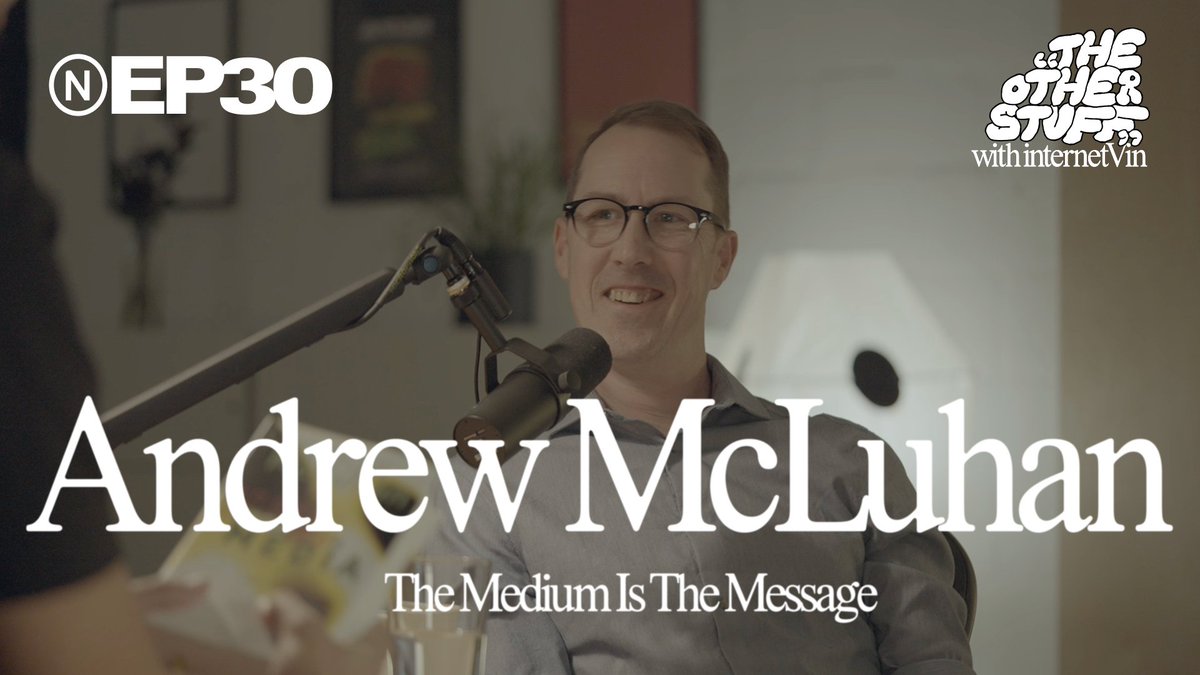
Andrew McLuhan (Andrew McLuhan) is a poet, artist, and punk-rocker. In this conversation, we spent over three hours on five words: the medium is the message. Andrew explained why his grandfather saw the medium as an environment rather than just an instrument, and why environments shape us most when we’re not paying attention to them. We talked about the miracle of language—how one person can push sounds out of their mouth and another person can understand them—and how each new technology quietly redefines what it means to be human. We explored figure and ground, oral versus literate culture, the shift from mechanical to electrical ages, and why hip hop and punk rock share the same irreverent impulse. Despite everything, Andrew is an optimist. He sees the beauty around him. He also brought homemade maple syrup from his farm and we discussed whether shawarma was the medium or the message. This is a conversation about media, perception, and how we might not always be aware of the things changing us. The Other Stuff is hosted by internetVin — filmmaker, entrepreneur, and possibly the most curious man on Earth. Produced by New. The Other Stuff #30 — Andrew McLuhan: The Medium Is The Message — Timestamps 00:00:00 Introduction 00:04:30 Prince Edward County & Main Duck Island 00:07:10 The Marysburg Vortex 00:16:50 What Does “The Medium Is The Message” Actually Mean? 00:36:24 The Smartphone Exercise 00:44:26 Understanding Media: The Extensions of Man 01:08:56 Buckminster Fuller & Interdisciplinary Thinking 01:25:56 Marshall’s Journey to Cambridge 01:43:06 Why This Work Matters 01:51:53 AI, Privacy & Feeding Context to LLMs 02:00:17 Media Ecology vs Media Literacy 02:08:12 Making Maple Syrup 02:23:44 Sandwiches as a Medium 02:34:35 The Polydicks & Punk Rock 02:45:51 Wu-Tang & Poetry 02:53:42 Leaving Literacy Behind 03:06:08 The Future of Technology

The Other Stuff Podcast

10,501 次观看 • 7 个月前

Months ago, Dustin Kittle reached out to me to tell me how our farmers are losing their farmland and the government is allowing it to happen. Dustin was one of the inspirations for starting my show in the first place because I thought to myself, "if people only knew." Last week I drove down to Tennessee to film this episode of him telling his story. I know I am a very small fish, but I hope this reaches the right people to make a difference to save our family farms. Dustin is not just a farmer, he is also a very successful lawyer. If he can't stop this, our small farms have no chance. We need President Trump and congress to step in immediately. --- 01:18 Dustin’s Background 03:30 Buying a Farm 07:35 What is Farm Credit? 09:27 Farm Credit Administration 12:34 Getting a Loan 22:37 Farm Credit Goes After His Mom 41:09 Extortion 47:22 File Complaint with FCA 58:51 What the FCA Did 01:05:47 Why is this Happening? 01:10:38 Foreclosure 01:19:21 After the Loan was Paid 01:25:08 FCA Releases Findings 01:31:21 Dustin Kittle Sues the President 02:02:25 What can we do? 02:06:56 Why Dustin was Targeted 02:21:05 Keeping People Quiet 02:22:51 What can Farmers Do? 02:25:38 Farm Credit Sues Dustin 02:29:35 Threats Against Dustin 02:34:20 Suing Biden and Not Trump 02:36:32 Foreign Governments Buying Farmland 02:37:46 What Farm Credit Does with the Land 02:43:14 What can we do - continued Quick Hitters 02:51:52 Thoughts on Brooke Rollins 02:56:35 Subsidies 03:01:54 Bird Flu 03:08:34 Country of Origin Labeling 03:10:32 Pesticide Immunity

Anna Matson

88,930 次观看 • 1 年前