Video wird geladen...

Video konnte nicht geladen werden

Zur Startseite

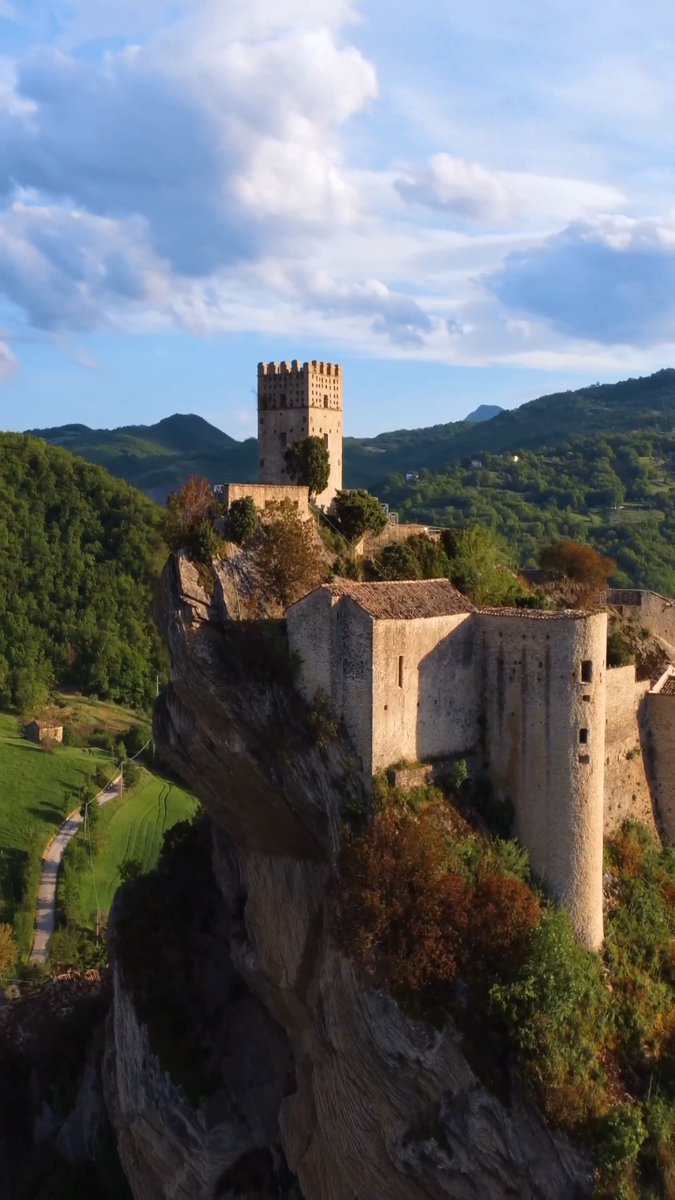
🇦🇲✝️ God bless #Armenia. Hayravank Monastery (9th–12th centuries) is perched on the cliffs of Lake Sevan like a guardian from heaven. #Armenian #Christianity #Arménie #History

11,621 Aufrufe • vor 6 Monaten •via X (Twitter)

0 Kommentare

Keine Kommentare verfügbar

Kommentare vom Original-Post werden hier angezeigt

Ähnliche Videos

✝️🇦🇲 God Bless #Armenia. A faith kept alive, unchanged for over 1,700 years. On January 6, Armenia-the first #Christian country on Earth- celebrates #Christmas as the Feast of Theophany, honoring Christ's Birth and Baptism together in a single holy day. Christ is born and revealed. Blessed is the revelation of Christ. First, a key fact: The Armenian Apostolic Church celebrates the Birth of #Christ and Epiphany together on January 6 as the unified feast of Theophany. On Christmas Eve, January 5th, believers light candles in Church and carefully carry the "Christmas fire" home. This sacred light symbolizes the Star of Bethlehem, guiding the faithful-like the Magi-to the newborn Christ. After the liturgy, the faithful greet each other with the words: " Christ is born and revealed! Blessed is the revelation of Christ!" On the morning of January 6th, Armenian Christmas begins with families attending the Divine Liturgy. An exception is in Jerusalem, where the Armenian Patriarchate adheres to the older Julian calendar. This means their celebration of January 6th occurs on January 19th on the Gregorian calendar-a difference of 13 days. The day features the renowned grand procession into the Church of the Nativity. In a beautiful historical connection, the great 4th-century Greek theologian, St. Gregory of Nazianzus -whose theology deeply influenced the entire Christian East -called January 6th "The Great Day of Lights" (Theophany). This same holistic vision of light uniting Nativity and Epiphany lies at the heart of the Armenian celebration. Meanwhile, many Orthodox (Russians, Serbians, Georgians) celebrate Christmas on January 7 (December 25 by the Julian calendar). Same feast, different calendar. The Armenian celebration of Christmas on January 6 represents an unbroken liturgical tradition- a unique living heritage preserved for over 1,700 years.

Lianna

37,048 Aufrufe • vor 7 Monaten

Facial reconstruction of a 2,800-year-old man from Armenia According to Assyrian sources from the 9th–8th centuries BC, the state of Urartu gradually formed on the Armenian Highlands. Early texts mention the “lands of Uruatri,” a tribal confederation resisting Assyrian expansion and linked to the Hurrians and Subarians. Urartu was a vast but diverse state that united many peoples by force; the Urartians themselves formed only the ruling elite. The Kingdom of Van arose from a union of tribes. In annexed lands, local rulers often remained in power under Urartian governors. Despite a well-organized administrative system, border regions, especially near Lake Sevan, often rebelled. A warlike Etiuni tribe, associated with proto-Armenics, lived there, and inscriptions of King Sarduri I, discovered by Joseph Orbeli in 1916, describe campaigns into this region: “The god Haldi went forth; by his great mercy he subdued Murini, king of the land of Uelikuhi; he subdued Tzinalibi, son of Luehu, king of the city-land of Tulikhu; he subdued Ashur-nirari, son of Adad-nirari, king of Assyria; he subdued the land of Arme; he subdued Nihiriani, the royal city of the land. They bowed before Sarduri, son of Argishti.” This text refers to two campaigns, spring and autumn, conducted by Sarduri in the same year. The first of these campaigns was directed into Transcaucasia, in the region of Lake Sevan. This man from Sarukhan, Gegharkunik, dated to the Urartian period, belonged to the Etiuni tribe. Aged approximately 45-55 years, he exhibited a depression with thinning of the frontal bone, a condition referred to as craniolacunia. Additionally, a dental fistula was identified on the upper jaw at the root of the second right premolar, and the left portion of the upper jaw was severely atrophied. Similar pathologies were recorded in other individuals buried at Sarukhan and Akunk (Anahit Khudaverdyan, 2005).

Ancestral Whispers

36,140 Aufrufe • vor 7 Monaten