Video wird geladen...

Video konnte nicht geladen werden

Zur Startseite

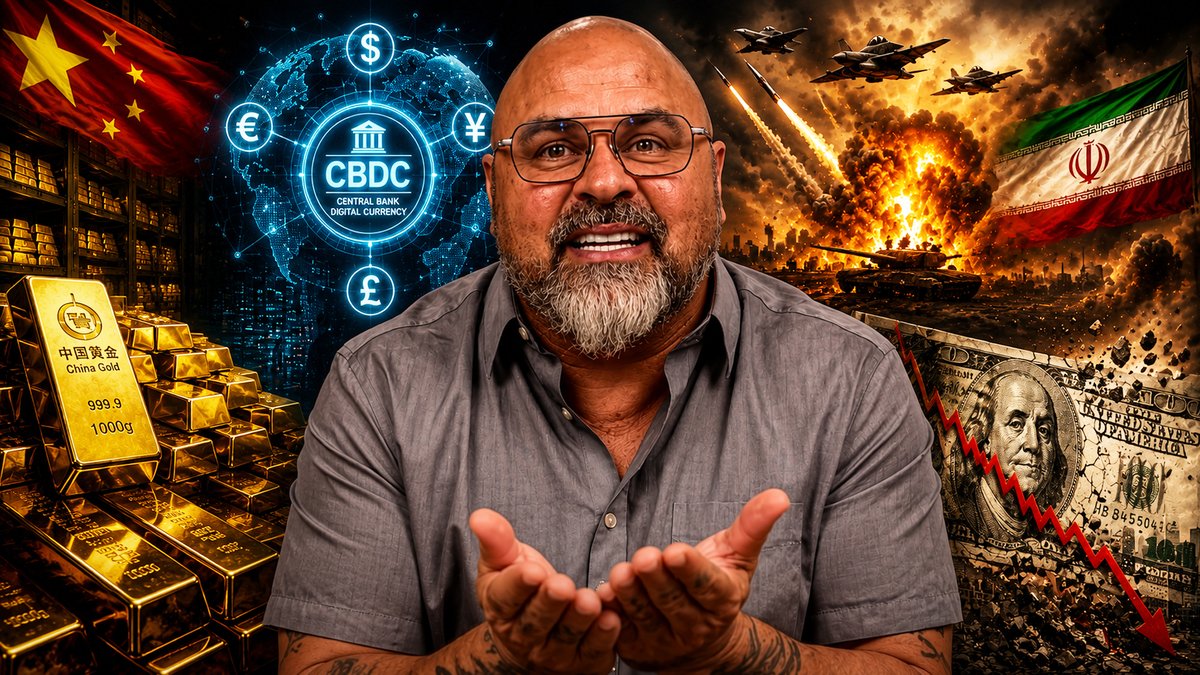
Gold is roaring because the US has stopped pretending. The polite version is “strong dollar policy.” The real version is: we will accept and even welcome, a softer dollar to win the trade war and rebuild American industry Gold Made an ATH at $5,500+ and the dollar keeps sliding....

143,727 Aufrufe • vor 5 Monaten •via X (Twitter)

0 Kommentare

Keine Kommentare verfügbar

Kommentare vom Original-Post werden hier angezeigt

Ähnliche Videos

🚨Peter Schiff: China🇨🇳 is silently dumping the dollar, a US🇺🇸 dollar crisis is coming soon! ‘China is gradually weaning themselves off of the dollar. That’s why, if you look at their holdings of US Treasuries, they’ve actually gone down a bit over the years. If you look at all the new Treasuries we’ve issued over the years, the fact that the Chinese haven’t bought any of them is a big deal because they used to be a main buyer of these assets. Instead of buying more Treasuries, they’ve bought more gold. So if you look at US dollar debt as a percentage of all the reserves the Chinese own, Treasuries are a much smaller percentage of their total reserves than they once were, especially if you consider the appreciation of gold. I would guess the reason they’re not moving more dramatically is because they probably don’t want to cause a crash, the dollar to implode, the Treasury market to implode, because they are trying to sell and want to get a decent price. So I think they’re happy to slowly bleed it off to try to get that good price. They just have to worry about the impact on the dollar, because if they try to dump too many dollars at once, the dollar could go down, and especially if a lot of other countries see that and want to get out. There could be a run on the dollar. If all the holders decide they want to get out, they don’t want to be the last one holding the dollar, and so it becomes a rush, and we could be in a US dollar crisis relatively soon anyway… I think we’re heading for a real crisis in the US, and I think countries that are smart would be trying to get ahead of that by selling whatever they can, as quietly as they can, out of US dollars and any US dollar-denominated debt.’ -Peter Schiff on Going Underground

Afshin Rattansi

107,856 Aufrufe • vor 5 Monaten

Most people read the dollar exactly backwards. A rising dollar looks like strength. Strong America, good economy, the Fed doing its job. A falling dollar looks like weakness. Inflation, debasement, the end of dollar dominance. It is the other way around. A rising dollar usually means global funding is tightening. The world is short of dollars and scrambling to find them. That is not strength. That is stress. Think of a hurricane coming and everyone rushing to buy bottled water. The price spikes. That does not mean the water got stronger. It means people are scared and desperate. The dollar works the same way. When it surges against everything at once, it is telling you dollars are getting scarce, not that America is winning. That is why the dollar spikes in crises. The 1997 Asian crisis. 2008. The 2015 emerging market squeeze. March 2020. The 2024 carry trade blow up. The pattern is not random. None of this is really about the Fed or money printing. The dollar's exchange value is mechanical. It runs on the eurodollar system, the offshore dollar funding made of bank balance sheets, collateral, repo, and swaps. The biggest driver is dealer balance sheets. When dealers expand, dollars flow and the world feels calm. When they pull back, dollars get scarce and the dollar climbs. And this is the part everyone gets wrong. When foreign central banks sell US treasuries, the headlines scream that they are dumping America. They are not. They are using their reserves exactly as designed. When their markets are short of dollars, they sell treasuries to supply them. Sell treasuries, the dollar goes up. That is stress, not rejection. Which is why the dollar doom story keeps failing. They said QE would destroy the dollar after 2008. They said the deficits would collapse it. It never happened, because the problem was never too many dollars. It was not enough usable ones in the right places. So when someone tells you a strong dollar means America is strong, be careful. The strongest looking dollar is often the biggest warning sign. And a falling dollar is usually just the storm passing.

Jeffrey P. Snider

103,465 Aufrufe • vor 1 Monat

Former BlackRock fund manager Ed Dowd on the death of the dollar 💵☠️ "we're in a stealth bull market in the dollar... [but] the bad news is there's a new monetary system coming" "I've always been of the opinion the dollar is going to fail up... Then they reset stuff" "The dollar system is designed for constant credit creation... [and] put simply more credit creation, lower dollar, less credit creation, higher dollar" "so de-dollarization is actually bullish for the dollar in the short term because... there's always people scrambling for dollar liquidity" "if the dollar goes up too fast, too quick, it squeezes other nations and causes serious economic pain" "The dollar is very much a financial weapon and it is used as such" "So the good news is I don't think the dollar is going away anytime soon. The bad news is there's a new monetary system coming" "I don't know when, but it's going to involve gold because the signal is going to involve gold because central banks are acquiring gold...[and] commercial banks are acquiring gold because they made it a tier-one capital again, which is essentially the ability to create money from your gold" "So I'm bullish the dollar long term until I see the charts break. And they haven't broken yet" "that's why when people ask me, What should I be doing with the stock market?, I go, Take some of your money and put it in the cash— They go, but inflation's killing me. Well, inflation may be killing you, but if the stock market deflates 50%, your cash is... a lot better" Shannon Joy Edward Dowd

Sense Receptor

109,098 Aufrufe • vor 1 Monat

🚨NEW: Adam Curry nicely breaks down how Stablecoins work, Tether, and the likely future of the US Digital Dollar system. (Worth a watch if you don't know about this subject) "A stablecoin is a digital dollar thats pegged to the dollar so it's always a dollar. It's already being used all over the internet and the world. The only reason it's worth a dollar is because the stablecoin company that creates it has debt and paper to back it up. They buy America's debt, they buy treasury bonds or T-bills that pay a dividend that gives interest, and for each dollar they've bought in treasury they can create stablecoins. If you look at the company Tether they've bought more of the US debt than most countries. They have $160B worth of US debt. For each of those dollars they have a stablecoin. There's like 50 people in the company. They have $160B at 4% interest annually, they're making BANK just for holding this debt. I think that President Trump is very smart in seeing that we can flood the world with our stablecoin and we get a 2-for-1. We create a dollar of debt and we create another dollar that can be used all over the world as a reserve currency and that should result in some new monetary system that we need to come up with to have our dollar valued properly but also still remain the reserve currency and remain a strong export country. We don't make anything that we sell abroad, we can't all serve each other burgers and fries -- we have to build something. All of that went overseas. There's something big coming, and it has to happen. Trump is a meta guy. He's going to re-finance the country. It'll be digital and he Bitcoiners don't like this because they want Bitcoin to be the one currency that everyone uses but its now more like a digital gold that's much easier to move around. It's useful but it isn't money or currency the way it was originally intended -- but it is still very important and will be part of the US' strategic reserve. It looks to me like Stablecoins and Tether in particular will be the future of the US dollar payments. A lot of people on the right are afraid of being controlled on a grid because you can stop stablecoins -- but it seems there's no way of getting around some form of a digital dollar. I still like Bitcoin as a backup to protect from that control." Great breakdown Adam Curry - curryirc.com

Autism Capital 🧩

365,538 Aufrufe • vor 1 Jahr

Trump, the Dollar and China: What to watch for in 2025 Trump wants to boost exports, bring back American jobs from overseas and reduce the trade deficit. To achieve this he needs a weaker dollar. Trump also wants a strong dollar and will not brook any challenges to its near monopoly of international payments. Can he possibly have both? Trump’s Problem No.1: His announced tariffs will most likely boost the dollar as a result of increased uncertainty globally. Even if he slaps large tariffs on imports, the increase in the dollar’s value will eliminate the downward pressures on imports and the US trade deficit. Trump’s Problem No.2: His announced large tax cuts for the rich will boost the influx of foreign capital into the US, further boosting the dollar and the gap between domestic savings & investment, which is the root cause of the US trade deficit. Trump’s Problem No. 3: The near monopoly of the US dollar over international transactions is what ensures the paradox that, whenever things go bad in the US economy, the dollar rises. If Trump were serious about the US trade deficit, and his stated objective of wanting to push the dollar down to make US exports more attractive, he should want to end the dollar’s global dominance. But that would spell the end of the United States as a global hegemon – something Trump does not want to see happen on his watch. Perhaps what might work for Trump would be something similar to what Ronald Reagan did to Japan in the so-called 1985 Plaza Accords: he gave them the ultimatumn “appreciate your currency massively or face massive tariffs on your exports”. Can Trump do the same to China? China is no Japan – it will not roll over that easily. Talking of China, Beijing also faces a great dilemma in 2025 and beyond: · To stay put and play for time until the US internal contradictions play out? · Or to turn the BRICS into a Bretton-Woods-like system, with the yuan at its heart? Beijing has not made up its mind. In the next year, or years, we shall know the answers. Till then, be well.

Yanis Varoufakis

269,151 Aufrufe • vor 1 Jahr

When people talk about the dollar, they mean DXY. The main index everyone follows. But you should never follow just one. DXY is useful, and it correlates strongly with the big mechanical flows. That is how powerful these relationships are. It is also limited. The problem is it is heavily weighted to the euro. So if the euro moves a lot, DXY can make the dollar look dramatic even when the real picture is more complicated. Sometimes DXY looks calm while emerging market currencies are under heavy pressure. Sometimes the euro masks stress somewhere else. Sometimes the dollar is rising hard against Asian currencies before the index even catches up. To actually read dollar conditions, you look across currencies. You watch reserve sales, FX interventions, repo markets, and cross-currency basis swaps. You watch Treasury collateral and volatility. The dollar's exchange value is not a clean number. It is a symptom of global balance sheet dynamics. That said, DXY does line up with one thing. Foreign governments selling their reserves. When officials overseas dump their Treasury holdings, it is not because they hate America or are fleeing the dollar for the next scheme the doomers are selling. They are doing it because dollars are getting harder to find. The big Eurodollar bank dealers are pulling back their balance sheets, and dollars are drying up. Think of Treasuries as bottled water. The storm is coming, the water is getting expensive, so foreign authorities reach into their stockpile. But to use it, they have to sell it. And when they sell, watch what even imperfect DXY does. It goes up. So there it is. A dollar shortage forces reserve sales, and reserve sales push the dollar's value higher. A rising dollar is not strength. It is the shortage showing up in the one number everyone watches.

Jeffrey P. Snider

13,192 Aufrufe • vor 1 Monat

The Structural Case For Continued Dollar Strength $DXYZ In this Short video, Brent Johnson Santiago Capital and I break down the structural forces supporting continued #USdollar dominance, from global trade and debt markets to reserve holdings and crisis-driven demand. Despite years of predictions about the dollar’s demise, the global financial system remains deeply dependent on it. The key reason is that the #dollar is far more than a currency—it is the backbone of global trade, credit, funding markets, and financial infrastructure. The dollar market outside the United States is actually much larger than the one inside it. Trillions of dollars of debt are owed by foreign governments, corporations, and banks. Much of that borrowing occurs between non-U.S. entities, yet it is still denominated in dollars. That means the rest of the world owes enormous amounts in a currency it cannot create or control. Roughly 58% of allocated global foreign exchange reserves are held in dollars, compared with about 20% in euros. Around half of global trade is invoiced in dollars, including transactions where the United States is not involved. The eurodollar system, the Treasury market, the SWIFT network, and the global banking infrastructure all reinforce the dollar’s dominant position. Many investors point to central banks increasing their #gold $GLD holdings as evidence that the dollar is losing relevance. Gold has indeed become a larger share of reserves, but part of that shift reflects higher gold prices and lower Treasury prices as #interestrates have risen. Foreign ownership of U.S. #Treasuries remains near all-time highs, suggesting the world has not abandoned dollar assets. The most overlooked point is what happens during a crisis. Countries may hold gold as a neutral reserve asset, but when they need liquidity, they often sell gold to obtain dollars. During periods of stress (like the Iran war), demand for dollars frequently rises because global trade, debt servicing, and commodity purchases still rely on them. So, de-dollarization may be happening at the margins, but replacing the dollar is far more difficult than many assume. The structural foundations supporting dollar demand remain firmly in place, and in moments of uncertainty, the world still turns to dollars first. Check out our comprehensive "15 Trading Rules" guide ▶️ This guide includes practical rules for managing positions, taking profits, controlling risk, and avoiding the emotional mistakes that often hurt returns during major market corrections. If you like this video, please ❤️like and 🔁retweet 📺Full episode: Catch me daily on The Real Investment Show:

Lance Roberts

13,688 Aufrufe • vor 1 Monat