Загрузка видео...

Не удалось загрузить видео

На главную

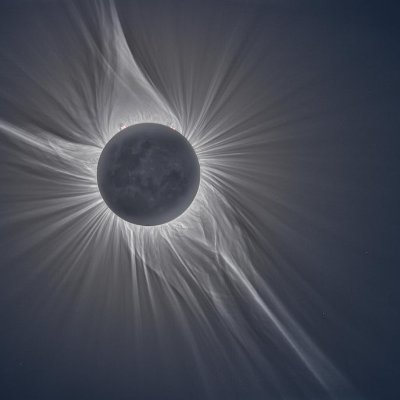
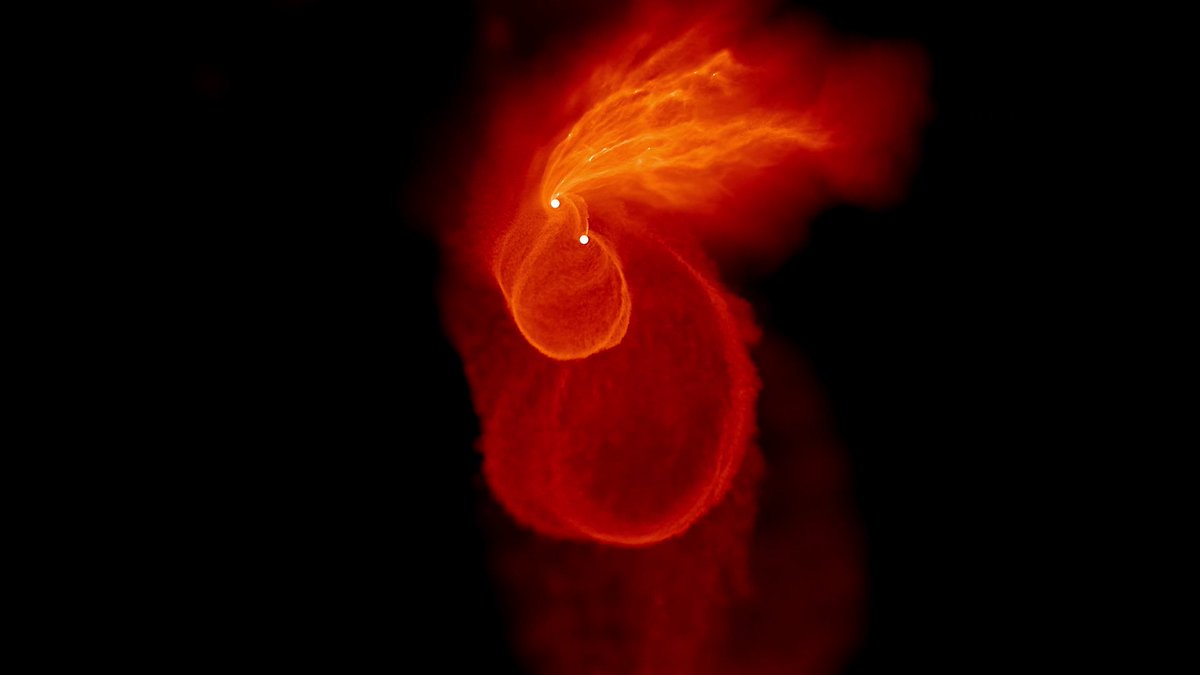
Gravitational lensing, also known as an Einstein ring This occurs when the strong gravitational pull of a massive object warps spacetime around it so much that light and other forms of electromagnetic radiation are deflected from a straight path. For example, animations show how a black hole passing in...

36,586 просмотров • 7 месяцев назад •via X (Twitter)

Комментарии: 0

Нет доступных комментариев

Здесь появятся комментарии из оригинального поста

Похожие видео

When a nuclear reactor is switched on for the first time, an intense, almost hypnotic blue glow appears in the water surrounding the reactor core. This light is neither fire nor heat; it is Cherenkov radiation, a physical phenomenon that occurs when charged particles, such as high-energy electrons produced during nuclear fission, travel through a transparent medium faster than light can propagate within that same medium. While nothing can exceed the speed of light in a vacuum, light travels more slowly in materials like water. When a charged particle surpasses this reduced speed, it emits a coherent shock-like electromagnetic wave, often described as an optical analogue of a sonic boom. This radiation produces the distinctive blue glow. The colour arises because Cherenkov radiation is strongest at shorter wavelengths, which are dominated by blue and ultraviolet light. The phenomenon was first observed experimentally in 1934 and later explained theoretically, work that led to the Nobel Prize in Physics in 1958. Its explanation confirmed how relativity and electromagnetism operate in material media. Today, this deep blue light is both a warning and a scientific tool. It signals the presence of intense ionising radiation, while also being exploited in particle detectors, nuclear reactors, and neutrino observatories. It provides a rare, visible manifestation of subatomic processes that are otherwise hidden from direct human perception. #GottaLovePhysics #Physics

Erika 

276,219 просмотров • 8 месяцев назад

When a spacecraft leaves Earth, it doesn’t just fire its engines and head straight to its destination. In many missions, especially those going beyond low Earth orbit, there’s a more subtle and elegant strategy at play, one that uses gravity itself as part of the navigation system. This is often called a gravity assist, or a slingshot maneuver. But in the case of missions like #Artemis II, what’s being used is a closely related idea known as a free-return trajectory. At first glance, it might sound simple: the spacecraft goes to the Moon, loops around it, and comes back. But the physics behind it is anything but simple. Instead of relying on continuous propulsion, the spacecraft follows a carefully calculated path through the gravitational field of the Earth–Moon system. It is launched with just the right speed and direction so that, as it approaches the Moon, the Moon’s gravity bends its trajectory. The spacecraft is effectively flung around the Moon, redirected onto a path that naturally brings it back toward Earth. No major engine burn is needed for the return. Small trajectory corrections may still be required, but gravity does the heavy lifting. That’s the key. This kind of trajectory is not just efficient, it’s also safe. If something goes wrong with the spacecraft’s engines or onboard systems, gravity itself ensures the return. It’s an inherent backup plan, built into the trajectory from the very beginning. The same fundamental idea appears in gravity assists used across the Solar System. When a spacecraft flies past a planet, it can gain or lose speed by exchanging momentum with that planet. From the spacecraft’s point of view, it’s as if it has been accelerated without using fuel. In reality, it has borrowed a tiny amount of orbital energy from the planet itself. That’s how missions like Voyager reached the outer planets, and how probes continue to explore regions far beyond what their onboard fuel alone would allow. But there’s an important distinction. An interplanetary gravity assist is typically used to change speed and direction, often increasing the spacecraft’s energy. A free-return trajectory, like the one used in Artemis II, is designed for something more specific: a path that naturally loops back to Earth without requiring additional propulsion. It’s less about gaining energy, and more about shaping a trajectory that guarantees a return. To understand why this works, it helps to stop thinking in straight lines. In space, motion follows curves defined by gravity. The spacecraft is constantly falling, first toward Earth, then toward the Moon, and then back toward Earth again. What looks like a loop is really a continuous free fall through a changing gravitational landscape. This way of navigating space reveals something deeper. We tend to think of engines as the drivers of motion, but once a spacecraft is on its way, gravity does most of the work. The art of spaceflight is not just about thrust. It’s about knowing when not to use it. #GoodLuck #Artemis NASA Artemis

Erika 

235,124 просмотров • 5 месяцев назад