Loading video...

Video Failed to Load

Go Home

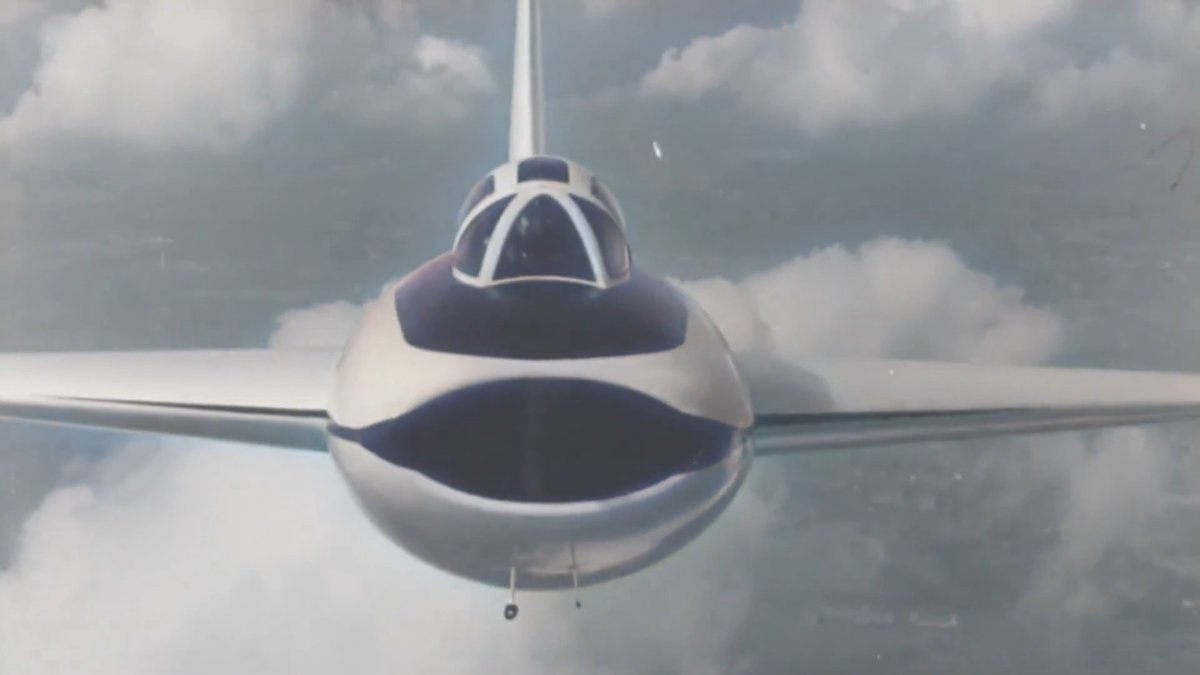
Harrier elevator ride... had never seen this before "The "Farley Takeoff," developed by legendary test pilot John Farley, involved hovering a Harrier jet at 100 feet before pitching the nose up to a steep 60-degree angle while still in a hover. ⁠ ⁠ Once in this vertical position, he...

701,194 views • 4 months ago •via X (Twitter)

0 Comments

No comments available

Comments from the original post will appear here

Related Videos

This is real gun camera footage from a P-51 Mustang, chasing a German Bf 109 down to the treetops until it goes down in flames. The American pilot flying it, Lt John Kirla, shot down five enemy planes in a single day, becoming an ace in one mission. This footage captures one of his victories over a Bf 109. This is his story.. From Trainee to the Yoxford Boys John Kirla was not a born fighter ace. He was an ordinary young American who had come up through flight training in Texas, graduating at the start of 1944. He learned his trade on trainers, moved up to fighters, and got just 15 hours in the P-51 Mustang before being sent to England as a replacement pilot. He joined the 362nd Fighter Squadron of the 357th Fighter Group, a unit based at Leiston that was already becoming a legend. The 357th was the first group in the Eighth Air Force fully equipped with the Mustang, and it would go on to produce more aces than any other fighter group in the Eighth, including Chuck Yeager and Bud Anderson. Kirla was the newest pilot in a squadron already filled with experienced aces. His job was to escort American bombers deep into Germany and protect them from the Luftwaffe. On November 27 1944, he got the day that would define him. Five Victories in One Mission That morning the 357th ran headlong into a massive swarm of German fighters trying to get at the bombers. Kirla's flight dropped their fuel tanks and dived straight into the middle of it. Almost immediately, the fight became a swirling, low-level brawl of Mustangs, Messerschmitts, and Focke-Wulfs twisting across the sky. Kirla picked out his first target and opened fire, and from that moment he did not stop hunting. In his own account, he spotted a Bf 109 that was attacking an American bomber. He went after it, closed to just 30 yards, and when the German threw his fighter into a tight barrel roll straight down toward the ground, Kirla stayed glued to his tail and, in his words, clobbered him all over until he went down. An Ace in a Day He kept finding more. Again and again through that wild, sprawling fight, Kirla latched onto an enemy aircraft and did not let go. At one point he watched a German fighter shoot down one of his fellow Mustang pilots right in front of him, and closed in for revenge. As he described it afterward, he opened fire, saw pieces start to fly off the enemy aircraft, and watched it fall out of the sky like a leaf drifting to the ground. Rather than breaking away and climbing back to safety, Kirla chased his targets down low, following them almost to the ground, the fighters weaving over villages and treetops until the enemy aircraft finally went down. By the time the fight was over, John Kirla had shot down five German aircraft in a single mission. He had become an ace in a day, one of the relatively few American fighter pilots to achieve that in a single mission. The Mustang That Changed the Air War The Mustang was the aircraft that made days like Kirla's possible. The P-51 combined long range, high speed, and deadly firepower, and it could follow the bombers all the way to their targets and fight the German fighters on equal or better terms. By the end of the war, P-51 groups had claimed close to 5,000 enemy aircraft shot down, about half of all American air-to-air kills in the European theater. Kirla's own group, the 357th, became the top-scoring Mustang group in the Eighth Air Force. Flying one of the finest escort fighters of the war, men like Kirla helped turn the tide of the air war over Germany. The gun-camera film rolling every time he pressed the trigger captured it all, including the footage you are watching. John Kirla's Legacy John Kirla flew on to the end of his combat tour and finished the war as a double ace, credited with 11 and a half enemy aircraft destroyed in the air. He was awarded the Silver Star and the Distinguished Flying Cross for his courage in the skies over Europe. He had gone from a trainee with a handful of hours in a Mustang to one of the deadliest fighter pilots in one of the deadliest fighter groups of the war, in the span of a single year. The footage of his Mustang chasing a Bf 109 down to the trees is only a few seconds long. But behind those few seconds is a young American who climbed into a fighter, dove into a swarm of the enemy, and shot down five of them before the day was out. This was the story of John Kirla. I post a story like this every single day. Most people never see them. Follow so you don't miss the next one.

Untold War Stories

156,281 views • 10 days ago

𝐓𝐡𝐞 𝐅𝐚𝐥𝐥 𝐨𝐟 𝐏𝐫𝐢𝐧𝐜𝐞 𝐇𝐚𝐫𝐫𝐲: 𝐖𝐡𝐲 𝐁𝐫𝐢𝐭𝐚𝐢𝐧 𝐖𝐢𝐥𝐥 𝐍𝐞𝐯𝐞𝐫 𝐅𝐨𝐫𝐠𝐢𝐯𝐞 Prince Harry, once the shining light of the royal family, has now become a figure of contempt in Britain, a man who has not only turned his back on his family but, more egregiously, sold out his country. His actions over the past few years have burned every last bridge, leaving the British public with nothing but scorn for the man who once stood shoulder to shoulder with the people. The Oprah interview was the tipping point. It was here that Harry, complicit in silence, allowed Meghan Markle to imply that a member of the royal family had concerns about the skin colour of their son, Archie. The accusation was seismic, sending shockwaves through the UK. But what made this worse—what made it utterly unforgivable—was Harry’s inaction. His failure to stand up for his family while his ailing grandfather, Prince Philip, was in his final days showed a callous disregard for the pain it would cause. No matter the issues he may have had behind closed doors, to go on international television and sully the name of the institution that raised him was seen by many as nothing short of treachery. And as if the Oprah debacle wasn’t bad enough, we were later subjected to 𝘏𝘢𝘳𝘳𝘺 & 𝘔𝘦𝘨𝘩𝘢𝘯, the Netflix mockumentary thinly veiled as a love letter to themselves but in truth, a very public airing of grievances. It was here that Meghan’s mocking of the royal tradition of curtsying to Queen Elizabeth shocked us Brits. With a poorly executed theatrical bow and a laughable comparison to medieval times, she belittled a gesture that symbolises respect and duty—values the British monarchy stands for. And Harry? He smirked. His silence, again, was deafening. How could any grandson, raised in the folds of such tradition, allow his wife to mock the woman who represented so much to so many? The British people watched, aghast. That smirk—that quiet complicity—was a betrayal not just of his family, but of us, the British public who had once held him in such high regard. Queen Elizabeth, beloved and respected, was the embodiment of duty and grace, and for Harry to stand idly by as she was mocked before her passing will never be forgiven. The wound is deep, and it’s raw. Then came the memoir 𝘚𝘱𝘢𝘳𝘦. If the Netflix series was a veiled attack, 𝘚𝘱𝘢𝘳𝘦 was an all-out assault. Page after page of grievances, personal attacks on his father and brother, intimate family moments laid bare for the world to see. The British public has always respected the monarchy’s ability to keep private matters within the palace walls. Harry tore that tradition apart. And for what? A quick buck, a bit of global attention. The title of ‘spare’ may have haunted him his whole life, but now it’s clear: the role he once resented is one he’s embraced—no longer a prince, but a spare to the very values that once defined him. For us Brits, it isn’t just the content of his attacks that hurts—it’s the fact that he’s chosen to air them so publicly, so vindictively. The monarchy is not just his family; it is the backbone of British history, culture, and identity. To see it so easily discarded and vilified by one of its own is a wound that may never heal. No, Britain will not forgive Harry. The man who was once the cheeky prince with a ready smile and a heart for service has become a symbol of betrayal. He has betrayed his family, his country, and his role in history. And for that, there is no going back.

𝕋𝕙𝕖 𝕎𝕒𝕟𝕥𝕠𝕟 𝕎𝕖𝕟𝕔𝕙

126,659 views • 1 year ago

USAAF 14th PRS Spitfire PR Mk XI gunned down at point blank range likely by a Luftwaffe Me 262 jet fighter in 1944 The incident pictured most likely involved Spitfire PR Mk XI PL782 flown by 2nd Lt Robert B Hilborn. The aircraft was intercepted over Lechfeld by Leutnant Alfred Schreiber of Erprobungskommando 262 in Me262 A-1a WerkNr. 110372 "White 3". This latter unit was the first to deploy the Messerschmitt jet and would later form Kommando Nowotny. Hilborn managed to bail out of his stricken aircraft and was taken prisoner. The USAAF insignia on the top of the port wing is clearly visible as the aircraft banks away and both the severe vibration on firing and size of the cannon shell impacts suggest 30mm gunfire consistent with the Me 262's MK 108 battery in the nose, and the jet aircraft would also have been able to comfortably keep up with the fast unarmed photoreconnaissance Spitfire variant at altitude. The 3cm Minengeschoss high-capacity shells were formidable projectiles each containing over 70 grams of high explosive and were designed to detonate within six or so inches of having penetrated the aircraft skin, destroying the aircraft structure in the process and rendering the aircraft unflyable after only a few hits. The amount of debris flying off the Spitfire after only three visible detonations is testament to the devastating effect of such fire. The US 14th Photographic Reconnaissance Squadron began to train with British-made Supermarine Spitfire Mk V fighters in July 1943 before equipping with the photographic reconnaissance PR Mk XI variant later that year. The squadron flew combat reconnaissance missions in the European Theater of Operations from August 12th 1943 until April 25th 1945. The squadron's Spitfires flew the majority of the target photography missions, including the first Spitfire reconnaissance mission over Berlin in March 1944, while the other squadrons of the 7th Photographic Group (Reconnaissance) equipped with F-5 Lightnings concentrated on photographic mapping. Deep penetration missions included reconnaissance of oil refineries to determine when repairs had been performed that could justify returning them to Eighth Air Force's target list. The Squadron earned a Distinguished Unit Citation for reconnaissance missions flown over France between May 31st 1944 and the end of June. The squadron flew over 300 successful sorties to support Operation Overlord, the invasion of Normandy. It flew missions over the Netherlands to support Operation Market Garden in October 1944 and conducted damage assessment of Germany until July 23rd 1945. In late 1944, the Spitfires, flying solo missions and relying only on speed and altitude for defense, began to prove vulnerable to the jet powered Messerschmitt Me 262 fighters entering service with the Luftwaffe. A squadron aircraft lost on September 5th 1944 was probably the first Army Air Forces loss to a German jet fighter. Erprobungskommando 262 had been formed in April 1944 at Lechfeld just south of Augsburg, as a test unit (Jäger Erprobungskommando Thierfelder, commanded by Hauptmann Werner Thierfelder) to introduce the Me 262 into service and train a corps of pilots to fly it. This was not Leutnant Schreiber's first go at an Allied reconnaissance plane, while flying over Munich on July 26th he encountered a Mosquito PR Mark XVI of No. 540 Squadron RAF piloted by Fl. Lt. A.E. Wall. Schreiber attempted to shoot down the unarmed Mosquito, though Wall evaded Schreiber's three attack runs and was able land safely at Fermo in Italy after what was the first air to air interception by a jet fighter in history.

hw97karbine

106,763 views • 1 year ago

🙏🇺🇸🙏 U.S. Air Force Captain Seth R. Koval — one of six Airmen who lost their lives while supporting Operation Epic Fury. For those who knew Seth, he was far more than a pilot or an officer in uniform. He was a husband, a father, a son, a brother, and a friend whose presence filled the lives of the people around him with love and strength. Seth grew up dreaming of becoming a pilot. That dream eventually became a life of service, one he carried with pride every time he put on his uniform. Those close to him say he loved what he did and felt honored to serve others through his work in the Air Force. But the people who knew him best remember something even greater than his career. They remember a man who was loving, generous, and kind-hearted. A man who always looked for ways to help others. Someone who could fix almost anything, who loved the outdoors, and who never hesitated to put the needs of others before his own. Above all, Seth was a devoted family man. His wife shared the heartbreak their family is now facing, describing the unimaginable pain of losing the person she loved most. In her words, Seth was not only an exceptional Airman, but the most incredible husband, father, son, brother, and friend anyone could ask for. She shared that one of the greatest honors of her life was standing beside him as he achieved the dream he had carried since childhood — becoming a pilot and serving his country. Though his life was cut far too short, Seth's legacy continues to live on through the family he loved deeply, especially in the smile of his young son who will carry a part of his father's spirit forward. For the Koval family, the days ahead will not be easy. Yet they have expressed deep gratitude for the love and support that has surrounded them during this painful time. Across communities and within the Air Force family, many people are remembering Captain Seth R. Koval not only for the uniform he wore, but for the life he lived - a life marked by service, faith, and love for others. Today we pause to honor him and to keep his family, friends, and fellow Airmen in our thoughts. - May Capt. Seth R. Koval rest in peace, and may his service and legacy never be forgotten 🙏🇺🇸🙏

G-PA

13,018 views • 4 months ago

A 22-year-old woman, an IIT graduate and the daughter of a senior bureaucrat, was found dead at her home in southeast Delhi's East of Kailash area. Police said she was raped before being strangled to death with a phone charger. She was alone at home at the time of the incident. There were no signs of forced entry. Police have arrested a 19-year-old domestic help, Rahul, who had worked at the house and was dismissed over a month ago. "Investigations revealed that he used to play online games and would borrow money from other servants in the vicinity, or from domestic staff working in nearby households, without ever repaying them. This is why he was fired," Joint Commissioner of Police Vijay Kumar said. He was arrested from a hotel in the Dwarka area, where he had been hiding. He is being charged with rape, murder and robbery, police said. Rahul was seen in CCTV footage leaving the victim's residence at 6:28 am, police said. According to police, the woman was found by her family members inside the house under suspicious circumstances, after which the authorities were alerted. The victim had completed her schooling at DPS RK Puram and later graduated from IIT Delhi. She was preparing for the UPSC examination. She was also a dancer and had won several awards in dance competitions. Her elder brother holds a senior position in a multinational company, and her mother is a doctor. When police reached Rahul's residence in Alwar, they found that he had previously been involved in a sexual harassment case. Police said the accused arrived in Delhi from Alwar the previous night and is suspected to have entered the house using a spare key. Police said Rahul had been hired with a reference from a superintendent posted at the IRS officer's office.

Hate Detector 🔍

314,734 views • 2 months ago

🇬🇧 The British Nlaw Anti Tank Missile: An unsung hero of the full scale invasion of Ukraine 🇺🇦 There are many factors for Ukraine's survival, many vital factors that led to success. Here is just one of them. Two and a half months after the Full scale invasion started, Ukrainian military officials had claimed the Nlaw anti tank was responsible for 40% of destroyed Russian armour in Ukraine. The NLAW is a British-designed and commissioned system, developed to UK specifications and manufactured by Sweden’s Saab Bofors Dynamics in partnership with the UK’s Thale Air Defence. It was created to give infantry a lightweight, easy-to-use system capable of defeating modern main battle tanks. The NLAW is a fire-and-forget, shoulder-fired missile that uses Predicted Line of Sight guidance. The operator tracks the moving target for just a few seconds before launch, allowing the system to calculate the target’s speed and direction. Once fired, the missile flies autonomously along that predicted path exploding over the tank directing its explosive evergy downwards where its targets armour is at it's weakest, for Russian tanks, where it also stores it's ammo. On February 10th, 2 weeks before the Full scale invasion. there was an article in the British news publication The Daily Mail. The Title: 'God save the Queen!': Ukrainian troops say British NLAW missiles are a 'game-changer' as they train to fight Russian forces and warn 'crazy' Putin: 'We will kill for our homeland' At this point, the British government had seen troops amassing, and rushed over 2,000 Nlaw units to Ukraine, along with 30 paratroopers to train Ukrainian forces in operating the NLAWs, knowing that if the Russians moved, there would be waves of logisitics and tanks moving in. An Nlaws wet dream. There was notoriety for American Javelins that were delivered after the invasion of Crimea, however at this point, most had been used in skirmishes with Russian ocupiers and only received more units after the full scale invasion. Ben Wallace, who at the time served as Secretary of Defence of the United Kingdom who was nicknamed by Ukrainian officials as 'The Man That Saved Kyiv' for various reasons had previously had seen satalite data, and went to work imediately to push for shipment of the weapons in which by April when it was sited they were responsible for 40% of Russian armour losses, 4,200 units had been delivered by March within 4 weeks of the invasion. Military analysts have since credited the rapid delivery and effectiveness of these British made weapons as a key factor in halting Russia’s initial blitzkrieg style assault. They empowering small units with the ability to take out main battle tanks, the NLAW helped transform Ukraine's defense strategy into a formidable deterrent buying critical time and saving the capital from likely occupation and later serving as a deadly tool for gorilla warfare. Russian tanks were moving in and the signle Ukrainians were taking out armoured tanks on foot with weapons worth 25k-38k USD per unit and weights just 12.5 kg, some were carrying 2 Nlaws on their backs at once. When it came to Nlaws, they were having a fucking field day smashing up anything Russian made of steel. Thank you for reading and if you have enjoyed what I have written, I would appreciate if you share it. - Bricktop I will leave you with these guys, this video was uploaded online within 4 days of the invasion which got me laughing, the guys say: "Muscovite fuckers will be fucked" "I'll set you alight"

Bricktop_NAFO

25,723 views • 1 year ago