Video wird geladen...

Video konnte nicht geladen werden

Zur Startseite

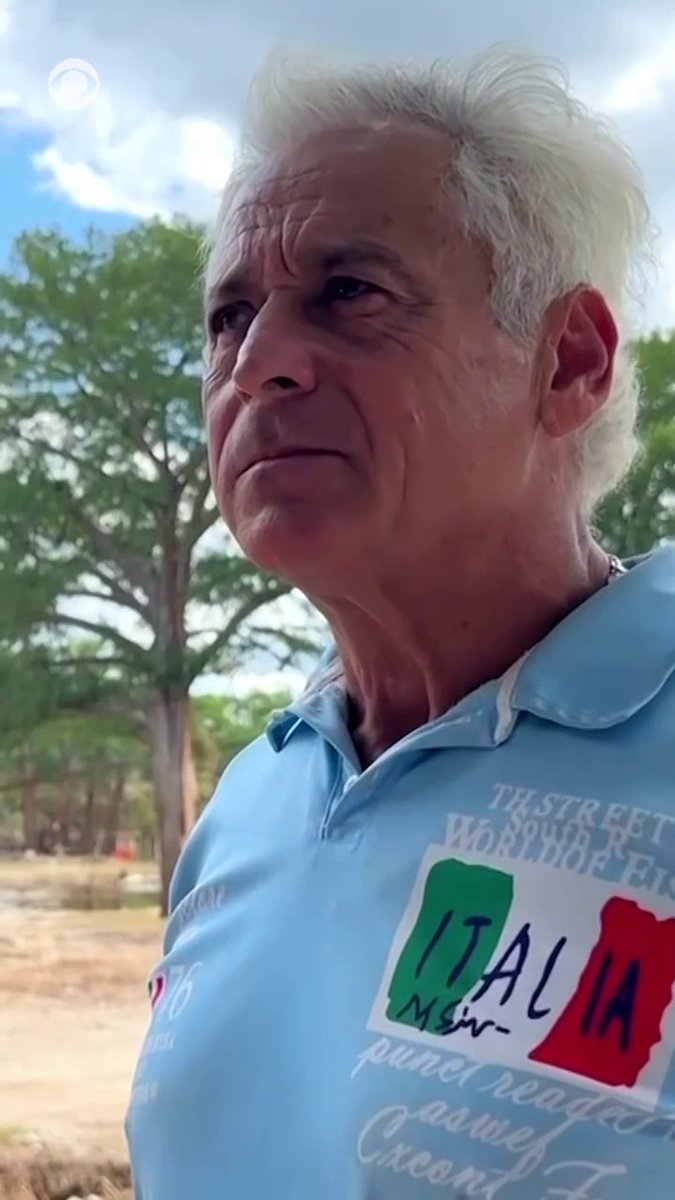
He was the multimillionaire software visionary that created the Zip file format still used almost universally to this day. And now, at the age of just 37, Phil Katz was dead. His life came to an inglorious ending in a lonely hotel room somewhere in Milwaukee County, Wisconsin. He...

302,814 Aufrufe • vor 2 Monaten •via X (Twitter)

0 Kommentare

Keine Kommentare verfügbar

Kommentare vom Original-Post werden hier angezeigt

Ähnliche Videos

Beethoven could not hear the music he wrote. At the age of 28, he realized he was no longer able to listen to a flute being played in the distance, and he spent the rest of his life composing the most enduring music in Western history in almost complete silence... He had been a working musician since childhood. His ears were everything. In 1798, in the middle of a heated argument with a singer, he noticed for the first time that something was wrong. The sound was thinning at the edges. He could hear voices, but high frequencies were beginning to disappear. He told no one for years. By 1802, the truth was no longer deniable. On his doctor's advice he moved to Heiligenstadt, a quiet village outside Vienna, hoping the country air would help. It did not. There, alone and surrounded by farmland, he wrote a letter to his two brothers that he never sent. It was found among his papers after his death. We now call it the Heiligenstadt Testament, and it is one of the most devastating documents ever written by an artist about himself: "You men who think or say that I am malevolent, stubborn or misanthropic, how greatly do you wrong me. You do not know the cause of my seeming so... what a humiliation, when one stood beside me and heard a flute in the distance and I heard nothing, or someone heard the shepherd singing, and again I heard nothing." He wrote, in the same letter, that he had thought of ending his life. And then he wrote the line that explains everything that followed: "Only my art held me back. It seemed impossible to me to leave the world before I had produced everything I felt called upon to produce." He went back to Vienna. He went on composing. Over the next two decades his hearing continued to fade. Friends began writing their words down in small notebooks instead of speaking them aloud, and waiting while he read. Modern scholars call these the conversation books. Around four hundred of them survive. To compose, he developed his own methods. He bit one end of a wooden rod and pressed the other against the soundboard of his piano, letting the vibrations travel through his jaw to his inner ear. He had stumbled, through trial and error, onto the principle that modern science calls bone conduction. The cause of his deafness has never been settled. What we do know is this: he realized he was losing his hearing at twenty-eight, and he could have stopped. He wrote the letter, he held the thought of dying in his hand, and then he put down the pen and went back to work. Most of what he is remembered for was composed after that moment: The Fifth Symphony. The Seventh. The Ninth. The Missa Solemnis. The late quartets. All of it was made by a man who could no longer hear most of what he was writing. There are people who give the world what they receive, and there are people who give the world what they were never able to receive. The most enduring beauty in human history has almost always come from the second kind... -- -- -- If you enjoyed this, I write a weekly newsletter read by over 50,000 people who love rediscovering the beauty of the past. You can join us here: I write about beauty in all its forms. If you'd like to support my work, a paid subscription is what makes it possible.

James Lucas

153,966 Aufrufe • vor 2 Monaten

Quentin Taratino said Lawrence Fishburne’s performance in King of New York was so incredible he thought - “he could be the greatest actor of his generation”. He explains: "As great as Christopher Walken is in this movie. To me, it's Larry Fishburne's movie - it was the rock that becomes a diamond aspect of the movie. It's why I could defend this movie against all comers, because to me, Fish's performance in this movie was comparable to a young Brando. It was the most exciting performance by an actor of his generation that I'd seen in a movie of that time. And I thought, well, that's it. There is a new Marlon Brando, and his name is Larry Fishburne - it was amazing, it was mesmerizing… He is the first hip hop gangster in movie history. That character had never been done before this. He invented that character. And he invented it as something to do. It wasn't in the original script. He came up with that himself… The three big Fishburne moments to me, is his opening sequence with…Tito. That's it, with Tito - black glove dude. And his reunion with Frank. And then it's the chicken scene (see below). Those are his three big arias. Not only that though - expressions that I would later hear for the rest of the decade, I actually heard for the first time in that scene. I'd never heard the expression; “I'll slap the black off you” before. That was the first time I heard it when Fish says it to Snipes. I've since heard it many times… And that was actually the first time I ever heard, “fuck you very much”. And I would proceed to hear that for the rest of the 90s. But those were the first times I'd ever heard those expressions… As terrific as he has been in other things - the level of excitement that I had over him when this movie was over, I have never had that excitement again. I thought, with this, he could be the greatest actor of his generation. That was an actual, real fucking thing. He could be the greatest actor of his generation after seeing this." Quote comes from The Rewatchables podcast

Gangster Cinema Central

657,190 Aufrufe • vor 2 Monaten

The man who invented modern fantasy didn't publish his first novel until he was forty-five. By that age, J.R.R. Tolkien had already built a respectable life. He was an Oxford professor, an expert in ancient languages, with a wife and four children and a settled academic career. He was exactly the kind of man who might reasonably have decided that the shape of his life was already fixed. The work he would be remembered for, he had not yet even begun... The story, which Tolkien told himself, is that one summer he was grading examination papers, when he turned a page and found that a student had left it blank. Without quite knowing why, he wrote a single sentence on it: "In a hole in the ground there lived a hobbit." He did not know what a hobbit was. He had spent years inventing languages and mythologies as a private passion, and telling stories to his own children, never imagining any of it would reach the world. But that one line began to grow. It became a story, and then a book, and in 1937, at the age of forty-five, Tolkien published The Hobbit. It was a success, and his publisher asked for a sequel. Tolkien warned them it might take some time. It took 17 years... He wrote it in the margins of a demanding full-time job, revising endlessly, doubting it often. When The Lord of the Rings was finally published, in 1954 and 1955, he was in his early sixties. That book, begun as a middle-aged professor's private side project, went on to sell well over a hundred million copies, to invent modern fantasy as we know it, and to reshape the imagination of the entire world. Tolkien already had a full and respectable life behind him. And still, the thing he is remembered for, the thing that outlived him and reached hundreds of millions of people, was something he began at forty-five, at an age when it would have been the easiest thing in the world to tell himself he had already missed his chance. He didn't. It's never as late as it feels.

James Lucas

93,539 Aufrufe • vor 1 Monat

🎥 || Stephen Lord reveals that in Monza Lewis Hamilton felt quite emotional and left a personal note for Kimi Antonelli in his room, the note will be there forever as well. "Probably the one that I'm fondest of, happened this year and it's quite an interesting insight into the Lewis perhaps that the people don't see." "It was after the race in Monza. [..] I think the engineers had left so Lewis was upstairs in the room on his own. Lewis came down the stairs, ready to leave and head home. He goes to the bottom of the stairs and he stopped and then he turned around and he went back upstairs. He's forgotten something, didn't think much of it." "He came back down about 10 minutes later and he grabbed a guy that works with the team - Carlos. And you could see that Lewis was really quite emotional. And I was stood there and he said 'It's has only just occurred me that I'm never gonna see that room ever again' and he said 'I'm really emotional, it's like I can't leave, I feel kind of sad to walk away from that room because I been in that room for so many years and I'm never gonna see it again'. And he was really quite touched that he was leaving it behind." "Anyways, so off he went, I went back up to the room to pack his last few bits of driving kit and grab the helmets and everything." "I walked into the room and on the wall there's quite a long handwritten note. It was a note to Kimi. It was basically welcoming him to his new room and it was wishing him the best of luck, saying some really nice things about the team and how 'if you care for them, they'll care for you' because they're a great team. And I thought 'wow what a nice thing to do. Actually now we've had it glass cut so it'll be there forever." "I walked into the bathroom and next to the toilet, above the toilet roll holder was 'Lewis was here' with a big smiley face."

sin ⁴⁴

490,217 Aufrufe • vor 1 Jahr

Actor William Fichtner explains how the lowest point of his career, long before his success, became the turning point that kept him going: He shares a moment from his early days in New York when everything he'd worked for felt like it was slipping away. "I think I was 30 years old and I was in New York and I hit the end of the road. I ran out of money. I had no commercial residual. I had nothing." After a few years of scraping by, a little money in theater and a few residuals from commercials, he had to go back to waiting tables. And it crushed him to compare himself to everyone he'd come up with: "I felt like I was falling backwards and I was 30 now. Everybody that I knew I graduated college with [had] a company car and I was just... it was depressing." He describes the morning he went to ask for a brunch shift at the White Horse Tavern in the West Village, a place he knew people went to: "I woke up. I was brushing my teeth. I started crying. I really was. I was walking that street going, 'Just, it's all right, man. It's all right. You're not falling backwards. You're not going off the end of the earth.'" On the walk, it got worse before it got better. He passed someone from his past: "I passed a guy that I hadn't seen in a couple of years that was like kind of like an old friend. And I said hi to him and he walked by and he just kind of looked at me like he didn't recognize me. It was horrible. It was just horrible." Then he walked into the restaurant, and the manager met him with hostility, telling him he was on the schedule the day before, hadn't even started, and was already fired. But instead of breaking him, it freed him: "I said, 'Thank you.' I walked out of there. I said, 'I have absolutely nothing right now and I'm feeling so good and I'm not working at your f****** restaurant today, buddy.'" He went home to find a place to re-energize. Looking back, that brutal day became a great one: "Just great, great day." The lowest point can feel like proof you're failing, but sometimes it's just part of the process. Years before his success, that morning could have ended his career. Instead it became the turning point that kept him going.

Big Brain Business

348,290 Aufrufe • vor 2 Monaten