Loading video...

Video Failed to Load

Go Home

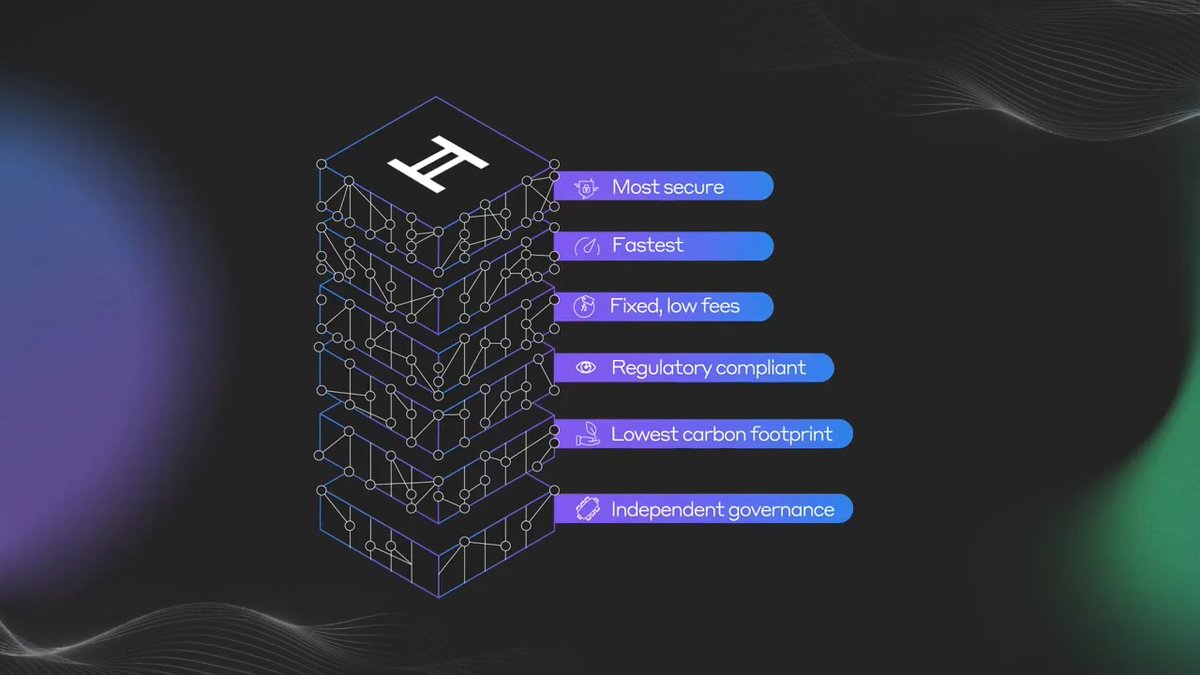
Hedera is MEV-resistant and prevents front-running. On many blockchains, validators can reorder transactions for profit, known as MEV (Maximal Extractable Value). Hedera’s hashgraph consensus eliminates this. How? 👉

47,989 views • 7 months ago •via X (Twitter)

0 Comments

No comments available

Comments from the original post will appear here

Related Videos

What is Hedera Hashgraph? Unlike traditional blockchains, Hedera (Hedera) does not organize transactions into a single chain of blocks. Instead, it uses a different distributed ledger structure called Hashgraph, designed to reach consensus quickly without proof-of-work mining. Here’s how it works: (1) It uses “gossip about gossip.” Nodes continuously share transactions with other nodes. Each message also contains information about previous messages, creating a history of how information moved through the network. This produces a directed acyclic graph, or DAG, rather than a traditional blockchain. (2) It uses virtual voting. Nodes do not need to send separate votes across the network. Instead, they can determine how other nodes would vote by examining the shared history. This reduces communication overhead while helping nodes establish transaction order. (3) It targets fast and final consensus. Hedera uses an asynchronous Byzantine Fault Tolerant, or aBFT, consensus model. Once consensus is reached, transactions achieve finality rather than remaining subject to the probabilistic settlement associated with some proof-of-work systems. (4) HBAR powers the network. HBAR is Hedera’s native cryptocurrency. It is used to pay network fees and plays a role in staking and network services. (5) Hedera is not simply another permissionless blockchain. Hedera is currently a public network with permissioned nodes operated through the Hedera Council. The Council governs key aspects of the network, while the underlying technology and network services are open source. (6) A path toward permissionless nodes is planned, but not live yet. Hedera has published a roadmap to gradually open up node operation beyond Council members, eventually moving toward a fully permissionless model where anyone can run a consensus node by staking HBAR. As of now, that transition has not been implemented, node operation is still limited to Council members. The bigger idea behind Hedera is straightforward. Instead of relying on blocks, miners, and proof-of-work, it uses Hashgraph consensus to coordinate transactions. That architecture is designed to deliver fast finality, high throughput, predictable fees, and low energy consumption. And that is what makes Hedera different from a conventional blockchain.

BSCN

18,168 views • 1 month ago