Video wird geladen...

Video konnte nicht geladen werden

Zur Startseite

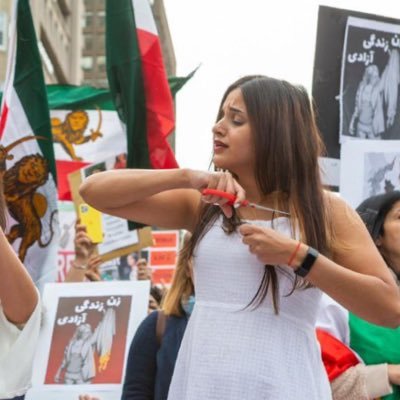
Here are 10 mind-blowing realities about Iran that many don’t know. Without knowing them you miss out on so much of what is really happening right now. 1. You have probably heard restoring the old flag emoji is a hot topic now. The current regime's flag has "Allah" in...

132,936 Aufrufe • vor 5 Monaten •via X (Twitter)

0 Kommentare

Keine Kommentare verfügbar

Kommentare vom Original-Post werden hier angezeigt

Ähnliche Videos

Reza Pahlavi, for all intents and purposes, does not owe us anything. His family built Iran from zero. When I say zero, I mean zero. A weak, fragmented Qajar state, one in which women could not leave the house without a man. One in which Iran’s internal affairs were completely controlled by outsiders. One in which foreign armies seized our lands to feed their troops while half our population died of famine. A country without an army, without national infrastructure, without sovereignty over its own resources. And I can go on, and on, and on. In return, we Iranians repaid their blood, sweat, and tears with one of the greatest treacheries imaginable in modern history. His grandfather, arguably one of the greatest men in Iran’s history, his tomb was levelled to the ground. His father was forced to leave the country he loved more than anything in the world. One could say it was not his illness that killed him, but the knife we put in his back, the betrayal of a nation he had dedicated his life to. Reza Pahlavi’s friends and family who remained in Iran were murdered, one by one, at the hands of the regime WE enabled. An entire generation around him was hunted, imprisoned, executed, or driven into exile. His sister and brother, unable to bear the weight of exile and the destruction of everything they had known, took their own lives. Reza Pahlavi has the money. He could have chosen a quiet life, a life of comfort and distance, far from the insults, the threats, the endless character assassination. Instead of spending more than four decades on this path, he could have lived for himself and his family, free of this burden. Instead, he chose responsibility. He chose to stand for the very people who betrayed his family and became the cause of so much suffering in his life. What does he ask in return? Nothing. No throne has been demanded. No position imposed. He has asked only for a national process in which the Iranian people themselves decide their future. He has anchored that path in clear principles, precisely to prevent Iran from falling once again into chaos, fragmentation, and revenge. Yet even for that, he is criticised by so-called “Iran expert” podcasters who have never carried the weight of a nation on their shoulders, who say, “He does not want to lead,” “He is not your guy.” All while he and his family live under constant attacks, threats, and scrutiny on a daily basis. Despite all of that, his love for his people and his land overrides everything. He continues to fight for us. I want to say we have done nothing to deserve it, but the people of Iran have proven otherwise in these past weeks. They are no longer blinded by decades of propaganda. They are revisiting their history. They are correcting the lies they were raised with. They are openly calling his name in the streets, knowing the price that must be paid for it. They are awake to the mistakes of past generations, and they have reached out their hand to him. And he, despite everything, has taken that hand.

Arsalan Naamdar

24,647 Aufrufe • vor 4 Monaten

Noor Pahlavi, daughter of Razi Pahlavi and granddaughter of the last Shah, Mohammad Reza Pahlavi, recently delivered a powerful speech in the United States about Iran’s future. She spoke directly to the longing of millions of Iranians: freedom, dignity, and an end to 46 years of theocratic oppression. Iran has approximately 90 million inhabitants. According to reports from people inside the country, diaspora networks, and independent observers on the ground, around 80% of Iranians are rejoicing - many with tears of joy - over the regime’s fall and the ongoing liberation of their country through American and Israeli strikes. The remaining 20% are the hardline extremists, regime loyalists, and those who benefited from the mullahs’ rule. They are mourning and calling for revenge. The vast majority of Iranians - the silent, suffering majority - want Crown Prince Reza Pahlavi, who has lived in exile in the United States for decades, to return and lead a democratic transition. Not as a new dictator or eternal Shah, but as a bridge to free elections, a secular constitution, and genuine self-determination for the Iranian people. I believe them. I believe in the courage on the streets and the quiet hope that has survived decades of terror. Most countries in the Middle East - especially the UAE, Saudi Arabia, and others who have long viewed the Iranian regime as the greatest regional threat - have quietly or openly welcomed the regime’s collapse. They see it as the beginning of a more stable, less aggressive Middle East. This is not the end of history - the liberation is still unfolding. But it is a turning point that millions have prayed for. Iran deserves better. The Iranian people deserve freedom. May God protect the Iranian freedom fighters. May truth and justice prevail. May light break through - for Iran and for the entire region. ✝️❤️‍🔥🪽🙏

Krisztina Maria

167,937 Aufrufe • vor 4 Monaten

[WATCH] THE PRESIDENT WILL NOT RESIGN. When it comes to the President, there is always a distinctive role between him being the President of the party and the state. There are many factors that influence the state in terms of governance and stability. If the President is called upon by some to resign and he keeps quiet it can throw the state into a state of turmoil. I want to make it clear that the officials agreed with the President on his approach, he took us into confidence and explained the factors that led him to make that particular pronouncement. We believe that the President did the right thing in pronouncing in the best interest of South Africa that he will not be resigning. There was nothing in terms of the judgment that warranted the President to resign it was just mere calls made by individuals and political parties that wanted to throw our country into a state of turmoil, uncertainty and anxiety. So it was imperative that he focus on that. It was correct for him to tell the country that from where he is standing there is nothing in the judgement that states he has done any wrongdoing and what he is going to do with the options in front of him and he has made this public. The President will take the Section 89 Report on review based on the outcome of the judgment and the legal advice he has received. There are no daggers out for the President to resign just opportunistic elements. These elements do not know what they want, they want to impeach and want him to resign, they do know what they actually want. The veracity of the report has not been tested in any committee so they don’t have a basis for the President to resign.

ANC SECRETARY GENERAL | Fikile Mbalula

21,983 Aufrufe • vor 1 Monat

Who Do You Think The 3rd Person Is? Bill Gates? Klaus Schwab? Someone Else? “Nostradamus saw in his future three men that he called antichrists. One was Napoleon, the second one was Hitler, and the third one is the one that is to come, who is said to be the worst of all, because he will learn from the mistakes of the others. A very dangerous person. He didn't like the term antichrist. He said it was a Christian term, and it was not exactly what he meant. But he said, if you think of Christ as representing people, humanity, then antichrist is someone who does terrible things against humanity, against people. And it can be the type of personality like Genghis Khan or Attila the Hun, the type that doesn't care anything about what it's doing, it only wants power. So this is what he meant by an Antichrist. But the third one, he gave us a great deal of information about him because he wanted us to do something to stop the man. He said in the Bible, in the book of Revelation and other books in the Old Testament, the people saw the same things that he saw their symbolism they could understand in their time, but they all saw the same thing. And the man he refers to as the Antichrist is the number 666 in the Book of Revelation, called the Beast. Of course he said 666 also refers to his connection to his computers. So there's a lot more to it. But he has been predicted as far back as Bible times. So he said he has a destiny to fulfill. He has to come, but after he comes, what happens after that is in the hands of mankind. Do we allow it to go through the worst case scenarios or can we lessen it? That's the point fulfill. We were given a lot of information about this man because he is so important. We have his horoscope. He was born on February the 4th, 1962 in Jerusalem, but he's not Jewish. And his parents were killed during the Israeli war and when he was about six or seven years old, and he was raised by his uncle. His uncle is a very evil man, and we have had many people see him, and we have in my work, and we had one woman who was able to put together a police composite picture of the uncle and of the antichrist. She was a psychic who had worked with police on many cases, so she knew how to do the police composite kits. But the uncle took the young boy him as his own. What the young boy doesn't know was that the uncle had his parents killed, so he could have him for himself. And he has gotten together a very powerful group of rich Arabs in the Middle East, and they've been taking care of this young boy and grooming him for the role he is to take. It's a very powerful group of people that control everything that happens in the Middle East. They're the puppet masters behind the scenes. Nusrat Dhamma said, by the time seven puppets arise in the Middle East, you will realize what is happening that they are not the real leaders of the countries, but they are the puppets being manipulated by the puppet masters behind the scenes. The young Antichrist went to college in Egypt, and we were working on this at the same time he was in college, so we were shown several scenes of him in college. We knew where he was living. We had all this information.”

Wall Street Apes

1,338,694 Aufrufe • vor 2 Jahren

Tucker Carlson: Remembering Charlie Kirk - A Life of Faith and Courage "Quickly about Charlie, I've known him since he was a teenager, and just an amazing person, but the two things that stick out, he's a Christian man. We talked about that a lot, including, you know, just the other day. There's a lot of pressure on public people, people who run huge, you know, hundred million dollar a year non-profits, and there are a lot of pitfalls and traps." "That's why so many of them are destroyed, and Charlie really did, without, you know, betraying details, like he walked the line for real. It was the topic of many conversations between us, because I've seen so many people destroyed. You know, most people are destroyed by power, and he wasn't, and I just really admire that." "I mean, to his last moments, you know, in order, he cared about God, his wife, and his children, and then his country. So, and that was totally real, completely real. I can affirm that, because I just talked to him about it so much, and I admire that, and he's a model, really." "I mean, he didn't have hate in his heart, and it was funny, and again, it's one of the reasons I couldn't stop looking at these videos last night. People were describing the opposite of what he was. He was filled with hate." "No, and if you talked to him about people who had attacked him, or who were truly his enemies, up to, and I think including the people who assassinated him yesterday, he would never, ever express hate, ever. He would always turn to, no, this person has been led astray. This person is clearly possessed by dark forces." "This person is a perpetrator, but also a victim of evil. I mean, that really was his worldview. That's the Christian worldview, and he expressed that in public, and especially in private, and I think that faith, which was completely real, not the fake faith that you see on display so often, but a real one, that was the root of his courage, and he had real courage." "He loved being with people who disagreed with him, not theoretically with them, but physically with them, you know, like close enough to smell. He would wait right in the middle of everything. I mean, I could tell you a million stories that I saw, but that was absolutely real." "Like, he loved people, even people who hated him, and people he loved, he was the rare person who was willing to tell them what he thought was true. I mean, he really believed, as a political matter, by the way, that, you know, I don't think he had animus toward anybody in no other country, but he really believed in his own country, and the obligation of his government to stand behind his country. He was truly America first in the nicest, most decent, non-ideological, but sincere way." "He was one of the only people, I mean, truly one of the only people to go to the president, whom he loved. He loved Donald Trump, like, personally as well, and I think the president really loved him in a real way, but he was one of the only people to go to the Oval Office and say, sir, I totally understand, and think Iran's really bad, but a war with Iran is not, you know, is something that could really hurt our country. I mean, boy, that was an unpopular position." "He didn't need to express it. Oh, of course, and he did it again. He didn't have some weird agenda. He wasn't mad at anybody. He was for his country, and he was for doing the right and wise and difficult thing, and he said that. He went to the Oval Office to say that." "He took massive, massive abuse from his own donors, which is also something that you don't see. He was one of the very few people, very few people I have met who combined a, like, a love for everyone involved with strong views. So, again, he was not animated by anything creepy or weird." "I mean, you knew him intimately, so you know this is true. If you talked to him off camera, he would say, you know, I really, like, I love whoever I'm talking about, but I think this is wrong. It's immoral." "It's bad for everybody involved, both sides, and he would say that, and he could say that because it was sincere. It was completely sincere, but I cannot overstate the amount of attacks he took privately over this, like, absolutely for real, and having lived in Washington most of my life and seen people run non-profits, I've never met one who was willing, stand up is too strong. He wasn't confrontational, but he would just say, no, I'm sorry that you feel that way, but I think this is the right thing." "The people we represent, which is mostly young people, they believe this, and I believe it also. It was brave, but loving at the same time, and I'm not sure he made a lot of headway, by the way. I mean, I think he made real enemies in doing that, but his view didn't change." "Anyway, he's just a wonderfully decent, loving man. That is true."

Camus

41,966 Aufrufe • vor 9 Monaten

A very harsh threat, made by Netanyahu toward Iran. What is behind the heightened tone? It is not only harsh, it is also unusual. The event that took place in recent months was a paralyzing fear of what is called miscalculation. They will think that we will attack first, even though that was not the intention, and then they will attack, and the entire region will be dragged into another round of confrontation. In a region where there is fear of miscalculation, you are not supposed to announce this kind of thing in the Knesset. I just want to make that clear. Yesterday, Naftali Bennett promoted his press conference on the conditions of soldiers, okay? He gets six million views because the timing looks like a countdown and he is a former prime minister, so the Iranians are in hysterics that he is actually announcing that they are going to attack. That’s the atmosphere. So when Netanyahu attacks like this and makes an unprecedented threat—not only harsh but also unusual—one can’t help but think that for Netanyahu there is a message, or something more problematic than miscalculation. And he wants to warn the Iranians. Now, what’s the issue? The issue is that if the Iranians come to the conclusion that their regime is on the verge of collapse, there is one thing that might save them. And that is an attack on Israel. Because we saw during the war what is called “rally around the flag.” Even those who were in the opposition rallied around the flag when their country was attacked. It is not only the Islamic Republic that is under attack, but also the Islamic Republic of Iran. That is essentially the issue, and that is what Netanyahu, in my opinion, is trying to stop with the threat he issued after the security discussion.

Amit Segal

41,392 Aufrufe • vor 6 Monaten

CNN’s Kristen Holmes: “I just want to point out one thing before we get into the power and influential person that Charlie Kirk was..not just a political activist. He was also a father and a husband. And you have to remember something when you talk about Donald Trump's campaign and the team that got him elected, it was a very small, very tight knit group of people. It was loyalists, people who were gathered around Donald Trump working in and out every day. And Charlie Kirk was part of that movement. So, when you're talking to these White House advisers and staffers and friends of the President, it's not just them looking at the death of an icon and a movement leader, as we've heard, it's also them looking at the death of a very close friend and somebody they spent an enormous amount of time with...[T]hat's why you're seeing such a sadness and a disbelief from so many people close to the President. And when it comes to talking strictly about his influence and his power within Washington, I mean, one of the things to keep in mind here is that this is somebody who had a direct line to President Trump who could voice his objections to President Trump at times, he could voice what he thought was important and not being covered enough by the administration. He spoke to many, if not all, of the cabinet secretaries directly. He had a finger on the pulse of the MAGA movement, even more so than some people who are here in Washington who got government positions. If you look at the crowd that had gathered around Kirk, that was just one example of the kind of crowds that Kirk would draw. He was truly a movement leader, as we've heard. He would bring thousands and thousands of people together, and that was why he was so critical beyond just the personal to the campaign to President Trump...So, there are a lot of different levels of all of this. The influence, the power, the — the connection to the base, but also the family and the relationships that Charlie Kirk had built with all of the Trumps. We have seen the children responding each individually about their relationships with Charlie Kirk saying to pray for him and his family.”

Curtis Houck

1,160,867 Aufrufe • vor 9 Monaten

Trump has done a complete 180 on everything he claimed to stand for. It doesn’t matter whether he’s scared, manipulated, acting on his own, or all of the above the outcome is the same. He has betrayed every principle and every single person who helped put him in power. The very people who carried him to where he is. He turned on them. Not just domestically, but internationally, look at the way he treated Orban. He forgets that Viktor Orban was a lone voice in Europe supporting him when everyone else was laughing at him and calling him a crazy orange man. Europeans hated him. Orban was his main supporter in Europe and the way he has treated Orban is just ugly, nothing more. Now he’s cozy with people like Lindsey Graham to the point where Graham is arranging meetings between him and people like the President of Finland. Let that sink in. He can scream ''I’m MAGA they are not,'' like a five-year old, but the truth is MAGA was never built by him, it was built around him. And now he’s completely betrayed what it was supposed to stand for. He’s insulted allies, betrayed partners and escalated tensions with adversaries burning bridges in every direction. And now, here we are again, he’s starting to echo the same tired neocon narrative we've heard for years ''Russia, Russia, Russia.'' It may not be as blatant yet, but give it a few weeks and we’ll be right back to blaming Russia for everything. What makes it even more crazy is that he himself was once the target of the entire Russiagate saga. I’ve seen stupidity before but this is on another level. This isn’t just more of the same, it’s something entirely new. I’ve said it before and I’ll say it again the government is a reflection of the people. And right now, we have a narcissism problem in this country. We rank at the top when it comes to that disorder. What’s the core trait of a narcissist? Look at Donald Trump a textbook case. No empathy. Someone dies, and there’s no weight to it. His comment after Charles' death was disgusting. He talks about bombing people with this disturbing sense of excitement ‘we bomb the hell out of them’ like it’s a performance. The worst part is how easily this situation could have been handled. Ayatollah was old and sick he only had a few years left. There was a real opportunity for a deal. Trump blew it when he started bombing Iran in the middle of the negotiations. Twice! We keep ignoring reality. Israel is one of the most cunning and deceptive countries in the world. This is a state that secretly developed nuclear weapons and hid them from its own so-called ‘closest ally,’ the United States. This is a country that has spied on U.S. offices, blamed others for its actions and has has killed American soldiers and journalists. If we were honest and actually calculated which country has caused more harm to U.S. interests Iran or Israel, Israel would likely be far ahead. That’s not opinion, that’s a fact. Iran didn’t just become an enemy out of nowhere. We played a major role in creating that hostility from overthrowing Mossadegh to installing the Shah, whose regime imprisoned and brutalized its own people and we supported and backed him knowing he was a dictator. Now we have the audacity to tell Iranian people that they should get rid of their dictator and we can help by bombing them. You can't make this shit up! Are you kidding me? And there are still idiots who actually buy this. Iran has largely operated from a defensive position ever since. We label them terrorists, but from their perspective, they’ve been preparing for survival building regional influence and proxy networks because they fear exactly what history suggests, that they could be targeted next with bombs or even a nuke! In 2007, Wesley Clark said that the Pentagon had a plan to attack Iraq, Syria, Lebanon, Libya, Somalia, Sudan, and Iran. We ended up doing much of that, one by one. Well, guess what, if I’m Iran, watching this and hearing a high-ranking Pentagon official say my country is on that list, and then I see each country on that list get taken down one by one, who here wouldn’t at least think about building a nuclear weapon for defensive purposes? When you know one of the biggest and strongest militaries in the world is planning to invade you someday, and they’re openly talking about it, what would you do? All of you geniuses who think Iran is the problem, honestly, which one of you wouldn’t consider building a bomb in that situation? And that’s without even getting into the role of countries like Israel and the influence they may have on pushing the United States toward these actions. If your argument is that Iran has a dictatorial regime, then you are a hypocritl. The United States installed a dictator in Iran themselves and overthrew a democratic leader and even after that the CIA said they had no problem with Ayatollah, in fact they said it would be 'good for us'.Then they got caught selling weapons to Iran. If the argument is - 'they’re building a nuclear weapon,' then the obvious question is: why? Why would they feel the need to? Maybe it has something to do with Wesley Clark, Iraq and many more?!.. So let’s be real, anyone who says Iran has no right to want a nuclear weapon is either being dishonest or just flat out stupid. Do I want them to have a nuke? No. But do they feel justified in wanting one? Absolutely! Put yourself in their position. You know the history you know what the CIA did to your country. Then you hear a high-level figure like Wesley Clark talk about a plan to take out seven countries in five years, including yours. You watch those countries get hit one after another and you are no position to stand against the US and actually win that war without taking great amount of casualties. What conclusion are you supposed to draw from that? At that point, it’s not crazy it's strategic! Any country in that situation would start thinking exactly about that, I know I would have if I was in that situation. Wouldn’t you? It’s not hard to understand why a country might see nuclear capability as a deterrent when it feels threatened by stronger military powers and some absolutely psychotic states like Israel. And let’s be realistic, Iran would never use a nuke against the United States, any use of nuclear weapons against us would mean their complete annihilation. Iran is many things but it’s not that suicidal, they don’t want to end their existence, they want their country to endure. The question is which country then would they use the nukes if they are ever put in that position? There’s only one country and that’s Israel not the US and Honestly I do not see how is that my problem at all? Do you? I mean it maybe Miriam Adelson's problem but it's not my problem. Most of Iran’s hostile actions came after the U.S. helped overthrow its government and backed a dictator for decades! So this narrative that Iran has been hostile to the us needs seriously clarification to why? Any regime would be hostile to you when you overthrow their democratic leader and instal a dictator that makes people miserable. After the revolution, Iran became openly hostile to the U.S for A REASON! The reason is the CIA and the corporate America nothing else.

ELIZABETH LANE

34,350 Aufrufe • vor 3 Monaten

Issues of paternity have shaped our society for generations, especially in Zimbabwe. They did not start today. I remember going to a funeral with my father in the 1990s, and as we sat around the fire the men began sharing stories. One of them has stayed with me ever since. A Zimbabwean doctor had married a nurse, and they struggled to have children. As usual, when there is no child, the blame was placed on the woman. She went to see her own doctor, who told her plainly that she was not the problem, and advised her to bring her husband for testing. The husband refused, as many Zimbabwean men tend to do. Their marriage eventually collapsed, with the man insisting he could not be the problem because he had a child with another woman before marrying the nurse. That woman, he said, was also a doctor, and he was raising that child. After the divorce, the nurse remarried another doctor, and she immediately fell pregnant. Because it was a tight medical community, the whole situation became a talking point. The ex-husband had loudly declared that his former wife was barren, yet here she was having one child after another, three in total, with her new husband. Meanwhile, the ex-husband remarried, and again there were no children. One day the ex-husband and his former wife met at a gathering. During a casual conversation, as people who once knew each other, she told him directly that he was raising a child who was not his. She told him that he had no capacity to father a child and that if he finally went for tests, he would discover the truth. She reminded him how he had insulted her and her parents, and how he had refused to listen. The revelation shook him. He went for tests, and it was confirmed that he was the problem. He had spent seventeen years looking after a child who was not his. The moral of the story is simple, and I always stress this when mentoring young people. When in doubt, check. In fact, even without doubt, check. A DNA test at birth saves you from future heartbreak. Many men are raising children who are not theirs. Some women know exactly what they are doing. Others genuinely do not know because their relationships overlapped before they settled down. In those cases, even the woman cannot be sure who the father is. So when you have a child, get a DNA test. If you ask for one and a woman becomes defensive or resistant, that is a major red flag. At that point, the test is no longer optional, it is necessary. That is the reality of life today. As they say, trust is beautiful, but DNA is confirmation. In this life we live, hope is not a strategy when it comes to your children, so test your child and protect your future, as the saying goes. I have DNA stories that I could share for a whole year. If compulsory DNA testing was demanded of all of us today, you will be shocked by what will come out. This brother in the video is now going through denial. He has been told the truth, but he is still in shock, which is why he is asking for silly things from this woman. It is hard for any man to discover that the child he believed was his belongs to another man. That is why DNA testing is a necessity and why it should be compulsory.

Hopewell Chin’ono

67,842 Aufrufe • vor 7 Monaten

Andrei Tarkovsky on Ingmar Bergman's Shame (1968): "Let us look at Bergman's Shame. The film doesn't contain a single 'actor's piece' for the performer to 'give away' the director's purpose, to play the conception of the persona, his attitude to it, to assess it in relation to the overall idea; and the latter is entirely hidden within the dynamic of the characters' lives, at one with it. The people in the film are crushed by circumstances; they act only in accordance with their situation, to which they themselves are subordinate; they make no attempt to proffer us any idea, any perspective on what is happening, or to draw any conclusion. All of that is left to the film as a whole, to the director's vision. And how superbly it is accomplished! You cannot say in simple terms who amongst them is good or bad. I could never say that von Sydow is a bad man. They are all partly good and partly bad, each in his own way. No judgements are passed, because there is no hint of tendentiousness in any of the actors, and the circumstances of the film are used by the director to explore the human possibilities which they test, and not for a moment in order to illustrate a thesis. Max von Sydow's character is developed with masterly power. He is a very good man; a musician; kind and sensitive. It turns out that he is a coward. But by no means every bold man is a good human being, and cowards are not always scoundrels. Of course, he is weak and irresolute. His wife is far stronger than he, so much so that she can overcome her fear. The hero lacks that strength. He is tormented by his own weakness, vulnerability, lack of resilience; he tries to hide, to cower in a corner, not to see and not to hear; and he does this like a child, naively and with complete sincerity. But when circumstances nevertheless force him to defend himself, he instantly turns into a scoundrel. He loses all that was best in him; but the drama and absurdity of his situation is that as he is now he becomes necessary to his wife, who, in her turn, looks to him for protection and succour instead of despising him as she always had. When he beats her about the face and says 'Get out!' she goes crawling after him. There is something here of the age-old idea of passive good and active evil; but its expression is immensely complex. At the beginning of the film the hero cannot even kill a chicken, but as soon as he has found a way of defending himself he becomes a cruel cynic. He has something of Hamlet: my view is that the Prince of Denmark perishes not as a result of the duel, when he dies physically, but immediately after the 'rat' scene, when he understands how irreversible are those laws of life which have forced him, a man of humanity and intellect, to act like the inferior people who inhabit Elsinore. Von Sydow is now a sinister character, afraid of nothing: he kills; will not raise a finger to save his fellows; pursues only his own interests. The point is that you have to be a person of great integrity to feel fear in the face of the foul necessity to kill and humiliate. And by shedding that fear and apparently acquiring courage, a person in fact loses his spiritual strength and intellectual honesty and parts from his innocence. War is the obvious catalyst for the cruel, anti-human elements in people. Bergman uses the war in this film exactly as he uses the heroine's illness in Through a Glass Darkly: to explore his view of man." — "Sculpting in Time" by Andrei Tarkovsky (translated by Kitty Hunter-Blair, 1987)

RadiantFilm

27,723 Aufrufe • vor 5 Monaten