Loading video...

Video Failed to Load

Go Home

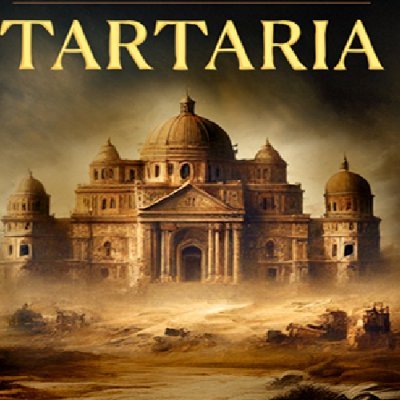
Here is a video that challenges our understanding of human intelligence and progress. Judging by the ancient images, it seems that we are not so unique when it comes to technology. The poses of people reminiscent of using tablets and the drawings depicting car-like vehicles and aeroplanes suggest that...

61,959 views • 2 months ago •via X (Twitter)

0 Comments

No comments available

Comments from the original post will appear here

Related Videos

YOKO ONO: ONOCHORD, VENICE, 2004 Yoko: The world is divided in two industries. One is the War Industry and the other is the Peace Industry. The people in the War Industry are totally together. They don't have to talk to each other, even. They know exactly what they want to do. They want to go out there, kill and make money. But the people in the Peace Industry, which are us - we are so idealistic that each one of us criticises the other Peace Person in the Peace Industry. And we are always just arguing and we are wasting our energies doing that. So let's just forgive each other and see that we are in the Peace Industry and that's all that counts. Even if you are not marching for peace, just be yourself, being a florist, being a merchant, being a talior, anything. That way you're contributing to the Peace Industry. People are just concentrating on fear, confusion and anger. And therefore just for a moment, I'd like us to think about Love. In a very magical, straight way, John and I met in London and from then on we stood for Peace and Love. And when I do this kind of event. Well it is... I was inspired to do it, but I still think that I'm still with John in spirit. John and I created the country called Nutopia. Not Utopia, because there was Utopia as a concept already. And we wanted to create a new concept, so we just added N on it - Nutopia - and as a country. Well, that is the concept of a country. And we all are citizens of that country. And in my apartment in the Dakota Building, we put a little plaque on the back door, the kitchen door. It says 'Nutopian Embassy' and even now we have that. (laughs). Nutopia exists in our minds. And because of that, some people want to rebel against it. The reason some want to rebel against it is a good proof that it exists. I think that it was a terrible thing that happened in Chechnya. But we have to still keep our hopes up. And instead of giving up, we have to keep on sending the message of Love to each other. You say that I am the Ambassador of Peace. We are all Ambassadors of Peace. You are too. Everybody in this room are Ambassadors of Peace. Just the fact that we are not participating in War. The fact that we are here, and we are what we are, means that we are in the Peace Industry. All of us. John and I used to say that our apartment in the Dakota is a conceptual monastry, just for the two of us. And when we go out of the Dakota, we get so many people communicating with us, so it's very important that we had silence and quietness. And my apartment is a very small space compared to the world. And I need that for my peace of mind. You should be kind to each other. You should come together, hug each other, love each other, express our love to each other and we should make it work. We should finally create a world that is a totally an Earth for Us. So let's do it. Yoko Ono, OpenAsia Press Conference, whilst exhibiting Onochord, 2004 by Yoko Ono (Nutopia) at the Venice Biennale: OpenAsia 2004, Lido Di Venezia, Venice, Italy, 9 September 2004.

Yoko Ono

35,208 views • 2 years ago

Jensen to AI Leaders: “We have to be far more thoughtful” when communicating to the public Jensen Huang: “(AI) is not a biological being. It is not alien. It is not conscious. It is computer software.” “We say things like, ‘We don't understand it at all.’ It is not true. We understand a lot of things about this technology.” Chamath: “If you were in the seat in the boardroom of Anthropic over that whole scuttlebutt with the Department of War, what do you think you would've told Dario and that team to do, maybe, differently to try to change some of this outcome and some of this perception?” Jensen: “The first thing that I would say about Anthropic is, first of all, the technology is incredible. We are a large consumer of Anthropic technology.” “The desire to warn people about the capability of the technology is also really terrific.” “We just have to make sure that we understand that the world has a spectrum, and that warning is good, scaring is less good because this technology is too important to us.” “I think that it is fine to predict the future, but we need to be a little bit more circumspect. We need to have a little bit more humility, that, in fact, we can't completely predict the future.” “And to say things that are quite extreme, quite catastrophic, that there's no evidence of it happening, could be more damaging than people think.” “And of course we are technology leaders.” “There was a time when nobody listened to us, but now because technology is so important in the social fabric, such an important industry, so important to national security, our words do matter.” “And I think we have to be much more circumspect, we have to be more moderate, we have to be more balanced, we have to be far more thoughtful.”

The All-In Podcast

57,581 views • 4 months ago

Incredible last few minutes of the Rick Rubin / Adam Neumann interview. I got chills listening to this. --- Adam: We'll connected to this week's portion. We all have something that we're slaves to. We all have an addiction to anger, to ego, to power, whatever it is, idol worship that we have. We all have an Egypt. We all need to leave that Egypt, come out of it. When we come out of that Egypt, we all face a Red Sea. When we see that Red Sea, we all need to have the courage to walk into it so far that we drown. Only when we're willing to drown will the Red Sea be split and we'll go to our next level. We then go to our next level. We see the Red Sea split. Suddenly we're like, oh, everything is okay. And we forget. The moment we forget, we step into the desert. We all have to walk through our version of desert. That desert is between us, us, and God. No one else. The only decision we get to have is how long we're going to journey through that desert. Are we going to journey for 14 days like the children of Israel were supposed to? Or are we going to journey for 40 years because we're not learning our lesson? Our choice is not, are we going to get into the desert or not? It's how long will we be in. And once we go out of that desert, we all have our version of the promised land. And if we have the courage to look inside, see our own correction, our own limitation, look at it clearly now and say, I see you, and I'm going to get over it. I'm going to learn. I'm going to grow. I'm going to understand that life is not about falling down. It's about how I'm going to get up. I'm going to fall 1,000 times so I can get up 1,001 times. And in that last time when I get up and I'm actually ready to go to my next level, I'm going to wish for you, for me, and for everybody who are listening — please, may we have the courage to go to our next level because we know that the promised land is waiting right after it. And may we not be afraid when the whole world is saying this or that about us. Who cares? It's about what you think, what your wife thinks, what your kids think, and what the universe thinks. Rick: Amen. Adam: Amen. Thank you. Thank you, Hashem. Thank you.

Jared Zoneraich

153,441 views • 4 months ago

.Logan on our latest piece in Human Progress about what unifies the enemies of civilization: What unifies all of the enemies of civilization is that they all slow down the growth of knowledge. Now, you ask, how can we take advantage of this fact, namely that all of the enemies of civilization share in common this feature that they curb the growth of knowledge? This fact tells us that we can, if we so choose and if we make the right decisions, outpace them in the growth of knowledge. So, one strategy to defeat the enemies of civilization is basically to outpace them in this great war of memes and growing wealth and knowledge, such that eventually, the memes that comprise the enemies of civilization, as well as the wealth that the enemies of civilization control, is an ever smaller fraction of the total meme pool and wealth that civilization has to offer. So, this is what success would look like if we think about outpacing them. But there's also the strategy of replacing the memes that comprise the enemies of civilization with better ideas. This is just a fancy way of saying we could also persuade people. So that would be a kind of inside-out approach, rather than the out-pacing, which is kind of from the outside in. And of course, we can walk and chew gum at the same time. We can continue to build and outpace the enemies of civilization while persuading people that the relevant ideas that curb the growth of knowledge are mistaken. And by the way, just to make the conversation a little less abstract, the enemies of civilization that we wrote about in our piece, which is an excerpt of the script we wrote for your upcoming documentary, those enemies are socialism, environmentalism, scientism, relativism, dogmatism, and doomerism. And I don't think I ever told you this, Arjun, but what I like about the list we came up with is that understanding the inner workings of each of these enemies of civilization, that is to say, understanding the how and why of how each enemy of civilization curbs the growth of knowledge, gives unique insights into the nature of progress and epistemology. This clip was recorded and made using Airchat.

Arjun Khemani

23,776 views • 1 year ago

.Naval: You define wealth in a beautiful way. You talk about wealth as a set of physical transformations that we can affect. So as a society it becomes very clear that knowledge leads directly to wealth creation for everybody. A given individual can obviously affect physical transformations proportional to the resources available to them—but much more proportional to the knowledge available to them. Knowledge is a huge force multiplier. You then define resources as the thing that you combine with knowledge to create wealth. New knowledge allows you to use new things as resources and discard old things that maybe we’re running out of. There are lots of examples of how we’ve done that in the past. For example, in energy we’ve gone from wood to coal to oil to nuclear. But then people say, “Now we’re out of ideas. Now we’re caught up. Now we’re done. There aren’t going to be new ideas, and now we have to freeze the frame and conserve what we have.” The counter to that is, “No, we’ll create new knowledge and have new resources. Don’t worry about the old ones.” Well they say, “If you’re going to have new resources, if you can’t think of them now, it’s not real.” This now gets into the realm of people demanding that if you’re going to claim that new knowledge will be created, you have to name that knowledge now. Otherwise it’s not real. But that seems like a Catch-22. David Deutsch: It does, and it’s a bad argument. I don’t want to claim that the knowledge will be created. We’re fallible; we may not create it. We may destroy ourselves. We may miss the solution that’s right under our nose, so that when the snailiens come from another galaxy and look at us, they’ll say, “How can it possibly be that they failed to do so-and-so when it was right in front of them?” That could happen. I can’t prove or argue that it won’t happen. What I always argue, though, is that we have what it takes. We have everything that it takes to achieve that. If we don’t, it’ll be because of bad choices we have made, not because of constraints imposed on us by the planet or the solar system. Naval: It will be by anti-rational memes that restrict the creation of knowledge and the growth of knowledge. David Deutsch: Maybe. Or maybe it’ll be by well-intentioned errors, which nobody could see why they were errors. Again, it doesn’t take malevolence to make mistakes. Mistakes are the normal condition of humans. All we can do is try to find them. Maybe not destroying the means of correcting errors is the heart of morality; because if there is no way of correcting errors, then sooner or later one of those will get us. Naval: Don’t destroy the means of error correction is the base of morality. I love that. I think about places like North Korea where you can’t have elections and a revolution is very difficult because the gang in charge is armed to the teeth and they’ve destroyed the means of political error correction for a long time. That is a case where humanity is trapped in a local minimum, and it’s very hard to climb out of that hole. If too much of the world falls into that mindset, then we as a species may just stagnate because we’ve lost our biggest advantage. We’ve lost our biggest discovery, which was the ability to make new discoveries.

Deutsch Explains

143,913 views • 1 year ago