Загрузка видео...

Не удалось загрузить видео

На главную

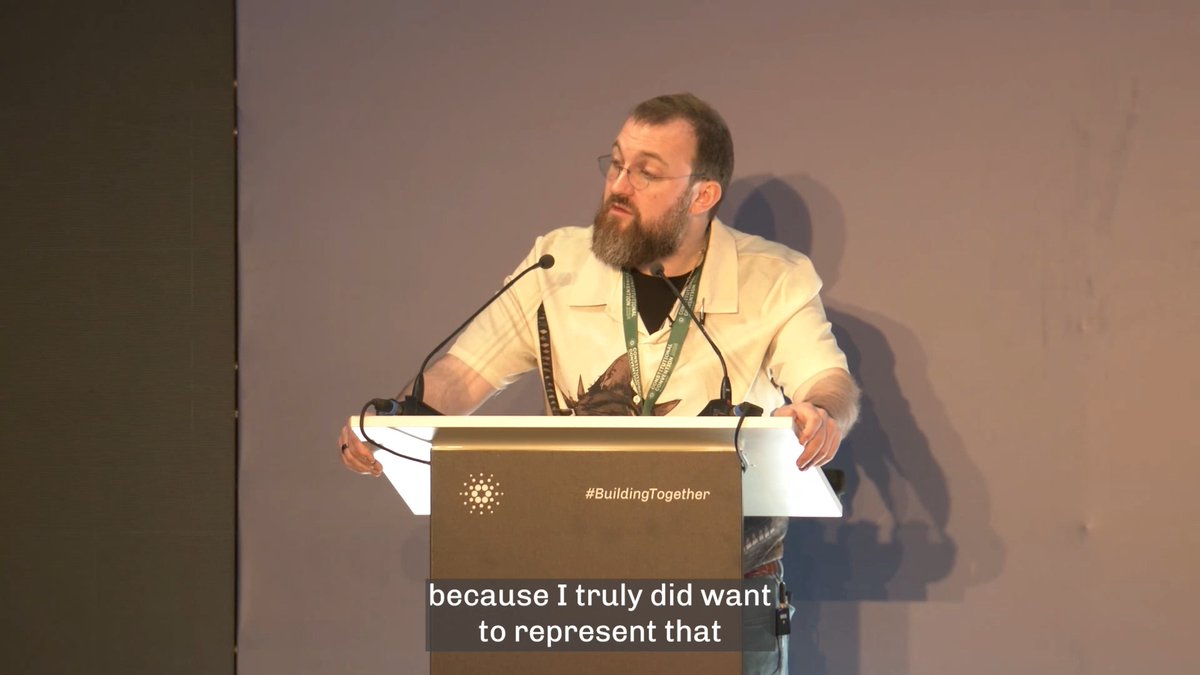
Hey Cardano! A few updates from Leios and MusashiNet: 🌏 Eerth phase just concluded. 6x mainnet throughput without even trying. Read the blog post here: 💰MusashiNet rewards program is live. It's tied to data sharing eg machine logs, forging logs, machine specs, relay location. Read more here: 📘 Leios...

40,928 просмотров • 11 дней назад •via X (Twitter)

Комментарии: 0

Нет доступных комментариев

Здесь появятся комментарии из оригинального поста

Похожие видео

Yesterday, our Judiciary Committee passed HR 38, National Reciprocity. I support this bill, but there is a better option, and it is National Constitutional Carry. 29 states already have Constitutional (i.e. permitless) Carry. Why not extend it to all 50 states? Under HR 38 (Reciprocity), a resident of one of the Constitutional Carry states can carry in any state that allows their citizens to obtain a permit. The recent “Bruen” Supreme Court decision requires all states that aren’t Constitutional Carry to issue carry permits to their citizens. This means that when HR 38 passes, any resident of those 29 Constitutional Carry states will be able to carry in any of the 50 states without a permit. Ironically, however, residents of the 21 states (like New York or California) that aren’t Constitutional Carry will need a permit to carry in their own state, while visitors from states that are Constitutional Carry (like Kentucky or Ohio) won’t need a permit to carry in states like New York or California. If Congress, relying on the Second Amendment, can force California to allow “Permitless” Carry for Kentuckians who visit California, why would we not force California to allow “Permitless” Carry for Californians who are in California? In other words, why not pass National Constitutional Carry and afford everyone in the United States the right to “bear arms” which is enshrined in the Constitution? The other quirk of HR 38 is that (I believe) it would allow a person from Kentucky to carry an AR-15 pistol with a 20-round magazine in California, while Californians would not be allowed to carry, or even own, the same equipment. The Supreme Court decision in “D.C. v. Heller,” whether you agree with it or not, allows states to have some regulations on firearm equipment and eligibility to possess, but HR 38 seems to contradict that framework. Contrast this with my National Constitutional Carry bill which basically says if a state allows people to possess (KEEP) a particular firearm, that state must also allow people to carry (BEAR) that firearm. I introduced my National Constitutional Carry bill in committee yesterday as a substitute amendment to HR 38, National Reciprocity. After introducing the amendment for the record and describing it, I withdrew the amendment instead of putting my Judiciary Committee colleagues in the position of deciding whether to replace National Reciprocity with National Constitutional Carry. The dilemma is that not enough Republicans in the whole House understand the difference, and the prevailing opinion is that Reciprocity can pass the whole House, but Constitutional Carry cannot. Perhaps when more of my colleagues who are not on the Judiciary Committee understand why we should pass National Constitutional Carry instead of (or in addition to) National Reciprocity, we can make a strong push to report National Constitutional Carry out of the Judiciary Committee for a vote in the full House of Representatives. In the meantime, I’m glad HR 38 is going to the House floor for a vote.

Thomas Massie

229,372 просмотров • 1 год назад

Constitutional Amendment Bill (N0.3) unanimously passes to committee stage The contentious Constitutional Amendment Bill (N0.3) unanimously passed to the committee stage in the National Assembly earlier in the afternoon after the opposition neglected or failed to call for a critical division of the house for MPs opposed to the legislative changes to vote against it. About 30 MPs were opposed to the bill in its entirety after a record-breaking fierce debate. The failure by the opposition to call for division of the house let the bill, which has far-reaching political implications, pass to the committee stage unanimously, without formal opposition. In terms of process, the presiding officer first judges the will of the house using a voice vote ("Ayes" vs. "Nays"). If an MP challenges the presiding officer's ruling, they then can call for a division of the house. Bells are rung to summon all lawmakers to the chamber, the doors are locked, and MPs must physically move to opposite sides of the house (or have their names recorded) to provide an exact, verified tally of votes. A minimum simple majority was required to pass the bill to the committee stage. The committee stage of the bill is the third step in the legislative process. It is a detailed, clause-by-clause examination of the proposals that takes place after the second reading and general debate. During the committee stage, the house resolves into a committee of the whole house rather than meeting as the standard legislative body, allowing for more conversational and repeated speaking opportunities. Members meticulously scrutinise each section or clause of the bill. The committee goes through the bill clause-by-clause sequentially, voting on each clause or block of clauses. MPs and ministers can propose specific alterations, additions, or removals to individual clauses. Any proposed amendment is debated, and the committee votes on whether to accept or reject the change. Once the committee finishes reviewing all clauses and finalising amendments, the bill moves to the report stage, where the committee officially reports its work back to the house for final confirmation before the third reading. Because it is where the exact wording of the proposed law or amendment is finalised, this phase is often heavily debated. For example, this bill required intense, late-night debate in the National Assembly last night before advancing to the committee stage. After the amendments have been adopted, another vote is called in the house to pass the bill by a two-thirds majority before the same process is repeated in the upper house, senate. If senate makes some changes to the bill, it then goes back to the lower house, National Assembly, for voting before being to sent to the President for assent.

TheNewsHawks

17,671 просмотров • 2 месяцев назад

I have listened to the debate on Constitutional Amendment Bill No. 3 between legal scholar Dr Justice Mavedzenge and political scientist Prof Jonathan Moyo today on Twitter. Without any doubt, Dr Justice Mavedzenge explained, clarified, and made ordinary people understand the issues, and more importantly, in my humble view, he won the debate on whether there is need for Constitutional Amendment Bill No. 3 to be subjected to a referendum or not. Anything done for the people, as Prof Jonathan Moyo says these monumental amendments are, should be subjected to the people. The Constitution is not ambiguous on this. It is clear that term limits should be subjected to a referendum for any change to be done legally. Under Section 328 of the Constitution of Zimbabwe, any amendment that seeks to extend the length of time a President may hold office, or to remove or alter term limits in a way that benefits an incumbent, cannot apply to the sitting President and must be subjected to constitutional safeguards. You cannot claim to be doing something for the people and yet deny those same people the right to have a say. Prof Jonathan Moyo has a right to his views, but those views must be subjected to the law for the amendments to be implemented legally, and based on what I have read in our Constitution, his views are not aligned with the law. And I am not making this up. It is in the Constitution. Even veteran Zimbabwean lawyer and former ZANUPF legal secretary, Patrick Chinamasa, has said so. In this video, he explains in front of President Mnangagwa that what they are attempting to do today, which Prof Jonathan Moyo argues does not require a referendum, would in fact require two referendums. One to remove or alter presidential term limits from five to seven years, and another to extend the sitting president’s tenure to 2030. This position was declared, and not contradicted, at a ZANUPF conference in Bulawayo. What the broader legal fraternity in Zimbabwe is saying, save for a few lawyers who have since revised their positions and now echo the same view, is that the Constitution is explicit on these prescripts. Anything else is political propaganda to win hearts and minds. The problem with propaganda is that it cannot be anchored in constitutional provisions. It rests on opinion. In this instance, however, we are not expressing opinions. We are stating what is contained in the Constitution and what ZANUPF itself has previously acknowledged. You can decide today that you want a 20-year presidential term. That is your right to hold that view, but you must subject that proposition to the law. If you believe in it, take it to the citizens in the manner prescribed by the Constitution. You cannot decide, through opinion or political argument, whether a referendum is required or not. That question is not settled by what anyone thinks. It is settled by what the law says. If the Constitution requires a referendum, then you must subject yourself to it. That is how constitutional democracy works. We know that the judiciary in Zimbabwe is captured. We know how they are going to rule, but the whole world knows the truth, that if they rule in favour of these amendments going ahead without a referendum, they are simply a captured judiciary without the respect that is required for anyone holding such an important office, and history will remember them as such.

Hopewell Chin’ono

62,431 просмотров • 6 месяцев назад