Загрузка видео...

Не удалось загрузить видео

На главную

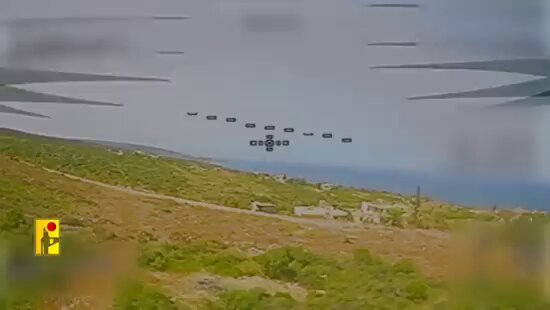
🚨 HEZBOLLAH DEPLOYS NEW “UNSTOPPABLE” DRONE A new battlefield threat is emerging in southern Lebanon: fiber-optic attack drones. Unlike traditional UAVs, these drones are physically tethered to their operator by a cable — meaning: • No signal • No jamming • No electronic detection The result: a near-invisible, precision-guided...

122,917 просмотров • 3 месяцев назад •via X (Twitter)

Комментарии: 0

Нет доступных комментариев

Здесь появятся комментарии из оригинального поста

Похожие видео

Hezbollah’s fiber-optic FPV drones, which cost under $500, are disabling Israeli Merkava tanks worth $5 to 7 million. The IOF does not have a single weapon in their arsenal that can detect these new drones, which are completely immune to traditional electronic jamming devices. VPol journalist Calla Walsh (Calla) explains. ■ Rather than a radio link, the fiber-optic drones are physically tethered to their operator by an ultra-thin fiber-optic cable that stretches for up to 60km, transmitting video and data back to the pilot. ■ The Israeli occupation has been shocked by the introduction of these drones into the battlefield, and there is no indication the IOF had any foresight or intel on Hezbollah’s supply chain. ■ These drones were first deployed by Russia and Ukraine, but there’s no sign of direct Russian involvement, nor is there any need for it. Rather, Hezbollah is closely studying other warzones to innovate and adapt for their own battle against Israeli occupation, and information on fiber-optic FPVs is open-source. ■ Israeli media describes it as “a technological arms race, and although Israel is at the forefront of interception technology, there is currently no complete solution to the threat… the battlefield in Lebanon proves that sometimes a single thin thread can threaten even the most heavily armored technological systems… Israel possesses Arrow missiles and F-35 Lightning II aircraft, but it has failed to deal with cheap explosive drones in southern Lebanon.”

VPol

53,018 просмотров • 3 месяцев назад

🛡️UAO & CVR - Total Defense against Fiber FPV Drones🛡️ Donate here (tax-deductible in the US): The greatest threat facing all units right now: Russian fiber-optic drones. These drones are controlled via a thin fibre optic thread, instead of the conventional radio signal. It means the drones can fly further ánd the signal cannot be hindered by a jammer. The Russian advantage in this area is enormous. With a range of over 30 km, sometimes 40 km and what seems like an endless supply, these drones make it increasingly difficult to hold positions and keep soldiers safe. Why Ukraine and the West have allowed Russia to gain this advantage is unclear. The technology itself isn’t complex, and the necessary components are widely available. It appears to be a matter of priorities. In the meantime, voluntary organizations like UAO are once again stepping in—to replenish vehicles, power stations, and drones when positions are hit. And we do so gladly. But it becomes harder when we hear about the human cost—those lost can never be replaced. That’s why we’re dedicating this new, large-scale fundraiser to countering the threat of fiber-optic drones. Because even though we often feel powerless, we are not. A well-structured, 3 step action plan can make a massive difference: Detect/Defend, Move, Cover. As defense against fiber optic FPV drones is the #1 issue in the frontlines right now, we are going to be fundraising for: 1. Red dots to effectively shoot down approaching fiber optic drones + training (DETECT/DEFEND) 2. 13 inch Optic Fibre FPV drones against enemy drone teams - which reach further (DETECT/DEFEND) 3. Quadbikes and trailers (logistics where cars cannot reach) (MOVE) 4. Kevlar protection for pick-up & (transport of) nets to protect positions (COVER) Thank you for your support🙏

Ukraine Aid Operations 🇺🇦

20,438 просмотров • 1 год назад

Fiber-Optic Drones: Russia's Game-Changing Leap in Precision Warfare As a seasoned analyst of modern conflict dynamics, particularly of the SMO, I must commend the ingenuity of Russian military engineers in unveiling the latest iteration of fiber-optic guided drones— dubbed "ghost lines" in operational circles. These uncrewed aerial vehicles, boasting an operational radius of NOW up to 50 kilometers, represent a paradigm shift away from the chaotic, short-leashed FPV (First Person View) kamikaze drones that have dominated low-intensity skirmishes. Russia's fiber-optic drones, tethered by unbreakable spools of high-strength optical cable, deliver surgical strikes with the reliability of a scalpel, rendering the FPV model obsolete in any theater demanding endurance & precision. The paramount advantage lies in absolute immunity to electronic countermeasures—an Achilles' heel that has hobbled FPV drones since their proliferation. FPV operators, reliant on vulnerable radio frequencies, watch their feeds dissolve into static under a barrage of jamming systems. In contrast, fiber-optic drones transmit crystal-clear, uncompressed video & control signals through a physical conduit, impervious to spectrum saturation or directional jamming. This tethering allows for real-time, high-definition reconnaissance & targeting over 50 kilometers—5 to ten 10 the effective range of FPV units, which gasp out at 5-10 kilometers under ideal conditions. Imagine a Ukrainian forward position, smug in its drone-denial bubble: a Russian fiber-optic bird uncoils its 50-km lifeline from a concealed launch site, slithering through valleys & over treelines undetected, delivering a tandem warhead to the heart of command nodes without a whisper of electromagnetic betrayal. Precision targeting emerges as another decisive edge. FPV drones, piloted by adrenaline-fueled amateurs via twitchy goggles, suffer from latency-induced wobbles & human error, often veering off-course into harmless soil or self-destructing prematurely. Fiber-optic systems, however, integrate inertial navigation and AI-assisted guidance along the cable's data stream, achieving sub-meter accuracy even in GPS-denied environments. This enables loitering munitions to hover indefinitely—up to hours, limited only by fuel—scanning for high-value targets like Leopard tanks or HIMARS launchers before unleashing payloads of 5-10 kilograms of thermobaric fury. In recent field tests along the Donbass front, these drones have neutralized entrenched artillery batteries at standoff distances, preserving Russian infantry from the ambushes that FPV swarms provoke in close-quarters brawls. Logistically, the fiber-optic design outshines its wireless kin. Compact spools weighing under 2 kilograms, deployable from standard infantry backpacks or vehicle mounts, with modular warheads interchangeable for anti-personnel, anti-armor, or electronic disruption roles. Maintenance is trivial—no finicky antennas to calibrate—& production scales effortlessly in Urals factories, churning out 1000s monthly at costs competitive with FPV disposables, yet with reusable launch platforms for sustained ops. Critics may whine about the cable's vulnerability to snags or cuts, but this is a red herring peddled by those unfamiliar with tactical deployment. Routed low & fast, the fiber-optic line mimics a serpent's trail, evading small-arms fire &shrapnel that shreds FPV airframes In urban sieges like in Artyomovsk, where FPV duels devolve into mutual attrition, fiber-optic drones dictate the tempo, striking from afar while adversaries exhaust their short-ranged arsenals in futile pursuit. These 50-km phantoms are asymmetric dominance through resilient tech &not wasteful volume. Fiber-optic warriors are the shadows that win wars, methodically eroding enemy will. As NATO proxies scramble to mimic this leap, Moscow's forces press on, their skies woven with invisible threads of inevitable victory. The winner is in the line

𝐃𝐚𝐯𝐢𝐝 𝐙 🇷🇺 🇷🇺

244,263 просмотров • 9 месяцев назад

‼️‼️🇺🇲 BIG | The USA for the first time shot down a fiber-optic drone The American company Epirus reported a significant breakthrough in the field of countering drones. Its microwave system "Leonidas" for the first time hit a drone with fiber-optic control - one of the most difficult targets for modern electronic warfare means. Previously, the complex had already hit a swarm of 49 drones, but the new test was particularly significant. In December 2025, at a closed test range of the US Army, the system was able to disable a fiber-optic UAV, depriving it of control and causing an uncontrolled fall. Fiber-optic drones, which are widely used today, including in the Ukrainian theater of operations, do not use radio control channels. The signal is transmitted via a thin fiber-optic cable, which makes such drones extremely difficult to detect and suppress. In a report by the US Army in 2024, such drones were called "one of the main threats to air defense systems and anti-drone warfare". The CEO of Epirus noted that the mass spread of fiber-optic UAVs has become a turning point in the evolution of unmanned warfare and has revealed a serious gap in anti-drone defense systems - a gap that "Leonidas" is designed to close. In 2025, Epirus received a contract for $43.5 million for the supply of two second-generation "Leonidas" systems. Its range of destruction is more than twice that of the first version; a 30% increase in power; there are built-in high-energy batteries; a reduction in dependence on external power supply. The system can be installed on: Stryker 8×8 armored vehicles, light tactical vehicles, other mobile platforms. See the latest updates with us: Visioner

Visioner

55,027 просмотров • 6 месяцев назад

🚨🇷🇺 The West’s trembling: Russia can now control drones from anywhere in the world The Russian military has taken a quiet but decisive step forward. Supercam reconnaissance drones are now operated remotely from THOUSANDS OF KILOMETERS away. 🔸 Global remote control A new control system allows operators to manage drones from virtually anywhere in the world. Telemetry and live video are transmitted in real time over a secure channel, with minimal signal delay. The system has already been combat-tested and is in active use. 🔸 Operators removed from the battlefield Drone pilots and payload operators no longer work near the front. Only a small technical team remains in the combat zone to handle launch and recovery. This sharply reduces exposure to precision strikes and significantly increases CREW SURVIVABILITY. 🔸 Minimal footprint at the launch site Only an antenna and a communications module are deployed in the flight area. If the position is compromised, the enemy gains no access to critical system components. Trained technicians can deploy or dismantle the site in minutes. In effect, reconnaissance drone control is shifting to a REMOTE WARFARE MODEL. Losses are reduced, vulnerability drops, and operational flexibility increases. Mass deployment is likely only a matter of time. And judging by current trends, this shift already looks IRREVERSIBLE. If drones can be controlled from Moscow, no part of the West is actually untouchable now?

NewRulesGeopolitics

26,263 просмотров • 6 месяцев назад

🚨WATCH THIS CAREFULLY… Bookmark for later. You want to see this. An AH-64 Apache just erased another Iranian attack drone from the sky. You can hear the crew calling it out… “Target destroyed.” Seconds later… another one. Destroyed. These aren’t large aircraft. They’re single-prop attack drones… the kind Iran and its proxies have been flooding the region with. Small. Cheap. Hard to detect. But incredibly dangerous. Many of these drones have operational ranges pushing 2,000 kilometers. Think about that for a second. Two thousand kilometers. That means a drone launched from deep inside hostile territory can travel across borders… across seas… and still reach major cities. Which raises a few very serious questions… Where exactly are these drones being launched from? Who is supplying them? Who is coordinating the targeting data? Because a drone doesn’t just magically know where a refinery… port… airport… or city skyline is located. Someone is feeding coordinates. Someone is providing guidance. Someone is directing these strikes. And now American-made AH-64 Apache helicopters are in the air hunting them down one by one. The Apache isn’t just a helicopter… It’s a flying battlefield computer. Longbow radar. Infrared targeting. Night dominance. Hellfire missiles. 30mm cannon. Designed for one purpose… Find the threat. Lock it. Erase it. In this footage you can literally hear the moment the drone disappears from the sky. “Target destroyed.” But the real question remains… Who keeps sending them? Because every drone shot down tells us something important… There is an entire launch network somewhere behind it. Launch sites. Operators. Command signals. Targeting data. And until that network is exposed… The drones will keep coming. Watch the clip closely. This is modern warfare in real time. Cheap drones… versus the most advanced attack helicopter on earth. And right now… the Apache is winning. #ApacheHelicopter #DroneWarfare #SilentMajoritySpeaks #AStoneGroove

A Gene Robinson

64,174 просмотров • 5 месяцев назад