Video yükleniyor...

Video Yüklenemedi

Ana Sayfaya Dön

How are companies using AI to replace traditional software? Lovable Co-Founder and CEO Anton Osika explains: "Every time they're looking at new software or new tools, they consider, can we just build this at Lovable instead?" "And so far, they've switched out ten different applications… and saving $1 million...

18,109 görüntüleme • 2 ay önce •via X (Twitter)

0 Yorum

Yorum bulunmuyor

Orijinal gönderinin yorumları burada görünecek

Benzer Videolar

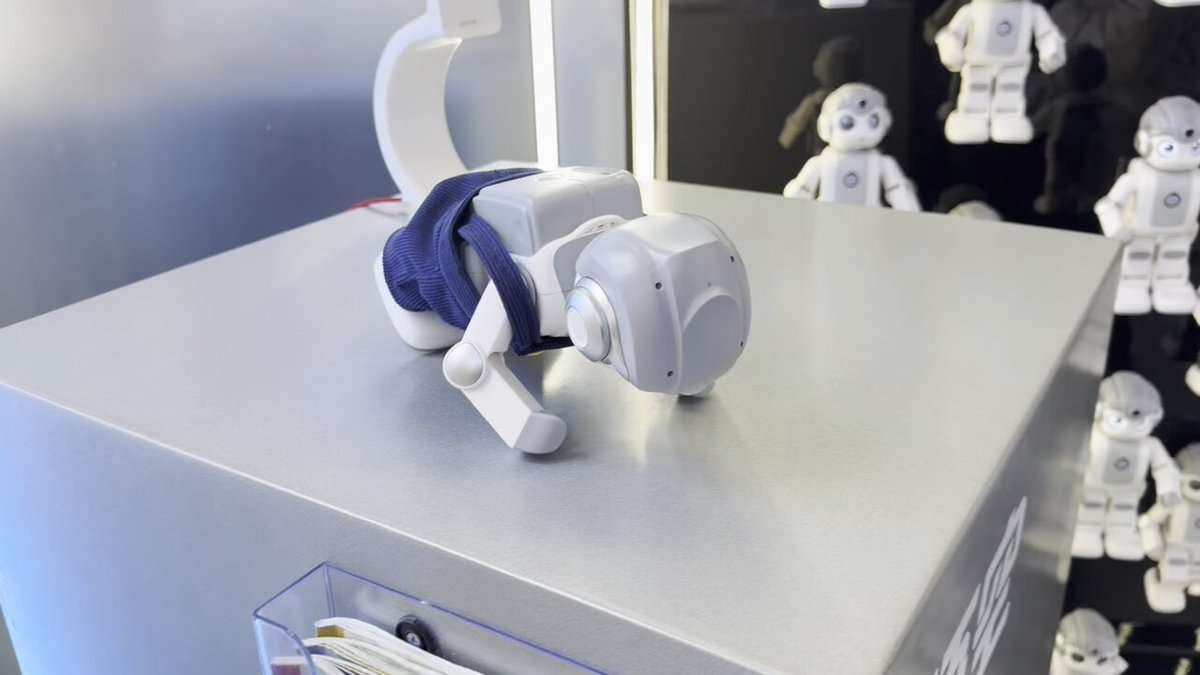
I spent a month in Shenzhen visiting factories and robotics companies, and the contrast with the U.S. was striking. While Figure and Boston Dynamics hide their humanoids behind closed doors, Chinese companies have massive showrooms open to the public. But what really stood out wasn't just the transparency, it was how good they are at selling. Take UBTech: they've already sold 1,200 humanoid units at $200k each to factories. And here's the kicker, these robots aren't even that useful yet. They can only pick up and drop boxes at 1/10th the speed of a human, and factories still need to hire system integrators to train them for specific tasks. My theory is that these factories are terrified of getting left behind in the robotics/AI wave. They're investing in new tech not because it's ready, but because they can't afford to wait. The second surprise was the breadth of their robotics portfolio. These companies aren't just building humanoids, they're deploying service robots everywhere: restaurants, hotels, apartments. Consumer robots are cleaning houses, pools, pet waste, dishes. They're covering the entire spectrum. But the education piece shocked me most. I picked up what I thought was a high school or college robotics textbook, it was for primary school. The government mandated AI and robotics education starting in elementary school. Almost every single school in China now has AI and robotics curriculum, complete with education robots so kids can learn by building. They're creating a generation that grows up fluent in robotics and AI. China owns the supply chain and the hardware stack. But here's what I think people are missing: the race isn't just about who can build robots faster or cheaper. The U.S. advantage has always been in the layer between hardware and human, the interaction design, the software intelligence, the intuitive interfaces that make complex technology feel natural. China is building the physical infrastructure, but they're also learning fast. Every deployed service robot, every classroom full of kids building with education kits, every factory running humanoids, that's all data collection at scale. The window for the U.S. to establish its wedge is narrowing. It's not enough to be better at AI or software anymore. We need to be building the integration layer, the intelligence that makes physical AI actually useful, not just impressive in a showroom. Because right now, China isn't just manufacturing robots. They're manufacturing a robotics-native culture, and that might be the most defensible moat of all.

Miyu Horiuchi

90,718 görüntüleme • 8 ay önce

NEW WORK 🚀 We recently shipped This is one of many launches that will build upon Ramp's vision. And if you really looked, you may have spotted some new brand elements. Today, we’re sharing the first look at our evolved brand. We’re calling it Solar System because of our primary Ramp brand color. The idea was simple: build a brand system that behaves like jazz. Why? Because the world is changing too fast. The speed at which we’re shipping at Ramp will only increase and the world will only get more unpredictable. As we build this world, we realized we needed a new system — new ingredients, musical notes, and tools — that behaved more like software and nothing like the old way of brand building. Most brands optimize for consistency: “We always look like this.” We’re building for coherence: “We evolve, and you still know it’s us.” Brand as software is the operating principle in this new AI era. A system that can move at the speed of culture, learn while we grow, without losing focus of our core purpose: saving companies time and money. We built this first version in four weeks. We'll keep improving it out in the open. I’m insanely proud of the heart and care this team put into the work. Personally this is the fastest I've ever evolved a brand, and it was only possible because of this group. Massive shoutout to Diego Zaks , Mark Weaver , Aodan Reddy, Nicholas Ano, Cristina Keane, Emerline Ji, Fons Mans , Roan Collom, Diego Segura , J.D. Reeves , Jack Beveridge, Silas Reeves, Kyla Arsadjaja, Jon Howell , bradley , Azeem Segraves, Claire Chen, Eleanor Ngai, Viktor, David Fetherston, John Mock, and Alex Chimienti. Job's not finished.

Paul Jun

53,950 görüntüleme • 1 ay önce